






Last updated: April 2025
The shift toward at-home STD testing is accelerating. The CDC's TakeMeHome program distributed over 440,000 HIV self-test kits in a single year, more than twice its original goal, and higher than all other CDC-supported nonclinical HIV testing combined. That's one infection. The same movement is happening across syphilis, gonorrhea, hepatitis B and C, herpes, and more. This guide covers all of it: how the kits work, which infections they detect, when to test after exposure, how accurate the results really are, and what to do next.
In This Article
How Do STD Rapid Test Kits Work?
Can You Test for Syphilis at Home?
Can You Test for Gonorrhea at Home?
Can You Test for Hepatitis B and C at Home?
Can You Test for HIV at Home?
How Long After Exposure Should You Wait to Test?
How Accurate Are At-Home STD Tests?
Single Tests vs. Combo Kits: Which Do You Need?
Why Does Early Testing Actually Change Outcomes?
How to Use an STD Rapid Test Kit Step by Step
How Often Should You Get Tested for STDs?
FAQs
How Do STD Rapid Test Kits Work?
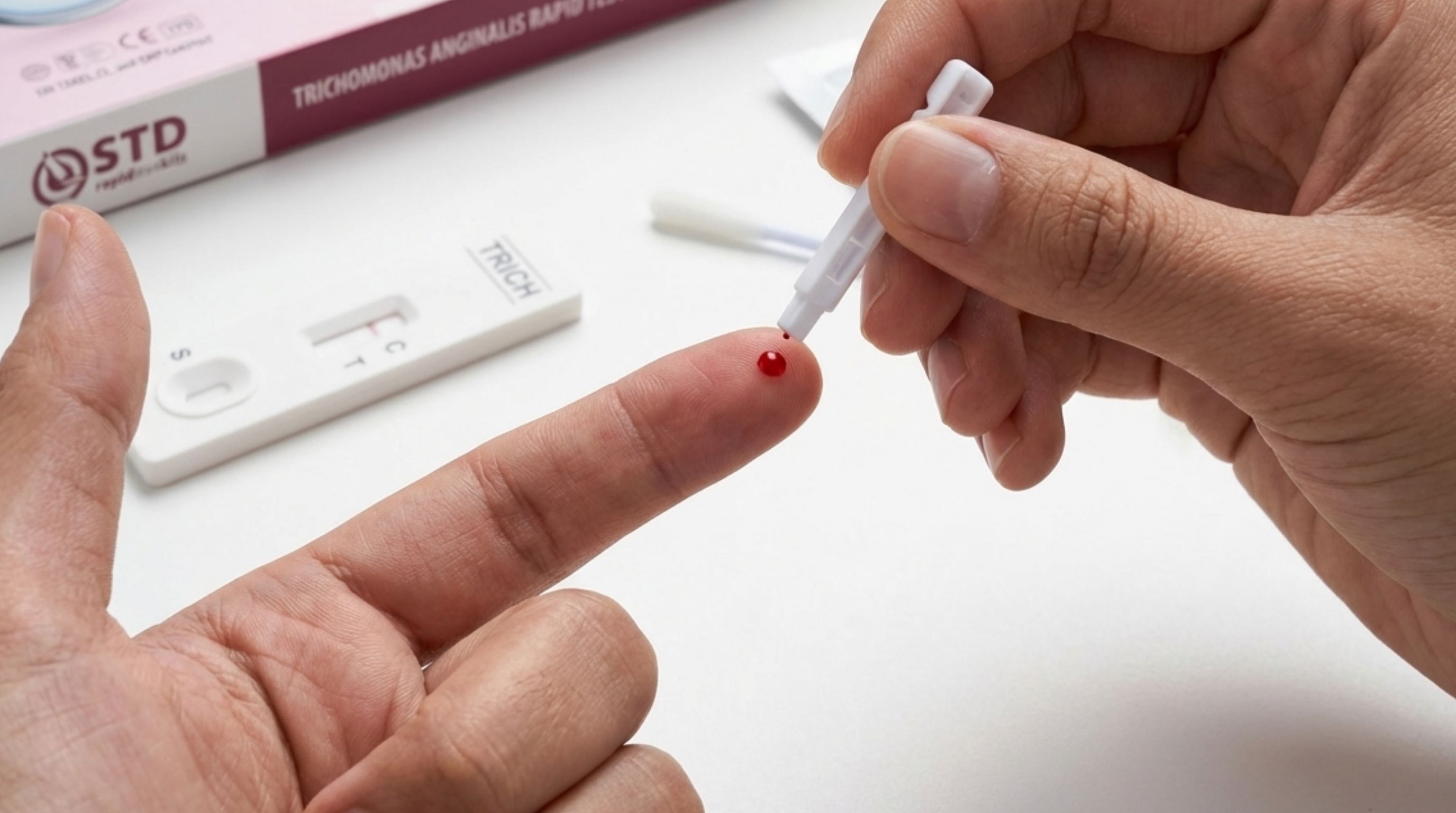
You've used a rapid test before without thinking much about what's happening inside it. A pregnancy test, a COVID test, the basic principle is the same. You introduce a biological sample to a test strip or cassette containing specific reagents, and those reagents react (or don't) to markers associated with a particular infection. For STDs, those markers are usually antibodies your immune system has produced in response to the pathogen, or, in some cases, antigens, proteins from the pathogen itself.
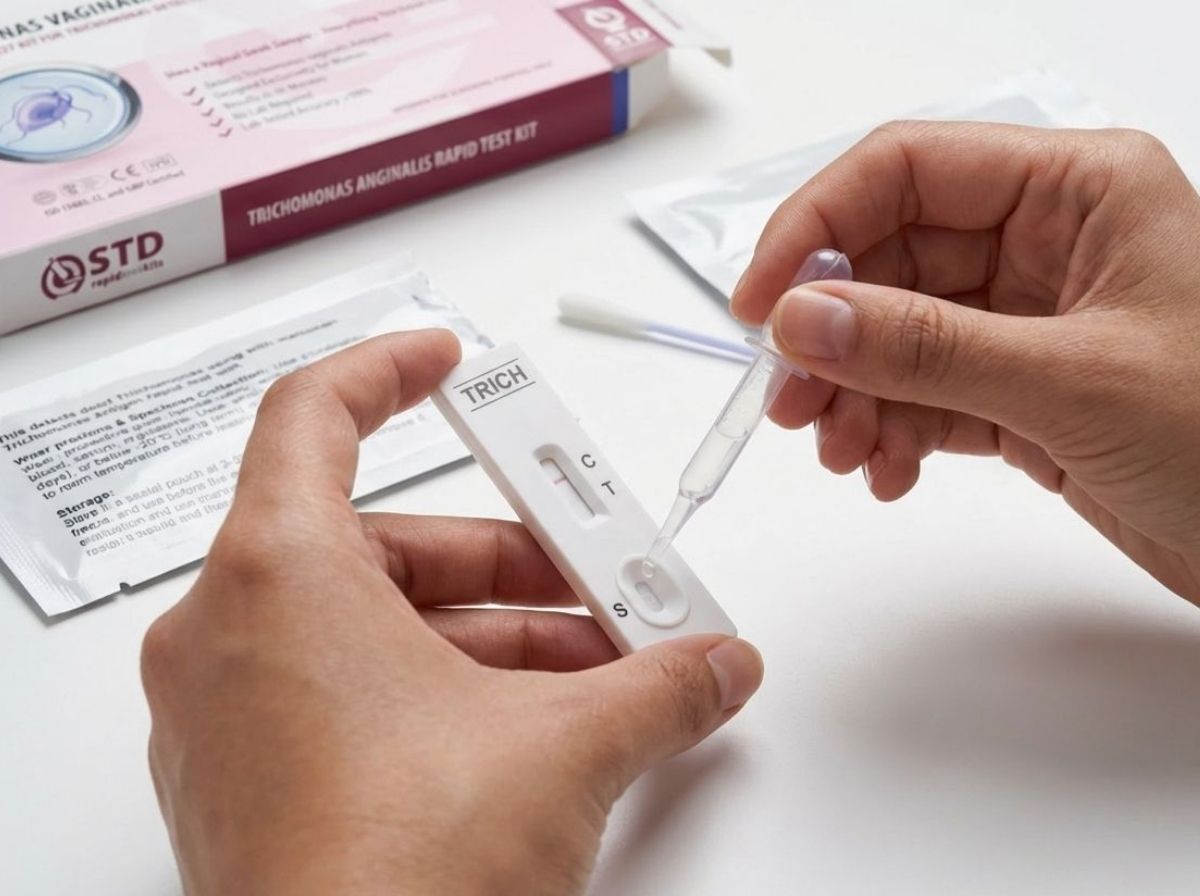
Here's exactly how it plays out. You collect your sample, a finger-prick blood drop, a midstream urine catch, or a swab from the affected site, and apply it to the test device. A buffer solution helps the sample travel through the test strip. As it moves, it either binds or doesn't bind to detection antibodies embedded at specific points on the strip. One line always appears regardless, that's the control line, confirming the test ran correctly. A second line in the test zone means reactive (positive). No second line means non-reactive (negative).
| Infection | Sample Type | What the Test Detects |
|---|---|---|
| HIV 1 & 2 | Finger-prick blood | Antibodies to HIV-1 and HIV-2 |
| Syphilis | Finger-prick blood | Antibodies to Treponema pallidum |
| Hepatitis B | Finger-prick blood | HBsAg surface antigen |
| Hepatitis C | Finger-prick blood | Anti-HCV antibodies |
| Gonorrhea | Urine or vaginal swab | Neisseria gonorrhoeae antigens |
| Chlamydia | Urine or vaginal swab | Chlamydia trachomatis antigens |
| Herpes HSV-1 & HSV-2 | Finger-prick blood | IgG antibodies to HSV-1 or HSV-2 |
| Trichomoniasis | Vaginal swab | Trichomonas vaginalis antigens |
| HPV (women) | Cervical/vaginal swab | HPV 16 & 18 antigens |
The sample type is determined by the biology of each infection. Blood-based tests using a finger-prick sample are used for HIV, syphilis, hepatitis B, hepatitis C, and herpes infections detected through immune markers circulating in the bloodstream. Urine or swab tests are used for gonorrhea and chlamydia, since those bacteria shed through the urogenital tract. Understanding exactly how at-home STD test kits detect infections matters because choosing the wrong sample type for the wrong exposure site produces an unreliable result, not because the test failed, but because you tested the wrong thing.
Can You Test for Syphilis at Home?
Yes, and given how easily syphilis is missed, home testing for it is one of the most practically useful things you can do for your sexual health. Syphilis is caused by the bacterium Treponema pallidum and spreads through direct contact with a syphilitic sore during vaginal, anal, or oral sex. The catch is that those sores, called chancres, are often painless, appear in hidden locations like inside the vagina or rectum, and heal on their own within a few weeks. Which means many people move through the first stage without noticing anything at all.
By the secondary stage, the infection has entered the bloodstream. Symptoms can include a body rash (characteristically on the palms of the hands and soles of the feet), swollen lymph nodes, sore throat, and fatigue, all easy to mistake for a flu or a skin reaction. The full progression of syphilis stages explains why so many cases go undiagnosed for months or years. Left untreated, syphilis eventually causes severe damage to the brain, heart, and blood vessels, complications that become irreversible.
According to the CDC's 2024 STI surveillance data, nearly 4,000 cases of congenital syphilis, transmitted from mother to baby during pregnancy, were reported in the US, marking the 12th consecutive year of increases and a rate 700% higher than a decade ago. That statistic is a direct consequence of syphilis going undetected in people who had no idea they were infected. The Syphilis At-Home Rapid Test Kit (99.4% accuracy) detects syphilis antibodies in a finger-prick blood sample from 6 weeks after exposure. Ocular syphilis, one of the more alarming complications, is another reason early detection matters far more than most people realize.
People are also reading: FAQs About At-Home STD Testing: Everything You've Always Wanted to Ask
Can You Test for Gonorrhea at Home?
Yes. Gonorrhea is caused by the bacterium Neisseria gonorrhoeae and can infect the genitals, rectum, and throat, depending entirely on the type of sexual contact involved. That last part matters: if you had unprotected oral sex, a standard urine-based gonorrhea test won't catch a throat infection. The exposure site determines which sample is needed.
What makes gonorrhea particularly effective at spreading is how often it causes no symptoms at all, especially in women. When symptoms do show up, discharge, painful urination, pelvic discomfort, or scrotal pain, they're often dismissed or attributed to something else. Gonorrhea is one of the most commonly asymptomatic STDs, which is precisely why testing, not symptom-watching, is the only reliable way to know your status. Untreated, it can lead to pelvic inflammatory disease, epididymitis, and infertility in both men and women.
There's an additional layer of urgency: gonorrhea is becoming increasingly resistant to antibiotics, and treatment options are narrowing. Early detection, before complications develop and before the infection is passed on, is now more clinically important than ever. The Gonorrhea At-Home Rapid Test Kit (97.2% accuracy) uses a urine or vaginal swab sample and detects gonorrhea-specific proteins from 3 weeks after exposure. If gonorrhea and chlamydia are both a concern, and they often are, since they're frequently co-transmitted, the Chlamydia & Gonorrhea 2-in-1 kit (98%) covers both in one sitting.
Can You Test for Hepatitis B and C at Home?
Yes, and for both infections, home testing fills a genuine gap, because hepatitis B and C are among the most underdiagnosed chronic conditions in the United States. The CDC estimates that as of 2023, roughly 14,400 new acute hepatitis B infections occurred in the US, but the chronic burden is far larger, with over 17,000 newly reported chronic cases in the same year, many of them in people who had no idea they were infected. Hepatitis C numbers are similarly stark: an estimated 67,600 new infections were recorded in the most recent surveillance cycle, well above public health targets.
Both are viral infections that primarily damage the liver, but they behave very differently. Hepatitis B spreads through blood, semen, and other body fluids, including sexual contact, and is vaccine-preventable. Hepatitis C spreads mainly through blood but can also be transmitted sexually, particularly among men who have sex with men. The shared thread is that both can progress silently for years or even decades, causing cirrhosis, liver failure, or liver cancer before a person realizes anything is wrong. Understanding the differences between hepatitis B and C is useful because the transmission routes, testing windows, and long-term risks diverge significantly, and testing for one while assuming you're covered for the other is a common and costly mistake.
The Hepatitis B At-Home Rapid Test Kit (98.8% accuracy) detects the HBsAg surface antigen from 6 weeks after exposure. The Hepatitis C At-Home Rapid Test Kit (98.5% accuracy) detects anti-HCV antibodies from 8 to 11 weeks after exposure. For anyone testing for both together, the Hepatitis B & C 2-in-1 kit (98.8%) covers both from a single finger-prick blood sample. A comprehensive guide to testing for hepatitis C at home is worth reading if you have any specific risk factors or questions about the window period.

People are also reading: STD Testing in the US: Every Option, Every Cost, Explained
Can You Test for HIV at Home?
Yes, and HIV is arguably the infection where at-home rapid testing has had the most measurable public health impact. Knowing your HIV status early changes everything: it opens the door to antiretroviral therapy that, when started promptly, allows people with HIV to live a normal lifespan and reduces transmission risk to near zero. The barrier has never been the treatment; it's been getting people to test in the first place.
HIV attacks the immune system by targeting CD4 T-cells, the cells responsible for coordinating the body's defense against infections and certain cancers. How HIV progressively weakens the immune system through CD4 cell depletion explains why early intervention matters so much: catching the infection before significant immune damage has occurred gives treatment the best possible starting point. Left undetected and untreated, HIV advances toward AIDS, at which point opportunistic infections and certain cancers become life-threatening. The compounding dangers of untreated HIV extend well beyond the immune system; cardiovascular disease, kidney damage, and neurological effects are documented as long-term consequences.
The HIV 1&2 At-Home Rapid Test Kit (99.7% accuracy) detects antibodies to both HIV-1 and HIV-2 from a finger-prick blood sample, from 6 weeks after exposure, with a confirmatory retest recommended at 12 weeks if the 6-week result is negative and the exposure risk was significant. For those concerned about HIV alongside other co-occurring infections, HIV co-infections are common and often go undetected simultaneously, another reason multi-infection panels often make more sense than single-infection testing for higher-risk exposures.
How Long After Exposure Should You Wait to Test?
This is the question most people get wrong, and it's the one that matters most for getting a result you can actually trust. Testing too soon after an exposure doesn't mean you're in the clear. It means your immune system hasn't had enough time to produce detectable antibodies, or the infection hasn't yet reached concentrations the test can detect. A negative result during this window can be completely false, and falsely reassuring at exactly the wrong moment.
Every infection has a specific testing window: the minimum time that must pass after exposure before a test reliably detects it. These aren't rough estimates. They're rooted in the biology of each pathogen and the detection sensitivity of each test format. How early you can detect different STDs with at-home testing is one of the most searched questions in sexual health, and the answer is different for every infection.
| Infection | Test From | Notes |
|---|---|---|
| Chlamydia | 14 days after exposure | Often no symptoms, test even without them |
| Gonorrhea | 3 weeks after exposure | Can infect throat, rectum, and genitals separately |
| Syphilis | 6 weeks after exposure | Painless sore may be the only, and easily missed, sign |
| HIV 1 & 2 | 6 weeks (first indicator); retest at 12 weeks for certainty | 12-week retest rules out window-period false negatives |
| Herpes HSV-1 & HSV-2 | 6 weeks after exposure | Most herpes infections are entirely asymptomatic |
| Hepatitis B | 6 weeks after exposure | Vaccine-preventable, test if unvaccinated after exposure |
| Hepatitis C | 8–11 weeks after exposure | Often silent for years; earliest detection window is longer |
The practical rule: note the date of your exposure, identify the infection you're concerned about, count forward to the correct window, and test then. Sitting with the anxiety in between is hard, but testing at day three after exposure for an infection with a 6-week window isn't testing, it's guessing. And a negative guess isn't peace of mind. The absence of symptoms tells you nothing; only a test at the right time does.
How Accurate Are At-Home STD Rapid Tests?
Highly accurate when used correctly, and when the testing window has passed. The kits available through STD Rapid Test Kits carry accuracy ratings from 97.2% to 99.7%, depending on the infection. That's clinically meaningful, and for most infections, it's on par with point-of-care tests administered in clinical settings. The technology isn't the weak link; user error and premature testing are.
The most common reason for a false negative isn't a defective test. It's testing before the window period has elapsed. The immune response that the test is designed to detect simply isn't there yet. A second source of error is technique: not collecting enough sample, contaminating the lancet before use, or misreading a faint line. The instruction leaflet that comes with every kit isn't filler; it's the difference between a valid result and a wasted one. At-home STD test kit accuracy holds up very well under real-world conditions, provided those two variables, timing and technique, are handled correctly.
A reactive (positive) result should always be confirmed by a healthcare provider with laboratory testing before treatment begins. Rapid tests are high-quality screening tools, not final clinical diagnoses. A negative result after the correct window period is highly reliable for ruling out infection. If your exposure is ongoing, new partners, regular unprotected sex, and retesting every 3 to 6 months is standard practice for sexually active adults. How rapid STD test kits compare directly to lab-based testing is worth understanding if you're deciding which approach fits your situation.
Check Your STD Status in Minutes
Test at Home with Remedium3-in-1 STD Test Kit
Claim Your Kit Today
Save 53%
 For Men & Women
 Results in Minutes
 No Lab Needed
 Private & Discreet
Order Now $69.00 $147.00
For all 3 tests
Single Tests vs. Combo Kits: Which Do You Need?
It depends on what you're specifically concerned about. If you had one defined exposure, unprotected oral sex, for example, and gonorrhea is the infection you're most worried about, a targeted single test is a reasonable choice. But if you're doing a broader sexual health check, or if you had unprotected sex where multiple infections could have been transmitted, a combo kit is more efficient and gives you a far more complete picture.
The case for combo testing isn't just convenience. STDs frequently co-occur; having one infection actively increases susceptibility to others. The link between existing STDs and elevated HIV transmission risk is one of the clearest examples: untreated gonorrhea or syphilis can make HIV transmission significantly more likely in either direction. Testing for one while ignoring the others isn't a complete picture; it's a partial one with a false sense of closure.
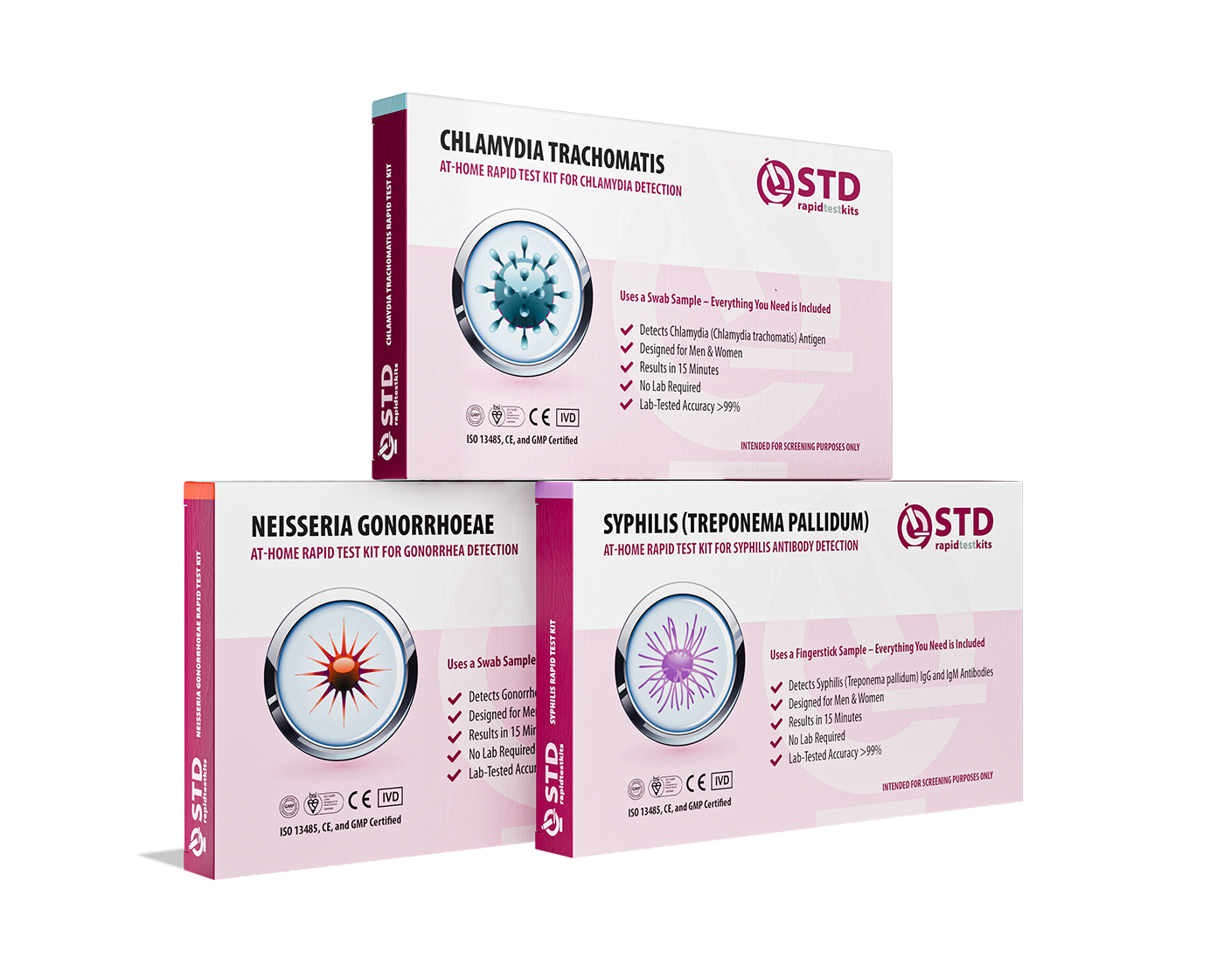
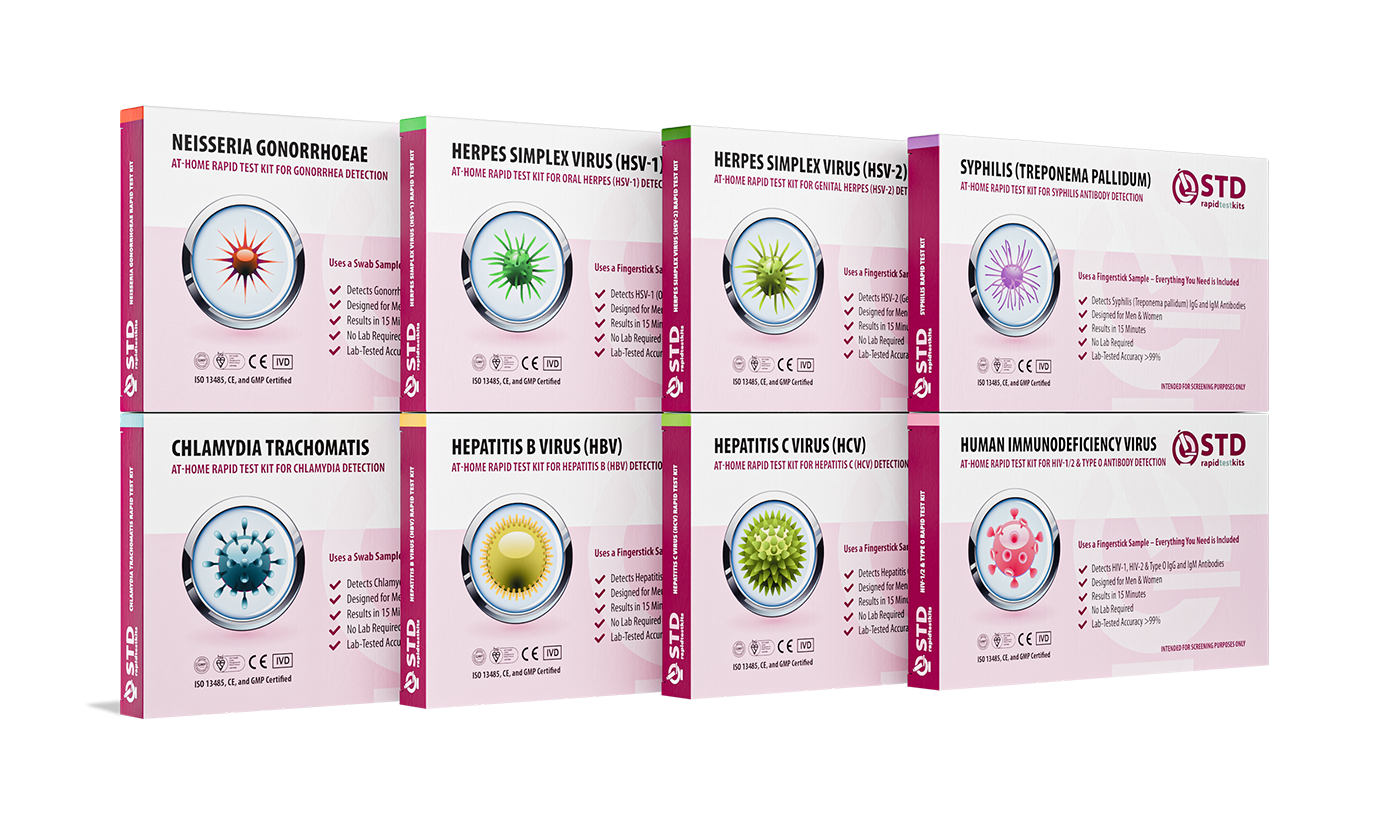
For the most common bacterial infections together, the Chlamydia, Gonorrhea & Syphilis 3-in-1 kit (99.5%) covers the three most frequently reported STDs in a single session. For comprehensive screening, the Complete 8-in-1 kit (99%) covers HSV-1 and HSV-2, chlamydia, gonorrhea, syphilis, HIV, hepatitis B, and hepatitis C, essentially a full sexual health panel at home. For women, the Women's 10-in-1 kit (99%) adds trichomoniasis and HPV 16 & 18. Choosing the right at-home STD test kit comes down to three questions: which infections you were potentially exposed to, which body sites were involved, and whether you want a targeted or comprehensive result.
Why Does Early Testing Actually Change Outcomes?
Most people with a sexually transmitted infection don't know they have one. Not because the symptoms are subtle, but because there often are no symptoms at all. Chlamydia is asymptomatic in the majority of cases. Most people with herpes never have a recognizable outbreak. Syphilis sores heal on their own. HIV's initial flu-like phase passes and leaves nothing obvious behind. The biology of these infections is specifically unfavorable for self-detection, which is why symptom-watching as a strategy doesn't work.
The CDC's 2024 STI surveillance data makes the scale of this visible: more than 2.2 million cases of chlamydia, gonorrhea, and syphilis were reported in the US in 2024, and those are only the diagnosed cases. Experts estimate that reported numbers represent a fraction of actual infections, since the majority are never caught. Even with a 9% decline from 2023, the overall STI case burden in the US remains 13% higher than it was a decade ago. For hepatitis C, an estimated 67,600 new infections occurred in a recent surveillance cycle, most of them in people who went years without a diagnosis. For HIV, the CDC recommends that every adult in the US get tested at least once, because an estimated 1 in 8 people living with HIV don't know it.
The compounding cost of missing an infection early is documented for every STD in this guide. Untreated gonorrhea leads to pelvic inflammatory disease and infertility in women. Untreated syphilis causes irreversible neurological damage. Untreated hepatitis C progresses to cirrhosis. Early detection doesn't just protect you, it stops transmission to partners who also have no idea. Why regular STD testing matters isn't a public health slogan. It's the biological math of catching something before it becomes compounding damage.
People are also reading: STD Myths and Facts: Common Misconceptions About Sexually Transmitted Infections
How to Use an STD Rapid Test Kit Step by Step
The process is quicker and less complicated than most people expect. The anxiety going into it is almost always worse than the actual five minutes it takes. Here's what happens from the moment you open the kit to when you read your result.
Start by reading the instruction leaflet completely before touching anything else. Two minutes. Worth every second. Each kit has slightly different protocols, the sequence of steps, the exact amount of buffer solution to add, and the specific waiting time before reading the result. Skipping this is the single most common source of user error. Lay everything out first: the test cassette, the lancet if blood collection is needed, the alcohol prep pad, the collection pipette or vial, and the buffer.
For blood-based tests, clean the side of your fingertip with the alcohol pad and let it dry completely. Use the lancet on the side of the fingertip, not the pad, where nerve endings make it more painful, and blood flow is actually worse. Squeeze gently to produce a drop and collect it as instructed, either directly onto the cassette or into a collection vial. For urine-based tests, let a little flow first, then collect midstream in the container provided. For swab tests, insert to the indicated depth and rotate as the instructions specify.
Once the sample and buffer are applied, set a timer. Do not read results early, and do not read them after the stated reading window, usually 20 to 25 minutes, because line intensity changes after that point and can produce a misleading read. Two lines, including a very faint one, in the test zone mean reactive. One line means non-reactive. No control line means the test didn't run correctly; retest with a fresh kit. What to do after a positive at-home STD result is a clear next step: confirm with a healthcare provider and get treated. Effective treatment exists for every infection these kits detect. If the process feels daunting, know that anxiety around STD testing is one of the most common reasons people delay, and the anxiety almost always disappears the moment results are in hand. Uncertainty costs more than a test.
How Often Should You Get Tested for STDs?
More often than most people currently do. The CDC recommends annual chlamydia and gonorrhea testing for all sexually active women under 25, and for older women with risk factors. HIV testing at least once in a lifetime is recommended for everyone aged 15 to 65, with annual or more frequent testing for those with ongoing risk. Syphilis screening is recommended for all pregnant women and for anyone with multiple partners or inconsistent condom use.
Those guidelines describe a floor, not a ceiling. Multiple partners: test every three to six months. Starting a new relationship: test before stopping condoms, not after. Received a notification from a recent partner: test at the correct window for whatever infection they mentioned. When an at-home test is appropriate versus when to see a doctor is a useful frame for matching the right testing approach to the situation.
Some groups carry a structurally higher risk for reasons that have nothing to do with behavior; gaps in access, awareness, and testing uptake explain more than individual choices do. Teens and seniors are both at elevated risk for different and often overlooked reasons. For couples, testing together removes the implication of suspicion and normalizes sexual health as a shared responsibility rather than a defensive move. Why STD testing is one of the most underrated relationship decisions, that framing might sound counterintuitive, but the data on trust and transparency in long-term relationships bears it out.
Check Your STD Status in Minutes
Test at Home with Remedium8-in-1 STD Test Kit
Claim Your Kit Today
Save 62%
For Men & WomenResults in MinutesNo Lab NeededPrivate & DiscreetOrder Now $149.00 $392.00
For all 8 tests
FAQs
1. What is an STD rapid test kit?
It's a home diagnostic tool that detects a specific sexually transmitted infection from a blood, urine, or swab sample and gives you a result in 15 to 20 minutes. No clinic, no lab, no appointment. Each kit targets specific infections, some cover one, others cover up to 10 in a single session.
2. How accurate are at-home STD rapid tests?
Very, when you test at the right time and follow the instructions. Accuracy ranges from 97.2% to 99.7% depending on the infection. The most common reason for a false negative is testing before the window period has elapsed, not a flaw in the test itself. Technique matters too: follow the instructions precisely, and the results hold up.
3. How soon after sex can I use an STD rapid test?
It depends entirely on which infection you're testing for. Chlamydia: 14 days. Gonorrhea: 3 weeks. Syphilis: 6 weeks. HIV: 6 weeks for a first result, 12 weeks for certainty. Herpes HSV-1 and HSV-2: 6 weeks. Hepatitis B: 6 weeks. Hepatitis C: 8 to 11 weeks. Testing earlier than these windows produces unreliable results, not because the kit is faulty, but because the biology hasn't caught up yet.
4. Can I test for multiple STDs at once?
Yes, combo kits test for several infections from a single collection session. You can go from a 2-in-1 (chlamydia and gonorrhea) up to a 10-in-1 that covers every major STD in one sitting. If your exposure involved multiple risk factors, a panel is almost always the smarter choice than testing for one infection at a time.
5. What does a positive rapid test result mean?
It means the test picked up markers associated with that infection, which is a strong signal, not a final verdict. Follow up with a healthcare provider for confirmatory lab testing before starting any treatment. A positive at-home result prompts action; it doesn't replace clinical confirmation.
6. Should I test even if I have no symptoms?
Absolutely, this is actually the most important scenario for testing. Most STDs produce no symptoms during early infection, and some never produce noticeable symptoms at all. Gonorrhea, chlamydia, syphilis, HIV, herpes, hepatitis B and C can all be present, active, and transmissible without you feeling anything. Symptoms are an unreliable indicator. Testing is the only one that works.
7. Can I test for STDs after unprotected oral sex?
Yes. Gonorrhea and syphilis are both transmissible through oral sex and both have at-home tests. The important detail: gonorrhea in the throat won't be caught by a urine test. Make sure the kit you choose covers the correct exposure site, and use the sample type the instructions specify for that site.
8. How often should sexually active people test for STDs?
At minimum, annually, but that's the floor. Anyone with multiple partners or inconsistent condom use should test every 3 to 6 months. If you had a specific exposure, test at the correct window for that infection. And if you're starting a new relationship, test before stopping barrier protection, not after.
9. Is at-home STD testing safe during pregnancy?
Yes, and it's actively encouraged. Syphilis, HIV, gonorrhea, chlamydia, and hepatitis B can all be transmitted to a baby during pregnancy or delivery, and early detection allows for treatment that prevents that transmission. STD testing during pregnancy is a standard and important part of prenatal care, not an optional extra.
10. Can an at-home rapid test replace a doctor visit?
For routine screening and peace of mind after an exposure: yes. For confirming a positive result and receiving treatment: no, that requires a healthcare provider. Think of home rapid testing as your first line of information. It's fast, private, and reliable when used correctly. What comes after a positive result is where clinical care takes over.
Take Control of Your Sexual Health Today
The point of testing isn't to create anxiety, it's to end it. A result you can trust lets you make genuinely informed decisions: about treatment, about your partners, about what comes next. Whether you're doing a routine check, responding to a specific exposure, or establishing a baseline before a new relationship, an at-home rapid test gets you answers in under 20 minutes, privately, on your own schedule.
For comprehensive coverage, the Complete 8-in-1 At-Home STD Test Kit (99% accuracy) covers HSV-1 and HSV-2, chlamydia, gonorrhea, syphilis, HIV, hepatitis B, and hepatitis C in a single session. For women wanting the most complete panel available, the Women's 10-in-1 Kit (99%) adds trichomoniasis and HPV 16 & 18. The full range of single-infection test kits and combo kits is available for every major STD. Visit STD Rapid Test Kits to find the right option for your situation. Testing is the fastest way to stop the guessing game.
How We Sourced This: Our article was constructed based on current advice from the most prominent public health and medical organizations, and then molded into simple language based on the situations that people actually experience, such as treatment, reinfection by a partner, no-symptom exposure, and the uncomfortable question of whether it "came back." In the background, our pool of research included more diverse public health advice, clinical advice, and medical references, but the following are the most pertinent and useful for readers who want to verify our claims for themselves.
Sources
1. CDC: 2024 National STI Surveillance Data Release
2. CDC: Hepatitis B Surveillance Report, 2023
3. CDC: Hepatitis C, Reduce New Infections (2024 National Progress Report)
4. NCBI: Rapid Tests for Sexually Transmitted Infections, The Way Forward
5. WHO: Sexually Transmitted Infections Fact Sheet
6. CDC: HIV Testing Recommendations
About the Author
Dr. F. David, MD is a board-certified infectious disease specialist focused on STI prevention, diagnosis, and treatment. He writes with a direct, sex-positive, stigma-free approach designed to help readers get clear answers without the panic spiral.
Reviewed by: Rapid STD Test Kits Medical Review Team | Last medically reviewed: April 2025
This article is for informational purposes and does not replace medical advice.


