
Published: August 2025 | Last updated: April 2026 | Editorial review and quality control: Martina N.
HIV does not make you sick on its own. The damage you read about, the infections that take hold, the weight loss, the cancers that appear at younger ages, comes from a slow process the virus runs against one specific population of immune cells: CD4 T lymphocytes, usually shortened to CD4 cells. They act as the conductors of your adaptive immune response. Without them, the rest of your immune system still functions but loses strategic direction.
This explainer covers what CD4 cells normally do, how HIV finds them and enters them, the surprising number of ways the virus kills them, what happens at each stage as your CD4 count falls, and where early testing plus modern antiretroviral therapy (ART) changes the outcome of every step that follows. Where the article cites a specific number, you'll find a link to the public-health source for that figure.
How does HIV weaken your immune system?
HIV infects and destroys CD4 T cells, the white blood cells that coordinate your body's response to germs. As CD4 numbers fall from the normal range of about 500 to 1,500 cells per cubic millimeter of blood, your immune defense weakens in graded stages. When the count drops below 200 cells/mm³, the diagnosis becomes AIDS and serious opportunistic infections become likely. Antiretroviral therapy stops viral replication, lets CD4 numbers recover over months to years, and reduces the virus to undetectable levels in blood, at which point it is not transmitted sexually.
Key takeaways
- HIV destroys CD4 T cells, the immune system's coordinators. Below 200 cells/mm³, your body loses defenses against infections that healthy immune systems clear without effort.
- Antiretroviral therapy started early restores CD4 numbers, suppresses the virus to undetectable levels, and reduces sexual transmission to effectively zero. Testing is what makes that early start possible.
What CD4 cells do for your immune system
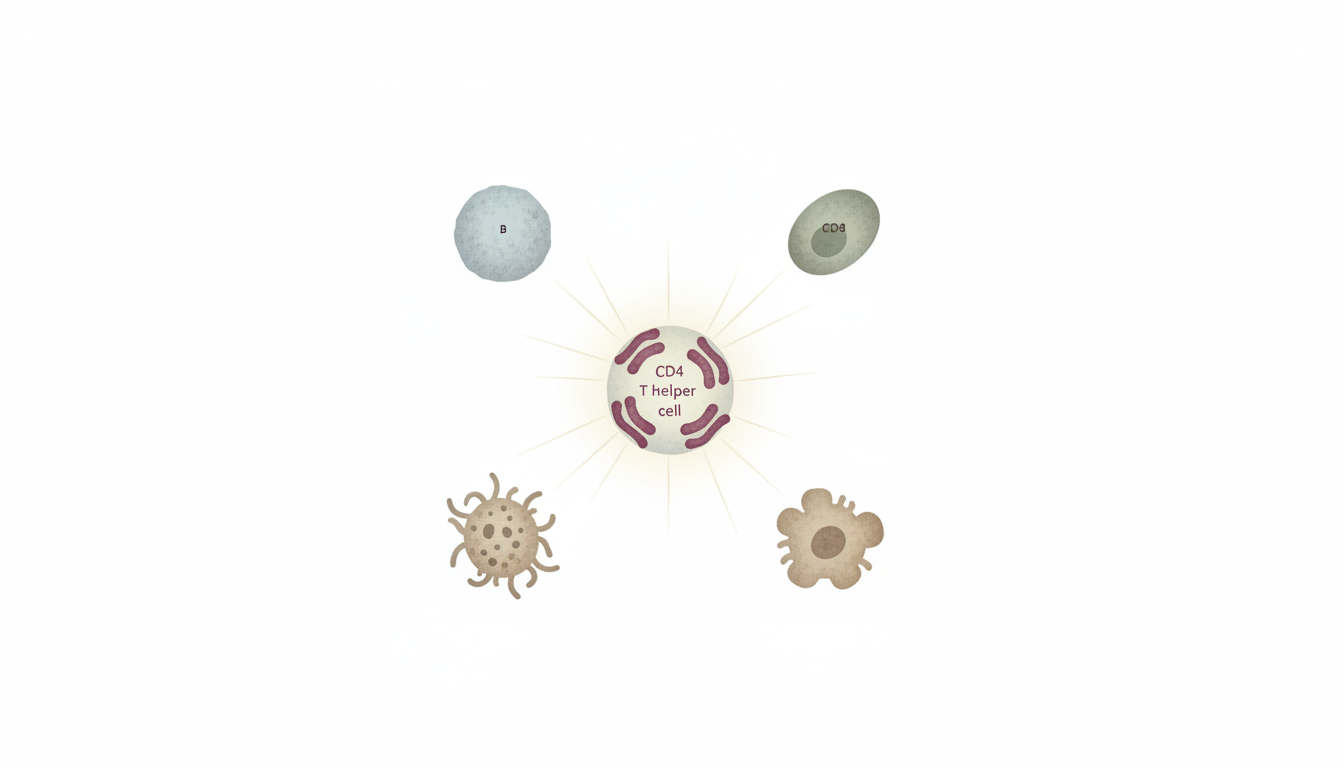
CD4 cells are a class of T lymphocyte that lives in your blood and lymphatic tissue. They are sometimes called "helper T cells" because their main role is to direct other immune cells: cytotoxic CD8 T cells that destroy infected host cells, B cells that produce antibodies, and macrophages that engulf and digest pathogens. The branch of immunity that involves cells attacking other cells (cell-mediated immunity) and the branch that involves antibodies neutralizing pathogens in the bloodstream (humoral immunity) both depend on CD4 signaling to coordinate.
In an adult without HIV, CD4 counts typically run between 500 and 1,500 cells per cubic millimeter of blood. The range is wide because numbers vary with age, time of day, recent vaccination, infection, and stress. What matters is the trend, and what matters in HIV care is whether the trend is moving up under treatment or down without it.
When CD4 numbers fall, the immune system does not collapse all at once. The decline is graded. Mild loss makes routine viral infections last a little longer. Moderate loss opens the door to oral thrush and shingles. Severe loss, below the AIDS threshold of 200 cells/mm³, lets organisms that healthy bodies clear without effort, like Pneumocystis jirovecii or Mycobacterium avium complex, take hold and cause life-threatening illness (NIH HIVinfo: Stages of HIV Infection).
How HIV finds and enters CD4 cells
HIV is a retrovirus: it stores its genetic information as RNA and reverse-transcribes that RNA into DNA after entering a host cell. To get inside, it needs to lock onto two surface proteins at once. The first is the CD4 receptor itself, which is what gives CD4 cells their name. The second is a co-receptor, usually CCR5 or, in later infection, CXCR4. Without both handholds, the virus cannot fuse with the cell membrane and inject its contents.
Once inside, HIV reverse-transcribes its RNA into DNA, transports that DNA to the nucleus, and integrates it into the host's chromosome. From that point on, every time the cell divides or is activated, the integrated viral DNA can instruct the cell to produce new HIV particles. The newly assembled virions bud off the cell membrane to infect more CD4 cells, while the producing cell is usually destroyed in the process. This cycle, called the HIV replication cycle, is what makes HIV a persistent rather than a clearable infection (NIH HIVinfo: HIV Life Cycle).
The CCR5 co-receptor matters clinically. People who carry two copies of a deletion called CCR5-delta32 are highly resistant to HIV infection because the virus cannot find its second handhold. The same biology underlies a class of HIV medications called CCR5 antagonists (such as maraviroc), which occupy the co-receptor and block docking. CCR5 biology is also the reason every published case of long-term HIV remission through stem cell transplantation has involved donors who carry the delta32 deletion.
Understanding the entry mechanism gave researchers something to attack. Modern antiretroviral therapy targets at least three steps of the HIV life cycle simultaneously: entry (CCR5 antagonists, fusion inhibitors), reverse transcription (NRTIs and NNRTIs), and integration (integrase inhibitors). Combining drugs that hit different steps prevents the virus from evolving resistance to any single one, which is why ART is always given as a combination regimen rather than a single pill in isolation.
The phases of HIV and CD4 decline
Untreated HIV infection moves through three recognizable phases. Each has a typical CD4 trajectory and a typical clinical presentation, though individuals vary widely.
Acute infection (roughly 2 to 4 weeks after exposure). The virus replicates rapidly in blood and lymphatic tissue. CD4 counts drop sharply during this phase, sometimes briefly into AIDS-range territory before partial recovery. Many people develop flu-like symptoms: fever, sore throat, swollen lymph nodes, rash, muscle aches, and sometimes mouth ulcers. This is called acute retroviral syndrome and is sometimes mistaken for influenza or mononucleosis. Symptoms typically last one to two weeks and resolve as the immune system mounts a partial response.
Chronic infection (clinical latency, often years). The immune system contains the virus to a steady-state "set point" in blood, but viral replication continues quietly in lymphoid tissue. CD4 numbers fall gradually, typically by about 50 to 100 cells per year on average without treatment, though this varies widely between individuals. Most people in this phase feel well. The danger is precisely that they feel well: many do not know they have HIV, do not test, and may transmit the virus unknowingly.
AIDS (CD4 below 200 cells/mm³ or AIDS-defining illness). When CD4 numbers fall below 200, the immune system can no longer keep certain organisms in check. Opportunistic infections appear: Pneumocystis pneumonia, candidal esophagitis, cryptococcal meningitis, disseminated tuberculosis, cytomegalovirus retinitis. Certain cancers (Kaposi sarcoma, non-Hodgkin lymphoma, invasive cervical cancer) also become more common as immune surveillance weakens. AIDS is a clinical stage, not a separate disease, and it is reversible with effective ART. With treatment, CD4 counts rise back into the normal range over months to years (CDC: About HIV).
| CD4 count (cells/mm³) | Immune status | What clinicians watch for |
|---|---|---|
| 500 to 1,500 | Normal range | Routine illnesses behave normally. |
| 350 to 499 | Mild depletion | Slightly slower recovery from minor infections; vaccine responses can be blunted. |
| 200 to 349 | Moderate depletion | Higher risk of oral thrush, herpes zoster (shingles), and tuberculosis. Prophylactic antibiotics may be considered. |
| 50 to 199 | Severe depletion / AIDS | Pneumocystis pneumonia, esophageal candidiasis, prolonged diarrheal illness. Daily prophylaxis recommended. |
| Below 50 | Profound immunosuppression | Cytomegalovirus retinitis, disseminated Mycobacterium avium complex, central nervous system infections. |
How HIV actually kills CD4 cells
The simple version of the story is that HIV gets into a CD4 cell, makes new viruses, and kills the cell on the way out. The real biology is messier, and it explains why CD4 counts drop faster than direct productive infection alone would predict.
Productive infection of a CD4 cell does kill that cell. Newly assembled virions punch through the membrane, and the cell dies of structural damage. But the majority of CD4 cells lost during HIV infection are not productively infected. Additional killing mechanisms work alongside direct viral replication:
- Pyroptosis. When HIV tries and fails to complete its life cycle inside a resting CD4 cell, abortive viral DNA fragments are detected by an immune sensor called the inflammasome. The cell self-destructs in an inflammatory way, releasing signals that recruit more CD4 cells to the area, which then become targets themselves. This positive-feedback loop accounts for a large share of CD4 loss in lymph nodes.
- Bystander apoptosis. Uninfected CD4 cells exposed to viral proteins or to inflammatory signals can be triggered into programmed cell death even though the virus never enters them.
- CTL-mediated killing. Cytotoxic CD8 T cells correctly identify infected CD4 cells displaying HIV antigens on their surface, and destroy them. This is a useful defense (it slows the virus), but it removes CD4 cells the body needs to coordinate the rest of the immune response.
Chronic immune activation accelerates all of these mechanisms. Persistent low-level viral replication in lymphoid tissue keeps the immune system inflamed even when blood viral loads look stable. That inflammation, by itself, depletes CD4 cells and contributes to age-related diseases (cardiovascular disease, certain cancers, bone loss) appearing earlier than expected in people with untreated HIV.
Most CD4 cells lost during HIV infection die from pyroptosis, an inflammatory bystander death triggered when the virus tries and fails to replicate inside resting CD4 cells. Direct viral killing accounts for a smaller share. This is why CD4 counts fall faster than the rate of productive infection alone would predict.
Consequences when CD4 falls
The clinical effects of immune depletion are not random. They follow a recognizable order based on which pathogens require the most intact CD4 response to stay in check.
- Opportunistic infections. Pneumocystis jirovecii pneumonia (PCP) was for years the defining AIDS illness in the United States. Other common opportunistic infections include esophageal candidiasis, disseminated tuberculosis, cryptococcal meningitis, toxoplasmic encephalitis, cytomegalovirus retinitis, and prolonged cryptosporidial diarrhea.
- HIV-associated cancers. Kaposi sarcoma (caused by human herpesvirus 8 in someone with weakened immunity), non-Hodgkin lymphoma, and invasive cervical cancer are formally AIDS-defining when they appear in someone with HIV. People living with HIV also have higher rates of certain non-AIDS-defining cancers, including anal, lung, and liver cancer.
- HIV-associated neurocognitive disorder (HAND). Chronic inflammation of the central nervous system, even at low viral loads, can produce difficulty with memory, attention, executive function, and motor coordination. Severe HAND is much rarer in the ART era; milder forms still occur.
- Cardiovascular and pulmonary disease. People with untreated or late-treated HIV develop atherosclerosis, hypertension, and pulmonary arterial hypertension at younger ages than the general population, partly from chronic immune activation and partly from co-infections like hepatitis C.
- Co-infections. Hepatitis B, hepatitis C, and tuberculosis interact with HIV in ways that worsen both conditions. Tuberculosis is among the most common serious illnesses in people living with HIV globally, particularly in regions where TB exposure is common (WHO: HIV and AIDS).
None of this is destiny. Every item on this list becomes far less likely when HIV is found early and ART starts before CD4 has fallen substantially.
Below 200 cells/mm³, daily prophylactic antibiotics against Pneumocystis pneumonia are standard of care in HIV management. Below 50 cells/mm³, additional prophylaxis against Mycobacterium avium complex is added. These prevent the most common life-threatening AIDS-era infections while ART works to rebuild CD4 numbers.
What ART does, and why it works
Antiretroviral therapy is now standard care for everyone diagnosed with HIV, regardless of CD4 count, and is recommended to start as soon as possible after diagnosis (CDC: HIV Treatment). Modern regimens combine three drugs from at least two different classes, often packaged into one or two pills taken once a day. The combination matters: hitting the virus at multiple steps of its life cycle simultaneously prevents the development of drug resistance.
Three things happen on effective ART:
- Viral load drops to undetectable. Standard blood assays cannot find HIV RNA in someone whose virus is suppressed. "Undetectable" usually means below 50 copies per milliliter; some assays go lower. Most people reach undetectable status within three to six months of starting treatment.
- CD4 numbers recover. Once viral replication is suppressed, the immune system stops being eroded by ongoing infection and inflammation. CD4 counts typically rise by 50 to 150 cells in the first year of treatment, with gradual continued recovery for several years afterwards. Recovery is more complete when ART starts at higher baseline CD4 counts, which is one of the strongest reasons to test early.
- Transmission becomes effectively zero. Multiple large studies, including PARTNER, PARTNER 2, and HPTN 052, have shown that people with sustained undetectable viral load do not transmit HIV sexually. Public-health agencies summarize this as Undetectable equals Untransmittable, or U=U (CDC: HIV Treatment as Prevention).
ART does not eliminate HIV. The virus persists in latent reservoirs, mainly in resting memory CD4 cells, where integrated viral DNA can sit silently for years and reactivate if treatment stops. This is why ART is lifelong: stopping treatment lets the latent reservoir reseed active infection within weeks.
People with HIV who take HIV medication as prescribed and get and keep an undetectable viral load have effectively no risk of transmitting HIV through sex.
ART side effects worth knowing
Older HIV medications had a reputation for harsh side effects. Modern integrase-inhibitor-based regimens are dramatically better tolerated, and most people on first-line treatment in the past decade report only mild and self-limiting side effects. Still, no medication is without trade-offs.
Common short-term side effects when starting a new regimen include nausea, headache, fatigue, sleep disturbance, and mild diarrhea. These usually settle within the first few weeks. Less common but worth monitoring are weight gain (associated with several integrase inhibitors), elevated cholesterol or blood sugar, mild liver enzyme elevation, kidney function changes (particularly with tenofovir disoproxil fumarate), and bone density loss in long-term use.
Skin rash within the first weeks of starting a new drug deserves prompt evaluation, since some hypersensitivity reactions (notably to abacavir in people without prior genetic screening) can be serious. Anyone on ART should have routine bloodwork at least every six to twelve months to monitor liver function, kidney function, lipids, and CD4 plus viral load trends.
The benefits dwarf the risks for almost everyone. Long-term cohort data show life expectancy on effective ART approaching that of the general population, particularly when treatment starts at higher CD4 counts.
The five most common adjustment-phase effects when starting a new regimen are nausea, headache, fatigue, sleep disturbance, and mild diarrhea. They typically settle within the first few weeks as your body adapts. Routine bloodwork every six to twelve months catches longer-term effects on liver function, kidney function, and lipids while there is still time to adjust the regimen.
When and how to test for HIV
Testing is the only way to know your HIV status. The CDC recommends that everyone aged 13 to 64 be tested at least once as part of routine medical care, and that people at higher risk of exposure test more often, in some cases every three to six months (CDC: HIV Testing).
Different test types detect different markers and have different window periods, the time between exposure and a reliable positive result:
- Nucleic acid tests (NAT). Detect viral RNA directly. Window period roughly 10 to 33 days. These are laboratory tests, used mostly in suspected acute infection or for blood-supply screening.
- Antigen and antibody combination tests (fourth-generation lab tests). Detect both the p24 antigen and antibodies. Window period roughly 18 to 45 days. This is the standard screening test in most clinics.
- Antibody-only rapid tests, including most at-home rapid tests. Detect antibodies your immune system makes against HIV. Window period roughly 23 to 90 days from exposure depending on the assay; most antibody tests will be reliable by 12 weeks.
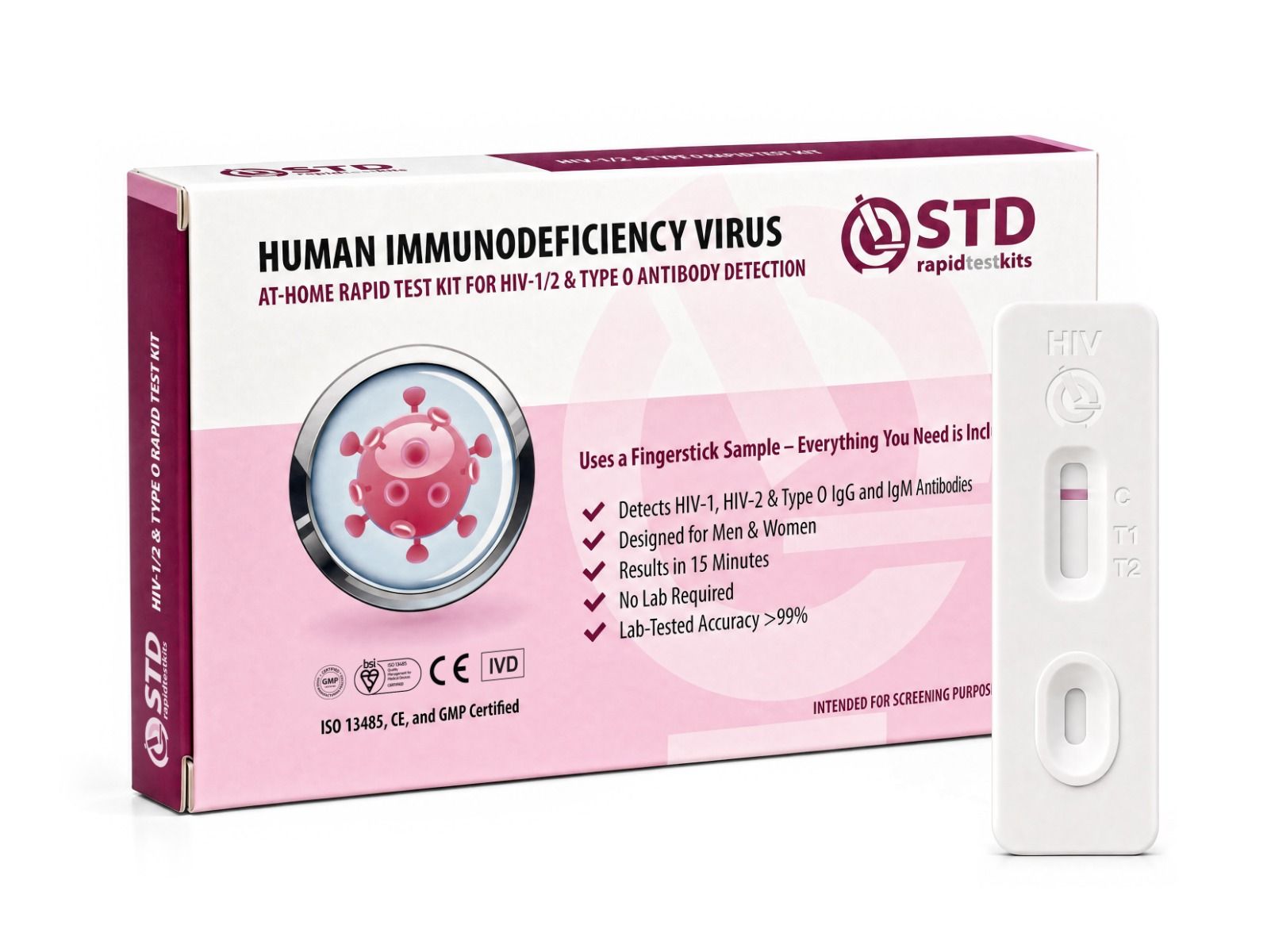
At-home rapid antibody tests are useful as private, fast screening. They are most reliable starting around 23 days after a possible exposure, with a small fraction of people not seroconverting until closer to 90 days. A negative result well inside the window period does not rule out infection: retest at 90 days to confirm. A positive result on a rapid test is treated as preliminary and should be confirmed with a laboratory antigen and antibody assay before starting treatment.
This article is published by stdrapidtestkits.com, which sells at-home HIV and STI testing kits. We recommend products based on fit-for-purpose for the reader's concern, not commercial benefit.
The bigger picture: why early testing changes everything
HIV that is found early and treated early is a manageable chronic condition. CD4 counts recover, viral load becomes undetectable, sexual transmission stops, life expectancy approaches that of the general population, and the cascade of opportunistic infections that defined AIDS in the 1980s and 1990s does not happen.
HIV that goes untested can sit silently for years while CD4 numbers fall and the virus continues to be transmissible. The first symptom may be an opportunistic infection arriving only after CD4 has already crossed below 200. Treatment at that point still works, but recovery is harder and the risk of long-term complications is higher.
If you've had a possible exposure, or it has been more than a year since your last test, the most useful next step is the simplest one: get tested. A rapid at-home antibody test gives you a preliminary answer in fifteen minutes, and a negative result outside the window period is reassurance you can act on. A reactive result is a starting point for treatment that, started promptly, prevents most of what this article describes.
What early testing buys you
- CD4 numbers recover as soon as ART suppresses viral replication, typically within months of starting treatment.
- Viral load reaches undetectable in three to six months on most modern regimens, at which point sexual transmission stops.
- Life expectancy on effective ART now approaches that of the general population when treatment starts at higher baseline CD4 counts.
Frequently asked questions
- What is the normal CD4 count?
- Adults without HIV typically have CD4 counts between 500 and 1,500 cells per cubic millimeter of blood. Numbers vary with age, time of day, recent vaccination, and recent infection, so a single number outside that range is less informative than the trend across multiple tests.
- How fast does CD4 count drop without treatment?
- Without treatment, most people lose around 50 to 100 CD4 cells per year, which means AIDS-range counts (under 200 cells/mm³) can arrive in as little as five to seven years for faster progressors. Others maintain higher counts for a decade or longer. Genetic factors and individual immune response account for much of the variation, but the trend is downward in nearly everyone who is not on ART.
- Can my CD4 count return to normal on ART?
- In most people who start ART before CD4 falls below 350, the count climbs back into the normal range within two to four years. Starting at lower baseline counts still works, but recovery is slower and sometimes incomplete. This is one of the strongest practical arguments for testing early rather than waiting for symptoms to appear.
- What does "undetectable equals untransmittable" (U=U) mean?
- Multiple large studies have shown that people with HIV who maintain an undetectable viral load on ART (under 50 copies per milliliter) do not transmit HIV through sex. Public-health agencies including the CDC have endorsed this as a clinical fact. U=U does not apply if someone misses doses or has not yet reached suppression, so consistency matters.
- Can an at-home antibody test detect early HIV infection?
- Antibody-only rapid tests, including most at-home kits, become reliable starting around 23 days after exposure for most people, with a small fraction not producing detectable antibodies until closer to 90 days. They are not designed to catch the very earliest acute infection. If an exposure was within the last few weeks and symptoms suggest acute infection, a clinic-based RNA or fourth-generation antigen and antibody test is more appropriate.
- Why does HIV persist even on treatment?
- HIV integrates its DNA into the chromosomes of long-lived resting memory CD4 cells, which form latent reservoirs. ART suppresses active replication but does not clear these reservoirs. If treatment stops, virus from the reservoir reactivates within weeks. Cure research is largely focused on emptying or silencing those reservoirs.
- Are HIV medications still hard on the body?
- Modern integrase-inhibitor-based regimens are far better tolerated than the medications used in the 1990s and early 2000s. Most people on first-line treatment today report only mild side effects: occasional nausea, headache, sleep changes, sometimes weight gain. Routine bloodwork checks for liver, kidney, and lipid effects so they can be addressed early.
- What is the role of co-receptors like CCR5 in HIV infection?
- HIV needs to bind both the CD4 receptor and a co-receptor (usually CCR5 in early infection, sometimes CXCR4 later) to enter a cell. People with two copies of the CCR5-delta32 deletion are highly resistant to HIV. CCR5 antagonists (like maraviroc) are an HIV drug class that blocks the co-receptor and prevents viral entry.

- U.S. Centers for Disease Control and Prevention. About HIV: stages of infection, AIDS-defining CD4 threshold, and clinical course.
- U.S. Centers for Disease Control and Prevention. HIV testing guidance, recommended frequency, and window-period explanation for the major test types (10 to 33, 18 to 45, and 23 to 90 days).
- U.S. Centers for Disease Control and Prevention. HIV Treatment: Undetectable equals Untransmittable (U=U) and recommendation that all people with HIV start treatment regardless of CD4 count.
- National Institutes of Health, HIVinfo. The Stages of HIV Infection fact sheet, including the under-200 cells/mm³ AIDS threshold and clinical course.
- National Institutes of Health, HIVinfo. HIV Life Cycle fact sheet covering the seven stages of viral replication and the corresponding antiretroviral drug classes.
- World Health Organization. HIV and AIDS fact sheet, including global epidemiology and tuberculosis as a common serious illness in people living with HIV.
