
Published: October 2025 | Last updated: May 2026 | Editorial review and quality control: Martina N.
How does HIV progress through its stages?
HIV moves through four clinical phases: acute infection (flu-like illness, 2 to 4 weeks after exposure), clinical latency (a decade or more with few symptoms), symptomatic HIV as immunity weakens, and AIDS, defined by a CD4 count under 200 cells/mm³ or an opportunistic illness. Started early, antiretroviral therapy halts progression and keeps a near-normal life expectancy.
HIV moves through four clinical stages, and each one feels different from the inside. Stage 1, acute infection, often arrives as a flu-like illness within a month of exposure. Stage 2, clinical latency, can run for a decade or longer with almost no symptoms. Stage 3 brings persistent illness as the immune system weakens. Stage 4 is AIDS, the most advanced stage. The four-stage model is best read as a clinical map of how untreated infection tends to progress, rather than a fixed schedule everyone follows: two people exposed on the same day can sit in different stages five years later, depending on how quickly each was diagnosed and treated.
The trajectory is not locked in either. With current antiretroviral therapy, people diagnosed and treated early keep the virus suppressed, often live a near-normal lifespan, and never move past stage 1 or 2 in any meaningful way. The framework still describes how untreated HIV travels through the body, but for most people on modern treatment the later stages are theoretical rather than lived. If you are reading this because of a recent worry, two sections below matter most: the 72-hour window for post-exposure prophylaxis (PEP), and when each test can detect infection.
Key Takeaways
- HIV usually moves through four stages over years, but modern antiretroviral therapy can halt progression at any stage and restore a near-normal life expectancy when it starts early.
- Most at-home rapid HIV tests detect antibodies and need 23 to 90 days after exposure for a reliable negative; lab fourth-generation antigen/antibody tests can flag infection from around 18 to 45 days, and a clinic RNA test from about 10 days.
If You May Have Been Exposed in the Last 72 Hours
Before the stage-by-stage detail, one action is genuinely time-critical. If a possible HIV exposure happened within the last 72 hours, the highest-impact step is asking about post-exposure prophylaxis (PEP) today, rather than waiting for any test result. Everything else in this article can wait a day; this cannot.
PEP is a 28-day course of antiretroviral medication that can stop HIV from establishing infection, but it only works when started within 72 hours of exposure, and sooner is better (ideally within 24 hours). Effectiveness drops with every hour of delay. Most emergency departments and many sexual health clinics provide it the same day, so hours matter more than which facility you choose.
Stage 1: Acute HIV Infection (2 to 4 Weeks After Exposure)
Acute HIV infection is the body's first detectable response to the virus. It usually begins 2 to 4 weeks after exposure and lasts a few weeks, though for some people the symptoms drag on for up to two months. The CDC notes that most people develop a flu-like illness within 2 to 4 weeks of exposure (CDC, About HIV). Older clinical writing called this an incubation period and assumed most cases were silent; the symptomatic picture is now understood to be more common.
The trouble is that the acute syndrome looks like a textbook viral illness. The same cluster of fever, sore throat, swollen glands, and rash shows up in influenza, mononucleosis, strep throat, and many other infections, so most people (and many clinicians on a brief visit) put it down to whatever is going around. What raises suspicion is the combination of a recent risk exposure plus this flu-like syndrome, especially when rash, mouth ulcers, or marked lymph node swelling appear together.
Catching it early matters, because viral load peaks during acute infection and transmission risk to partners is correspondingly high. Testing has a catch here: standard antibody-based rapid tests, including most at-home kits, can read falsely negative this early because the body has not yet produced detectable antibodies. If you suspect acute HIV after a known exposure, a clinic visit lets a provider pick a test type that matches your timeline, which the testing-window section below explains.
Symptoms of Acute (Early) HIV Infection
These overlap with many viral illnesses. Having them after a risk exposure is a reason to test, not a diagnosis on its own.
- Fever and chills Common
- Sore throat Common
- Fatigue and body aches Common
- Swollen lymph nodes in the neck, armpits, or groin Common
- Headache Common
- Measles-like rash on the trunk Less common
- Mouth ulcers or sores Less common
- Diarrhea or drenching night sweats Less common
Stage 2: Clinical Latency (Months to Decades)
After the acute phase settles, HIV enters clinical latency, also called the asymptomatic stage or chronic HIV. The virus keeps replicating in lymph tissue at a lower rate, the immune system reaches an uneasy truce, CD4 T-cells decline slowly, and most people feel well. Without treatment, this phase can last a decade or longer, according to the CDC's HIV overview, though the range is wide: some people progress in 2 to 3 years, others stay in latency for 15 or 20. The UK National Health Service notes that without effective treatment HIV gradually weakens the immune system until it can no longer fight infection.
Latency is invisible without testing. Many people learn their status years into this stage, usually through routine screening rather than symptoms. The most consistent physical sign is persistent generalized lymphadenopathy, swollen lymph nodes lasting more than three months in two or more non-adjacent sites, and even that is easy to overlook. A yearly at-home antibody test is how most latency-stage infections get caught.
Starting antiretroviral therapy (ART) during latency is the single most impactful step in HIV care. Within roughly 3 to 6 months of consistent ART, most people reach viral suppression, with HIV RNA below 200 copies per milliliter of blood. At that point the U=U principle applies and the person cannot sexually transmit HIV, a finding from the PARTNER and HPTN 052 studies that is now standard CDC messaging. Latency does not mean the infection is stable or fading on its own; untreated, it is silent damage that continues until stage 3 makes itself felt.
People with HIV who reach and keep an undetectable viral load on consistent antiretroviral therapy have effectively zero risk of sexually transmitting the virus to a partner. The PARTNER and HPTN 052 studies established this, and it is now standard CDC and WHO messaging. U=U covers sexual transmission; shared needles, pregnancy, and breastfeeding still call for separate precautions.
Stage 3: Symptomatic HIV Disease
As CD4 counts fall below 500 cells/mm³ and the immune system loses its spare capacity, latency gives way to symptomatic disease. Staging systems draw the line slightly differently (the WHO clinical system places the shift between its stages 2 and 3, while the CDC's CD4-based system labels it differently), but the lived experience is similar: infections you would once have shrugged off start lingering, recurring, or appearing in unusual forms.
Older literature called this the AIDS-related complex, a term clinicians have retired, though the signal it carried still holds. The immune system is no longer fully compensating, and progression to AIDS is months to a few years away without treatment. Starting ART here still reverses many symptoms over weeks to months; how far the CD4 count has dropped sets how long recovery takes. Stage 3 is where the cost of untreated HIV stops being invisible, and every further month off treatment means more lost immune capacity.
Common findings during symptomatic HIV include:
- Persistent oral thrush (candida in the mouth)
- Oral hairy leukoplakia, white corrugated patches on the side of the tongue
- Recurrent shingles (herpes zoster) outbreaks
- Recurrent vaginal yeast infections and fungal nail infections
- Prolonged unexplained diarrhea
- More than 10 percent unintentional weight loss
- Persistent fevers and night sweats lasting weeks
- Bacterial pneumonia or pulmonary tuberculosis
Stage 4: AIDS (Acquired Immunodeficiency Syndrome)
AIDS is defined by either of two criteria from the CDC: a CD4 count below 200 cells per cubic millimeter, or an AIDS-defining opportunistic illness at any CD4 count. Without treatment, median survival after an AIDS diagnosis is roughly 1 to 3 years, varying with which infections occur and how fast they are treated.
Even at this stage, ART changes the outlook. People who present in advanced AIDS can recover meaningfully; CD4 counts often climb back above 200 within 3 to 12 months of effective therapy, and many opportunistic infections clear with the right antimicrobial treatment alongside immune recovery. Care is more complex here, often combining treatment for an active infection with ART, timed to avoid immune reconstitution inflammatory syndrome (IRIS), where a recovering immune system overreacts to a now-exposed pathogen. Preventive medication against further opportunistic infections becomes part of daily life too.
The severe-wasting image of late-stage AIDS from the 1980s and 1990s is now uncommon wherever ART is widely available. The WHO's HIV fact sheet reports that most people diagnosed with HIV worldwide are now on antiretroviral therapy, and recent annual AIDS-related deaths are estimated at around 630,000, down sharply over two decades. AIDS today occurs mostly among people who do not know their status, cannot reach ART, or have stopped treatment because of side effects, cost, or stigma.
AIDS-defining illnesses recognized by the CDC include:
- Pneumocystis jirovecii pneumonia (PCP)
- Kaposi sarcoma
- Esophageal candidiasis
- Cryptococcal meningitis
- Cytomegalovirus (CMV) retinitis
- Disseminated Mycobacterium avium complex (MAC)
- Central nervous system lymphoma
- Toxoplasmosis of the brain
- Tuberculosis at any site, and HIV-associated wasting syndrome
Either criterion alone establishes a Stage 4 (AIDS) diagnosis: a CD4 count below 200 cells/mm³, or any AIDS-defining illness regardless of CD4 count.
How CD4 Count and Viral Load Track Each Stage
Two lab values do most of the work in tracking HIV stage and treatment response: CD4 cell count and viral load. Both come from a standard blood draw, usually every 3 to 6 months once someone is settled on treatment.
CD4 cells, also called T-helper cells, are the immune coordinators HIV targets directly (we cover this in depth in how HIV weakens the immune system). A healthy adult carries roughly 500 to 1,500 of them per cubic millimeter of blood, and the count falls as HIV depletes them. The trend matters more than any single reading, because counts swing with concurrent infection, stress, vaccination, and ordinary lab variation; two readings six months apart say more than one snapshot.
Viral load measures how many copies of HIV RNA circulate per milliliter of blood. Untreated, it can run from a few thousand to several million copies. ART aims to push it below 200 copies per mL, the usual threshold for undetectable in US labs, and ideally below 50 on more sensitive assays. Suppression typically takes 3 to 6 months of consistent therapy, and holding it there depends on near-daily adherence, since missed doses risk a rebound and drug-resistant virus.
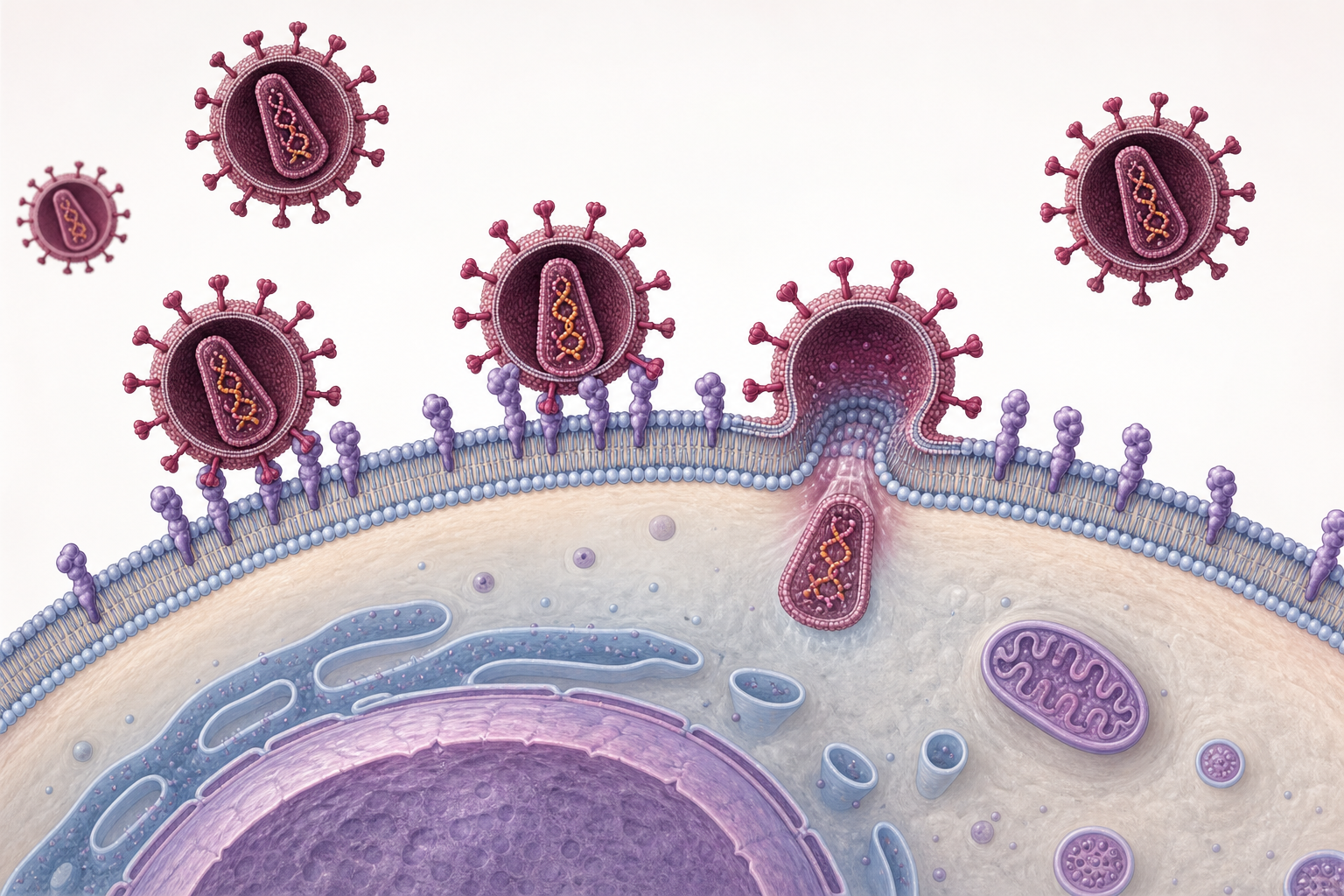
The Four Stages at a Glance
The table below sets the four stages side by side with the CD4 ranges, the untreated viral-load pattern, and the signs that tend to go with each. Real cases blur at the edges, and treatment can hold someone in an early stage indefinitely, so read it as orientation rather than a strict ladder.
| Stage | Typical CD4 (cells/mm³) | Viral load (untreated) | Common signs |
|---|---|---|---|
| Acute HIV (2 to 4 weeks) | Often still 500+ | Very high (often millions of copies/mL) | Flu-like illness, fever, rash, swollen lymph nodes |
| Clinical latency | 350 to 500+ | Lower, but still detectable | Few or none; possibly persistent lymphadenopathy |
| Symptomatic HIV | 200 to 499 | Rising over time | Thrush, shingles, weight loss, recurrent infections |
| AIDS (Stage 4) | Below 200 | High | AIDS-defining opportunistic infections or cancers |
When Each HIV Test Can Detect Infection
The stages above describe what happens in the body. The testing window describes when a test can first see the infection, and confusing the two is the most common mistake after a worried exposure. A test taken before its window opens can miss an early infection even while viral load is high, because antibody levels may not have climbed enough yet for the test to register them.
Three test categories cover most situations, summarized in the chart below and drawn from the CDC's HIV testing guidance. The practical rule is to match the test to the time since exposure. A rapid antibody home test at four weeks can read negative even when HIV is present; the same test at three months is reliable. If three months feels too long, a fourth-generation lab test at six weeks gives most of the answer sooner, and a clinic RNA test can flag infection within two to four weeks. For routine screening with no specific exposure, an annual home test suits most sexually active adults, while people with multiple partners, men who have sex with men, and people who inject drugs may prefer every 3 to 6 months. Our guide to testing for HIV at home covers accuracy and timing in more detail.
Why Early Detection Changes Every Stage
The biggest single predictor of long-term outcome with HIV is how early ART begins. People who start at higher CD4 counts (above 500 cells/mm³) carry lower lifetime risk of cardiovascular disease, kidney disease, certain cancers, and AIDS-defining illness than those who start late. The international START trial, published in 2015, showed that starting ART immediately rather than waiting substantially cut the risk of serious illness or death, and the current standard from the CDC, WHO, and NIH is to begin treatment as soon as HIV is diagnosed (NIH HIVinfo), on the day where possible.
Routine screening matters precisely because latency is silent for years. The CDC recommends that everyone aged 13 to 64 test at least once as part of routine care, with more frequent testing for higher-risk groups. According to CDC surveillance information, male-to-male sexual contact accounts for the largest share of new HIV diagnoses in the United States, with smaller shares from heterosexual contact and injection drug use.
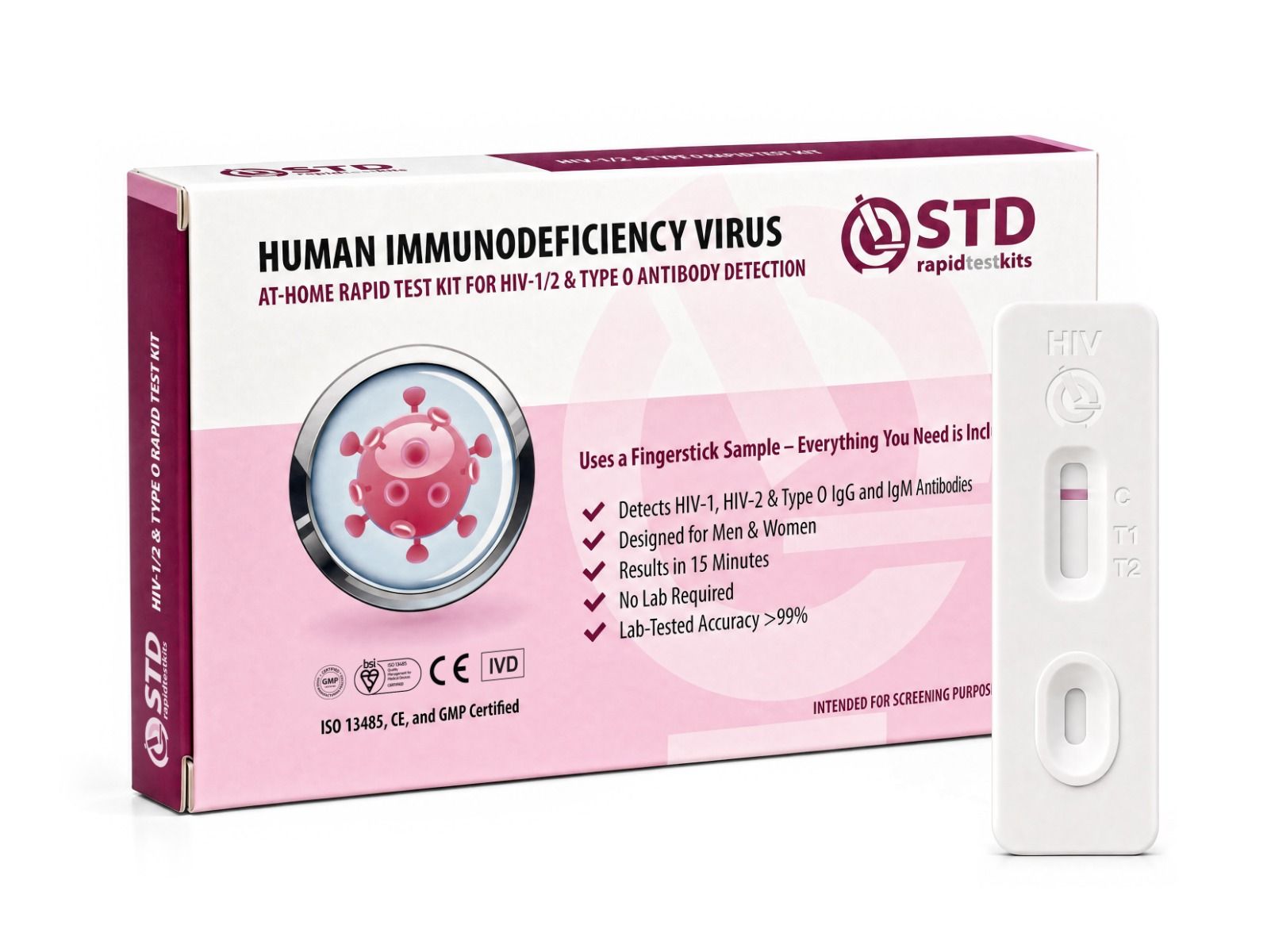
At-home rapid tests fit into this picture alongside clinic and lab testing. FDA-cleared fingerstick HIV kits report sensitivity in the high 90s and specificity above 99 percent when used after the window period, with the specific figures listed on the HIV home test product page. Two caveats are worth repeating: a reactive home result needs lab confirmation, and a negative inside the window needs a repeat once enough time has passed.
With proper medical care, HIV can be controlled. People with HIV who get effective HIV treatment can live long, healthy lives and protect their partners.
Pediatric HIV: How the Stages Differ in Children
HIV in children under 15 runs on different timelines and uses adapted staging. Untreated, HIV acquired around birth (during pregnancy, delivery, or breastfeeding) progresses faster than HIV acquired in adulthood, and a substantial share of untreated infants develop severe immune suppression in the first year or two of life.
Modern care has changed this picture dramatically. WHO and CDC guidance is for every pregnant woman living with HIV to take ART through pregnancy and breastfeeding, and for HIV-exposed infants to receive preventive antiretrovirals within hours of birth. With that approach, mother-to-child transmission drops below 1 percent in well-resourced settings. Pediatric staging also adjusts CD4 thresholds for age, since young children naturally run higher counts, and often relies on CD4 percentage rather than the absolute number.
Diagnosing HIV in babies under 18 months needs HIV DNA or RNA (molecular) testing, not an antibody test. A mother's antibodies cross the placenta and can make an antibody test read positive in an uninfected child, so molecular testing is the only reliable way to confirm or rule out infection at this age.
Common Myths About HIV, Cleared Up
Several HIV myths have outlived the science that should have ended them. Five are worth correcting directly.
Five Common Myths About HIV
Myth: An HIV diagnosis is a death sentence.
Fact: With modern ART, people diagnosed today and treated promptly have a life expectancy approaching that of HIV-negative peers. The drop in mortality since the 1990s is one of the largest in modern medicine.
Myth: HIV can spread through casual contact.
Fact: It does not pass through handshakes, hugs, shared utensils, toilet seats, coughing, sneezing, or insect bites. Transmission needs infected body fluids (blood, semen, vaginal or rectal fluids, breast milk) reaching a mucous membrane or broken skin, or shared needles.
Myth: Only certain groups are at risk.
Fact: Some groups carry higher prevalence in CDC surveillance, and Black and Latino communities are disproportionately affected in the US, but the routes (sexual contact, shared needles, parent-to-child) are not limited by demographic group. HIV can affect anyone.
Myth: You can tell who has HIV by looking.
Fact: Clinical latency has nothing to see; people can feel completely well for years. A test is the only reliable way to know someone's status.
Myth: At-home HIV tests are not reliable.
Fact: FDA-cleared at-home rapid HIV tests are accurate screening tools when used after the window period; the published sensitivity and specificity figures appear earlier in this guide. The most common cause of a false negative is testing too early, not the test itself. Always confirm a reactive result with a lab test.
What to Do After a Possible Exposure
If a possible exposure worries you, the useful actions split by timing. Within 72 hours, the priority is PEP, the 28-day antiretroviral course described above; reach a clinic, urgent care, or emergency department rather than waiting on a test. Past 72 hours, the focus shifts to timing your test to the right window, and, if exposures are likely to keep happening, to prevention.
For ongoing risk rather than a one-off worry, pre-exposure prophylaxis (PrEP) is a daily pill or an injection given every two months. Taken as prescribed, PrEP greatly reduces the chance of getting HIV from sex, per the CDC's PrEP guidance, and it is available through primary care, sexual health clinics, and telehealth. If one exposure raised more than one concern, broad at-home STI test kits can screen for several infections at once. This guide is published by stdrapidtestkits.com, which sells at-home STI testing kits; we suggest tests by how well they fit the reader's concern, not by commercial benefit, and any confirmed diagnosis should be managed with a licensed clinician.
What Should You Do After a Possible Exposure?
Was the possible exposure within the last 72 hours?
Yes: Ask about PEP today at a clinic, urgent care, or emergency department, before any testing. Hours matter more than the choice of facility.
Was the exposure more than 72 hours ago?
Yes: Time your test to the window: an at-home antibody test from about day 23 (repeated at 90 days for a definitive negative), or a fourth-generation lab test at about six weeks.
No specific exposure, just due for a check?
Yes: Add an annual at-home HIV test to your routine, and test every 3 to 6 months if you have multiple partners or other risk factors.
No: If none of these fit your situation, ask a clinician for a testing schedule that matches your risk.
Guidance only; a healthcare provider can advise based on your specific situation.

Frequently Asked Questions About HIV Stages
- How long does each stage of HIV typically last?
- Acute HIV usually appears 2 to 4 weeks after exposure and clears within a few weeks. Untreated, clinical latency can run a decade or longer before advancing toward AIDS, though some people progress faster and others much slower. The symptomatic stage before AIDS can last months to a few years. With antiretroviral therapy started early, latency can extend indefinitely and most people never reach AIDS.
- Can HIV stages be reversed with treatment?
- Partly. Antiretroviral therapy suppresses the virus to undetectable levels and stops further immune damage, but it does not clear HIV from the body. Even at AIDS, starting ART can rebuild the immune system enough to push CD4 counts back above 200 and resolve many opportunistic infections, though some damage from advanced disease can persist.
- What tests confirm which stage of HIV someone is in?
- Stage comes mostly from the CD4 cell count and clinical history rather than the HIV test itself. CDC staging uses CD4 thresholds, with a count below 200 cells/mm³ defining AIDS, while viral load shows how active the virus is. Confirming HIV status takes a positive antibody or antigen test followed by a confirmatory test.
- How accurate are at-home rapid HIV tests?
- Confirm any reactive home result with a clinic or lab test; the home rapid kit is a reliable screener, not a final diagnosis. Used after the window period, FDA-cleared fingerstick kits perform within the accuracy range noted earlier in this guide. The most common reason for a false negative is testing too early, not a flaw in the test itself.
- What is the window period for HIV testing?
- The test type sets the clock. Nucleic acid (RNA) tests detect HIV from about day 10, fourth-generation lab antigen/antibody tests from about day 18, and at-home antibody kits become reliable from about day 23. A repeat test at 90 days confirms a definitive negative for home antibody tests.
- Can HIV be transmitted during the latency stage?
- Yes. People in clinical latency are still infectious, because the virus keeps replicating at low levels even without symptoms. Viral load is the deciding factor: people on ART with sustained suppression cannot sexually transmit HIV, the U=U principle established by the PARTNER and HPTN 052 studies.
- What does "undetectable equals untransmittable" mean?
- It refers to reaching and keeping an undetectable viral load on consistent ART, the standard established by the PARTNER and HPTN 052 trials. At that level, the risk of sexual transmission to a partner is effectively zero. Reaching it usually takes 3 to 6 months of therapy, and holding it depends on near-daily adherence. U=U covers sexual transmission only; shared-needle and pregnancy routes still need separate precautions.
- Does HIV always progress to AIDS?
- No. With antiretroviral therapy started at any earlier stage, the vast majority of people with HIV never develop AIDS, because sustained viral suppression prevents the immune damage that drives progression. Without any treatment, the natural course does tend to move through all four stages over years to decades.
- U.S. Centers for Disease Control and Prevention. About HIV: stages of HIV by CD4 count, how untreated latency can last a decade or longer, transmission, symptoms, and the AIDS definition (CD4 below 200 cells/mm³).
- U.S. Centers for Disease Control and Prevention. HIV testing overview, test types, and window periods (23 to 90 days for antibody tests, 18 to 45 days for fourth-generation tests, 10 to 33 days for NAT).
- U.S. Centers for Disease Control and Prevention. HIV treatment, antiretroviral therapy, and the Undetectable equals Untransmittable (U=U) consensus.
- World Health Organization. HIV/AIDS fact sheet covering ART coverage, recent annual AIDS-related deaths of roughly 630,000, and clinical staging criteria for stages 1 through 4.
- U.K. National Health Service. HIV and AIDS information for the general public, including symptoms, how untreated HIV damages the immune system, treatment, and what U=U means.
- U.S. National Institutes of Health, HIVinfo. HIV treatment guidance, including the standard of starting antiretroviral therapy at diagnosis and the evidence behind early treatment.
