
Published: October 2025 | Last updated: May 2026 | Editorial review and quality control: Martina N.
The two groups carrying the heaviest share of new sexually transmitted infections in the United States look nothing alike. One has barely started having sex. The other has been sexually active for decades. Yet on every recent CDC surveillance report, adolescents aged 15 to 24 and adults over 55 keep showing up as the populations testing the least relative to how often they need to.
The drivers are different in each group, and the fixes are different too. This article walks through what current data actually says, the specific behavioral and biological reasons each group is exposed, what CDC testing intervals look like at each age, and the practical steps that close the testing gap.
Key takeaways
- Youth aged 15 to 24 make up roughly a quarter of the sexually active population but account for about half of the 20 million new STIs reported in the United States each year (CDC NPIN).
- Reported chlamydia, gonorrhea, and syphilis rates among U.S. adults aged 55 and older have more than doubled over the past 10 years, with the steepest climb in syphilis and gonorrhea.
The two-age-group pattern, in plain numbers
Provisional 2024 CDC surveillance counts more than 2.2 million reported cases of chlamydia, gonorrhea, and syphilis combined, a 9 percent decline from 2023 and the third consecutive annual decrease for the combined total (CDC STI Statistics annual reports).
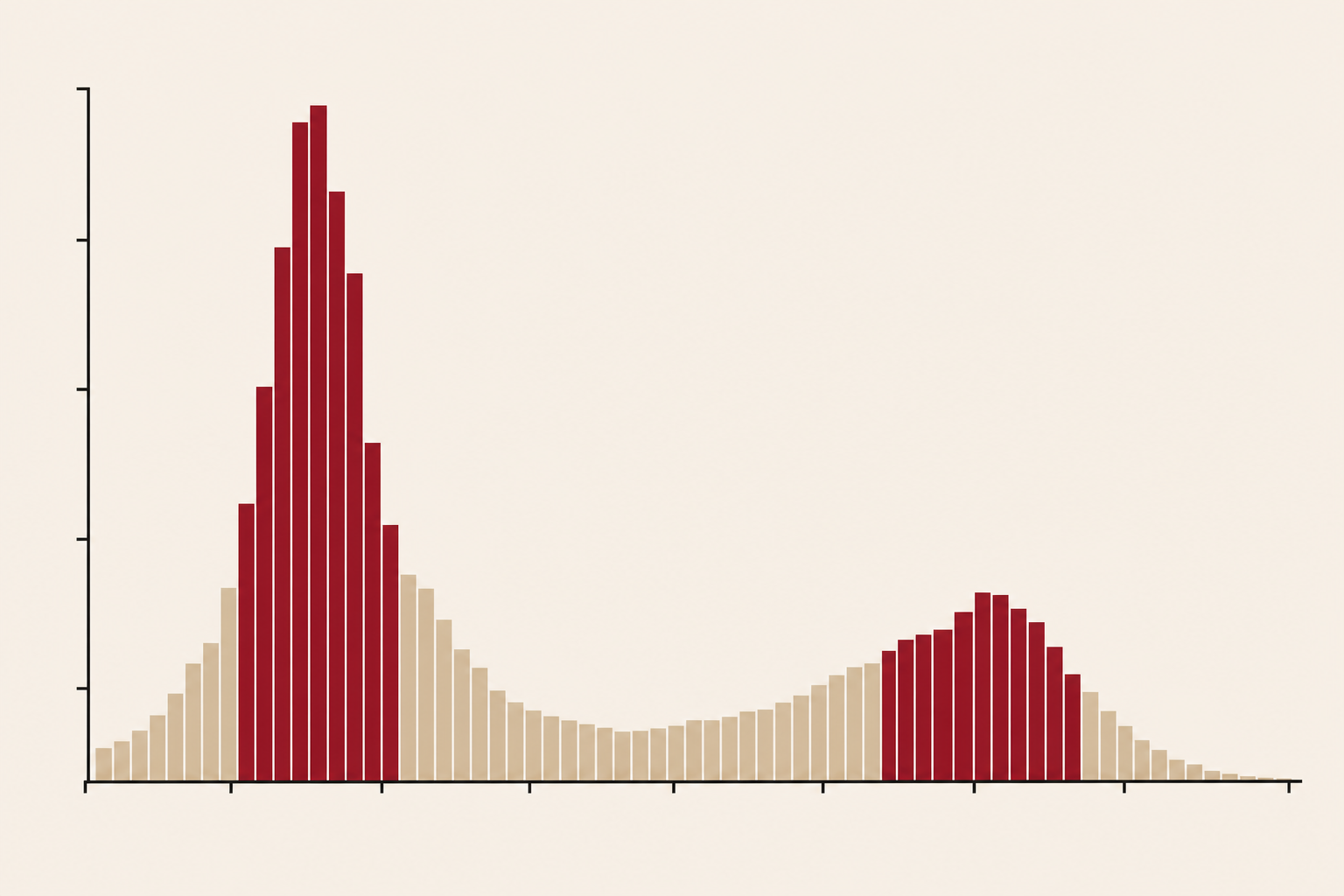
About half of new STIs in any given year fall on people aged 15 to 24, even though that group is only about 25 percent of the sexually active population (CDC NPIN, Sexually Transmitted Infections Among Young Americans). At the other end of the age curve, CDC surveillance data from the mid-2010s through 2019 shows reported gonorrhea rates in adults aged 55 to 64 roughly tripling, and reported chlamydia, gonorrhea, and syphilis among adults 55 and older have more than doubled over the past decade (CDC STI Statistics).
Those two patterns are the reason this article exists. Two demographic groups that almost never get talked about in the same sentence are quietly running the highest infection rates in the country.
Why adolescents and young adults carry such a big share
The reasons cluster into four areas: biology, behavior, education gaps, and access to confidential testing. Each is fixable, but each tends to be addressed in isolation, which is part of why the curve has been so stubborn for decades.
Biology favors infection in younger women
The cervix in younger women has a larger zone of immature columnar epithelium called cervical ectopy, a patch of more fragile lining tissue that is more easily infected than the tougher cell layer that matures with age. That tissue is more vulnerable to chlamydia and gonorrhea than the mature squamous tissue that develops later. The CDC's STI Surveillance reports have documented this biological vulnerability for years, which is part of why young women show the highest reported chlamydia rates of any age group in the country.
Sex education is unevenly delivered
What an American teenager learns about STIs depends almost entirely on which state and which school district they're in. Some receive comprehensive instruction covering condoms, consent, vaccination, and testing. Others get abstinence-focused programs that omit most practical guidance on prevention. The result is a generation entering sexual activity with very uneven baseline knowledge of what to do and when.
Behavioral patterns add to exposure
The CDC's Youth Risk Behavior Survey tracks sexual-activity indicators in U.S. high-school students every two years, including current sexual activity, number of recent partners, and condom use at last sexual intercourse (CDC Youth Risk Behavior Surveillance System). The most recent YRBS reports document a long-running decline in condom use at last sexual intercourse among sexually active high-school students compared to a decade ago, even as overall sexual activity rates in that group have also dropped.
Confidential testing is hard to reach
Confidentiality is the single biggest hidden barrier. A teen who is worried that a test will show up on a parent's insurance explanation of benefits often doesn't get tested at all. Title X-funded clinics, school-based health centers, and many county public health departments offer free or confidential testing, but coverage is patchy and many young people don't know these options exist.
Stigma keeps the conversation off the table
Asking a primary-care doctor about STIs is one of the most uncomfortable conversations many young people will ever have. Avoiding the conversation usually means avoiding the test, which is how silent infections turn into long-term complications years later.
Youth ages 15-24 make up just more than 25 percent of the sexually active population but account for half of the 20 million new STIs that occur in the United States each year.
Why STI rates in adults 55+ have more than doubled
The fastest-growing age group for new STI diagnoses is people who came of age before testing was routine and before condoms were considered necessary outside of pregnancy prevention. Several factors are driving the climb at once, and they reinforce each other.
Longer healthy lifespans and supportive medication
Better cardiovascular care, hormone treatments, and medications for erectile function mean millions of adults are sexually active well into their 60s, 70s, and beyond. The behavior itself is healthy. What the surveillance numbers reflect is the unprotected version of that behavior.
Condom use was never standard in this cohort
Most adults over 55 grew up in an era when contraception, not STI prevention, was the primary reason to use a condom. Once pregnancy risk dropped after menopause, condom use largely stopped. CDC surveillance shows the consequences clearly in the numbers: rates of reported chlamydia, gonorrhea, and syphilis in adults 55 and older have more than doubled over the past decade (CDC STI Statistics).
Dating apps put more new partners in play
A growing share of sex among older adults happens between partners who met online and have not yet had a frank conversation about testing status or recent exposures. The conversation often gets skipped because partners assume it doesn't apply at their age. The infectious-disease consequences are real and showing up in the data.
Primary care rarely raises the topic
Providers are far more likely to ask a 22-year-old about sexual partners than a 67-year-old, even though the older patient may have more recent unprotected exposures. The result is an age group that almost never gets routine STI screening unless they raise it first, which they almost never do.
Mucosal and immune changes raise vulnerability
Postmenopausal vaginal tissue is thinner and more prone to small abrasions during sex, which raises HIV and HSV transmission efficiency. Older adults also live with more chronic conditions and take more medications that can blunt immune response, both of which matter for infections like syphilis and HIV.
The five drivers above act together, not separately. A 62-year-old meeting partners on a dating app, with no condom habit from earlier life, no provider raising the topic at the annual physical, and postmenopausal mucosal changes that make some infections transmit more efficiently, is exactly the profile CDC surveillance is now picking up at scale.
Which infections show up in each group
The two age curves are different in volume, and they also cluster around different infections. The dominant trio at each end of the age curve is summarized in the table below.
For people aged 15 to 24, chlamydia alone accounts for a large share of reported new cases. HPV is so common in the early sexually active years that it is one of the strongest arguments for ACIP-recommended vaccination through age 26, with shared clinical decision-making available through age 45 (CDC STI hub).
For adults 55 and older, the headline shifts toward syphilis and gonorrhea, with HIV diagnoses also climbing. Syphilis is the single largest percentage increase across the senior cohort. Because primary syphilis can present as a single painless sore that heals on its own, it is easy to miss. Untreated syphilis in older adults can progress to neurosyphilis, which is much harder to reverse than early-stage syphilis.
One pattern holds across both age groups. Most STIs cause no symptoms at all in their early stages. Routine testing finds infections before symptoms appear, and that timing is what protects fertility, partners, and long-term organ health.
| Age group | Most commonly reported infections | Notes |
|---|---|---|
| 15 to 24 | Chlamydia, gonorrhea, HPV | Highest reported chlamydia rates of any age band. HPV vaccination remains the single highest-impact prevention tool. |
| 55 and older | Syphilis, gonorrhea, HIV | Fastest-rising group for reported syphilis. Routine screening is rarely offered, so symptomatic presentation is the common entry point. |
Why are teens and seniors at higher risk for STIs than middle-aged adults?
For teens the mix is biology (more vulnerable cervical tissue in younger women), inconsistent sex education, low confidential access to testing, and falling condom use. For older adults the drivers are decades of low condom use combined with longer sexually active lifespans, more dating-app partners, mucosal changes after menopause, and primary-care providers who rarely raise the topic. Both groups end up undertested because clinical systems are built around middle-aged exposure patterns, not theirs.
What CDC actually recommends for testing at each age
One reason so many infections go undetected is that people don't know what regular testing means at their age. The CDC's screening recommendations are specific to age, sex, and exposure pattern, summarized in the table below.
The most common gap is the over-50 group. CDC recommends HIV testing at least once for everyone aged 13 to 64, but in practice many providers treat that one-time test as a checkbox and never repeat it. With the rise in late-life dating and casual partners, the practical rule is broader: any new partner, in any decade of life, is a reason to test.
| Group | Infections | CDC-recommended testing interval |
|---|---|---|
| Sexually active women under 25 | Chlamydia and gonorrhea | At least annually |
| Women 25+ with risk factors (new partner, multiple partners) | Chlamydia and gonorrhea | At least annually |
| Men who have sex with men | Chlamydia, gonorrhea, syphilis, HIV | At least annually; every 3 to 6 months with multiple partners |
| Pregnant people | HIV, syphilis, chlamydia, hepatitis B | First prenatal visit; repeat in third trimester if at risk |
| All adults aged 13 to 64 | HIV | At least once as routine screening |
| Older adults with new sexual partners | Full STI panel including syphilis and HIV | At each partner change; otherwise as risk dictates |
Closing the testing gap for teens and young adults
The most practical change is the easiest to state: use confidential testing options. In every U.S. state, minors can consent to their own STI testing, though billing and explanation-of-benefits rules vary. Title X-funded clinics, school-based health centers, and county public health departments routinely handle confidentiality. The CDC's GetTested locator at gettested.cdc.gov surfaces local options. Many of these clinics offer free or sliding-scale fees, and they do not contact parents in the great majority of states.
Use at-home rapid kits when clinic friction is the blocker. For a young adult who doesn't want to make a clinic appointment, a self-collected swab and fingerstick blood sample remove the most common friction point. Lateral-flow rapid tests are screening tools, not lab NAATs. They are useful after the correct window period to flag likely infections, and a positive home result should be followed by a clinic visit to confirm and start treatment.
Get vaccinated against HPV. The HPV vaccine is the single highest-impact prevention tool available to anyone under 26 and is the reason cervical-cancer rates in vaccinated cohorts are dropping sharply. Shared clinical decision-making allows vaccination through age 45 for adults who weren't covered earlier (CDC).

Closing the testing gap for adults over 55
The behavioral changes here are simpler than people expect, and they mirror what works at every other age.
Treat every new partner as a reason to test. The biggest single change is reframing testing from something young people do to something everyone does before a new sexual relationship. A typical rapid panel covers a fingerstick blood test for HIV, syphilis, hepatitis B, and hepatitis C, plus a self-swab for chlamydia and gonorrhea where applicable.
Use condoms outside long-established monogamous relationships. Pregnancy prevention was the historical reason. STI protection is the same calculation now as it was at 22.
Bring it up at the annual physical. Older adults usually wait for the provider to ask. The provider rarely does. A two-sentence opening at the start of a physical changes the dynamic and gets the screen on the order set.
Use telemedicine and at-home kits when mobility is a barrier. Both options solve the logistics problem for adults with limited transportation or with concerns about being recognized at a local clinic. The fingerstick blood-test technology used in at-home kits is the same chemistry used in donor screening for decades.
The myths that keep both age groups from testing
The same beliefs show up in clinic intake forms and helpline calls from both populations, with different wording. The table below pairs the most common ones with what current public-health guidance actually says.
| Common belief | What current guidance says |
|---|---|
| "I'd know if I had an STI" | Most STIs cause no symptoms in their early stages. Chlamydia is silent in roughly 70 percent of women and 50 percent of men. Primary syphilis can present as a single sore that heals on its own and is easily missed. |
| "STI testing is invasive or painful" | Most modern tests are a fingerstick of blood or a self-collected swab. Urine collection is also common in clinics. Throat and rectal swabs exist but are only used when clinically indicated. |
| "I'm in a committed relationship, so I'm safe" | Many STIs can be present from a previous partner and only become apparent during a flare or a routine screen. Baseline testing at the start of a relationship is sensible at any age. |
| "I'm too old to catch an STI" | Older adults can and do catch every STI that younger adults catch. Postmenopausal tissue changes can raise transmission efficiency for some infections. |
| "I don't need a condom now that pregnancy isn't possible" | Condoms reduce transmission of HIV, gonorrhea, chlamydia, and to a lesser extent syphilis, HSV, and HPV. The pregnancy calculation changes at menopause. The infection calculation does not. |
Common questions
- Why do teenagers have higher STI rates than middle-aged adults?
- About half of all new U.S. STIs fall on people aged 15 to 24, a share driven by three compounding factors: more biologically vulnerable cervical tissue in younger women, patchy state-by-state sex education, and limited access to confidential testing without parental involvement. Falling condom-use rates documented in the CDC's Youth Risk Behavior Survey add to the exposure picture.
- Are STI rates really rising in older adults?
- Yes, and the trend is well documented in CDC surveillance. The combined chlamydia, gonorrhea, and syphilis rate among Americans 55 and older has more than doubled over the past decade, with reported syphilis showing the single largest percentage increase. The pattern reflects a generation meeting new partners later in life without a strong baseline of condom use.
- What is the most common STI for teens?
- Chlamydia, by a wide margin. Gonorrhea is second. HPV is the most prevalent infection overall but most cases clear without ever being diagnosed. The HPV vaccine remains the highest-impact prevention tool for anyone under 26.
- What is the most common STI for adults over 55?
- Reported syphilis cases are climbing fastest in the 55+ group. Gonorrhea is also rising, and new HIV diagnoses among older adults have increased. Chlamydia is less commonly diagnosed in this band, partly because routine annual chlamydia screening is not recommended for older adults the way it is for women under 25.
- How often should an older adult get tested for STIs?
- The practical rule is any new sexual partner is a reason to test, in any decade of life. The CDC recommends a one-time HIV test for everyone aged 13 to 64 as a baseline, plus repeat testing whenever risk factors apply. Common risk factors after 55 include new partners, dating-app partners, and condomless sex.
- Can teenagers get tested without their parents knowing?
- In every U.S. state minors can consent to their own STI testing, though billing and explanation-of-benefits rules vary. Title X-funded clinics, school-based health centers, and county public health departments handle confidentiality routinely. Privately purchased home rapid tests are another option that bypass insurance entirely.
- Are at-home STI test kits accurate enough to rely on?
- At-home rapid lateral-flow tests are useful for screening when used after the correct window period. They are not the same technology as a lab NAAT, which has higher analytical sensitivity, especially in asymptomatic infections. A positive home result should be confirmed by a clinic, and a negative result early after exposure should be repeated after the appropriate window for that infection.
- Do condoms still matter after menopause?
- Yes. Condoms reduce transmission of HIV, gonorrhea, chlamydia, and to a lesser extent syphilis, HSV, and HPV. Menopause changes the pregnancy calculation, not the infection one. Postmenopausal vaginal tissue can transmit some STIs more efficiently than premenopausal tissue.
- U.S. Centers for Disease Control and Prevention. National 2024 provisional STI surveillance data release. Reference for the 2.2 million combined-case figure and the year-over-year decline narrative.
- CDC STI Statistics annual reports landing page. Source for the third consecutive annual decrease in the combined chlamydia, gonorrhea, and syphilis total, and for the multi-year trend in adults 55 and older.
- CDC National Prevention Information Network. Sexually Transmitted Infections Among Young Americans fact sheet. Source for the 15-24 year olds accounting for half of new STIs figure cited throughout the article.
- CDC Youth Risk Behavior Surveillance System. Source for adolescent sexual-activity, partner-count, and condom-use trend data referenced in the behavioral-patterns section.
- CDC Sexually Transmitted Infections information hub. Reference for current testing guidance, population-specific screening recommendations, and HPV vaccination age ranges.
- World Health Organization. Sexually transmitted infections fact sheet. Reference for global context on rising STI rates, screening guidance, and the role of vaccination in prevention.
