How Accurate Are At-Home STD Test Kits, Really?
At-home STI test kits have come a long way since the first generation appeared in pharmacies. Modern lateral-flow cassettes deliver results in about 15 minutes using the same chemistry as clinical strip tests. But accuracy depends on more than the brand on the box: the infection you are testing for, the timing relative to exposure, and how you collect the sample all change your odds. Here is what the published data shows.
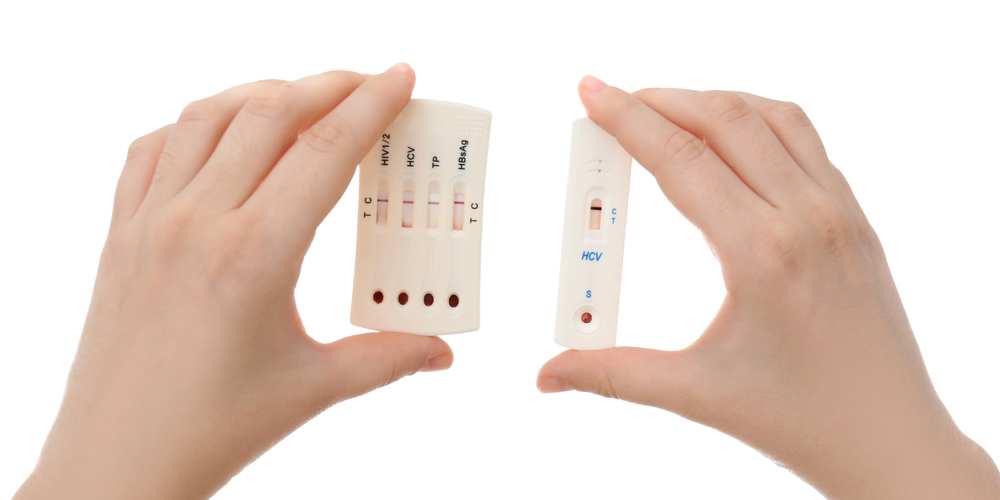



- Reputable at-home rapid STI tests deliver lab-comparable specificity (over 99% in most cases) and sensitivity in the mid-to-high 90s, but only if you wait the correct window period before testing.
- A negative at-home rapid result is screening reassurance, not a clean lab NAAT panel. Confirm any positive at a clinic, and pair any negative with persistent symptoms with a clinician-administered NAAT.
Published: October 2025 | Last updated: May 2026 | Editorial review and quality control: Martina N.
How accurate are at-home STD test kits?
Most reputable at-home rapid lateral-flow STI kits report 92 to 99% sensitivity and over 99% specificity when used after the correct window period. Chlamydia, gonorrhea, and HIV kits run mid-to-high 90s; syphilis dips lower in early infection. Accuracy falls sharply if you test too early, rush sample collection, or read the result outside the kit's stated window.
The accuracy of a rapid at-home STI test isn't a single number. It depends on the infection, the timing relative to exposure, the technology inside the kit, and how carefully you collect the sample. Modern lateral-flow cassettes use the same core chemistry as clinical strip tests, deliver results in about 15 minutes, and let you skip a clinic visit entirely. This article walks through what the published data shows, infection by infection, and where the honest limits sit. We sell at-home STI test kits, and the recommendations below favor accuracy and fit-for-purpose over commercial scope: where a clinic test is genuinely better, we say so.
How at-home STD test kits work
The at-home STI testing market splits into two distinct technology categories, and conflating them is the source of most accuracy confusion. The first category is rapid lateral-flow immunoassays. The second is mail-in molecular kits.
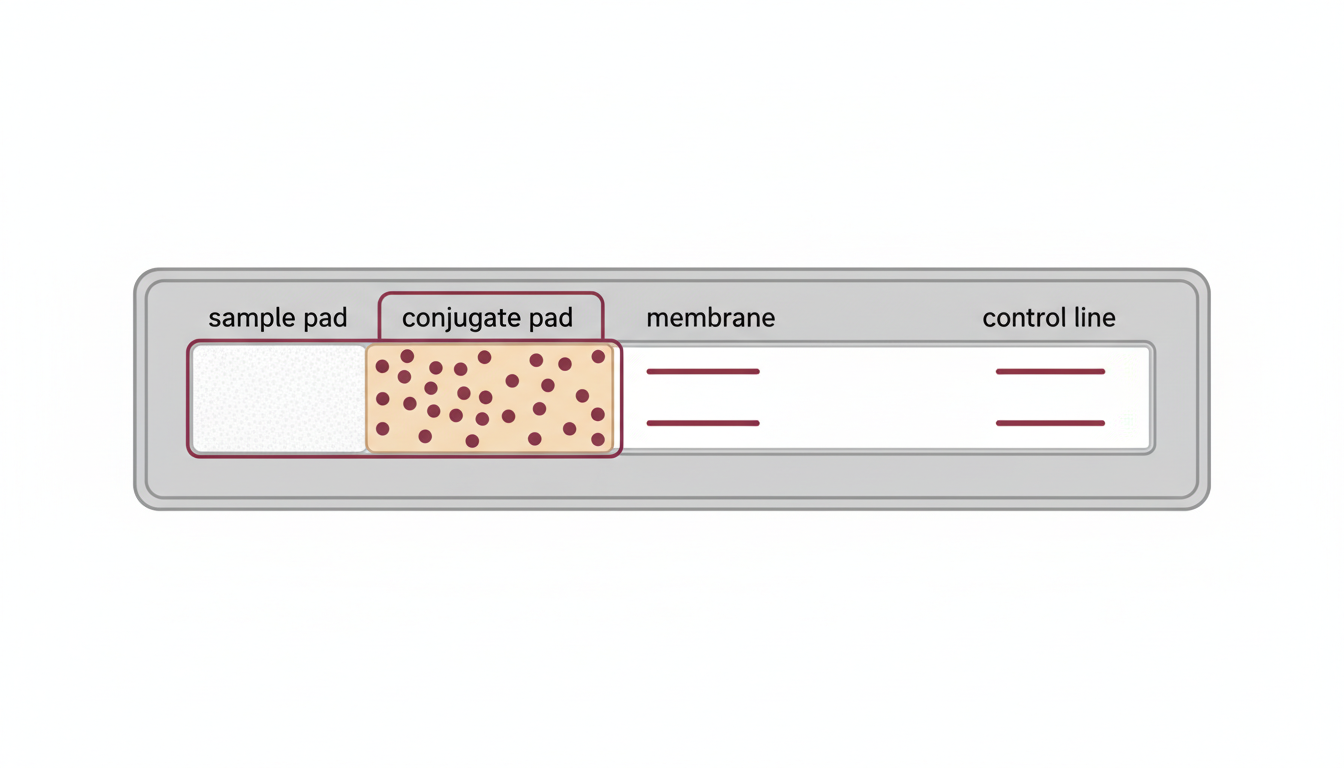
A rapid lateral-flow test is a single-use cassette. You add buffer plus your sample (a swab from genital tissue, or a few drops of fingerstick blood) to a well, the liquid wicks across a paper membrane, and within 10 to 20 minutes a control line plus an optional test line appears. The chemistry behind it is antibody-or-antigen detection, similar to a rapid pregnancy test or a COVID antigen strip. No mailing, no waiting for an email, no third party touching your sample.
A mail-in kit, by contrast, ships you a sample-collection device. You self-collect (vaginal swab or urine), seal the sample in the kit's transport tube, and the package goes back to a CLIA-certified lab via prepaid post. The lab runs a NAAT (nucleic acid amplification test) and emails you a result a few days later. The technology at the lab end is the same gold-standard NAAT chemistry the CDC names as the laboratory reference standard for chlamydia and gonorrhea (CDC 2021 STI Treatment Guidelines).
This site sells kits in the first category: lateral-flow chemistry, results in your bathroom, no lab loop. Lateral-flow is faster, more private, and cheaper than a clinic NAAT, but per-test analytical sensitivity sits a notch below lab molecular testing, especially in early or asymptomatic infection. A typical kit contains a sealed test cassette with the lateral-flow strip inside, a sample-collection tool (a vaginal or penile swab for the four swab products, or a fingerstick lancet plus a capillary tube for blood-based tests), buffer solution, step-by-step instructions, and a timing card so you read the result in the correct window.
Rapid lateral-flow at home: read your result on a paper-strip cassette in about 15 minutes. Faster, more private, cheaper. Sensitivity sits a notch below lab molecular testing in early or asymptomatic infection.
Mail-in lab NAAT: self-collect a sample and ship it to a CLIA-certified lab. Higher analytical sensitivity, especially in low-pathogen-load or atypical infections. Days of wait time and a third-party lab handling your sample.
Sensitivity, specificity, accuracy: why one number isn't enough
Three terms get used interchangeably in test marketing, and the difference matters for how you read your result.
Sensitivity is the percentage of truly infected people the test correctly flags as positive. A test with 95% sensitivity will miss 5 out of every 100 infected people who use it correctly inside the right window.
Specificity is the percentage of uninfected people the test correctly flags as negative. A test with 99% specificity will produce one false positive for every 100 uninfected users.
Overall accuracy is a blended figure weighted by how common the infection is in the tested population. It can hide a low sensitivity behind a high specificity if the infection is rare. That is why regulatory bodies, including the U.S. FDA, generally report sensitivity and specificity separately on test labels rather than as a single "accuracy" figure.
For a home STI test, the practical implications break down like this. A test with high specificity and lower sensitivity means a positive almost certainly reflects real infection, but the test may miss real infections at the early end of the window. A test with high sensitivity and lower specificity catches almost everything real, but expect more false positives that need clinic confirmation. A kit with both above 95% is genuinely useful for screening, with good performance in both directions. When a product page says only "99% accurate," the right question is: 99% sensitivity, 99% specificity, or both, and at what time after exposure?
- Sensitivity: the percentage of infected people the test correctly flags as positive. 95% sensitivity means 5 missed infections per 100 infected users.
- Specificity: the percentage of uninfected people the test correctly clears. 99% specificity means one false positive per 100 uninfected users.
- Overall accuracy: a blended figure that depends on the underlying infection prevalence. Useful in marketing copy, less useful for individual decision-making.
How accurate are at-home STD tests by infection?
Real-world accuracy figures vary by infection because the underlying biology varies. The lateral-flow chemistry is the same; the pathogen, the antibody class, and the typical bacterial or viral load all differ. These infections are common and frequently silent: the World Health Organization estimates roughly 374 million new chlamydia, gonorrhea, syphilis, and trichomoniasis infections worldwide in 2020, and notes that most STIs produce no symptoms at all (WHO STI fact sheet). The lateral-flow kit ranges below are drawn from the published instructions for use on each product page; the NAAT reference ranges reflect current CDC STI treatment guidance.
A few things stand out from this data. Specificity stays consistently high across infections. If your at-home test reads positive, the result is unlikely to be a false alarm caused by random cross-reactivity. That said, every positive result should be confirmed at a clinic with a NAAT or RPR titer (a blood test used to confirm syphilis and monitor treatment), because a confirmed positive triggers a different clinical conversation (and treatment) than a screening positive.
Sensitivity varies more. Chlamydia and gonorrhea swab sensitivity sits in the mid-to-high 90s for symptomatic infections, drops in asymptomatic carriers, and rises sharply with proper sample-collection technique. Syphilis sensitivity in the early primary stage can dip lower than the headline figure suggests, which is part of why clinicians often pair a treponemal rapid test with a lab non-treponemal RPR for confirmation.
Window periods matter more than brand differences. A 99%-sensitive HIV antibody test still misses early infection if you test on day 10 post-exposure. The infection is there; the antibodies your test is looking for haven't built up yet. The next section covers this in detail because it is the single biggest source of false-negative results among home-test users.
| Infection | Sample type | Window after exposure | Sensitivity | Specificity |
|---|---|---|---|---|
| Chlamydia | Vaginal or penile swab | 7 to 14 days | 92 to 98% | over 99% |
| Gonorrhea | Vaginal or penile swab | 7 to 14 days | 92 to 98% | over 99% |
| HIV (antibody) | Fingerstick blood | 23 to 90 days | 95 to 99% | over 99% |
| Syphilis | Fingerstick blood | 21 to 90 days | 85 to 98% | over 95% |
| Hepatitis B | Fingerstick blood | 30 to 60 days | 95 to 99% | over 99% |
| Hepatitis C | Fingerstick blood | 8 to 11 weeks | 90 to 99% | over 99% |
| HSV-2 (antibody) | Fingerstick blood | 12 to 16 weeks (per kit IFU label) | 93 to 98% | over 95% |
| Trichomoniasis (women only) | Vaginal swab | 1 to 4 weeks | 90 to 95% | 98 to 99% |
Why timing changes accuracy more than the brand does
The window period is the time between exposure to an infection and the point at which a test can reliably detect it. Test before the window closes and you risk a false negative even if the kit is performing perfectly. The CDC describes this lag explicitly in its HIV testing guidance, and the same logic applies to every antibody-based test on the market.
For our product range, the published windows look like this. HIV antibody tests reliably detect infection between 23 and 90 days post-exposure; most modern fingerstick antibody assays reach high sensitivity by day 45, and the CDC still recommends a 90-day re-test for definitive negatives. Laboratory antigen/antibody combination tests can flag HIV earlier, from about 18 days, but home rapid antibody kits cannot. Syphilis treponemal antibody tests need 3 weeks to 3 months. Hepatitis B surface antigen detection needs 30 to 60 days. Hepatitis C antibody detection runs 8 to 11 weeks for most adults, occasionally up to 6 months in immunocompromised patients. HSV-2 IgG antibody testing typically becomes reliable at 12 weeks, with some kit labels extending the outlier window to 16 weeks; CDC and WHO references generally cite 6 to 12 weeks as the standard seroconversion window. Chlamydia and gonorrhea swab tests are detectable from about day 7, more reliably from day 14.
If you are testing because of a specific recent exposure, the right protocol is often a two-test approach: one test soon after the exposure to rule out anything already detectable, and a second after the longest applicable window has passed to confirm. A single test inside the window rules nothing out; a single test after the window closes is a much stronger signal.
Interpreting a within-window negative as the all-clear is the most common home-test mistake. A within-window negative is a partial answer, and one that costs nothing to verify with a follow-up test once the window has closed. Plan the second test into your purchase from the start; ordering a single kit and testing on day 5 is the most expensive way to get the least useful answer.
Most home-test kits will read negative on day 5 even when an infection is present, because the antibodies or detectable antigens have not accumulated yet. A negative inside the window period rules nothing out. Plan to retest after the relevant window closes (45 to 90 days for HIV, 12 or more weeks for HSV-2, 14 days for chlamydia or gonorrhea swab) to draw a conclusion you can rely on.
How the detection windows compare
The window period varies a lot between infections, which is why a single test date rarely covers everything at once. The chart below plots when each home test becomes reliable after exposure. A bar that starts at day 23, like the HIV antibody test, means a negative before that point carries little weight. The practical guidance is simple: time your test to the longest window that applies to your exposure, or plan a second test once that window closes.
Six mistakes that wreck home-test accuracy
Sample collection and result interpretation are where most "the test was wrong" stories actually come from. Published validation studies consistently identify collection and interpretation errors, not failures of the test chemistry, as the primary avoidable source of home-test inaccuracy. Six errors account for the bulk of them.
Reading too early or too late. Lateral-flow tests have a result window, usually 10 to 20 minutes after the sample is added. A line that appears at minute 30 is not a positive result; it is evaporation artifact, sometimes called a ghost line. Read the cassette inside the timing window the instructions specify, and not after. Use a phone timer rather than guessing.
Photographing the strip after the read window has passed. If you want to keep a record of the result for a possible clinic follow-up, photograph the cassette inside the read window, not later. An image taken at minute 25 may show evaporation lines that did not exist at minute 15. The photo is useful evidence for a clinician only if it captures the result the kit was designed to display.
Wrong-site sample. Swab tests for chlamydia and gonorrhea are validated for genital sites only. Using a vaginal swab to test for pharyngeal (throat) gonorrhea, or a penile swab to look for rectal chlamydia, gives a meaningless result. We don't sell pharyngeal or rectal swabs because the lateral-flow chemistry isn't validated for those tissue types; for those exposures, see a clinic for a clinician-collected NAAT.
Insufficient sample volume, shallow swab depth, or cross-contamination. Fingerstick blood tests require a specific sample volume to flow correctly across the membrane, and under-filling the buffer well is the most common reason for an invalid result (no control line). Self-collected vaginal swabs need to reach the vaginal walls; a shallow swab can miss bacteria, and penile urethral swabs need 2 to 3 cm depth. Touching the absorbent tip with your fingers before it reaches the buffer can also introduce material that interferes with the chemistry. The control line is what confirms the test ran; without it, the result tells you nothing.
Storing the kit incorrectly. Lateral-flow cassettes are heat-sensitive. A kit left in a hot car for an afternoon, or stored in a steamy bathroom for months, may give an invalid result or, worse, a falsely shifted line. Store at room temperature, away from direct sun and humidity, and check the kit's expiration date before use.
Skipping the symptomatic-test rule. A negative home test in someone with active symptoms (genital sores, persistent discharge, dysuria, painful intercourse) does not rule out infection. Symptomatic testing should always include a clinic visit for direct examination and confirmatory lab work, regardless of what the home test shows. Symptoms change the pre-test probability enough that the home test's sensitivity gap matters far more than it does in routine asymptomatic screening.
If the control line never appears, the test did not run, whatever the test line shows. Discard the cassette and retest with a fresh kit rather than trying to interpret a partial result.
Lab NAAT versus at-home lateral-flow: complementary, not equivalent
A common marketing pattern is to call at-home rapid tests "NAAT-equivalent" or "lab-grade," but the two technologies differ meaningfully. Rapid tests and laboratory NAAT use different chemistry, and the difference matters most in asymptomatic infections.
Lab NAAT (Nucleic Acid Amplification Testing), sometimes called PCR, amplifies tiny amounts of bacterial or viral genetic material until enough is present to detect. The CDC describes NAAT as the gold standard for chlamydia, gonorrhea, and trichomoniasis screening. Sensitivity is typically 96% to 99%, including in asymptomatic carriers with a low bacterial load. At-home lateral-flow tests detect antigens or antibodies; they typically need a few orders of magnitude more pathogen present to flip from negative to positive. That gap is real and worth being honest about.
The sensitivity gap shows up most clearly in three situations. First, asymptomatic infections, which carry a lower pathogen load and are especially common with chlamydia, where the infection often produces no symptoms at all (CDC chlamydia overview). Second, very early infection, where pathogen counts are still ramping up. Third, chronic low-level infection that is slowly resolving. In all three, a NAAT may catch what a rapid lateral-flow test misses.
Rapid tests are not useless, and lab NAAT is not always the right answer; the two technologies fill different needs. Rapid tests are screening tools: cheap, private, fast, and useful for the question "I had an exposure and the window has passed; am I in the clear?" or "I am sexually active with a regular partner and want to test annually as a baseline." A negative rapid result, after the window, with no symptoms, gives you a meaningful reassurance signal. A positive rapid result tells you to follow up at a clinic, fast, with confirmatory NAAT and treatment. Lab NAAT is the right tool when the stakes are higher: symptomatic infection, partner-confirmed exposure, pregnancy, repeat testing after a positive, or any throat or rectal exposure.

When a clinic visit is the right next step
A few situations call for a clinician's involvement, and a home test alone won't replace them. Knowing this list before you order a kit helps you avoid the trap of treating a home rapid test as a final answer when it is actually a screening signal.
A positive home result. Every positive needs a confirmatory lab NAAT (for bacterial infections) or RPR titer (for syphilis), plus a treatment plan. Most STIs are very treatable with the right antibiotic course; getting from "the line appeared" to "the infection is treated" runs through a clinician. A positive HIV result in particular is the start of a clinical process, not a prognosis: with modern antiretroviral therapy, people diagnosed today have near-normal life expectancy and can reach an undetectable viral load that makes sexual transmission to partners effectively impossible.
A high-risk single exposure within the last 72 hours. Post-exposure prophylaxis (PEP) for HIV is most effective when started within 72 hours of exposure and is taken for 28 days. A home antibody test cannot detect anything yet inside that window, and you don't need it to. If the exposure was high-risk (condomless sex with a partner of unknown or known-positive status, sexual assault, or needle exposure), go directly to an emergency department or sexual-health clinic. Starting PEP as soon as possible gives it the best chance of working, and waiting on a home antibody test only loses hours that PEP eligibility depends on.
Active symptoms with a negative home result. Symptomatic testing should always include direct clinical examination, regardless of the home test outcome. The home test's sensitivity gap matters most here, and a clinic visit also lets a provider rule out conditions that home tests don't cover at all (bacterial vaginosis, yeast, urinary tract infection).
Pregnancy. Antenatal STI screening protocols are specific and time-bound, and confirmatory results inform treatment decisions for both parent and infant. Coordinate with your provider rather than relying on home testing for prenatal screening.
Repeat exposure to a known-positive partner. When the partner's confirmed result is already on the table, the clinical math changes. A clinic-administered NAAT, or in some cases prophylactic treatment without waiting for a result, may be the right call.
Throat or rectal exposure concerns. Pharyngeal and rectal swabs require clinician collection and lab handling that lateral-flow home kits aren't validated for. We don't sell those tests; a clinic does, and that is the honest answer for those exposure routes.
An HIV diagnosis today is a treatable condition, not a death sentence. Antiretroviral therapy (ART) brings life expectancy close to that of an uninfected person and reduces viral load to undetectable levels within a few months. At undetectable levels, sexual transmission to partners is effectively impossible, the principle that the principal public-health agencies refer to as U=U (undetectable equals untransmittable). A positive home result is a prompt to book a clinic visit fast, not a verdict.
Picking the right kit for your concern
The right kit depends on what you are testing for and the kind of exposure or screening pattern that prompted you to test. For a plain-English overview of sexually transmitted infections and how they are diagnosed, MedlinePlus is a useful starting point. A few practical patterns cover most adult cases.
Single recent exposure, partner status unknown. A 6-, 7-, or 8-in-1 combo kit covers the most likely infections in one purchase, run after the longest applicable window has closed (typically 12 weeks for definitive results across the panel). A single purchase covers both sample types and produces results from multiple cassettes in one session.
Specific known concern, single infection. If you have a defined worry, such as a partner who just told you they tested positive for chlamydia, a single-infection kit like an at-home chlamydia test is faster, cheaper, and more focused. Read the window-period rules above for the relevant infection before you order.
Routine annual screening, no specific concern. A combo kit run after the appropriate window from your last new partner is the typical approach. Annual screening is a CDC recommendation for all sexually active adults under 25 and for older adults with new or multiple partners (CDC guidance on getting tested). The CDC's HIV-specific guidance reinforces the routine-screening principle:
CDC recommends that everyone between the ages of 13 and 64 get tested for HIV at least once as part of routine health care, and more often if they have ongoing risk factors.
HPV and trichomoniasis: a women-only scope note
Our HPV and trichomoniasis swab kits are validated for vaginal self-collection and are women-only. Men needing HPV or trichomoniasis testing should see a clinic, because using the wrong kit for the wrong anatomy produces a meaningless result. For mixed-anatomy partner-screening situations, the female partner can use the at-home kit while the male partner books a clinic visit for parallel testing.
- Validated for vaginal self-collection only; results apply to female anatomy.
- No male-compatible HPV or trichomoniasis at-home rapid kit is currently offered on this site.
- Male readers who need testing for either infection should see a clinic for clinician-collected sampling.
- In partner-screening situations, the female partner can use the at-home kit while the male partner books a parallel clinic visit.
Home test or clinic: what to do next
Do you have active symptoms right now (genital sores, unusual discharge, pain when urinating, or pelvic pain)?
Yes: See a clinic. A negative home test does not rule out infection when symptoms are present, and a provider can examine you and run confirmatory lab work that home kits cannot.
Was your exposure high-risk and within the last 72 hours?
Yes: Go to a clinic or emergency department now. HIV post-exposure prophylaxis (PEP) is time-sensitive, and a home antibody test cannot detect anything yet or guide that decision.
Has the longest applicable window period for your exposure already passed (for example, 14 days for a chlamydia or gonorrhea swab, 12 weeks for HSV-2)?
Yes: An at-home rapid kit is a reasonable screening choice. Collect the sample exactly per the instructions, read it inside the timing window, and confirm any positive at a clinic.
No: Wait until the window closes, or test now and plan a follow-up retest once it does, since a within-window negative rules nothing out.
Guidance only. A healthcare provider can advise based on your specific situation.
FAQs
- How accurate are at-home rapid STD tests overall?
- Specificity is the stronger suit: over 99% for most reputable kits, which means a positive result is rarely a false alarm. Sensitivity runs 92 to 98% depending on the infection and on whether you tested after the correct window period. Chlamydia, gonorrhea, and HIV kits sit in the mid-to-high 90s; syphilis dips lower in the early primary window. Every positive should still be confirmed at a clinic with a lab test.
- How long after exposure should I wait to test?
- Wait at least 14 days for chlamydia or gonorrhea swabs; about 45 days for a strong HIV antibody signal, with a 90-day re-test for a definitive negative; 3 weeks to 3 months for syphilis; and 12 weeks for HSV-2 IgG. If you must test sooner than the window allows, plan a follow-up retest at the end of the window, because a within-window negative tells you little on its own.
- How often do home test kits give a false positive?
- It depends on how likely infection is in your situation. A test with 99% specificity produces about one false positive per 100 uninfected users. In a low-risk population, where few people are truly infected, a larger share of all positive results turn out to be false alarms. This is a matter of math rather than a flaw in the strip, which is why every positive home result should be confirmed at a clinic, no matter how clear the test line looked.
- What's the difference between a lateral-flow rapid kit and a mail-in lab kit?
- A rapid lateral-flow kit gives you a result at home in about 15 minutes via a paper-strip cassette. A mail-in kit ships your sample to a CLIA-certified lab that runs a NAAT and emails you the result a few days later. Lab NAAT has higher analytical sensitivity, especially in early or asymptomatic infection. This site sells the rapid lateral-flow category; lab NAAT is the right tool for confirmatory or symptomatic testing.
- What does a positive at-home test mean?
- A positive lateral-flow result means the test detected the antibody or antigen it was looking for. Specificity is high, so the chance of a false positive is low, but every positive should be confirmed at a clinic with a lab NAAT (for bacterial infections) or RPR titer (for syphilis). Confirmation is also where you get the prescription, partner-notification guidance, and follow-up plan that the home test doesn't provide.
- What if my home test is negative but I have symptoms?
- A clinic visit is the right call. A negative home test in a symptomatic person doesn't rule out infection, because lateral-flow sensitivity in low-pathogen-load or atypical infections can miss what a NAAT catches. A clinic visit also lets a provider rule out non-STI causes of the same symptoms (bacterial vaginosis, urinary tract infection, yeast) that home STI kits don't address.
- Will a home test catch every infection?
- No. Home rapid tests cover the panel each kit is validated for (typically chlamydia, gonorrhea, HIV, syphilis, hepatitis B and C, and HSV-2). Throat and rectal exposures require pharyngeal or rectal swabs, which we don't sell because lateral-flow chemistry isn't validated for those tissue types. Some bacterial infections (mycoplasma, ureaplasma) and many non-STI causes of similar symptoms also fall outside the home-test panel.
- Do home tests cost more or less than clinic testing?
- It depends on insurance coverage. Home test kits typically cost between $15 and $80 for a single-infection test, or $80 to $200 for a multi-infection panel, paid out of pocket. Clinic testing through a doctor's office is often partly or fully covered by insurance but may include co-pays or visit fees. Many free or low-cost options also exist: Planned Parenthood, county health departments, and CDC-funded community clinics offer sliding-scale or no-cost STI testing in most U.S. metros.
- Are at-home test results confidential?
- Yes. The result stays on your cassette in your bathroom. There is no clinic chart entry, no insurance claim, no third-party lab handling your sample, and no automatic reporting from us. If you choose to confirm a positive at a clinic, that visit follows the clinic's normal confidentiality rules, but the home test itself does not generate any medical record.
- U.S. Centers for Disease Control and Prevention. STI Clinical Guidance and 2021 STI Treatment Guidelines: NAAT as the laboratory reference standard for chlamydia and gonorrhea, plus screening and partner-management recommendations.
- U.S. Centers for Disease Control and Prevention. Getting Tested for HIV: window periods (antibody 23 to 90 days, antigen/antibody 18 to 90 days, NAT 10 to 33 days), self-test framework, PEP timing, and retest guidance.
- U.S. Centers for Disease Control and Prevention. Getting Tested for STIs: at-home self-tests, mail-in self-collection kits, and clinic-based testing options.
- World Health Organization. Sexually transmitted infections fact sheet: global incidence of curable STIs (about 374 million new infections in 2020) and the high proportion of asymptomatic infection.
- U.K. National Health Service. Sexually transmitted infections overview: symptom assessment, testing pathways, clinic confidentiality, and referral criteria.
- U.S. National Library of Medicine, MedlinePlus. Sexually transmitted infections: patient-facing reference on diagnosis, testing approaches, and follow-up care.