What to Do If You Test Positive with an At-Home STD Kit
A reactive line on an at-home STI kit feels like a verdict, but it is a screening signal that needs laboratory confirmation before treatment. Here is the calm, ordered checklist most clinicians follow over the next week, from confirming the result to telling partners, starting treatment, and protecting yourself going forward.




- An at-home rapid test is a screening tool, not a final diagnosis. Every reactive result needs laboratory confirmation before treatment, especially for HIV and syphilis.
- Most bacterial STIs (chlamydia, gonorrhea, syphilis, trichomoniasis) are curable with a single course of antibiotics once a clinician confirms the diagnosis.
Published: October 2025 | Last updated: April 2026 | Editorial review and quality control: Martina N.
A reactive line on an at-home STI test is unsettling, but it is the start of a process you can manage rather than the end of one. Most rapid lateral-flow kits, including ours, are screening tools designed to flag a likely infection so you can take the next step: laboratory confirmation, clinician-directed treatment, and partner notification. This guide walks through that next step in the order most clinicians recommend, with realistic timelines, plain-English context on what each result actually means, and honest information on when to retest, when to see a clinician, and how to talk to the people you have been intimate with.
What should I do right now after a positive at-home STD test?
Confirm the result with a clinic-based test before starting any treatment. At-home rapid tests are designed to over-call infections rather than miss them, and false positives do happen, particularly on HIV and syphilis screens. Pause sexual activity that could transmit infection until you have a confirmed diagnosis, tell recent partners (most clinics offer anonymous notification if you would rather not do it directly), and book a clinical appointment within roughly a week. Save a clear photo of the test cassette: clinicians sometimes want to see the line strength.
The first 24 to 48 hours after a reactive result
The first reaction to a reactive line is usually disbelief, then a mix of fear and shame. Both reactions are normal. Acting on them without information is what most people later regret. Here is what to do, in roughly the order that matters.
Take a photograph of the test cassette. Rapid lateral-flow strips become unreliable to read after the manufacturer's stated window (typically 15 to 30 minutes). A timestamped photo lets a clinician later interpret line strength, which can matter: a faint test line on an HIV antibody strip, for example, may indicate early seroconversion or a non-specific reaction, and the difference changes follow-up.
Stop sexual activity that could transmit infection until you have a confirmed diagnosis and either a clean follow-up or a completed course of treatment. This includes oral sex (some infections, including syphilis, gonorrhea, and HSV, transmit orally), and any unprotected vaginal or anal contact.
Book a clinical appointment within a week. Public-health clinics, sexual-health services, and primary-care providers can usually fit you in within that window. If the screen was for HIV, faster is better, ideally within a few days. For bacterial STIs like chlamydia or gonorrhea, a few days of delay does not meaningfully change outcomes, but the longer you wait, the longer the window for onward transmission.
Do not start antibiotics from a leftover prescription, a friend's stash, or an unverified online source. Treating the wrong infection (or the right one with the wrong dose) can drive resistance and complicate later confirmation testing.
Note the date of the test, the date of your most recent likely exposure, and any symptoms you have had. A clinician will ask. The exposure date matters because window periods vary by infection: HIV antibody tests can miss recent infections, syphilis serology takes weeks to turn positive, and herpes antibody seroconversion can take 12 weeks or longer.
Give yourself an hour. The clinical steps below are time-sensitive in days, not minutes. Spending an hour reading, making a list of partners to contact, and identifying the nearest clinic almost always produces better decisions than a phone call made in the first ten minutes after the result.
Why a reactive at-home test needs laboratory confirmation
A reactive at-home result needs to be confirmed in a lab. This is not paranoia about kit quality. It is how rapid screening is designed to work everywhere, including in clinics that use the same lateral-flow technology at the point of care.
Lateral-flow tests prioritize sensitivity (catching as many real infections as possible) over specificity (avoiding false positives). The trade-off is built in: a screening tool you can use at home in 15 minutes cannot match the analytical precision of a nucleic-acid amplification test (NAAT) processed in a clinical laboratory. The rapid test asks a useful question (is this person likely positive?). The lab test answers a different one (is this person actually infected, and with what?).
Specific reasons confirmation matters:
- HIV testing has a small but real false-positive rate on rapid antibody screens. The CDC's HIV testing guidance recommends every reactive rapid HIV test be confirmed by a laboratory differentiation assay before any treatment decision.
- Syphilis serology is biologically tricky. Non-treponemal screens (the RPR and VDRL tests, short for Rapid Plasma Reagin and Venereal Disease Research Laboratory) can react in pregnancy, autoimmune conditions, and after some other infections. Confirmation pairs the screen with a treponemal-specific test.
- Chlamydia and gonorrhea are best diagnosed by NAAT on the appropriate sample type. A positive rapid swab usually means infection, but the NAAT confirms it and identifies any co-infection.
- Herpes antibody tests in the home rapid format measure your immune response, not active lesions. They tell you that you have antibodies, not which body site is currently infected. A clinician's assessment is the bridge between those two.
None of this means home tests are wrong or unreliable. It means they are screening tests, like every other screening test in modern medicine, and they are paired with a confirmation step for the same reasons mammograms are paired with biopsies.
| Test type | What it tells you | Typical turnaround |
|---|---|---|
| At-home rapid lateral-flow | Screen-grade signal that infection is likely | 10 to 30 minutes |
| Clinic NAAT (chlamydia, gonorrhea, trichomoniasis) | Definitive: organism's nucleic acid detected | 1 to 3 days |
| Lab HIV differentiation assay | HIV-1 vs HIV-2 vs indeterminate | Same day to 1 week |
| Treponemal plus non-treponemal syphilis | Active vs past-treated infection, with titer | 1 to 3 days |
Treatment depends on which infection is confirmed
Once a clinician confirms the diagnosis, treatment is usually straightforward, especially for bacterial infections. The main categories:
Bacterial and protozoal infections (curable). Chlamydia, gonorrhea, syphilis, and trichomoniasis all respond to a defined course of medication. According to the CDC's STI Treatment Guidelines:
- Chlamydia. Doxycycline 100 mg twice daily for 7 days is the preferred regimen for non-pregnant adults. Azithromycin remains an alternative.
- Gonorrhea. A single intramuscular dose of ceftriaxone 500 mg (or 1 g for people weighing 150 kg or more), often combined with doxycycline if chlamydia has not been ruled out. Resistant gonorrhea is a growing concern, which is why test-of-reinfection three months later is now standard.
- Syphilis. Long-acting penicillin G (benzathine penicillin) by intramuscular injection. The number of doses depends on stage: one dose for primary, secondary, and early latent; three doses one week apart for late latent and tertiary.
- Trichomoniasis. Oral metronidazole. The CDC's most recent update replaced the single-dose regimen with a multi-day course for people assigned female at birth, because cure rates were higher in trial data.
Viral infections (manageable, not curable). HIV, HSV-1, HSV-2, hepatitis B, and HPV are viral. Treatment focuses on suppression, prevention of transmission, and protection against complications:
- HIV. Modern antiretroviral therapy is daily oral medication that suppresses viral load to undetectable levels in most people. Undetectable equals untransmittable: someone with a sustained undetectable viral load does not transmit HIV sexually. Starting therapy promptly after diagnosis is now the standard of care.
- Genital herpes. Episodic or daily suppressive antiviral therapy (acyclovir, valacyclovir, famciclovir) reduces outbreak frequency and onward transmission risk.
- Hepatitis B. Most adult-acquired hepatitis B clears spontaneously. Chronic infection is managed by a hepatology team and may include long-term antiviral therapy.
- HPV. Most infections clear without treatment within two years. Visible warts can be removed with topical or procedural treatment. High-risk HPV strains are tracked through cervical screening for women, and through clinician evaluation for anal or oropharyngeal disease in people at higher risk.
The point: the right answer almost always exists. What you want to avoid is skipping the clinician step and self-treating off a positive screen, because the wrong drug at the wrong dose for the wrong infection can mask a clearer diagnosis on later confirmation testing and contribute to antibiotic resistance.
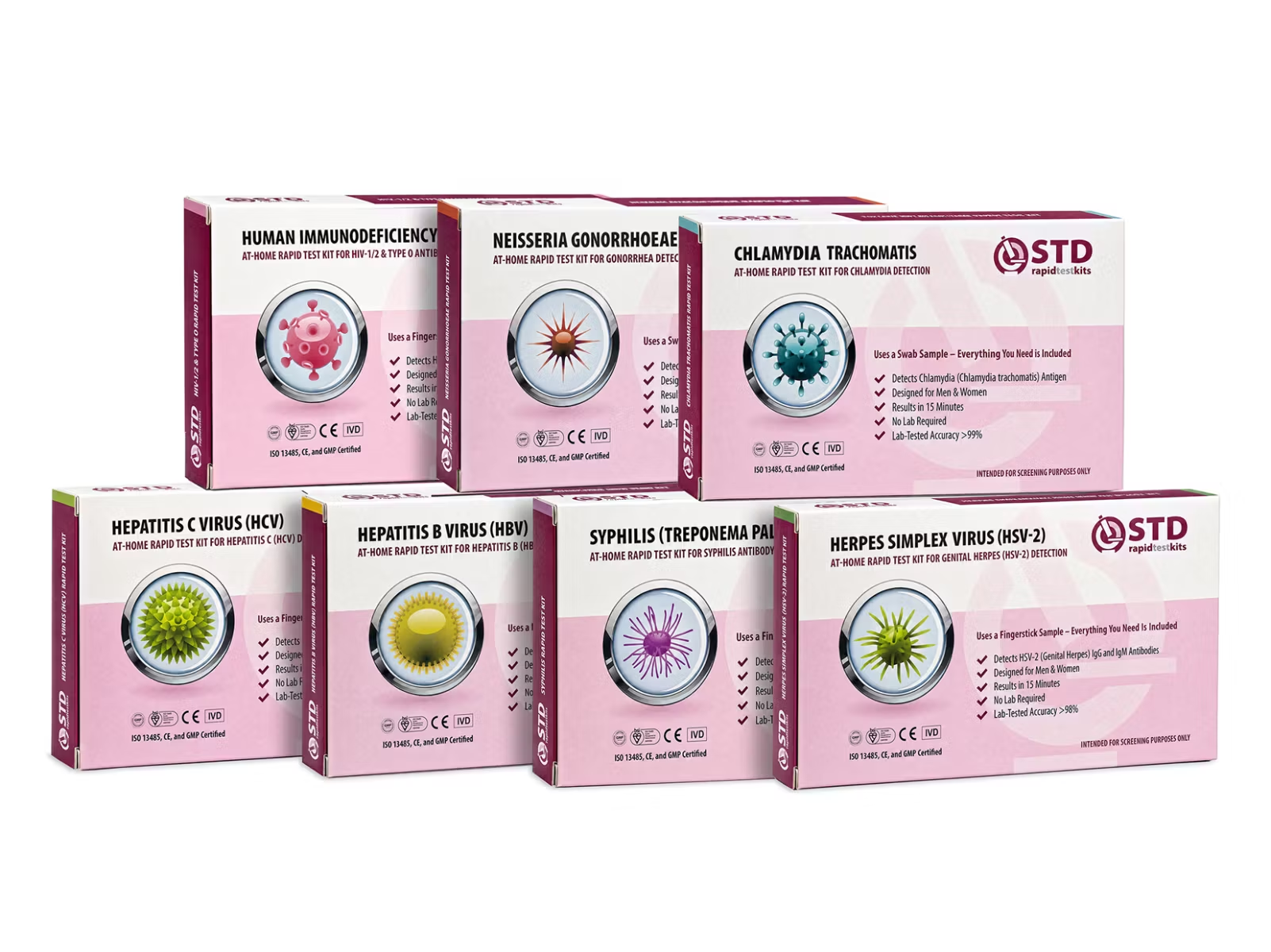
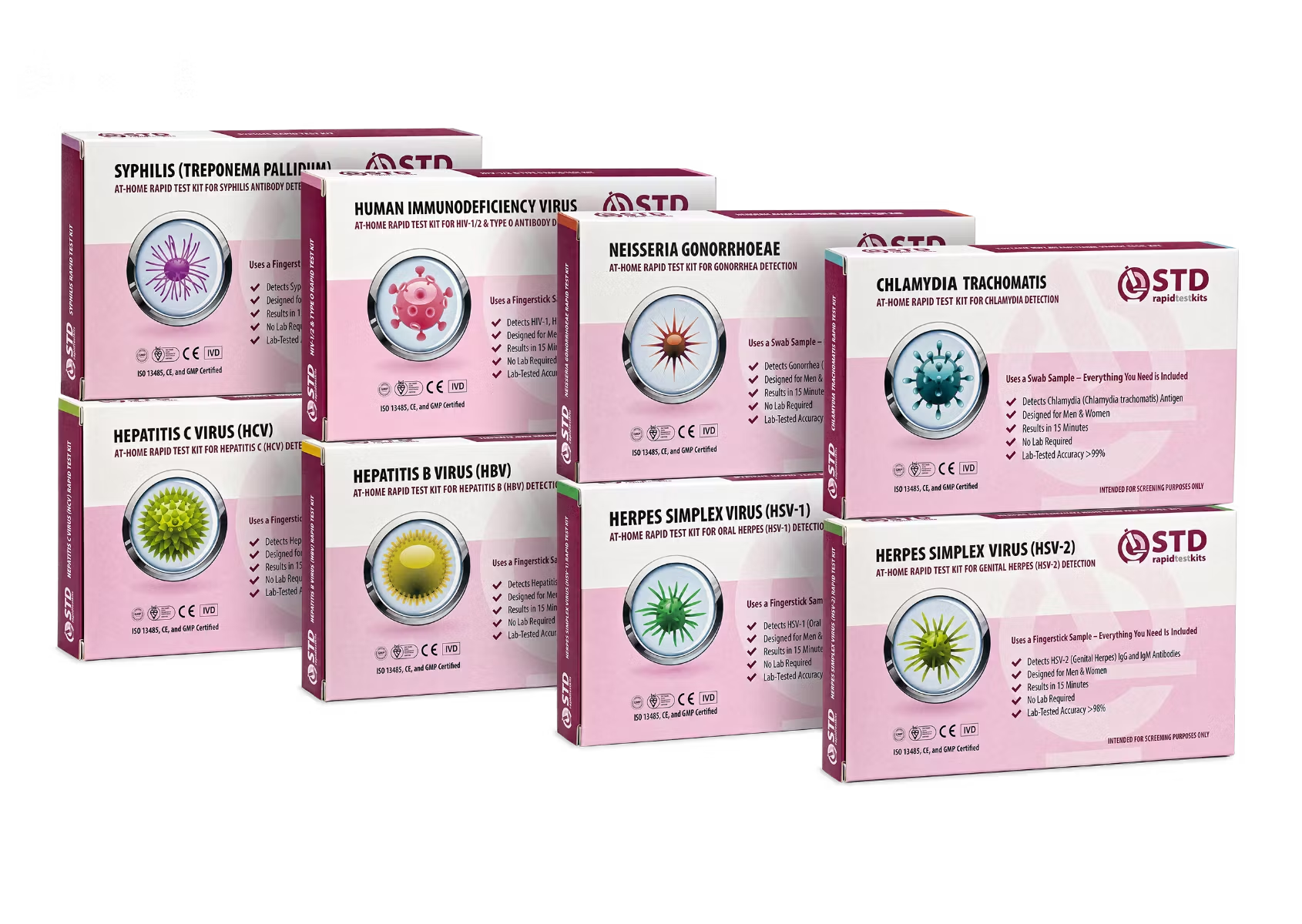
Disclosure: we sell at-home rapid tests for several of the infections covered here, and product links in this article go directly to our store.
How to tell your sexual partners
Partner notification feels like one of the hardest parts of a positive result. It is also one of the most consequential. Without it, the same infection moves through your sexual network and back to you after treatment, or to people you care about who do not yet know they are at risk.
There are three ways to do it, and clinics support all three:
- Tell partners yourself. Direct conversation works for partners you trust. A short, plain message is enough: I tested positive for chlamydia, you should get tested, I am not blaming anyone, I just want both of us to be okay. You do not need to disclose your full sexual history.
- Anonymous partner notification through a clinic. Most public-health departments will contact partners on your behalf, without naming you, to recommend testing. In the US, ask the clinic running your confirmation about disease intervention specialist (DIS) services. In the UK, the NHS sexual-health pages describe the equivalent free GUM-clinic referral process.
- Expedited partner therapy (EPT). For chlamydia and gonorrhea specifically, in jurisdictions where it is legal (most US states, with variation), a clinician can give you treatment to deliver to your partner without that partner needing their own clinic visit first. EPT is well established for opposite-sex partners and has limitations for partners of the same sex, where a clinical exam matters more.
Whichever route you choose, the look-back period to cover is roughly:
- Chlamydia and gonorrhea: partners from the past 60 days.
- Syphilis: depends on stage. Primary syphilis typically goes back 90 days, secondary 6 months, early latent 1 year.
- HIV: any partner since your last documented negative test, or as far back as is reasonable if you have never tested.
- Trichomoniasis: current partner(s); look-back beyond that is rarely productive.
If a partner reacts badly, that is information about the relationship, not a verdict on you. Clinicians and counselors hear these conversations described daily and can help you script the next one.
Talking with a sex partner about getting tested for STIs may not be easy. But it's an important conversation to have. STIs don't always cause symptoms, so getting tested is the only way to know for sure if you have an infection.
Coping with the emotional weight
A positive STI result hits people hard, and the way it hits is rarely proportional to the medical seriousness of the infection. People are often more shaken by curable chlamydia than by manageable HIV, because the psychological response is about identity, trust, and relationships rather than pathophysiology.
A few things that help:
Name the feeling without acting on it. Shame, anger at a partner, fear of disclosure, fear of partner reaction: these are normal first-day reactions. They typically soften within 48 to 72 hours once you have scheduled the next clinical step and have something concrete to focus on.
Get information from a clinical source rather than a forum. Online communities can be supportive, and they can also amplify anxiety with worst-case anecdotes. The CDC, NHS, WHO, and Mayo Clinic publish plain-English resources that calibrate risk realistically. Use them as your baseline.
Talk to one person. A close friend, a counselor, or a sexual-health clinic helpline. Saying it out loud once dilutes the shame in a way that thinking about it alone does not.
Remember the numbers. The WHO's STI fact sheet estimates more than one million curable STIs are acquired globally every day. Tens of millions of people in the US alone are living with one or more STIs at any given time. STIs are infectious diseases, with all the implications that follow from that fact: high transmission, often asymptomatic, treatable when identified.
If a positive result triggers significant depression, intrusive thoughts, or thoughts of self-harm, contact a mental-health professional or crisis line. Sexual-health clinics are familiar with this and can refer.
A positive STI screen is not a moral failure, a permanent label, or evidence of bad judgment. STIs are infectious diseases that follow the same epidemiological rules as other infections. The shame attached to them is cultural, not clinical, and clinicians do not see it that way.
Cost and access if money is tight
Cost should not be the barrier between a reactive screening result and confirmation testing. The options:
- State and local health departments. Every US state runs sexual-health clinics that offer free or sliding-scale STI testing and treatment. The CDC's GetTested locator finds the nearest clinic by ZIP code. The NHS in the UK offers free testing through GUM (genitourinary medicine) clinics and online testing services.
- Federally qualified health centers (FQHCs). In the US, FQHCs serve patients regardless of insurance status on a sliding scale. They handle confirmation testing, treatment, and follow-up.
- Planned Parenthood and similar non-profits. Sliding-scale testing and treatment, with privacy that some readers prefer over a primary-care visit.
- Insurance. If you have insurance, most US plans cover STI confirmation testing and treatment as preventive care under Affordable Care Act rules. A primary-care visit is usually the cheapest entry point.
- Manufacturer assistance programs. For HIV antiretrovirals and several other long-term medications, every major manufacturer runs a patient-assistance program that brings out-of-pocket cost down significantly. A clinician's office can navigate the application.
The single most expensive option is doing nothing. Untreated bacterial STIs cause infertility, chronic pelvic pain, and increased HIV acquisition risk. Untreated HIV becomes AIDS over time without therapy. Free clinic care is always cheaper than any of those outcomes.
Preventing the next infection
Once you have handled the current diagnosis, the next conversation is about reducing the chance of a repeat. The protective measures stack: each one helps, none is perfect on its own, and together they are effective.
The list below is the boring, evidence-backed version. If you want a single sentence to take away: condoms plus vaccination plus routine screening plus PrEP-when-indicated covers most of the practical risk for most people, most of the time.
Prevention checklist
- Condoms reduce transmission of fluid-borne infections (HIV, gonorrhea, chlamydia) substantially. They are less protective for skin-contact infections like HSV, HPV, and syphilis chancres outside the covered area.
- Vaccinate against the preventable ones: HPV (routine through age 26 per ACIP, with shared decision-making through age 45) and hepatitis B (universal in most childhood schedules, with adult catch-up for people at risk).
- Pre-exposure prophylaxis (PrEP) is daily or on-demand medication that reduces sexual HIV acquisition by about 99% when taken as prescribed (per CDC PrEP guidance). Discuss eligibility with a clinician.
- Routine screening every 3 to 12 months, depending on number of partners and exposure type, catches infections before they cause complications. Frequency is based on individual risk, not moral judgment.
Retesting and test-of-cure
Retesting comes up twice in this conversation. The first time is to confirm the original positive (covered above). The second is to confirm you are clear after treatment, which clinicians call test-of-cure or follow-up testing.
Chlamydia and gonorrhea. The CDC recommends retesting for reinfection at 3 months after treatment, because reinfection from an untreated partner is the dominant risk. Test-of-cure with a NAAT within 3 weeks of treatment is generally not recommended, because dead bacterial DNA can produce a false-positive result.
Syphilis. Follow-up serology at 6 and 12 months tracks treatment response by watching the non-treponemal titer fall. A four-fold drop is the clinical marker of treatment success.
HIV. Once antiretroviral therapy is started, viral-load monitoring (every 1 to 3 months early on, then less frequently once suppressed) tracks success. Antibody tests stay positive for life and are not useful for monitoring treatment.
Trichomoniasis. A test of reinfection at 3 months is recommended for people assigned female at birth, because reinfection rates are high.
Herpes. Antibody tests stay positive once seroconverted. The clinical conversation shifts from do I have it to how do I manage outbreaks and reduce transmission to partners.
Some readers prefer to do the 3-month reinfection retest at home for privacy and convenience. That is reasonable for a screening retest. The original confirmation, however, should be done in a clinic where the result lives in your medical record and can guide ongoing care.
FAQs
- Can an at-home STD test give a false positive?
- Yes. Every screening test has a false-positive rate, which is why a positive result is treated as preliminary. Lateral-flow rapid tests are tuned to maximize sensitivity, which slightly raises the false-positive rate compared with lab NAATs. The fix is the same fix labs use: confirmation testing on a different platform before treatment.
- How quickly should I see a clinician after a reactive at-home result?
- Within a week is fine for most bacterial STIs. For HIV, sooner is better, ideally within a few days, so antiretroviral therapy can start promptly if confirmed. Genital symptoms (pain, discharge, sores) warrant same-day or next-day care regardless of test result.
- Should I take antibiotics from a leftover prescription before confirmation?
- No. Self-treating with the wrong antibiotic, or the right one at the wrong dose, can mask the actual diagnosis on confirmation testing, contribute to antibiotic resistance, and delay appropriate care. Wait for the clinician's confirmation and treatment plan.
- Do I have to tell every past partner?
- Notify the people who fall inside the relevant exposure window, not your full sexual history. If a direct conversation feels too hard, ask the clinic running your confirmation about disease intervention specialists, who can reach out without naming you. Most readers find that knowing a clinic can handle the outreach lowers the barrier to actually doing it.
- Is it safe to have sex during treatment?
- Not unprotected. For most bacterial STIs, you are considered non-infectious about 7 days after a single-dose treatment or after completing a multi-day course. Your clinician will give a specific timeline. For chronic viral infections like HIV and HSV, ongoing transmission risk depends on viral suppression and outbreak status, and your clinician will explain how that applies to you.
- Can I trust a home retest after treatment?
- For screening purposes, yes. For confirmation that the original infection has cleared, the type of test matters: a NAAT for chlamydia or gonorrhea done too soon after treatment can detect dead bacterial DNA and read positive even though the live infection is gone. Wait the clinician's recommended interval (typically 3 months for reinfection screening) before retesting at home.
- Will my partner's negative result mean my positive was a false alarm?
- Not necessarily. STI transmission is probabilistic, not guaranteed. A partner can test negative because they were not infected, because they tested too soon after exposure (the window period), or because the test is not sensitive to the strain or sample type involved. Your clinical confirmation is the answer to your question, not theirs.
- What if I am pregnant?
- Tell your prenatal provider immediately. STIs in pregnancy are treatable, and treatment is critical to prevent transmission to the baby. Some regimens differ in pregnancy: doxycycline for chlamydia is replaced with azithromycin; metronidazole timing for trichomoniasis is adjusted; syphilis must be treated with penicillin even if you have a stated penicillin allergy (clinicians use a desensitization protocol). Do not wait.
- U.S. Centers for Disease Control and Prevention. Sexually transmitted infections treatment guidelines, with regimen-by-regimen recommendations for chlamydia, gonorrhea, syphilis, and trichomoniasis.
- U.S. Centers for Disease Control and Prevention. HIV testing overview, including the rationale for laboratory confirmation of every reactive rapid HIV screen.
- U.S. Centers for Disease Control and Prevention. Getting tested for STIs: testing recommendations, screening cadence, and post-result guidance for the most common infections.
- U.S. Centers for Disease Control and Prevention. PrEP clinical guidance, including the approximately 99% reduction in sexual HIV acquisition when taken as prescribed.
- World Health Organization. Sexually transmitted infections fact sheet, including global incidence figures and curable-vs-viral classification.
- National Health Service (UK). Sexually transmitted infections overview, with referral pathways and free-clinic access information.
- Mayo Clinic. Sexually transmitted diseases (STDs) symptoms and causes overview, plain-English clinician-reviewed reference.