
Published: October 2025 | Last updated: May 2026 | Editorial review and quality control: Martina N.
An inconclusive at-home STI test is unsettling. The line is faint, the result reads invalid, or your gut says the number does not match how you feel. Before you assume the worst, know this: an inconclusive or unexpected result almost never means what people fear it means, and the article below walks through what false positives and false negatives actually are, why at-home rapid tests sometimes get it wrong, when to retest, and when to bring the result to a clinician.
Key Takeaways
- Most inconclusive at-home STI results trace back to testing too early in the window period, a sample-handling issue, or the test's natural error margin.
- Retest after the recommended window, then confirm any positive with a laboratory test through a clinician. Lab NAAT and confirmatory blood panels are the deciding word.
What 'False Positive' and 'False Negative' Actually Mean
A false positive is a test result that says you have an infection when you do not. A false negative is the opposite: the test says you are clear when you actually carry the infection. Both happen with every screening tool ever made, including the ones used in hospitals. The difference is how often, and in what conditions.
For sexually transmitted infections, two numbers describe how often these errors happen. Sensitivity is the chance the test correctly flags a true infection. Specificity is the chance the test correctly clears someone who is genuinely uninfected. A test with 99% specificity will still produce a false positive in about 1 of every 100 uninfected people who use it. That number sounds small until you remember how many people are testing without symptoms.
Inconclusive sits outside both categories. The test could not give a clean read. The control line did not show, the result line is too faint to call, or the kit timed out. The test is telling you, in writing, that it cannot answer. Treat that the same way you would treat a broken thermometer: rerun the measurement with a fresh kit, and if it happens twice, take the question to a clinician with lab access (per CDC STI Treatment Guidelines).

Why At-Home STI Tests Can Get It Wrong
Most odd results trace back to one of three broad causes. You tested before the infection had time to show up. The sample collection went sideways. Or the test hit the natural margin of error that every screening tool carries. None of those mean you definitely have an STI, and none of them mean you definitely do not.
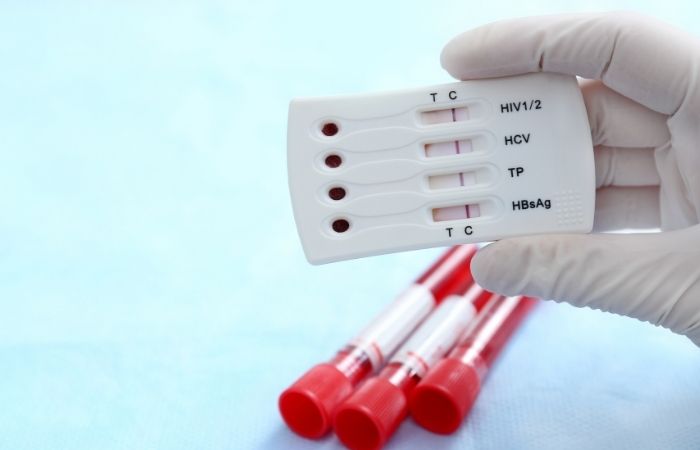
At-home rapid tests use a chemistry called lateral-flow immunoassay. A capture line on the test strip binds to specific antibodies or antigens in your sample, producing a visible mark when the target is present in detectable amounts. The chemistry is reliable, but it has limits. Five real-world factors account for most of the wrong answers people get.
Testing too early. Every infection has a window period: the time between exposure and when the body has produced enough markers for a test to detect them. Test inside the window and a real infection can read negative because there is not yet enough virus, bacteria, or antibody for the strip to catch. This is the single most common reason for a false negative on a home test.
Sample collection mistakes. A swab that did not contact the right tissue, a fingerstick that did not yield enough blood, or a sample applied to the strip incorrectly can give you a faint or missing result. The instructions look simple, but small mistakes compound.
Cross-reactivity. Some infections trigger antibodies that look similar to the ones a test is screening for. Syphilis and herpes tests are most prone to this, which is why a confirmatory second test is recommended on any reactive screening result for these infections (per CDC STI Treatment Guidelines).
Medical conditions and recent vaccinations. Autoimmune disease, recent flu or COVID vaccination, pregnancy, and some chronic infections can occasionally cause a false reactive line. The signal is real chemistry; it just is not the chemistry you tested for.
Storage, expiration, and timing. A kit that overheated in shipping, sat past its expiration date, or got read after the listed window can give an unreliable answer. Read the package insert before you start, and follow the timer exactly.
1. Testing too early: the infection has not yet produced enough markers to detect. 2. Sample-collection error: a swab or fingerstick that did not yield a usable sample. 3. Cross-reactivity: another infection's antibodies look similar to the one being tested. 4. Medical conditions and recent vaccinations: autoimmune disease, pregnancy, or a recent vaccine can produce a false reactive line. 5. Storage or timing problems: heat-damaged kits, expired kits, or results read outside the listed window.
Reading a Potential False Positive Result
A positive line on a screening test is not a diagnosis. It is a signal that something matched the test's target and that the next step is confirmation.
For most STIs, the confirmation pathway is a lab test using different chemistry than the home kit. For HIV, the gold standard is a fourth-generation antigen-antibody lab assay plus an HIV-1/2 antibody differentiation test if the first is reactive (the algorithm is described on the CDC HIV Testing page). For syphilis, labs run both treponemal and non-treponemal tests in sequence, which together separate a real active infection from cross-reactive antibodies. For chlamydia and gonorrhea, the confirmatory technology is nucleic acid amplification testing, or NAAT, which directly detects bacterial genetic material rather than antibodies.
A few things help in the meantime. Do not assume the positive is wrong. Many positives are real, especially on home HIV antibody tests, which are engineered for high specificity. False positives on these kits are rare, but they happen, particularly in populations where the underlying infection is uncommon. That is exactly why a reactive home result is a flag to confirm, not a final answer.
Do not start any treatment based on a single home result. Antibiotics or antivirals begun on a wrong assumption complicate the next steps and can mask real findings on a follow-up test.
Hold off on telling partners about a confirmed infection until you have the lab result. There is a difference between saying, "My screening test was reactive and I am following up," and saying, "I have been diagnosed." The first is honest. The second is premature.
Reading a Potential False Negative Result
A negative line is easier to second-guess than to act on, especially when the result conflicts with how you feel or what happened. The right response depends on timing.
If the test was taken inside the window period for that specific infection, the negative is unreliable. Period. The body had not yet produced enough of the marker the test looks for. A second test after the window has closed is the only way to get a meaningful answer.
If the test was taken after the window, the negative is more trustworthy, but not airtight. A negative home result is a useful data point, but rarely the whole story. A few situations call for a confirmatory test even when the home result is negative.
- Symptoms that match a specific infection. Discharge, sores, painful urination, or a sudden flu-like syndrome a few weeks after exposure. Symptoms outweigh a negative screening result.
- A known exposure to a specific infection. If a partner has been diagnosed, get screened by a clinician regardless of what the home test says.
- Antibiotics or antivirals taken recently. Treatment can lower the level of detectable infection well below what a rapid test can pick up, producing a temporarily negative result. The CDC recommends retesting after a complete treatment course.
- Repeated risk exposure. If exposure has happened more than once across different time windows, no single test can cover all of them. Retest at intervals.
stdrapidtestkits.com publishes this article and sells the rapid test kits linked below. We recommend products based on fit for the reader's concern, not commercial benefit.
Window Periods: The Hidden Variable That Trips Most People
Every STI has a window period. Test before it closes and you can produce a clean negative result on a real infection. The window is not the same for every infection, and it is not the same for every type of test. The figures in the table below come from CDC guidance for current screening technologies and reflect typical conservative practice.
The earliest reliable window is when a test can begin picking up most infections. The conservative window is when a negative result is reliable enough to act on. If you tested inside the earliest reliable window, treat the result as preliminary. If you tested after the conservative window, the result is more trustworthy, especially without new exposure since. HSV-2 antibody timing varies by assay; the 12-week figure below reflects the conservatively published CDC-aligned guidance, though some manufacturers recommend extending to 16 weeks for low-index-value results.
| Infection | Test type | Earliest reliable | Conservative retest |
|---|---|---|---|
| HIV | Home rapid antibody (lateral-flow) | 23 days | 90 days |
| HIV | Lab 4th-generation antigen / antibody | 18 to 45 days | 90 days |
| Chlamydia | NAAT or rapid swab | 7 to 14 days | 2 weeks |
| Gonorrhea | NAAT or rapid swab | 7 to 14 days | 2 weeks |
| Syphilis | Treponemal blood test | 3 weeks | 12 weeks |
| Hepatitis B | Surface antigen blood test | 3 to 6 weeks | 12 weeks |
| Hepatitis C | Antibody blood test | 8 to 11 weeks | 12 weeks |
| HSV-2 | IgG blood antibody test | 6 weeks | 12 weeks |
What to Do If Your At-Home Test Was Inconclusive
An inconclusive or unexpected result is a call for a clear next step, not a verdict. The path below is what most clinicians and the CDC recommend.
- Read the kit's instructions again, all the way through. Note the timing window for reading results, the storage requirements, and the expiration date. A surprising share of people who run a home test the second time get a different read just from following the procedure more carefully.
- Retest with a fresh kit after the right window has passed. If you tested inside the earliest reliable window, wait until the conservative window has closed and try again. If you tested after the window and the result was inconclusive (not negative, not positive), run a second kit immediately to rule out a sample-handling issue.
- Get a lab confirmation for any reactive result. A positive on the second home test is still a screening result. Call a clinic, urgent care, or public-health clinic and ask for the lab follow-up specific to that infection: NAAT for chlamydia or gonorrhea, treponemal plus non-treponemal for syphilis, and fourth-generation antigen-antibody for HIV.
- Hold off on sex until you have a clean answer. Refrain from sexual contact, or use barrier protection, until the confirmatory result is in. This protects partners and removes one variable from the situation.
- Tell a clinician about any symptoms. Symptoms count more than a negative screening test. Discharge, sores, painful urination, a fever after a known exposure, swollen lymph nodes, or a flu-like syndrome a few weeks after sex are all worth a same-week appointment.
Getting a follow-up visit if a positive turns out to be wrong costs you an afternoon. Missing a real infection because a negative was wrong can cost months of untreated illness. Either way, the confirmatory test is worth doing.

How Reliable Are At-Home Tests? Sensitivity vs Specificity
Two numbers describe how often a test gets the answer right, and they do not measure the same thing. Sensitivity measures how often the test correctly flags a real infection. Specificity measures how often it correctly clears an uninfected person. A test can be strong in one and weaker in the other, which is why the marketing word "accuracy" hides more than it explains.
For at-home HIV antibody tests, the design priority is high specificity, which means false positives are rare. Sensitivity on home tests is typically lower than lab fourth-generation assays, especially during the first month after exposure, because antibodies take time to climb to detectable levels (see CDC HIV Testing).
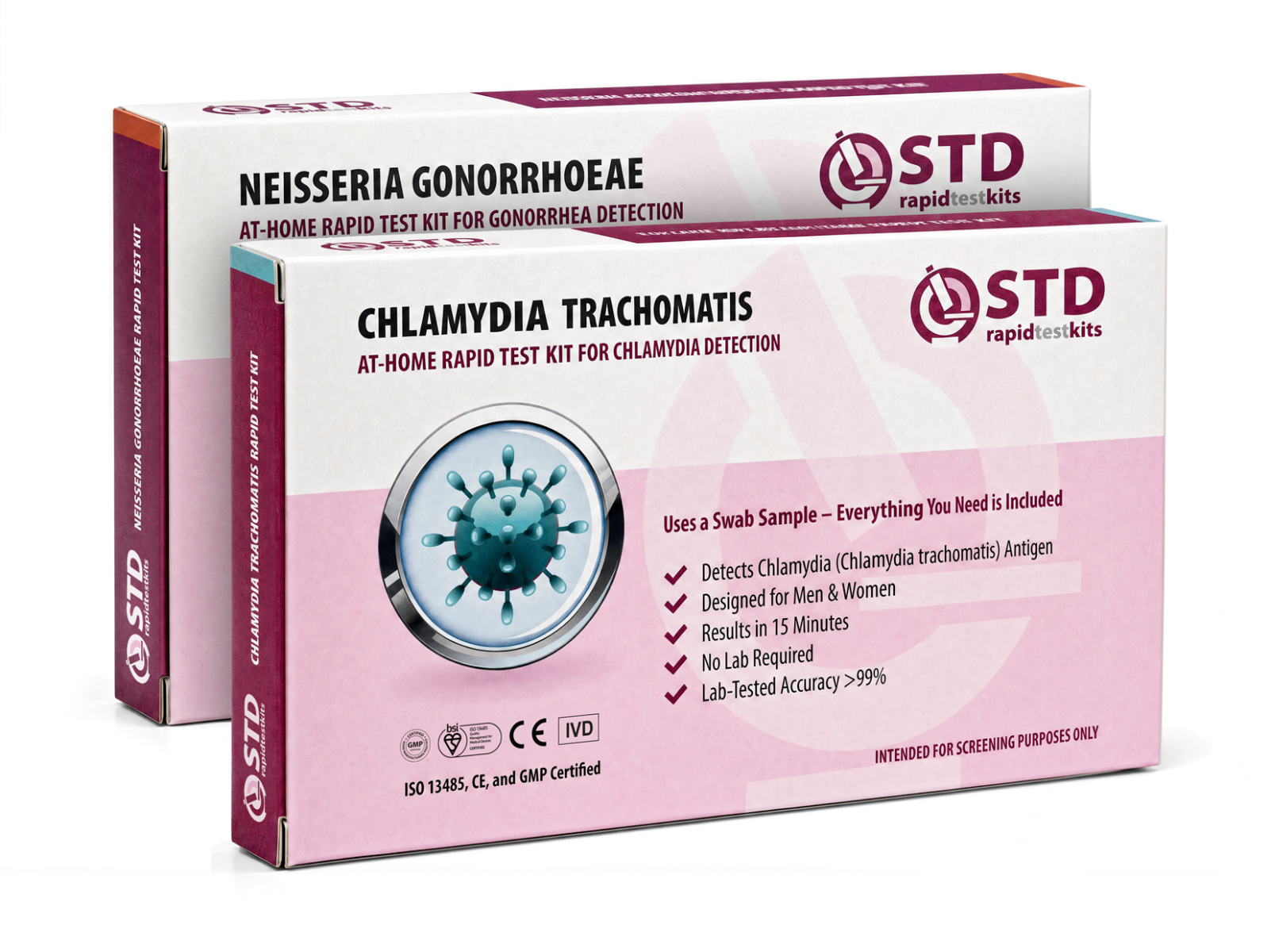
Home chlamydia and gonorrhea rapid tests use lateral-flow chemistry on a self-collected swab. They are convenient and they screen well after the window has closed. They are not the same as lab NAAT, which directly amplifies bacterial genetic material and is more sensitive at low infection levels. A positive on a home test is meaningful enough to act on, then confirm. A negative is meaningful after the window has closed and in the absence of symptoms.
Sensitivity and specificity also depend on prevalence. In a low-prevalence population (asymptomatic adults with no known exposure), even a high-specificity test produces a higher percentage of false positives among all positives that come back, simply because there are few true positives to start with. This is why clinicians take a reactive home result as a flag to confirm, not as the diagnosis itself.
Common Myths About False STI Test Results
Misunderstandings about home tests cause both unnecessary panic and unwarranted reassurance. The four below come up the most often in reader questions.
Myth: A positive home test always means you have the infection. Reality: a positive is a screening result. Lab confirmation is the deciding step, especially for infections like syphilis and herpes where cross-reactivity occasionally produces a positive read on a person who is not actively infected.
Myth: A negative result means you are completely clear of every STI. Reality: a negative result reflects what one test could detect at the time you took it. If the test was inside the window period, the result is preliminary. Even a post-window negative does not cover infections the kit did not test for. A 7-in-1 panel does not screen for HPV, mycoplasma, or trichomoniasis in men.
Myth: At-home tests are as accurate as clinic-based tests. Reality: home rapid tests use lateral-flow chemistry and are very useful for private screening. Lab-based tests (NAAT for chlamydia and gonorrhea, fourth-generation antigen-antibody for HIV, treponemal plus non-treponemal for syphilis) remain more sensitive, particularly close to the edge of the window period. Home and lab tests are complementary, not interchangeable.
Myth: If two home tests disagree, average the result. Reality: do not try to interpret divergent home results yourself. Two home tests with different answers means a lab test should be the deciding word.
Rapid tests are very accurate when used correctly, but no screening test is 100% accurate, and reactive results must be confirmed with follow-up testing before a diagnosis is made.
Taking Control of Your Sexual Health
At-home STI tests are a useful screening tool. They are private, cheap relative to a clinic visit, and they let people who would not otherwise get tested start a conversation with themselves about their risk. They are not a substitute for clinical care, and they were never designed to be.
The number of unknown infections in the US is high precisely because most people do not test until they have symptoms (the WHO publishes background on global STI screening rates at the WHO STI fact sheet). A home test that produces an inconclusive result is still a step forward, because it has surfaced a question. Following up on that question with a confirmatory test is what changes outcomes.
A clean way to use them looks like this.
- Test before symptoms appear, after a new partner, or after a known exposure.
- Wait the right window before treating a negative as meaningful.
- Confirm any reactive result with a lab test through a clinician.
- Bring the result to a clinician if you have symptoms, repeated exposures, or two inconclusive home results in a row.
If you tested at home, did the right things to handle the kit, and still got an unclear result, you have not done anything wrong. The next move is a lab test, a clinic visit, or both.
FAQs
- Can medications affect my STI test result?
- Yes. Antibiotics taken before testing can lower bacterial load below detection levels, producing a temporary false negative. Antivirals can do the same for some viral infections. If you have been treated recently, wait until the treatment course is complete and ask a clinician about the right retesting timing.
- How long should I wait to retest after an inconclusive result?
- It depends on the infection. For chlamydia and gonorrhea, wait 1 to 2 weeks. For HIV antibody home tests, wait until at least 23 days post-exposure (90 days is the conservative window). For syphilis or hepatitis B and C, wait several weeks to allow the body to produce detectable markers. The table earlier in this article lists conservative windows by infection.
- Are some STI tests more prone to false positives than others?
- Yes. Syphilis and herpes antibody tests are the most prone to cross-reactivity. This is one reason confirmatory testing is built into the CDC syphilis algorithm: a positive treponemal test is followed by a non-treponemal test to separate active from past infection.
- What if I am still inconclusive after retesting?
- Go to a clinic, urgent care, or public-health STI clinic for a lab-based test. Two inconclusive home results in a row means the answer is not coming from a home kit, and a clinician should take over.
- Can a past STI cause a false positive on a current test?
- Some infections leave antibodies in the body long after the infection has cleared. A test that measures antibodies can read positive even when there is no active infection. HSV-2 antibody tests in particular can stay positive lifelong after the first infection. A clinician interprets these results in context.
- Do all STIs show up on tests?
- No. Herpes can be undetectable between outbreaks. HPV in men is not screened by routine at-home tests. Some early-stage infections fall below the detection threshold of rapid tests. A negative test does not rule out every possible infection.
- What is the difference between sensitivity and specificity?
- For at-home STI tests, high specificity is the design priority. That means a positive result is rare enough that it warrants lab confirmation, while a negative result inside the window period is the more common error to watch for. Put plainly: sensitivity is how well the test detects a real infection (few false negatives), and specificity is how well it rules out infection in uninfected people (few false positives).
- U.S. Centers for Disease Control and Prevention. STI Treatment Guidelines covering testing windows, confirmatory testing algorithms, and retesting recommendations after treatment.
- U.S. Centers for Disease Control and Prevention. HIV Testing guidance covering rapid test window periods, fourth-generation lab assays, and the confirmatory antibody differentiation algorithm.
- U.S. Food and Drug Administration. Public information on cleared in-vitro diagnostic devices, including home-use rapid tests for sexually transmitted infections.
- World Health Organization. Sexually transmitted infections fact sheet covering global STI burden, screening guidance, and public-health context.
- NHS. Sexually transmitted infections overview with patient-facing window period and clinical testing guidance.
- U.S. Centers for Disease Control and Prevention. Syphilis general information covering stages, transmission routes, and prevention as a public-facing background resource.
