Why You Should Not Self-Treat an STI (and What Professional Care Looks Like)
Why pharmacy hacks and partner pills make STIs worse, not better
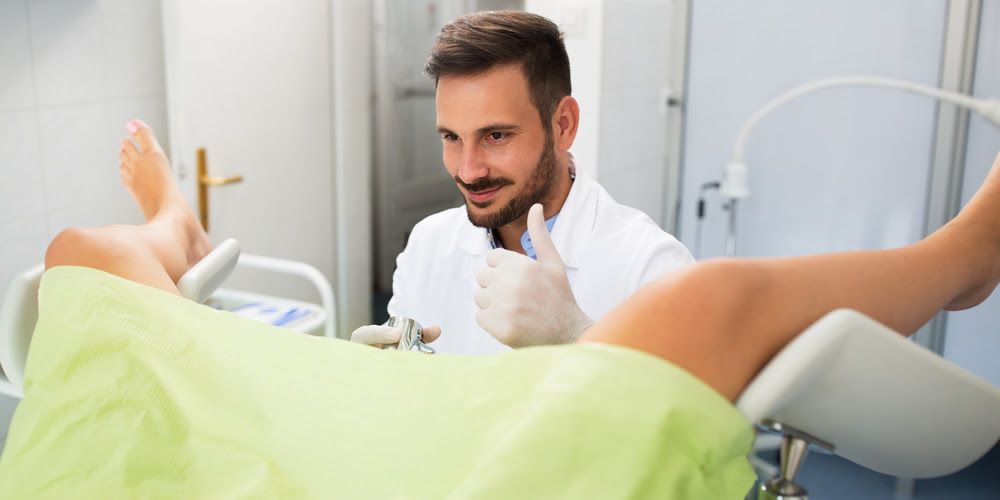



- Most bacterial STIs are curable, but only with the right prescription antibiotic at the right dose. Leftover or partner-shared pills almost always fail and accelerate antibiotic resistance.
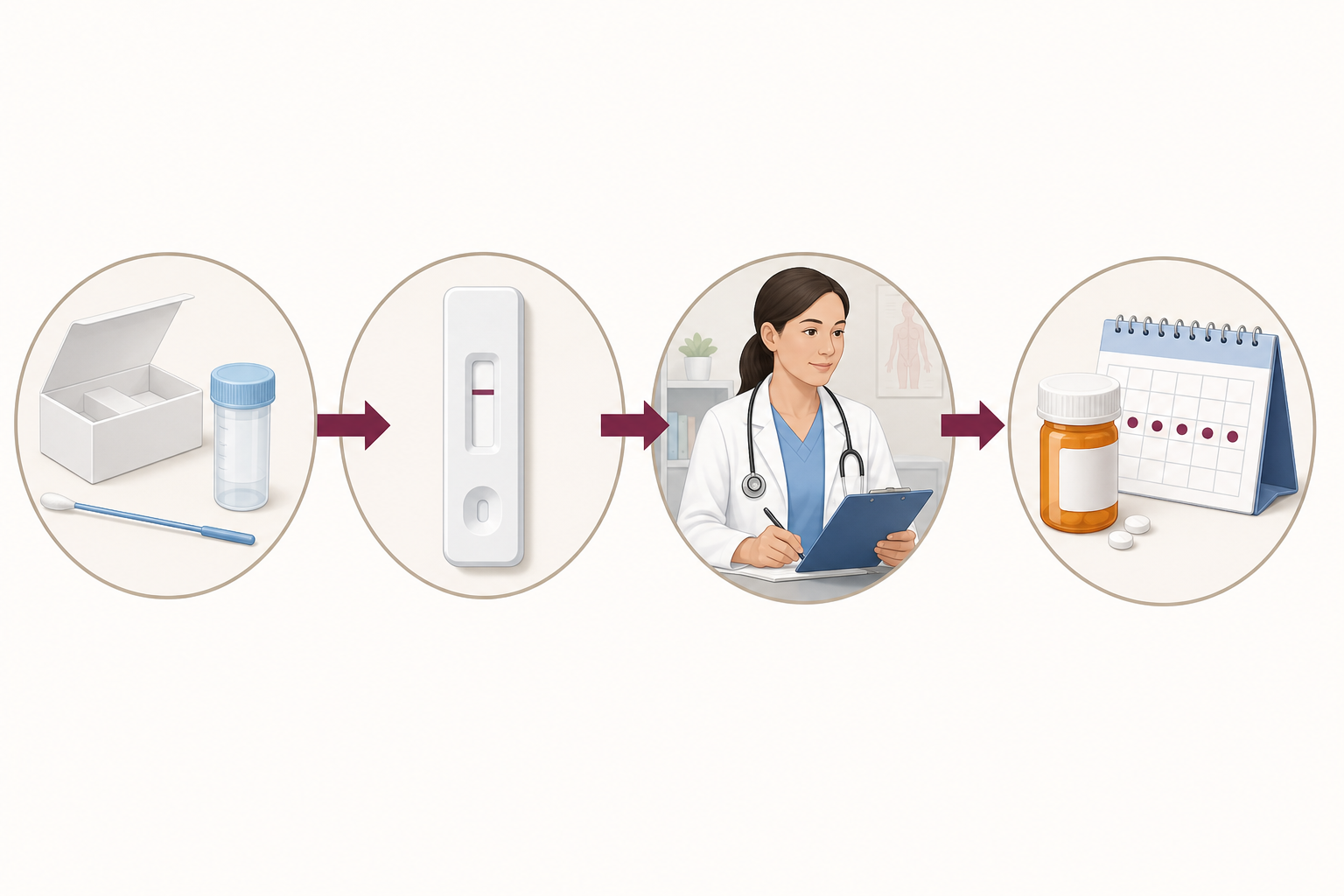
- At-home rapid tests give you a private, fast answer about your status. A positive result is the start of treatment, not the end; pair it with a clinical visit so the right medication is prescribed and partners can be notified.
Published: September 2025 | Last updated: May 2026 | Editorial review and quality control: Martina N.
Getting blindsided by an STI symptom or a worrying exposure sends most people straight to the search bar. From there it is a short hop to dubious advice: borrow a friend's leftover azithromycin, douche with apple cider vinegar, hit the drugstore for whatever sounds vaguely relevant. None of that works for sexually transmitted infections, and most of it makes the problem worse. Bacterial STIs require specific antibiotics at specific doses; viral STIs are managed with prescription antivirals; the rest depends on what a clinician finds when the right sample reaches the right test. This guide walks through why professional care is non-negotiable, what testing genuinely looks like in 2026, and where private at-home screening fits into a sensible plan.
Why Self-Treating an STI Almost Never Works
The temptation to handle an STI quietly at home is understandable. Embarrassment, cost, and clinic wait times are real barriers. But the medicines that actually clear sexually transmitted infections are not the kind you pick up over the counter, and the symptoms that send people to the drugstore in the first place usually point to something the drugstore cannot fix.
The diagnosis problem
Vaginal discharge can mean bacterial vaginosis, a yeast infection, trichomoniasis, gonorrhea, chlamydia, or several other things, and the standard antifungal you buy without a prescription only treats one of them. A burning sensation during urination might be a urinary tract infection, but it is also one of the most common chlamydia and gonorrhea symptoms in people with penises. Without a lab result, you are guessing.
The drug-matching problem
Antibiotics are not interchangeable. Per the CDC STI Treatment Guidelines, gonorrhea is now treated with a single intramuscular injection of ceftriaxone, not an oral pill, because the bacteria have developed resistance to nearly every oral antibiotic that used to work. Chlamydia is treated with doxycycline for seven days; syphilis is treated with benzathine penicillin G by injection; trichomoniasis is treated with metronidazole or tinidazole. Each requires a specific drug, a specific dose, and a specific duration. Taking a partner's leftover pills or grabbing whatever your friend says worked for them does not reliably deliver any of those things.
The underdosing problem
When an antibiotic course is cut short, susceptible bacteria die first and the hardier survivors multiply. That is the basic mechanism behind antimicrobial resistance. Skipping doses, sharing antibiotics, or stopping when symptoms ease all contribute to drug-resistant infections. Gonorrhea is the cautionary example. The CDC's gonorrhea overview notes that drug-resistant strains of gonorrhea are increasing, which is why the recommended regimen has changed multiple times in the past two decades.
The viral mismatch
Antibiotics do nothing to HIV, herpes simplex, hepatitis B, or HPV. Antivirals, a different class of drug entirely, are what these infections respond to, and they are not available without a prescription. Self-medicating a herpes outbreak with leftover amoxicillin will not shorten it. Treating an HPV-related genital wart with the antifungal cream you used for thrush will not clear it.
The co-infection gap
STIs travel in groups. Someone diagnosed with chlamydia is more likely than the general population to also have gonorrhea, and someone with one bacterial STI is at higher background risk for HIV and syphilis. The WHO's STI fact sheet emphasizes screening for multiple infections at one visit precisely because single-infection thinking misses co-infections that change treatment plans. A self-treatment that targets one possible diagnosis leaves any others to progress unchecked.
Sub-therapeutic dosing is one of the main drivers of antimicrobial resistance. Even when the drug class is correct (it often is not), the dose and duration in a partial leftover prescription is rarely enough to clear an active infection. The infection persists, you remain contagious, and the bacteria that survive are better equipped to resist the next round of treatment.
Signs That Warrant a Clinical Visit
Most STIs are silent for weeks, months, or in some cases years. People feel fine while an infection slowly causes damage, which is why routine screening matters as much as symptom-driven testing. The NHS guidance on STIs notes that many STIs cause no symptoms at all, making routine testing the only reliable way to know your status.
That said, when symptoms do appear, they are a clear cue to book an appointment rather than wait it out. The patterns clinicians look for include:
- Genital sores or ulcers. A painless round sore is the classic primary syphilis presentation; clustered painful blisters point toward herpes simplex; firm fleshy growths can be HPV-related warts.
- Abnormal discharge. Green, yellow, frothy, or unusually heavy discharge from the penis or vagina is not normal and often signals gonorrhea, chlamydia, or trichomoniasis.
- Pain or burning with urination. Especially without other UTI symptoms, this overlaps heavily with chlamydia and gonorrhea.
- Painful intercourse. For people with vaginas, this can signal pelvic inflammatory disease, an upstream complication of untreated chlamydia or gonorrhea.
- Abnormal vaginal bleeding. Spotting between periods or after sex can be a pelvic inflammatory disease sign.
- Rash on palms or soles. A hallmark of secondary syphilis a few weeks to months after an unnoticed primary chancre.
- Flu-like illness after a recent exposure. Fever, sore throat, swollen lymph nodes, and a body rash in the two to four weeks after a possible HIV exposure can be acute retroviral syndrome.
- Unexplained pelvic or testicular pain, fever, or weight loss. Any of these in a sexually active person warrant a workup.
None of these symptoms is sufficient for self-diagnosis, but each is a strong reason to get tested for a panel of common STIs rather than for whichever single infection your search results suggested. Pairing a clinician visit with at-home rapid screening for the most common bacterial and bloodborne infections is the fastest way to narrow down what is actually going on.
What Modern STI Testing Looks Like
STI testing has changed substantially in the past decade, and a lot of the squeamish associations people carry around (long needles, awkward pelvic exams for every infection, slow callbacks) are out of date. The two big categories are sample types and test technology, and both decide how soon after exposure a test is useful.
Sample types
Bacterial STIs that infect the genital tract (chlamydia, gonorrhea, trichomoniasis) are detected most accurately from swab samples taken at the infection site. The good news is that self-collected swabs are now considered as accurate as clinician-collected ones for these infections per CDC treatment guidance, which is what makes at-home rapid kits viable for these targets. Bloodborne infections (HIV, syphilis, hepatitis B, hepatitis C) and viral antibody panels (HSV-1, HSV-2) are detected from blood, traditionally drawn at a clinic but also testable from a fingerstick sample at home.
Test technologies
Laboratories use nucleic acid amplification tests, or NAATs, as the gold standard for chlamydia and gonorrhea. NAATs detect the bacterial genetic material directly and are highly sensitive even at low infection levels. For HIV and syphilis, fourth-generation antigen-antibody combination tests and reverse-sequence syphilis algorithms are now standard in most clinical labs. At-home kits use a different technology, lateral-flow immunoassays, which look for either antibodies in blood or microbial antigens in swab samples. Lateral-flow tests trade some analytical sensitivity for speed and convenience; the result appears on the cassette in about 15 minutes rather than 24 to 72 hours in a laboratory. The at-home rapid kit and the lab NAAT are complementary screening and confirmatory tools, not equivalent technologies.
Window periods
The window period is the time between an exposure and when a test reliably becomes positive. For chlamydia and gonorrhea, swab-based tests are typically reliable from one to two weeks after exposure. For HIV, the CDC HIV testing guidance distinguishes three test classes: fourth-generation antigen-antibody lab tests detect most infections within 18 to 45 days; rapid antigen-antibody fingerstick tests use roughly 18 to 90 days; and antibody-only rapid tests may need the full 23 to 90 days. Syphilis is generally detectable three to six weeks after exposure. Hepatitis B and C antibody windows are longer. Testing too early returns a negative that you cannot trust, which is one of the most common reasons a self-managed plan misses an actual infection.
Both lab tests and at-home rapid tests share the same biology of window periods. Detection depends on the immune system or the infection load reaching the threshold the assay can pick up, which takes time regardless of where the sample is processed.
| Infection group | Sample type | Lab gold standard | At-home rapid option |
|---|---|---|---|
| Chlamydia, gonorrhea, trichomoniasis | Self-collected genital swab | Nucleic acid amplification test (NAAT) | Lateral-flow swab cassette, ~15-minute result |
| HIV, syphilis, hepatitis B, hepatitis C | Fingerstick or venous blood | Fourth-generation antigen-antibody panel (HIV) and reverse-sequence treponemal algorithm (syphilis) | Lateral-flow blood cassette, ~15-minute result |
| Herpes (HSV-1, HSV-2) | Fingerstick or venous blood for antibody panels; clinic-collected swab for active lesions | Type-specific glycoprotein G antibody serology; PCR of lesion swab | Lateral-flow blood antibody cassette, ~15-minute result |
Bacterial vs Viral STIs: The Treatment Reality
The single most important fact for understanding why self-treatment fails is that bacterial and viral STIs are completely different problems requiring different drug classes.
Bacterial and parasitic: curable, but you need the right antibiotic
Chlamydia, gonorrhea, syphilis, and trichomoniasis are all bacterial (trich is a parasitic protozoan), and all are curable with prescription medications. The current standard regimens per CDC STI Treatment Guidelines include:
- Chlamydia. Doxycycline 100 mg twice daily for 7 days. Azithromycin 1 g single-dose is now a second-line option because doxycycline performs better, especially for rectal infections.
- Gonorrhea. Ceftriaxone 500 mg intramuscular injection, single dose. Oral antibiotics are no longer recommended as monotherapy because of resistance.
- Syphilis. Benzathine penicillin G intramuscular injection, with the number of doses depending on stage. Penicillin remains the only fully effective treatment, particularly during pregnancy.
- Trichomoniasis. Metronidazole 500 mg twice daily for 7 days in people with vaginas; a single 2 g dose is an option for people with penises.
None of these are available over the counter in the United States. All require a clinician to assess for allergies, drug interactions, and pregnancy status before prescribing. None can be safely improvised from a partner's leftovers.
Viral: usually not curable, but well-controlled with antivirals
HIV, genital herpes (HSV-1 and HSV-2), hepatitis B, and HPV are viral infections. They are not addressed by antibiotics at all. Treatment looks different for each:
- HIV. Lifelong antiretroviral therapy (ART) suppresses the virus to undetectable levels in blood. Sustained undetectable viral load means effectively zero risk of sexual transmission to partners. The earlier ART begins, the better long-term outcomes are. Self-managing an HIV diagnosis without ART is the single most dangerous self-treatment choice on this list.
- Genital herpes. Antiviral drugs such as acyclovir, valacyclovir, and famciclovir shorten outbreaks when taken at the first sign of symptoms (episodic therapy) and reduce outbreak frequency when taken daily (suppressive therapy). Antivirals are prescription medications.
- Hepatitis B. Chronic infection is managed with prescription antivirals such as tenofovir or entecavir. The hepatitis B vaccine prevents new infections and is part of the routine immunization schedule.
- HPV. Most HPV infections clear without treatment within one to two years, but high-risk types can persist and cause cervical, anal, or oropharyngeal cancers. Cervical screening with Pap and HPV tests is the established detection strategy. The HPV vaccine prevents the highest-risk strains and is recommended for routine vaccination through age 26 and through shared clinical decision-making up to age 45.
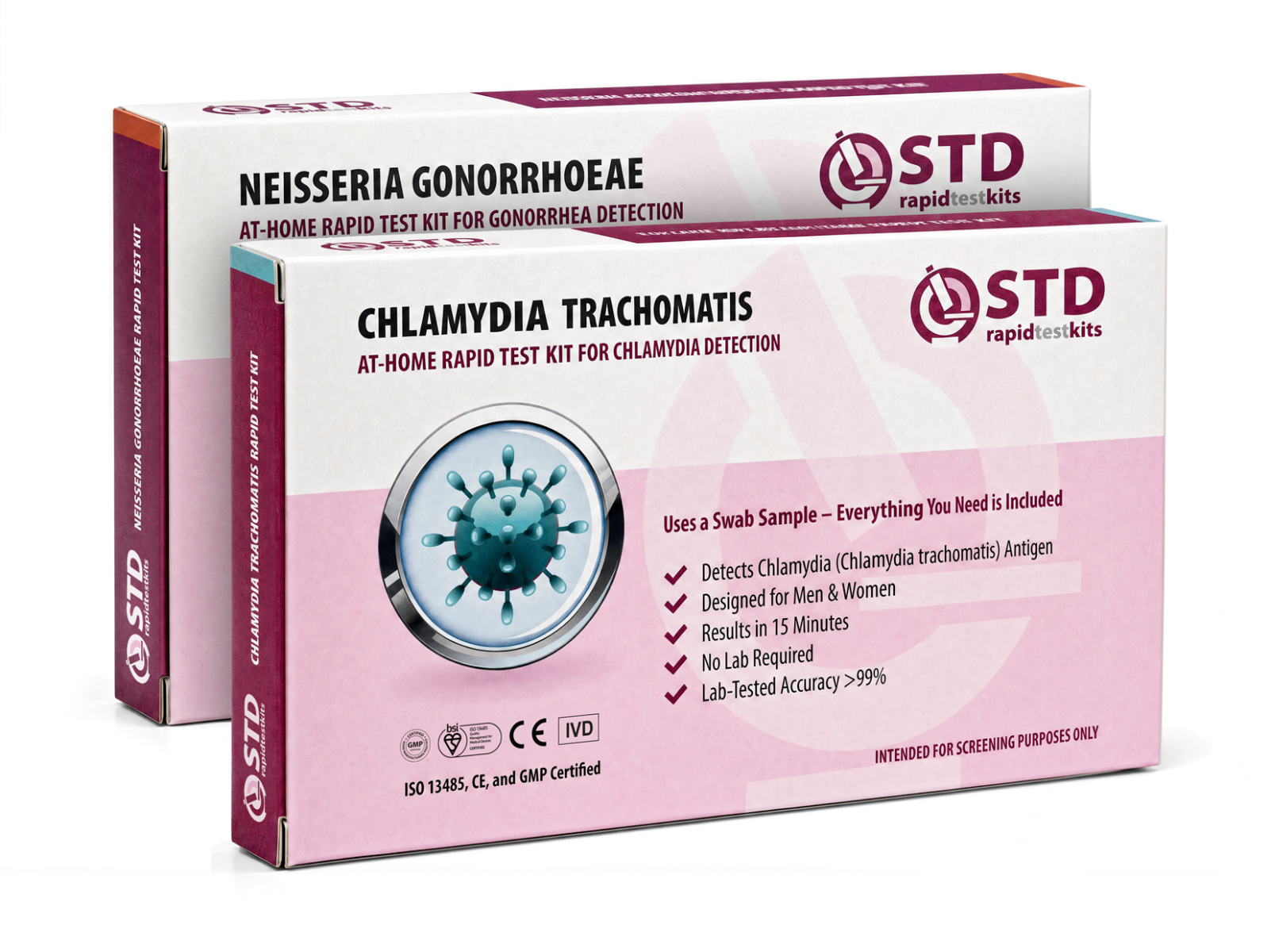
The at-home screening options referenced throughout this article are sold by this site and use lateral-flow chemistry, a different technology from the laboratory NAAT and fourth-generation assays described above. They are useful as a private first-pass screen; they do not replace clinical confirmation and prescription treatment.
Most STIs have no signs or symptoms, so testing is the only way to know for sure if you have one.
The Real Risks of Going It Alone
Beyond the simple problem of using the wrong drug, self-treatment carries downstream risks that compound the original infection. These are the failure modes clinicians most often see when patients arrive after weeks or months of trying to handle things on their own.
Antimicrobial resistance gets worse
Every under-dosed antibiotic course is a selection pressure event for the surviving bacteria. The CDC's gonorrhea overview notes that drug-resistant strains are increasing, and population-level resistance is the reason the recommended treatment regimen has changed multiple times in the past 15 years. Individual self-medication is one of the inputs that drives this.
Symptoms quiet down but the infection persists
An under-dosed antibiotic may reduce inflammation enough to make symptoms feel better, while leaving enough bacteria behind to maintain a chronic, low-grade infection. In chlamydia and gonorrhea, this is how upper-genital-tract complications develop. Pelvic inflammatory disease (PID) is a leading cause of tubal-factor infertility and ectopic pregnancy per the CDC's chlamydia overview. Many cases of PID-related infertility trace back to chlamydia or gonorrhea that was missed or under-treated, not to obvious untreated infection.
Partners stay infected and reinfect you
STIs require partner treatment to stop the ping-pong cycle. Clinicians follow established expedited partner therapy (EPT) protocols (see CDC EPT guidance) that let an index patient bring antibiotics directly to a partner without a separate appointment in many states. Self-treating in isolation means partners go untreated, and once you finish your own course you are exposed all over again.
Co-infections get missed
A standard clinical STI panel screens for several infections at once because they cluster. Self-treating one suspected infection leaves the rest invisible. Someone who treats a presumed yeast infection at home may have trichomoniasis. Someone who self-treats a presumed UTI may have chlamydia. Someone who waits out a rash may have secondary syphilis. The right answer is a panel, not a single-infection guess.
- Untreated syphilis can progress to neurological, cardiovascular, and ocular complications over years.
- Untreated hepatitis B can drive cirrhosis and liver cancer.
- Untreated HIV destroys CD4 cells progressively and ends in AIDS without antiretroviral therapy.
Where At-Home Rapid Testing Actually Fits
If self-treatment is off the table, the natural question is whether at-home testing is also off the table. It is not. Rapid screening at home solves a different problem from clinical treatment, and used correctly it improves access rather than replacing care. The WHO STI fact sheet cites clinic stigma and the cost of testing as key barriers to diagnosis, barriers that a private at-home kit removes for the first screening step.
The kits we sell are lateral-flow rapid tests. They use the same swab sample type that labs use for chlamydia, gonorrhea, trichomoniasis, and HPV, and the same fingerstick blood sample type that clinics increasingly use for HIV, syphilis, and hepatitis screening. The chemistry is different from lab NAAT or fourth-generation antigen-antibody assays, so the analytical sensitivity is a notch lower, but the screening utility is real. Lateral-flow at-home rapid tests are well suited to:
- Knowing your baseline status before a new sexual relationship.
- Checking after a known exposure, once the appropriate window period has passed.
- Routine periodic screening for asymptomatic infections, especially chlamydia and gonorrhea, in sexually active adults.
- A first-pass triage when symptoms appear, before booking a clinical visit.
What at-home kits are not designed to do is provide a treatment plan. A positive result tells you something is there; it does not tell you the resistance profile of the specific gonococcal strain you have, or whether you also have a co-infection that was not on the panel, or whether your partners have been notified. Those are clinician jobs.
The right mental model is at-home rapid test as a screening tool that connects you faster to a clinician, not as a substitute for one. A confirmed positive should always trigger a clinical appointment for treatment.
Our at-home trichomoniasis and HPV swab tests are validated for vaginal self-collection only; male readers needing a trichomoniasis or HPV test should see a clinic. The rest of the panel (HIV, syphilis, chlamydia, gonorrhea, herpes, hepatitis) works for any gender.

What Actually Happens at a Clinical Visit
One of the bigger drivers of self-treatment is anxiety about the clinic visit itself. People imagine awkward interrogations, judgmental staff, and invasive exams. The reality of contemporary STI clinic visits, especially at sexual-health-focused or family-planning clinics, is much less dramatic.
A standard initial visit includes:
- A brief confidential history. A few questions about recent sexual activity, symptoms, contraception, and prior testing. This is logistical, not interrogative; it helps the clinician decide which specific infections to test for.
- Sample collection. For most STIs this is a urine sample, a self-collected swab, or a small blood draw. A speculum exam is reserved for specific concerns (suspected PID, abnormal bleeding, possible cervical pathology) and is not routine just because you are getting an STI panel.
- Counseling and prevention discussion. Vaccination status (hepatitis B, HPV), PrEP eligibility for HIV prevention, condom and lubricant guidance, and partner notification options.
- Follow-up plan. When results are back, how they will be communicated, and what the next steps look like depending on the outcome.
If a result comes back positive, treatment is straightforward and usually fast:
- For most bacterial STIs, the prescription is written at the visit or sent to your pharmacy the same day. Gonorrhea is treated with an in-office intramuscular injection in many clinics, so you may walk out already treated.
- For viral STIs, the clinician explains the management plan, prescribes antivirals where appropriate, and refers to specialty care if needed (infectious disease for HIV, hepatology for hepatitis B and C).
- Partner notification can be done by you, by the clinician with your consent, or via anonymous partner-notification services that many public health departments operate.
Cost is a frequent worry. In the United States, many public health clinics offer STI testing and treatment on a sliding scale or free, and Planned Parenthood and Title X family planning clinics provide low-cost or no-cost services regardless of insurance status. The CDC's expedited partner therapy guidance exists specifically to reduce the access burden of partner treatment. There are options. A positive result does not lock you into a confusing or expensive process.
Stigma is the other frequent worry. Sexual-health clinicians see STIs every working day and approach the visit as a clinical task, not a moral one. Arriving with the same matter-of-fact framing makes the conversation considerably easier.
Frequently Asked Questions
- Can I take leftover antibiotics if I think I have an STI?
- Leftover antibiotics create two overlapping problems. First, the drug is probably wrong for your specific infection; gonorrhea, chlamydia, syphilis, and trichomoniasis each call for a different antibiotic regimen, and matching by guesswork rarely lands on the right one. Second, even when the class happens to be right, the quantity remaining in someone else's bottle is almost certainly the wrong dose for the wrong duration. Incomplete courses accelerate resistance and leave you contagious. A confirmed diagnosis followed by a current-guideline prescription is the only reliable path.
- Are there any over-the-counter products that treat STIs?
- No prescription-free oral or topical product treats a sexually transmitted infection in the United States. Over-the-counter items you might encounter (antifungal creams for yeast, drugstore boric-acid suppositories, douches, urinary-tract pain strips) treat different conditions or only mask symptoms. If you are tempted by an online pharmacy offering antibiotics without a prescription, that is illegal in most U.S. states and the medications may be counterfeit or expired.
- How long after a possible exposure should I wait to test?
- It depends on the test. For chlamydia and gonorrhea, swab-based rapid tests are reliable starting about one to two weeks after exposure. For HIV, modern fourth-generation lab tests detect most infections within about 18 to 45 days, and antibody-only rapid tests typically need 23 to 90 days. For syphilis, three to six weeks is the standard window. Testing earlier risks a false negative; testing at the recommended window gives a result you can act on. The CDC's HIV testing guidance breaks down window periods by test type for all current HIV test classes.
- If my at-home rapid test is negative, am I in the clear?
- Only if you tested after the appropriate window period for every infection you are concerned about. A test taken too early can return a falsely reassuring negative. Repeat testing is recommended after the longest applicable window if you suspect a specific exposure. At-home rapid lateral-flow tests are also a screening technology with slightly lower analytical sensitivity than lab NAAT; if you have ongoing symptoms despite a negative rapid result, a clinical lab test is the next step.
- My partner was diagnosed with chlamydia and gave me a copy of the prescription. Should I take it?
- Expedited partner therapy is a real and legitimate practice in many states; a clinician can prescribe a course of antibiotics for a sexual partner without that partner needing their own appointment. If you received medication this way, take the full course as directed. What is not safe is taking a few leftover pills from your partner's bottle; the dose will be wrong. The CDC's expedited partner therapy guidance has details on how this works state by state.
- Can I tell the difference between an STI and a UTI or yeast infection without testing?
- Reliably, no. The symptoms overlap heavily. Burning urination, discharge, and pelvic discomfort can all appear in UTIs, yeast infections, bacterial vaginosis, chlamydia, gonorrhea, and trichomoniasis. Diagnosis depends on the sample, not on symptom pattern. If you are sexually active and develop any of these symptoms, an STI panel is part of the appropriate workup alongside the obvious differentials.
- What if I have no symptoms but had a possible exposure?
- Get tested. Most STIs are asymptomatic for the majority of people who have them, and waiting for symptoms to appear is the most common reason cases are caught late or after complications have already developed. Routine screening is built into clinical guidelines specifically because the absence of symptoms is not evidence of the absence of infection.
- How is at-home rapid testing different from a lab NAAT or fourth-generation HIV test?
- At-home rapid tests use lateral-flow immunoassay chemistry and return a result in about 15 minutes from a fingerstick blood drop or a self-collected swab. Lab NAATs amplify the pathogen's genetic material directly and lab fourth-generation HIV tests combine antigen and antibody detection; both are slightly more sensitive and run on a 24 to 72 hour turnaround. The two are complementary, not equivalent. Rapid tests are the screening tool that fits at home; lab tests are the confirmatory tool that fits a clinical workup. A positive rapid result should always be followed up with clinical care.
- U.S. Centers for Disease Control and Prevention. STI Treatment Guidelines. Reference for current recommended regimens for chlamydia, gonorrhea, syphilis, and trichomoniasis, including the move away from oral monotherapy for gonorrhea and the doxycycline-first recommendation for chlamydia.
- U.S. Centers for Disease Control and Prevention. About Gonorrhea. Reference for documented antimicrobial resistance trends in Neisseria gonorrhoeae and the evolution of treatment recommendations.
- U.S. Centers for Disease Control and Prevention. HIV Testing. Reference for fourth-generation antigen-antibody test characteristics and HIV window periods including the 23 to 90 day range for antibody-only rapid tests.
- U.S. Centers for Disease Control and Prevention. Expedited Partner Therapy clinical guidance. Reference for clinician-initiated partner treatment protocols and state-by-state EPT availability.
- World Health Organization. Sexually Transmitted Infections (STIs) Fact Sheet. Reference for asymptomatic prevalence, multi-infection screening rationale, and cost/stigma access-barrier framing.
- United Kingdom National Health Service. Sexually Transmitted Infections (STIs) overview. Reference for the general statement that many STIs cause no symptoms and that routine testing is the only reliable way to confirm status.
- U.S. Centers for Disease Control and Prevention. About Chlamydia. Reference for chlamydia symptoms, asymptomatic infection rates, and complications including pelvic inflammatory disease and tubal-factor infertility.