
Published: August 2025 | Last updated: May 2026 | Editorial review and quality control: Martina N.
How often should I get tested for STIs?
Most sexually active adults should screen at least once a year for chlamydia, gonorrhea, syphilis, and HIV. Tighten to every 3 to 6 months if you have multiple partners, condomless sex with an unknown-status partner, a partner with an STI, or are a man who has sex with men. Test sooner for symptoms or after a known exposure.
Regular STI testing is the simplest tool sexually active adults have for catching infections early, before they cause lasting harm or quietly pass to a partner. Most sexually transmitted infections cause no symptoms for weeks, months, or even years. Without a test, you cannot know your status.
Sexually transmitted infections are common, and many of them are silent. The CDC's surveillance program (CDC STI statistics) tracks millions of new U.S. cases each year, with bacterial STI rates rising substantially over the past decade. When caught early, the common bacterial infections (chlamydia, gonorrhea, syphilis) are curable with antibiotics, and viral infections like HIV are managed effectively with daily medication.
This guide covers when to test and how often, the risk factors that tighten the cycle, the window period for each infection, where home rapid tests fit alongside clinic and mail-in lab testing, what untreated infections actually do over time, and how to build a routine you will keep. The terms STD (sexually transmitted disease) and STI (sexually transmitted infection) are used interchangeably here; STI is the term most current public-health agencies prefer because not every infection causes overt disease. The goal is not to alarm anyone. The goal is to make routine STI testing feel like the dental cleaning of sexual health: scheduled, normal, low-stakes, and worth doing.
Key Takeaways
- Most STIs cause no symptoms for weeks or months. Routine testing is the only reliable way to know your status before complications start.
- Caught early, chlamydia, gonorrhea, and syphilis are curable with a short antibiotic course. Untreated, they can cause infertility, ectopic pregnancy risk, and permanent organ damage.
stdrapidtestkits.com sells at-home lateral-flow rapid STI tests. We recommend products that fit a reader's actual situation, not commercial benefit. Where the right answer is a clinic visit (pharyngeal or rectal swab, NAAT confirmation, treatment, or symptom evaluation), we say so plainly.
Why routine STI testing matters
Most STIs are silent. Chlamydia, the most commonly reported bacterial STI in the United States, produces no obvious symptoms in most women and many men who carry it (CDC chlamydia page). Gonorrhea, trichomoniasis, and herpes follow a similar pattern: many people feel completely fine while the infection establishes itself or transmits to a partner. Without a test, the only signal you might get is a much later complication, by which point the original infection may have caused real damage.
The public-health math behind routine screening is straightforward. The World Health Organization estimates more than 1 million new curable STIs (chlamydia, gonorrhea, syphilis, and trichomoniasis combined) are acquired every day worldwide in adults aged 15 to 49 (WHO STI fact sheet). Each of those infections is curable with antibiotics if it is found early. Each of them, if missed, can develop into pelvic inflammatory disease, infertility, ectopic pregnancy risk, or, in the case of syphilis, multi-organ damage years later.
Annual screening also reduces transmission at the population level. Studies cited in the CDC's STI Treatment Guidelines show that screening sexually active young women for chlamydia each year substantially reduces rates of pelvic inflammatory disease over follow-up. Annual screening also breaks transmission chains; when an infected person learns their status and gets treated, the unknowing spread to current and future partners stops.
Routine testing is also how someone with HIV gets onto antiretroviral therapy quickly. Modern fourth-generation HIV antibody-antigen tests detect infection within about 18 to 45 days of exposure, and people who start treatment within months of infection have near-normal life expectancy and become non-infectious to partners once their viral load is suppressed (CDC HIV testing). The 'undetectable equals untransmittable' principle only kicks in for people who know their status and stay on therapy, which is why the CDC recommends at least one HIV test for everyone aged 13 to 64 even without identified risk factors.
More than 1 million curable sexually transmitted infections are acquired every day worldwide, the majority of which are asymptomatic.
Who should test, and how often
The CDC publishes screening recommendations by group. The short version is below, with deeper guidance on the agency's screening recommendations page.
Sexually active women under 25. Annual chlamydia and gonorrhea screening, regardless of partner count or contraceptive use. Women 25 and older with risk factors (a new partner, multiple partners, or a partner with an STI) should also test annually.
Sexually active men. The CDC does not recommend universal annual chlamydia and gonorrhea screening for heterosexual men, though screening is encouraged in high-prevalence settings. The HIV recommendation is at least one lifetime test for everyone aged 13 to 64, with annual testing for people with ongoing risk factors.
Men who have sex with men (MSM). Every 3 to 6 months for HIV, syphilis, and chlamydia and gonorrhea at genital, rectal, and pharyngeal sites as appropriate. MSM with multiple partners may benefit from quarterly testing.
Pregnant people. Test at the first prenatal visit for HIV, syphilis, hepatitis B, and chlamydia. Hepatitis C, gonorrhea, and a syphilis re-test in the third trimester are recommended for those at higher risk. Untreated maternal STIs can cause stillbirth, neonatal infection, or low birth weight.
Anyone with a new or multiple partners. Annual minimum, tightening to every 3 to 6 months if the pattern is ongoing. The math is exposure-based, not moralistic: if your partner pattern means a new encounter every quarter, an annual test catches only infections from the last 90 days; anything earlier could already have transmitted onward.
Injection drug use, sex work, or partners in either category. At least annual HIV, hepatitis B, hepatitis C, and syphilis testing, with tighter cycles for ongoing risk.
People living with HIV. Annual syphilis plus the full panel, with tighter cycles based on partner activity.
Anyone with symptoms or partner notification. Unusual discharge, painful urination, genital sores, pelvic pain, sore throat after oral sex, or a partner's recent positive diagnosis are reasons to test now, not at your next annual visit.
| Group | Recommended cadence | Source |
|---|---|---|
| Sexually active women under 25 | Annual chlamydia + gonorrhea screening | CDC |
| All adults 13 to 64 | At least one HIV test in lifetime; annual if ongoing risk | CDC |
| Pregnant people | First prenatal visit; repeat in 3rd trimester for higher-risk pregnancies | CDC |
| Men who have sex with men | Every 3 to 6 months for HIV, syphilis, chlamydia, gonorrhea | CDC |
| Multiple partners or new partner | Annual minimum; every 3 to 6 months if ongoing | CDC |
| Injection drug use | At least annual HIV, hepatitis B, hepatitis C, syphilis | CDC |
| People living with HIV | Annual syphilis plus full panel; more often per partner activity | CDC |
| Anyone with symptoms or partner notification | Test now, not at next annual visit | CDC |
Risk factors that change your schedule
Two people who both describe themselves as 'sexually active' can need very different testing cycles. Risk factors are the multiplier. The CDC and the U.S. Preventive Services Task Force both treat the following as inputs that move you from the once-a-year tier into the every-3-to-6-month tier.
If two or more risk factors apply at once, treat the every-3-to-6-month cycle as a floor, not a ceiling. Some clinicians recommend monthly screening for high-volume periods of partner activity, especially for syphilis, where the early-stage chancre can heal in 3 to 6 weeks and disappear before a routine annual test would catch it.
Inputs that tighten the routine to every 3 to 6 months
Two or more applying at once is a signal to treat the every-3-to-6-month cycle as a floor, not a ceiling.
- Multiple sexual partners in the past year (typically 2 or more), or any new partner with unknown status Common
- Condomless oral, vaginal, or anal sex with a partner whose status you do not know Common
- A partner who has tested positive for an STI, has multiple partners themselves, or shares injection equipment Common
- A previous STI in the past 12 months (reinfection rates after treatment are elevated, and an untreated partner is the most common cause) Common
- Membership in a higher-prevalence group: men who have sex with men, transgender people who have sex with men, sex workers, or anyone living with HIV Common
- Recent travel to a region with higher STI prevalence followed by a sexual encounter there Less common
- A condom that broke or slipped during a recent encounter Less common
- Any new genital, pelvic, anal, or pharyngeal symptoms (these override the routine schedule, regardless of where you are in your cycle) Common
What an STI test involves, by sample type
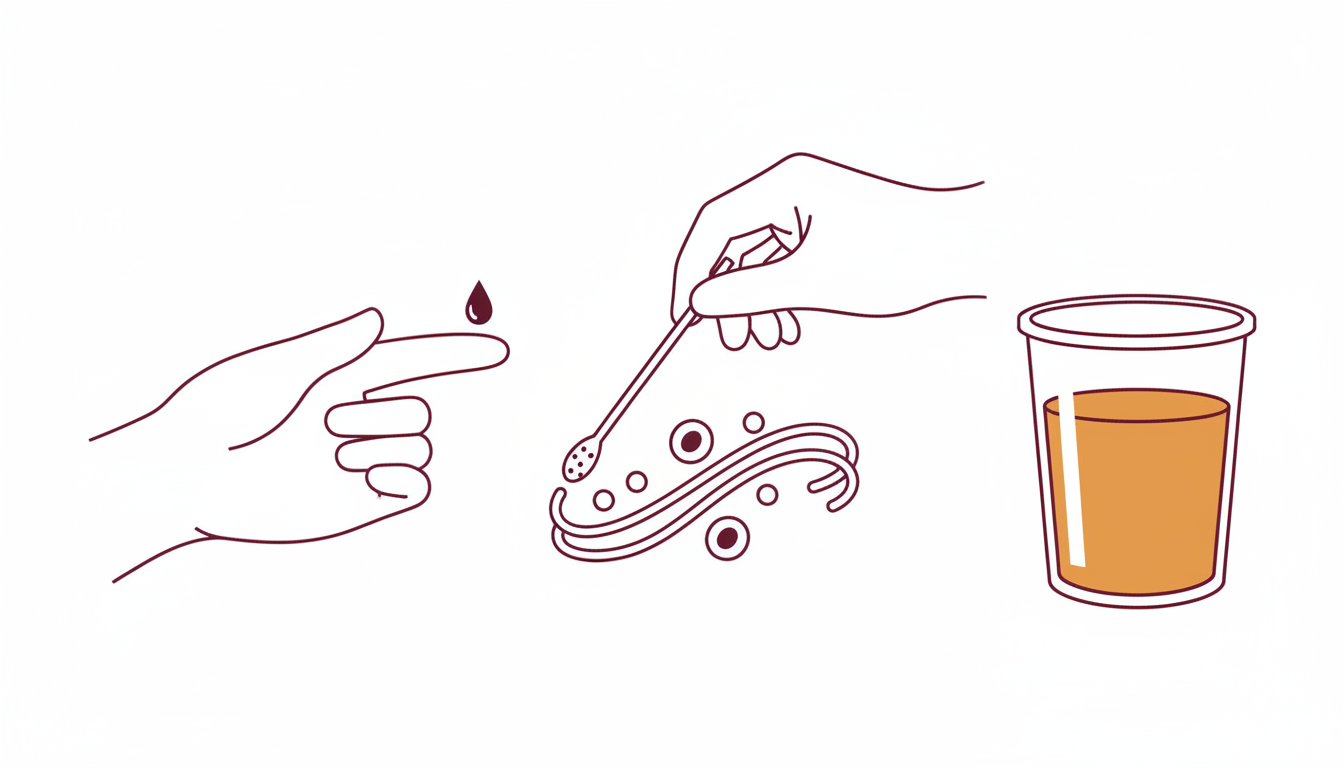
STI testing is not one test. It is several tests for several different infections, each using whichever sample type works best for that infection.
Blood tests (fingerstick or venous draw). HIV, syphilis, hepatitis B, hepatitis C, and herpes simplex (HSV-1 and HSV-2 antibody) are detected through blood. Modern fourth-generation HIV tests detect both antigen (active virus) and antibody, narrowing the window period to about 18 to 45 days. Syphilis blood tests measure treponemal or non-treponemal antibodies. Hepatitis B and C antibody tests confirm exposure; antigen and viral-load tests confirm active infection.
Genital swabs. Chlamydia, gonorrhea, trichomoniasis, and HPV are diagnosed from a swab of the affected anatomy. In a clinic this is usually a self-collected vaginal swab or a urine sample (clinical NAAT testing accepts both). At home, lateral-flow rapid swab tests use a self-collected vaginal or penile swab. Our trichomoniasis and HPV at-home swab kits are validated for vaginal self-swab only; male readers needing trich or HPV testing should see a clinic.
Throat and rectal swabs. If the exposure was oral or anal, a clinic-administered pharyngeal or rectal swab gives the most accurate result. Most at-home rapid kits, including the ones we sell, are not validated for these sites. A positive result on a genital sample does not rule out infection at another anatomic site.
Urine. Lab-based NAAT for chlamydia and gonorrhea works on first-catch urine. We do not sell urine-based kits; this option is clinic-only.
Window periods: when each test becomes reliable
The 'window period' is the gap between a possible exposure and when a test can detect that exposure reliably. Test before the window closes and you can get a false negative; test after, and you can trust the result within the assay's documented sensitivity. Window periods vary by infection AND by the test technology used. Lab molecular tests (NAAT) typically have shorter windows than home rapid lateral-flow antibody tests, because the lab test detects the pathogen directly while the home test waits for your immune system to seroconvert.
The bars below summarize typical windows for the standard panel, drawn from the CDC's STI screening guidance and the CDC's HIV testing recommendations. Two additional notes that do not fit a shared timeline: hepatitis B uses HBsAg plus core antibody at 3 to 6 weeks (core antibody can persist after recovery, so both markers are tested together); for HSV-2, IgG seroconversion typically occurs by 12 weeks, and the CDC's herpes treatment guidelines recommend repeat type-specific antibody testing at 12 weeks after presumed acquisition for early negatives. Routine asymptomatic HSV-2 serologic screening is not recommended for the general population because of false-positive issues; symptom-driven testing is preferred. Trichomoniasis NAAT becomes reliable from about week 2 onward in women.
For most people, a test at 2 weeks covers chlamydia and gonorrhea; a 6-week test covers syphilis; a 3-month test catches all common infections including HIV and hepatitis C.
Why untreated STIs matter
The reason routine screening is built into public-health guidance is that the curable infections cause real damage when they sit untreated for months or years. The list below is the practical answer to what does it actually matter if I skip testing this year.
Chlamydia and gonorrhea. In women, untreated infection ascends from the cervix into the upper reproductive tract and can cause pelvic inflammatory disease (PID), which scars the fallopian tubes and is a leading preventable cause of infertility and ectopic pregnancy (Mayo Clinic on PID). Most women who develop PID had no symptoms from the underlying infection that triggered it. In men, untreated infection can cause epididymitis (inflammation of the tubes behind the testicles) and, more rarely, infertility. Both infections also raise HIV transmission risk by inflaming genital tissue.
Syphilis. Treatable with a single benzathine penicillin G injection in early stages. Untreated syphilis progresses through latent stages over years to tertiary syphilis, which can damage the heart, brain, eyes, and nerves. Congenital syphilis (mother-to-baby transmission) causes stillbirth, neonatal death, or lifelong disability; U.S. rates have risen sharply over the past decade, which is why prenatal syphilis testing is a CDC priority.
HIV. Without treatment, the chronic stage of HIV may last a decade or longer before progressing to AIDS, and the disease is fatal without antiretroviral therapy (CDC, About HIV). Modern ART, started early, gives near-normal life expectancy. Late diagnosis is still common in the U.S.; CDC data show that of every 100 people living with HIV, only 87 know their status, meaning roughly 1 in 8 are unaware of their infection (CDC HIV facts and statistics).
Hepatitis B and C. Both can become chronic liver infections that affect hundreds of millions of people globally and raise the risk of cirrhosis and liver cancer. Hepatitis C is curable in most cases now with 8 to 12 weeks of direct-acting antivirals (NHS hepatitis C treatment), but the cure depends on knowing you have it.
HPV. Most HPV infections clear on their own within 1 to 2 years. Persistent infection with high-risk HPV types is the cause of nearly all cervical cancer and a large share of anal, penile, vaginal, and oropharyngeal cancers. HPV vaccination is the primary prevention; cervical screening (Pap and HPV co-testing on a 3-to-5-year cycle for average-risk people aged 25 to 65) is the secondary safety net.
Even without symptoms, chlamydia infection that sits untreated for months can ascend from the cervix into the upper reproductive tract and cause pelvic inflammatory disease (PID). PID is a leading preventable cause of tubal-factor infertility and ectopic pregnancy. The infection itself is curable with a single oral antibiotic course. The damage from delayed diagnosis is often permanent.
When symptoms or a known exposure override the routine
Symptoms and known exposures both override the routine schedule, and each calls for a different response.
New genital, pelvic, anal, or pharyngeal symptoms are not 'wait until your next routine screen' territory. The list that warrants prompt testing:
- Unusual or new vaginal, penile, or rectal discharge.
- Burning or pain on urination.
- Genital, anal, or oral sores, blisters, or ulcers.
- Pelvic pain (women) or testicular pain (men) without obvious cause.
- A sore throat after oral sex with a new partner that does not resolve in a week.
- A new rash on the palms, soles, or trunk in the weeks after a sexual encounter (a possible sign of secondary syphilis).
- Lower abdominal pain with fever (a possible sign of pelvic inflammatory disease).
For symptoms, the right place is usually a clinic, not a home test. A clinician can examine the lesion, swab the actual symptom site (including the rectal or pharyngeal sites we do not sell home kits for), and prescribe treatment immediately if needed. The NHS sexual-health guidance offers a similar symptom-triggered triage in the UK.
Known or suspected exposures work differently. If a partner notifies you they have tested positive for an STI, or you had condomless sex with someone whose status is unknown, the testing schedule should adapt to the window period of the infection involved. For HIV exposure from a known-positive partner, post-exposure prophylaxis (PEP) should be started within 72 hours, well before any test could pick up an early infection. Ask a clinic about PEP first, then plan the testing schedule.
A common pattern for window-period testing after a specific exposure: an immediate baseline test to document pre-exposure status, a second test at the early end of the window (day 14 for chlamydia and gonorrhea, day 18 for HIV antigen-antibody), and a final test at the late end (3 to 6 weeks for syphilis, 3 months for HIV, 12 weeks for hepatitis C antibodies).
If you have symptoms, see a clinic; home rapid tests are not designed for symptomatic diagnosis. If you had a known exposure, ask a clinic about PEP within 72 hours for HIV risk, then plan testing around each infection's window period rather than the day after.
Common myths that keep people from testing
'I have no symptoms, so I don't need to test.' Most STIs are asymptomatic for weeks, months, or longer. CDC guidance is explicit that many people with an STI have no symptoms but can still spread the infection to sex partners. The absence of symptoms is information about how you feel. It does not necessarily reflect whether you carry an infection.
'I'm in a monogamous relationship, so I'm fine.' Monogamy from this point forward does not erase what was carried into the relationship from the past. Many chronic infections (HIV, hepatitis B and C, herpes, HPV) have long latency periods. A pre-relationship test for both partners closes that loop honestly. After that, annual screening is reasonable.
'I'd know if my partner had something.' Your partner does not know either, in most cases. Testing is the only way to find an asymptomatic infection. Mutual testing is a sign of respect, not suspicion.
'Testing is humiliating or invasive.' Modern STI testing is mostly a finger prick, a urine cup, or a self-collected swab; most home rapid kits skip the clinical visit entirely. Most clinicians have done thousands of these visits, and the friction is more often mental than procedural.
'I'd rather not know.' The cost of not knowing is the silent damage chlamydia, syphilis, HIV, or hepatitis can cause over months and years. The cost of knowing is one prescription, one antiviral regimen, or one conversation with a partner.
The no-symptoms assumption is the one that does the most damage. Chlamydia, the most commonly reported bacterial STI in the United States, produces no obvious symptoms in most women and many men. Without a test, you have no reliable early-warning signal that something is wrong.
Where you can get tested
Your primary-care doctor. A standard annual physical can include a sexual-health-history conversation and screening orders. If you ask, the doctor will order what is appropriate for your risk profile. Coverage usually flows through health insurance.
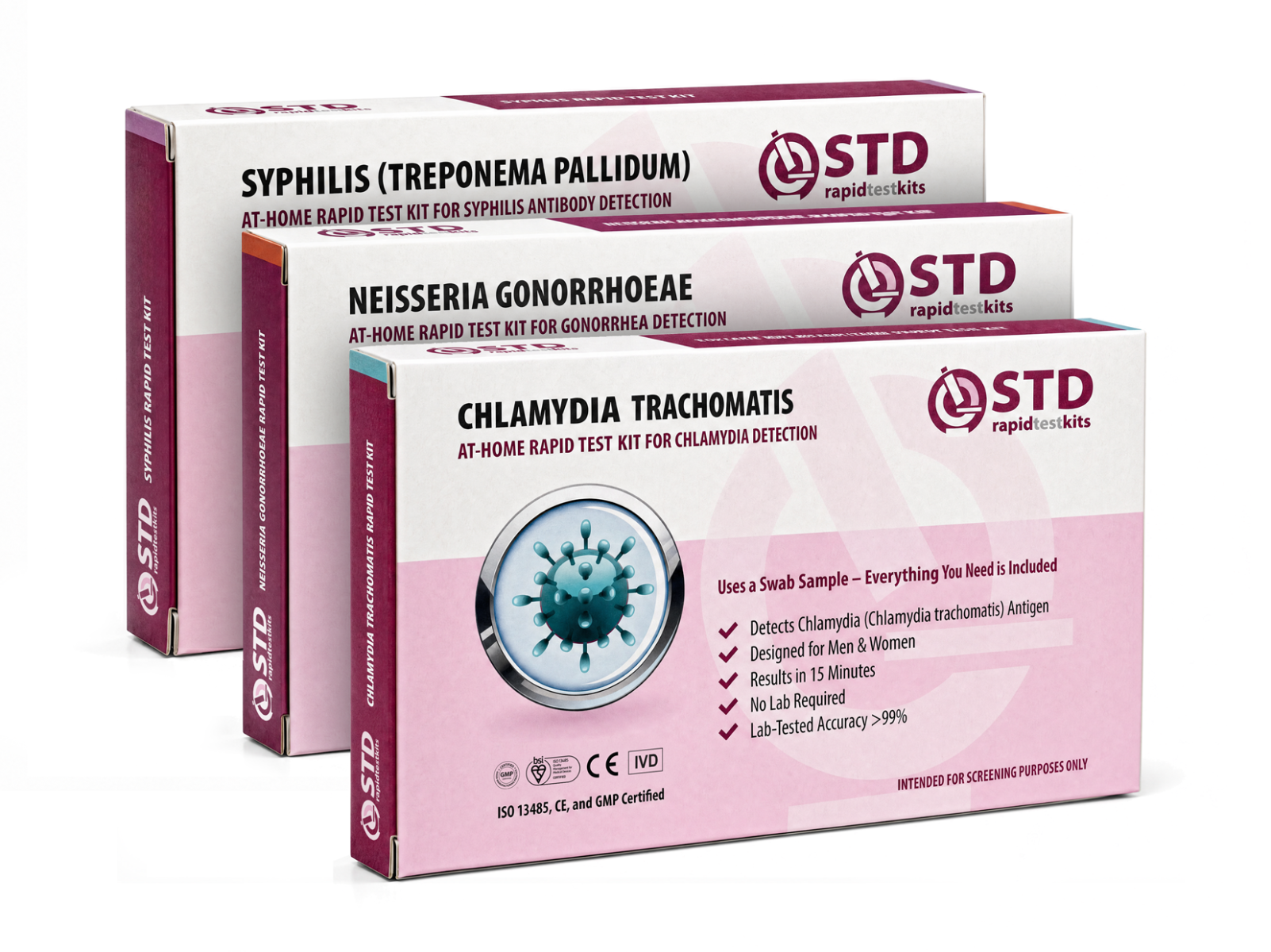
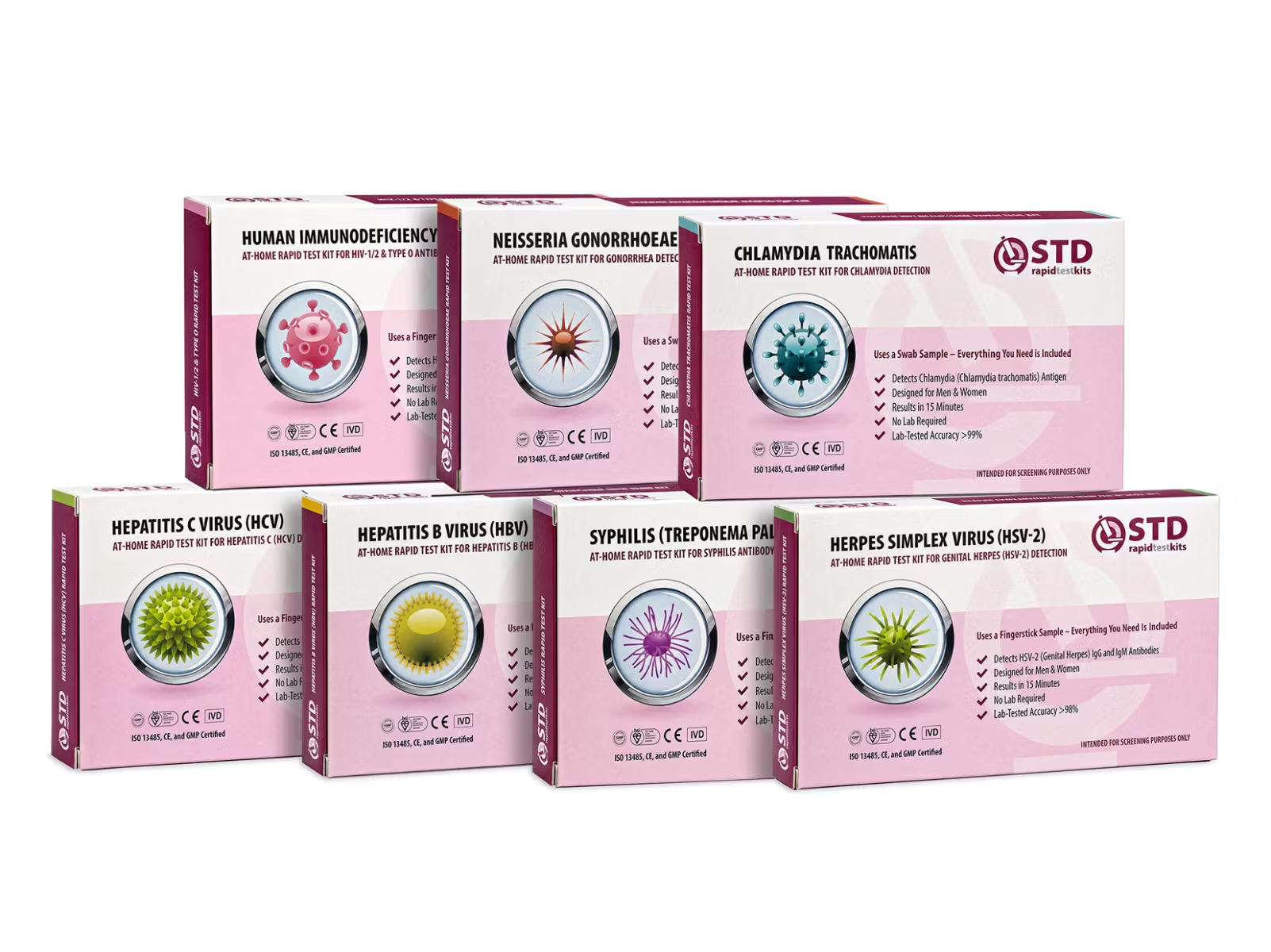
At-home rapid lateral-flow kits. Self-collected swab or fingerstick blood, results in about 15 minutes, no lab involvement, no insurance interaction or EOB trail. Best for routine annual or quarterly screening, partner pre-tests, and worry-resolution checks for someone past the window period. Our at-home STI test kits cover the common bacterial and bloodwork panels described above; the kit you pick should match the infection panel you actually need to screen. Limits: not validated for asymptomatic rectal or pharyngeal screening, and a positive result should be confirmed with a clinician-ordered lab test before treatment.
Sexual-health clinics and Planned Parenthood. Sliding-scale or free testing in non-judgmental environments. The CDC's GetTested locator finds local clinics by ZIP code. Planned Parenthood centers offer the full panel of STI tests, including for uninsured patients.
State and county health departments. Many run free or low-cost STI clinics, particularly for HIV and syphilis. Public-health departments are also the best resource if you have been notified by a partner or contact tracer.
Urgent care. A reasonable option for symptomatic visits or off-hours screening. Urgent care typically uses lab-processed tests with a 1-to-3-day result turnaround; coverage depends on your insurance.
At-home mail-in NAAT panels. Self-collected swab or blood, mailed to a partner lab, results in 2 to 7 days. These use lab-grade molecular testing and report at lab-equivalent sensitivity. We do not sell mail-in NAAT panels; companies that do include LetsGetChecked, Everlywell, and Nurx, among others.
Each option has different strengths. Lab-processed clinic testing is the gold standard for analytical sensitivity. At-home rapid testing is the strongest option for speed, privacy, and flat upfront cost. Mail-in NAAT is the middle ground.
If cost or insurance is the barrier, the CDC's <a href="https://gettested.cdc.gov/" target="_blank" rel="noopener noreferrer">GetTested locator</a> finds free and sliding-scale STI testing sites by ZIP code. State and county health departments also run public STI clinics, particularly for HIV and syphilis screening, with no out-of-pocket cost in most jurisdictions.
Home rapid tests vs lab NAATs
The kits we sell at stdrapidtestkits.com are lateral-flow immunoassays, the same chemistry as a home pregnancy test or a COVID rapid antigen test. They are not NAAT or PCR. The two technologies are complementary, with different strengths, and knowing where each fits matters more than knowing how the cassette runs.
Lab NAAT (nucleic acid amplification test). The clinical gold standard for chlamydia, gonorrhea, and trichomoniasis. NAAT detects bacterial DNA or RNA directly, with sensitivity typically above 95 percent and specificity above 99 percent on validated samples. The trade-off is a clinic visit (or mail-in kit), a wait of 1 to 7 days for results, and the cost of lab processing.
Lab antigen-antibody HIV test (4th generation). The clinical gold standard for HIV. Combines p24 antigen detection (catches infection earlier) with antibody detection (catches established infection). Window period of 18 to 45 days. Lab-only.
Home rapid tests (lateral-flow immunoassay). A swab or fingerstick sample reacts with antibodies on a paper strip and produces a visible line within 15 to 20 minutes. Sensitivity and specificity vary by infection and by manufacturer; for the lateral-flow chemistry used in our kits, performance is in the mid-to-high 90s for most analytes when used correctly and after the proper window period. A positive home test is a screening alert, not a diagnosis: confirm with a clinician-ordered lab NAAT or antigen-antibody test before starting treatment.
What rapid tests do best. Speed (a 15-minute result), privacy (no clinic visit, no records request, no insurance interaction or EOB trail), cost (a flat upfront price, typically less than a clinic copay), and convenience (a partner pre-test conversation can happen the same evening rather than spread across two clinic visits). For someone already past the window period after a worry, a rapid test gives a fast preliminary answer at home.
Where lab testing has the edge. Analytical sensitivity at the bottom of the detection threshold. A lab NAAT can pick up a smaller bacterial load; a rapid test may miss low-grade infections the lab catches. Rapid kits are also not validated for asymptomatic rectal or pharyngeal screening; those sample types require a clinic.
How to use a rapid test well. Test after the window period for the infection you are screening, not the day after exposure. Follow the kit instructions exactly: incorrect collection technique is the most common cause of an inaccurate result. Confirm any positive result with a clinician-ordered lab test before starting treatment.
If a rapid test comes back positive, bring the cassette (or a photo of the result) to your provider and ask for a clinician-ordered laboratory confirmation before starting treatment. For chlamydia, gonorrhea, or trichomoniasis the confirmation is a NAAT. For syphilis it is a treponemal plus non-treponemal sequence, two blood-test types that together confirm whether the infection is currently active or was treated previously. For HIV it is antigen-antibody plus RNA confirmation. Confirmation is fast and protects against the small false-positive rate inherent to any lateral-flow test.
Many people with an STI have no symptoms but can still spread the infection to sex partners. Regular testing is the best way to know your status.
What happens after a positive result
A positive home rapid result calls for a clinician-confirmed lab test before any treatment decision. Most clinicians treat a positive home test the same way they treat a positive in-clinic rapid test: confirm with a laboratory test first. False positives and false negatives both happen with rapid lateral-flow tests. A false negative within the window period is more common than a false positive. If a home test is negative but symptoms persist, repeat with a lab test or see a clinician; the symptoms matter more than a single negative strip.
Test results that come back positive are stressful. They are also the entry point to treatment that works. Modern STI medicine resolves most bacterial infections in days and manages viral ones effectively over the long term, especially when caught early through the kind of routine screening this article is built around.
Steps after a positive home rapid result
- Confirm with a clinician. Bring the home test result (or a photo of the cassette) to your provider. They will order the appropriate confirmatory test: NAAT for chlamydia, gonorrhea, or trichomoniasis; treponemal plus non-treponemal sequence for syphilis; antigen-antibody plus RNA confirmation for HIV; HBsAg with core antibody and viral load for hepatitis B; antibody plus RNA for hepatitis C.
- Start treatment if confirmed. Most bacterial STIs are treated with single-dose or short-course antibiotics. Viral infections (HIV, HSV, hepatitis B and C) are managed long-term, often with antiviral therapy that suppresses the infection and reduces transmission risk.
- Notify partners. Anonymous partner notification services exist in most U.S. states; your provider can also help. Treating partners simultaneously prevents the most common cause of post-treatment reinfection.
- Set a re-screening schedule. Most bacterial STIs are re-screened at 3 months post-treatment to confirm cure and rule out reinfection. HIV and hepatitis enter long-term care, where retesting frequency becomes a clinician decision.
Building a testing routine that sticks
Routine testing only works if it happens. The simplest version: pair STI testing with another annual visit you already keep. Your dental cleaning, your vision check, your birth-control refill, your annual physical, any of these is a useful anchor.
If clinic visits feel like too much friction, a rapid kit on hand turns testing into a 15-minute exercise you can do whenever the question crosses your mind: after a new partner, after a condom failure, before a planned monogamous commitment, or after your annual reminder fires.
If you are in a higher-risk group (multiple partners, MSM, pregnancy, or recent partner notification), build the cadence the CDC recommends into your calendar. Quarterly testing for MSM means roughly every 90 days; the simplest implementation is a recurring calendar event with a 24-hour reminder.
Three scheduling traps tend to defeat any schedule, even a well-intentioned one. Testing only 'when you feel like it' lets the high-risk months go untested. Testing only the day after a possible exposure produces false reassurance from a test that could not yet detect the infection. And skipping tests because 'I always come back negative' misses the fact that most STIs are asymptomatic; a negative streak does not lower future risk.
Honesty with partners helps too. A 'we both tested last month, here is mine' pre-conversation is shorter, lighter, and more reassuring than a future 'I should mention something' conversation. Mutual testing protects you, your partner, and anyone either of you might be in contact with later.
Habits that make routine testing actually happen
- Anchor each test to an existing event: the first day of a quarter, the start of a new partner, the day after your birthday. The anchor matters less than its consistency.
- Pre-decide your test type for each scenario: a combined panel kit for the annual screen, a single-infection rapid test for a specific worry, a clinic referral for symptoms or for sample types we do not sell.
- Document each test (date, kit used, result). A short note in your phone or one row in a spreadsheet works; the next time the calendar tells you to screen, you have the previous data point ready.
- Set the next test reminder before you forget the last one. A 12-month or 3-month calendar reminder takes 30 seconds and removes the 'did I do that yet?' decision later.
Decide your next test today
Do you have new genital, pelvic, anal, or pharyngeal symptoms, or has a partner recently notified you of an STI diagnosis?
Yes: See a clinic this week. A clinician can examine the symptom site, swab rectal or pharyngeal sites that home kits do not cover, and start treatment the same day if needed.
Was your last possible exposure within the past 72 hours and the source partner is HIV-positive or status unknown?
Yes: Contact a clinic, urgent care, or emergency room about post-exposure prophylaxis (PEP) immediately. Plan window-period testing afterward.
Are you asymptomatic and past the window period (about 14 days for chlamydia and gonorrhea, 6 weeks for syphilis, 45 days for the lab HIV antigen-antibody test)?
Yes: Order an at-home rapid kit that matches your risk profile, or book a routine clinic screen. Confirm any positive result with a clinician-ordered lab test before treatment.
No: Wait until you are past the relevant window before testing. Testing too soon produces false reassurance from a result the assay could not yet detect.
A quick decision flow to pick the right starting point. A clinician can refine based on your full history.
FAQs
- How often should I get tested for STIs?
- Once a year is the CDC baseline for most sexually active adults. Tighten to every 3 to 6 months if you are an MSM, have multiple partners, or had condomless sex with an unknown-status partner. Sexually active women under 25 should screen for chlamydia and gonorrhea annually. Pregnant people test at the first prenatal visit. Test sooner for symptoms, a condom failure, or partner notification.
- How soon after a possible exposure can I test?
- Window periods vary by infection. The earliest reliable times are about 10 to 33 days for a lab HIV NAT/RNA test (used for very recent high-risk exposures), 14 days for chlamydia and gonorrhea, 3 to 6 weeks for syphilis, 18 to 45 days for the lab HIV antigen-antibody test, and 23 to 90 days for rapid antibody-only HIV tests. A 3-month catchall test covers most common infections reliably.
- How accurate are at-home rapid tests compared with a clinic visit?
- Lateral-flow rapid tests are screening tests, not confirmatory tests. They report sensitivity in the mid-to-high 90s for the infections they cover when used correctly and after the right window period. A clinic NAAT or PCR test has higher analytical sensitivity at low pathogen loads. Use rapid tests for screening; use clinic tests for confirmation of any positive result.
- What if my home test is positive?
- Treat the result as preliminary and confirm with a clinic test. Curable infections (chlamydia, gonorrhea, syphilis, trichomoniasis) are treated with antibiotics. Viral infections (HIV, hepatitis B and C, herpes) are managed with antivirals. Notify recent partners so they can test and treat too. Public-health departments offer anonymous partner notification services if that is helpful.
- Is annual STI testing enough if I am in a long-term monogamous relationship?
- For two adults in a confirmed monogamous relationship who both tested negative at the start, annual screening is conservative. Some couples and clinicians decide to drop to every 2 to 3 years after a long uneventful stretch. Routine screening in pregnancy is still recommended at the first prenatal visit regardless of relationship status.
- Do I need a Pap smear AND an STI test, or are they the same thing?
- They are different. A Pap smear (often combined with HPV co-testing) screens for cervical-cell changes caused by HPV on a 3-to-5-year cycle for average-risk people aged 25 to 65. An STI panel screens for active bacterial and viral infections (chlamydia, gonorrhea, syphilis, HIV, hepatitis). Both are part of routine sexual healthcare for women.
- Does insurance cover routine STI screening?
- Most U.S. health plans cover preventive STI screening at no cost-share under the Affordable Care Act, including HIV, chlamydia, gonorrhea, and syphilis when ordered for the populations the U.S. Preventive Services Task Force recommends them for. Coverage of at-home rapid kits varies and is often out-of-pocket. Your county health department's free STI clinic is the backup if cost is a barrier.
- What STIs are not covered by at-home rapid tests?
- Home rapid lateral-flow kits cover the standard panel through swab or fingerstick blood: chlamydia, gonorrhea, HIV, syphilis, hepatitis B and C, HSV-1, HSV-2, plus trichomoniasis and HPV for women. Home kits do not cover rectal or pharyngeal swab samples, urine-based NAAT, HPV testing for men, or screening for less common STIs like Mycoplasma genitalium and lymphogranuloma venereum. If your scenario needs one of those, a clinic visit is the right next step.
- U.S. Centers for Disease Control and Prevention. STD screening recommendations from the 2021 STI Treatment Guidelines. Used for the frequency-by-group framework, MSM cadence, pregnancy screening, the risk-factor multipliers, and the rationale for annual screening in young women.
- U.S. Centers for Disease Control and Prevention. HIV testing recommendations. Covers fourth-generation antigen-antibody assay window periods (18 to 45 days), rapid antibody-only window (23 to 90 days), NAT/RNA window (10 to 33 days), and the at-least-once lifetime testing recommendation for adults 13 to 64.
- U.S. Centers for Disease Control and Prevention. HIV facts and statistics. Used for the share of people with HIV who are unaware of their status (87 of 100 know their status) and U.S. prevalence framing.
- Mayo Clinic. Pelvic inflammatory disease (PID): symptoms and causes. Used as a non-CDC tier-1 reference for PID as a downstream complication of untreated chlamydia and gonorrhea.
- World Health Organization. Sexually transmitted infections fact sheet. Global incidence, including the estimate that more than 1 million curable STIs are acquired every day worldwide and the majority are asymptomatic.
- U.K. National Health Service. Sexually transmitted infections overview and hepatitis C treatment pages. Used for patient-facing symptom-triggered triage, clinic-only sample-type guidance, and the 8-to-12-week direct-acting antiviral cure duration for hepatitis C.
