STD Testing in the US: Every Option, Every Cost, Explained
STD testing in the US doesn't have one price. It has dozens. The same chlamydia test can cost nothing at a federally funded clinic or hundreds at an urgent care a few blocks away. This guide maps every route, what insurance actually covers, where to find free testing, and how at-home rapid kits stack up on cost, accuracy, and privacy.
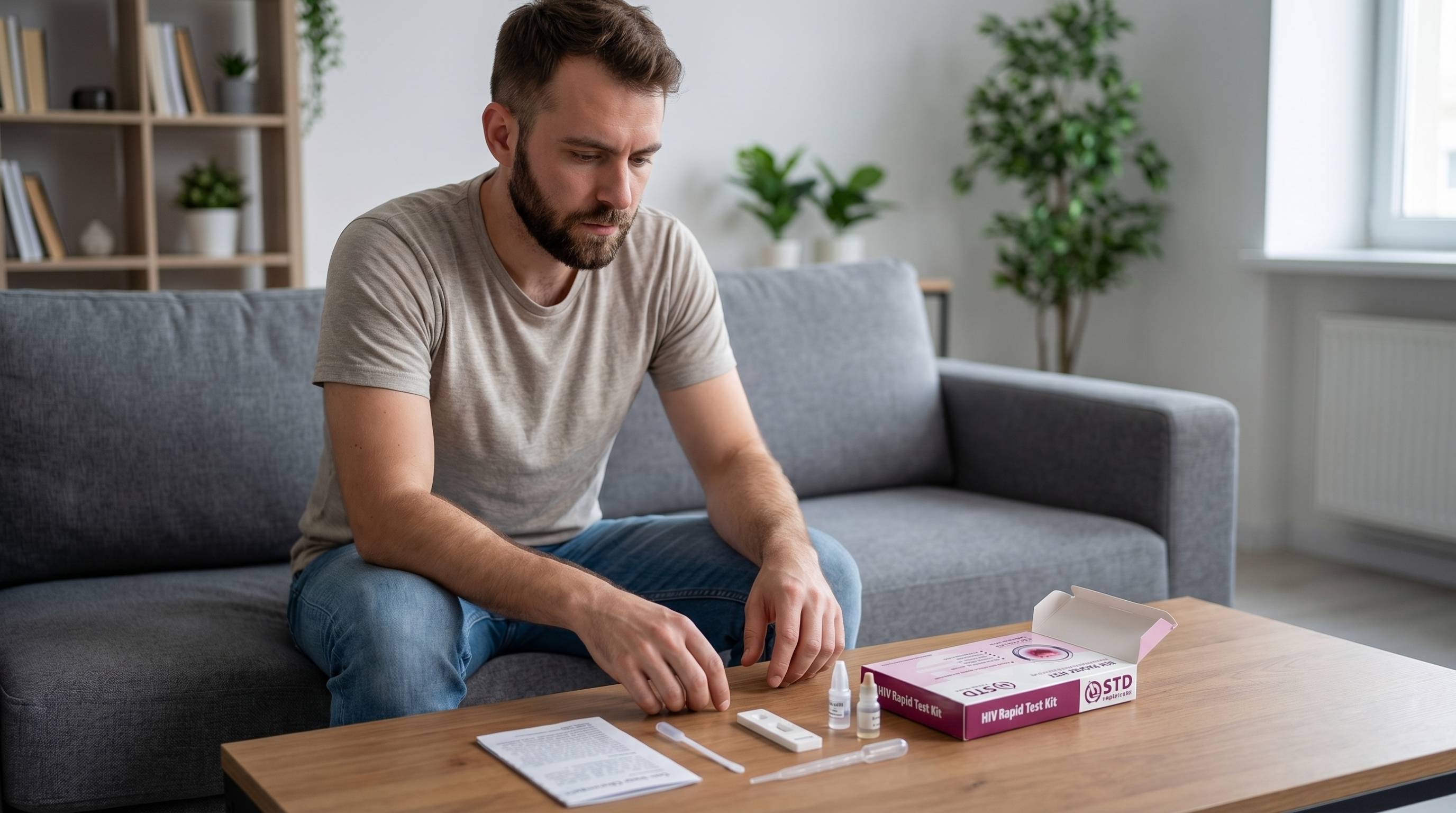



- Cost for the same test can vary 10x depending on the facility, with public clinics at the bottom and private urgent care at the top.
- Privacy and cost move in the same direction: at-home rapid kits and county clinics are both the cheapest options and leave the smallest insurance footprint.
Published: September 2025 | Last updated: April 2026 | Editorial review and quality control: Martina N.
STD testing in the US doesn't have one price. It has dozens, depending on where you go, what infections you're testing for, whether you have insurance, and whether your insurance actually covers it. The same chlamydia test can cost nothing at a federally funded clinic, or close to $200 at an urgent care center six blocks away. According to the CDC's national STI surveillance data, more than 2.2 million combined cases of chlamydia, gonorrhea, and syphilis were reported in the US in 2024, a figure that captures only diagnosed infections, not the much larger population carrying an STI without symptoms or access to testing.
This guide covers every major route to STD testing available in the US in 2026: what each option actually costs, what insurance does and doesn't cover, where to find free or sliding-scale care, how to use an HSA or FSA card to lower the bill, and where at-home rapid testing fits in. One number at a time, the choice gets a lot clearer.
How much does STD testing actually cost in the US?
STD testing ranges from $0 to $600+ depending on where you go and what's on the panel. County health departments and federally qualified health centers (FQHCs) are free or sliding-scale for most uninsured people. At-home rapid kits run $15 to $90 with no hidden fees. Urgent care self-pay typically lands at $150 to $440+ once lab fees are added. Insurance covers preventive STD screening at 100% under the ACA when the visit is coded as preventive, but a diagnostic code triggers cost-sharing.
How Much Does STD Testing Cost in the US?
STD testing in the US costs anywhere from $0 to roughly $600, depending on four variables: where you go, what infections you're testing for, how many are on the panel, and whether you have insurance that covers it. A basic chlamydia and gonorrhea screen at a county public health clinic can genuinely be free. A comprehensive 10-infection panel at an urgent care center with out-of-network lab processing can hit $600 once every fee is added. Most uninsured patients paying out of pocket at a mid-tier facility (urgent care, private primary care, or a telehealth lab platform) land somewhere between $150 and $300 for a standard panel.
That middle figure hides the fact that the US operates several parallel testing systems at very different price points, and most people only know about one or two of them. The table below maps the full cost landscape for self-pay patients across every major route available in 2026.
| Testing Route | Typical Self-Pay Cost | Privacy | Best Fit |
|---|---|---|---|
| County / Public Health Clinic | $0 to $40 (sliding scale) | Confidential, no insurance trail | Uninsured, urban or suburban |
| FQHC / Planned Parenthood | $0 to $100 (income-based) | Confidential | Uninsured or underinsured |
| Primary Care / OB-GYN | $100 to $300+ | Goes on insurance record | Insured with preventive coding |
| Urgent Care Center | $150 to $440+ | Goes on record | Symptomatic, need same-day visit |
| Telehealth + Lab Draw | $30 to $200 | No insurance involvement | Privacy-conscious, near draw site |
| At-Home Rapid Test Kit | $15 to $90 per kit | Full privacy, no record | Rural, repeat tester, urgent answer |
| Direct-to-Consumer Lab (Quest, LabCorp) | $30 to $200 | Discreet billing | Want lab results without a doctor |
Why Do You Get a Surprise Bill After STD Testing?
One of the most common financial shocks in STD testing has nothing to do with the test itself. It comes from the fee structure built around it. When you go to a doctor's office or urgent care center, you're often not paying one price. You're paying up to three: the office visit fee, the laboratory processing fee, and sometimes a follow-up consultation fee if results need interpretation. Each of these can be billed separately, and they frequently come from different entities. Your office visit might be in-network, but the lab your provider contracts with may not be.
Out-of-network lab bills are the most common surprise. You go in, pay your self-pay or copay rate, and assume that covers everything. Three weeks later a bill arrives from a lab company you've never heard of for specimen handling and processing charges that were never mentioned at the counter. This is legal and common, and it catches people completely off guard. Under the federal No Surprises Act, facilities are required to provide a Good Faith Estimate for self-pay patients, but most people don't know to ask. If you're paying cash anywhere, request a Good Faith Estimate in writing before any samples are collected, and ask one specific question: "Does this price include the consultation fee and all lab processing fees?"
Billing-code routing is the other invisible source of surprise bills. When a provider orders STD testing as part of an annual preventive exam, it's billed under a preventive care code, which means the ACA requires your insurance to cover it at 100% with no copay. If you walk in with a symptom, or if the conversation drifts toward a specific concern rather than routine screening, the billing code can flip from preventive to diagnostic. Suddenly you owe your full deductible before coverage applies. Same test, same office, completely different bill. Framing the appointment correctly matters: "I'd like my annual STD screening" reads to the system very differently from "I'm worried about a symptom I noticed."
Before any sample is collected at a clinic or urgent care, ask three questions: (1) Will this be billed as preventive or diagnostic? (2) Is the lab in-network with my insurance, or are you sending samples to an outside lab? (3) Can I have a Good Faith Estimate in writing? Sixty seconds at the counter can prevent a $200+ bill three weeks later.
Does Insurance Cover STD Testing, and What Are the Exceptions?
Under the Affordable Care Act, most private health insurance plans are required to cover STD screening as preventive care at no cost: no copay, no deductible. Per HealthCare.gov's preventive services list, this includes chlamydia and gonorrhea screening for sexually active women under 25 (and older women at increased risk), syphilis screening for adults at increased risk, and HIV screening for adults aged 15 to 65. Coverage is real and substantial, but the word "preventive" is doing a lot of work. The moment your visit is coded as diagnostic (because you came in with symptoms, or because your provider frames it as investigating a concern), cost-sharing kicks in and your deductible may need to be met first.
Privacy is the other dimension most people don't think about until it's too late. If you're covered under a parent's, spouse's, or partner's insurance plan, your testing can trigger an Explanation of Benefits (EOB), a document mailed to the policyholder that itemizes what services were billed. The EOB doesn't show your results, but it usually says "STD panel" or equivalent billing language. For anyone who needs testing to remain private from the primary policyholder, the practical options are: self-pay outside the insurance system entirely, use a telehealth or direct-to-consumer lab route with discreet billing, or use an at-home rapid kit that leaves no insurance record at all.
Medicaid coverage varies significantly by state. In the 40 states (plus DC) that have expanded Medicaid under the ACA, low-income adults generally have access to comprehensive coverage that includes STD screening. In the non-expansion states, a meaningful population falls into a coverage gap: too much income to qualify for restricted Medicaid eligibility, not enough to afford marketplace insurance. For people in that gap, the free clinic and sliding-scale options below are the primary access point.
If you're on a parent's, spouse's, or partner's insurance plan, an STD test routed through that policy will trigger an Explanation of Benefits mailed to the primary policyholder. The EOB doesn't show your results, but it does itemize the service under STD-panel billing language. If keeping the test private from the policyholder matters, route through self-pay, a direct-to-consumer telehealth lab, or an at-home kit. Each of those leaves no insurance record at all.
Can You Use an HSA or FSA Card for STD Testing?
Yes, and this is one of the most underused cost-reduction tools available to people with workplace health accounts. At-home STD test kits qualify as eligible medical expenses under IRS rules governing HSA and FSA accounts, which means they can be paid for with pre-tax dollars from a Health Savings Account (HSA) or Flexible Spending Account (FSA). IRS Publication 969 outlines the broader rules for HSA, FSA, and HRA accounts under Section 213(d) of the tax code.
What this means in practice: if you're in the 22% federal tax bracket and you buy a $60 combo kit using HSA funds, your real out-of-pocket cost is closer to $47. At the 24% bracket it lands around $46. If your state also has income tax, the pre-tax benefit compounds. For someone testing quarterly over a year, paying through an HSA adds up to roughly $50 to $100 in real savings across a year, money most people never realize is available to them in the first place.
HSA accounts require a qualifying high-deductible health plan. FSA accounts are employer-offered and don't carry that requirement, but they do have an annual use-it-or-lose-it expiration. If you have funds sitting in either account near year-end, at-home test kits are a legitimate and practical use. Most kit providers, including the ones on this site, accept HSA and FSA cards directly at checkout, and the process is no different from any other purchase. Note: this site sells the rapid at-home STI kits linked throughout this guide; product links go to our own catalog.
Where Can You Get Tested for Free or at Very Low Cost?
Free and sliding-scale STD testing exists in most parts of the US, though access is substantially stronger in urban areas than rural ones. The main categories are federally qualified health centers (FQHCs), county and city public health departments, AIDS Healthcare Foundation (AHF) clinics, Planned Parenthood locations, and mobile testing units. Each operates slightly differently, and matching your situation to the right one saves time and money.
FQHCs are federally funded community health centers required by law to offer services on a sliding-scale basis tied to household income and family size. There are over 1,400 FQHC organizations in the US operating roughly 15,000 service delivery sites. The HRSA Find a Health Center tool finds the nearest one by zip code in under thirty seconds. You don't have to be uninsured to use one, and appointments are typically easier to get than people expect.
County public health departments are the most consistent low-cost source nationwide. Most offer HIV and syphilis testing free of charge to anyone who walks in, regardless of income, insurance, or immigration status. Chlamydia and gonorrhea screening is often free or near-free as well. The CDC's GetTested locator lets you search publicly funded testing sites by zip code. AHF clinics offer free HIV testing at numerous locations nationwide, and Planned Parenthood provides a broad sexual-health panel at most locations on a flat-fee or sliding-scale basis.
This infrastructure is heavily concentrated in cities and inner suburbs. If the nearest free clinic is an hour away, the transportation cost and time barrier make "free testing" functionally inaccessible. For anyone in a rural area with no nearby clinic, at-home rapid kits are often the most practical and most cost-effective option by a wide margin.
Where to find free or low-cost STD testing
- Federally qualified health centers (FQHCs): sliding-scale fees by household income; locator at findahealthcenter.hrsa.gov.
- County and city public health departments: free HIV and syphilis testing in most jurisdictions; chlamydia and gonorrhea screening often free or near-free.
- AIDS Healthcare Foundation (AHF) clinics: free HIV testing at locations nationwide.
- Planned Parenthood: broad sexual-health panel on a flat-fee or sliding-scale basis at most locations.
- CDC's GetTested locator: search publicly funded testing sites by zip code at gettested.cdc.gov.
How Much Do At-Home Rapid Test Kits Cost, and Are They as Accurate as Clinic Tests?
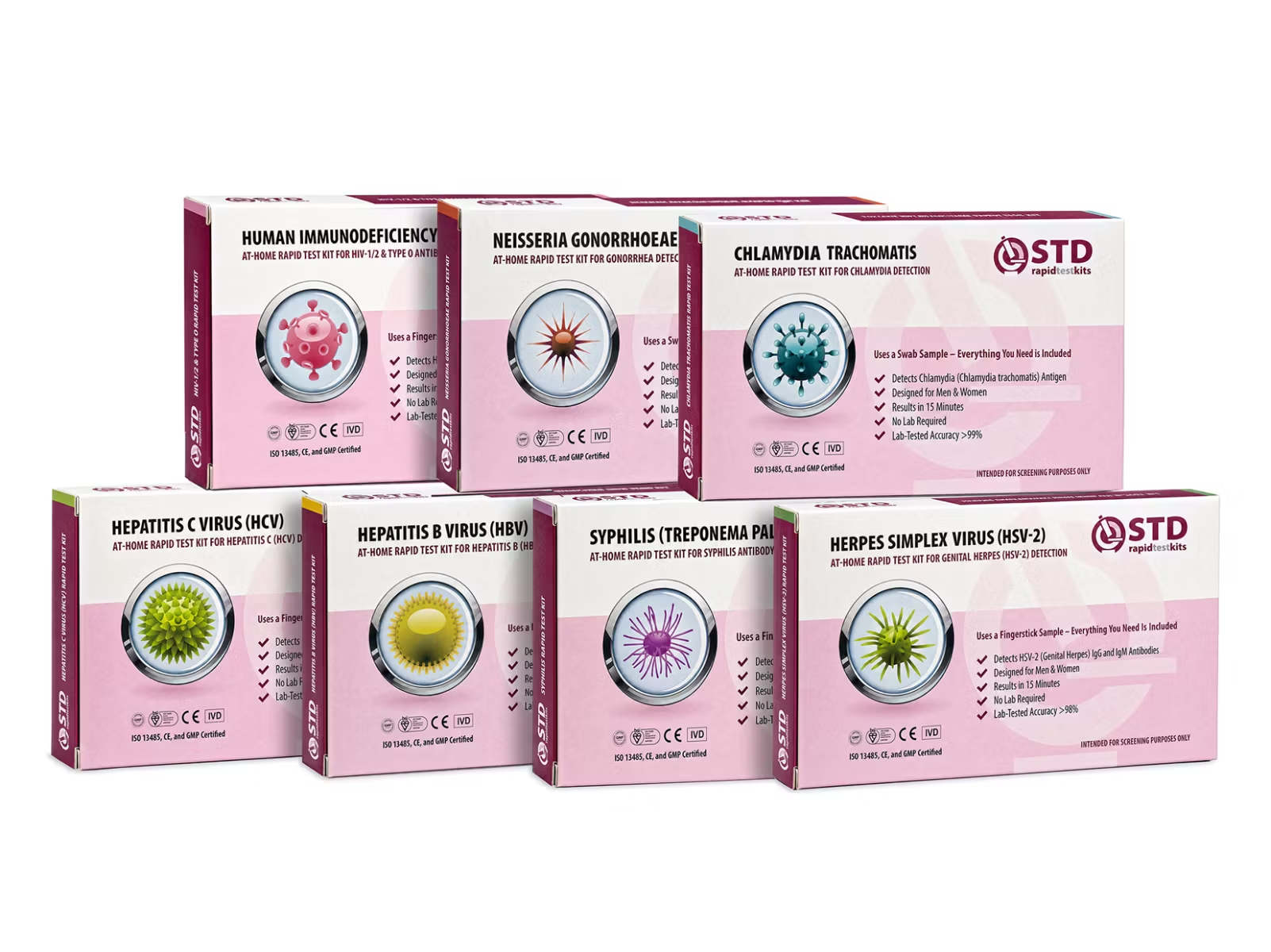
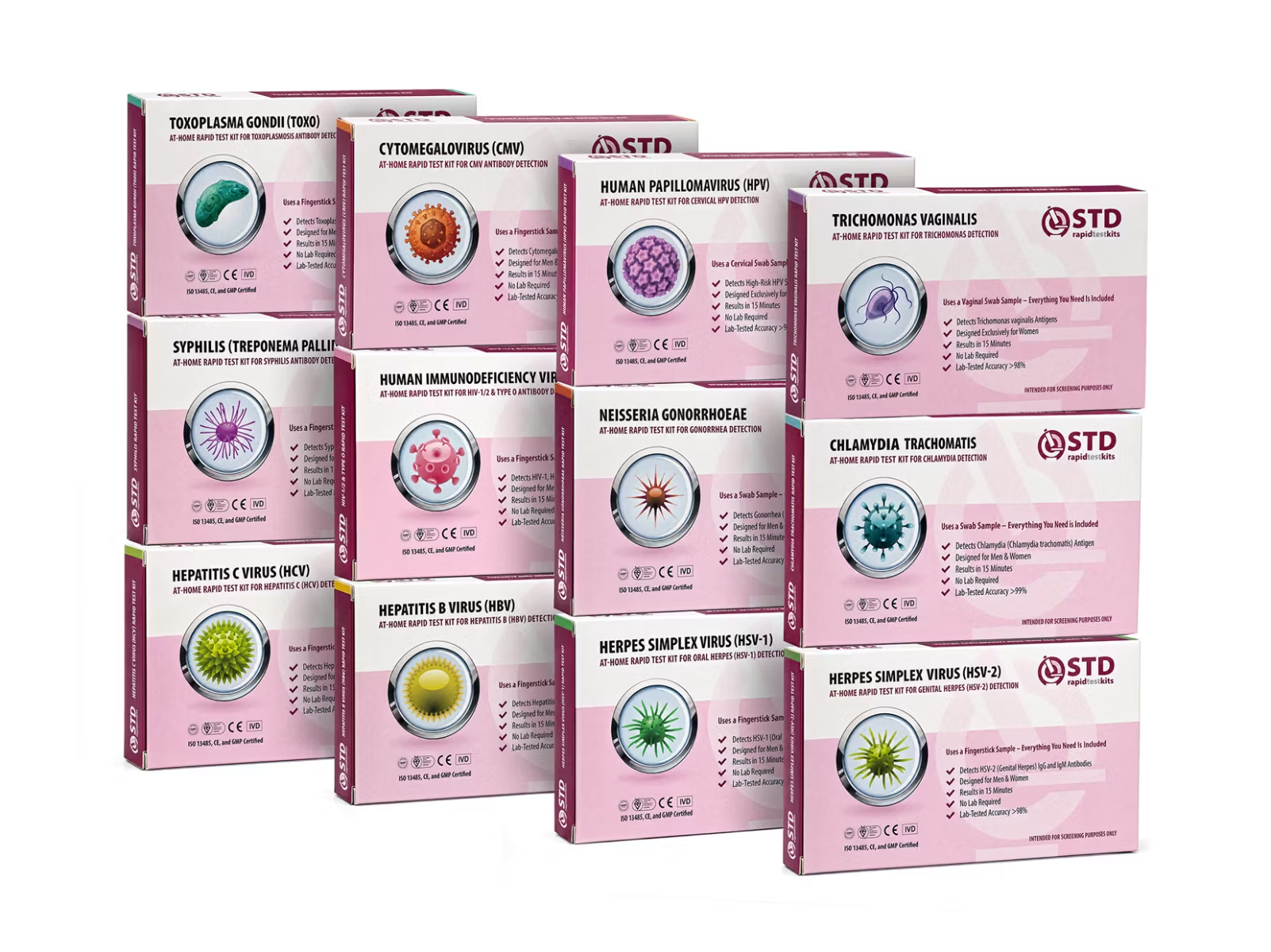
A single-infection rapid kit for chlamydia, gonorrhea, syphilis, or HIV typically runs $15 to $35. A combo kit covering four to eight infections runs $40 to $90. Results come in 15 to 20 minutes from a self-collected swab or a fingerstick blood sample. No appointment, no waiting room, no separate lab bill, no insurance record of any kind. For someone who tests regularly (quarterly, or after each new partner), the economics versus clinic visits are substantial: four urgent care self-pay visits can run $600 to $1,200 a year, while four combo kits covering the same infections run $160 to $360. Pay through an HSA or FSA and the effective cost drops further.
The accuracy question comes up every time someone weighs at-home testing against a clinic. Reputable rapid lateral-flow immunoassay kits perform comparably to many lab-based screening tests when used correctly and within the appropriate window after exposure; each manufacturer publishes its own sensitivity and specificity figures on the product page, and those numbers vary slightly by infection. What matters most is timing. Testing before the infection has produced enough detectable antibodies or antigens will produce a negative result regardless of method. The minimum windows below apply equally to at-home kits and clinic tests, and missing them is the single biggest cause of false-negative results.
| Infection | Earliest Reliable Test Window | Notes |
|---|---|---|
| Chlamydia | 14 days after exposure | Most commonly reported STI in the US, often asymptomatic |
| Gonorrhea | 3 weeks after exposure | Frequently co-occurs with chlamydia |
| Syphilis | 6 weeks after exposure | Early treatment is straightforward; late-stage damage is not |
| HIV | 6 weeks (first indicator); retest at 12 weeks | Two-stage timing matters; do not stop at 6 weeks |
| Herpes (HSV-1 and HSV-2) | 6 weeks after exposure (antibody test) | Often excluded from default panels; request explicitly |
| Hepatitis B | 6 weeks after exposure | Vaccine-preventable; test if unvaccinated and exposed |
| Hepatitis C | 8 to 11 weeks after exposure | Longest window of any common STI |

What Does It Actually Cost If You Skip Testing and an Infection Goes Untreated?
Almost every conversation about STD testing frames cost as the barrier. Almost none frame it as the cheaper side of a comparison. That's worth correcting, because the downstream economics of an untreated infection are substantially worse than the upfront cost of any test on this list, often by orders of magnitude.
Untreated chlamydia in women can progress to pelvic inflammatory disease (PID). Treatment for uncomplicated PID involves a course of antibiotics, but complicated cases involving hospitalization, surgical drainage of an abscess, or downstream fertility treatment run into thousands of dollars. Untreated syphilis progresses through stages over years, with tertiary-stage complications including cardiovascular damage and neurological involvement that require specialist care vastly more expensive and difficult than a $30 syphilis screening test. Hepatitis C, left undetected for years, is a leading driver of liver transplant in the US, a procedure costing hundreds of thousands of dollars with years of follow-up care required. The CDC notes that many STIs, including chlamydia, often produce no symptoms at all. People carry and transmit these infections without any indication that something is wrong.
The cost comparison isn't subtle: a $40 combo kit versus years of downstream treatment for an infection that could have been cleared with a single antibiotic course is not a close call. A combo kit followed by a course of antibiotics costs less than one urgent-care self-pay visit, and far less than managing pelvic inflammatory disease, tertiary syphilis, or hepatitis C complications years later.
Most STIs do not have signs or symptoms, so getting tested is the only way to know for sure if you have one.
Which STD Testing Route Is Right for Your Situation?
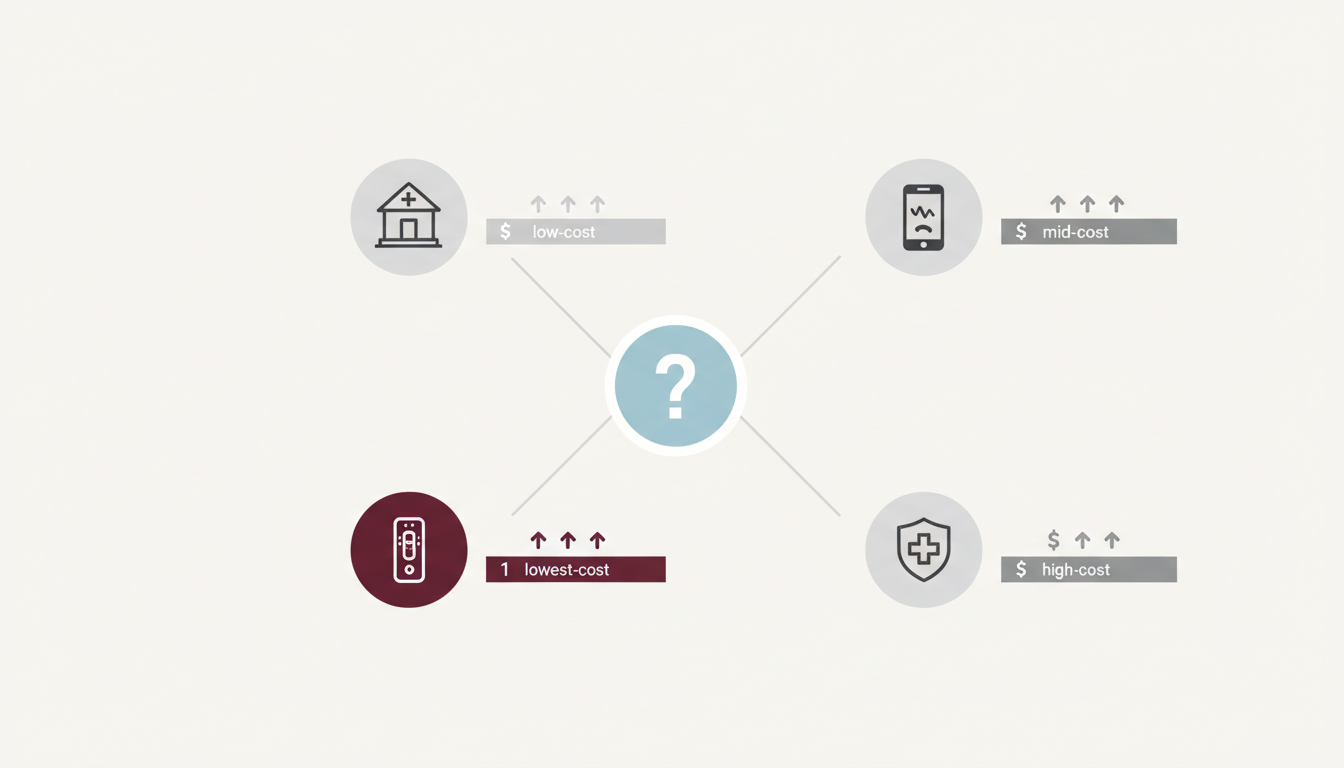
With seven distinct testing routes available in the US, the right choice isn't arbitrary; it narrows quickly based on a handful of variables. The most common mistake people make is defaulting to urgent care because it feels official. Urgent care is usually the most expensive option and often not the most thorough. Here is how to map your situation to the right route.
If you have insurance and can frame your visit as preventive, a primary care or Planned Parenthood appointment is likely your lowest-cost option, potentially free. Confirm in advance that your provider will bill the visit under a preventive code, not a diagnostic one. If you are on a shared insurance plan and privacy matters, avoid that insurance entirely (the EOB problem is real). At-home kits or a direct-to-consumer lab route protect your information completely. If you have no insurance and cost is the primary constraint, a county health department or FQHC is the right first call: free or sliding scale, walk-in available at many locations. If you are in a rural area or the nearest clinic requires a significant drive, an at-home rapid kit is both the most practical and the most cost-effective option. If you want lab-grade results without insurance involvement and don't mind visiting a draw site, direct-to-consumer telehealth platforms (Quest Direct, STDcheck) offer competitive pricing against at-home kits for larger panels.
Our at-home rapid kits use lateral-flow immunoassay chemistry, the same sample types lab NAAT tests use but with a different detection technology. They are validated for screening at home, and a positive screening result is always worth confirming with a follow-up lab test. They are not a substitute for in-person clinical evaluation when you have active symptoms, an exposure to an antibiotic-resistant strain, or a need for treatment that day. Prices in this guide reflect typical 2026 ranges and will vary by state, provider, and individual income when sliding-scale rates apply. Confirming preventive billing with your provider before any appointment is always worth the 60-second phone call.
Frequently Asked Questions
- How much does a full STD panel cost without insurance?
- Expect $150 to $440+ at an urgent care or private clinic for a panel covering five to ten infections, often before separate lab fees are added. The same panel through a direct-to-consumer telehealth lab platform typically runs $100 to $200. An at-home combo kit covering seven to eight infections runs $40 to $90. Free options exist through county health departments and FQHCs on a sliding-scale basis; for many uninsured people the cost there is $0.
- Does insurance cover STD testing?
- Most private insurance plans cover preventive STD screening at 100% under the ACA, but only when billed as preventive care. If your visit is coded as diagnostic (because you came in with a symptom or specific concern), cost-sharing applies and your deductible kicks in first. Medicaid covers STD testing in the 40 states (plus DC) that expanded coverage under the ACA; in non-expansion states, coverage gaps exist for many low-income adults.
- Can I use my HSA or FSA card for at-home STD test kits?
- Yes. At-home STD kits are eligible medical expenses under IRS Section 213(d), reimbursable through HSA, FSA, and HRA accounts. Most kit providers (including this site) accept HSA and FSA cards directly at checkout. This effectively reduces your out-of-pocket cost by your marginal tax rate, typically 22% to 24% for most employed adults.
- What is the cheapest way to get tested for STDs in the US?
- A county public health clinic or FQHC is free or near-free for most uninsured people on a sliding scale, particularly for HIV and syphilis. For private testing without a clinic visit, a combo rapid kit covering four to eight infections costs $40 to $90 with no lab fees and no waiting-room time. Direct-to-consumer telehealth labs (Quest Direct, STDcheck) sit in the middle at $100 to $200 for a comprehensive panel.
- How do I get tested without it showing up on my parent's or partner's insurance?
- Pay out of pocket so no Explanation of Benefits is generated. Practical options: a direct-to-consumer telehealth lab, cash-pay at a clinic that doesn't require insurance, an at-home rapid kit (no record at all), or a county health department, which offers confidential testing without insurance involvement. Avoid using shared insurance entirely if privacy is the priority.
- What does a standard STD panel actually include?
- There is no universal standard, which is exactly the problem. Most clinic panels cover chlamydia, gonorrhea, syphilis, and HIV. Some include hepatitis B and C. Herpes (HSV-1 and HSV-2) is routinely excluded from default panels unless you ask for it by name, which surprises most patients. If there is a specific infection you are concerned about, request it explicitly rather than assuming it is included.
- How accurate are at-home rapid STD tests compared to lab tests?
- Reputable rapid lateral-flow immunoassay kits perform comparably to many CLIA-certified lab screening tests when used correctly and within the appropriate window after exposure; each kit's product page publishes its own sensitivity and specificity figures. The critical variable is timing: testing before the minimum window after exposure produces a false negative regardless of method. At-home kits carry a slightly higher user-error rate because sample collection is self-administered, but following the instructions closely brings real-world accuracy in line with the figures published for each kit. A positive at-home result is always worth confirming with a follow-up lab test.
- When should I test after a potential exposure?
- Test from 14 days for chlamydia, 3 weeks for gonorrhea, and 6 weeks for syphilis, hepatitis B, and herpes (HSV-1 and HSV-2 antibodies). For HIV, test at 6 weeks for a first indicator and retest at 12 weeks for certainty. For hepatitis C, test from 8 to 11 weeks after exposure. Testing earlier than these windows can produce a false negative even when an infection is present.
- U.S. Centers for Disease Control and Prevention. National Sexually Transmitted Infections Surveillance: 2024 case counts and trends for chlamydia, gonorrhea, and syphilis in the United States.
- U.S. Centers for Disease Control and Prevention. Getting Tested for STIs: when to test, what's typically included, and how to find publicly funded testing sites.
- U.S. Centers for Disease Control and Prevention. GetTested: zip-code locator for publicly funded HIV, STI, and hepatitis testing sites in the United States.
- HealthCare.gov. Preventive Care Benefits for Adults: list of preventive services covered without cost-sharing under the Affordable Care Act, including STI screening.
- Internal Revenue Service. Publication 969: Health Savings Accounts and Other Tax-Favored Health Plans: governs HSA, FSA, and HRA accounts under Section 213(d).
- Health Resources and Services Administration. Find a Health Center: official locator for federally qualified health centers offering sliding-scale care across the US.
- Centers for Medicare & Medicaid Services. Your Right to a Good Faith Estimate: consumer-facing explanation of self-pay protections under the No Surprises Act.