Scared to Get Tested for an STD? How to Push Through the Fear
Fear of getting tested for an STD stops millions of people every year, regardless of their actual exposure risk. This guide walks through the full psychological arc: from the paralysis before testing, through the shock of a diagnosis, to the long road back to feeling like yourself again. If you are somewhere on that arc right now, you are in the right place.
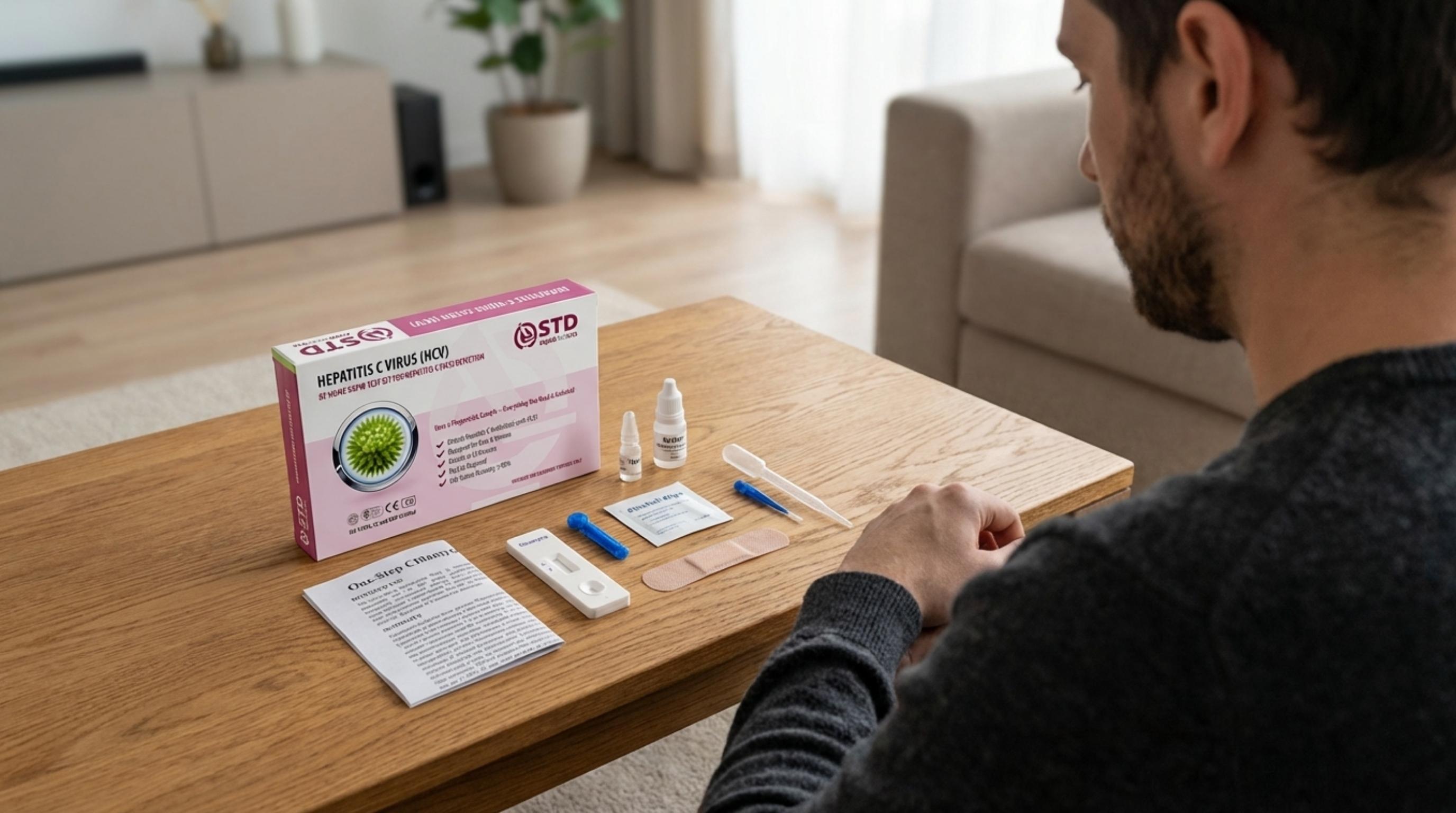



- Fear of testing is the single biggest barrier to STD care for many people, and it works independently of actual exposure risk; stigma drives the spread of infections that would otherwise be caught early.
- At-home rapid tests remove the clinic encounter entirely, with private results in minutes and no paperwork in a shared medical system, which makes them especially useful when shame is the main obstacle.
Published: November 2025 | Last updated: May 2026 | Editorial review and quality control: Martina N.
The fear of getting tested for an STD, that specific visceral reluctance, is one of the most common and least discussed mental health experiences in sexual health. Being scared to get tested stops millions of people from getting answers they urgently need, which quietly fuels an epidemic that thrives on silence. The fear has a name, a mechanism, and a way through. Understanding what is happening in your head makes the path forward a lot clearer.
The fear is not weakness, and it is not irrational. It is a predictable response to a culture that has spent centuries turning sexually transmitted infections into moral verdicts. This guide walks through the full arc: why people delay testing, what STD paranoia and OCD look like in practice, how stigma works on the brain, why at-home testing changes the equation, what happens psychologically after a positive diagnosis, and how to find real mental health support when fear becomes the main problem.
Key Takeaways
- Fear of testing is the single biggest barrier to STD care for many people, and it works independently of actual exposure risk; stigma drives the spread of infections that would otherwise be caught early.
- At-home rapid tests remove the clinic encounter entirely, with private results in minutes and no paperwork in a shared medical system, which makes them especially useful when shame is the main obstacle.
Why So Many People Are Scared to Get Tested
Picture this. It has been three weeks since a hookup you are not entirely sure was risk-free. You have Googled your symptoms more times than you can count. You know you should get tested, and yet every time you come close to booking an appointment or ordering a kit, something stops you. Fear, specific and visceral, harder to reason your way out of than you expected. If that fits where you are right now, you are in good company: anxiety about STD testing is one of the most common barriers to care, and it operates completely independently of actual risk level.
This is where the STD crisis lives, in the gap between knowing you should get tested and being able to make yourself do it. According to the CDC's STI health-equity guidance, distrust of the healthcare system and fear of discrimination create negative feelings around testing and treatment that keep people away from care, sometimes for years. The peer-reviewed psychology literature frames the same dynamic as internalized stigma, and the practical result is the same. Infections spread because shame is a more powerful force than most public health campaigns give it credit for, not because people are careless.
The longer you wait, the more anxious you get, a pattern explored in depth in our guide to anxiety about STD testing. The more anxious you get, the harder testing feels. The harder testing feels, the longer you wait. Meanwhile, if an infection is present, it has more time to cause damage and more opportunities to be passed on without anyone knowing.
The fear is also not monolithic. It comes in several distinct flavors, and recognizing which one is running your avoidance is the first move toward breaking out of it. Some people fear the result itself, the positive test that would make everything real. Others fear judgment from a doctor, a partner, a parent, a community. Others are caught in a different trap entirely: a kind of obsessive, spiraling anxiety that attaches to the possibility of infection and refuses to let go, even when every rational signal says the risk was low.

STD Paranoia, OCD, and the Fear That Will Not Quiet Down
There is a specific psychological experience that gets too little attention in sexual health conversations. The person who is not avoiding testing because they do not want to know, but because they are trapped in an anxiety loop that testing fails to fix. They test negative. They feel relieved for forty-eight hours, what our article on the mental toll of waiting for STD results calls the cruelest part of the process. Then the doubt creeps back in. What if the test was wrong? What if they tested too early? What if the lab missed something? So they test again, and again.
This pattern, sometimes called STD paranoia, has a clinical name: venereophobia, and it overlaps significantly with obsessive-compulsive disorder and illness anxiety disorder. Researchers describe it as a heightened state of fear and suspicion about sexual health and possible infection, where compulsive behavior (repeated testing, incessant body-checking, hours of online research) tries to reduce anxiety but ultimately makes the anxiety worse. The OCD brain is often called the "doubting disorder" for exactly this reason: certainty feels necessary, but it is never quite achievable, so relief is always temporary.
If you recognize yourself here, if negative tests do not give you peace, if you find yourself checking for symptoms multiple times a day, if the fear of a specific infection has started to reshape your daily life, this is a mental health concern that deserves direct attention rather than another round of testing. Cognitive behavioral therapy, specifically a method called exposure and response prevention (ERP), has a strong evidence base for treating this kind of health anxiety. At-home rapid testing can be genuinely useful when used as a single, well-timed tool, particularly for HIV-specific fear covered in our guide to HIV testing at home for anxious testers. As a repeated reassurance ritual, it feeds the loop instead of breaking it. A therapist who specializes in OCD or health anxiety can help you find where that line is.
| Fear Type | What It Feels Like | What Drives It |
|---|---|---|
| Stigma avoidance | Postponing testing to avoid becoming "someone with an STD" | Internalized shame; fear of judgment from others |
| Result fear | Not wanting to know; ignorance feels safer than certainty | Fear of what a positive result would mean for relationships and identity |
| Venereophobia / STD OCD | Repeated testing that does not bring relief; obsessive body-checking | Health anxiety; certainty feels necessary but is never achievable |
| Systemic mistrust | Reluctance to engage with the healthcare system at all | Historical mistreatment, discrimination, lack of culturally affirming care |
| Social fear | Avoiding testing because of who might find out | Community stigma; fear of partner reaction; small-town social exposure |
What STD Stigma Does to Your Brain
Stigma is more than an abstract social problem. It has measurable, documented effects on the brain and body, and understanding those effects makes it easier to stop blaming yourself for how hard this feels. When a person internalizes stigma (absorbs external shame and turns it against themselves), the result is what researchers call self-stigma: a privately held belief that the diagnosis makes them lesser, unlovable, or dirty. The response is predictable, neurological, and absolutely not a character flaw.
The psychological literature on this is unambiguous. Research published in peer-reviewed journals, summarized in our deep-dive on how STD stigma affects mental health, consistently shows that people diagnosed with STIs report shame, anxiety, embarrassment, isolation, fear of rejection, and fear of no longer being sexually desirable. The cluster of responses closely mirrors what we see in other heavily stigmatized health conditions. Studies on internalized STD stigma have found it strongly linked to depression and anxiety as an ongoing condition that can persist for months or years if left unaddressed, a connection explored in our guide to STDs and mental health.
Stigma does not stay in the individual. A 2025 APA/Harris poll found that 35% of U.S. adults say they would view someone differently if they knew that person had a mental health condition, and STD stigma typically runs considerably deeper than mental health stigma in most communities. That ambient cultural judgment is what people pick up on when they feel unable to book a test. It is an accurate read of an environment, and the clinical overlap between STDs and depression is documented in depression, anxiety, and STDs: the overlooked impact. The solution is dismantling the environment that makes the fear so rational in the first place, and in the meantime, finding testing options that make that environment irrelevant.
The CDC's STI health-equity work identifies distrust of the healthcare system and fear of discrimination as structural barriers that keep people away from STI testing and treatment, particularly in communities already underserved by the medical system. The framing across CDC public-health materials treats these barriers as drivers of disparity, not as individual failings.
The Waiting Room You Never Have to Sit In
One concrete shift in the last five years: you no longer have to walk into a clinic, sit in a waiting room, and hand your sexual history to a stranger in order to know your status. At-home rapid STD testing exists precisely for the gap between knowing you should get tested and being able to make yourself do it in a traditional setting. If stigma, anxiety, or systemic mistrust is keeping you from testing, removing the clinic from the equation removes the friction-heaviest part of the process.
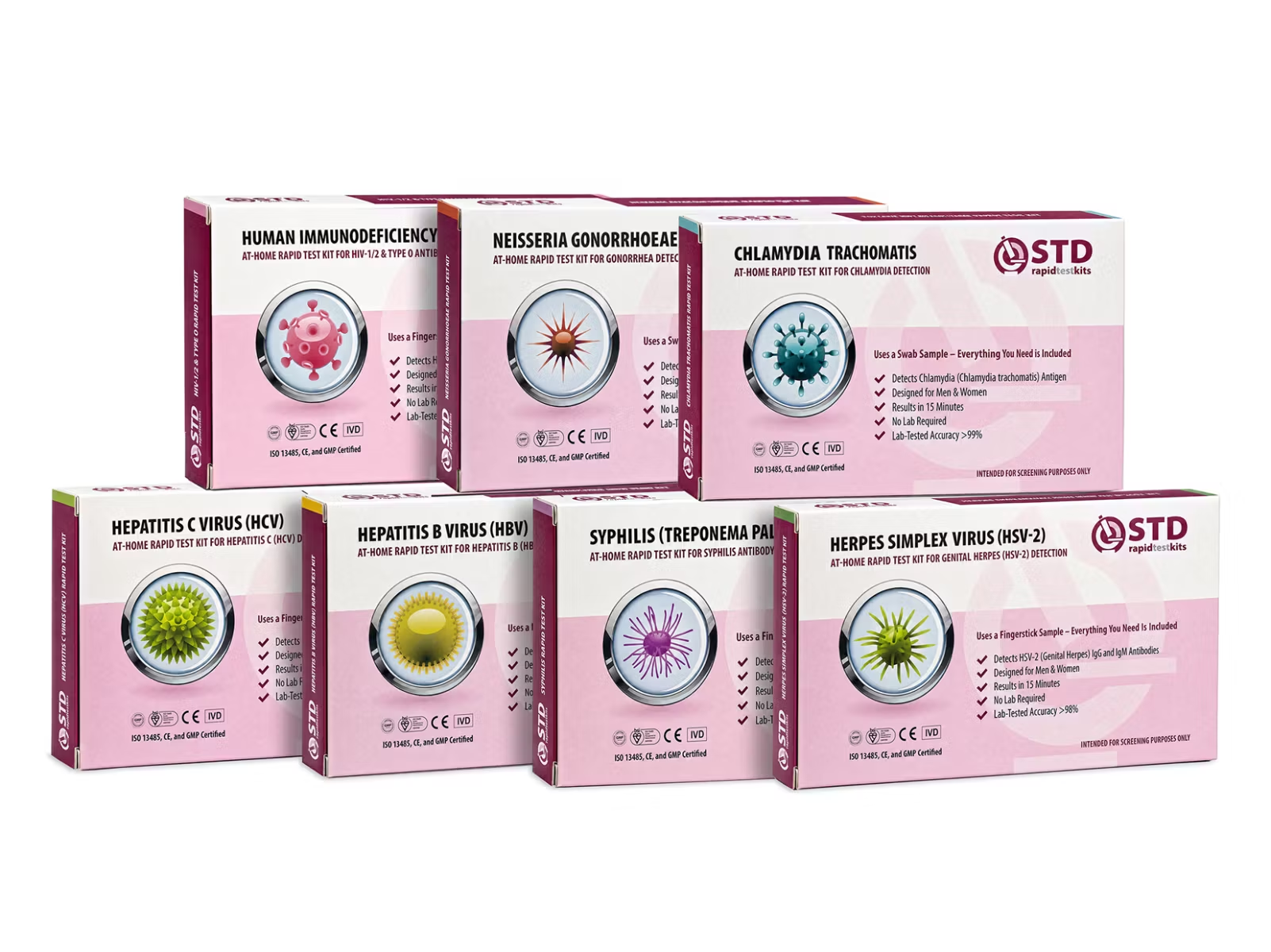
At-home rapid tests from STD Rapid Test Kits deliver results in minutes rather than days. There is no waiting room, no staff judgment, no paperwork trail in a shared medical system. You test on your own timeline, in your own space, with your privacy intact. For the person who is scared of what the result might say, that privacy is the entire point, as we explore in breaking the stigma through at-home testing. It is the difference between testing and not testing at all, and not testing is always the worse option medically.
Timing matters as much as the test itself, and this is where well-intentioned people make an avoidable mistake: testing too soon after an exposure and getting a false negative that does not give them accurate information. Every infection has a window period, the time between exposure and when a test can reliably detect it. Testing inside that window does not mean you are clear. It means the test has not had enough biological signal to work with yet. The window varies significantly by infection, and the table below covers the typical timing for our rapid kits.
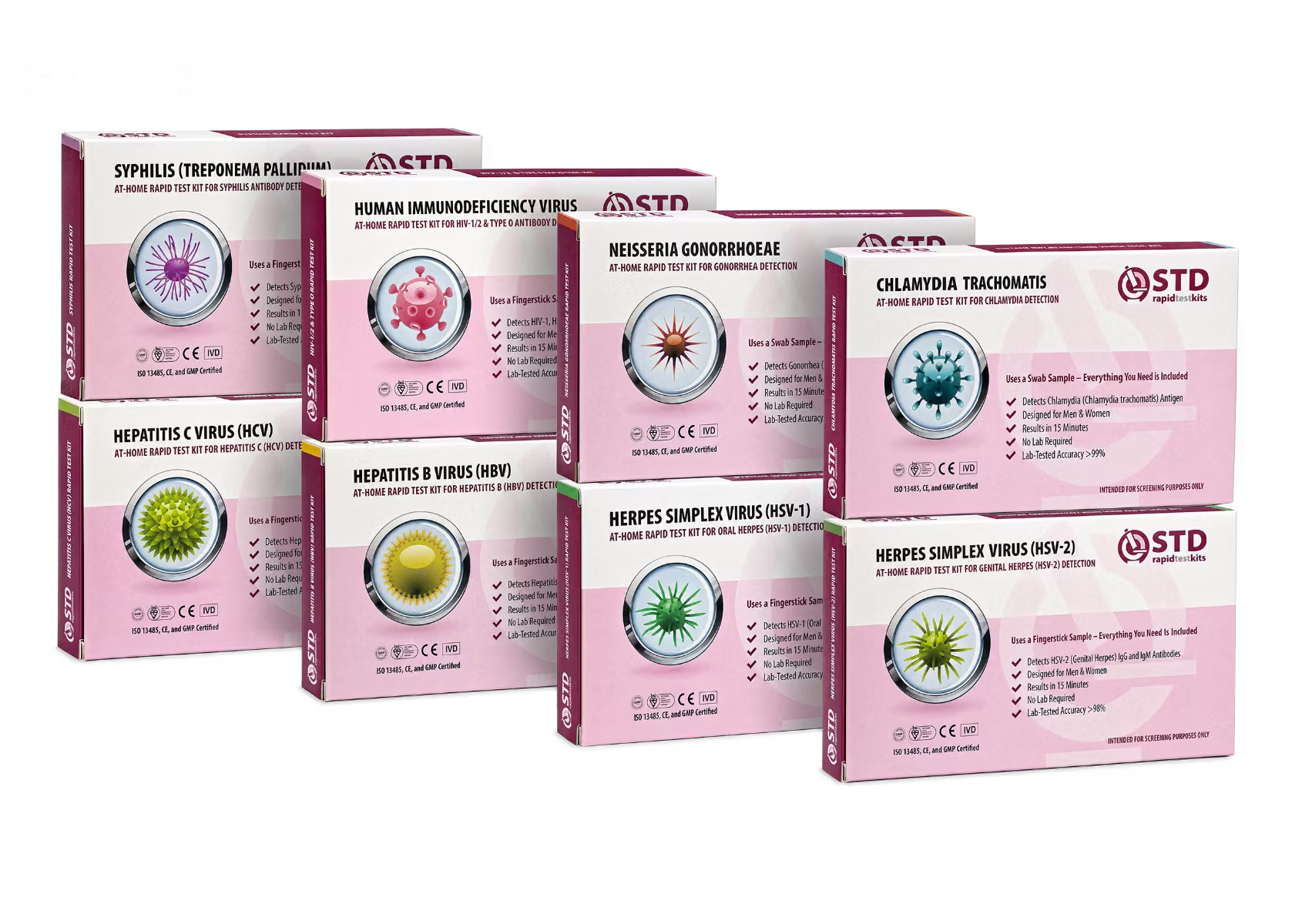
If you are unsure which infection to test for, a combo kit takes the guesswork out. The Complete 8-in-1 At-Home Rapid Test Kit covers HSV-1, HSV-2, chlamydia, gonorrhea, syphilis, HIV, hepatitis B, and hepatitis C in a single order. For the anxious person worried about multiple exposures, a comprehensive screen is almost always the better move than testing for one infection and leaving uncertainty on the table.
| Infection | Test From | Recommended Kit |
|---|---|---|
| Chlamydia | 14 days after exposure | Chlamydia At-Home Rapid Test Kit (see product page for current sensitivity data) |
| Gonorrhea | 3 weeks after exposure | Gonorrhea At-Home Rapid Test Kit (see product page for current sensitivity data) |
| Syphilis | 6 weeks after exposure | Syphilis At-Home Rapid Test Kit (see product page for current sensitivity data) |
| HIV 1 & 2 | 6 weeks (first indicator); retest at 12 weeks for full confidence | HIV 1 & 2 At-Home Rapid Test Kit (see product page for current sensitivity data) |
| Herpes HSV-1 / HSV-2 | 6 weeks earliest; retest at 12 weeks if early-window negative | Herpes HSV-1 + HSV-2 2-in-1 (see product page for current sensitivity data) |
| Hepatitis B | 6 weeks after exposure | Hepatitis B At-Home Rapid Test Kit (see product page for current sensitivity data) |
| Hepatitis C | 8 to 11 weeks after exposure | Hepatitis C At-Home Rapid Test Kit (see product page for current sensitivity data) |
The Stigma That Lives Outside You
It is worth being honest about where STD stigma comes from, because understanding its origins makes it harder to absorb as personal truth. The stigma attached to sexually transmitted infections is a historically constructed response to illness rather than an inevitable one, and it has been deliberately shaped by forces with very little to do with medicine or public health.
For most of recorded Western history, STDs were understood as divine punishment for immoral behavior. Syphilis, gonorrhea, and later HIV were all used as tools of social control, ways to categorize certain people (the promiscuous, the deviant, the outsider) as morally inferior and medically undeserving. That legacy did not disappear when science got better. It migrated into law, into culture, into language, into institutional policy, into the implicit bias of healthcare providers, and into the specific weight it still carries in faith communities, covered in how to talk about STDs without shame in faith-based communities. When someone today feels "dirty" after a diagnosis, they are absorbing centuries of deliberate messaging about what their diagnosis is supposed to mean about them.
The burden of this messaging is not distributed evenly. CDC data on STI health equity, and our deep-dive into STD stigma in the LGBTQ+ community, consistently show that racial and ethnic minority groups, LGBTQ+ individuals, and people in lower-income communities face disproportionate STI rates. The driver is structural inequity including poverty, reduced healthcare access, systemic discrimination, and the compounding effect of medical mistrust built over generations of unethical treatment, rather than behavior. The Tuskegee syphilis study, whose lasting effects we trace in Tuskegee's long shadow, in which Black men with syphilis were deliberately left untreated for decades so researchers could observe disease progression, is not an isolated historical footnote. It is a foundational reason communities of color approach healthcare with rational, justified caution, and why "just go get tested" lands very differently depending on who is hearing it.
Acknowledging all of this is the prerequisite for real empowerment. Shame that you believe you deserve is impossible to dislodge. Shame that you understand as externally imposed, historically constructed, and medically meaningless becomes possible to work through.
What Actually Happens to Your Mind After a Positive STD Diagnosis
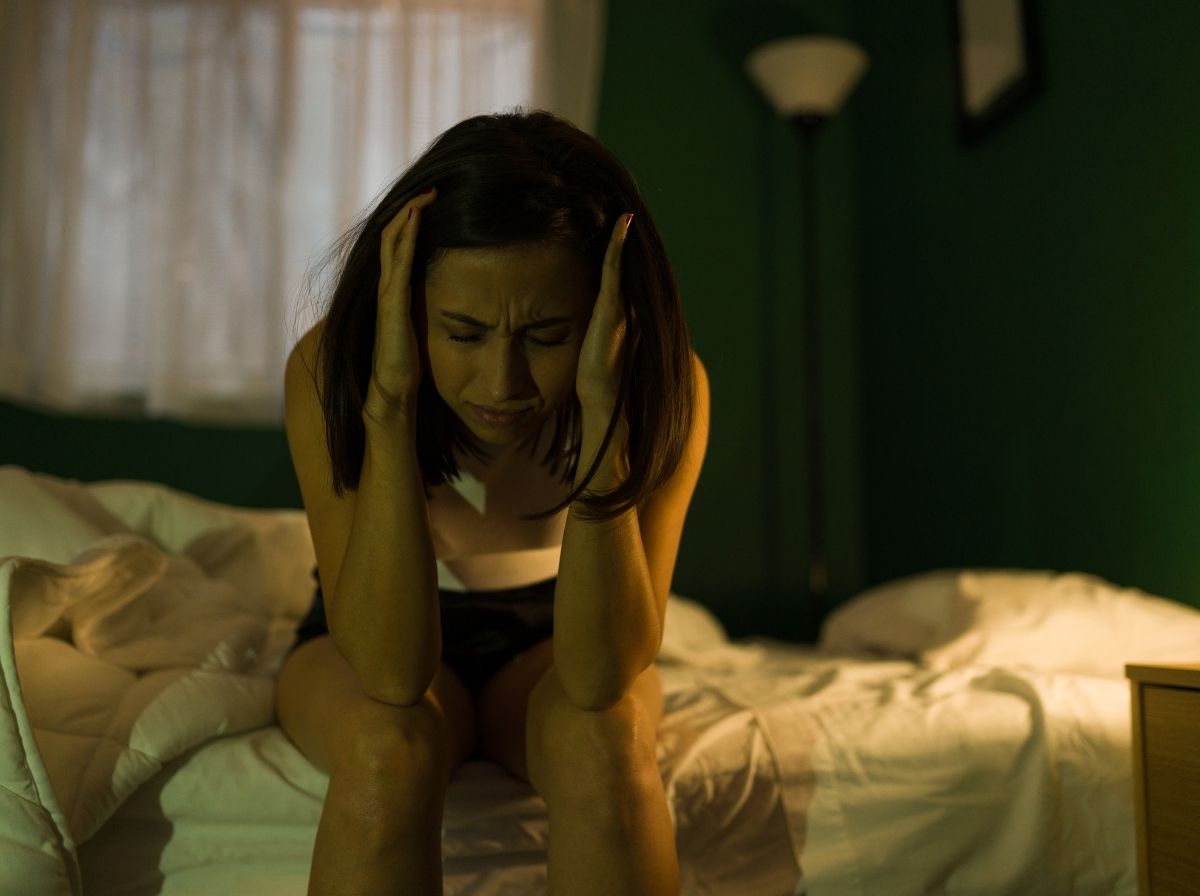
You tested. The result came back positive. And now you are somewhere on the floor, emotionally if not literally. What happens next in your head follows a remarkably consistent pattern, which means it also has a way through.
The first wave is almost always shock, regardless of how much you suspected the result. Even people who were mentally prepared for a positive report describe the moment the result becomes real as something that short-circuits their thinking. The response is biological: the stress system floods with cortisol, the prefrontal cortex goes temporarily offline, and the body treats the information as a physical threat. You may feel nausea, dissociation, a strange flatness, or the opposite, immediate overwhelming grief. All of these are normal, and none of them is permanent.
What tends to follow the shock is the shame spiral, a documented psychological pattern we break down in full detail here, and this is where the real psychological damage happens if it goes unchecked. The shame spiral is the internal voice that takes the diagnosis and turns it into a verdict about your worth as a person. It says things like: this happened because something is fundamentally wrong with me, no one will want me now, I should have known better, I am disgusting. None of these statements is medically accurate. All of them feel completely true in the first forty-eight hours. Multiple studies of people newly diagnosed with herpes simplex virus have found high rates of depressive symptoms in the weeks after diagnosis, a finding that informs our full breakdown of the emotional impact of a diagnosis. The pattern tells you this is the predictable psychological cost of a diagnosis delivered inside a culture that has weaponized it, not a personal failure of emotional regulation.
The shame spiral also has a particularly dangerous tendency: it discourages people from seeking treatment, telling partners, and getting follow-up care. This is the mechanism by which stigma causes direct physical harm. Someone who is too ashamed to go back to a clinic, or too afraid to have the partner conversation, is someone whose infection goes unmanaged and uncontained.
Shock in the first hours: cortisol flood, dissociation or grief, prefrontal thinking temporarily offline. Shame spiral in the first days to weeks: internal voice converting the diagnosis into a verdict on your worth. Avoidance as the spiral's downstream cost: skipped treatment, avoided partner conversations, infections that go unmanaged. Recognizing the pattern is the first step out of it.
The Long Way Back: Reclaiming Identity After Diagnosis
There is life after an STD diagnosis, a full one, including a continued sex life, continued relationships, and continued self-respect. This is what the data shows and what the experience of millions of people confirms, rather than an optimistic sentiment. Getting there, though, is real work, and it is worth being honest about what that work involves.
Start with information, and our comprehensive guide to living well after an STD diagnosis covers what to look for. The calm, sourced, accurate kind of information about what your diagnosis means clinically, rather than the panicked, 3am Google-search kind. Most people's mental image of what it means to have herpes, chlamydia, HIV, or syphilis is dramatically worse than the medical reality and dramatically worse than what their own experience will be with proper care. Effective treatment exists for every common STD. Many bacterial infections are cured completely with a single course of antibiotics. Chronic viral infections can be managed to the point where transmission risk is dramatically reduced and outbreaks become infrequent or cease entirely.
From there, community becomes the more powerful medicine. This sounds abstract, but it is one of the most powerful interventions available. Finding even one other person, in an online forum, a support group, a conversation with a trusted friend or healthcare provider, who has been through the same experience and come out the other side, does something information alone cannot. It makes the future livable in a felt, not just intellectual, way. The isolation of an STD diagnosis is one of its most damaging features, and shame thrives in silence. The antidote is the selective, chosen experience of being known and not rejected, rather than broadcast disclosure.
The harder question, and the one where fear tends to reconsolidate after diagnosis, is disclosure: to partners, to people you date, to people you care about. It deserves its own honest treatment. Disclosure is hard. It does not always go the way you hope. The fear of rejection is real. It is also true that people living with STDs sustain relationships, find new partners, build intimacy, and are loved consistently and ordinarily. For those navigating this with a herpes diagnosis specifically, where stigma tends to be the most intense, Dating With an STD? Here's How to Tell Them Without Losing Them is the place to start. Disclosure gets easier with practice, with language, and with the grounding that comes from genuinely believing your diagnosis is not the most important thing about you. That belief takes time to build. It builds.

When the Fear Is the Problem: Getting Mental Health Support That Works
Sometimes the psychological response to an STD diagnosis (or the fear of one) crosses from understandable distress into something that needs professional support. Knowing where that line is matters, because the same shame that keeps people from testing also keeps people from asking for mental health help. Both deserve direct address.
If you are experiencing persistent depression, significant anxiety, suicidal thoughts, or a complete inability to function in the weeks following a diagnosis, these are signs to reach out to a mental health professional, specifically one who is affirming of sexual health concerns and comfortable with STD-related distress. Not every therapist has this background, and it is worth asking directly. Our guide to overcoming the stigma of STD testing covers practical steps for finding affirming care. Cognitive behavioral therapy (CBT) has strong evidence for both the depression and anxiety that commonly follow diagnosis. For OCD-related STD fear specifically, exposure and response prevention (ERP) is the gold-standard treatment.
If you are in the venereophobia spiral (testing repeatedly without relief, unable to trust negative results, checking your body obsessively), the at-home testing environment can be both a lifeline and a trap. Used once, at the right time, with accurate information about window periods, a rapid test is exactly the clarity-giving tool it is designed to be. Used as a compulsive reassurance ritual, it feeds the anxiety loop rather than breaking it. If you recognize the second pattern in yourself, the most useful next step is a conversation with someone trained to treat health anxiety, not another test. That conversation is available, it works, and it does not require you to feel better before you reach out.
Testing is the fastest way to stop the guessing game. Whatever is driving your fear (the result, the judgment, the identity threat, the loop that will not stop), the answer on the other side of testing is almost always more manageable than the one inside the spiral. The 6-in-1 At-Home Rapid STD Test Kit covers the most common infections discreetly, without waiting rooms or clinical encounters, with results in minutes.
FAQs
- Is it normal to feel terrified before getting an STD test, even if my risk was probably low?
- Yes, completely normal, and you are far from alone in it. The fear is not proportional to actual risk; it is proportional to what a positive result would mean socially and emotionally. That gap between clinical reality and perceived threat is exactly what STD stigma creates. The anxiety you are feeling is a response to cultural messaging, not a signal that something is wrong with you.
- I tested negative, but I still cannot stop worrying. What is going on?
- If a negative result brings relief for a day or two and then the doubt creeps back in, you are likely dealing with health anxiety or OCD rather than a standard fear of infection, and more testing will not fix it. The pattern has a name in the clinical literature: reassurance-seeking that does not reassure, because compulsions feed OCD rather than resolving it. A therapist who specializes in health anxiety or OCD is the right next step.
- Can STD stigma cause depression?
- Yes, and the research is clear on this. Internalized stigma following an STD diagnosis is consistently linked to clinically significant depression and anxiety, not just temporary sadness. The shame of a diagnosis, compounded by fear of rejection and isolation, creates the psychological conditions in which depression develops. This is a documented, predictable consequence of delivering a medical diagnosis inside a shame-saturated cultural context, not a personal weakness.
- I think I tested too early. Do I need to retest?
- Yes, retest. The infection cannot be detected inside the window regardless of how certain you feel about the result. The single most-missed point: HIV and herpes both warrant a 12-week retest after an early-window negative, because antibody seroconversion in those infections can take longer than the 6-week first-indicator mark. For exact timings on chlamydia, gonorrhea, syphilis, hepatitis B, and hepatitis C, see the testing-windows table above. The shorter the window, the sooner you get a reliable answer.
- How do I tell a partner about a positive STD result without the conversation destroying everything?
- Directly, factually, and without pre-apologizing for having the diagnosis. The conversation works best when it leads with information rather than shame: what the infection is, how it is managed, what it means for them, and what steps you are taking. Most people respond better to calm clarity than to emotional self-flagellation. Some conversations will still be hard. That does not mean they always will be, and it does not mean the diagnosis makes you undateable.
- Is it possible to have a normal sex life after an STD diagnosis?
- Yes, and this is a clinical reality rather than a consolation. Millions of people live with herpes, HIV, HPV, and other managed STDs and sustain active, healthy, intimate relationships. Effective treatment significantly reduces transmission risk for most infections. Disclosure, consistent care, and honest communication with partners are the practical building blocks of a sex life that continues on the other side of a diagnosis.
- Why do some people with STD-related anxiety keep testing even after negative results?
- Because the anxiety is driving the behavior, not the infection risk. This is the hallmark of what clinicians call venereophobia or STD OCD: a pattern where testing is used as a compulsion to reduce anxiety, but because compulsions feed OCD rather than resolving it, the relief never lasts. Negative results stop being reassuring. The only treatment that breaks this cycle is working with a trained therapist on the underlying anxiety, not accumulating more test results.
- What is the fastest way to get tested without anyone finding out?
- An at-home rapid test. No clinic, no waiting room, no paperwork in a shared system, no staff interaction. Results arrive in minutes, in your own space. The Complete 8-in-1 kit covers the eight most common infections in a single discreet order, shipped directly to you. If privacy is the barrier between you and knowing your status, that barrier is now completely removable.
Take Your Status Off the Table
Whatever has been keeping you from testing (the fear of the result, the shame of sitting in a clinic, the OCD loop that will not quiet down, the mistrust of a system that has not always been trustworthy), the answer to all of it begins in the same place: knowing your status. Not knowing is a different kind of anxiety, one with no resolution and no expiry date.
At-home rapid testing removes the most common barriers between fear and answers. The Complete 8-in-1 At-Home Rapid STD Test Kit covers HSV-1 and HSV-2, chlamydia, gonorrhea, syphilis, HIV, hepatitis B, and hepatitis C, the eight most common infections, in a single discreet kit with results in minutes. If your concern is more targeted, the 6-in-1 kit covers the core infections including HIV and herpes. Both ship directly to you, with no clinic, no judgment, and no waiting room.
Testing is empowerment in the most practical sense. Take control of your sexual health today. Visit STD Rapid Test Kits and get the clarity you have been putting off.
1. Order a kit and test at the right window for your specific concern (use the timings table above). 2. If fear is still the obstacle, a therapist trained in health anxiety or OCD can help. The barrier itself is treatable.
Our article was constructed based on current advice from the most prominent public health and medical organizations, and then molded into simple language based on the situations that people experience, such as pre-test paralysis, post-diagnosis shame, OCD-driven reassurance-seeking, and the realities of disclosure and recovery. In the background, our pool of research included broader public health guidance, peer-reviewed psychology literature, and clinical references, but the sources listed below are the most pertinent and useful for readers who want to verify our claims for themselves.
- U.S. Centers for Disease Control and Prevention. STI Health Equity: healthcare distrust, fear of discrimination, and social determinants as structural barriers driving STI health disparities.
- American Psychological Association / Harris Poll, 2025. Beliefs About Mental Health Have Evolved, But Stigma Remains, including the 35% figure on adults who would view someone differently.
- PMC / NCBI. Psychological Health and Well-Being in Patients with Sexually Transmitted Infections, including documented links between STI diagnosis and shame, anxiety, depression, and fear of rejection.
- PMC / NCBI, 2025. Venereophobia: A Comprehensive Review, including its overlap with OCD and illness anxiety disorder and the role of compulsive reassurance-seeking.
- Healthbeat, 2025. Are STIs Truly Declining, or Is the Data Just Lacking? Context for U.S. STI surveillance trends and testing-access disparities.
- Psych Central. Coping with a Positive STI Diagnosis: 9 Helpful Tips, on the shock-shame-recovery arc and practical mental health support.