Published: September 2025 | Last updated: May 2026 | Editorial review and quality control: Martina N.
Where can I get tested for an STD?
You have seven main options. The fastest is an at-home lateral-flow test, with results in 15 to 20 minutes; the lowest-cost is a public health STI clinic, often free. Mail-in lab panels return clinic-grade NAAT results in 4 to 7 days. Use the free <a href="https://gettested.cdc.gov/" target="_blank" rel="noopener noreferrer">CDC locator</a> at gettested.cdc.gov to find a site near you. Cost, speed, and privacy decide which fits best.
Lots of people put off STI testing because they are not sure where to go, what it costs, or who else might see the results. In 2026 you have more options than ever, and several of them are free, fast, and private. If nerves are the thing holding you back, our guide to getting past the fear of testing is a good first read.
This guide walks through every realistic place an adult in the U.S. or U.K. can get tested for sexually transmitted infections, what each option involves, when each one makes sense, and where at-home rapid tests fit in. Public health sources from the CDC, WHO, and NHS are linked at the end so you can verify any specific claim.
Key Takeaways
- Free or sliding-scale STI testing is available in nearly every U.S. county through public health departments, Planned Parenthood, and community health centers; the CDC's locator at gettested.cdc.gov finds your nearest site by ZIP code.
- At-home rapid lateral-flow kits give private, lab-free results in 15 to 20 minutes; mail-in panels return laboratory NAAT results in 4 to 7 days when you want clinic-level accuracy without leaving home.
Your options at a glance
Seven realistic routes cover almost every situation an adult in the U.S. or U.K. faces in 2026:
- Public health STI clinics run by your county or city health department. Often free.
- Planned Parenthood and community health centers (FQHCs). Sliding-scale fees based on income.
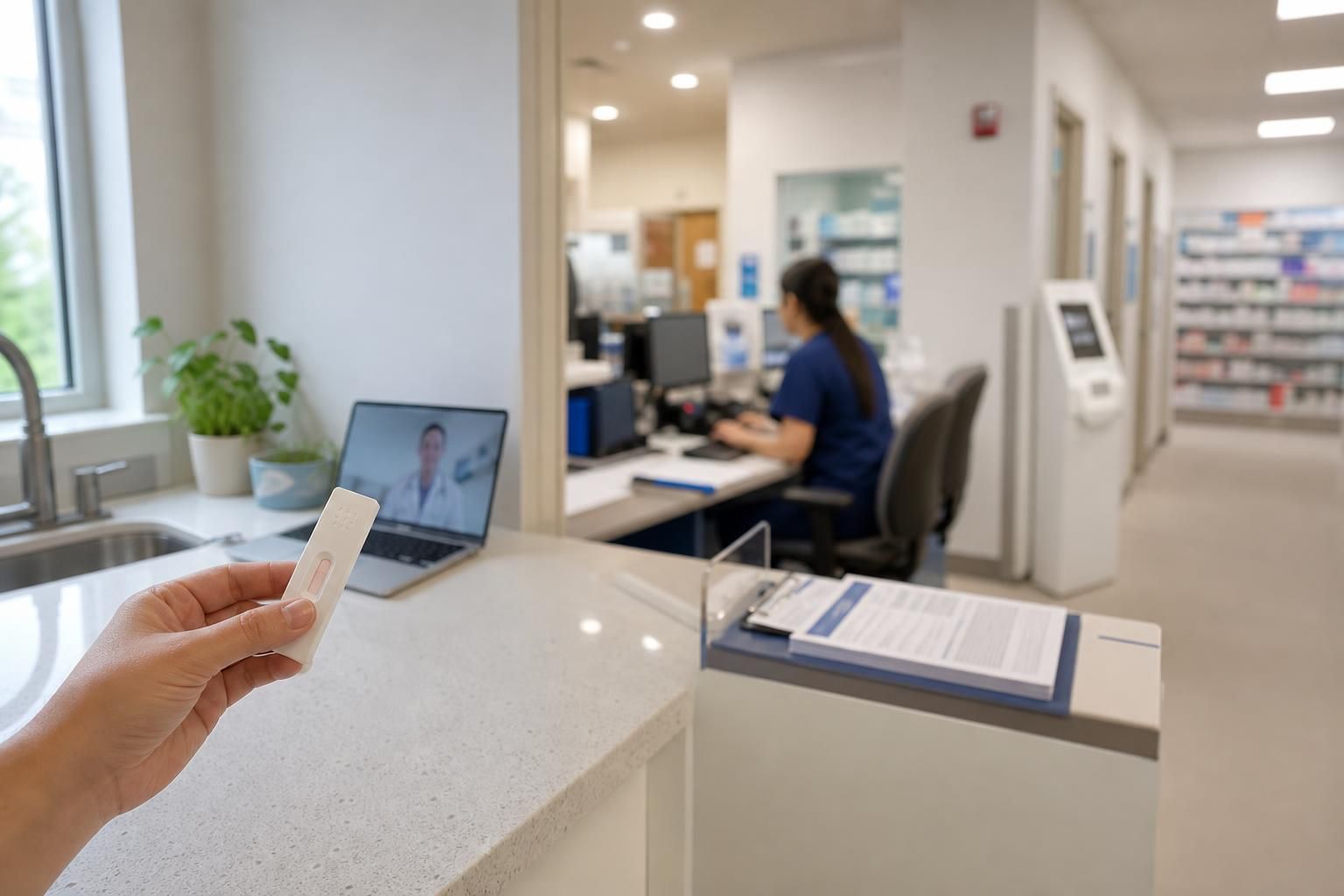
- At-home rapid test kits. Lateral-flow strips that give a result on the kitchen counter in 15 to 20 minutes, no lab involved.
- Your primary care doctor. Billed through insurance, with more privacy than walking into an STI-only clinic.
- Urgent care and retail clinics like CVS MinuteClinic or Walgreens Healthcare Clinic. Walk-in friendly.
- Online telehealth services with mail-in lab panels. Order online, collect a sample at home, ship it to a lab, get results by portal.
- Specialty STI clinics (called GUM clinics in the U.K.). Free under the NHS, confidential, walk-in.
The right route depends on three things: how much you can spend, how fast you need an answer, and how much privacy you want. Each section below walks through one option in detail.
If cost is your main concern, begin with the CDC locator at <a href="https://gettested.cdc.gov/" target="_blank" rel="noopener noreferrer">gettested.cdc.gov</a> to find a free or low-cost site near you. If privacy matters most, an at-home rapid kit or a self-pay mail-in panel keeps the result off any insurance record entirely.
Public health departments and STI clinics
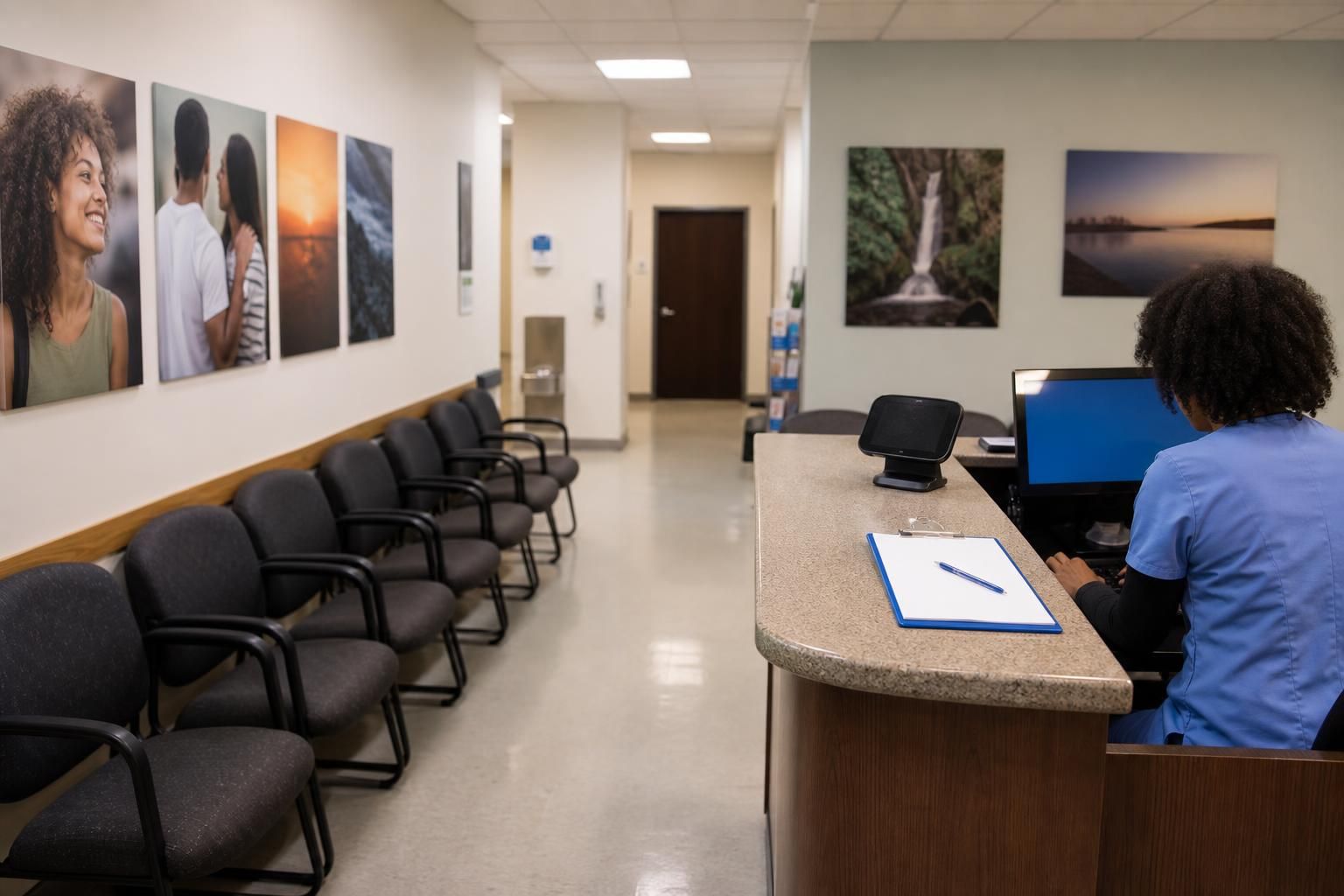
Every U.S. state and most counties run a public health department, and the larger ones operate dedicated STI clinics. These are the closest thing to a guaranteed free testing option in the country. You walk in, fill out a brief intake form, talk to a nurse or counselor, get tested, and either wait for results or get them by phone in a few days.
What makes them work for most people: cost (often $0, with no insurance check), staff who handle STI testing every day and will not make it weird, and same-day treatment in many clinics if you test positive for something curable. What makes them imperfect: hours can be limited, wait times can run long in busy urban areas, and the clinic location may show up on a public map.
The CDC's testing locator at gettested.cdc.gov is the fastest way to find your nearest site. Type your ZIP code and filter by what you want tested. Many sites also offer free condoms, PrEP counseling, and partner-notification support at the same visit.
In the U.K., the equivalent is a Genito-Urinary Medicine (GUM) clinic or a sexual health clinic run by the NHS. Testing and treatment for STIs are free regardless of immigration status, and you can usually book online or walk in. The NHS sexual health page lists what services are available and how to access them.
Planned Parenthood and community health centers
Planned Parenthood operates hundreds of health centers across the U.S. and runs one of the most accessible STI testing networks for people without insurance or with limited income. Fees slide based on what you can pay; in many states, federal Title X funding covers tests for free for people below certain income thresholds. Locations and services for each health center are listed at plannedparenthood.org, and the CDC's gettested.cdc.gov locator also includes Planned Parenthood sites alongside other free options.
Community health centers, also called Federally Qualified Health Centers (FQHCs), are a parallel network in nearly every U.S. county. They serve people regardless of insurance status and use the same sliding-scale model. The HRSA Find a Health Center tool at findahealthcenter.hrsa.gov locates the nearest one by ZIP code.
College and university student health centers test as well, often for free if you are enrolled, and often without sending charges to a parent's insurance plan if you ask. If you are a student, this is usually the most private and lowest-cost in-person option available to you.
The HRSA Find a Health Center tool at <a href="https://findahealthcenter.hrsa.gov/" target="_blank" rel="noopener noreferrer">findahealthcenter.hrsa.gov</a> locates FQHCs by ZIP code. These centers offer sliding-scale STI testing regardless of insurance status, and many charge nothing for low-income patients.
At-home rapid test kits
(Disclosure: stdrapidtestkits.com sells at-home rapid test kits. We include at-home rapid testing as one option among several here and recommend a kit only when it fits the reader's concern, not for commercial benefit.)
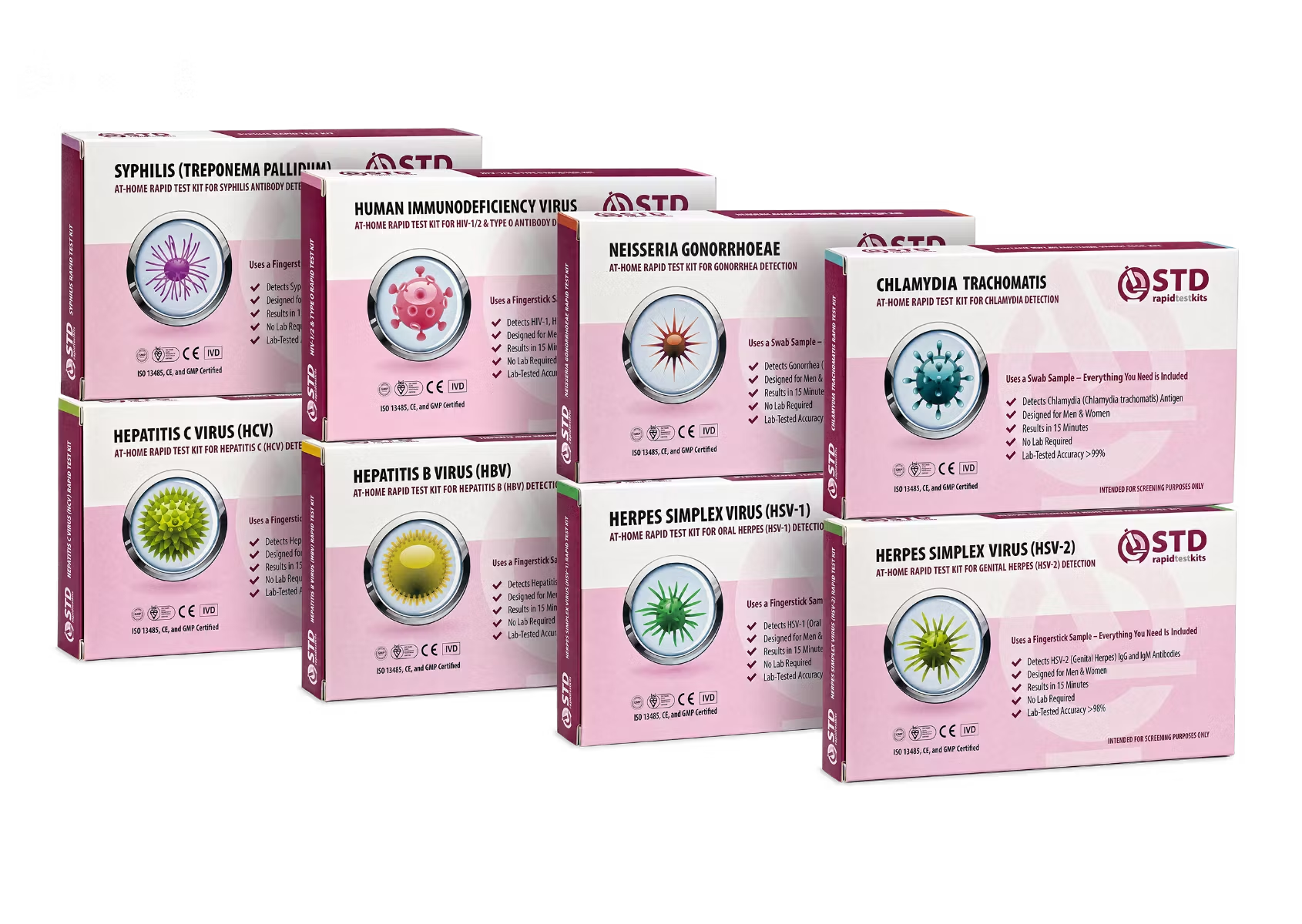
At-home rapid test kits use lateral-flow immunoassays, the same chemistry as a home pregnancy test or a COVID antigen test, to give a result on the kitchen counter in 15 to 20 minutes. No lab is involved. The sample is either a self-collected vaginal or penile swab (for chlamydia, gonorrhea, trichomoniasis, HPV) or a small fingerstick blood drop (for HIV, syphilis, herpes, hepatitis B, hepatitis C). Combo kits bundle several tests so you can screen for multiple infections in one sitting; we stock at-home STI test kits across single-infection and multi-infection panels.
What rapid kits do well: speed, privacy, no online portal, no health-record entry, no shipping. You buy the kit, run the test, and read the line. If the result is negative and you tested at the right time after exposure (see the window-period section below), the test rules out an active infection at the sensitivity printed on the kit's labeling. Those figures vary by infection and by manufacturer, so check the sensitivity and specificity on the specific kit before you buy.
Where lab testing has the edge: detecting very low-level infections a molecular test might still catch. The CDC and clinical guidelines describe laboratory NAAT as the gold standard for chlamydia and gonorrhea because of its higher analytical sensitivity. Lateral-flow rapid tests are strong screening tools, especially when you are inside the right window, and they are not a NAAT. Confirm any positive rapid result at a clinic before starting treatment.
At-home swab kits are sold over-the-counter and online, and blood-based rapid tests for HIV, syphilis, and hepatitis are available from pharmacies and online retailers. Check that the kit you buy has FDA clearance or an equivalent regulatory mark (CE mark in the U.K.) and that the manufacturer lists sensitivity and specificity data on the labeling.
Your primary care doctor
If you have a regular doctor, you can ask for STI testing at any visit, or schedule a visit specifically for it. The pros: an existing relationship with your provider, a private appointment, and coverage for annual STI screening as preventive care with no copay on most commercial insurance plans under the Affordable Care Act.
The trade-off is insurance documentation. The visit and lab work get coded with billing codes, which means the explanation of benefits goes to the policyholder. If you are on a parent's or partner's plan and do not want them to see what tests you ordered, that is the place where it most often becomes visible. The CDC's STI screening guidance outlines what testing is appropriate for which age and risk groups, useful context if you want to ask your doctor for specific panels.
Your primary care doctor is also the right person to see if you have symptoms that go beyond a basic screening test (genital sores, persistent unusual discharge, lower abdominal pain, throat pain after oral exposure), because they can do a physical exam and order targeted tests such as a culture or a swab of an actual lesion. MedlinePlus from the U.S. National Library of Medicine keeps a plain-English guide to STI symptoms and screening that is a helpful companion when you are deciding whether a symptom warrants a visit.
Most commercial insurance plans cover annual screening for HIV, chlamydia, gonorrhea, syphilis, and hepatitis B and C as preventive care with no copay, per Affordable Care Act rules. Symptom-driven testing or follow-up after a positive screen may be billed differently and can incur a copay or coinsurance. Ask the front desk how the visit will be coded if cost matters for your decision.
Urgent care and retail health clinics
Urgent care centers and the in-store retail clinics at pharmacies (CVS MinuteClinic, Walgreens Healthcare Clinic, Walmart Health) test for the most common STIs and are useful when you need same-day access without an appointment. They typically test for chlamydia, gonorrhea, syphilis, and HIV; some also cover trichomoniasis or hepatitis. Walk-in access without an appointment is the main draw, and self-pay costs usually run $75 to $200 or more for the visit, plus separate lab fees.
Retail clinics work best when you have a specific concern, want results within a few days, and have insurance or can pay out of pocket. They are not the lowest-cost option for an asymptomatic full-panel screening; a public health clinic or a mail-in lab panel will be cheaper for that. A visit billed through commercial insurance also generates an EOB, with the same privacy implication as a primary care visit.
Best for: same-day walk-in access when you have a specific concern and no time to wait for an appointment. Self-pay cost: $75 to $200 or more for the visit, plus separate lab fees. Privacy: medium. If billed through commercial insurance, an explanation of benefits goes to the policyholder, just like a primary care visit. For a free or lower-cost asymptomatic screening, a public health clinic or a mail-in panel is the better fit.
Online mail-in lab panels (telehealth STI testing)
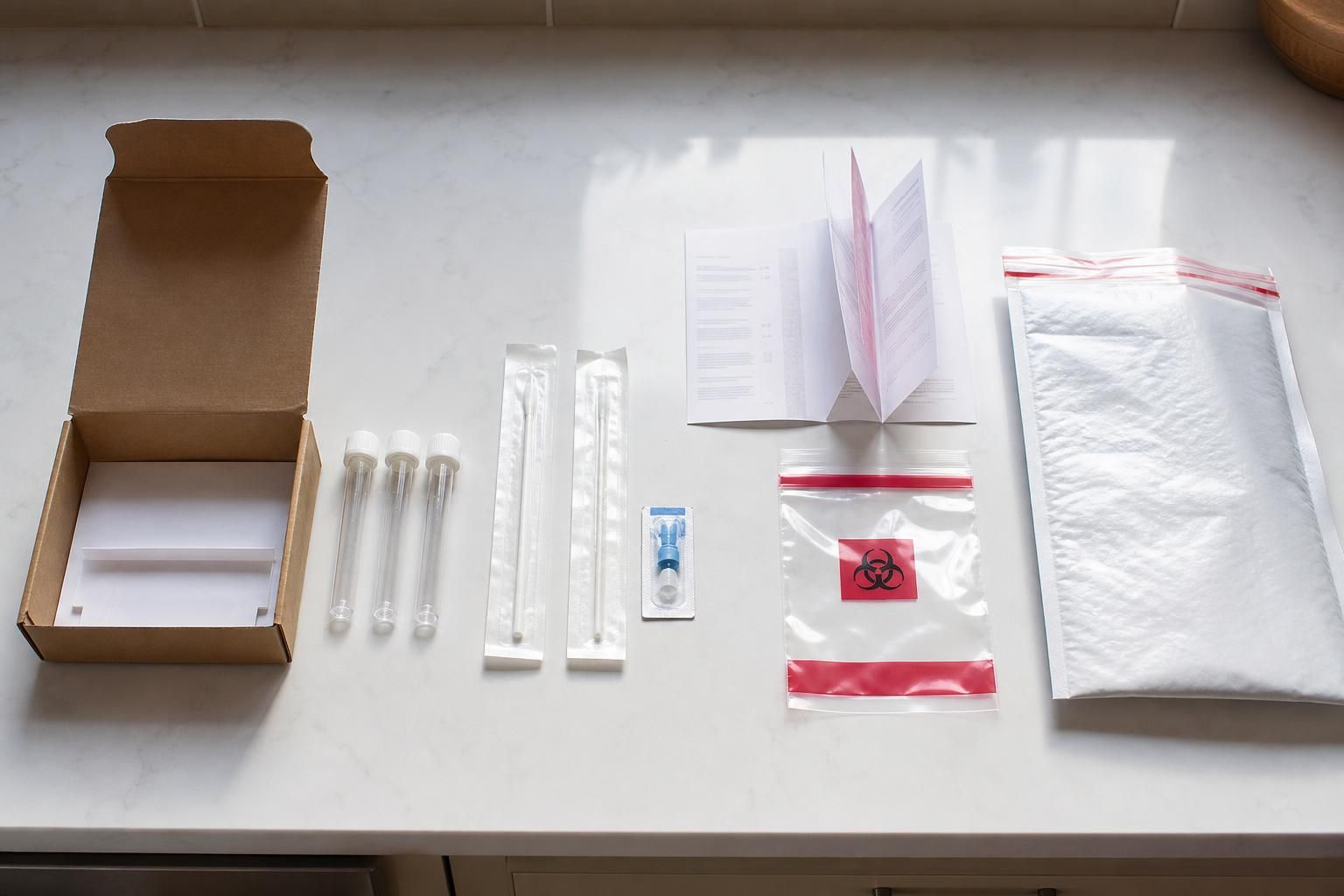
Mail-in lab panels are the bridge between in-person testing and at-home rapid kits. You order a panel online from a service such as LetsGetChecked, Everlywell, Nurx, or MyLabBox, receive a collection kit by mail, gather a sample at home (urine, fingerstick blood, or a self-swab depending on the panel), ship it back in a prepaid mailer, and get results in a secure online portal, usually within 2 to 5 business days after the sample reaches the lab.
What you actually get: laboratory NAAT (nucleic acid amplification test) analysis, the same molecular technology a public health clinic uses for chlamydia, gonorrhea, and trichomoniasis, plus blood-based testing for HIV, syphilis, and hepatitis. Results come with clinician follow-up if you test positive, which is the part that sets this category apart from a generic at-home kit.
What you trade for that is time and money. Mail-in panels usually cost more than a public health visit, take 4 to 7 days end to end (shipping plus lab turnaround), and require you to collect the sample correctly. They are a good fit if you want lab-grade results without leaving home and do not need an answer the same day.
How to choose the right route
Each option fits a different combination of cost, speed, and privacy. The table below maps the trade-offs. For most asymptomatic adults the practical decision comes down to one question: is cost or privacy more important to me right now?
| Option | Typical cost | Speed | Privacy |
|---|---|---|---|
| Public health STI clinic | Free or low-cost | Same day to 5 days | High (often anonymous) |
| At-home rapid kit | Single kit ~$25; combo $50 to $200 | 15 to 20 minutes | Highest |
| Planned Parenthood / FQHC | Sliding scale, often free | Same day to 5 days | High |
| Primary care doctor | Insurance copay or self-pay | 1 to 5 days | Medium (insurance EOB) |
| Mail-in lab panel | Approx. $80 to $250 per panel | 4 to 7 days end to end | High (no insurance) |
| Urgent care or retail clinic | Self-pay $75 to $200+, or insurance | Same day to 5 days | Medium |
| GUM / specialty STI clinic (UK) | Free under NHS | Same day to 5 days | High |
When you should get tested (window periods)
Where you test matters less than when you test. Every STI has a window period, the gap between exposure and the point when a test can reliably detect the infection. Test inside that window and a false negative becomes more likely, no matter how good the test or the clinic is.
The chart below maps approximate detection windows by infection, drawn from current CDC STI guidance, CDC HIV testing guidance, and lateral-flow product labeling. If your last possible exposure was more recent than the window for the infection you are worried about, treat a negative result as provisional and retest once the window closes. A fourth-generation laboratory HIV panel has a shorter window than an antibody-only home test, which is worth knowing if you need an early answer.
What testing actually involves at a clinic
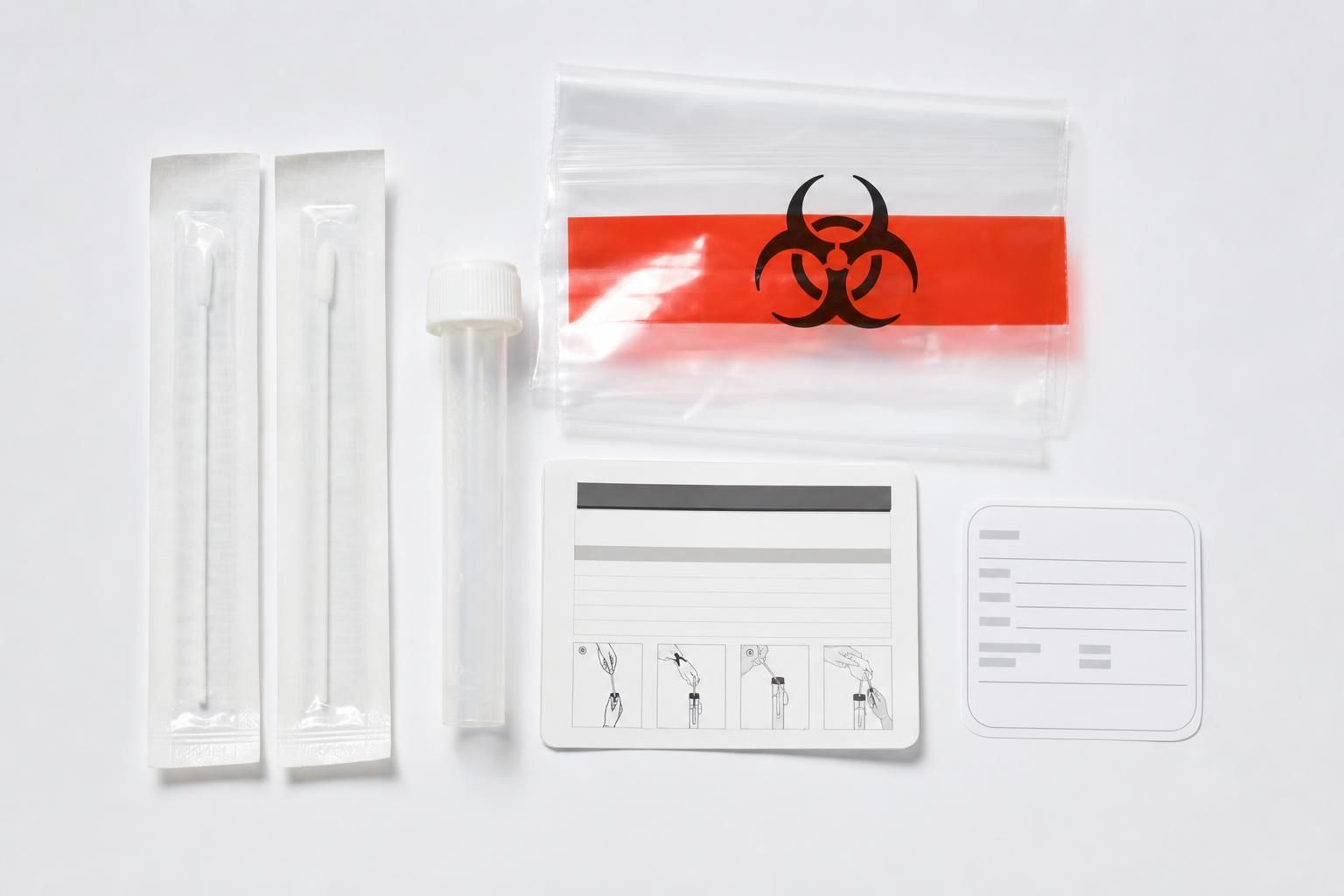
If you have never been tested, knowing what to expect lowers the threshold to walk in. Staff at STI clinics see hundreds of patients a week, the intake questions are brief and clinical, and nothing you say will surprise them. A typical screening visit takes 20 to 45 minutes and runs in four steps:
- Intake form. A brief sexual history (number of partners, last exposure, condom use, current symptoms). The form serves clinical purposes only.
- Sample collection. Depending on what is being tested: a urine sample, a self-collected or clinician-collected swab (vaginal, penile, throat, or rectal as appropriate), and a small blood draw for HIV, syphilis, or hepatitis.
- Counseling. A nurse or counselor walks you through window periods, what each test covers, and what symptoms to watch for.
- Results. Some tests come back the same day (rapid HIV, rapid syphilis); laboratory NAAT tests come back in 1 to 5 days, usually by phone, secure portal, or text.
Pharyngeal (throat) and rectal swabs are part of standard screening for people with oral or anal exposures, but they are not always added by default. Ask for those swab sites explicitly if they apply to you. Bringing a rough list of your last exposure dates and any symptoms speeds the whole visit along.
How much testing costs in 2026
Cost varies more than most people expect. The same chlamydia and gonorrhea panel can cost $0 at a public health clinic and over $300 at a retail urgent care without insurance. Approximate 2026 self-pay ranges in the U.S. (based on publicly listed self-pay rates as of early 2026; actual cost varies by clinic and region):
- Public health STI clinic: free or up to about $30, depending on county.
- At-home rapid kit: roughly $25 for a single-infection test, or about $50 to $200 for a multi-infection combo kit, depending on how many infections it covers.
- Planned Parenthood and FQHCs: $0 to $200 on a sliding scale, often $0 for low-income patients via Title X.
- Primary care office visit (no insurance): $150 to $300 for the visit, plus lab fees of $50 to $300 depending on the panel.
- Mail-in lab panel: approximately $80 to $250 for a comprehensive panel.
- Urgent care or retail clinic (no insurance): $75 to $200 or more for the visit, plus separate lab fees.
If you have insurance, the Affordable Care Act requires most plans to cover annual STI screening as preventive care with no copay (HIV, chlamydia, gonorrhea, syphilis, hepatitis B and C). Symptom-driven testing may not qualify as preventive and can incur a copay or coinsurance. When cost is the main constraint and you want to screen without symptoms, a public health clinic or Planned Parenthood is almost always the lowest-cost route.
Privacy, confidentiality, and partner notification
Confidentiality is one of the biggest reasons people pick one route over another, so it helps to know how each option handles your information. The short version: anything billed through commercial insurance generates an explanation of benefits (EOB) that goes to the policyholder, while self-pay options and public clinics leave the smallest trail. The box below breaks it down by route.
Reportable-disease laws also vary by state. When a lab confirms certain infections (HIV, syphilis, gonorrhea, chlamydia), it reports the result plus basic demographic information to the state health department for surveillance. That is not the same as telling your contacts. Partner notification is a separate, mostly opt-in system that exists to break the chain of transmission, and in most states the health department can contact a partner without ever revealing your name.
Privacy and confidentiality by testing route
- Public health STI clinics: highly confidential; many states permit anonymous HIV testing; minimal insurance documentation.
- Planned Parenthood and community health centers: confidential care; can often bill without detailed EOB codes; financial assistance available.
- Urgent care and retail clinics: documented in the medical record; an insurance EOB may disclose STI testing to household members reviewing claims.
- Primary care physician: integrated into the medical record; highest likelihood of insurance documentation and EOB visibility.
- Mail-in lab panels and at-home rapid kits: smallest data trail; results typically not reported to insurance; no medical-record entry unless you report results to a provider.
- Partner notification: the CDC recommends confidential patient-delivered or provider-assisted notification; most states do not mandate disclosure without consent.
After your results
If your test is negative and you are past the relevant window period, the result rules out an active infection at typical screening sensitivity. Keep using protection, retest annually if you have new partners, and follow the CDC screening schedule for your age and risk group.
If your test is positive, the next step depends on the infection:
- Bacterial infections (chlamydia, gonorrhea, syphilis, trichomoniasis) are curable with antibiotics, often within 1 to 7 days of starting treatment. See a clinician within a few days for a prescription and partner-notification guidance.
- Viral infections (HIV, herpes, HPV, hepatitis B and C) are managed with current treatment, and several are highly controllable. HIV in particular is now treatable to an undetectable viral load, which makes it sexually non-transmissible to partners (the U=U principle confirmed by the CDC).
- Lab confirmation matters. If your positive came from an at-home rapid test, confirm it with a clinician-administered NAAT or laboratory antibody test before starting treatment. False positives happen with any screening tool, lateral-flow or otherwise.
Whatever the result, partner notification is the public-health step that breaks the chain of transmission. Most clinics will help you with this, and many states offer anonymous notification through the health department so you do not have to contact partners yourself.
Many sexually transmitted infections do not cause symptoms, so testing is the only way to know for sure whether you have one.
Common myths about getting tested
A few persistent misconceptions stop people from testing or steer them toward the wrong route. Here is what the evidence actually says.
Myths vs facts about STI testing
Myth: If I had an STI, I would have noticed symptoms by now.
Fact: Many STIs cause no symptoms at all. The CDC states plainly that testing is the only way to know for sure whether you have one, which is why routine screening is recommended even when you feel fine.
Myth: Testing is too expensive if I don't have insurance.
Fact: Free or sliding-scale testing is available in nearly every U.S. county through public health departments, Planned Parenthood, FQHCs, and student health centers. The CDC's locator at gettested.cdc.gov finds no-cost sites by ZIP code.
Myth: My results will end up in front of people I don't want to see them.
Fact: Several routes are confidential or anonymous. Public health clinics often offer anonymous HIV testing, and at-home kits and self-pay mail-in panels involve no insurance trail at all, so no EOB goes to a policyholder.
Myth: A standard screening automatically checks every exposure site.
Fact: Throat and rectal swabs are not always added by default. If you have had oral or anal exposure, you need to ask for those swab sites specifically, because a generic screening may only cover urine or a genital swab.
Your next step
Pick the route that matches your top priority right now. The quick decision below points you to the best starting point. You can always combine routes, for example screen at home first and confirm anything positive at a clinic.
Which testing route should you start with?
Is keeping the test off any insurance record your top priority?
Yes: Use an at-home rapid kit or a self-pay mail-in panel. Neither runs through insurance, so no explanation of benefits reaches a policyholder. Confirm any positive at a clinic before treatment.
Do you need the lowest possible cost and don't mind an in-person visit?
Yes: Find a free public health clinic, Planned Parenthood, or community health center near you with the CDC locator at gettested.cdc.gov.
No: For clinic-grade lab accuracy without leaving home, order a mail-in NAAT panel. For a result in minutes, use an at-home rapid kit and retest at the end of the window period if you tested early.
Guidance only. A healthcare provider can advise based on your specific situation.
Frequently asked questions
- How often should I get tested for STIs?
- The CDC recommends annual chlamydia and gonorrhea screening for sexually active women under 25 and for men who have sex with men, plus annual HIV screening for everyone aged 13 to 64. People with new or multiple partners should test more often, roughly every 3 to 6 months. After a known exposure, test once you are past the window period for the infection in question.
- Can I test for everything at once?
- Most clinics and mail-in panels offer a comprehensive option covering chlamydia, gonorrhea, syphilis, HIV, trichomoniasis, and sometimes hepatitis B and C and herpes. At-home rapid combo kits cover six to ten infections at once. No single test covers every infection, because each one needs a different sample type or assay technology.
- Will my parents see the test if I'm on their insurance?
- Usually yes. The explanation of benefits sent to the policyholder typically lists the visit type and the lab tests ordered. To keep testing private, use a public health STI clinic, Planned Parenthood, a community health center, or pay out of pocket for a mail-in panel or at-home kit. Many states also let you file a confidential communications request with the insurer to redirect EOBs.
- Are at-home rapid tests as accurate as a clinic test?
- For routine screening past the correct window period, a lateral-flow home kit is a useful first answer. Check the sensitivity and specificity printed on the specific kit's labeling, since the figures vary by infection and manufacturer. Laboratory NAAT testing is more sensitive for chlamydia and gonorrhea, so confirm any positive home result at a clinic before treatment, and retest any negative taken inside the window once the window closes.
- Can I get free STI testing if I don't have insurance?
- Yes. Public health STI clinics, Planned Parenthood, community health centers (FQHCs), and college student health centers all offer free or sliding-scale testing regardless of insurance status. The CDC's testing locator at gettested.cdc.gov finds free sites by ZIP code.
- Do I need an appointment, or can I walk in?
- Public health STI clinics, urgent care, and retail clinics usually accept walk-ins. Planned Parenthood, primary care doctors, and most community health centers prefer appointments but often accommodate same-day visits. Mail-in panels and at-home rapid kits are entirely self-directed, with no appointment to make.
- What if I test positive?
- Confirm any positive at-home result with a clinician before starting treatment. If the infection is bacterial, a short course of antibiotics usually clears it within a week. If it is viral, treatment is long-term and most infections are well controlled with current medication. The clinic that confirms your result will guide partner notification, often anonymously through the health department.
- How long do results take?
- Rapid lateral-flow tests give results in 15 to 20 minutes at home, and within about 30 minutes at a clinic. Laboratory NAAT tests come back in 1 to 5 business days. Mail-in lab panels typically deliver results 4 to 7 days after you ship the sample, including transit time.
- U.S. Centers for Disease Control and Prevention. Sexually Transmitted Infections homepage with current screening, testing, and treatment guidance.
- U.S. Centers for Disease Control and Prevention. Get Tested locator for free and low-cost STI testing sites by ZIP code.
- U.S. Centers for Disease Control and Prevention. HIV section, including testing window periods for fourth-generation and antibody-only tests, and U=U treatment-as-prevention guidance.
- World Health Organization. Sexually transmitted infections fact sheet covering global prevalence, transmission, and testing recommendations.
- U.K. National Health Service. Sexually transmitted infections information page covering symptoms, testing routes, and free NHS sexual health services.
- MedlinePlus, U.S. National Library of Medicine. Sexually transmitted infections consumer health guide covering symptoms, testing, prevention, and treatment.
