Best At-Home STD Tests in 2026: Top 8 Kits Compared
Choosing an at-home STD kit shouldn't feel like guesswork. We compare the leading rapid lateral-flow tests and mail-in lab panels available in 2026, what each actually detects, the window period before results are reliable, and which scenarios call for a clinic visit instead. A practical read for anyone weighing privacy, speed, and accuracy.
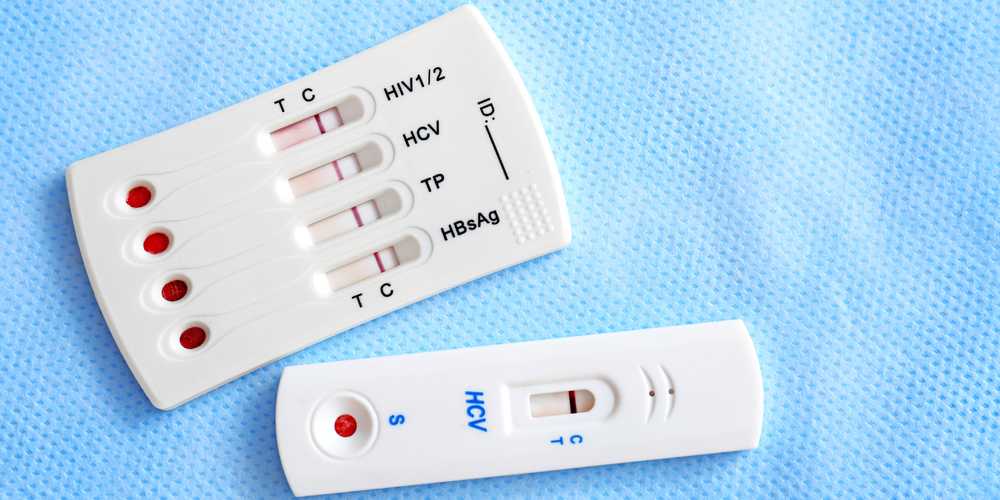



- Rapid lateral-flow at-home STI kits read results in roughly 15 minutes from a self-collected swab or fingerstick blood drop, with reported sensitivity typically in the mid to high 90s percent when used inside the correct window period.
- Mail-in lab tests are slower (2 to 5 business days after the lab receives the sample) but use NAAT or PCR chemistry, the same methodology a clinic uses, and offer broader multi-infection panels.
Published: June 2025 | Last updated: April 2026 | Editorial review and quality control: Martina N.
At-home STD testing went from clunky novelty to mainstream sexual-health tool over the past few years, and the kit shelf in 2026 looks nothing like it did even three years ago. You can read a lateral-flow result in your bathroom in roughly 15 minutes, ship a fingerstick or swab to a CLIA-certified lab and view results online in 2 to 5 days, or layer the two together for both speed and depth.
This guide does what most listicles skip: it tells you when each format is the right call, what each kit detects, and where home testing should hand off to a clinic. We compared 8 of the most-recognized brands by sample type, infections covered, result speed, and the situations they fit best. If you are testing because of a specific symptom or recent exposure, scroll to the window-period section before you order. Timing matters more than brand choice for accuracy.
Editorial disclosure: stdrapidtestkits.com publishes this guide and sells the rapid lateral-flow kits referenced as our top pick. Every claim about competitor brands is sourced from their publicly published spec sheets and product pages, not from a paid partnership.
Which at-home STD test should I actually buy in 2026?
Pick a rapid lateral-flow kit (results read at home in about 15 minutes) when privacy, speed, and a single-infection or small-combo screen are your priority. Pick a mail-in lab kit (results in 2 to 5 days) when you want a multi-infection panel run with NAAT or PCR chemistry, especially for asymptomatic chlamydia or gonorrhea screening. Both formats report sensitivity in the mid to high 90s percent when used after the correct post-exposure window. Brand choice matters less than format choice; format choice matters less than testing inside the right window.
Key takeaways
- Rapid lateral-flow at-home STI kits read results in roughly 15 minutes from a self-collected swab or fingerstick blood drop, with reported sensitivity typically in the mid to high 90s percent when used inside the correct window period.
- Mail-in lab tests are slower (2 to 5 business days after the lab receives the sample) but use NAAT or PCR chemistry, the same methodology a clinic uses, and offer broader multi-infection panels.
Why at-home STI testing keeps growing
The reasons people choose home testing have stayed remarkably consistent over the past five years: privacy, scheduling, cost, and the friction of clinic intake. What changed is the supply side. The U.S. Food and Drug Administration cleared its first at-home oral-fluid HIV test back in 2012; the CDC now lists self-testing among recommended HIV-screening pathways, and the lateral-flow format has expanded across most common STIs in the years since.
The audiences who lean on home testing today include people who screen routinely between dating-app partners, couples in long-distance or non-monogamous arrangements who use testing as a trust signal, readers in small communities where clinic visibility feels uncomfortable, and pregnant people who want to confirm screening without an extra appointment. None of these are niche edge cases anymore; they cover most of the people walking through any sexual-health clinic door.
The trade-off is also clearer than it used to be. Home testing is excellent for screening when you have no symptoms, for confirming a clean status before a new partnership, and for follow-up testing after treatment. It is not a substitute for clinical evaluation when you have active symptoms, when you have a confirmed exposure, or when a positive result needs immediate antibiotic treatment. Most of this guide is about getting that line right.
Home testing is the right tool for routine screening, for confirming a clean status before a new partnership, and for follow-up after treatment. A clinic is the right call when symptoms are active, when an exposure is confirmed, or when a positive result will need same-day antibiotic treatment.
Lateral-flow rapid tests vs mail-in lab tests
Most at-home STI kits fall into one of two technical categories, and confusing them is the single most common reason readers end up frustrated with their results.
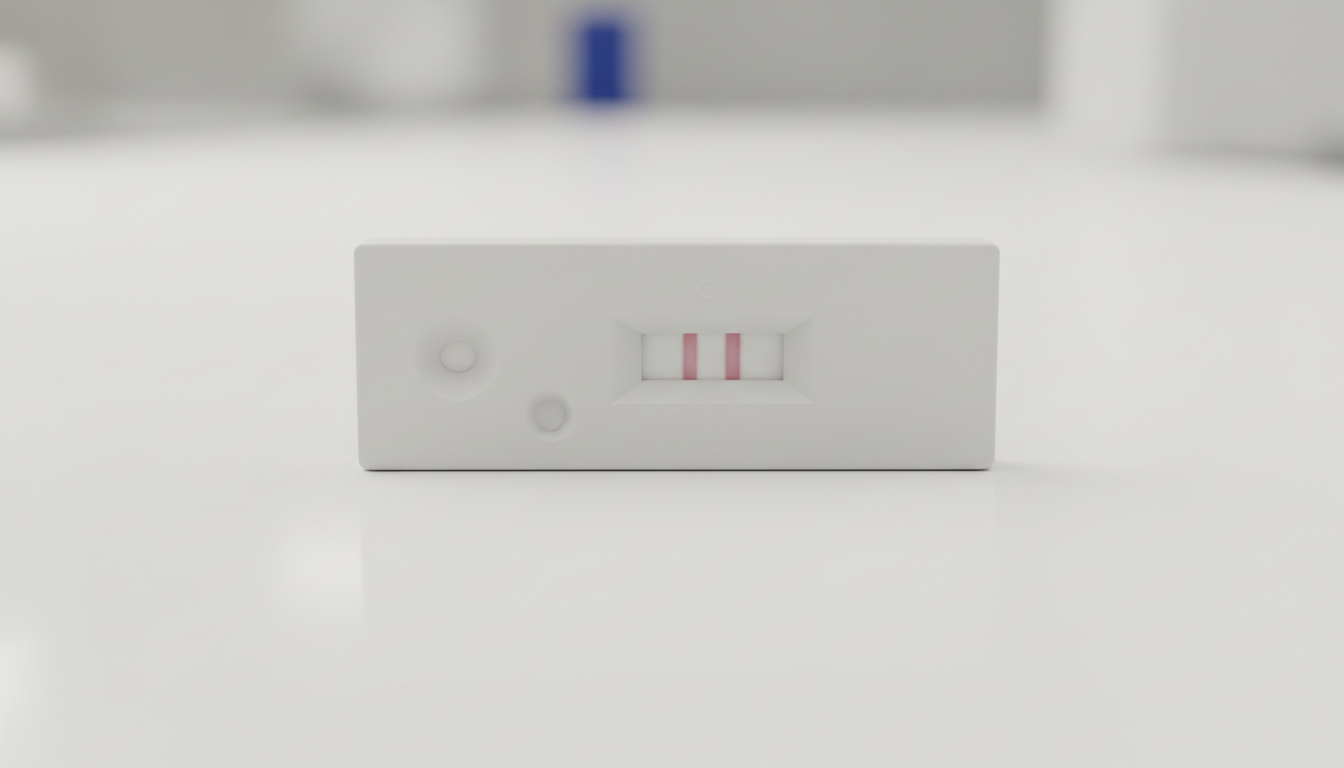
Lateral-flow rapid tests (the format used by stdrapidtestkits.com and the ORAQuick HIV Self-Test) are immunoassay strips you read at home, structurally similar to a pregnancy test. You collect a small sample (a fingerstick blood drop, a self-administered genital swab, or oral fluid for HIV), apply it to the cassette, and read the colored line in the result window in roughly 15 minutes. Reported sensitivity for major rapid lateral-flow STI tests sits in the mid to high 90s percent when the test is used after the recommended post-exposure window. The trade-off is analytical sensitivity: a lateral-flow strip is less sensitive than a lab NAAT for very low pathogen loads, especially in fully asymptomatic infections.
Mail-in lab tests (the format used by Everlywell, LetsGetChecked, myLAB Box) are sample-collection kits paired with a prepaid return mailer. You collect at home, the kit ships to a CLIA-certified lab, and you log into a secure portal 2 to 5 days after the lab receives it. The lab analyzes your sample with NAAT or PCR chemistry, the same methodology a clinic uses for diagnostic testing. Analytical sensitivity is higher in this format, particularly for asymptomatic chlamydia and gonorrhea, where lab NAAT is the CDC-recognized gold standard.
Neither format is universally better. Speed, privacy, and lower cost-per-test push toward lateral-flow. Comprehensive multi-infection screening and asymptomatic-detection sensitivity push toward mail-in lab. The right answer depends on what you are trying to learn and how soon. Per CDC guidance on STI testing, a positive home result of either format is best confirmed with a clinic-administered NAAT or PCR before treatment decisions are made.
| Format | Sample type | Result time | Best for |
|---|---|---|---|
| Rapid lateral-flow (home read) | Self-swab or fingerstick blood drop | About 15 minutes | Privacy, speed, single-infection or small-combo screen |
| Mail-in lab (NAAT or PCR) | Self-swab, fingerstick, or urine | 2 to 5 business days after lab receipt | Asymptomatic multi-infection screening |
| Clinic NAAT or PCR | Clinician-collected swab, blood, or urine | Same day to 1 week | Active symptoms, treatment, full diagnostic workup |
How we compared these kits
We did not physically test all 8 brands in our office, and any reviewer who claims to have done so for a single article is shading the truth. What we did do: pull the published spec sheet, instructions for use (IFU), and product page for each brand; cross-reference any independent validation studies; and rank each kit on the criteria below.
- Sample type and chemistry: lateral-flow vs lab NAAT or PCR, fingerstick vs venous blood, self-swab vs lab-collected swab.
- Infections covered: single-target vs combination panel, and which exact infections sit inside the panel.
- Result time: minutes for lateral-flow, business days for mail-in lab; calendar reality (shipping both directions) for the lab format.
- Privacy: packaging discretion, billing-statement language, and result-delivery method.
- Window period guidance: does the brand state when results are reliable, and does that guidance match CDC recommendations?
- Price per infection covered: useful when comparing a 7-in-1 panel against three single-target kits.
- Support after a positive result: built-in clinician consult, treatment-prescription support, or links to local resources.
The list below moves from the kit we recommend most often (because we sell it and stand behind it) to the formats best suited for specific situations our kits do not cover.
Stack-ranking eight brands one through eight implies a false precision. Sample type, infections covered, and result time are objective facts; "best overall" depends on which of those matter most to you. We sort the next section by format, not by leaderboard position, so you can match a kit to your situation rather than chase a ranking.
1. STD Rapid Test Kits (rapid lateral-flow, our top pick)
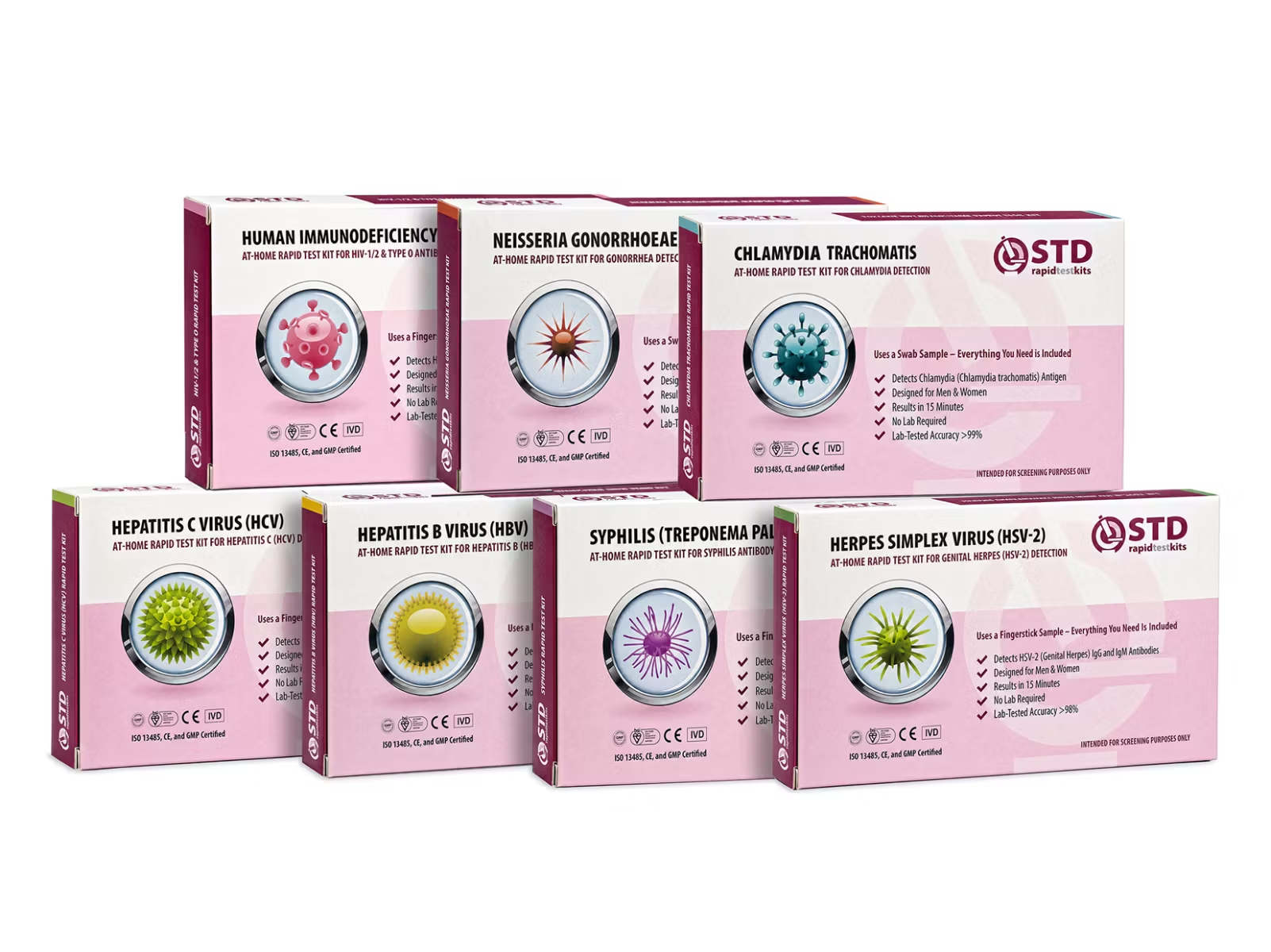
STD Rapid Test Kits is the brand we publish under, and our line is built entirely on rapid lateral-flow chemistry. Every kit is self-administered at home, results read in roughly 15 minutes, and packaging ships in plain unmarked mailers with no medical labels or identifying language on the billing statement.
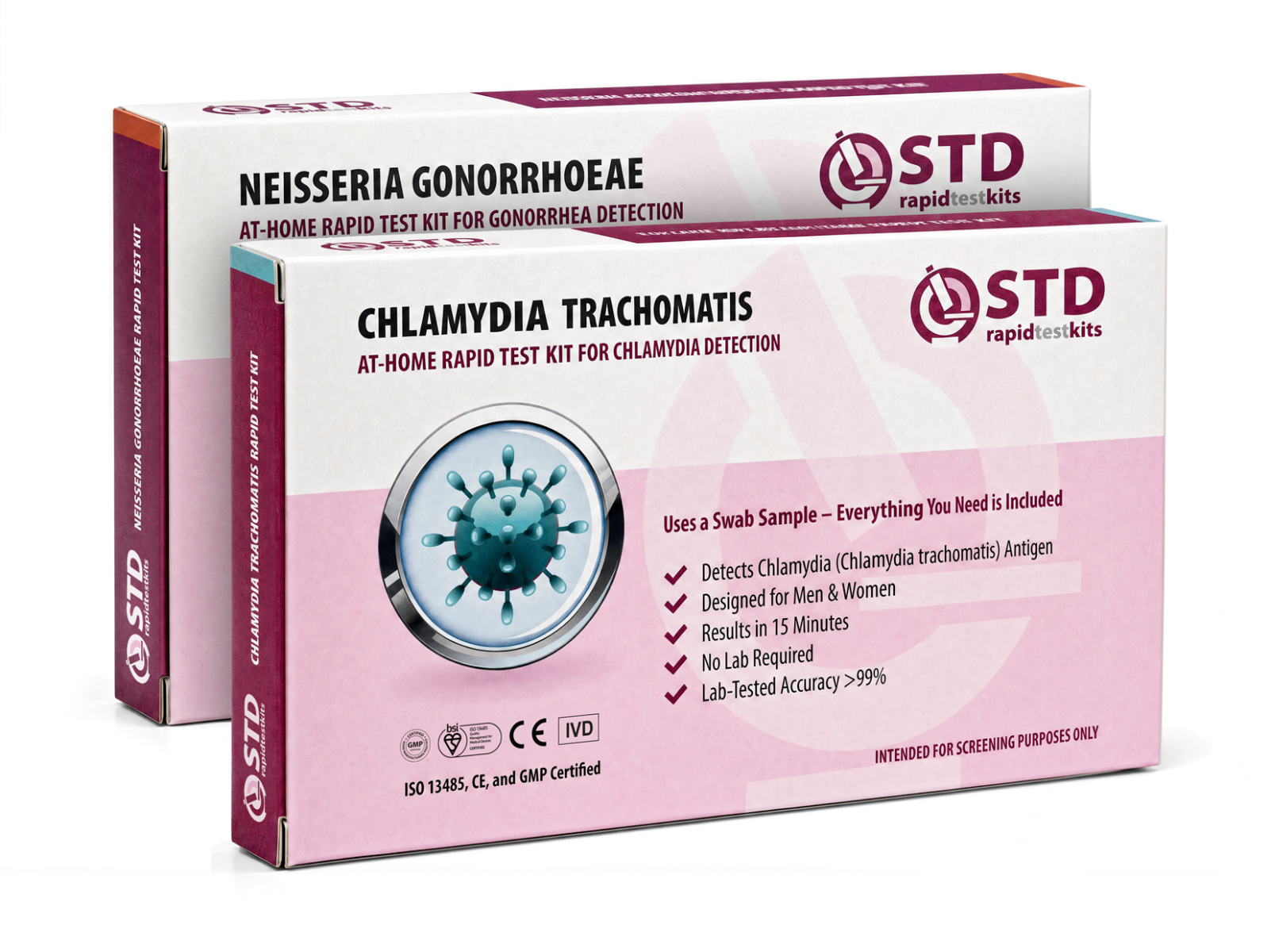
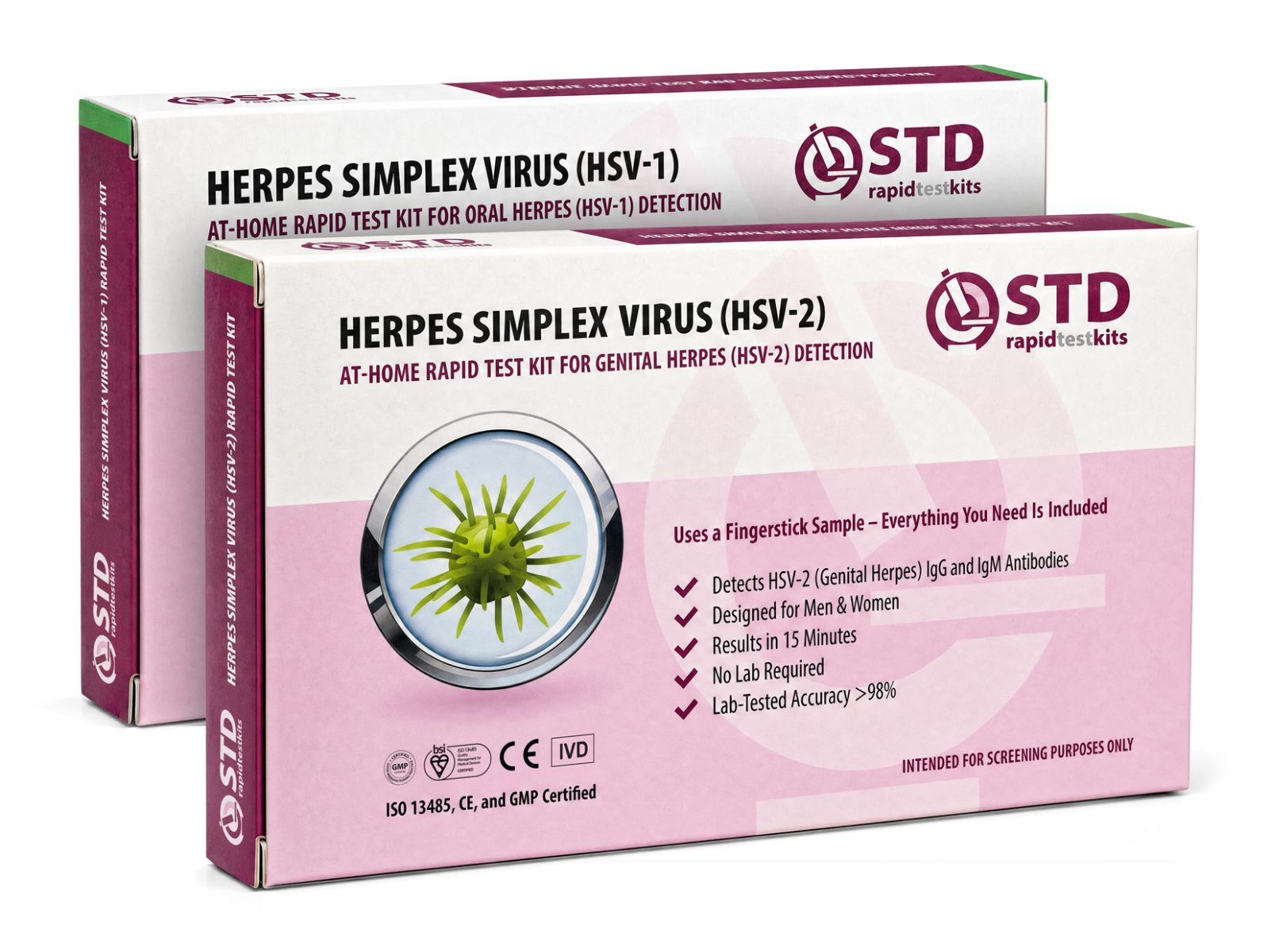
The catalog covers the most-screened single infections (HIV, syphilis, hepatitis B, hepatitis C, chlamydia, gonorrhea, HSV-1, HSV-2, and trichomoniasis) plus combination panels in 2-in-1, 3-in-1, 6-in-1, 7-in-1, 8-in-1, and 10-in-1 formats. Manufacturer-reported sensitivity for the individual lateral-flow assays sits in the mid to high 90s percent across the line; positive results should be confirmed by a clinic NAAT or PCR before treatment decisions, the same recommendation that applies to any rapid screening test. We do not sell pharyngeal-swab, rectal-swab, urine, or lab-processed mail-in NAAT panels; for those, a clinic visit is the right call.
Two scope limits worth knowing up front: our trichomoniasis kit and our HPV kit are validated for vaginal self-swab only, so they fit female anatomy. Male readers needing a trichomoniasis or HPV test should see a clinic. The 10-in-1 panel is also women-only; the 8-in-1 panel is validated for both men and women.
The other 7 kits worth knowing about
The seven brands below cover most of the rest of the U.S. at-home STI market in 2026. We list them by format so you can match the right one to your scenario, not by ranking them against our kits (which would be both biased and useless to you).
2. Everlywell (mail-in lab). A 2-test or 6-test mail-in panel processed at a CLIA-certified lab. Sample collection is a self-swab and fingerstick blood drop. Results post to an online portal in 2 to 5 business days after lab receipt. Strong fit for asymptomatic multi-infection screening; weaker fit if you need an answer same-day.
3. LetsGetChecked (mail-in lab). Comparable mail-in NAAT format with broader health-test catalog (thyroid, testosterone, HIV, full STI). Result times run 2 to 5 days after lab receipt. Their telehealth follow-up for positive results is the most polished in the category.
4. myLAB Box (mail-in lab). Highly modular mail-in option with single-target and combination NAAT panels. Strong fit for readers with one specific concern (e.g., chlamydia after a known exposure) where a single-target lab NAAT is more cost-effective than a panel.
5. Nurx (telehealth + mail-in). Telehealth-driven model that bundles testing with prescription support. Better suited if you have insurance and may need treatment if results are positive, since the platform can route a prescription to your local pharmacy. Less private than other formats since the workflow links to a clinical record.
6. ORAQuick HIV Self-Test (rapid lateral-flow). Oral-fluid lateral-flow rapid test for HIV antibodies only, with results in 20 minutes. The only mainstream U.S.-market HIV self-test sold in pharmacies. Limited to HIV; window period is roughly three months from exposure for reliable results.
7. Binx Health (mobile-app lab). Mail-in chlamydia and gonorrhea NAAT processed at a CLIA-certified lab, paired with an app-driven workflow. Higher price point than the established mail-in players; worth watching as the platform expands.
8. Molecular Testing Labs (Amazon, mail-in lab). Budget-friendly mail-in chlamydia and gonorrhea NAAT often sold through Amazon. Accuracy holds up because the lab chemistry is the same as more expensive players; instructions and customer support are the weak link.
Bottom line: if you want speed and privacy, the rapid lateral-flow brands (our line, ORAQuick) are the right tool. If you want a deep multi-infection NAAT panel from a CLIA lab, the mail-in players above each have a legitimate niche.
| Brand | Format | Infections covered | Result time |
|---|---|---|---|
| Everlywell | Mail-in lab NAAT | 2 to 6 STIs (basic or full panel) | 2 to 5 days after lab receipt |
| LetsGetChecked | Mail-in lab NAAT | STI panels plus broader health tests | 2 to 5 days after lab receipt |
| myLAB Box | Mail-in lab NAAT | Single-target or combination panels | 3 to 6 days after lab receipt |
| Nurx | Telehealth plus mail-in lab | STI panel plus prescription support | 4 to 7 days |
| ORAQuick HIV Self-Test | Rapid lateral-flow (oral fluid) | HIV antibodies only | About 20 minutes at home |
| Binx Health | Mail-in lab plus app workflow | Chlamydia, gonorrhea | 2 to 5 days after lab receipt |
| Molecular Testing Labs | Mail-in lab NAAT (Amazon) | Chlamydia, gonorrhea | 2 to 5 days after lab receipt |
Window periods: when each test gives accurate results
Tests do not work on intention; they work on biology. Every infection has a window period, the time between exposure and when a test can reliably detect the infection. Testing too early produces false negatives even with a perfect kit. The figures below are drawn from CDC STI treatment guidelines and WHO STI fact-sheet guidance; the exact day-counts vary by assay and by the source you cite, so treat them as ranges.
Three practical rules of thumb worth memorizing before you order any kit:
- Bacterial STIs (chlamydia, gonorrhea, trichomoniasis) become detectable around 5 to 7 days post-exposure; the reliable retest window is 1 to 2 weeks.
- Bloodborne viral STIs (HIV, hepatitis B, hepatitis C, syphilis) take longer because the test detects antibodies your immune system has to develop first. Reliable windows run 6 to 12 weeks for most antibody-based home tests (the 2-week window in the table below applies to 4th-generation Ag/Ab combo tests run at a lab or clinic; at-home rapid antibody tests need the 6-to-12-week window).
- HSV-2 antibody tests are the slowest, with reliable seroconversion windows commonly cited at 12 to 16 weeks. A negative HSV-2 antibody test before that window does not rule out infection.
| Infection | Common sample type | Earliest detection | Reliable retest window |
|---|---|---|---|
| Chlamydia | Self-swab or urine | About 5 days | 7 to 14 days |
| Gonorrhea | Self-swab or urine | About 5 days | 7 to 14 days |
| Trichomoniasis (women) | Vaginal self-swab | About 5 days | 1 to 2 weeks |
| Syphilis | Fingerstick or venous blood | About 3 weeks | 6 to 12 weeks |
| HIV (rapid antibody) | Fingerstick or oral fluid | About 3 weeks | 12 weeks |
| HIV (lab Ag/Ab combo) | Venous blood (lab/clinic only) | 2 weeks | 6 weeks |
| Hepatitis B | Fingerstick or venous blood | About 6 weeks | 12 weeks |
| Hepatitis C | Fingerstick or venous blood | 2 to 3 weeks | 8 to 12 weeks |
| HSV-2 (antibody) | Fingerstick or venous blood | About 6 weeks | 12 to 16 weeks |
| HPV (women) | Vaginal self-swab | Detects current infection | Routine screening cycles |
Combo panel or single test? How to choose
Most of the decision tree comes down to two questions: do you know what you might have been exposed to, and how worried are you about asymptomatic infections you would not otherwise notice?
Pick a combination panel when you have had multiple new partners in the past few months, when you are running a baseline screen at the start of a new partnership, when symptoms are non-specific (general burning, discharge, rashes) and you do not know what is causing them, or when you want a single-purchase peace-of-mind sweep after a higher-risk encounter. Combo panels are also more cost-effective per infection than buying single-target kits separately.
Pick a single-target test when you have a confirmed exposure to one specific infection (your partner just tested positive for chlamydia), when you are doing follow-up testing after antibiotic treatment, when budget is tight and you need to prioritize, or when timing requires a retest of one specific infection inside its own window period. Single-target lateral-flow kits are also the right tool when you want the fastest possible read on one specific concern.
A reasonable middle ground that we see often: order a 2-in-1 or 3-in-1 lateral-flow combo for the bacterial STIs you can test for at the 7-to-14-day window, then circle back with a separate antibody-based combo (HIV, syphilis, HSV-2) at the 12-week window for full coverage.
Common testing mistakes that produce false results
Most home-test failures are not the test's fault. They are user-collection errors, timing errors, or read-time errors. The five mistakes below account for the vast majority of false negatives we hear about.
- Testing too early. The single biggest cause of false negatives. A reassuring result at day 3 post-exposure is meaningless for any STI in the table above; retest at the reliable-window mark.
- Skipping the read-time window. Lateral-flow cassettes give a valid result inside a specific time window (typically 10 to 20 minutes after applying the sample). Reading earlier may miss a faint test band; reading much later may produce evaporation lines that look like false positives.
- Sample-collection shortcuts. A swab that does not contact the right tissue, a fingerstick that does not produce a full blood drop, or a urine sample that is not midstream all reduce sensitivity. Read the IFU twice before you start.
- Testing under the influence. Alcohol and many recreational drugs do not affect the chemistry of the test, but they affect your ability to follow the IFU correctly. Save it for sober time.
- Not retesting after a negative inside the window. If you tested before the reliable window closed, the negative is provisional. Retest at the window mark.
Testing too early. A negative result before the window period closes is not reliable, even with a perfect kit. If you tested inside the first week after a possible exposure, retest at the window mark for the specific infection you are checking.
When to skip the kit and head to a clinic
Home tests are excellent screening tools. They are not the right tool for every situation, and being honest about that is part of using them well.
See a clinician within 72 hours of exposure if there is a possibility of HIV exposure (post-exposure prophylaxis is most effective inside that window, per CDC HIV testing guidance), if you have been sexually assaulted, or if you have active symptoms that need same-day evaluation: open sores, severe pelvic pain, fever, visible blood, or worsening discharge. The kit cannot treat you, and it cannot triage between infectious and non-infectious causes of symptoms.
You should also see a clinician for the test itself when the right test for your scenario is one we do not sell at home: pharyngeal swabs (throat gonorrhea after oral exposure), rectal swabs (after anal exposure), urine NAAT, or any test where a clinician-collected sample is required for diagnostic-grade accuracy.
A positive lateral-flow or mail-in lab result is reason to follow up, not reason to start self-treating. Confirmation with a clinic NAAT or PCR is the standard of care because it rules out the small false-positive rate inherent to any screening test, and because most STIs need a prescription antibiotic course (or an antiviral suppression plan) that requires a clinician anyway.
What to do after your result
If your home test is negative and you are inside the reliable window for that infection, you are most likely clear. If you are unsure about the timing, retest at the window mark. If your result is faint or the control line did not appear, run a fresh test; the IFU usually allows for a free replacement.
If your home test is positive, do three things in order. First, do not panic; almost every STI is treatable, and most are curable with a short antibiotic course. Second, schedule a clinician visit (in person or via telehealth) for a confirmatory NAAT or PCR and to start treatment. Third, notify recent partners so they can test and treat as well; CDC partner-notification resources are linked from the CDC STI treatment guidelines page if you want a script for that conversation.
Follow-up testing matters too. After treatment for chlamydia or gonorrhea, the CDC recommends a test-of-cure or test-of-reinfection roughly three months later. A single-target lateral-flow kit is a clean fit for that retest because you already know what you are checking for. The same logic applies if you are returning to confirm HSV-1 or HSV-2 status outside an active outbreak: a fingerstick antibody test fits cleanly once you have passed the 12-to-16-week seroconversion window discussed earlier.
Many sexually transmitted infections cause no symptoms but can lead to serious health problems if not treated. Anyone who is sexually active should consider getting tested.
Frequently asked questions
- Are at-home STD tests as accurate as clinic tests?
- When used inside the correct window period and according to the IFU, rapid lateral-flow at-home kits report sensitivity in the mid to high 90s percent for most STIs, and mail-in lab tests use the same NAAT or PCR chemistry a clinic uses. Both are reliable for screening. A positive result of either type should be confirmed by a clinician before treatment, the same recommendation that applies to any screening test.
- How soon after possible exposure can I test?
- It depends on the infection. Bacterial STIs (chlamydia, gonorrhea, trichomoniasis) become reliably detectable at about 7 to 14 days. Bloodborne viral STIs (HIV, hepatitis B, hepatitis C, syphilis) need 6 to 12 weeks for antibody-based tests. HSV-2 antibody tests need 12 to 16 weeks. Testing earlier than the window is a common cause of false negatives.
- Do I need a prescription to order a home STD kit?
- No. Direct-to-consumer at-home STD test kits are sold without a prescription in the United States. Some bundled telehealth services route through a clinician for the prescription side, but the testing itself does not require one.
- Will the package give away what is inside?
- Reputable brands ship in plain unmarked mailers with no clinical or sexual-health language on the outside, and billing statements show a generic merchant name. If discreet shipping matters to you, check the brand's privacy and shipping page before ordering; the major players in the U.S. market all default to discreet packaging.
- What if I test positive at home?
- Schedule a clinician visit for a confirmatory NAAT or PCR and to start treatment. Most STIs are curable with a short antibiotic course (chlamydia, gonorrhea, syphilis, trichomoniasis) or manageable with antiviral suppression (HIV, HSV). Notify recent partners so they can test and treat as well.
- Can I use a home STD test if I am pregnant?
- Yes, and CDC guidance recommends prenatal STI screening early in pregnancy. If you test positive at home, confirm the result with your prenatal-care clinician promptly; some STIs (syphilis, HIV, hepatitis B) need treatment to prevent transmission to the baby.
- Does the at-home herpes test detect oral herpes lesions?
- No. The combined herpes home test is a fingerstick blood antibody assay; it measures whether your immune system has developed antibodies to HSV-1 or HSV-2 over time. It does not detect an active lesion, oral or genital. An active lesion needs a clinician-collected swab and a viral PCR for direct identification.
- Is home testing covered by insurance or HSA/FSA?
- Most direct-to-consumer at-home STI kits are not directly billed to insurance. Many U.S. brands accept HSA and FSA cards at checkout because the kits qualify as eligible medical expenses; check the brand's payment-options page to confirm before ordering.
- U.S. Centers for Disease Control and Prevention. STI Treatment Guidelines and screening recommendations, current edition.
- U.S. Centers for Disease Control and Prevention. About Sexually Transmitted Infections, including transmission, testing, and prevention.
- U.S. Centers for Disease Control and Prevention. HIV Testing, including self-testing, antibody testing, and antigen/antibody combination testing windows.
- World Health Organization. Sexually Transmitted Infections (STIs) fact sheet, with global epidemiology and screening guidance.
- U.K. National Health Service. Sexually transmitted infections (STIs) overview, with home-test and clinic-test guidance.
- U.S. National Library of Medicine, MedlinePlus. Sexually Transmitted Diseases plain-language overview.
- U.S. Centers for Disease Control and Prevention. Genital Herpes overview, including HSV-1 and HSV-2 antibody-test guidance.