Early STD Detection: Why Testing Before Symptoms Matters
Most sexually transmitted infections cause no symptoms for weeks, months, or years. Feeling fine is not evidence of being uninfected. This guide walks through the specific complications early detection prevents, the window periods that decide when a test is actually accurate, and the at-home options that make routine screening realistic for adults outside formal clinic settings.
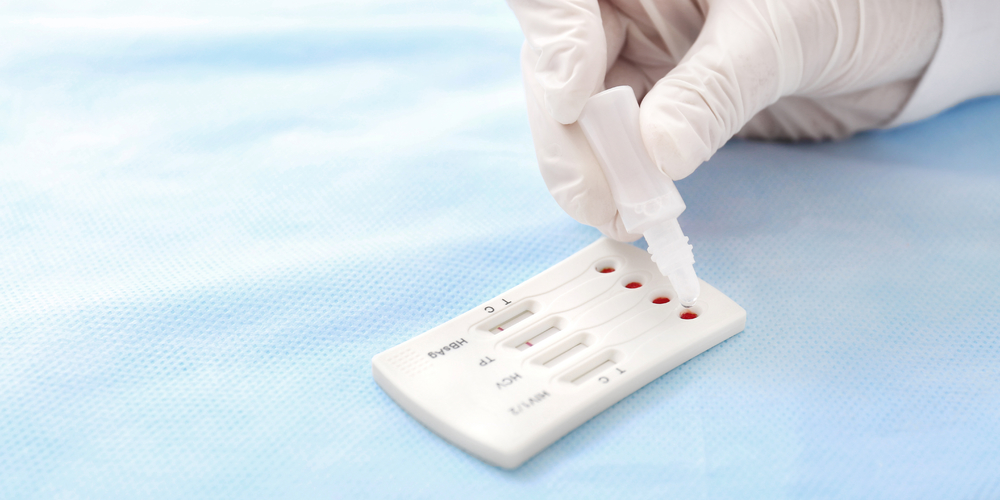



- Most STIs cause no symptoms in their early stage, so routine testing is the only reliable way to catch an infection before it causes complications or passes to a partner.
- Each infection has its own window period (the time after exposure when a test becomes accurate); knowing which window applies tells you when to actually test.
Published: August 2025 | Last updated: May 2026 | Editorial review and quality control: Martina N.
Most people who pick up a sexually transmitted infection do not know they have one. The U.S. Centers for Disease Control and Prevention estimates that one in five people in the United States is living with an STI on any given day, and a large share of those infections produce no symptoms at all (CDC STI data). Chlamydia, gonorrhea, HPV, and early-stage HIV often pass unnoticed because the body’s first response is quiet enough to mistake for nothing.
That silence is the entire problem. Without a symptom prompt, there is no obvious moment to test, no reason to take a partner conversation seriously, and no warning signal before complications start. Early detection is the part of sexual health that does not depend on luck. It is what you choose to do on a routine schedule, the same way you would book a dental cleaning, because the cost of waiting until something hurts is much higher than the cost of a swab and fifteen minutes of attention every few months.
Key Takeaways
- Most STIs cause no symptoms in their early stage, so routine testing is the only reliable way to catch an infection before it causes complications or passes to a partner.
- Each infection has its own window period (the time after exposure when a test becomes accurate); knowing which window applies tells you when to actually test.
Most STIs Don’t Announce Themselves
Chlamydia is the textbook example. The CDC notes that the majority of people with chlamydia have no symptoms at all, which is why so much chlamydia is found through routine screening rather than through patients presenting with complaints (CDC Chlamydia). The infection sits in the cervix, urethra, or rectum for weeks or months, multiplying quietly, while the person carrying it feels exactly as they did before exposure.
Gonorrhea behaves similarly in many women and increasingly in men, especially when the infection site is pharyngeal (throat) or rectal rather than urogenital. Trichomoniasis, the most common curable STI worldwide, is commonly asymptomatic, meaning many people carry and transmit it without knowing (CDC STI overview). Genital HPV almost never shows visible signs at the time of acquisition, which is why the average person becomes aware of their HPV status only after an abnormal Pap result years later.
HIV has its own pattern
The acute infection phase, generally two to four weeks after exposure, can produce a flu-like illness, but the symptoms are nonspecific enough that they are routinely attributed to a cold or a bad day. After that, the virus enters a clinical latency period that can last a decade or more, during which the infected person feels well, transmits efficiently to partners, and progresses toward AIDS unless treated (HIV.gov basics).
What ties these infections together is a structural problem: the body’s “I am sick” signal evolved for acute infections, not for slow chronic ones. STIs are mostly slow chronic ones. Routine testing replaces the missing biological signal.
An infection you cannot feel is still actively damaging tissue, still transmissible, and still progressing on its own timeline. The absence of symptoms is the case for testing, not against it.
What Counts as “Early” Depends on the Infection
Early detection only works if you test inside the window where a test can actually detect the infection. Test too soon after exposure and you get a falsely reassuring negative. Test at the right time and the result is meaningful. Every infection has its own window period determined by how the test works (antibody response, antigen presence, or pathogen DNA) and how long the body takes to reach detectable levels.
If you have a recent known exposure
The point is not memorizing the table below. The point is that “I had unprotected sex yesterday, I should test today” usually produces a useless result. If you have a known exposure event and want a confident answer, chlamydia and gonorrhea swabs are the earliest-window tests on the home market (about 7 to 14 days), and HIV’s antigen-antibody fourth-generation lab tests close the window faster than any home rapid antibody test will (CDC HIV testing).
If you are on ongoing screening
For routine screening with no specific exposure event, the question “what is the window period?” matters less. The relevant question becomes “how often am I screening?”, and CDC’s general recommendations cover most adults: annually for sexually active women under 25, annually for men who have sex with men, and more often for people with multiple partners or new partners (CDC STI Treatment Guidelines).
| Infection | Test method | Reliable detection window after exposure |
|---|---|---|
| Chlamydia | Lab NAAT or at-home rapid swab | About 14 days |
| Gonorrhea | Lab NAAT or at-home rapid swab | About 7 days |
| Syphilis | Lab antibody or at-home rapid blood | 3 to 6 weeks; retest at 90 days if negative |
| HIV (rapid antibody) | At-home fingerstick blood | 3 to 12 weeks; 90-day retest to confirm |
| HIV (lab antigen-antibody combo) | Lab blood draw | About 18 to 45 days |
| Hepatitis B | At-home rapid blood or lab | 3 to 6 weeks for acute infection |
| Hepatitis C | At-home rapid blood or lab | 8 to 11 weeks for antibody seroconversion |
| HSV-2 (antibody) | Lab antibody or at-home rapid blood | 6 to 12 weeks for most people |
How long after a possible STI exposure should I wait to test?
It depends on the infection. Chlamydia and gonorrhea are detectable about 7 to 14 days after exposure. Syphilis takes 3 to 6 weeks. HIV depends on the test type: lab antigen-antibody combo tests are accurate by 18 to 45 days, while at-home rapid antibody tests need a 3 to 12 week window with a 90-day retest to confirm. Hepatitis C antibodies appear at 8 to 11 weeks. If you test before the window closes and the result is negative, repeat the test once you are past the window for that specific infection.
Complications You Prevent When You Catch It Early
This is the section that decides whether early detection feels worth the small inconvenience or not. The short version: untreated STIs cause real, sometimes permanent damage. The full version, by infection:
Chlamydia and gonorrhea: pelvic inflammatory disease and infertility
Untreated chlamydia and gonorrhea can ascend from the cervix into the uterus and fallopian tubes, producing pelvic inflammatory disease (PID). Complications include tubal scarring, chronic pelvic pain, ectopic pregnancy, and tubal-factor infertility (CDC Chlamydia). The damage accumulates with each episode, so a single late-treated infection in your twenties can be the reason you struggle to conceive in your thirties.
In men, untreated chlamydia and gonorrhea more rarely produce epididymitis, which can also cause infertility. The asymmetry in symptom rates between men and women is part of why screening matters: a man with no symptoms may transmit to a partner who develops PID before either of them knows anything was wrong.
Syphilis: cardiovascular and neurologic damage
Untreated syphilis progresses through primary (painless chancre), secondary (rash, fever), and tertiary stages. Tertiary syphilis can develop ten to thirty years after the initial infection and includes neurosyphilis (dementia, paralysis, blindness) and cardiovascular syphilis (aortic aneurysm) (CDC Syphilis). The window for cure is wide; penicillin remains effective at any stage; but the structural damage of tertiary syphilis is permanent regardless of treatment.
HPV: cervical, anal, and oropharyngeal cancer
High-risk HPV strains, particularly 16 and 18, are responsible for most HPV-related cancers, including cervical, anal, and oropharyngeal cancers (NCI HPV and cancer). The cancer pathway takes years to decades, during which routine cervical screening with Pap and HPV co-testing catches precancerous changes long before they become cancer. Early detection of the precancer (not the cancer) is the entire mechanism behind the dramatic drop in cervical cancer rates in countries with screening programs.
HIV: AIDS prevention and treatment-as-prevention
Modern antiretroviral therapy, started early after diagnosis, allows people with HIV to live near-normal lifespans and reach an undetectable viral load. Undetectable means untransmittable: a sustained undetectable viral load reduces sexual transmission to functionally zero (CDC HIV). Late diagnosis (AIDS-stage CD4 below 200) is associated with much higher mortality and more complicated treatment. The single biggest predictor of how well someone with HIV does is how early they were diagnosed and started on therapy.
Hepatitis B and C: cirrhosis and liver cancer
Chronic hepatitis B and untreated hepatitis C are leading causes of cirrhosis and hepatocellular carcinoma. Hepatitis C is now curable in most cases with direct-acting antivirals taken for 8 to 12 weeks, but the cure does not reverse cirrhosis that has already developed. The CDC’s viral hepatitis resources note that early detection of chronic hepatitis B and C is the difference between manageable chronic infection and progression to advanced liver disease (CDC Viral Hepatitis).
Vertical transmission
Several STIs pass from mother to child during pregnancy or delivery. As of the CDC’s 2022 STI surveillance report, congenital syphilis cases in the United States exceeded 3,700 per year, with hundreds of stillbirths and infant deaths attributed to the infection (CDC STI surveillance). Maternal HIV transmission to the infant has been reduced to under 1% in the United States when the mother is on effective antiretroviral therapy. Both outcomes depend entirely on early maternal detection.
Transmission Math: Why One Person Testing Matters
STIs spread in sexual networks, not in pairs. When one person tests positive and gets treated, the chain of onward transmission breaks at that node. When that person does not test, the chain keeps growing through every partner they have until something forces the issue (usually a symptom in a downstream contact).
The downstream math
The math is harsh. A single person with untreated chlamydia who has three new partners in a year, each of whom has two more new partners, is one node in a network of nine downstream people. Most of those nine will also have no symptoms. Public health departments cannot expedite-treat or contact-trace at scale fast enough to interrupt this; the only realistic intervention point is “the person who got it first decides to test.”
Partner notification after a positive
This is also why disclosure to partners is part of the testing conversation. A positive result is a signal not only to start treatment but to notify recent partners so they can test and treat. The CDC’s expedited partner therapy guidance, available in most U.S. states, allows clinicians to prescribe treatment for the partner without requiring a separate clinic visit (CDC Treatment Guidelines). That entire infrastructure depends on someone testing first.
Most people who have an STI do not know it. Many STIs do not cause any symptoms. Routine screening is the only way to identify many infections.
Treatment Is Easier When the Infection Is Young
Most bacterial STIs are cured with a single course of antibiotics if caught early. Uncomplicated chlamydia is treated with a 7-day course of doxycycline. Uncomplicated gonorrhea is treated with a single intramuscular dose of ceftriaxone. Uncomplicated syphilis (primary, secondary, or early latent) is treated with a single intramuscular dose of benzathine penicillin G (CDC STI Treatment Guidelines).
Compare those to the late-detection versions of the same infections. PID from untreated chlamydia requires longer multi-drug antibiotic regimens, often with hospitalization. Tertiary syphilis requires longer penicillin regimens and the underlying damage is permanent. Late-stage HIV requires more complex initial regimens and ongoing management of opportunistic infections. The treatment is harder, more expensive, and less complete the longer the infection runs.
Antimicrobial resistance compounds the stakes
Gonorrhea has steadily developed resistance to nearly every antibiotic class historically used to treat it; ceftriaxone is the last reliable first-line option in the United States (CDC STI Treatment Guidelines). Catching gonorrhea early means treating it before resistance evolves further in that strain, before transmission seeds more cases, and before the case enters a longer multi-drug treatment pathway.
Caught early: single-dose ceftriaxone for gonorrhea, single-dose benzathine penicillin G for early syphilis, 7-day doxycycline for chlamydia. Outpatient. Usually one visit.
Caught late: multi-drug PID regimens with possible hospitalization for chlamydia/gonorrhea, longer penicillin courses for tertiary syphilis with permanent damage that cannot be reversed, more complex HIV regimens plus management of opportunistic infections.
Peace of Mind Is a Real Health Outcome
The mental health benefit of routine testing is underestimated in clinical discussions but real for most people who do it. Sexual health anxiety, especially after a new partner or a known risk event, can persist for weeks or months in the absence of a definitive answer. Some of that anxiety is rational; some of it is intrusive worry that the testing simply resolves.
A clear negative result in the right window period gives you the answer. A positive result, while harder, gives you a plan and an actionable next step. Both outcomes are easier to live with than not knowing. The avoidance pattern (do not test because you do not want to find out) costs more, emotionally and clinically, than testing and dealing with whatever the result is. People in serodifferent relationships, people navigating a new partner, and people whose previous partner has just disclosed a positive result all consistently report that the test itself was less stressful than the period of uncertainty before it.
A negative result closes the question. A positive result opens a treatment plan. Either outcome is more manageable than sustained uncertainty.
At-Home Testing Fills the Access Gap
Routine screening was historically held back by access friction: clinic hours, transport, cost, and the embarrassment many people feel discussing sexual health with a primary care doctor they see for other things. Self-collected at-home tests have closed most of those gaps over the past five years. The clinical evidence behind self-collected swabs is solid; multiple studies have shown that self-collected vaginal and penile swabs perform comparably to clinician-collected swabs for chlamydia and gonorrhea NAATs (CDC screening recommendations).
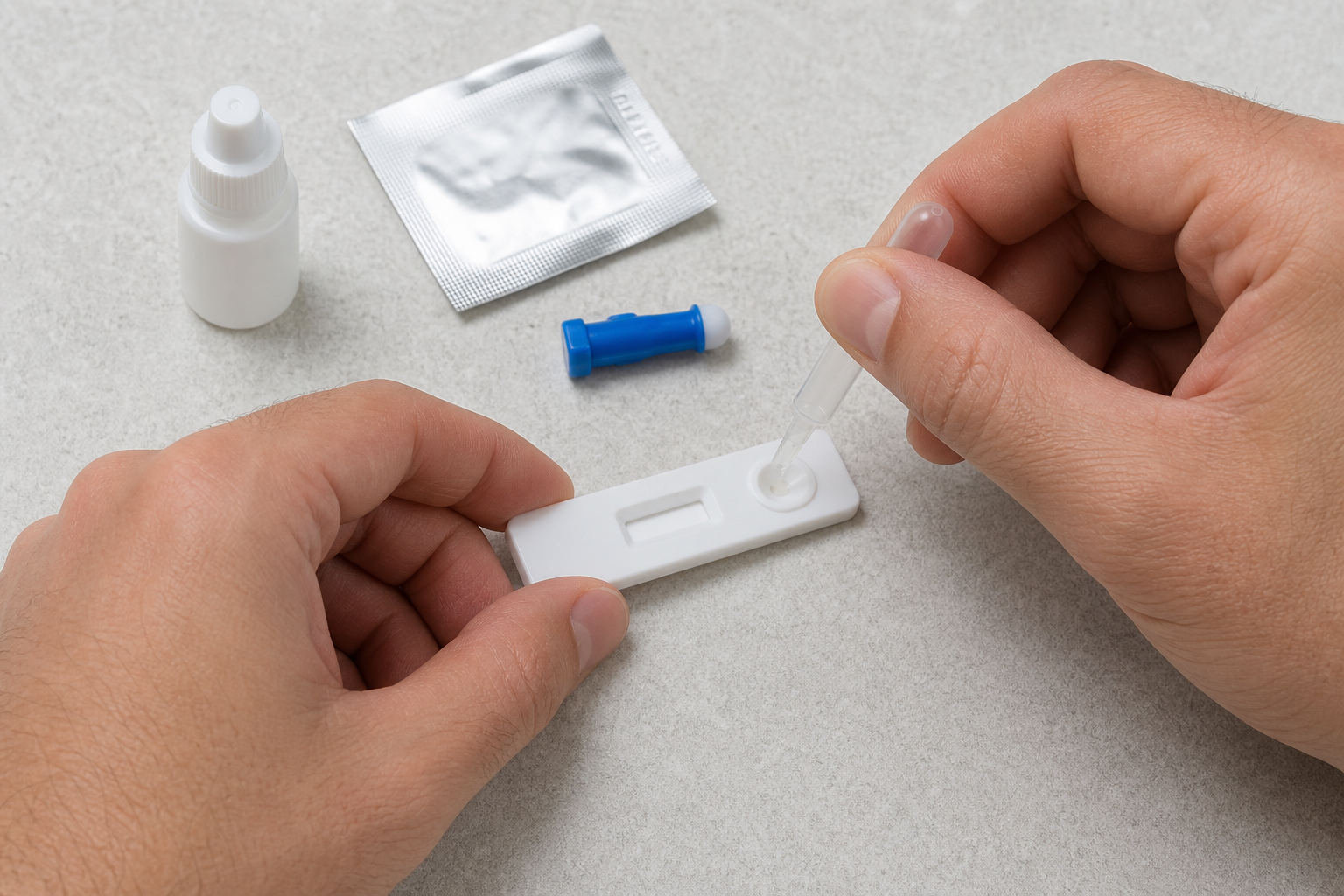
What at-home rapid tests give you is a fifteen-minute lateral-flow result in the privacy of your bathroom. That is meaningfully different from a lab NAAT in two ways. First, the chemistry is different; rapid lateral-flow tests are less analytically sensitive than lab NAATs, which means a negative rapid test in a high-risk context still benefits from lab confirmation. Second, the experience is different; the at-home rapid is what you actually do, while the clinic NAAT is what you keep meaning to schedule.
Combination kits reduce decision friction
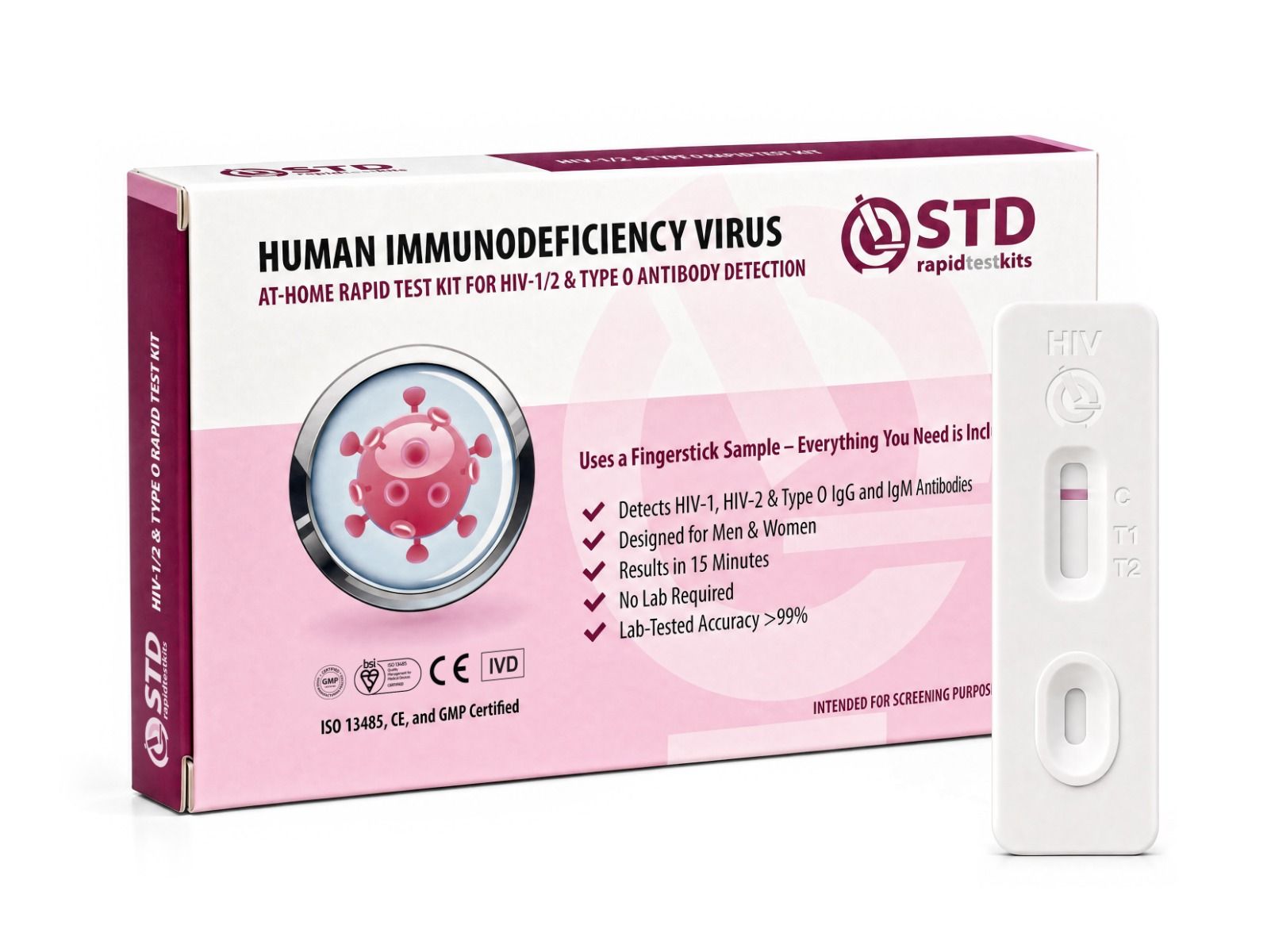
Combination kits matter for the same reason: the friction of selecting and ordering separate tests for chlamydia, gonorrhea, syphilis, and HIV is the friction that stops people from screening at all. A single multi-STI kit reduces the decision to one purchase and one fifteen-minute session. stdrapidtestkits.com sells at-home rapid lateral-flow kits for the infections covered in this article.
When to Test, and How Often
CDC’s screening guidance is the practical baseline (CDC screening recommendations):
- All adults 13 to 64 should be tested for HIV at least once as part of routine healthcare.
- Sexually active women under 25, or older women with risk factors (new partner, multiple partners), should be screened annually for chlamydia and gonorrhea.
- Sexually active men who have sex with men should be screened at least annually for HIV, syphilis, chlamydia, and gonorrhea, with screening every 3 to 6 months for those at higher risk.
- Pregnant people should be tested at the first prenatal visit for HIV, syphilis, hepatitis B, and chlamydia, with repeat testing in the third trimester for higher-risk pregnancies.
- Anyone with a new partner or a known exposure should test after the appropriate window for the suspected exposure.
These are minimums. People with multiple partners, those who use shared injection equipment, and those in serodifferent relationships generally benefit from more frequent screening (every 3 to 6 months). The home market makes the 3-to-6-month cadence realistic in a way that quarterly clinic visits often are not. If you decide to set up a routine, a recurring at-home kit aligned with the recommended cadence for your situation is the simplest mechanism.
One practical note on results: a positive rapid test result is a preliminary result. It is a strong signal that something is there, but it should be confirmed at a clinic with a lab NAAT (for chlamydia, gonorrhea) or a lab antigen-antibody or RNA test (for HIV) before any treatment is started. A negative rapid test inside the relevant window period is generally reliable for routine screening, with a repeat test recommended if the exposure was very recent.
Frequently Asked Questions
- Do I need to test if I’m in a long-term monogamous relationship?
- If both partners tested at the appropriate windows after their last outside partner, and the relationship has been mutually monogamous since, ongoing screening is generally not needed beyond the CDC’s one-time adult HIV test. Anything less than those conditions (last partner uncertain, monogamy uncertain, no baseline test ever done) is a case for a baseline screen now.
- If I had unprotected sex two days ago, when should I test?
- Two days is inside every common STI window period, so a test today would likely be negative regardless of infection status. The earliest test that produces a meaningful result is the gonorrhea swab at about 7 days. Chlamydia swab is reliable at about 14 days. Syphilis needs 3 to 6 weeks. HIV depends on the test: a lab antigen-antibody combo test is accurate by about 18 to 45 days; an at-home rapid antibody test requires a 3 to 12 week window, with a 90-day retest to confirm a negative result. If your exposure is a real concern, set calendar reminders for each test’s window and screen on a rolling schedule rather than testing too soon.
- Are at-home rapid tests as accurate as lab tests?
- For screening purposes, at-home rapid tests catch most infections and return a result in 15 minutes at home. The trade-off is analytical sensitivity: lab NAATs occasionally detect infections a rapid test misses, particularly close to the window-period edge. Treat a positive rapid as a strong signal warranting clinic confirmation, and treat a negative rapid in a high-risk context the same way: pair it with a follow-up lab test once you are clearly past the window.
- What does a positive result mean? Do I retest?
- The same-day move after a positive rapid result is to book a clinic confirmatory test, not to start treatment. For chlamydia or gonorrhea, the clinic runs a NAAT; for HIV, an antigen-antibody or RNA test; for syphilis, a treponemal-specific antibody test. Confirmatory results typically return within one to three business days. Treatment starts only after confirmation, and at that point it is straightforward for most bacterial STIs and lifelong but manageable for chronic viral ones.
- Can I get an STI from oral sex?
- Yes, though risks differ by infection. Gonorrhea, chlamydia, syphilis, herpes, and HPV all transmit through oral sex; HIV transmission through oral sex is possible but much less efficient than through vaginal or anal intercourse. Pharyngeal (throat) gonorrhea and chlamydia are largely asymptomatic and require a clinic-collected throat swab to detect, which at-home rapid kits do not cover. If a throat exposure is the concern, plan a clinic visit for pharyngeal NAAT in addition to whatever home testing you do for the urogenital and blood-based infections.
- Does insurance cover STI testing?
- Under the Affordable Care Act, most U.S. insurance plans cover STI screening at no out-of-pocket cost for recommended populations (annual chlamydia and gonorrhea screening for women under 25, HIV screening for adults, syphilis screening for pregnant people, others). Coverage details vary; check your plan. At-home rapid kits are generally an out-of-pocket purchase, but the time and access tradeoff often makes them the faster path for people whose schedule does not align with clinic hours.
- What’s the difference between an STI and an STD?
- STI (sexually transmitted infection) is the more current public-health term and covers asymptomatic infections that have not yet produced disease. STD (sexually transmitted disease) refers to an infection that has progressed to symptomatic disease. STI is used consistently by the World Health Organization and the CDC, and STD remains in wide consumer use (<a href="https://www.who.int/news-room/fact-sheets/detail/sexually-transmitted-infections-(stis)">WHO STI fact sheet</a>).
- U.S. Centers for Disease Control and Prevention. STI overview, screening recommendations, and population prevalence estimates.
- U.S. Centers for Disease Control and Prevention. Chlamydia information hub: asymptomatic-infection summary, PID progression, and screening guidance.
- U.S. Centers for Disease Control and Prevention. STI Treatment Guidelines, screening recommendations by population, drug regimens by infection, and expedited partner therapy guidance.
- HIV.gov. HIV basics, stages of infection, testing windows, and treatment-as-prevention.
- World Health Organization. Sexually transmitted infections (STIs) fact sheet and global prevalence.
- U.S. National Cancer Institute. HPV and cancer fact sheet, including the role of HPV 16 and 18 in HPV-related cancers (cervical, anal, oropharyngeal).