At-Home STD Testing Myths: 10 Common Beliefs Fact-Checked
At-home STI tests have changed a lot in the last few years, and the rumors haven't kept up. Are home rapid tests accurate? Are they private? Do real doctors trust them? We work through the ten most repeated myths, one calm answer at a time, so you can decide what fits your situation.
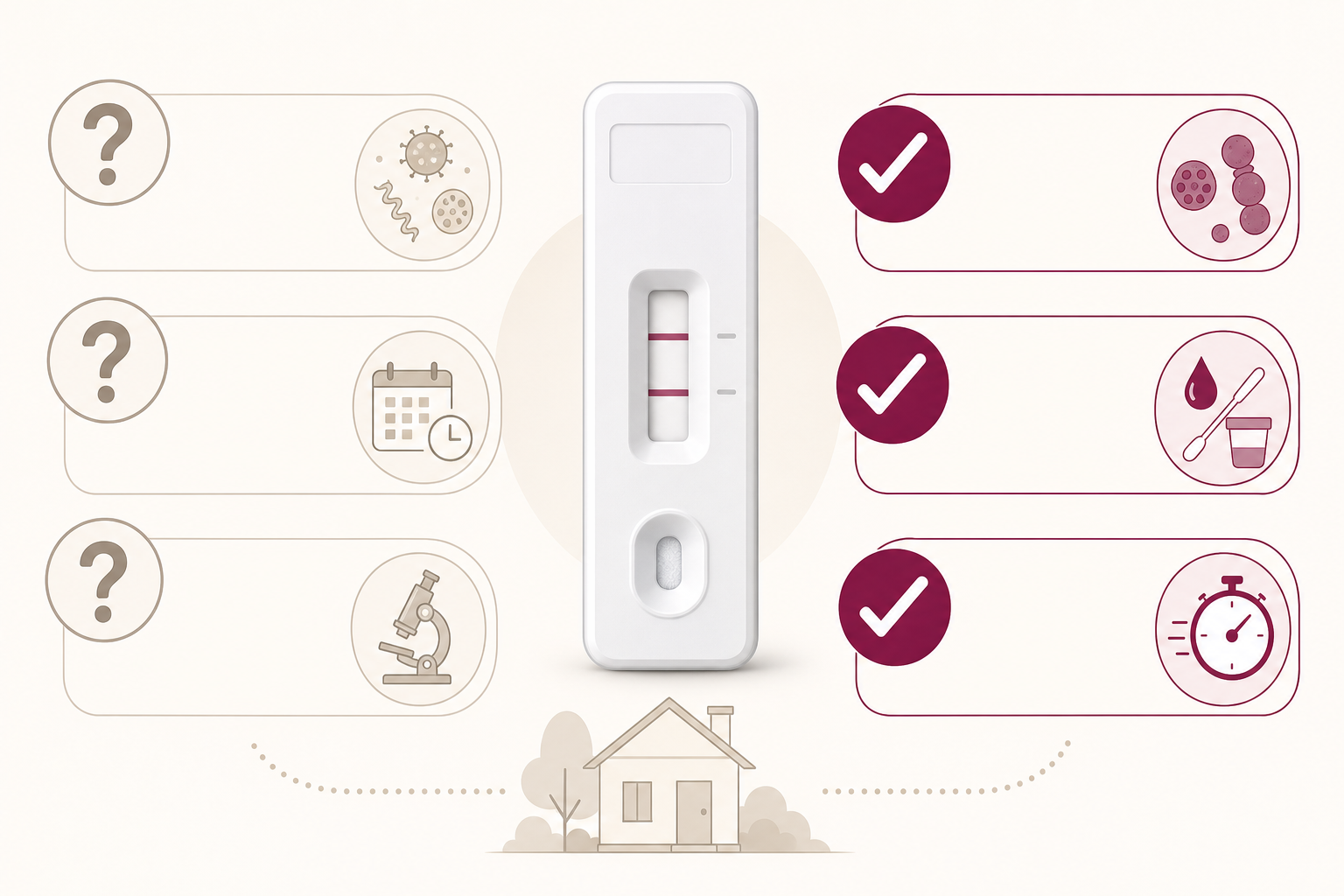



- At-home rapid STI tests use lateral-flow chemistry, the same family of tests as a COVID antigen test, and produce a visible result in about 15 minutes.
- A negative rapid result is most reliable when taken after each infection's window period; a reactive (positive) home result should always be confirmed by a clinic before starting treatment.
Published: August 2025 | Last updated: May 2026 | Editorial review and quality control: Martina N.
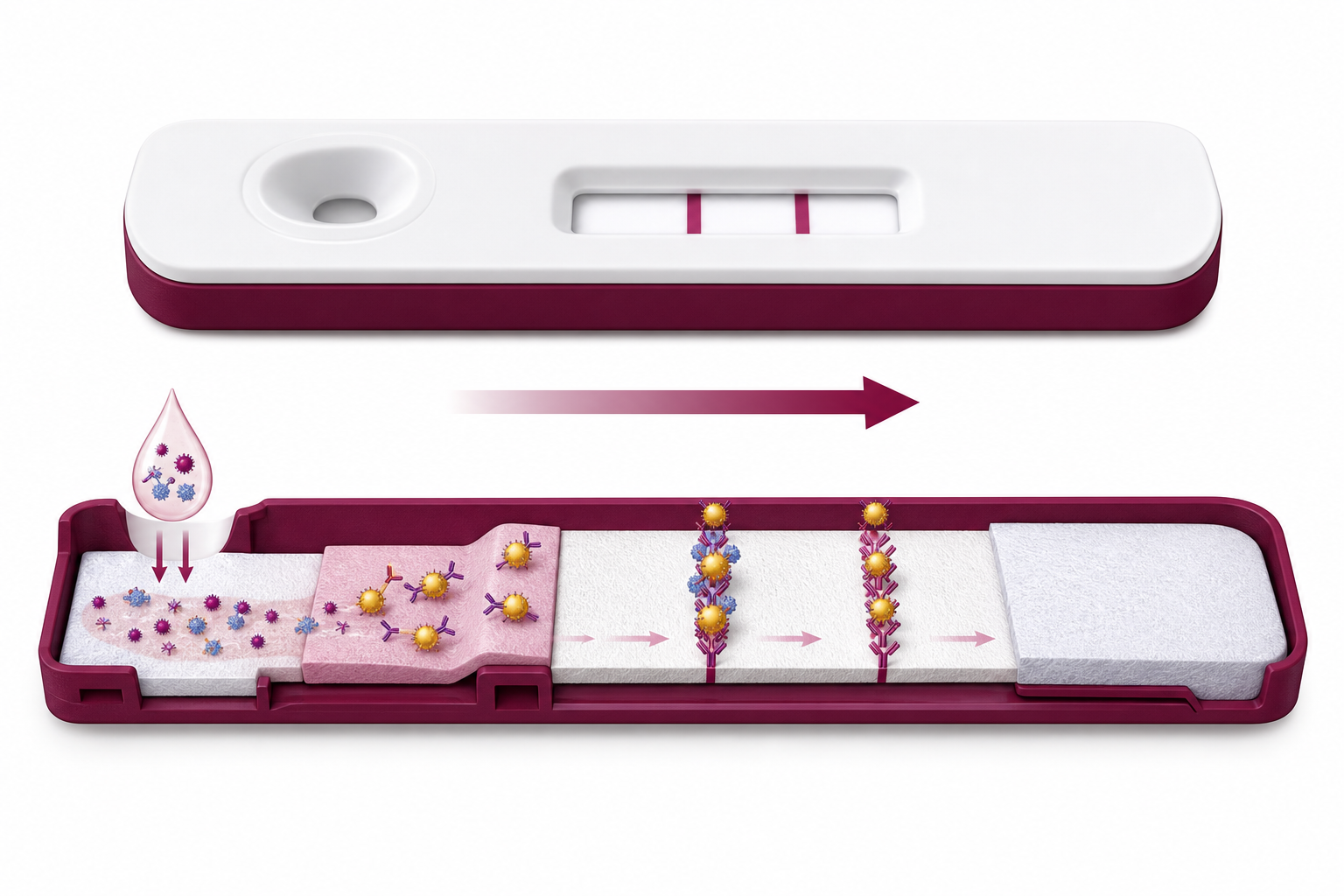
At-home STI testing has gone from a niche, mail-back concept to a mainstream tool that public health bodies including the U.S. Centers for Disease Control and Prevention and the World Health Organization now actively recommend for certain situations. The technology that powers most at-home rapid kits is the same lateral-flow chemistry behind a COVID antigen test or a pregnancy test. You add a sample, fluid travels along a strip, and a colored line appears within minutes if a target marker is present.
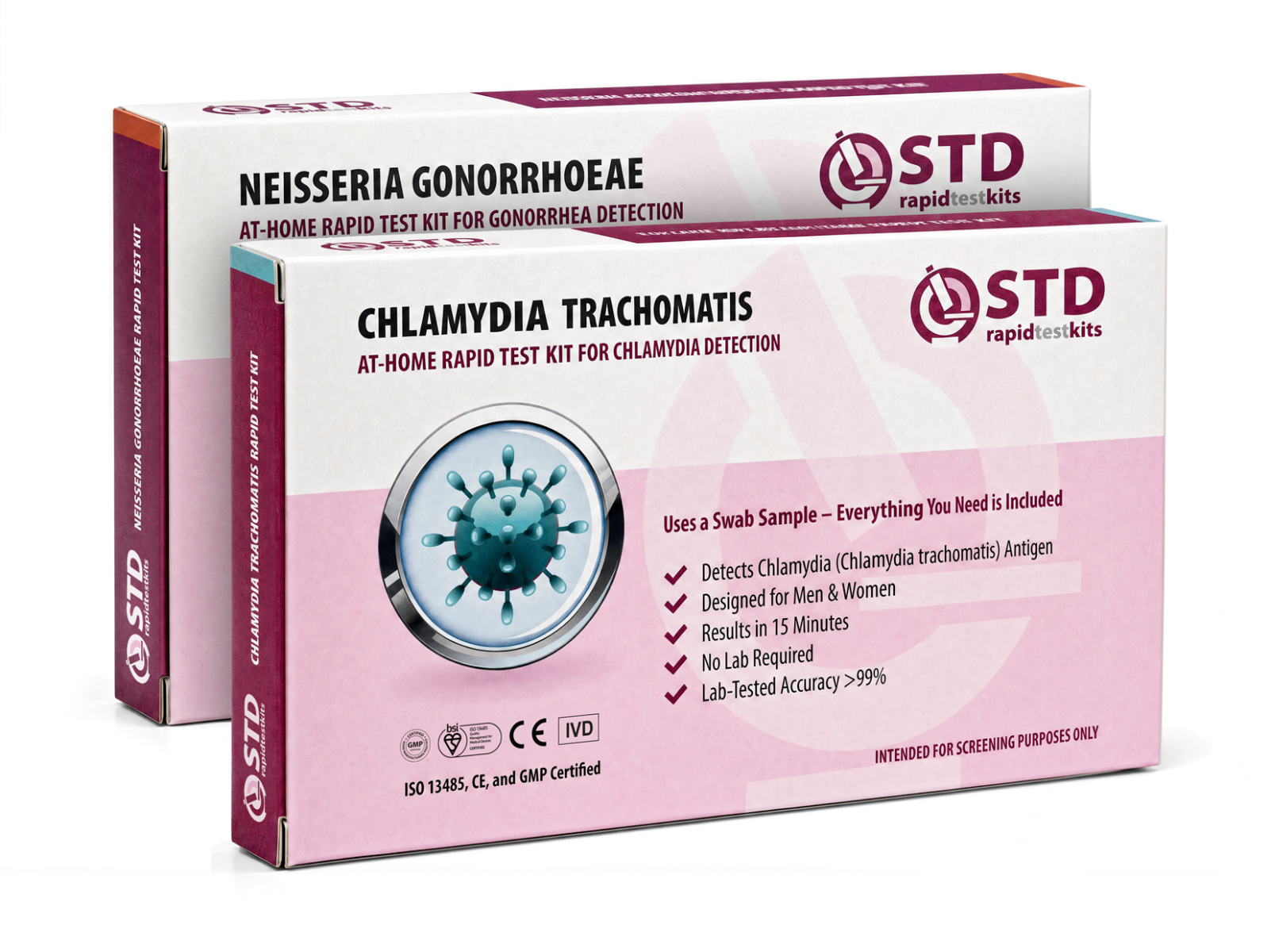
So why do home STI tests still get a bad reputation? Some of the doubt is genuine confusion between two different products. Mail-in lab kits let you self-collect a sample, ship it to a partner lab, and get a NAAT or PCR result in a few business days. Rapid at-home tests like the lateral-flow cassettes we sell give a visible result on the strip in about 15 minutes, with no lab in the loop. Some of the lingering suspicion is leftover from older, less reliable home kits. And some of it is just generic anxiety about doing anything medical without a clinician in the room. The ten myths below are the ones that come up most often when readers ask whether to order a test, and the calm version of the answer.
This article is published by stdrapidtestkits.com, which sells at-home STI testing kits. We recommend products based on fit-for-purpose for the reader's concern, not commercial benefit.
Are at-home STI tests reliable, private, and worth it?
Modern at-home rapid STI tests use lateral-flow strips and typically report sensitivity in the mid-to-high 90s and specificity above 99% when used after the correct window period for each infection (see individual product pages for the sensitivity and specificity figures published for each kit). They are private (discreet packaging, no clinic record), priced in line with a single clinic copay, and useful as a screening tool. A reactive home result is best confirmed by a clinic NAAT or blood draw before treatment.
Key takeaways
- At-home rapid STI tests use lateral-flow chemistry, the same family of tests as a COVID antigen test, and produce a visible result in about 15 minutes.
- A negative rapid result is most reliable when taken after each infection's window period; a reactive (positive) home result should always be confirmed by a clinic before starting treatment.
Myth #1: At-home STI tests are not accurate
The truth: Modern at-home rapid STI tests perform reliably when they are used after the correct window period for each infection and the sample is collected per the kit's instructions. The chemistry that powers them, lateral-flow immunoassay, is the same approach used by FDA-approved over-the-counter products like the OraQuick at-home HIV test, which the CDC identifies as the only at-home HIV test currently approved by the FDA for consumer purchase. Swab-based rapid tests for chlamydia and gonorrhea, and rapid blood tests for syphilis and the hepatitis viruses, all use the same lateral-flow approach with infection-specific antigens or antibodies on the strip.
What home rapid tests are not is a substitute for the lab-based nucleic-acid amplification test (NAAT) used by clinics and reference labs. NAAT is the analytical gold standard for several STIs, and current CDC STI Treatment Guidelines still treat lab NAAT as the confirmatory test for chlamydia, gonorrhea, and trichomoniasis. Think of a home rapid test as a fast, private screening tool. A negative result past the window period is meaningful information; a reactive (positive) result is your prompt to schedule confirmatory testing at a clinic.
Myth #2: Home tests give a lot of false positives
The truth: Specificity, the rate at which a test correctly returns a negative result for someone who is not infected, is generally high for the lateral-flow tests used in modern at-home kits, often above 99% for the well-validated single-infection products. False positives do happen, but they are uncommon. False negatives, not false positives, account for most home-test errors. The cause is almost always that the sample was collected too early in the infection's window period and the body has not yet produced enough antigen or antibody for the strip to detect.
This is why the standard public-health framing is screen at home, confirm at the clinic. A reactive home result narrows the population that needs confirmatory testing from "everyone who might have been exposed" down to "people whose home strip already turned positive," which is a much smaller group. Even at 99% specificity, a small number of those reactive results will be false alarms, which is exactly why labs run a confirmatory NAAT (for swab infections) or a confirmatory antibody panel (for blood infections) before any treatment is prescribed.
Treat a reactive home strip as a prompt to confirm at a clinic, not as a diagnosis. Confirmatory NAAT or antibody panels are designed to catch the small share of reactive home results that turn out to be false alarms before any treatment is started.
Myth #3: At-home STI tests are too expensive
The truth: A single rapid at-home test cassette typically costs less than a clinic visit copay in the United States, and the comparison gets more favorable once you factor in the time off work, the transit, the consultation fee, and (in some cases) the lab fee that gets billed separately. For people who are uninsured, the at-home option is often the only price point that lets them test at all without going through a free public health clinic with limited hours.
The cost picture also changes once you consider testing cadence. Per CDC screening guidance, sexually active women under 25 and men who have sex with men should be screened for chlamydia and gonorrhea at least annually, with more frequent screening for higher-risk situations. If your situation calls for a quick check three or four times a year, a stack of single-infection rapid tests adds up to less than the equivalent run of clinic visits in most cost models.
Myth #4: At-home tests aren't private
The truth: At-home tests are arguably the most private way to screen for an STI that exists. The kit ships in plain, unbranded packaging. The sample is collected and read in your own bathroom. The result never enters your medical record unless you choose to bring it to a provider. There is no front-desk check-in, no insurance claim that turns up on a family policy statement, and no lab requisition with your name on it sitting in a folder somewhere.
The privacy tradeoff worth knowing about is on the result side. At-home rapid tests do not include a clinical follow-up call, and a reactive result does not automatically connect you to treatment. That is the user's responsibility. For most readers this is a feature rather than a bug, because it lets you control who finds out what and when. For others, particularly anyone who would benefit from immediate counseling on a positive result, a clinic may be the better starting point.
At home: plain unbranded packaging, no front-desk check-in, no insurance claim filed, no lab requisition with your name on it, result stays out of your medical record unless you bring it in.
At a clinic: visit recorded in your chart, lab order generated under your name, possible insurance claim documentation, but with a clinician available immediately for counseling and prescription if a result is reactive.
Myth #5: Home tests only screen for one or two STIs
The truth: The single-infection rapid test was the early entry point for the at-home category, but the menu has expanded substantially. You can now find rapid lateral-flow tests for chlamydia, gonorrhea, trichomoniasis, HPV, syphilis, HIV, hepatitis B, hepatitis C, HSV-1, and HSV-2 either as standalone single-infection kits or as combination panels that pair swab-based and blood-based tests in the same box. The most common combination configurations are 2-in-1 (chlamydia plus gonorrhea), 3-in-1 (those two plus syphilis), and broader panels of six, seven, eight, or ten infections in a single kit.
The catch is that some specific samples are not in the at-home rapid menu. Pharyngeal (throat) swabs and rectal swabs for gonorrhea and chlamydia, for example, are not currently sold as at-home rapid tests by any reputable provider in this category. If your exposure was oral or anal and you want a site-specific test of that anatomy, you still need a clinic visit. The home-rapid menu covers a lot of ground but is not yet a complete replacement for the full sexual-health screen a clinic can do. It is also worth noting that a few combo kits (for example our 10-in-1 panel) include trichomoniasis and HPV, which are validated for self-collected vaginal swabs only; male readers needing a trich or HPV test should see a clinic.

Myth #6: If you have no symptoms, you don't need to test
The truth: Most STIs are asymptomatic for most people for most of the infection. The CDC's STI hub notes that a large share of new STI cases occur in people who report no symptoms, and the most common bacterial infections (chlamydia in particular) can sit undetected for months while still being transmissible. That assumption, the "I would know if something was wrong" intuition, is one of the biggest reasons undiagnosed infections continue to spread.
This is why the official screening cadence is a function of behavior and risk rather than symptoms. The CDC's screening guidance recommends at least annual chlamydia and gonorrhea screening for sexually active women under 25 and for men who have sex with men, with more frequent screening (every 3 to 6 months) for higher-risk situations. HIV screening is recommended at least once for all adolescents and adults aged 13 to 64, and at least annually for people in higher-risk categories. None of those recommendations require symptoms to trigger them, because the data show that waiting for symptoms means missing a large share of infections that are otherwise easy to treat early.
Chlamydia, gonorrhea, HPV, HIV, and herpes can all be transmitted by people who feel completely well and have no visible signs. Routine screening based on your behavior pattern, not your symptom pattern, is the only way to catch the cases that would otherwise stay hidden until complications appear.
Myth #7: At-home STI tests take days to give a result
The truth: This one mixes up two different at-home product categories. The mail-in lab kit model (you self-collect, ship the sample to a partner lab, receive a NAAT result in 2 to 5 business days) does take days. The at-home rapid test model, which is what lateral-flow cassettes like ours are, gives a visible result on the strip in about 15 minutes. There is no shipping step, no lab queue, and no waiting period beyond the strip's read window.
The 15-minute number is real, but it is also a strict ceiling rather than a target. Reading the strip too early can cause a false negative because the antibody or antigen has not had time to migrate and bind. Reading it too late (typically more than 20 to 30 minutes after the sample is applied, depending on the kit) can cause an evaporation-driven false positive as the strip dries down.
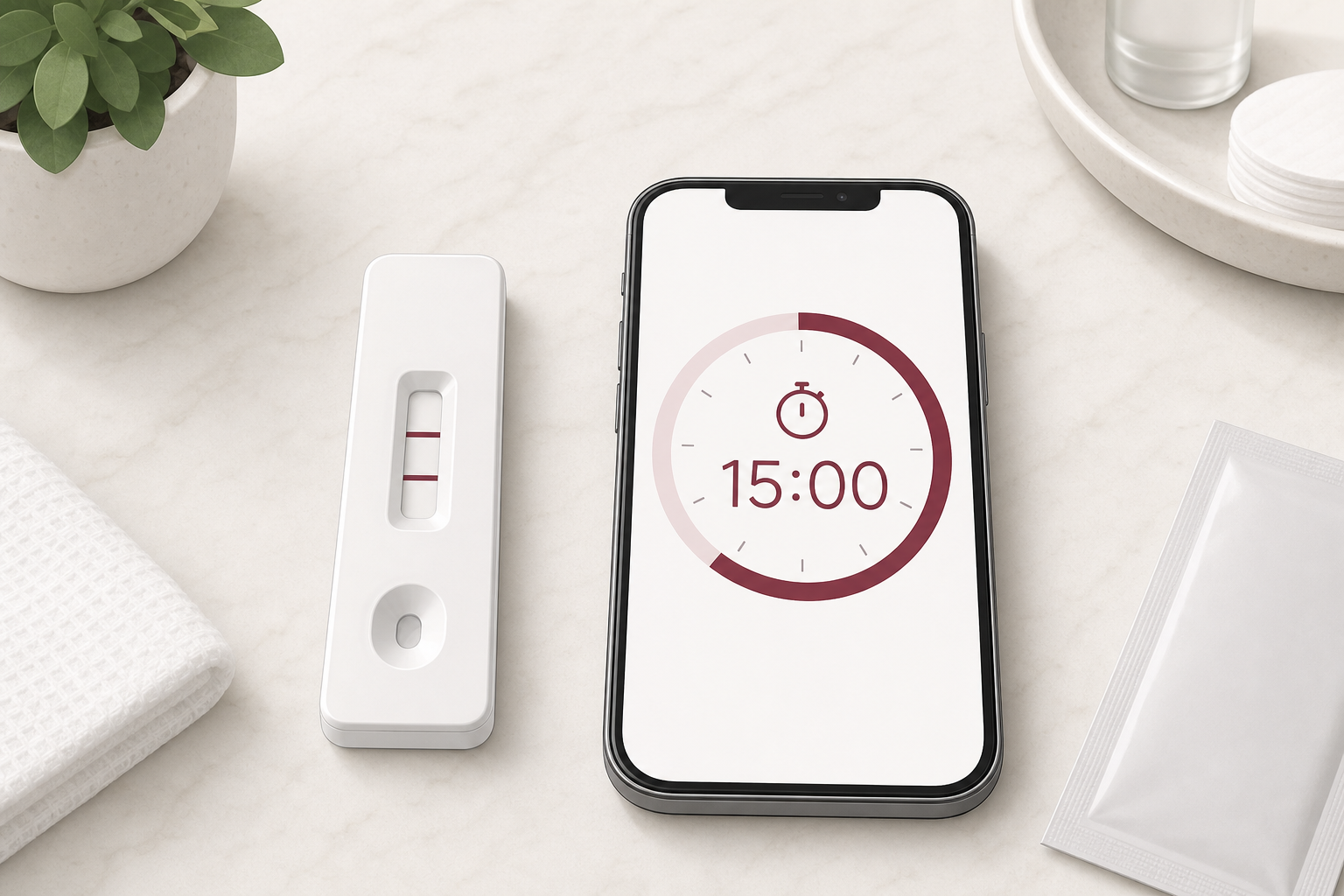
Set a phone timer when you apply the sample. Reading inside the kit's stated window (usually 15 minutes, with a hard cutoff around 20 to 30 minutes) is the single most controllable factor in getting a reliable result.
Myth #8: Home STI tests are complicated to use
The truth: Most at-home rapid STI tests are designed to a usability standard intended for someone with no medical training and no instruction beyond the leaflet in the box. The two most common test types break down into very few steps. For a swab-based test (chlamydia, gonorrhea, trichomoniasis, HPV), the user inserts the supplied swab, swirls it in the provided buffer tube, and applies a few drops of the buffer to the cassette. For a blood-based test (HIV, syphilis, hepatitis B and C, HSV-1, HSV-2), the user pricks a finger with the supplied lancet, draws a small drop of blood into a transfer pipette or capillary, and applies it to the cassette with a buffer drop on top.
Reading the kit's instructions before opening anything prevents the most common causes of inaccurate results. Most user mistakes trace back to skipped steps: not waiting long enough between the swab and the cassette, missing the read window, or not collecting enough sample volume. Most kits include a labeled diagram and many include a QR code that opens a short instructional video. If a step is unclear, watch the video before applying the sample, not after.
1. Read the leaflet end to end (most are one to two pages). 2. Check the expiry date printed on the foil pouch. 3. Have a phone or watch ready for the read-window timer. Doing these three things in order eliminates the majority of preventable user errors.
Myth #9: At-home STI testing is not approved by medical experts
The truth: Medical bodies have endorsed at-home STI testing as a public-health tool for more than a decade. The U.S. FDA approved the first at-home HIV test (OraQuick) for over-the-counter sale in 2012, and the CDC's HIV testing page still describes the OraQuick self-test as the currently FDA-approved at-home option. The World Health Organization includes HIV self-testing as one of the legitimate ways for people to learn their HIV status. The NHS in the UK signposts patients to home testing kits offered by some clinics and sexual health services.
The nuance worth knowing is that "approved by medical experts" is not the same as "FDA-cleared for over-the-counter sale" for every kit on the market. The first describes a category-level endorsement (yes, home testing is a valid tool); the second describes a regulatory clearance for a specific product. Some kits in the at-home category hold individual FDA clearance, others are sold as research-use or self-collection devices in jurisdictions where that is permitted, and others are CE-marked for the European market. Reputable sellers list the regulatory status of each individual product on its product page. If that status matters to you for a specific test, look it up rather than assume.
FDA cleared / approved (U.S.): the kit has cleared the U.S. regulatory pathway for over-the-counter sale. CE marked (Europe): the kit conforms to European in-vitro-diagnostic regulations. Research-use only: not cleared for diagnostic claims and best avoided as a primary screening choice. Reputable sellers state which designation applies to each individual product.
Myth #10: At-home tests don't connect you to medical support
The truth: The home-testing market is split between two service models. Bare-strip kits (the lateral-flow cassette in a box) are sold without a clinical consultation included, on the assumption that the user already has, or can find, a primary-care provider for follow-up if the result is reactive. Telehealth-bundled services include a virtual consultation with a clinician as part of the package, often at a higher price point.
Neither model is inherently better; they serve different readers. If you already have a doctor and your goal is just a fast, private screen, the bare-strip model is faster and cheaper. If you want a single end-to-end experience that includes guidance on what a positive result means and a treatment prescription if appropriate, a telehealth-bundled service may be worth the extra cost. Either way, a reactive home result should always be followed up with a clinician for confirmatory testing and (if needed) treatment. The home strip is a starting point, not the final answer, and that is the same standard public health bodies apply to home tests for everything from glucose to pregnancy.
All sexually active women younger than 25 years should be tested for gonorrhea and chlamydia every year. Many infections cause no symptoms, so testing is the only way to know.
Frequently asked questions
- How do I know if a specific at-home STI test is reliable?
- Look for the regulatory status on the product page (FDA clearance for the U.S., CE marking for Europe, or equivalent), and check whether the manufacturer publishes sensitivity and specificity numbers. Reputable kits state the window period after which the test is most accurate and the population it was validated in.
- Should I trust a positive result from an at-home test?
- Treat a reactive home result as a strong signal to get confirmatory testing at a clinic before starting any treatment. Specificity for most lateral-flow tests is high, but a small fraction of reactive results are false alarms, and clinics confirm with a NAAT (for swabs) or a confirmatory antibody panel (for blood) before prescribing.
- How long after exposure should I wait to test at home?
- It depends on the infection. Chlamydia and gonorrhea are typically detectable about 14 days after exposure, syphilis around 3 to 6 weeks, and HIV antibodies around 23 to 90 days depending on the test format (the CDC HIV testing page cites this range). Herpes antibodies typically take around 12 weeks for most people, though some assay labels and immune responses extend the window to 16 weeks; check the specific kit's package insert for its validated detection window. Testing too early is the most common cause of false negatives.
- Are at-home STI tests covered by insurance?
- Some U.S. insurance plans cover at-home STI tests when ordered through a participating telehealth provider, but most over-the-counter retail purchases are paid out of pocket. HSA and FSA accounts will usually reimburse the purchase. Check with your plan before assuming coverage.
- Do at-home STI tests work if I have no symptoms?
- Yes. Asymptomatic screening is one of the strongest use cases for the at-home category, because the majority of new STI infections occur in people who do not yet have symptoms. The CDC recommends routine screening based on risk and behavior, not on whether symptoms have appeared.
- How often should I screen?
- Annual chlamydia and gonorrhea screening is the CDC baseline for sexually active adults under 25 and for men who have sex with men. Every 3 to 6 months if you have multiple partners or a known recent exposure. Everyone aged 13 to 64 should have had at least one HIV test, with annual HIV testing for people in higher-risk categories.
- Do at-home STI tests need a prescription?
- No. The at-home rapid kits sold in this category are over-the-counter products that you can order online without a prescription or a clinician referral.
- Can I take an at-home STI test while on antibiotics?
- Antibiotics taken for an unrelated reason can suppress bacterial infections like chlamydia and gonorrhea below the test's detection threshold, which can cause a false negative. If you are mid-course on antibiotics, talk to a clinician about the right time to test, or wait until the course is finished and a clearance window has passed.
The honest summary
At-home rapid STI tests are not magic, and they are not a replacement for everything a clinic can do. What they are is a fast, private, accurate-enough-for-screening tool that gives readers a way to take a first look without the friction that keeps a lot of people out of a clinic in the first place. The data on screening uptake suggests that lowering that friction is one of the most effective ways to bring more undiagnosed infections into treatment, which is the public-health endpoint that matters.
If you decide a home test fits your situation, pick a kit that matches the infection you are actually concerned about, wait for the window period to pass before testing, follow the kit's instructions exactly, and treat any reactive result as your prompt to schedule confirmatory testing at a clinic. If you want broader peace of mind in a single sitting, the multi-panel combination kits cover most common infections in one box. If your exposure involved oral or anal contact and you want a site-specific test of that anatomy, a clinic visit is still the right call.

- U.S. Centers for Disease Control and Prevention. STI hub, including current screening recommendations and asymptomatic-infection prevalence context.
- U.S. Centers for Disease Control and Prevention. STI Treatment Guidelines, including the rationale for NAAT as the laboratory confirmatory standard for chlamydia, gonorrhea, and trichomoniasis.
- U.S. Centers for Disease Control and Prevention. HIV testing landing page, identifying the OraQuick at-home HIV test as the currently FDA-approved at-home HIV self-test and citing the 23 to 90 day antibody detection window.
- World Health Organization. HIV/AIDS fact sheet, including the place of HIV self-testing in WHO-recommended diagnostic options.
- World Health Organization. Sexually transmitted infections fact sheet, including global STI prevalence figures and screening context.
- U.K. National Health Service. Sexually transmitted infections topic page, including the NHS pointer to home testing kits offered through some clinics and sexual health services.