Published: November 2025 | Last updated: May 2026 | Editorial review and quality control: Martina N.
The World Health Organization refreshed its HIV clinical management guidance in January 2026, and the changes ripple out beyond clinics. Same-day treatment starts, broader self-testing pathways, and tighter integration with PrEP and prevention are now central pillars rather than aspirational add-ons. If you are considering an at-home HIV test, what you choose and when you test matters more than ever (WHO HIV fact sheet).
This article walks through what the updates mean for a person testing privately, how to read window periods honestly, when to retest, and what your next step should look like whether your result is negative or positive. The science behind HIV testing has not shifted in 2026. The difference is how quickly the system around you is built to respond once you know.
Key Takeaways
- At-home rapid HIV tests are lateral-flow antibody tests. They are most reliable from 23 to 90 days after exposure, not the morning after a scare (CDC).
- WHO's 2026 update emphasizes linking every test result, positive or negative, to a clear next step: confirmatory testing, treatment start, PrEP, or a planned retest.
Why the New HIV Guidelines Matter to You
When global organizations like the WHO release clinical recommendations, the framing can feel abstract. But the January 2026 update lands closer to home than most policy refreshes. With a renewed push toward same-day treatment starts and regimens tailored for co-infections, the message is unambiguous: the sooner you know your status, the better your outcomes (WHO HIV fact sheet).
The revised guidance now supports starting ART (antiretroviral therapy) even before confirmatory testing is complete in high-risk or resource-limited settings. That specific scenario will not apply to everyone using an at-home test in the U.S. or U.K., where confirmation is usually quick. The broader implication still does: waiting for symptoms or putting off testing because of fear costs you real health advantages. HIV often produces no noticeable symptoms in the early weeks.
- Same-day ART starts. Treatment can begin alongside (or even before) confirmatory testing in higher-risk settings.
- Expanded self-testing pathways. Home rapid tests are explicitly part of the recommended screening toolkit, not a workaround.
- Integrated TB screening. Anyone newly diagnosed with HIV should also be assessed for tuberculosis co-infection.
What Counts as an HIV Test Today?
If it has been a while since you last looked into HIV testing, the menu has changed. The WHO guidelines themselves distinguish between tests used for diagnosis, screening, and self-testing. Three broad categories cover almost everything you will see (NIH HIVinfo).
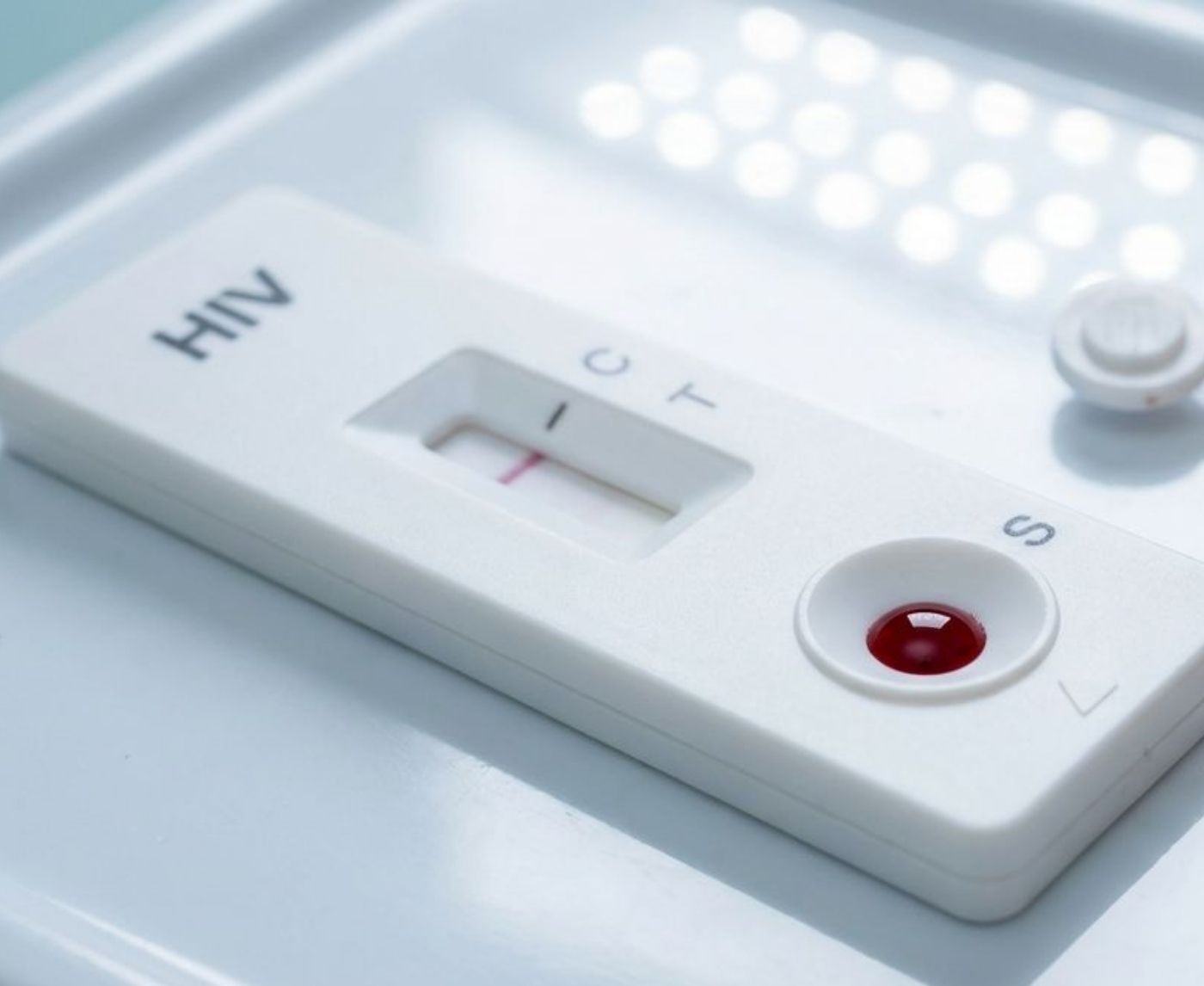
Consider a 29-year-old who recently ended a long monogamous relationship and had a first new encounter where the condom broke. No symptoms yet, plenty of anxiety. She picks up an FDA-cleared at-home rapid HIV test at a pharmacy. It uses a fingerstick blood sample and returns a result in about 20 minutes. That is a self-test: designed for private use, no lab processing, lateral-flow chemistry that detects HIV antibodies. It is fast, affordable, and accessible. The catch is the timing. Depending on her exposure date, the result might not be definitive yet.
In contrast, lab-processed 4th-generation combination antigen-antibody blood tests and NAAT (nucleic acid amplification tests) can detect infection earlier. They take longer to deliver a result and require professional collection or mail-in handling. Here is how the major test types stack up (CDC).
| Test Type | How It Works | Earliest Reliable Detection | Where You'll Find It |
|---|---|---|---|
| Rapid Self-Test (Fingerstick) | Lateral-flow detection of HIV antibodies | About 23 to 90 days post-exposure | At-home kits, pharmacies |
| 4th Gen Combo Lab Test | Detects p24 antigen plus antibodies | About 18 to 45 days post-exposure | Clinics, lab-based mail-in kits |
| NAAT (RNA Test) | Lab-based amplification of viral RNA | About 10 to 33 days post-exposure | Specialty labs, high-risk clinics |
Window Periods: Why Timing Is Everything
The table above compares common HIV test types by detection window and availability. Your choice of test affects how soon a result is meaningful and whether you will need to retest.
Say your potential HIV exposure happened during a chaotic weekend: a new partner, maybe substances, maybe a condom that did not stay on. Five days later you are spiraling. Should you test now? Wait? Will the result mean anything?
This is where the concept of a window period comes in. It is the time between exposure and when a test can reliably detect the virus. The window depends on the test type (CDC self-testing guidance). Rapid antibody home tests detect HIV antibodies, which take weeks to develop to detectable levels. Lab NAAT tests look for viral RNA directly and can flag infection earlier in the timeline.
| Test Type | Detection Marker | Window Period | Retest Needed? |
|---|---|---|---|
| Rapid Self-Test | Antibodies | 23 to 90 days | Yes, if exposure was within window |
| 4th Gen Lab Test | p24 Antigen and antibodies | 18 to 45 days | Maybe, if early exposure |
| NAAT (RNA Test) | Viral RNA | 10 to 33 days | Rarely |
Symptoms or No Symptoms: Why You Still Need to Test
Typical window periods for HIV detection by test type. Testing too early can produce a falsely reassuring negative, which is why WHO's 2026 guidance emphasizes structured retesting in higher-risk cases.
If you are still inside the window, say, fewer than 14 days after the encounter, a negative rapid result does not tell you much. It could be accurate. It could be too soon. Many guidelines recommend a second test a few weeks later.
One of the most misleading myths about HIV is that you will know if you have it: some burning, fever, rash, or fatigue will signal a red flag. The reality is that many people experience no symptoms at all during the early stages. Those who do often chalk them up to a cold, the flu, or just a rough week. WHO's 2026 update reinforces what the CDC has emphasized for years: most HIV transmission comes from people who do not yet know they are positive (CDC).
Picture a 34-year-old who has flu-like symptoms about 10 days after a one-time hookup. He brushes them off as a seasonal bug. Months later, a routine blood panel flags something off. By the time he tests, the most infectious window is already behind him. With WHO's renewed emphasis on early ART, that delay is exactly what the guidelines are trying to prevent. The flip side is just as common. A 26-year-old with zero symptoms tests positive during a home STI panel she bought after a pregnancy scare. She almost did not test for HIV at all, but the combo kit included it. That surprise result reshapes her understanding of risk. It is also part of why WHO now recommends integrating HIV testing into routine sexual health screening, especially for younger adults, people with new partners, or anyone with a history of STIs.
stdrapidtestkits.com sells rapid lateral-flow home test kits, including the combination panel below.
When can I trust an at-home HIV test result?
At-home rapid antibody tests are reliable from about 23 to 90 days after a possible exposure. Before day 23, a negative result is not conclusive and you should plan to retest. If you are within the first two weeks of a high-risk exposure, a lab NAAT or 4th-generation antigen-antibody test will detect infection earlier than any home rapid test can.

Can You Trust At-Home HIV Tests in 2026?
The short answer: yes, when used correctly and at the right time. Most at-home HIV test kits available in 2026, especially FDA-cleared options, perform with high sensitivity and specificity once you are past the antibody window (MedlinePlus). What WHO's new guidance subtly raises is the bar after the result. Knowing your status is only the beginning. The emphasis now is on linkage to care. Your result, positive or negative, should trigger a next step rather than just relief or panic.
In a clinical setting, that next step is built in: a counselor, a referral, a follow-up visit. At home, the responsibility for follow-up sits with you. Choose a kit with clear instructions, transparent sensitivity and specificity figures on the product page, and ideally guidance on what to do after a reactive or negative result. WHO does not name specific brands, but the principle is clear: HIV testing must be accessible, accurate, and connected to care. Some kits now integrate with telehealth platforms that offer confirmatory testing referrals.
- FDA clearance (U.S.) or CE marking (Europe). Confirms the device was reviewed against a regulatory performance standard.
- Published sensitivity and specificity figures. The product page should state both, not just a vague "99% accurate" claim.
- Documented follow-up path. A reputable kit links you to confirmatory testing, telehealth, or a help line for reactive results.
What to Do If You Test Positive at Home
This is where fear tends to take over. It does not have to. If your at-home HIV test shows a reactive result, the first thing to remember is that, as of 2026, HIV is more manageable than ever. With early ART, people living with HIV can have life expectancies that approach those of HIV-negative peers, and a person whose viral load becomes undetectable on treatment does not transmit HIV sexually (CDC living with HIV).
WHO's newest guidance pushes for same-day treatment starts, especially in settings where confirmatory testing might be delayed. The reason is straightforward: early ART leads to better immune outcomes, prevents transmission to partners, and preserves long-term health. So if you test reactive at home, your next step is to confirm the result with a clinic or laboratory test and begin discussing treatment options without delay.
What this looks like in practice: a 41-year-old sees a reactive line on his home test late at night. Instead of spiraling, he schedules a confirmatory appointment for the next day through a telehealth platform. Within 72 hours, he is connected with an HIV specialist and starting medication. Fast action like this, with confirmatory testing the next day and specialist linkage within 72 hours, is increasingly common. Some clinics will re-test with a 4th-generation combo or NAAT before initiating treatment. Others, especially those following WHO's 2026 model, may start ART right away.
- Confirm with a lab test. A 4th-generation antigen-antibody panel or NAAT at a clinic, telehealth lab order, or sexual health center.
- Schedule a clinical consult within 24 to 48 hours. Most cities have rapid-start HIV clinics or telehealth services that can see you the next business day.
- Discuss ART initiation at that consult. Same-day ART starts are increasingly standard under WHO's 2026 guidance, especially when confirmatory testing is in progress.
Privacy, Packaging, and Support: What Testing from Home Looks Like in 2026
There is a scene worth naming: someone hunched over a bathroom sink, hands trembling, reading instructions under dim light, waiting for a test strip to show a line, or not. It is raw. It is real. And in 2026, with WHO pushing decentralization of HIV care toward self-testing and community-based models, it is more common than ever (WHO HIV fact sheet).
Reputable at-home HIV tests now arrive in plain, discreet packaging with no labels suggesting sexual health contents. Most include instructions in multiple languages, QR codes for video guides, and rapid result windows of 15 to 20 minutes. Some bundle access to helplines or scheduling portals for confirmatory care. When anxiety peaks, every detail matters. People report driving 40 miles to buy a test from a pharmacy two towns over to avoid recognition. Others use a friend's shipping address. Stigma has not vanished, but technology and policy have made it easier to move through fear without stalling your health.
If you are wondering whether support exists after you see your result, the answer is yes, but you have to reach for it. Start with your local health department, a telehealth STI clinic, or a platform like stdrapidtestkits.com, which guides users toward next steps rather than stopping at result delivery.

Retesting: When, Why, and How Often
Say you tested negative after a risky encounter. Maybe it was two weeks ago. Maybe five. Should you retest? Probably. WHO's 2026 update stresses that single-point testing is rarely enough when the exposure was recent. If you are still inside the window period, a follow-up test gives you more clarity (NIH HIVinfo).
A simple rule of thumb: if your last possible exposure was fewer than 90 days ago and you used a rapid antibody self-test, schedule a retest at or after the 90-day mark. If you used a 4th-generation lab test, you may only need to retest if symptoms appear or the exposure was very recent. NAAT users may need only one test, depending on context.
Retesting makes sense in other situations too. If you start PrEP or PEP, you will need scheduled follow-ups at regular intervals. If your partner tests positive, even after you have tested negative, retesting a few weeks later is wise. The 2026 guidance also introduces more flexible retesting windows based on local availability and self-testing capacity, which is a quiet but important nod to people testing at home. If cost is a barrier, a clinic's subsidized testing option or a lower-priced combo kit covers the same ground.
Retest schedule by test type
- Rapid antibody self-test: retest at or after the 90-day mark if your last exposure was within the window.
- 4th-generation lab test: retest only if symptoms appear or the exposure was within the past two to three weeks.
- NAAT (RNA) test: a single result is usually conclusive once you are past day 10 to 14 post-exposure.
- On PrEP or PEP: scheduled retesting roughly every three months while you remain on the medication.
HIV and Pregnancy: New Guidance from WHO
One of the most significant updates in WHO's 2026 HIV management guidelines is the refined pathway for preventing mother-to-child transmission. If you are pregnant, trying to conceive, or unsure, this section is for you.
The revised guidance recommends integrating HIV screening into all prenatal testing and, in high-burden areas, offering home-based testing to partners as well. Shared testing reduces stigma and encourages earlier treatment. More importantly, WHO now supports earlier initiation of ART in pregnancy, including for those awaiting confirmatory testing in resource-limited settings (WHO HIV fact sheet).
For people considering pregnancy or who recently tested positive, this opens up more time-sensitive options. At-home testing can be the first signal. If the result is reactive, act quickly. With ART initiated during pregnancy, the perinatal transmission rate can drop to about 1 percent or lower (CDC HIV and pregnancy). Many providers now recommend that both partners establish a baseline HIV status before conception, and testing together at home makes that straightforward.
Co-Infections Like Tuberculosis: A New Emphasis
An under-discussed piece of WHO's 2026 update is the expanded guidance on HIV and tuberculosis (TB) co-infection, a pairing that remains a major global threat. TB is the leading infectious cause of death among people living with HIV worldwide, and WHO now recommends routine TB screening for those newly diagnosed with HIV (WHO HIV fact sheet).
How does that affect you if you are testing at home? It reinforces that HIV testing is not a standalone act. It is a portal to broader health evaluation. If your HIV result is reactive, especially if you have experienced fatigue, weight loss, night sweats, or chronic cough, talk to a provider about TB screening as well. Some advanced at-home STI panels now include risk-assessment tools or provider follow-up that can help bridge these conversations. WHO's new guidance aligns global standards with the principle that testing is part of whole-person care.
Knowing your HIV status is an important step toward staying healthy. CDC recommends that everyone between the ages of 13 and 64 get tested for HIV at least once as part of routine health care.
FAQs
- Do I really need to retest if my first HIV test came back negative?
- Depends on which test you used and when. A rapid antibody home test has a window that can stretch to 90 days, so a negative result before that point is not a closed case. A 4th-generation lab test narrows the window to about 45 days, which means follow-up is less often needed. If you are genuinely unsure, retest. One additional test is low-cost insurance against a falsely reassuring early result.
- Can I get a false positive with an at-home HIV test?
- It is uncommon but possible. Some rapid tests can produce a faint positive if they have been stored improperly, used outside the read window, or interpreted under poor lighting. Every reactive home result needs confirmation with a laboratory test, typically a 4th-generation antigen-antibody panel or a NAAT, before it is treated as a diagnosis.
- I feel fine. Why would I need to test for HIV?
- Early HIV often produces no symptoms at all. When it does, it can look like the flu: fever, body aches, maybe a rash. Easy to miss. The CDC recommends testing for everyone at least once between ages 13 and 64, and more often if you have ongoing risk factors. No symptoms does not mean no risk.
- Is it safe to use an HIV test at home?
- Yes, when the kit comes from a reliable source. Look for FDA clearance or CE marking. If it arrives without proper instructions or from an unfamiliar online seller, do not use it. Quality kits are discreet, easy to follow, and well-validated. Testing in your own space combines safety with privacy.
- How do I talk to my partner if I test positive?
- Start honestly. Something like, "I tested recently and I want to share something with you." WHO supports early treatment in part because people delay testing out of fear of this exact conversation. You do not have to do it perfectly. Many health departments offer partner notification services, including anonymous ones, if you need help with disclosure.
- What if I see a faint line on my test?
- A faint line within the test's official read time is generally still a positive result. The line intensity does not measure viral load or severity. Confirm with a laboratory test before drawing conclusions, and call the support number that should come with any reputable kit if you are unsure how to interpret what you are seeing.
- Can I use an at-home HIV test while pregnant?
- Yes, and current WHO guidance encourages it. Integrating HIV screening early in pregnancy is now standard, and at-home testing can be part of that pathway. The sooner a reactive result is confirmed and ART started, the lower the risk of mother-to-child transmission, which can drop to about 1 percent or lower with timely treatment.
- Does PrEP change my testing schedule?
- Yes. PrEP and regular HIV testing work together. Guidelines recommend HIV testing roughly every three months while on PrEP. Some people use home kits between clinic visits to stay current on their status between scheduled labs.
Before You Panic, Here's What to Do Next
Maybe you have already tested. Maybe you are still debating. Either way, knowing your HIV status is never the wrong move. In 2026, with earlier treatment, better outcomes, and more support than ever, there is real power in acting now.
WHO's 2026 recommendations do not just shape clinic protocols. They reshape the stakes for every person holding a rapid test strip in their hand at home. Window period, test type, and what you do after the result all shape whether that result is genuinely actionable. If you are testing privately, the home result is the start of your follow-up plan, with confirmation and care still ahead.
- World Health Organization. HIV fact sheet, including overview of 2026 clinical management priorities: same-day ART initiation, TB co-infection screening, and mother-to-child transmission prevention.
- U.S. Centers for Disease Control and Prevention. Getting Tested for HIV: routine screening recommendations, test type overview, and CDC guidance that everyone aged 13 to 64 test at least once.
- CDC Let's Stop HIV Together. Self-testing guidance and window-period details for rapid antibody tests.
- NIH HIVinfo. HIV Testing fact sheet covering test types, window periods, and retesting recommendations.
- MedlinePlus (NIH). HIV Screening Test: laboratory test methodology and reliability for screening.
- U.S. Centers for Disease Control and Prevention. HIV and Pregnant Women, Infants, and Children: perinatal transmission rates with timely ART.
- U.S. Centers for Disease Control and Prevention. Living With HIV: ART, life expectancy outcomes with sustained treatment, and the U=U principle.
