How to Talk About STDs Without Ending the Relationship
An STD diagnosis can shake your confidence about dating, but most disclosures don't end the relationship. With the right timing, plain words, and a partner worth your time, the conversation often deepens trust instead of breaking it. Here is what to say, when to say it, and how to handle the rejections that do happen.




- Most adults say they would date someone with a common STI if their partner is honest, informed, and on treatment. Rejection happens, but it is the exception rather than the rule.
- Disclose before sex, in a private sober moment, with brief words about what you have, how you manage it, and what protection looks like. The right person responds with questions, not silence.
Published: October 2025 | Last updated: April 2026 | Editorial review and quality control: Martina N.
An STD diagnosis can shake your sense of being date-able, but most disclosures don't end the relationship. Public-health groups have spent the last decade trying to undo the damage done by stigma campaigns of the 1980s and 1990s, and survey data is starting to shift in your favor. The story you've been told, that disclosure is the end, is mostly false. The story most people don't hear, that calm and factual disclosure tends to deepen trust, is the one that holds up across surveys and clinical experience.
This article walks through the conversation itself: when to bring it up, what to say, how to read your partner's reaction, and what to do if it doesn't go well. It also covers the flip side, asking a partner about their testing without making it weird. Both halves of the conversation are the same skill.
Will telling someone I have an STD end the relationship?
Usually no. Surveys from the American Sexual Health Association and similar groups suggest a majority of adults are willing to date someone with a common STI when their partner is honest, informed, and proactive about treatment. Disclose before sex, in a calm sober moment, with a brief script that names what you have, how you manage it, and what protection looks like. Some partners will leave. That happens. But it is not the most common outcome, and it is a clearer signal of fit than chemistry alone.
Key takeaways
- Most adults say they would date someone with a common STI if their partner is honest, informed, and on treatment. Rejection happens, but it is the exception rather than the rule.
- Disclose before sex, in a private sober moment, with brief words about what you have, how you manage it, and what protection looks like. The right person responds with questions, not silence.
Why Disclosure Feels So Heavy
The fear of telling a partner is rarely just about the test result. It is about identity. Many of us grew up in a culture that ties sexual health to morality, with words like "clean" doing the dirty work of moral judgment. So a positive test can feel like a verdict on your past, your honesty, and your worth, even though it is none of those things.
That weight gets heavier the more isolated you feel. Public-health groups, including the U.S. Centers for Disease Control and Prevention, identify stigma as one of the largest barriers to testing and disclosure. People delay both because shame is louder than the medical advice. The World Health Organization notes that more than 1 million curable STIs are acquired every day worldwide, the majority with no symptoms at the time of transmission.
It helps to name what is happening. The dread you feel before that conversation is real, but it is about cultural messaging more than your actual situation. The body part of an STI is usually manageable with medication, monitoring, or in some cases simply waiting for clearance.
Words like "clean" or "unclean" carry the implication that other people are dirty or shameful. That framing is cultural, not clinical. CDC and WHO public-health materials specifically push back against it because moral language gets in the way of testing, disclosure, and treatment. Replacing "are you clean?" with "when were you last tested?" is a small linguistic change that does meaningful work.
How Partners Actually Respond
Surveys from the American Sexual Health Association and similar groups consistently find that a majority of adults say they would date someone with a common STI when their partner is honest about it. Herpes, HPV, chlamydia, and similar diagnoses do not read as deal-breakers to most informed people, especially when the person disclosing is calm, factual, and on treatment.
That does not make rejection rare in your specific situation. It does mean the worst-case story you are rehearsing in your head is not the most likely one. Many partners respond with questions, not silence. Some go get tested themselves. Some say a quiet "thanks for telling me" and move on with the relationship as if you had told them about a thyroid condition or a knee injury.
When someone reacts badly, their reaction is usually a mirror of their own fear, knowledge gaps, and emotional readiness, not a referendum on your value. Stigma trains people to flinch first and think later. You can be disappointed in the flinch without letting it become your inner voice. The reaction is data about how a partner handles vulnerability in general, which is information you would want before things get more serious anyway.
When ASHA and similar groups report that a majority of adults are willing to date someone with a common STI, that majority is conditional on three things: clear disclosure, basic information about the infection, and visible management (medication, condoms, or both). Surveys do not promise acceptance. They do say honest informed disclosure changes the odds substantially in your favor.
When and How to Disclose: A Calm Script
Timing matters more than wording. Tell a partner before any sexual contact that could transmit your infection, and ideally before the relationship escalates emotionally to the point where the news lands as a betrayal. The CDC's STI prevention guidance suggests bringing up testing and status as a normal part of the "are we doing this" conversation, not as a separate dramatic event.
Pick a private, sober moment. Not in bed. Not after two drinks. Somewhere you can both think and ask questions without performing for anyone. If you can, do it in person. Text disclosure is sometimes appropriate (long distance, safety concerns, or a partner who freezes face-to-face), but most people read tone better when they can see your face.
Try a script like this: "Before we get more intimate, I want to be honest about something. I have [name of infection], which I manage with [medication or routine]. It is transmissible, and here is what we would do to lower the risk. Your comfort matters too, so ask me anything."
That structure does three things at once. It tells the truth, names the management plan, and invites questions. Disclosure belongs in any relationship heading toward physical intimacy; the conversation can wait until that threshold is approaching.

How to Ask a New Partner About Their Testing
Disclosure is one half of the conversation. Asking is the other. If you are scared to bring up your own status, you are probably also scared to ask about theirs. That fear is the same fear, dressed in different clothes, and the cure is the same: practice and a small repertoire of plain-English openers.
Most adults have never heard a model script for asking about testing, so it lands as awkward when it does not have to be. Public-health educators and counsellors recommend framing the question as a normal step in any new sexual relationship, rather than as an accusation aimed at this specific partner. Getting comfortable asking is more useful than getting the wording exactly right.
If a partner reacts badly to a calm question, that is information about them, not about whether the question was reasonable. Mutual respect about sexual health is a baseline. A partner who cannot answer "when were you last tested?" without getting defensive is showing you how they handle other hard subjects too.
- "I get tested regularly, and I would feel better if we talked about when you were last checked."
- "Before we go further, can we talk about what protection looks like for both of us?"
- "What is your testing routine?"
If They Reject You or Ghost You: What to Do
Sometimes you do the brave thing and the response is silence. The read receipt with no reply. The slow fade. A blunt message that they are not okay with it. It hurts in a specific way because you were vulnerable and they vanished or recoiled at the worst possible moment.
A few things help in the days after. First, separate their reaction from your reality. Their flinch is about their fear of intimacy, infection, or social judgment, not about whether you are worth loving. Second, resist the urge to over-explain or chase. You said the truth once, clearly. You don't owe a sequel.
Third, give yourself permission to grieve a small loss. Even a short situationship that ends after disclosure is a real loss, and the grief is real even if the relationship was new. Talk to a friend, a therapist, or a peer support group. The American Sexual Health Association maintains patient resources and peer support referrals for herpes, HPV, and other diagnoses where the conversation is not loaded with shame. A sex-positive clinician can also help.
The rejection is a single data point about a single person, not a verdict on your future dating life. People with manageable STIs build long, satisfying relationships every day.
Anonymous moderated peer forums (ASHA's patient communities, Reddit's herpes-support spaces with verified moderation, hospital-affiliated support groups) let you process the rejection without having to disclose to anyone in your offline life. The first 48 hours after a hard reaction are the hardest; talking to someone who has already been there shortens that span.
Rebuilding Confidence After Rejection
One bad reaction can make you flinch from the next dating app, the next first date, the next moment of attraction. That is a normal response to being hurt, and it is also temporary if you give yourself the right tools.
Reading the official guidance on your specific infection from the NHS, the CDC, or the WHO, rather than the comments section of social media, shrinks shame faster than almost anything else. Most common STIs are far more manageable than most people realize, and the gap between public perception and clinical reality is large.
Community helps too. Talking to people who have had the same diagnosis, whether in support groups, moderated forums, or therapy with a sex-positive clinician, reminds you that you are not alone and gives you new scripts and new framings that you did not grow up with. People who have disclosed dozens of times have language you have never tried.
And the fear itself tends to shrink with repetition. Most people find the third or fourth disclosure easier than the first. The wording sharpens, the voice steadies. You don't have to feel ready before you start; you just have to keep going.
- Read official guidance (CDC, NHS, WHO) on your specific infection. Better facts shrink shame faster than affirmations do.
- Find one community space (peer forum, support group, sex-positive therapist) where the conversation is not loaded with judgment.
Common Myths About STD Disclosure
A lot of the fear around disclosure comes from myths that don't survive close inspection. Here are the main ones and what the public-health guidance actually says.
| Common myth | What the guidance actually says |
|---|---|
| No one will date you if you have an STD. | ASHA and similar surveys consistently show most adults would date someone with a common STI when disclosure is calm and informed. Millions of people with manageable STIs are in long-term relationships right now. |
| Disclosing always leads to rejection. | Rejection happens, but acceptance is more common. The kind of partner who panics over a calm health conversation is the kind who would have struggled with other vulnerabilities later anyway. |
| Wait until things get serious to disclose. | Best practice is before sexual contact. The earlier the conversation happens, the lower the chance it lands as a betrayal. |
| You should apologize when you tell someone. | Disclosure is information, not an apology. Apologetic framing teaches the partner to treat your status as a wrongdoing rather than a fact about your body. |
| If you have an STD, you should only date others with the same diagnosis. | Some people choose to. Many do not. The CDC and WHO both note that serodiscordant couples (one partner positive, one negative) manage transmission safely with treatment, condoms, and routine testing. |
Test Before You Tell: Know Your Status First
The strongest version of disclosure is the one where you actually know what you have, not what you suspect. If your symptoms or your timeline have you guessing, the kindest thing you can do for your future partner (and yourself) is to test before the conversation, not during it.
Routine testing is a normal part of sexual health, not a crisis response. The CDC, the WHO, and the NHS all recommend regular STI screening for sexually active adults, with frequency tied to your number of partners and your specific risks. Annual is a baseline. More often if you have multiple or new partners, or if you are in a high-prevalence community.
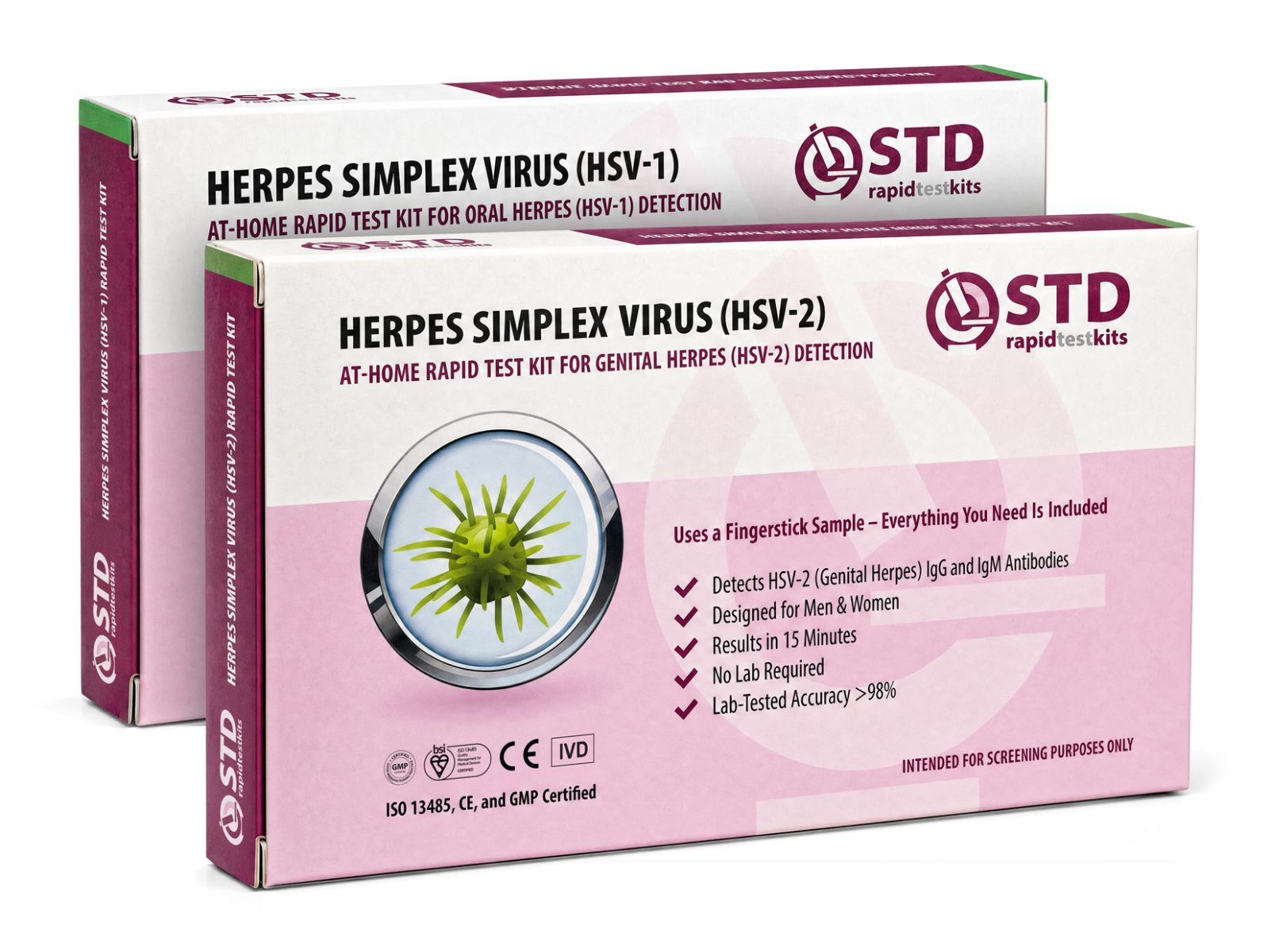
At-home rapid tests are one option. They use the same swab or fingerstick sample types as clinic tests, and they let you confirm your status privately before you have a hard conversation with anyone else. A reactive at-home result should always be followed up with a clinic visit for confirmatory laboratory testing and treatment, because at-home rapid tests are screening tools rather than diagnostic ones. A clean status panel can take the guesswork out of disclosure entirely.
stdrapidtestkits.com publishes this article and sells the at-home rapid tests linked below. Products are recommended based on fit for the reader's concern, not commercial benefit alone.
Dating Again After Diagnosis
It is tempting to think you are back at square one after a hard rejection, swiping with a secret and bracing for the worst. You are not. You are someone who has had a hard, honest conversation about sexual health, which is a category most adults have never even attempted.
People with manageable STIs build long-term relationships every day. Some date partners with the same diagnosis; others disclose upfront in their dating profile, and others wait until things feel emotionally safe. There is no single right pattern, only the one that fits your comfort and the kind of partner you are looking for.
A diagnosis does not change your worth. It does change how you filter for partners who can handle real conversations, which turns out to be useful information. The people who cannot show up for a calm health conversation often cannot show up for the rest of life either, and the ones who stay are usually the ones worth keeping.
- You are not the disease. You are a person with a body, and bodies pick things up. That framing is the truth, and saying it inside your own head before the conversation makes the conversation easier.
- The right partner asks questions. The wrong partner gets defensive or runs. You will know which kind you are dealing with within about three minutes.
- You don't have to do this perfectly. You just have to do it honestly. Stumbled words and a real face read better than a polished script delivered without eye contact.
Frequently asked questions
- Will my partner break up with me if I disclose an STD?
- Possibly, but most don't. Survey data from groups like the American Sexual Health Association consistently shows a majority of adults would date someone with a common STI when the disclosure is calm and informed. If a partner does leave, the breakup says more about how they handle vulnerability than about your worth.
- When is the right time to tell a new partner I have an STD?
- Before any sexual contact that could transmit your infection. Pick a private, sober moment, not in bed and not after drinking. The earlier in the relationship the conversation happens, the lower the chance it lands as a betrayal.
- Do I have to disclose if we are not having sex?
- Generally no for purely social or emotional relationships, though specific infections (like HSV-1 with active oral lesions) can transmit through non-sexual contact such as kissing. The general rule is: if there is any chance of transmission given how you are interacting, disclose. If there is not, you are not obligated.
- How do I tell someone I have herpes specifically?
- Use a script that names what you have, how you manage outbreaks (medication, lifestyle), what protection looks like (condoms, avoiding contact during outbreaks, antiviral suppression therapy), and how transmission risk changes with treatment. Antiviral suppression therapy reduces transmission risk substantially. Be ready for questions and avoid apologetic framing.
- What if I don't know exactly what I have?
- Test before you disclose. A vague "I think I might have something" is harder for a partner to respond to than "I tested positive for X, and here is what we do about it." At-home rapid tests can confirm screening status, with a clinic visit to follow up any reactive result for confirmatory laboratory testing and treatment.
- Can people with STDs have safe, satisfying sex?
- Yes. Most STIs are manageable with treatment, lifestyle adjustments, or both. Herpes, HPV, HIV, hepatitis B, and others have well-established protocols (medication, condoms, communication, regular testing) that allow for active sex lives with minimal transmission risk. The CDC, WHO, and NHS all publish prevention guidance for serodiscordant couples (one partner tests positive, one tests negative).
- Should I get tested again before disclosing?
- If your last test was more than three to six months ago, or if you have had new partners since then, yes. A current test confirms your specific status and gives you accurate information to share. It also protects a new partner from inheriting an old uncertainty.
- Is it ever okay to lie or omit my status?
- No, in any situation involving sexual contact that could transmit. Beyond the ethical issue, knowingly transmitting an STI without disclosure is a criminal offense in many U.S. states and other jurisdictions. The right answer is always honest disclosure paired with protective measures.

- U.S. Centers for Disease Control and Prevention. STI prevention, testing, and partner communication guidance.
- U.S. Centers for Disease Control and Prevention. Let's Stop HIV Together stigma campaign and partner-disclosure resources.
- World Health Organization. Sexually transmitted infections fact sheet, including the figure that more than 1 million curable STIs are acquired daily worldwide and the note that the majority are asymptomatic.
- U.K. National Health Service. Sexually transmitted infections overview, partner notification guidance, and testing recommendations.
- American Sexual Health Association. Patient resources, partner conversation guides, and survey data on disclosure attitudes.