Dental Dam vs Condom vs Saran Wrap: What Actually Protects You?
Compare dental dams, condoms, and plastic wrap for safer oral sex.



- Latex or polyurethane dental dams and condoms are the two FDA-cleared barrier methods recommended by the CDC for oral sex.
- Kitchen plastic wrap tears under friction, slips during use, and is not authorized by the CDC or FDA as an STI barrier.
Published: July 2025 | Last updated: May 2026 | Editorial review and quality control: Martina N.
Here's the question that brings most people to this page: if dental dams aren't easy to find at the corner pharmacy, can you grab plastic wrap from the kitchen, or cut up a condom, and call it good? The short answer is that a dental dam or a cut-open latex condom both work as a barrier during oral sex when used once and discarded. Plastic wrap, despite circulating online for decades as a DIY substitute, isn't authorized for that use by the CDC or FDA, and there's no published clinical evidence that it reliably blocks sexually transmitted infections (STIs). The longer answer covers when each option fits, what you trade off, and what to test for if you've had oral contact without a barrier.
Key Takeaways
- Latex or polyurethane dental dams and condoms are the two FDA-cleared barrier methods recommended by the CDC for oral sex.
- Kitchen plastic wrap tears under friction, slips during use, and is not authorized by the CDC or FDA as an STI barrier.
What a Dental Dam Is, and Who Actually Uses One
A dental dam is a thin sheet of latex (or polyurethane, for people with latex allergies) used as a barrier between the mouth and the vulva or anus during oral sex. Originally designed for dental procedures, the same material works for oral-vulvar (cunnilingus) and oral-anal (anilingus, or rimming) contact because it stops direct skin-to-skin and fluid exchange in the area where most oral-route STIs travel.
Real-world use lags far behind the recommendation. Surveys of women who have sex with women consistently find dental dam use is rare, with most respondents citing three reasons: stores don't stock them, sex education classes never showed them one, and friends never mentioned them. That's an awareness and access gap, not a question of whether the device works. When used correctly and replaced after each act, a dental dam reduces the risk of transmitting infections that spread through oral-genital or oral-anal contact, including herpes simplex virus (HSV-1 and HSV-2), gonorrhea, chlamydia, syphilis, and HPV (CDC overview of sexually transmitted infections).
Dental dams aren't only for queer couples or for cunnilingus. Anyone giving oral sex to a partner with a vulva or anus can use one, regardless of either person's gender identity, and protection works in both directions.
Do I have to buy a real dental dam, or can I use a condom or plastic wrap?
A latex or polyurethane dental dam, or a latex condom cut into a flat sheet, both work as oral-sex barriers when used once and discarded. Kitchen plastic wrap is not authorized by the CDC or FDA for STI prevention and isn't a reliable substitute. If only plastic wrap is available, treat it as marginally better than nothing for fluid contact, but plan to switch to a real barrier and to get tested if there's been a known exposure to an infection that travels through oral routes.
Dental Dam vs Condom vs Plastic Wrap: A Side-by-Side Look
The three barriers people reach for during oral sex aren't equivalent. One was designed and tested for sexual use, one was designed for a different sexual use but adapts cleanly, and one was designed to wrap leftovers. Here is how they compare on the fields that matter for safer oral sex.
| Option | Designed and cleared for sex use? | Reduces STI risk? | Practical trade-offs |
|---|---|---|---|
| Dental dam (latex or polyurethane) | Yes (FDA cleared) | Yes, with correct single-use technique | Rarely stocked at neighborhood pharmacies; flavored variants harder still to find |
| External condom cut into a flat sheet | Yes (as a condom) | Yes, when latex or polyurethane (not lambskin) | Smaller surface area than a dental dam; spermicide-coated condoms can irritate oral tissue |
| Kitchen plastic wrap | No (not authorized for sex) | Not established; no published clinical evidence | Tears under friction, slips during use, has no standardized thickness for biological barrier purposes |
Why Plastic Wrap Isn't a Real Barrier
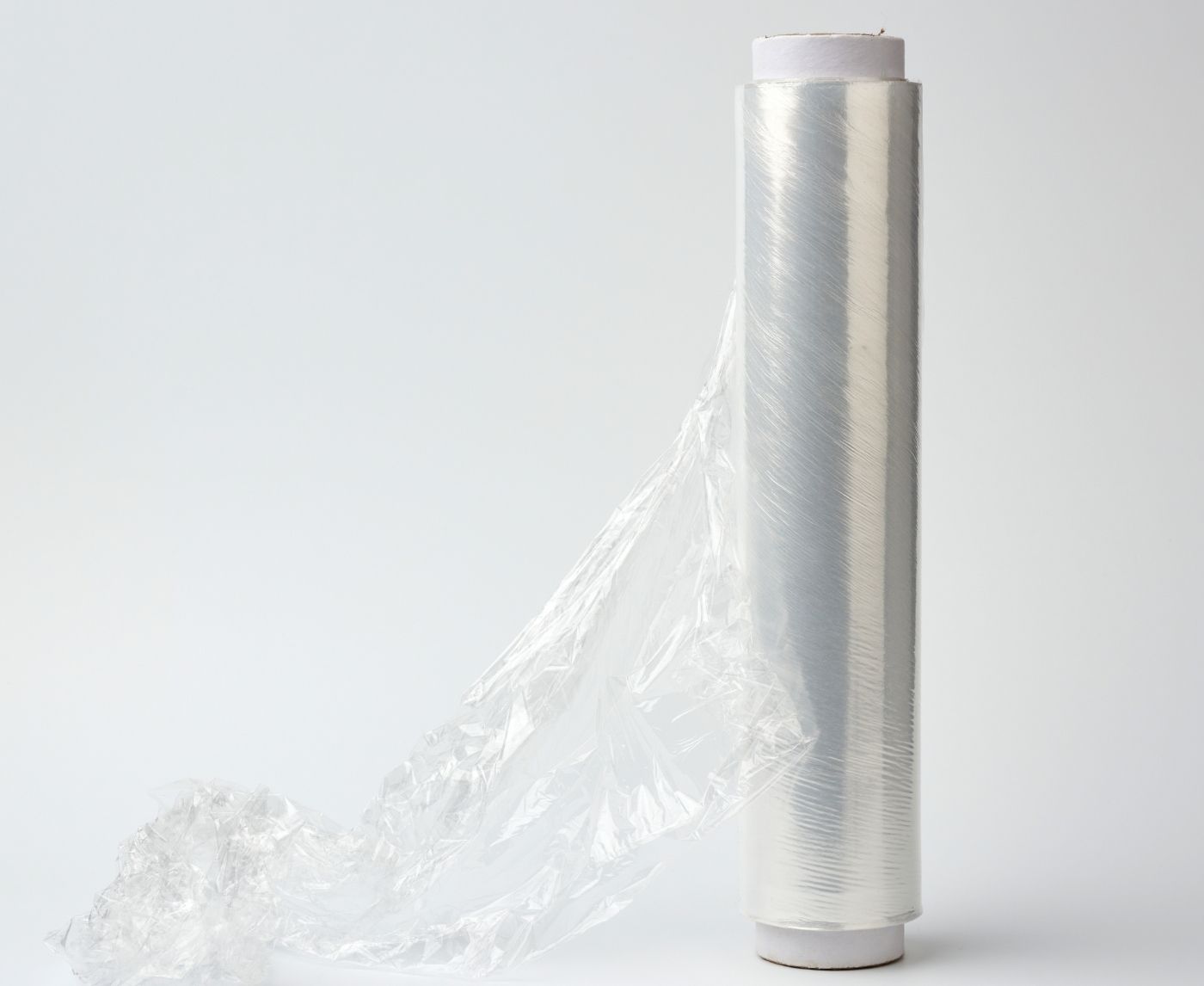
Kitchen plastic wrap (called cling film in the UK) is engineered to cling to bowls and food containers. The product spec is about static cling and food-contact safety. It is not engineered to stay in place under friction or moisture against skin, and no regulator (FDA, CDC, NHS, WHO) lists it among recommended barriers for sexual contact. The mechanical question matters more than the material question here. Even if a sheet of plastic wrap were impermeable to viral particles in lab conditions, it has to stay flat, in place, and intact through the act of oral sex. In practice it doesn't.
The honest framing: kitchen plastic wrap isn't recommended for either pregnancy prevention or STI prevention, and the reasons overlap.
- It slips. There's no anatomical shape, no edges sized for human anatomy, and no cling that holds up against skin oils, lube, and saliva.
- It tears. Plastic wrap is designed to tear easily over a serrated cutter; the same property makes it useless under repeated mechanical pressure.
- No standardized thickness for biological barrier use. Different brands and gauges aren't tested for STI-blocking sensitivity or specificity, because that isn't their use case.
How to Make a Barrier From a Latex Condom
If a real dental dam isn't available and a latex or polyurethane condom is, the condom is the right pivot. This is a longstanding workaround in sex-positive sex education and harm-reduction work, and it's medically sound because the material itself has been tested for sexual contact. Here's the standard method:
- Open a new latex or polyurethane condom (never a previously worn one).
- Use clean scissors to cut off the closed tip.
- Cut off the rolled base ring.
- Slice the resulting tube down one side to open it into a flat rectangle.
- Lay it flat over the vulva or anus during oral contact.
- Discard it after one use, exactly like a regular condom.
Two material caveats. First, do not use lambskin (natural-membrane) condoms for this purpose. Lambskin is porous to viruses including HIV, HSV, and HPV, and is only marketed for pregnancy prevention, not STI prevention. Second, skip condoms with spermicide (typically nonoxynol-9). Spermicide can irritate the delicate mucosa of the mouth and genital tissue and offers no benefit for oral-sex barrier use.
The cut-condom method gives you a smaller barrier surface than a purpose-made dental dam, which is the main practical drawback. Dental dams are typically about 6 by 8 inches; a cut-open condom is closer to 3 by 7. For most oral-vulvar use that's enough, but if you find yourself stretching the sheet to cover the area, that's a sign to add a second one (positioned to overlap, not stretched) or switch to a purpose-made dam.
STIs That Travel Through Oral Sex (Even Without Ejaculation)
The persistent myth about oral sex is that it's low risk for everything serious. The reality is that several common STIs transmit through oral-genital or oral-anal contact even when no fluid is exchanged at the level people imagine, and even when there are no visible symptoms. Here's the short clinical map (CDC STI overview):
- Herpes (HSV-1 and HSV-2). The same virus that causes oral cold sores can transfer to the genitals during oral sex, and genital HSV-2 can transfer to the mouth. Transmission can occur during asymptomatic viral shedding, when there are no visible sores at all (CDC genital herpes information).
- Gonorrhea. Pharyngeal (throat) gonorrhea is often asymptomatic and frequently missed because most people don't request a throat swab during routine STI testing. It can transmit to a partner's genitals or anus through oral contact and is harder to clear with antibiotics than urogenital gonorrhea.
- Chlamydia. Less common in the throat than gonorrhea, but possible. Pharyngeal chlamydia is also typically asymptomatic.
- Syphilis. Primary syphilis presents as a chancre (a single, painless, firm-bordered ulcer) that can appear on the genitals, anus, mouth, throat, or lips. Direct contact with a chancre during oral sex transmits the bacterium, and chancres in the mouth are often missed during a casual visual check.
- HPV (Human Papillomavirus). HPV transmits through skin-to-skin contact, including oral-genital contact. Some HPV strains cause oropharyngeal cancer; HPV is now the leading cause of throat cancers in many high-income countries (CDC HPV information). Barriers reduce risk but don't eliminate it because HPV can live on skin not covered by the barrier.
- Hepatitis A and B. Hepatitis A can transmit through oral-anal contact (rimming) via fecal-oral exposure. Hepatitis B transmits through bodily fluids and is possible through oral sex, particularly with bleeding gums or open sores.
HIV transmission through oral sex is rare but not zero. Risk increases when the receiving partner has cuts, sores, or recent dental work in the mouth and the giving partner's fluids carry HIV. The CDC describes oral-sex HIV risk as low compared to anal or vaginal sex, but advises barriers when either partner's status is unknown.
Pharyngeal gonorrhea is typically asymptomatic and is rarely included in routine STI testing unless specifically requested. Diagnosis requires a clinic throat swab. At-home rapid panels do not cover this site, so anyone with a recent oral exposure who wants throat-site testing should request a pharyngeal swab from a clinic or sexual-health service.
If You've Already Had Unprotected Oral Sex
The right move is testing, not panic. Most STIs that travel through oral routes have well-defined window periods (the time between exposure and a reliable positive test). Chlamydia and gonorrhea show up on nucleic acid tests within roughly 1 to 2 weeks. Syphilis blood tests reliably detect infection by 3 to 6 weeks. HIV antibody/antigen rapid tests are reliable by about 23 to 90 days depending on the test generation; lab fourth-generation antigen-antibody tests detect HIV earlier. Herpes antibody tests detect seroconversion in most people by 12 weeks after exposure, with some assays recommending up to 16 weeks to rule out late seroconversion.
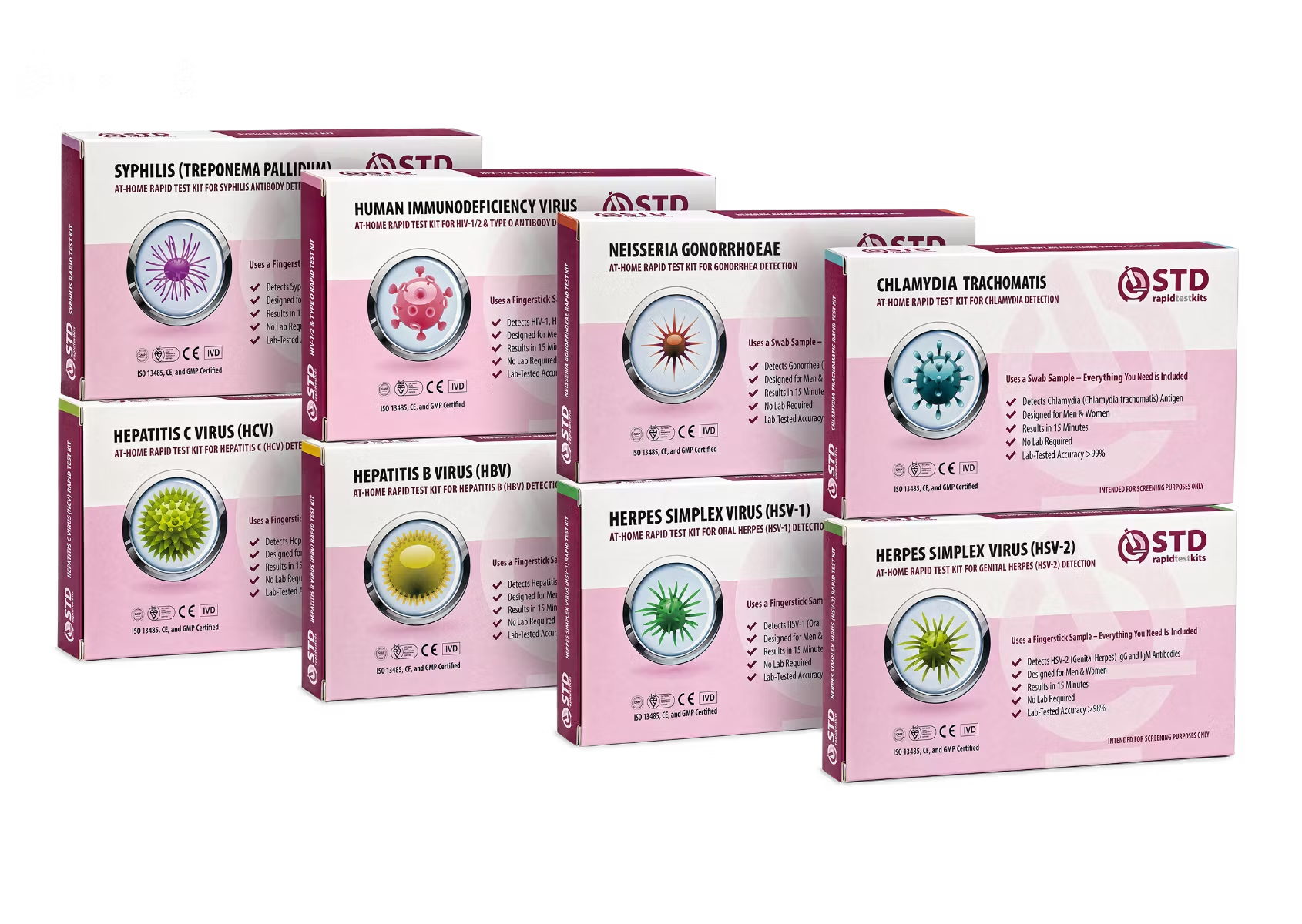
The kits sold here screen genital and bloodborne markers at home using lateral-flow chemistry. They do not include a pharyngeal (throat) swab, which is what a clinic uses to diagnose throat gonorrhea or chlamydia. If your concern is specifically a throat infection from oral sex, see a clinic and request a pharyngeal swab. For the genital, anal, and bloodborne markers from the same exposure event, a multi-marker home panel covers most of the territory.
Epidemiologic studies show that consistent use of condoms is highly effective in preventing the spread of HIV.
How to Use a Dental Dam Without Killing the Mood
One of the bigger barriers to using barriers (no pun intended) isn't logistics. It's awkwardness. People worry the moment of producing a dental dam will feel clinical or that it will signal distrust. None of that has to be true. The framing matters more than the device.
A few ways to keep it smooth:
- Prep ahead. Keep dental dams or pre-cut condoms in your bedside drawer alongside lube, so you're not scrambling at the moment.
- Add water-based lube. A thin layer on the side facing the genitals improves sensation for the receiving partner. Skip oil-based lubes with latex; they degrade the material.
- Hold it in place gently. A dental dam doesn't stick to skin on its own. The giving partner's hands hold it flat. The receiving partner can also help hold the edges.
- Talk about it like a feature, not a chore. Something like, "I picked these up so we can do this without worrying about it" reframes the dam as care rather than caution.
There is nothing about a partner taking sexual health seriously that is unsexy.
Keep a small supply of dental dams or pre-cut condoms in your bedside drawer alongside lube. Having it ready before the moment removes the only awkward part.
What to Look for When You Buy
If you're ready to keep a small supply on hand, the shopping criteria are straightforward:
- Material. Latex is the standard. Choose polyurethane if you or a partner has a latex allergy. Both are FDA-cleared as barriers.
- Size. Most purpose-made dental dams are around 6 by 8 inches, which is enough surface area for vulvar or anal coverage. If you find yourself stretching to fit, switch to a larger size or use two overlapping sheets.
- Flavor. Many brands sell flavored dams (mint, vanilla, fruit). The flavor doesn't change the barrier function; it only makes oral contact more pleasant for the giving partner.
- Storage. Keep dental dams in a cool, dry place, away from sharp objects and direct heat. Latex degrades with heat and time.
- Check the expiration date. Like condoms, dental dams have a shelf life. Expired latex is more prone to tearing.
If local pharmacies don't carry dental dams (many don't), online sellers ship them in plain packaging. Don't let store availability be the deciding factor; an order of 10 to 20 dams costs less than a single STI clinic visit and lasts months.
When the DIY Route Makes Sense, and When It Doesn't
Resourcefulness isn't a failing. Plenty of people, especially queer folks, teens, and people in rural areas, make do with what they have. But there is a hierarchy of safety inside DIY, and treating that hierarchy honestly is part of harm reduction.
- Reasonable DIY: Cut-open latex or polyurethane condoms, used with water-based lube, replaced after each use.
- Not reasonable DIY: Plastic wrap from the kitchen, plastic sandwich bags, lambskin condoms, or balloons.
If your only choice on a given night is between nothing and plastic wrap, plastic wrap may reduce some fluid transfer in the moment, but it isn't a reliable barrier against the skin-to-skin STIs the article above lists (especially HSV and HPV, which travel on skin contact independent of fluid). The right move after that kind of exposure is to plan a real barrier for next time and to test for the relevant infections after the appropriate window period passes.
The Bottom Line
Dental dams and condoms are barriers that have been tested for sexual use. Plastic wrap is a barrier that has been tested for wrapping food. The first two reduce STI risk during oral sex when used correctly and replaced each time; the third doesn't have evidence behind it as a sexual barrier and isn't recommended by any public health authority. If a real dental dam isn't on hand, a cut-open latex or polyurethane condom is the medically sound substitute. If neither is available and exposure has already happened, test at the right window period for the infections that travel through oral routes.
If you take one thing from this article
- Order dental dams online before you need them; pharmacies rarely stock them.
- If a dental dam isn't on hand, cut open a latex or polyurethane condom (not lambskin, no spermicide).
- If you've already had unprotected oral contact, test at the appropriate window period for the relevant infections.
Frequently Asked Questions
- Can I use plastic wrap as a dental dam?
- It isn't recommended. Kitchen plastic wrap isn't FDA-authorized for sexual use, has no published clinical data on STI blocking, and tears or slips under friction. Use a purpose-made dental dam or a cut-open latex condom instead.
- Do dental dams actually prevent STIs?
- Yes, when used correctly and replaced after each act. Latex or polyurethane dental dams reduce direct skin-to-skin and fluid contact, which is the main route for herpes, gonorrhea, chlamydia, syphilis, and HPV during oral sex.
- How do I turn a condom into a dental dam?
- Open a new latex or polyurethane condom, cut off the closed tip and the rolled base ring with clean scissors, then cut down one side to open it into a flat rectangle. Use it once and discard it. Don't use lambskin condoms (porous to viruses) or condoms with spermicide (irritating to oral tissue).
- Can you catch an STI from oral sex without ejaculation?
- Yes. Herpes, gonorrhea, chlamydia, syphilis, HPV, and hepatitis can all transmit through oral-genital or oral-anal contact without ejaculation or visible fluid. Several of them transmit through skin-to-skin contact even when no symptoms are visible.
- What is the safest barrier for oral sex?
- A purpose-made dental dam (latex or polyurethane), used once and replaced for each act. A cut-open latex or polyurethane condom is a close second when a dental dam isn't available.
- Why don't more people use dental dams?
- Three reasons consistently come up in surveys: pharmacies often don't stock them, sex-education classes rarely demonstrate them, and friends rarely talk about them. The result is an awareness and access gap, not a clinical failing of the device.
- Do I need a dental dam for rimming?
- Yes. Rimming (oral-anal contact) can transmit herpes, hepatitis A, syphilis, and intestinal pathogens. A dental dam is the recommended barrier for that contact specifically.
- Can a dental dam be reused?
- No. Like condoms, dental dams are single-use. Reusing one increases the risk of tearing and of cross-contaminating the other side. Discard after each act and use a fresh one for the next.
- U.S. Centers for Disease Control and Prevention. Condom Use overview, including effectiveness of latex condoms for preventing sexually transmitted infections when used consistently and correctly.
- World Health Organization. Condoms fact sheet, global guidance on barrier methods for STI and HIV prevention.
- U.S. Centers for Disease Control and Prevention. Sexually transmitted infections overview, transmission and prevention background for the infections covered in this article.
- U.S. Centers for Disease Control and Prevention. Genital Herpes information, including HSV-1 and HSV-2 transmission via oral-genital contact and asymptomatic shedding.
- U.S. Centers for Disease Control and Prevention. HPV information, including transmission through skin-to-skin contact and association with oropharyngeal cancer.
- U.K. National Health Service. Sexually transmitted infections (STIs) patient-facing summary of symptoms, transmission, and testing pathways.