
Published: July 2025 | Last updated: May 2026 | Editorial review and quality control: Martina N.
For many people in religious communities, sexual health is one of the hardest topics to bring up. Faith gives shape, meaning, and belonging, but it can also create silences that make people afraid to ask basic questions about their bodies. When those silences harden around sexually transmitted infections, the consequences fall on the individuals who feel they have nowhere safe to turn.
This piece is for the believer carrying a question for weeks and not sure who to ask. For the parent who wants to talk honestly with a teenager. For the pastor, imam, rabbi, or small-group leader who senses someone in the community is hurting and isn't sure how to open the door. Compassion and clinical accuracy belong together. Naming a health concern out loud is not a confession of moral failure. In nearly every faith tradition, attending to the body is an act of stewardship.
Key Takeaways
- STI testing is a health decision, not a moral verdict. Most major faith traditions name caring for the body as a duty, not a taboo.
- For people not yet ready for a clinic visit, private at-home rapid tests offer a discreet bridge to a status check, especially where community visibility feels risky.
Why Faith Communities Often Stay Silent
Stigma rarely arrives in one piece. It builds over years of unspoken assumptions, gendered expectations, and curricula that skip past the practical questions people actually have. A few patterns show up repeatedly across denominations and traditions:
- Sex gets taught as risk, not as health. When the only frame for sexuality is moral danger, the everyday vocabulary for routine medical conversation never develops. People learn the word "purity" before they learn "incubation period."
- Education stops at abstinence. Abstinence-centered teaching has a legitimate place in many traditions, yet when it crowds out information about transmission, testing windows, and treatment, congregants are left unprepared for adult life, whether they wait until marriage or not.
- Gender double standards run deep. Women, queer congregants, and survivors of sexual assault often carry a disproportionate share of the shame. The same diagnosis that gets handled quietly for one person can become a public scandal for another.
- Confidentiality is genuinely fragile. In a community where a pharmacy run can be noticed and a clinic visit talked about, the fear of being identified can outweigh the fear of the illness itself.
Public-health researchers have documented for years that stigma correlates with delayed testing and worse outcomes. The CDC notes that most bacterial STIs, and many viral ones, cause few or no early symptoms, which is why routine screening, rather than symptom-watching, is the only reliable safeguard.
The medical treatment for most bacterial STIs is straightforward and inexpensive. The harder problem in a faith-based setting is building a space where asking the question feels safe. Most of the harm stigma does is not theological. It is the weeks or months of delay between a worry and a test.
The Cost of Silence
The American numbers are sobering. According to CDC surveillance summaries, the United States records millions of new bacterial STI cases each year across chlamydia, gonorrhea, and syphilis combined, and CDC analyses estimate that roughly 1 in 5 Americans carries an STI at any given time. Globally, the World Health Organization estimates that more than 1 million STIs are acquired every day, the majority of which cause no symptoms at all.
What turns a manageable infection into long-term harm is almost always delay. Chlamydia caught early is treated with a short course of antibiotics. Chlamydia left untreated can scar the fallopian tubes and cause infertility. Syphilis, nearly eliminated in the United States a generation ago, has surged in recent years and can progress through stages that affect the heart, brain, and unborn children if missed. HIV, when caught early and treated with modern antiretroviral therapy, becomes a chronic and well-managed condition with a near-normal life expectancy and a viral load that becomes undetectable and untransmittable.
Late-stage syphilis can damage the cardiovascular and central nervous systems years after the initial infection, complications that a single course of penicillin given in the primary stage prevents entirely.
Untreated chlamydia can progress to pelvic inflammatory disease and tubal scarring that causes infertility in women. Untreated syphilis advances through latent stages and can affect the heart, brain, and developing fetus years after the initial infection. HIV diagnosed early and treated with antiretroviral therapy reaches an undetectable viral load that is not transmissible. In every one of these cases, the difference between a manageable problem and a permanent one is the timing of the first test.
Faith and Health Are Not Opposites
A common worry from religious readers: "If I talk about testing, am I conceding something about my values?" The honest answer is no.
Stewardship of the body shows up in nearly every major tradition. In Christian scripture, the body is described as a temple deserving care. In Islam, the principle of hifz al-nafs, the preservation of life, is foundational to medical ethics and is regularly cited by Muslim scholars in support of preventive healthcare. In Jewish tradition, pikuach nefesh, the obligation to save a life, overrides nearly every other religious requirement. Hindu and Buddhist frameworks emphasize the body as the vessel of practice and the responsibility not to neglect it. Across these traditions, the answer to a possible health threat is investigation, not avoidance.
Three reframes can help when stigma is the heavier weight than the test itself:
- Integrity over secrecy. Knowing your status is an act of honesty with yourself, your spouse, and any future partner. Honesty is a named virtue in most religious frameworks.
- Stewardship over taboo. On most religious accounts, the body is a gift. Tending to it is not an indulgence.
- Compassion over fear. A diagnosis is information, not a verdict. It opens a door to treatment.
Under pikuach nefesh, for example, observant Jews are obligated to seek preventive medical care, and the obligation can override otherwise-binding ritual restrictions when life or future health is at stake. Parallel principles run through Islamic, Christian, and Hindu medical-ethics literatures, which treat early diagnosis of a treatable condition as an act consistent with, not contrary to, religious practice.

Practical Ways to Open the Conversation
Most people who want to talk about STIs in a faith setting don't need a sermon or a script. They need a few low-stakes openings that signal "this is a safe topic to discuss with me."
For friends or peers:
- "I read something recently that surprised me about how common STIs are. Have you ever come across that?"
- "If you ever needed a confidential way to get tested, would you know where to start? I do, if that is ever useful."
- "I'm not asking because I'm worried about you. I'm asking because nobody asks me, and I wish they did."
For parents talking with adult or teenage children:
- "I want to be the person you can ask anything, even the things our community doesn't usually talk about."
- "I won't react. I will help. That is a promise."
- "Health is a separate question from morality. I don't want you to confuse the two."
For partners in marriage:
- "I want us both to know our baseline. Knowing where we stand is part of how we take care of each other."
- "Can we get tested together? It would mean something to me to do it as a couple."
For someone you suspect is suffering in silence:
- "If you ever wanted to talk, I won't tell anyone, and I won't judge. That is my standing offer."
- "I don't need the details. I just want you to know I am here."
The pattern across these openings is the same: name the topic gently, drain the moral charge from it, and leave the door open. You do not have to be the one with answers. You only have to be the one who refuses to make silence the price of belonging.
End by offering a concrete next step rather than another general nudge. A link to a confidential clinic, a phone number for the local sexual-health service, or the name of an at-home testing option turns a supportive conversation into something a person can act on the same evening.
How do you talk about STDs in a faith-based community without making it worse?
Lead with stewardship instead of morality. Most faith traditions name caring for the body as an obligation, not a taboo. Open with a neutral question like "have you heard about at-home STI testing?", keep confidentiality airtight, and separate the medical conversation from the spiritual one. For people who aren't ready for a clinic visit, discreet at-home rapid tests provide a private bridge to a status check, with results in about 15 minutes for screening purposes.
Privacy as a Pathway to Care
For some people in tight-knit faith communities, the obstacle isn't theology. It's geography. Their primary care doctor goes to their congregation. The local clinic sits two blocks from their grandmother's house. The pharmacist is married to a deacon. In those settings, "go get tested" is not neutral advice.
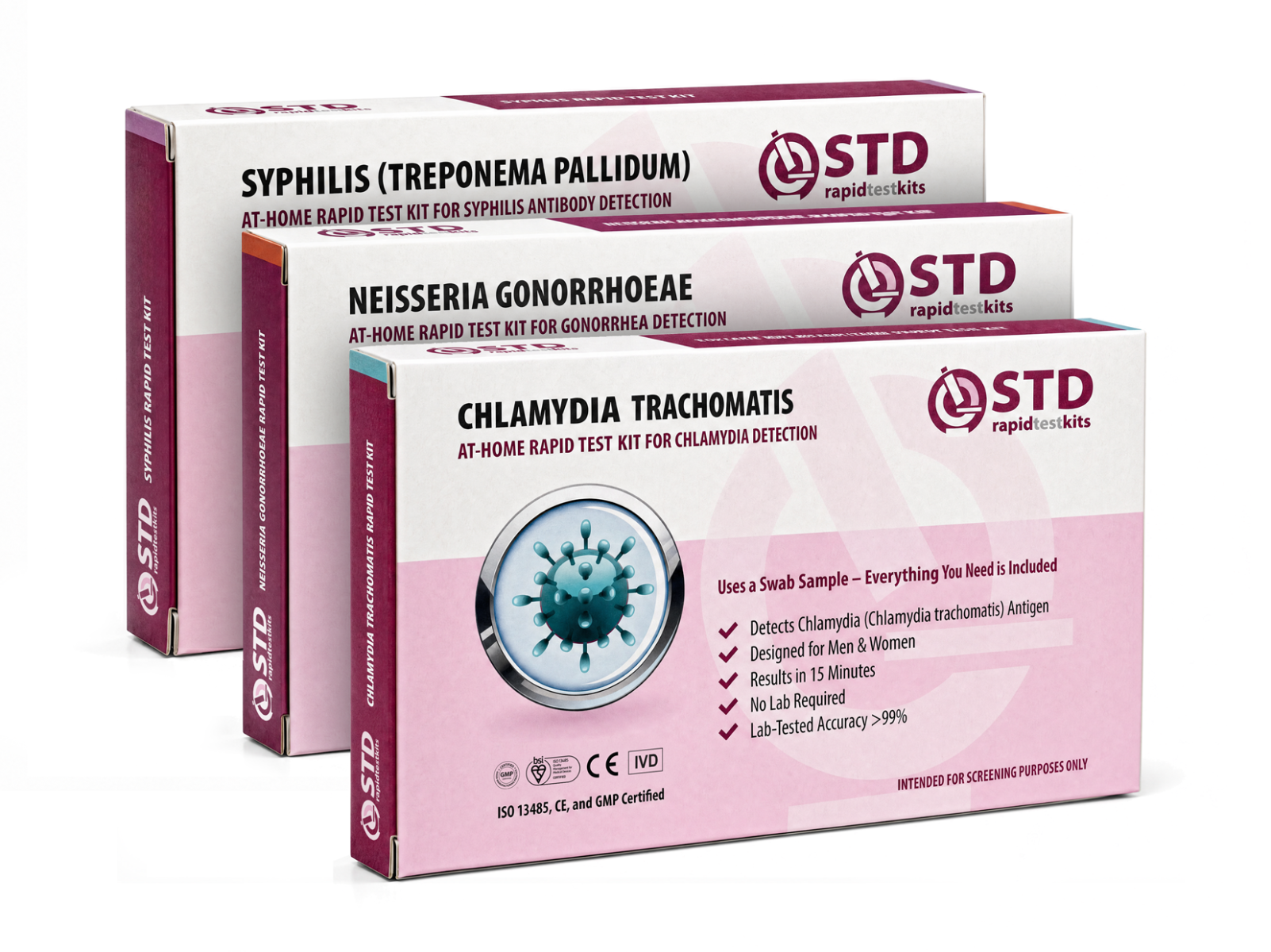
Discreet at-home testing was built for exactly this situation. A sealed package arrives in plain shipping mail. The kit contains a self-collected swab or a finger-stick lancet, depending on the infection being tested for. Rapid lateral-flow kits give a result in about fifteen minutes. There is no clinic waiting room, no insurance record routed to a parent's plan, no chance of being seen by someone who recognizes you.
What at-home rapid tests are useful for:
- Screening when symptoms are absent. Most bacterial STIs and HIV can be silent for weeks or months. Rapid antibody and antigen-antibody tests are designed for this screening role.
- A first-look check after a possible exposure. Important caveat: every test has a window period during which it cannot reliably detect a new infection. HIV antibody home tests reach their most reliable detection window around 12 weeks post-exposure (laboratory antigen/antibody tests can detect earlier, around 18 to 45 days for venous draws). Syphilis antibody tests are most reliable at 6 to 12 weeks. Chlamydia and gonorrhea swabs at 1 to 2 weeks. A negative result on day 3 is not the same as a clean bill of health.
- Routine periodic screening for sexually active adults. The CDC recommends annual chlamydia and gonorrhea screening for sexually active women under 25 and for adults with new partners, plus at least annual HIV screening for anyone in higher-risk groups.
What at-home rapid tests are not:
- A replacement for clinic care when symptoms are present.
- A NAAT or PCR test. Home rapid kits use lateral-flow immunoassay chemistry, which is excellent for screening at home but less analytically sensitive than the lab NAAT tests used to confirm a positive result. The two are complementary, not equivalent.
- A substitute for clinical follow-up when a positive result needs treatment. A positive rapid result should be confirmed and treated by a clinician.
A note on what we sell: this site offers at-home rapid STI tests, and the kit below is one private option for readers who want to take a first step without a clinic visit.
For Faith Leaders Working in Sermons, Counseling, and Youth Groups
Faith leaders carry a quieter authority than most public-health professionals on this topic. When a respected leader says "your health matters and asking is allowed," the message travels through a community in a way no billboard can.
A few practical moves leaders can make:
- Mention health screening inside routine teaching. A brief inclusion within a sermon about stewardship, the body, or honesty in relationships lands far better than staging a standalone "sex talk," which tends to raise everyone's defenses. Normalization happens through repetition.
- Train small-group leaders in non-judgmental response. The first reaction a person hears when they disclose a health concern can determine whether they ever ask for help again. A short workshop on listening without flinching is worth more than a glossy pamphlet.
- Stock a discreet resource list. A single-page handout, available without anyone having to ask, listing local clinics, sliding-scale options, and confidential at-home testing resources. Place it in the same rack as everything else.
- Avoid making testing only a youth conversation. Adults in long marriages, widows and widowers re-entering dating, and older congregants navigating divorce are often the most underserved.
- Separate spiritual care from the medical referral. A leader can offer prayer, confession, or pastoral counseling alongside the simple sentence, "and please also get tested by a clinician this week."
Faith leaders who already use this approach tend to find that congregants disclose health concerns earlier, when most STIs are still a short antibiotic course rather than a years-long management problem or a referral to a fertility specialist.
STDs are very common. Millions of new infections occur every year in the United States. STDs do not always cause symptoms, so the only way to know for sure if you have one is to get tested.
What to Say to a Loved One Who's Afraid
If someone in your life is carrying a diagnosis quietly, your words matter more than your information. Responses that tend to land:
- "Thank you for telling me. That took courage."
- "Nothing about this changes what I think of you."
- "What do you need from me right now: practical help, listening, or space?"
- "I'd like to learn about this so I can be useful. Where can I read?"
- "You are not your diagnosis."
Responses to avoid, even when they come from a good place:
- "How did this happen?" Reads as interrogation.
- "I forgive you." You may not be the one whose forgiveness is being sought, and the framing implies guilt where there may be none.
- "We need to pray about this." Spiritual care is welcome, but only after listening, not instead of it.
- "Does anyone else know?" Confidentiality cuts both ways. Let the person tell their own story on their own timeline.
If the person is asking about testing, the most useful response is a specific next step rather than a general "you should get checked." A link to a discreet at-home kit, the phone number of a confidential clinic, or an offer to drive them yourself is more actionable than a vague nudge.

When Marriage Doesn't Mean Safety
One case that comes up often in faith counseling: a person believed themselves and their partner to be monogamous, and a diagnosis lands. The shock is rarely about the infection itself. It is about the breach of trust the infection implies.
A few things to hold steady on:
- The infection is treatable or manageable in the vast majority of cases. The medicine is the easier part of what comes next.
- Testing the partner is a baseline, not an accusation. Both members of a couple deserve clarity about what they are managing.
- Confidential testing is available for the partner too. They do not have to walk into the same clinic, or any clinic at all if at-home testing is acceptable.
- The relationship question is separate from the health question. The two are tangled in the moment, yet they are not the same. Trying to settle the marriage in the same conversation as the diagnosis is usually a mistake. Make the medical decisions first, then take the longer conversation with a counselor or pastor.
For couples whose tradition prizes forgiveness and restoration, this is a moment where the theology has more to offer than people sometimes expect. For couples without that scaffolding, secular counseling is widely available and effective.
An at-home multi-infection kit can be a quieter starting point than a clinic appointment for both partners, especially when one person is reluctant to be seen seeking care.
Building Cultures of Care
Imagine a religious community where youth groups offer accurate sexual-health information alongside spiritual counsel. Where pastors mention HIV testing in the same breath as the annual physical. Where a person carrying a diagnosis can find both prayer and a clinic referral, in the same hour, from the same people.
That world starts with a few small, repeated acts: normalizing conversation, stocking discreet resources, training leaders to listen without flinching, and refusing to make silence the price of belonging. None of these moves require anyone to abandon their tradition. They ask only that the tradition be allowed to do what it claims to do, which is to make space for the whole human being, body included.
If you are reading this and you are the one carrying the question, you do not have to enter a clinic to take the first step. A private test ordered to a discreet address can be the bridge from worry to clarity. The simplest act, finding out, is often the bravest one.
- Normalize health-screening language inside an existing sermon or study about stewardship of the body, rather than staging a separate sexual-health event.
- Train two or three small-group leaders in non-judgmental disclosure response so that the first reaction a congregant hears is not a flinch.
- Place a single-page resource handout listing confidential local testing and at-home options in the same rack as other materials, available without anyone having to ask.
- Separate spiritual care from medical referral. Offer both when someone discloses, in that order, and let the clinical step happen on its own clock.
Frequently Asked Questions
- Is it against my religion to get tested for STDs?
- Most major faith traditions teach that caring for the body is an obligation, not a taboo. The Christian framing of the body as a temple, the Islamic principle of hifz al-nafs (preservation of life), and the Jewish principle of pikuach nefesh (saving a life) all support seeking medical care. Getting tested is consistent with these traditions.
- Are at-home STD tests reliable enough to trust?
- Home lateral-flow rapid tests vary by manufacturer and by infection. Check each product's insert or product page for its specific published sensitivity and specificity figures, and use the test only after the relevant window period has passed. These tests are designed for screening at home and are not a replacement for laboratory NAAT testing, which is the gold standard for confirmation. A positive home result should always be confirmed by a clinician before treatment.
- What is the most private way to get tested for STIs?
- At-home rapid test kits offer the most privacy: plain packaging, no insurance record, no clinic visit. You collect the sample yourself, run the test at home, and read the result in about 15 minutes. Many sexual-health clinics also offer anonymous testing, where no identifying information is recorded against your name.
- Can I get an STI if I'm married and faithful?
- Yes. STIs can be acquired before a marriage and remain dormant for years, can be transmitted by a partner who has not disclosed everything, or in rare cases by non-sexual routes. A baseline test for both partners is a sensible early step in any marriage, and it is not an accusation.
- How do I talk to my conservative parents about getting tested?
- Frame it as a stewardship question, not a confession. "I want to take care of my health on a regular schedule" lands differently than "I have something to tell you." If even that conversation feels too exposed, a discreet at-home kit lets you take the step without your parents needing to know unless you choose to tell them.
- Do STIs always cause symptoms?
- No. Most chlamydia, gonorrhea, and HIV infections cause few or no symptoms in their early stages. HPV often clears silently but can persist and cause cancer years later. This is why routine screening, rather than symptom-watching, is the recommended approach for sexually active adults per CDC guidance.
- Can I test for several infections at once?
- Yes. Combination at-home kits cover multiple infections in a single order, typically using a swab for chlamydia and gonorrhea (plus trichomoniasis and HPV in women-only kits), and a finger-stick blood sample for HIV, syphilis, herpes, hepatitis B, and hepatitis C. The 6-, 7-, 8-, and 10-in-1 combinations are designed for people who want a broad screen in one go.
- What if my partner refuses to get tested?
- You can still test yourself and share the result. Seeing one partner's transparency sometimes lowers the threshold for the other to follow. If refusal persists despite a clear and patient conversation, that is itself information worth taking seriously, and it is a topic worth raising with a trusted counselor or leader who can help.
- U.S. Centers for Disease Control and Prevention. Sexually Transmitted Infections landing page covering U.S. prevalence overview and screening framing.
- U.S. Centers for Disease Control and Prevention. STI Treatment Guidelines: screening recommendations, including annual chlamydia and gonorrhea screening for sexually active women under 25.
- U.S. Centers for Disease Control and Prevention. HIV Testing page, including window periods for antibody and antigen/antibody tests and guidance for self-testing.
- World Health Organization. Sexually transmitted infections fact sheet, including the 1 million new STIs acquired daily worldwide figure and asymptomatic infection statistics.
- U.S. Centers for Disease Control and Prevention. Chlamydia fact sheet covering asymptomatic infection rates and complications including pelvic inflammatory disease and infertility when untreated.
- NHS (United Kingdom). Sexually transmitted infections overview, including symptom-absence patterns and the case for routine screening.
