No STD Clinic Nearby? At-Home Testing and Telehealth Options
When the nearest sexual health clinic is an hour's drive or a state away, you still have practical ways to screen, confirm, and treat. This guide walks through three home-based options, what each one is good for, and when you genuinely need to find a clinic.




- Three home-based testing routes exist today: rapid lateral-flow kits, mail-in lab kits using NAAT, and telehealth with mail-order treatment. The right pick depends on whether you have symptoms and how recently you were exposed.
- Distance and stigma both delay STI care in rural areas. Home testing closes most of the distance and privacy problems; for positive results, confirmation by a CLIA-certified lab is still the standard.
Published: July 2025 | Last updated: May 2026 | Editorial review and quality control: Martina N.
The closest sexual health clinic to your zip code might be 50 miles away. It might only open Tuesday and Thursday mornings. The lobby might be visible from the parking lot of the only diner in town. If any of that sounds familiar, you are not unusual. The federal Health Resources and Services Administration designates large parts of rural America as medically underserved areas, and sexual health services are usually the first to thin out when a county clinic loses funding.
This guide covers what you can actually do when going to a clinic is not realistic. It explains what at-home rapid kits can and cannot tell you, when a mail-in NAAT lab makes more sense, and how telehealth fills the gap between a positive result and treatment. None of this replaces a clinician for every situation. For routine screening, for many positive cases that need fast follow-up, and for the privacy some readers need, the home options have improved enough to take seriously.
Key Takeaways
- Three home-based testing routes exist today: rapid lateral-flow kits, mail-in lab kits using NAAT, and telehealth with mail-order treatment. The right pick depends on whether you have symptoms and how recently you were exposed.
- Distance and stigma both delay STI care in rural areas. Home testing closes most of the distance and privacy problems; for positive results, confirmation by a CLIA-certified lab is still the standard.
Why So Many Counties Have No STI Clinic
Rural counties have been losing health services for two decades. Hospitals close. Title X family planning funding fluctuates. A single clinician retiring can shut down sexual health screening for an entire county. According to the HHS Office of Population Affairs, Title X-supported clinics provide most low-cost sexual health screening in the United States, and clinic density has dropped in many non-metro counties since 2017.
The reasons stack on top of each other:
- Distance. Even a 30-mile trip means time off work, gas money, and a working vehicle. For shift workers, that is often a full unpaid day.
- Hours. Many rural clinics open only on daytime weekdays, when most adults are at work.
- Privacy. In a town where the receptionist is your cousin's friend, walking in for STI testing is itself a disclosure. People delay rather than risk it.
- Provider comfort. Sexual health requires specific training, including how to ask the right questions without judgment. In areas with few clinicians, those conversations sometimes do not happen.
- Confidentiality fears for minors. Every state allows minors to consent to STI testing, but local administrative habits do not always match the law, and teens may not know their rights.
The result is predictable. CDC surveillance data shows steep increases in chlamydia, gonorrhea, and syphilis across the rural South, parts of the Midwest, and Appalachia. Congenital syphilis cases (passed from a pregnant patient to a newborn) have climbed sharply in non-metro counties where prenatal screening and timely penicillin treatment are hardest to reach.

Three Honest Ways to Test Without a Clinic Visit
Home-based testing is not one product. It is three different categories, and they answer different questions. Pick the one that matches your situation.
1. Rapid lateral-flow home kits
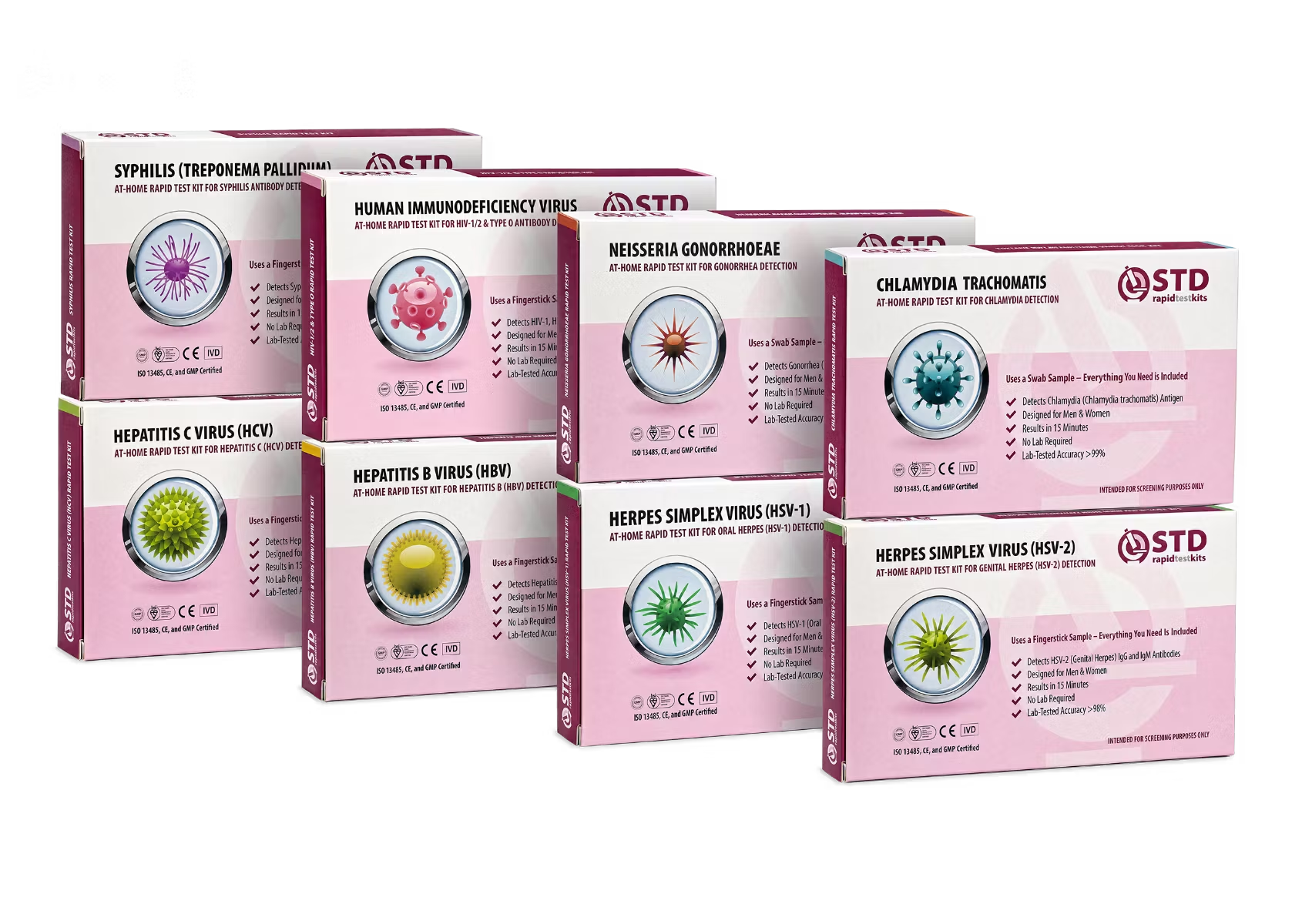
These are the kits you use on your own table. A swab or fingerstick blood drop, a buffer, a strip that develops a line in 10 to 15 minutes. They use the same lateral-flow chemistry that powers many rapid clinic-based tests, including the FDA-cleared at-home HIV antibody test that has been available since 2012 and the swab-based rapid tests for chlamydia, gonorrhea, and other infections sold direct to consumers.
What they are good for: a fast first answer, especially if you have a specific worry from a known exposure, you are past the window period, and you want privacy. They cost less than most clinic visits, ship in plain packaging, and never go through your insurance.
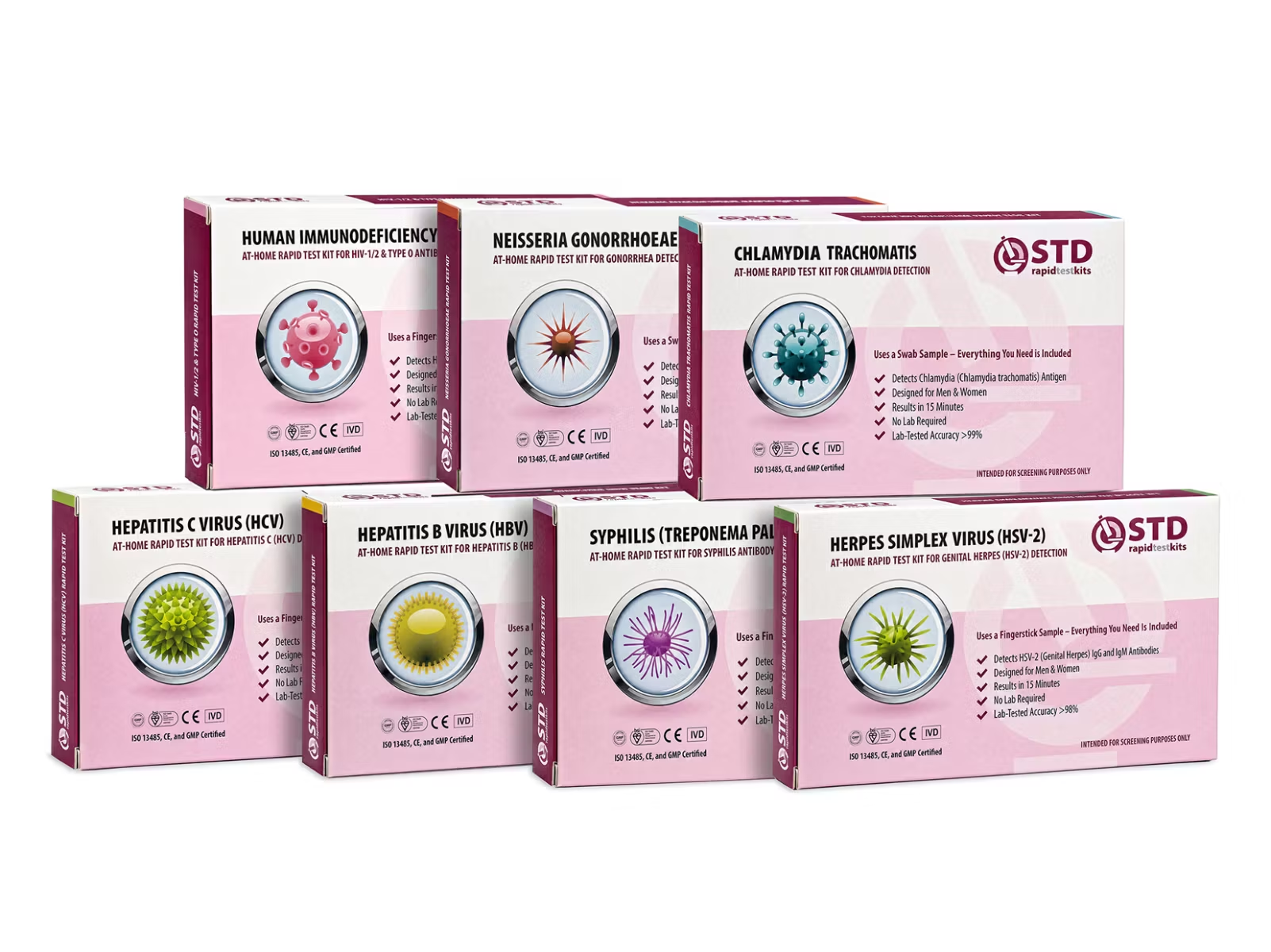
What to be clear-eyed about: rapid lateral-flow chemistry is less analytically sensitive than the NAAT (nucleic acid amplification testing) labs use as the gold standard. A negative rapid test in an asymptomatic person past the window is reassuring. A positive rapid test should be confirmed with a lab NAAT before treatment in most cases. The two technologies are complementary, not equivalent. We sell rapid kits at stdrapidtestkits.com, and we are upfront about this: rapid kits screen, labs confirm.
2. Mail-in lab kits
You collect your sample at home (swab, fingerstick, sometimes urine) and ship it to a CLIA-certified lab in a prepaid envelope. Results come back through a secure portal in three to five days. The technology is the same NAAT or chemiluminescent immunoassay your clinician would order. The American Sexual Health Association maintains a free at-home testing locator covering federally funded mail-in programs in many states.
Best for: when you want lab-grade results without a clinic visit, or when you are asymptomatic and doing routine annual screening. Slower than a rapid kit, more sensitive.
3. Telehealth plus mail-order treatment
For many confirmed infections, you can book a video visit with a licensed provider in your state, and that provider can send a prescription to a mail-order pharmacy. A rural patient with confirmed chlamydia or trichomoniasis can finish the entire cycle (test, diagnosis, prescription, pill bottle delivered) without ever sitting in a waiting room. Telehealth providers can also order standard mail-in lab panels in their own name, which sometimes opens up insurance coverage that direct-to-consumer kits do not.
Best for: filling the gap between a positive home test result and an in-person clinic when no clinic is reachable.
stdrapidtestkits.com sells at-home rapid lateral-flow STI kits. We recommend our products where they fit your situation. We are also straightforward when a clinic visit, a mail-in NAAT lab, or telehealth is the better tool. Honest fit beats a forced sale.
When At-Home Testing Is the Right Tool, and When It Isn't
The honest version of "is at-home testing accurate?" depends on three things: which infection you are testing for, how long it has been since your possible exposure, and whether you have symptoms.
For chronic blood-borne infections (HIV, syphilis, hepatitis B, hepatitis C), home antibody tests have been studied alongside clinic versions and perform well once you are past the seroconversion window. Per CDC testing guidance, fourth-generation HIV antigen/antibody assays typically detect infection by 45 days after exposure; antibody-only rapid tests, including most at-home rapid kits, are most reliable at 90 days. Syphilis treponemal antibody tests detect most infections within 6 weeks. Hepatitis C antibody tests detect most infections within 8 to 11 weeks.
For bacterial infections that the body clears quickly (chlamydia, gonorrhea, trichomoniasis), home swab samples collect the same tissue a clinician would. Rapid lateral-flow kits are slightly less analytically sensitive than lab NAAT, especially in asymptomatic infections. Practical guidance:
- If you have clear symptoms (discharge, painful urination, a sore, a visible lesion), use a home rapid kit if a clinic is impossible, but plan on lab confirmation through either a mail-in NAAT or eventual clinic follow-up.
- If you are asymptomatic and screening routinely, mail-in lab NAAT panels are the most sensitive home option. Rapid kits give you privacy and speed; mail-in kits give you the most accurate yes-or-no.
- If you are testing right after a known exposure, wait through the window period before testing. Testing on day three after an exposure produces a false negative on almost any test.
Self-care interventions, including self-testing for sexually transmitted infections, can extend the reach of quality services to people who otherwise face barriers to care.
Confidential Testing for Teens and Young Adults
Every U.S. state allows minors to consent to STI testing on their own, without parental permission, though specific ages and rules vary. The Guttmacher Institute maintains a state-by-state summary, and the federal Title X family planning program is required to keep adolescent visits confidential. None of that fully solves the problem when the nearest Title X clinic is two counties away, or when a teen worries that a clinic visit will show up on a parent's insurance Explanation of Benefits (EOB).
Home testing largely removes the EOB problem. Most home kits are paid out of pocket. They do not go through insurance, do not trigger a claim, and arrive in unbranded packaging.
If you are under 18 and trying to get tested:
- Check the Guttmacher minor consent table for your state's exact rules before assuming you need parental consent.
- Many state and local health departments offer free or low-cost confidential testing for adolescents, sometimes by mail.
- If you order a home kit, use a delivery address where you control the mail. Packaging is plain, but a parcel that requires signature or counter pickup may be opened by someone else.
- Telehealth providers in most states can see minors for STI care without parental consent for the testing portion. Treatment rules are more state-specific.
None of this is encouragement to hide testing from a parent who would support you. It exists for the situations where disclosure is not safe.
Every U.S. state allows minors to consent to STI testing independently, though specific ages and conditions vary. Local administrative practice does not always match state law, so check your exact state rules through the Guttmacher Institute's minor consent summary or your state health department before assuming you need parental consent. Title X-funded clinics are required by federal rule to keep adolescent visits confidential.
If You Are LGBTQ+ in a Conservative Area
For LGBTQ+ readers in small towns, the calculation changes. The risk of being outed, misgendered, or judged is not theoretical. Many rural clinicians do not have routine training in sexual health beyond a cis-het, monogamous template, and some patients have legitimate concerns about how a visit will be documented.
Home-based options work especially well here because they are silent. The kit does not ask your sex assigned at birth. It does not ask your sexual orientation. It tests the sample. For men who have sex with men, the CDC recommends extragenital screening (throat and rectal swabs) for chlamydia and gonorrhea every three to six months for those with multiple partners, with HIV testing on the same interval. Self-collected pharyngeal and rectal swabs are validated and accepted by most mail-in NAAT labs. We do not currently sell pharyngeal or rectal swab kits at home; for those sample types, a mail-in NAAT lab is the right route, and we want to be clear about that limit rather than dress up genital swabs as something they are not.
For trans and nonbinary readers, the practical points are the same. Pick the sample type that matches the anatomy you have, not the gender marker on your ID. A vaginal swab tests vaginal tissue regardless of whose body it came from. Trans men with vaginal anatomy still need cervical screening on the same schedule as cis women. Trans women on hormone therapy still need HIV and syphilis screening at the intervals recommended for their sexual practices. The lab does not care which checkbox got ticked on the order form, and the result reads the same.
Our at-home kits cover genital and blood-borne infections only. For pharyngeal (throat) or rectal swabs, which the CDC recommends for routine MSM screening, a mail-in NAAT lab is the right route. Self-collected pharyngeal and rectal swabs are validated and accepted by most CLIA-certified mail-in services.
When to Skip the Kit and Find a Clinic Anyway
Some situations need in-person care faster than a mail-in kit can deliver. If any of the following apply, the right move is calling 211, an urgent care, or your state's STI hotline rather than ordering a test:
- Severe pain. Pelvic, testicular, or rectal pain that is sharp, sudden, or worsening, especially with fever.
- Visible lesions you cannot explain. A new ulcer, a cluster of blisters, or anything bleeding. A clinician can swab the lesion directly, which is more accurate than antibody-only testing during the early days of an outbreak.
- Pregnancy. Any positive STI test or new symptom during pregnancy needs same-week clinical care, because some infections (syphilis, chlamydia, gonorrhea, herpes) cross to the fetus and standard treatment is time-sensitive.
- Possible HIV exposure within 72 hours. Post-exposure prophylaxis (PEP) starts within 72 hours of exposure and prevents seroconversion. A mail-in test will not arrive in time. Find an urgent care or emergency room and ask for PEP by name.
- Possible sexual assault. Sexual assault forensic exams are time-sensitive and free in most states. Call the National Sexual Assault Hotline at 1-800-656-4673 for the nearest SANE-trained provider.
None of these situations make home testing useless for follow-up. They are simply not the right first step.
Post-exposure prophylaxis (PEP) must start within 72 hours of an HIV exposure to prevent seroconversion. The sooner the better; effectiveness drops sharply after the first 24 hours. Do not wait for a mail-in kit. Go to an urgent care, emergency room, or your nearest hospital and ask for PEP by name. PEP is a 28-day course of antiretroviral medication and is covered by most insurance, Medicaid, and patient assistance programs when paid out of pocket is not realistic.
How to Tell a Real Home Test From a Sketchy One
The market for home STI tests has grown fast, and some products do not stand up to scrutiny. Use this short checklist before you buy anything:
- FDA-cleared, or backed by published validation data. The FDA maintains a public database of cleared in vitro diagnostic tests. For mail-in labs, look for the CLIA certification of the lab they actually use.
- Reports sensitivity and specificity separately. A single "99 percent accurate" claim with no breakdown is marketing. Look for sensitivity (catches true positives) and specificity (rules out false positives) by infection.
- Tests the right sample type for what you need. Throat or rectal infections need a swab from that site. A vaginal or penile swab will not catch a pharyngeal gonorrhea infection.
- Clear instructions, sealed components, dated buffers. A reputable kit has its expiration date printed on the foil pouch, not handwritten.
- A clear path to confirmation and treatment. Look for kits paired with telehealth follow-up, a lab confirmation upgrade, or at minimum a printable result you can take to a clinician.
For straightforward rapid-screen needs, our combo kits cover the most common infections in one box. For asymptomatic annual screening, mail-in NAAT panels remain the more sensitive choice.
FAQs
- If I live in a rural area, can I really get tested without a clinic visit?
- Yes, in most cases. Three home-based routes exist: rapid lateral-flow kits you read yourself in 15 minutes, mail-in kits processed by a CLIA-certified lab, and telehealth providers who can order lab panels and prescribe treatment by mail. Each has tradeoffs in sensitivity, speed, and cost.
- Are home STI tests as accurate as clinic tests?
- For chronic blood-borne infections like HIV, syphilis, and hepatitis, FDA-cleared home antibody tests perform very close to clinic versions once you are past the window period. For chlamydia, gonorrhea, and trichomoniasis, mail-in lab kits using NAAT match clinic accuracy, while rapid lateral-flow kits are slightly less analytically sensitive but reliable in many situations. Always plan to confirm a positive rapid result with a lab NAAT.
- Can a teen order an STI test without their parents knowing?
- Every U.S. state allows minors to consent to STI testing, though specifics vary. Home kits paid out of pocket do not generate insurance claims or Explanation of Benefits notices. Use a mail address you control. Check your state's specific minor consent rules through Guttmacher or your state health department.
- What if I test positive at home?
- Two next steps depending on the infection. For curable bacterial infections (chlamydia, gonorrhea, syphilis, trichomoniasis), book a telehealth visit to confirm and prescribe treatment. For HIV, hepatitis, and herpes, contact a primary care or infectious disease provider to start ongoing care. Many home-test sellers include telehealth referral links.
- Will my insurance cover an at-home STI test?
- Some plans reimburse FDA-cleared home tests; many do not. Most people who buy home kits pay out of pocket specifically because that keeps the testing off their claims history. Out-of-pocket pricing for combo kits is generally less than a single in-person clinic visit copay.
- How soon after a possible exposure should I test at home?
- Timing depends on the infection and the test technology. At-home rapid HIV antibody tests need 90 days. A 4th-generation Ag/Ab HIV test is reliable from 45 days. Chlamydia and gonorrhea swab tests: at least 7 days, ideally 14. Syphilis treponemal antibody: 6 weeks. Hepatitis C antibody: 8 to 11 weeks. Testing before these windows risks a false negative on almost any platform.
- Is a rapid lateral-flow kit the same thing as a NAAT?
- No. They use different detection methods. NAAT amplifies the pathogen's genetic material and catches infection earlier and at lower concentrations than other methods. Lateral-flow strips detect antigens or antibodies via a color-change reaction on a paper strip: faster and cheaper, but less sensitive in asymptomatic people or very early infection. Use a rapid kit for a quick first-pass screen; send to a NAAT lab to confirm a positive or if symptoms persist despite a negative result.
- What about throat or rectal infections?
- Pharyngeal (throat) and rectal infections need a swab from that anatomic site. The rapid kits we sell cover genital and blood-borne infections only; for pharyngeal or rectal swabs, a mail-in NAAT lab is the right route. If you have throat or rectal symptoms, a clinic visit is the most direct path to a swab-of-site sample.
- U.S. Centers for Disease Control and Prevention. Sexually Transmitted Infections (STI) home: testing guidance, window periods, and surveillance data for chlamydia, gonorrhea, syphilis, HIV, and other reportable STIs.
- U.S. Department of Health and Human Services, Office of Population Affairs. Title X Family Planning Program, including confidentiality protections for adolescent and underserved patients.
- American Sexual Health Association. At-home STI testing resources and free mail-in program directory by state.
- Rural Health Information Hub (HRSA-supported). Rural sexual health, healthcare access patterns, and clinic distribution data for non-metro U.S. counties.
- World Health Organization. WHO guideline on self-care interventions for health and well-being, 2022 revision. Includes self-testing for sexually transmitted infections as an access-extending intervention.
- CDC GetTested locator. Confidential testing site finder by zip code, including federally funded mail-in programs.