
Published: September 2025 | Last updated: April 2026 | Editorial review and quality control: Martina N.
Your first prenatal visit comes with a long list of bloodwork, and STI screening is part of it. The catch: "routine" depends on your clinic, your age, your stated risk profile, and the local guidelines your provider follows. Some infections are tested at every first visit. Others, like herpes and trichomoniasis, often are not tested at all unless you ask, and a few may need a repeat in the third trimester to keep the baby safe at delivery.
This guide explains exactly which tests are standard, which commonly slip through the cracks, how to ask for more without feeling judged, and where an at-home rapid test can help fill a verified gap. The reassuring part first: most pregnant readers who finish this article will already be fully screened. The remainder leave with a clear, low-friction plan.
Are pregnant women automatically tested for every STI?
No. Standard U.S. prenatal panels test for HIV, syphilis, and hepatitis B at the first visit. Chlamydia and gonorrhea are routine only if you are under 25 or flagged as higher-risk. Herpes is not routinely tested unless you have symptoms or a known history. Hepatitis C and trichomoniasis are added based on risk factors. If you want a complete picture, you may need to ask, or supplement with a verified at-home rapid test.
Key Takeaways
- Chlamydia and gonorrhea: the CDC recommends a third-trimester rescreen if you are under 25 or have a new partner during pregnancy.
- HIV and syphilis: repeat testing is recommended in higher-prevalence areas and where state law requires. Ask your provider whether this applies to you.
What "Routine" Actually Includes
When you walk into your first prenatal appointment, your OB or midwife will order a standard panel of labs. "Routine" is shaped by CDC guidance, ACOG recommendations, insurance rules, and provider discretion. Here is what most U.S.-based OBs test for in the first trimester, based on the CDC's STI screening guidelines for pregnant women:
| Infection | Tested at First Visit? | Repeat Later in Pregnancy? |
|---|---|---|
| HIV | Yes, recommended for every pregnancy | Third trimester if higher-risk per ACOG |
| Syphilis | Yes, required by most state laws | Third trimester and at delivery in higher-risk areas |
| Hepatitis B | Yes | Repeat at delivery only if higher-risk |
| Chlamydia | Yes if under 25 or higher-risk | Third trimester if first test was positive or risk factors continue |
| Gonorrhea | Same criteria as chlamydia | Same as chlamydia |
| Hepatitis C | Yes, recommended for every pregnancy in current CDC guidance | Generally not repeated |
| Herpes (HSV) | No, unless symptoms or known history | Suppressive therapy planning at 36 weeks if positive history |
| Trichomoniasis | Not standard, only if symptoms or partner positive | Repeat after treatment |
Which Infections Can Actually Affect a Pregnancy
This is where clarity matters most. Many STIs, when caught and treated early, pose almost no long-term threat to a healthy pregnancy. A small subset can cause real harm if left undetected, which is exactly why screening exists. The risk is not in the infection itself; it is in missing it.
Untreated chlamydia is associated with preterm birth, premature rupture of membranes, neonatal pneumonia, and conjunctivitis in the newborn. Gonorrhea brings similar risks plus joint and bloodstream infections in babies. Untreated syphilis can cross the placenta at any stage of pregnancy and cause stillbirth, miscarriage, or congenital syphilis with bone deformities, neurologic damage, or hearing loss. The CDC's congenital syphilis page describes a sharp rise in U.S. cases in recent years, with most preventable through routine screening and timely penicillin treatment.
HIV can pass to the baby during pregnancy, delivery, or breastfeeding if untreated. The CDC's STI Treatment Guidelines for HIV note that without antiretroviral therapy a mother's transmission risk to the neonate is roughly 30 percent, and that risk drops below 2 percent with ART, obstetrical interventions, and avoidance of breastfeeding. Genital herpes matters most around delivery; an active outbreak at the time of vaginal birth carries a real, though small, risk of neonatal herpes, which is why suppressive antiviral therapy is offered from 36 weeks for anyone with a known history. Trichomoniasis is linked to preterm birth and low birth weight, and treatment with metronidazole is safe in pregnancy.
How to Ask for More Without Feeling Judged
This is the part that trips most people up. You are already being examined, scanned, and told what to eat. Adding "can we run more STI tests?" can feel awkward, even shameful. It is not. Asking for a complete picture of your own body is a routine, reasonable thing to do, and most OBs respond respectfully when patients advocate for fuller screening.
One phrasing that works well: "I know we ran some tests at the start. I have read that not every STI is screened automatically in pregnancy. I would feel safer knowing I have been checked for everything, including herpes and trichomoniasis. Can we add those, or should I use an at-home rapid test?" That request shows you are informed, opens shared decision-making, and is not accusatory.
If saying it aloud feels hard, write it in a portal message or hand a written note to the intake nurse. Some clinics let you request HIV or syphilis screening anonymously. If your provider declines or brushes the request off, you can still test independently. Most at-home rapid tests are pregnancy-compatible because the sample is a self-collected vaginal swab or a fingerprick blood drop, neither of which carries any risk to the fetus.
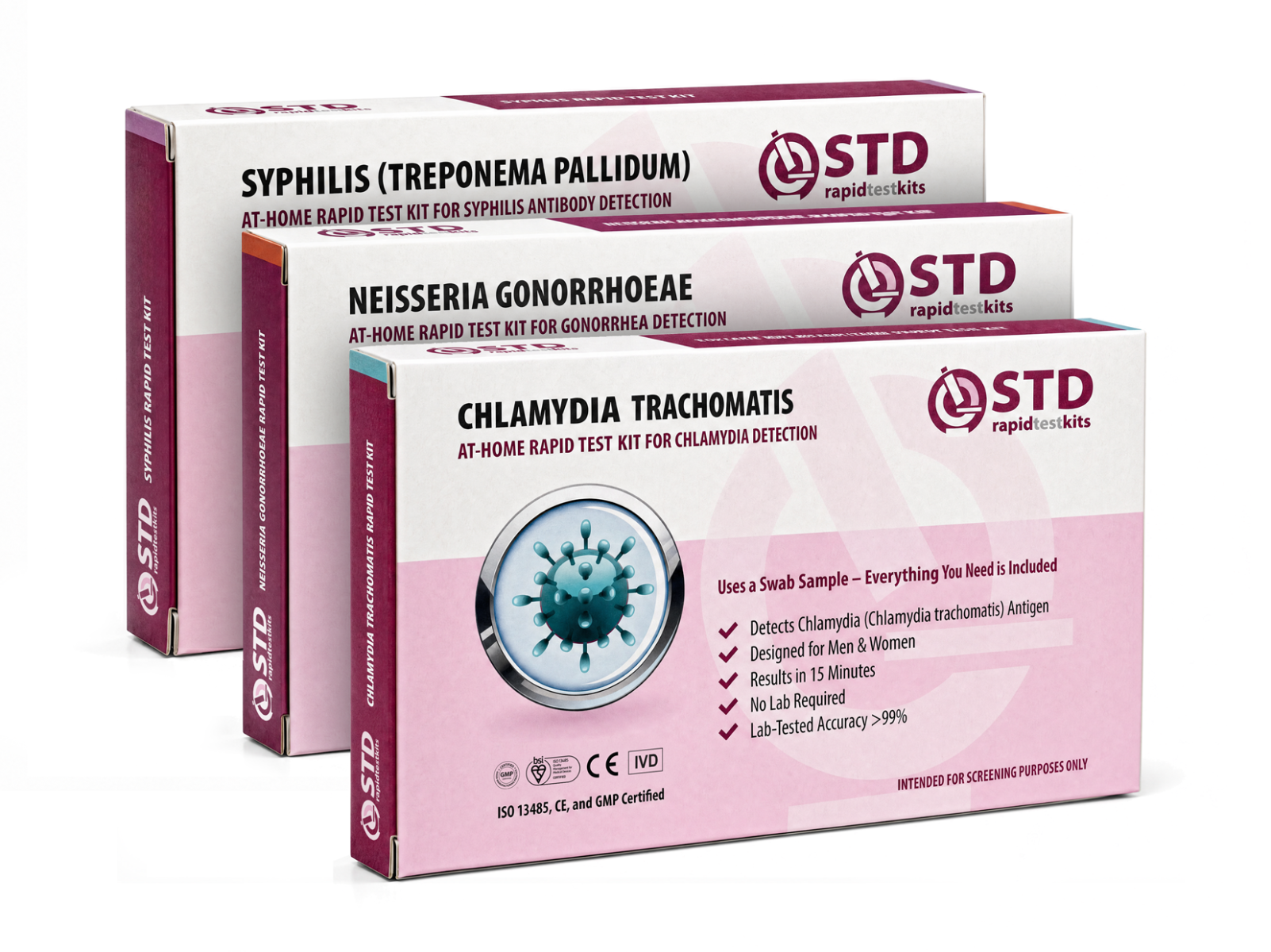
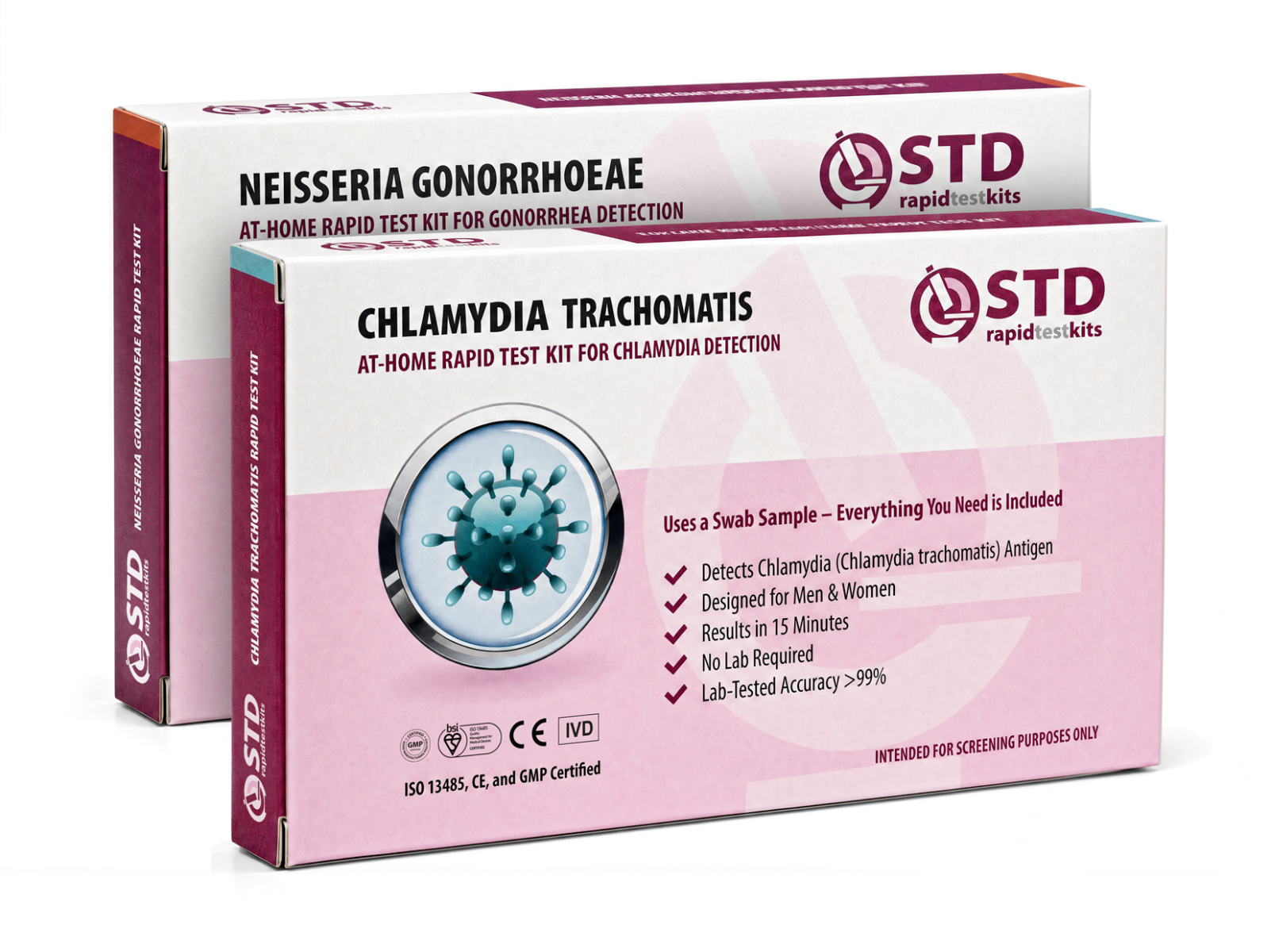
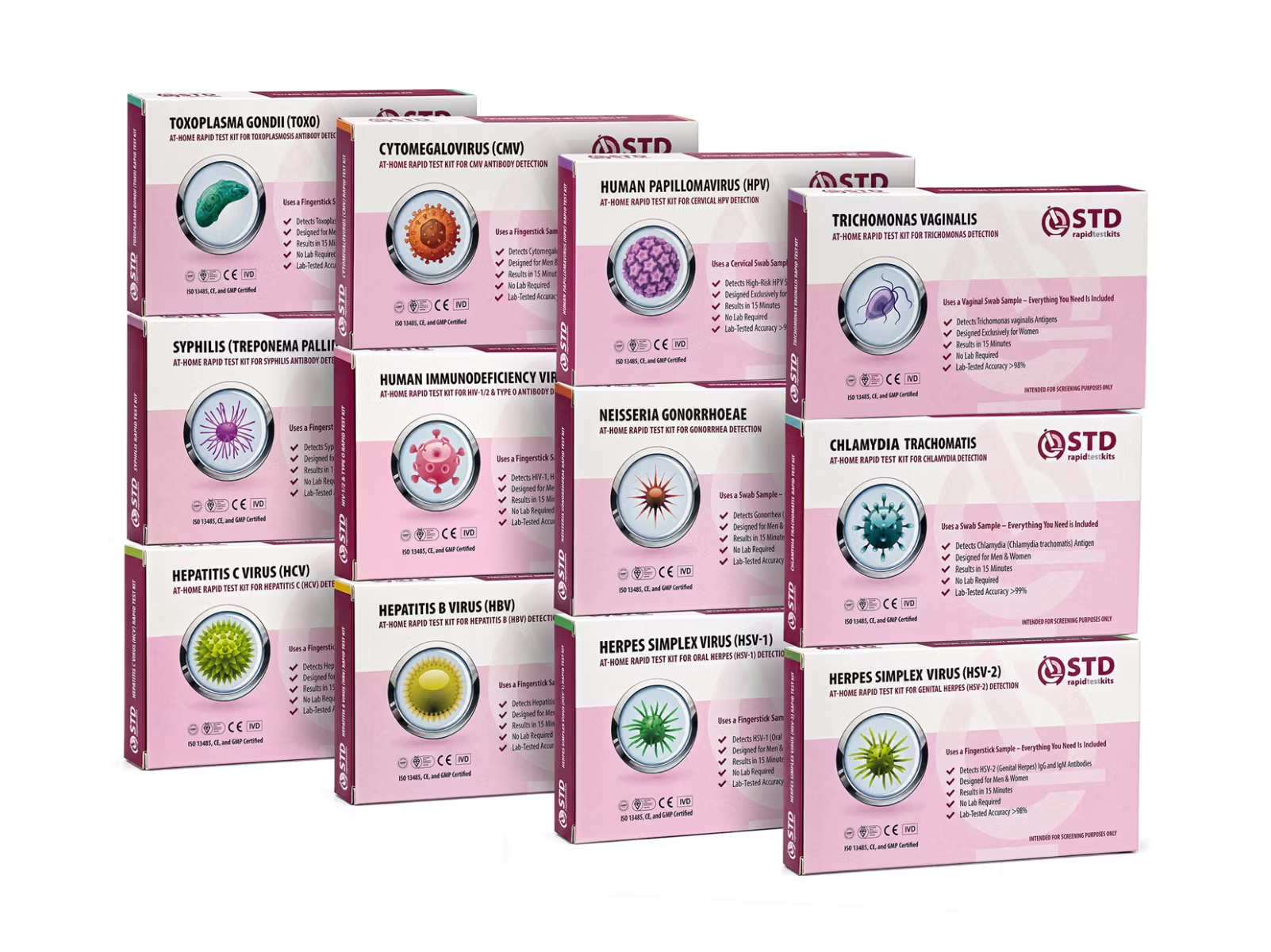
This article is published by stdrapidtestkits.com, which sells at-home STI rapid testing kits. We recommend products based on fit-for-purpose for the reader's concern, not commercial benefit. Our home kits are rapid lateral-flow tests; they are useful as accessible screens, and a positive result is worth confirming with a lab NAAT or blood draw through your provider.
At-Home STI Testing During Pregnancy: Where It Helps
At-home rapid tests use lateral-flow chemistry, the same format as a home pregnancy test, applied to swab samples or fingerprick blood. They are not a replacement for the lab NAAT and treponemal blood tests your OB orders, but they are a real option for filling specific gaps. Whether your provider ran a partial panel, you are between clinics, you want a quiet retest after a partner conversation, or you need a fast screen before your next appointment, a rapid at-home kit can fill the gap without a clinic visit.
For pregnant readers, the trichomoniasis and HPV self-swab kits are validated for vaginal self-collection only, which fits prenatal testing. HIV, syphilis, hepatitis B, and hepatitis C blood tests use a fingerprick. Chlamydia, gonorrhea, and herpes can be screened from a self-collected swab. Results from the rapid format come in around 15 minutes for most kits.
Two honest caveats. First, our kits are lateral-flow screens, not NAAT or PCR; lab-based NAAT remains the analytical gold standard for chlamydia and gonorrhea, and labs are particularly better at picking up very-early or very-low-level infections. A negative rapid test in the first weeks after exposure does not rule out infection. Second, any positive result should be confirmed and managed with your prenatal provider so treatment is dosed safely for pregnancy.
| Dimension | At-Home Rapid Test | Lab NAAT or Blood Test |
|---|---|---|
| Sample type | Self-collected vaginal swab or fingerprick blood | Clinic-collected swab, urine (NAAT), or venous blood draw |
| Turnaround | Around 15 minutes at home | Typically 2 to 5 business days |
| Best use | Filling a gap in a partial panel; quick screen between visits | Definitive diagnosis and treatment decisions in pregnancy |
| Limitation | Lower analytical sensitivity for very-early or very-low-level infections; positives should be confirmed with a lab | Requires a clinic visit, scheduling, and a longer wait |
What Happens If You Test Positive
Take a breath first. Most STIs in pregnancy are treatable, and the pregnancy-safe medications are well-established. Bacterial infections (chlamydia, gonorrhea, syphilis, trichomoniasis) clear with antibiotics that have decades of safety data in pregnancy. Penicillin remains the only recommended treatment for syphilis in pregnancy, even when penicillin allergy is suspected, because alternative antibiotics do not reliably prevent congenital syphilis. Viral infections (HIV, herpes, hepatitis B) are not curable but are highly manageable; HIV is treated with antiretrovirals that protect the baby, and herpes is managed with suppressive antivirals starting at 36 weeks.
Notify your prenatal provider as soon as you have a confirmed positive. If your at-home rapid test returned positive, your OB will repeat it with a lab confirmation before treatment, which is normal practice. The earlier treatment starts, the more reliably complications are prevented.
The partner conversation is real and often the hardest part. A simple opener: "I just got a positive result for a treatable infection. It is common, often shows up without symptoms, and we should both get tested and treated so we are not passing it back and forth." If that conversation is unsafe for you to have, ask your OB about anonymous partner-notification services; many U.S. health departments run them.
Bacterial STIs cured with pregnancy-safe antibiotics. HIV managed with antiretrovirals that protect the baby. Herpes controlled with suppression therapy from 36 weeks. The single biggest predictor of a healthy outcome is catching the infection in time, which is why screening even when asymptomatic matters more than a clean sexual history.
Mid- and Late-Pregnancy Retesting: Who Needs It
One first-trimester test is not always enough. The CDC recommends repeat third-trimester screening for chlamydia and gonorrhea in pregnant people under 25, and earlier-pregnancy partners can change. Repeat HIV and syphilis testing in the third trimester is recommended in regions with rising rates, and many U.S. states now mandate a syphilis re-test at delivery. Hormonal shifts can also reactivate dormant herpes, so a person with a known HSV history may have an outbreak in late pregnancy even after years of quiet.
Here is the simple breakdown most prenatal providers use:
| Trimester | Standard Tests | Why the Timing |
|---|---|---|
| First | HIV, syphilis, hepatitis B, hepatitis C; chlamydia and gonorrhea if under 25 or higher-risk | Earliest detection allows treatment before fetal exposure |
| Second | Repeat or add tests if not done in the first trimester, or if symptoms appear | Catch missed infections before late-pregnancy complications |
| Third | Repeat chlamydia and gonorrhea if higher-risk; repeat HIV and syphilis where mandated; HSV suppression planning at 36 weeks | Protects the baby at delivery and lets the team plan a safe birth |
Why Retesting Is Standard Practice, Not a Warning Sign
Retesting is not a sign of carelessness. It is how providers account for the fact that exposure can happen any time, that some infections are dormant, and that some early tests miss very-low-level infections. If your clinic does not offer repeat testing, an at-home rapid test through a reputable home-test provider can fill the gap, with confirmation by your OB if positive.
If your provider does not proactively schedule a third-trimester retest, you can request one at your 28-week appointment, or use an at-home rapid test for a quick interim screen before your next visit. A 15-minute swab or fingerprick result is enough to flag whether a fuller lab workup is worth the extra clinic trip.
Labor, Delivery, and Why Late-Pregnancy Status Matters
Some infections directly shape how labor is managed. The clearest examples:
| Infection | Effect on Delivery Plan | Late-Pregnancy Action |
|---|---|---|
| HIV (positive) | Cesarean delivery may be recommended if viral load is not suppressed near term | Antiretroviral therapy throughout pregnancy; viral load measured near delivery |
| Genital herpes | Cesarean recommended if active lesions or prodromal symptoms at the start of labor | Suppressive antiviral therapy from 36 weeks for anyone with a positive history |
| Chlamydia or gonorrhea | No change to mode of delivery if treated; untreated raises risk of neonatal eye and lung infection | Treat with pregnancy-safe antibiotics before delivery; routine eye prophylaxis at birth |
| Syphilis | Mode of delivery unchanged; treated infants get follow-up serology | Confirm clearance of maternal infection with repeat blood testing |
| Hepatitis B (mother positive) | No change to mode of delivery | Newborn receives hepatitis B vaccine and immune globulin within 12 hours of birth |
It Is Never Too Late to Add a Missing Test
Even at 36 weeks, it is not too late to add a missing test. Many clinics run rapid syphilis, HIV, and chlamydia tests with same-day results. If you are between providers or off-grid, an at-home rapid kit can give you a fast, private snapshot before your due date. A rapid syphilis, HIV, or chlamydia test at 36 weeks takes 15 minutes and can still change the delivery plan if the result comes back unexpected.
If your prenatal records are incomplete late in pregnancy, the three most useful rapid tests are syphilis, HIV, and chlamydia. A 15-minute result on any of these can still shape the delivery plan: penicillin treatment for syphilis, antiretroviral coverage for HIV, and pregnancy-safe antibiotics for chlamydia all reduce neonatal risk if started before labor begins.
The Partner Side of the Equation
Prenatal care focuses on the pregnant person, but if a partner is sexually active during pregnancy, their testing matters too. Reinfection during pregnancy is more common than most people expect. The pattern providers see often: pregnant patient treated for chlamydia or gonorrhea, partner not tested, infection back two months later because it was never cleared on the partner's side.
If you test positive, your partner should be tested and treated regardless of symptoms. If you are in a long-term, formerly-monogamous relationship and you test positive first, the cause is usually a quiet, asymptomatic infection one of you carried in unknowingly. It does not have to mean infidelity, and the medical priority is breaking the chain of transmission so you both clear it together.
An at-home test is often the easiest path for a hesitant partner: no clinic visit, a self-collected sample, and a result in about 15 minutes. If their result is positive, they bring it to their own provider for confirmation and treatment.
Pregnant women should be tested for sexually transmitted infections starting early in pregnancy. Testing and treatment are the best ways to prevent serious health problems for both mother and baby.
Frequently Asked Questions
- Do I really need STI testing in pregnancy if I feel completely fine?
- Yes. Most STIs in pregnancy cause no symptoms in the early months, and several pregnancy symptoms (more discharge, mild cramps, light spotting) overlap with infection signs. Testing is the only reliable way to know, and most positives in pregnancy are caught precisely because routine screening was done, not because the person noticed anything unusual.
- Is STI testing safe for the baby?
- Yes. Clinic-based testing uses blood, urine (for lab NAAT panels), or swabs. The at-home rapid tests sold on this site use a self-collected vaginal swab or a fingerprick blood drop, with no radiation, no medications, and nothing that reaches the baby. Testing is one of the lowest-risk parts of prenatal care.
- Can I take an at-home STI test while pregnant?
- Yes. Most at-home rapid tests are pregnancy-compatible because the sample types are non-invasive. Use a reputable home-test provider, and bring any positive result to your prenatal provider so it can be confirmed with a lab test and treated with pregnancy-safe medication.
- Will my doctor think I am accusing my partner if I ask for more tests?
- No, if your provider is doing their job. Asking for a complete screen is routine in modern prenatal care. A useful framing is, "I want to make sure I am fully screened for everything, not just the standard panel." That is information-seeking, not accusatory. If your provider reacts judgmentally, that is a signal about the practice, not about your request.
- Is herpes part of routine prenatal testing?
- No. If you have ever had cold sores or genital herpes, the most important action is telling your provider at your first prenatal visit. That single disclosure triggers suppressive antivirals from around 36 weeks, which substantially cuts the risk of an active outbreak at delivery. Routine antibody screening for everyone else is not recommended because it can produce false positives that complicate care without changing outcomes.
- Do I need to retest later in pregnancy if my first-trimester tests were negative?
- Sometimes. The CDC recommends repeat third-trimester screening for chlamydia and gonorrhea if you are under 25 or have a new partner. HIV and syphilis are repeated in higher-prevalence areas or where state law requires. If your circumstances have not changed and you tested negative early, repeat testing is not strictly required, but many providers still offer it as a precaution before delivery.
- Can I get tested without my partner knowing?
- Yes. Your test results are protected by medical privacy laws and are yours to share or not share. If you test positive, partner notification is medically important to prevent reinfection, but how and when you handle it is your decision. Many U.S. health departments offer anonymous partner-notification services if direct disclosure is not safe for you.
- How quickly do results come back?
- It depends on the test type. Rapid lateral-flow tests, including most at-home kits, give results in about 15 minutes. Lab-based NAAT and blood tests through your OB typically return within 2 to 5 business days. Some clinics now offer same-day rapid HIV and syphilis testing for late-pregnancy patients who need a quick answer before delivery.
- U.S. Centers for Disease Control and Prevention. STIs and Pregnancy: fact sheet on which infections are screened during pregnancy and why early detection matters.
- U.S. Centers for Disease Control and Prevention. STI Treatment Guidelines: Pregnant Women, including which tests are recommended at the first visit and which are repeated in the third trimester.
- U.S. Centers for Disease Control and Prevention. About Congenital Syphilis: U.S. trends, transmission risk during pregnancy, and the role of screening and treatment in prevention.
- U.S. Centers for Disease Control and Prevention. STI Treatment Guidelines: HIV, including antiretroviral therapy in pregnancy and the reduction of mother-to-neonate transmission risk to below 2 percent with ART, obstetrical interventions, and avoidance of breastfeeding.
- World Health Organization. Sexually transmitted infections (STIs) fact sheet: global epidemiology, asymptomatic transmission, and the importance of screening pregnant women.
- U.S. Centers for Disease Control and Prevention. Sexually Transmitted Infections topic overview: common STIs, screening recommendations, and links to condition-specific guidance.
