
Published: November 2025 | Last updated: May 2026 | Editorial review and quality control: Martina N.
Most prenatal care in the U.S. includes an STI panel, but most parents-to-be never see a written list of what was actually tested. The basic prenatal screen reliably covers HIV, syphilis, and hepatitis B. Chlamydia and gonorrhea are included in some practices and not others. Herpes, HPV, and trichomoniasis are usually not tested unless symptoms appear or you specifically ask. That gap is where vertical transmission, the medical term for an infection passing from a pregnant person to their newborn, most often slips through.
This article walks through which infections can pass from parent to baby, when the highest-risk windows are, what the standard prenatal panel actually screens for, and how to fill in the gaps if your situation calls for it. The goal isn't to alarm anyone. Most pregnancies under prenatal care go fine. The cases that don't tend to involve a treatable infection that nobody knew was there, and that part is worth understanding.
Key Takeaways
- Standard prenatal panels reliably screen for HIV, syphilis, and hepatitis B. Herpes, HPV, and trichomoniasis are not routinely included unless symptoms appear or you specifically request them.
- Most mother-to-newborn transmissions trace back to asymptomatic infections. Early detection plus the right treatment prevents the majority of serious newborn complications, including congenital syphilis.
Why Vertical Transmission Still Happens in 2026
Modern obstetric care is good at catching the infections it screens for. The challenge is that the standard prenatal panel was never designed to be exhaustive. It targets the infections that cause the most severe newborn outcomes when missed (HIV, syphilis, hepatitis B), plus the most common bacterial STIs in some practices. Infections that are common but lower-risk for the parent, or that are difficult to detect reliably from a routine blood draw, often sit outside that panel.
STDs passed from a pregnant person to a baby fall under the umbrella term vertical transmission (sometimes called perinatal transmission). The route varies by infection. Syphilis and HIV can cross the placenta during pregnancy. Chlamydia, gonorrhea, and herpes typically transmit during vaginal delivery through contact with infected fluids or lesions. A few can transmit after birth through close contact or breastfeeding. The CDC's overview of STIs in pregnancy notes that most STIs produce no signs or symptoms, meaning a parent can carry an infection without realizing it. Routine screening, rather than waiting for symptoms, is what catches those cases.
The asymptomatic angle is the part most people underestimate. A parent with no symptoms can still shed virus or carry bacteria that reach the baby at the wrong moment. Herpes is the textbook example: many people carrying HSV-1 or HSV-2 have never had a visible outbreak, yet asymptomatic shedding can still infect a newborn during vaginal delivery if the parent acquires the virus near term.
| Infection | Transmission Timing | Primary Risk to Baby | Treatment Available |
|---|---|---|---|
| Herpes (HSV) | During delivery (contact with lesions or asymptomatic shedding) | Neonatal herpes: skin/eye/mouth, central nervous system, or disseminated disease | Yes, antivirals for parent (suppression late in pregnancy) and baby if exposed |
| Chlamydia | During delivery | Conjunctivitis (eye infection); pneumonia in early infancy | Yes, antibiotics for parent during pregnancy |
| Gonorrhea | During delivery | Severe newborn eye infection that can cause blindness if untreated | Yes, antibiotics for parent; standard newborn eye prophylaxis |
| Syphilis | During pregnancy (crosses the placenta) | Congenital syphilis: stillbirth, organ damage, neurologic complications | Yes, penicillin (highly effective when treatment starts early enough) |
| HIV | Pregnancy, delivery, and breastfeeding | Lifelong infection if untreated | Yes, antiretroviral therapy reduces perinatal transmission to very low rates |
| Trichomoniasis | During delivery (uncommon) | Associated with preterm birth and low birth weight | Yes, oral metronidazole |
| Hepatitis B | Pregnancy and delivery; rarely after birth | Risk of chronic infection if untreated at birth | Yes, hepatitis B immune globulin plus first vaccine dose at birth |
When the Risk Window Opens (and When It Closes)
Transmission risk is not uniform across pregnancy. Some infections are most dangerous early on because they cross the placenta and can disrupt fetal development. Others sit quietly through the entire pregnancy and only become a real threat at the moment of vaginal delivery. Knowing which type you're dealing with shapes both the testing schedule and the delivery plan.
Syphilis, for example, is most concerning across the entire pregnancy because Treponema pallidum (the bacterium that causes syphilis) readily crosses the placenta. Per the WHO's guidance on mother-to-child syphilis transmission, treating the parent with penicillin early enough in pregnancy substantially reduces the risk of congenital syphilis. By contrast, herpes is mostly a delivery-time concern. Chlamydia and gonorrhea also do most of their damage during the passage through the birth canal. The table below summarizes the typical risk profile by trimester for each infection.
| Infection | 1st Trimester | 2nd Trimester | 3rd Trimester | Labor / Delivery |
|---|---|---|---|---|
| Syphilis | High | High | High | Lower (transmission usually already occurred in utero) |
| HIV | Moderate without ART | Moderate to high without ART | Moderate to high without ART | High without ART; very low with full ART regimen |
| Herpes (HSV) | Low | Low | Moderate (especially with new infection near term) | Highest if active lesions or shedding at delivery |
| Chlamydia | Low | Low | Low | High (infant exposure during vaginal birth) |
| Gonorrhea | Low | Low | Low | High (infant exposure during vaginal birth) |
| Trichomoniasis | Very low | Low | Moderate | Moderate |
What Standard Prenatal Screening Catches (and What It Misses)
Most pregnant patients in the U.S. get screened for HIV, syphilis, and hepatitis B at the first prenatal visit. The CDC's screening guidance for pregnancy recommends that, plus chlamydia screening for everyone under 25 (and older patients with risk factors), gonorrhea for those at increased risk, and hepatitis C for everyone. Repeat HIV and syphilis testing in the third trimester is recommended for parents at higher risk or in regions with rising rates. Recent CDC reporting has flagged that congenital syphilis rates in the U.S. have climbed sharply in recent years, which is why timely retesting matters.
Routine herpes serology is not recommended for everyone in pregnancy. The reasoning: a positive HSV antibody test in someone who has never had symptoms doesn't change much about their delivery plan unless it's a new acquisition near term. Trichomoniasis screening is similar; testing is targeted to people with symptoms or high-risk profiles rather than universal. HPV is not part of prenatal STI screening because the cervical cancer screening interval (three to five years for most patients) doesn't line up with pregnancy in a meaningful way.
Practical implication: if you want broader coverage, you have to ask. Bringing it up doesn't make you sound paranoid. Providers see this question often and most will accommodate it without pushback, especially if you can name the specific infections you'd like added.
If you're not sure what was tested, ask directly: Which STIs am I being screened for at this visit, and which are not part of the standard panel? Useful follow-ups: Do you recommend a third-trimester repeat for HIV or syphilis in my situation? and If I have a new partner during pregnancy, what should we add? Most clinics document these requests in your chart and order the additional tests at the next blood draw.
Delivery Decisions: When a C-Section Lowers Newborn Risk
For a small set of infections, the delivery method itself is the protective intervention. Active genital herpes lesions or prodromal symptoms at the onset of labor are the clearest example. Per the CDC's STI treatment guidelines, a scheduled cesarean delivery is recommended when active herpes lesions are present at labor to avoid newborn contact with infected tissue. Antiviral suppression in the last few weeks of pregnancy is often added for parents with a known herpes diagnosis to reduce the chance of an outbreak at term.
HIV is a different shape of decision. With effective antiretroviral therapy and a suppressed viral load near delivery, the perinatal HIV transmission rate falls to very low levels and vaginal delivery is often safe. The NIH's perinatal HIV prevention guidance walks through how viral load near term, intrapartum medications, and infant prophylaxis combine to drive that risk down.
A C-section is not a universal shield. If an infection like syphilis has already crossed the placenta, the baby is already exposed regardless of how delivery happens. Early detection and treatment in the parent are the most effective interventions available, well ahead of any decision about delivery method.
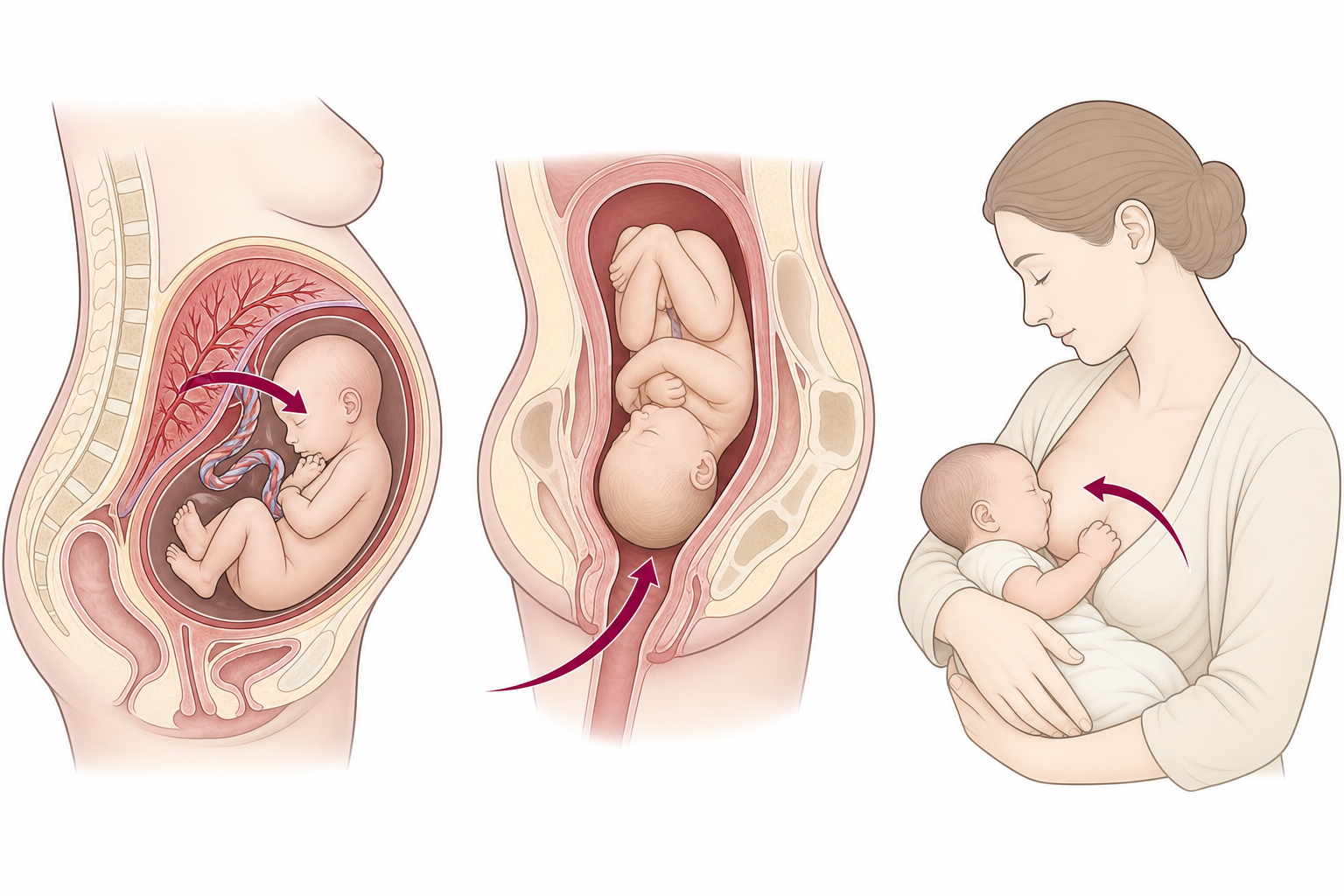
Treating Newborns Who Were Exposed at Birth
When a newborn is exposed (or suspected to be exposed) during delivery, treatment usually starts before any symptoms appear. The exact protocol depends on the infection. For HIV, infants born to a parent with detectable virus are typically started on antiretroviral prophylaxis within hours of birth, with confirmatory testing scheduled over the first several months. For chlamydia and gonorrhea, standard newborn eye prophylaxis (an antibiotic ointment given to most newborns in U.S. hospitals) substantially reduces conjunctivitis from gonorrhea; oral antibiotics may be added if chlamydia exposure is known. For hepatitis B, the combination of hepatitis B immune globulin plus the first vaccine dose given within 12 hours of birth is highly protective.
Newborn herpes is rare but treated aggressively when suspected, because the central nervous system form can be severe. Babies thought to be at risk get IV acyclovir and close observation. For congenital syphilis, the diagnostic and treatment workup is detailed and depends on what testing the parent had during pregnancy and how recently they were treated; the CDC's STI treatment guidelines describe the full evaluation framework.
The unifying theme: the earlier the parent's infection is detected, the more treatment options exist. Most of the worst outcomes (stillbirth from untreated syphilis, severe neonatal herpes from a new HSV infection at term, perinatal HIV in an unscreened parent) follow a missed or delayed diagnosis rather than a failure of treatment.
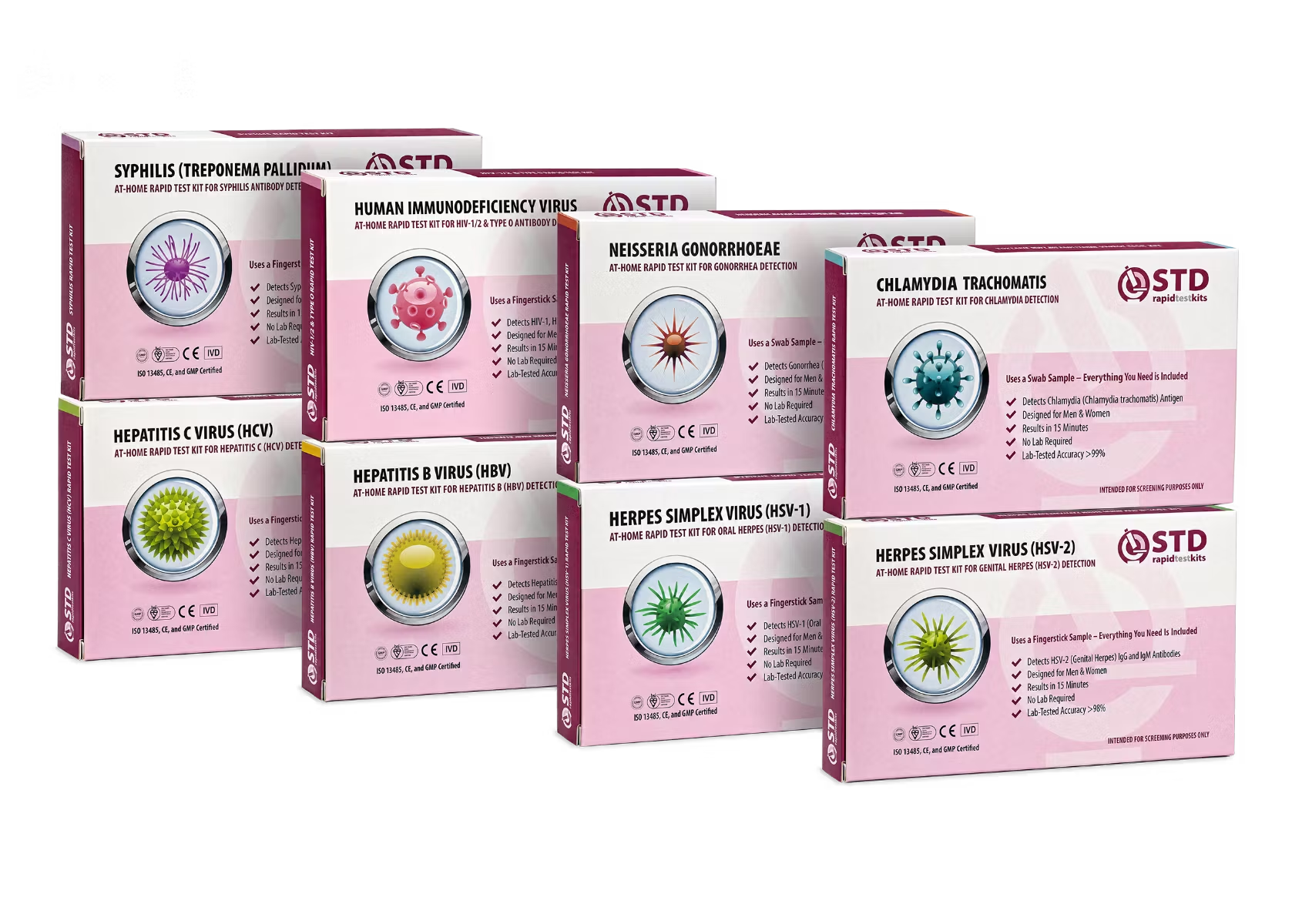
This site sells at-home rapid STI test kits. The panel below is one screening option for use between prenatal visits or as a prompt for follow-up clinic testing; it is not a substitute for the lab work your prenatal provider orders.
How to Talk to Your Provider About Expanded Testing
Pregnant patients sometimes hesitate to bring up STI testing because it feels like an accusation, either of themselves or of their partner. Reframing helps: a fuller test list at the first prenatal visit is the single highest-leverage thing you can do to protect a newborn from a preventable infection. Providers know this. Most will add tests on request without questioning your relationship.
Concrete script ideas that work in a typical OB or midwifery visit: I'd like to make sure my prenatal panel includes herpes serology, trichomoniasis, and a third-trimester repeat HIV and syphilis. Can we add those? Or, if your situation has changed: I had a new partner since my last test. What should we re-screen? If a provider declines, ask them to document the reason in your chart so you have it on record. That sometimes prompts reconsideration on its own.
If you live somewhere with limited prenatal access, or your visits are short and rushed, an at-home rapid screen between visits can fill a gap. A flagged result is a useful prompt to bring up at your next appointment rather than waiting for a future scheduled draw. Any positive result still needs clinic-based confirmation before treatment decisions.
All pregnant women should be tested for HIV, syphilis, hepatitis B, and hepatitis C as early as possible during each pregnancy. Some women should be tested again later in pregnancy.
Where At-Home Testing Fits Into the Prenatal Picture
At-home rapid tests are screening tools, not replacements for prenatal care. They make sense in three specific situations during or around pregnancy. First, when there's been a known exposure since the last clinic visit and you'd rather not wait to bring it up. Second, when you want a faster heads-up between scheduled prenatal blood draws, especially for HIV or syphilis if you're at higher risk. Third, when access to a clinic is limited (rural area, short appointment slots, lapsed insurance) and a home-collected screen is the most realistic next step.
The lateral-flow chemistry used in home rapid tests works differently from the lab-based NAAT (nucleic acid amplification test) that clinics use as the gold standard for chlamydia and gonorrhea, or the lab-based RPR confirmatory workflow for syphilis. Home tests produce a result quickly and at relatively low cost. A positive result needs to be confirmed in a clinic, and a negative result during a known window period needs to be repeated outside that window. Your prenatal provider can order the lab NAAT or RPR confirmation directly.
For pregnant patients specifically, the upside of an at-home rapid kit is the conversation it starts. A flagged result, even one that turns out negative on confirmation, brings testing back into the prenatal visit at a moment when there's still time for treatment if needed.

The Bottom Line for Pregnant Patients and People Planning to Be
Vertical transmission is largely a story of detection rather than a story of damage. The infections that cause the worst newborn outcomes (congenital syphilis, perinatal HIV, neonatal herpes) all have effective treatments or interventions when the parent's infection is identified in time. The system mostly works for the infections it screens for. The risk concentrates around the infections it doesn't screen for routinely, and around parents whose situations changed mid-pregnancy without a corresponding update to the testing plan.
The two highest-leverage steps are getting a written list of what your first-trimester panel actually included, and updating that list whenever your situation changes (a new partner, a new symptom, or a partner's positive result). At-home testing fills gaps between visits; it doesn't replace the baseline that those two steps establish.
FAQs
- Can babies actually get an STI from their pregnant parent?
- Yes. Vertical transmission is well documented for HIV, syphilis, herpes, chlamydia, gonorrhea, hepatitis B, and (less commonly) trichomoniasis. The route differs by infection: some cross the placenta during pregnancy, some transmit during vaginal delivery, and a few can transmit after birth through close contact or breastfeeding. The parent often has no symptoms when transmission happens, which is why screening matters.
- If I've never had STI symptoms, am I in the clear?
- Not necessarily. Several STIs (especially herpes, HPV, and trichomoniasis) can persist without obvious symptoms. Asymptomatic shedding can still infect a newborn at delivery. The only reliable way to know your status is testing, ideally at the first prenatal visit and again later in pregnancy if your situation changes.
- Which STI carries the highest risk for a newborn?
- Untreated syphilis during pregnancy carries some of the most severe outcomes, including stillbirth and congenital syphilis. The CDC has reported sharp increases in U.S. congenital syphilis cases in recent years. Neonatal herpes is rarer but can be severe when it occurs, especially with a new HSV infection acquired near delivery. Both are largely preventable with early detection and treatment.
- Will a C-section protect my baby if I test positive for an STI?
- It depends on the infection. Cesarean delivery is recommended when active genital herpes lesions or prodromal symptoms are present at the onset of labor, because it prevents direct contact during birth. For HIV, decisions about delivery method depend on viral load and the antiretroviral regimen near term. For infections that already crossed the placenta (such as syphilis), the delivery method does not change in-utero exposure that already happened.
- Why didn't my prenatal panel cover everything?
- Standard prenatal panels target the infections with the strongest evidence for prenatal screening: HIV, syphilis, hepatitis B, plus chlamydia and gonorrhea in many practices. Routine herpes serology, trichomoniasis screening, and HPV testing are generally not part of the standard panel because the evidence does not support universal screening for those in the prenatal context. If you want broader coverage, ask your provider to add the specific tests you'd like.
- How would I notice if a newborn was infected at birth?
- Signs vary by infection and may not appear immediately. Eye redness or discharge in the first week can suggest chlamydia or gonorrhea conjunctivitis. Skin vesicles, lethargy, or seizures within the first month can suggest neonatal herpes and need urgent evaluation. Jaundice, poor feeding, or rash can be nonspecific but warrant a check. Trust a pediatrician's evaluation rather than self-diagnosing; tell them about any positive or recent prenatal test.
- Is breastfeeding safe if I have an STI?
- For most STIs, yes. Exceptions include active herpes lesions on the breast (avoid nursing on that side until the lesion has healed) and HIV (current U.S. guidelines recommend formula feeding for parents with HIV, even on antiretroviral therapy). Hepatitis B is not a contraindication to breastfeeding once the newborn has received the appropriate immune globulin and vaccine. Ask the provider managing your specific diagnosis for individualized guidance.
- Should I retest later in pregnancy if my first-trimester panel was negative?
- Sometimes, depending on risk factors. CDC guidance supports a third-trimester repeat for HIV and syphilis in patients at higher risk, in regions with rising STI rates, or when there's been a new exposure since the first test. If you've had a new partner during pregnancy, or your partner has, ask about repeating the panel rather than assuming the first-trimester result still holds.
How we sourced this article: Our editorial team summarized current screening, treatment, and prevention guidance from the CDC, WHO, and NIH, focused specifically on infections that can transmit from a pregnant parent to a newborn. Where U.S. and international guidance differed, we noted both. This article is for general education and is not a substitute for prenatal care; for pregnancy-specific decisions, talk to a provider who knows your full medical context.
- U.S. Centers for Disease Control and Prevention. About STIs and pregnancy: overview of vertical transmission risks and recommended screening.
- U.S. Centers for Disease Control and Prevention. Screening for HIV, viral hepatitis, STIs, and TB during pregnancy.
- U.S. Centers for Disease Control and Prevention. STI treatment guidelines: clinician reference for HSV management at delivery, syphilis evaluation, and infant prophylaxis.
- U.S. Centers for Disease Control and Prevention. 2025 press release on national congenital syphilis and STI surveillance data.
- World Health Organization. Mother-to-child transmission of syphilis: prevention strategies and treatment timing.
- U.S. National Institutes of Health (HIVinfo). Preventing perinatal HIV transmission during pregnancy and childbirth.
