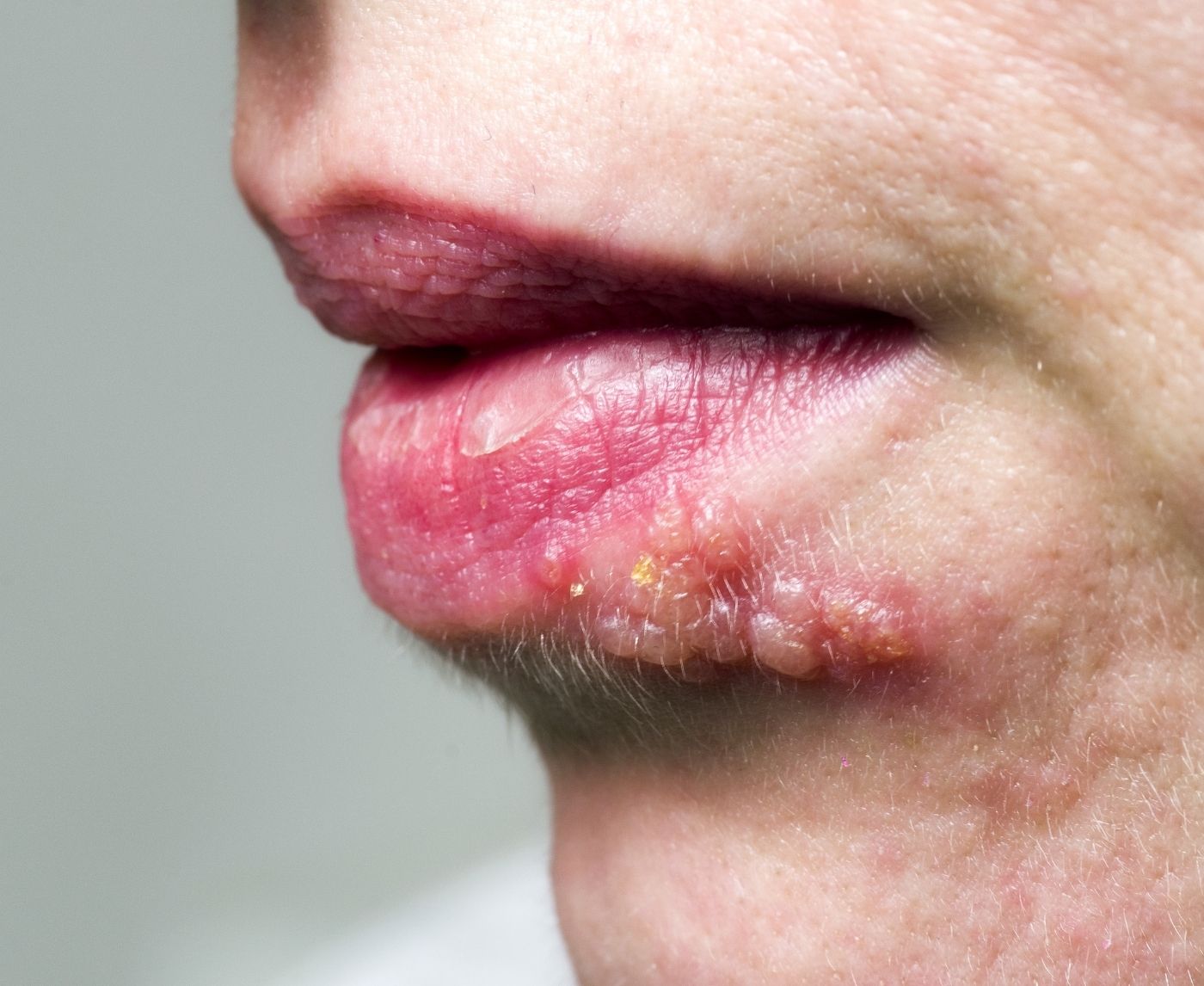
Published: October 2025 | Last updated: May 2026 | Editorial review and quality control: Martina N.
Is it syphilis or herpes?
A syphilis chancre is usually a single, painless ulcer with firm rolled edges, surfacing 10 to 90 days after exposure (median around 3 weeks per StatPearls). A herpes outbreak is typically a cluster of small painful blisters that rupture into shallow ulcers, often within days to a few weeks. Pain shifts probabilities but does not diagnose. Confirm with a blood antibody test for syphilis (reliable about 3 to 6 weeks post-exposure) and either a clinic swab of an active herpes lesion or an HSV antibody blood test (most reliable 12 or more weeks out).
You notice a sore. It might be small, round, and on its own, or it might be a cluster of tiny blisters that already hurt. The first question your brain asks: is this herpes, is this syphilis, or is this nothing? This guide compares the two infections by appearance, pain, location, and timing, then explains which test answers which question and when. The short version: pain is a clue, not a diagnosis. Most readers searching this question turn out to have a non-STI cause (friction, an ingrown hair, a canker sore, contact dermatitis), so the goal here is calm narrowing, not panic.
Picking the wrong test, or the right test at the wrong time, is one of the most common ways people end up with a falsely reassuring negative. The two infections move on different clocks, respond to different tests, and need different timing windows to confirm. Get the timing right and a home test is genuinely useful. Get it wrong and the result is noise.
Key Takeaways
- Pain is the strongest single clue: chancres are usually painless and singular, herpes sores are usually a painful cluster, but neither rule is absolute.
- Test timing matters more than test brand. Syphilis serology becomes reliable at 3 to 6 weeks post-exposure; HSV antibodies need around 12 weeks. A negative inside those windows is preliminary, not final.
Does It Hurt? The First Clue
The most common mental shortcut people use is pain. A classic syphilis chancre is painless. It usually feels firm at the edges and smooth in the center. It can sit there for a week or more without protesting, which is exactly why it gets dismissed as a scratch, a shaving nick, or friction from clothing.
Herpes sores often hurt. Many people feel tingling, itching, or burning before any visible bump appears, a phase clinicians call the prodrome. Once the blisters rupture, contact with urine, sweat, or fabric can sting sharply. The first outbreak is typically the worst, often layered with flu-like symptoms (fever, body aches, swollen lymph nodes), per the CDC genital herpes overview. The CDC page describes the symptom set of the first outbreak but does not provide an exposure-to-symptom day count, so the timing claims in this article are sourced to NHS and StatPearls instead.
The trap: not every herpes outbreak hurts. Recurrences can be mild, sometimes nothing more than a small fissure that heals in a few days. And syphilis chancres can occasionally feel tender if rubbed or if a secondary skin infection sets in. Pain shifts probabilities.
A painless sore leans toward syphilis. A painful blister cluster leans toward herpes. Neither rule is absolute, because mild herpes recurrences can feel almost like nothing, and a chancre rubbed by clothing can become uncomfortable. Use pain to choose which test to run first, not to decide whether to test at all.
Ulcer or Blister? What You Are Looking At
Shape gives more information than location. A syphilis chancre starts and stays as an ulcer: a single round sore with clean defined edges and a smooth, often slightly depressed center. It does not begin as a blister. It does not multiply (with rare exceptions of two or three chancres clustered close together).
A herpes outbreak typically begins as small fluid-filled blisters in a tight cluster of three to ten, on the genitals, buttocks, or thighs. Within a few days the blisters rupture, leaving shallow open ulcers that crust as they heal. Blister phase first, ulcer phase second. A chancre skips the blister phase entirely.
Lighting, skin tone, friction, and shaving irritation can distort how either looks in person, which is why visual self-diagnosis has limits. Lesion patterns also vary substantially between individuals, especially on darker skin where redness reads less dramatically and pigment changes are more subtle. The table below summarizes the textbook differences side by side. The syphilis onset row is sourced to the StatPearls clinical reference on syphilis on the NIH NCBI Bookshelf; the herpes onset row reflects the NHS genital herpes page.
| Feature | Syphilis Chancre | Herpes Sore |
|---|---|---|
| Number of sores | Usually a single sore | Cluster of multiple blisters |
| Pain level | Painless or mildly tender | Often painful, burning, or itchy |
| Texture | Firm rolled edge, smooth depressed base | Fluid-filled blisters that rupture into shallow ulcers |
| Onset after exposure | 10 to 90 days, median about 21 to 25 (StatPearls) | Variable: often within weeks, sometimes months or years (NHS) |
| Healing time | 3 to 6 weeks even without treatment | 1 to 2 weeks per outbreak |
| Recurrence in same area | Does not recur as a sore | Can reactivate as future outbreaks |
| Systemic symptoms | Rare in primary stage | Fever, aches, swollen nodes during first outbreak |
Timing After Exposure: A Strong Differentiator
If you can pin down when the exposure happened, the calendar narrows the field considerably. The StatPearls clinical reference on syphilis (hosted on the NIH NCBI Bookshelf) places the primary chancre window at 10 to 90 days after exposure, with a median of 21 to 25 days. Most people who develop a visible sore see it inside the first month. The WHO and CDC syphilis fact sheets cover staging and treatment but do not state this specific incubation window, which is why this article cites StatPearls for the day-range.
Herpes incubation is more variable. Per the NHS genital herpes page, first symptoms can appear within weeks of exposure, but some people do not develop visible blisters for months or years. Many readers who pin a herpes diagnosis to a recent encounter are actually seeing a delayed first outbreak from an earlier exposure they had assumed was uneventful.
Cultural shorthand has not kept up with the numbers, either. U.S. STI surveillance has documented sharp rises in primary, secondary, and congenital syphilis over the past decade. A painless sore today, in many U.S. cities, is more likely to be early syphilis than it was even a few years ago.
A painless ulcer that surfaces about three to four weeks after a new partner is statistically more consistent with syphilis than with herpes. A painful blister cluster that surfaces a few days to a few weeks after a new partner is statistically more consistent with a recent herpes acquisition or a herpes recurrence than with a chancre.
Both syphilis chancres and herpes lesions resolve on their own. A chancre fades within 3 to 6 weeks even when untreated, while the bacterium continues spreading internally and can progress to secondary syphilis (rash, fatigue, fever) weeks to months later. Herpes lesions crust and heal, but the virus stays dormant in nerve tissue and can reactivate. If your sore disappeared without treatment, that is your strongest argument for testing now, not later.
Where the Sore Shows Up Matters
The location of a lesion changes how quickly it gets noticed and how often it gets misidentified. A painless chancre on the shaft of a penis is usually spotted within days. A painless ulcer on the cervix, deep inside the vagina, on the inner anal canal, or at the back of the throat can heal completely before the person ever sees it.
This is one reason syphilis is often diagnosed weeks or months after the actual exposure. The chancre forms wherever the bacterium entered the body, including mucosal surfaces you cannot easily inspect. Herpes can appear in those hidden sites too, but the burning sensation tends to draw attention sooner.
Both infections appear orally, genitally, anally, and occasionally on the fingers (a herpetic whitlow), which means anatomical site alone cannot tell you which infection you have.
A primary syphilis chancre on the cervix, the inner vaginal wall, the anal canal, or the back of the throat can form, last three to six weeks, and heal entirely without ever being seen. The absence of a visible sore does not rule out primary syphilis if there has been a recent exposure, especially an oral or receptive anal exposure where mucosal sites are involved.
Oral Sores: Cold Sore, Chancre, or Canker?
A sore on the lip or inside the mouth two weeks after oral sex is a common reason people land on this guide. Three things are usually on the table.
Oral herpes (most often HSV-1, occasionally HSV-2) typically begins with tingling or itching, then a cluster of blisters that crust within a few days. It hurts, especially during the blister phase, and tends to recur in roughly the same spot.
Oral syphilis presents as a single painless ulcer on the lip, tongue, gum, or tonsil, usually weeks after exposure rather than days. It does not blister first. People often mistake it for a canker sore (aphthous ulcer) or a bite injury, and the lack of pain can delay testing for a month or longer.
A canker sore is round, painful, has a yellow or white center with a red border, heals in 1 to 2 weeks, and is not contagious. The pain pattern usually rules out a syphilis chancre, and the absence of a blister phase usually rules out herpes.
Recurrence and Systemic Signals Beyond the Sore
Syphilis does not produce recurring chancres. The primary sore heals once and does not return as a sore. If untreated, the infection moves to its secondary stage, presenting as a non-itchy rash on the trunk, palms, or soles, sometimes with fatigue, swollen lymph nodes, low-grade fever, and patchy hair loss. The CDC's syphilis page highlights the palms-and-soles distribution as one of the most distinctive secondary-stage findings; per the StatPearls syphilis reference, the rash typically appears 2 to 8 weeks after the chancre healed. Mayo Clinic's syphilis page describes the same body-wide rash as one of the clearest signs that primary syphilis has progressed.
Herpes recurs by design. After the first outbreak, HSV stays dormant in nerve ganglia and can reactivate during stress, illness, menstruation, or for no apparent trigger. Recurrent outbreaks are usually milder and shorter (5 to 10 days versus 2 to 4 weeks for the first episode), and outbreak frequency typically drops sharply after the first year. Some people experience six or more outbreaks per year; others have one in their lifetime and never another.
HSV is also more common than most people realize. According to the American Sexual Health Association, roughly 1 in 8 U.S. adults aged 14 to 49 carry genital HSV-2, with most carrying it unknowingly because of asymptomatic shedding and brief or atypical outbreaks. If you have had similar painful sores in the same anatomical area before, herpes is the more likely call. If this is your first painless sore weeks after a new exposure, syphilis rises on the list.
Both infections quiet down on the surface. Syphilis enters its secondary and latent stages, where the bacterium continues to circulate and can damage the nervous system, eyes, and cardiovascular system years later. Herpes retreats into nerve tissue and can reactivate at any point, with shedding of the virus possible even between visible outbreaks. Treatment changes both trajectories.
Things People Mistake for Syphilis or Herpes
Most genital and oral bumps are not STIs. Friction sores, ingrown hairs, sebaceous cysts, contact dermatitis, yeast infections, and small vascular skin spots (angiokeratomas, harmless dilated capillaries that look like tiny red or purple dots) all show up in the same body areas and routinely send anxious readers to image searches at 2am. A few patterns help separate STI from non-STI:
- An ingrown hair is small, has a visible hair underneath, and resolves within a week. A chancre does not have a hair in it.
- Contact dermatitis (from soap, lubricant, latex, or laundry detergent) is itchy, diffuse, and tracks the area of contact rather than appearing as a single round lesion.
- A razor nick is linear, shallow, and heals quickly. A chancre is round and lasts weeks.
- A sebaceous cyst is a pea-sized lump under the skin, not an open sore.
- A canker sore in the mouth is painful (a chancre is not), heals in 1 to 2 weeks, and is not infectious.
If a sore changes in shape over a few days, lasts more than a week, or sits in an area where friction is unlikely, that is when the threshold to test crosses from optional to recommended.
Three patterns shift the decision from watch-and-wait to confirm with a test: a sore lasting more than 7 days, a sore that returns in the same exact spot, or a sore in a low-friction area where rubbing and irritation are unlikely explanations. Any one of these is reason enough to test.
When to Test for Reliable Results
Testing too early produces false reassurance. Both infections have a window period: the time between exposure and the moment the test can detect them.
For syphilis, blood antibody tests (rapid lateral-flow at home, or treponemal and non-treponemal lab assays) become reliably positive about 3 to 6 weeks after infection per the CDC STI Treatment Guidelines (see the guidelines landing page, which links to the full clinical document). Repeat testing is recommended if the first result is negative but exposure was recent.
For herpes, two test types exist. Swabbing an active lesion (PCR or culture, usually clinic-administered) gives the highest accuracy when sores are present. HSV antibody blood tests (type-specific IgG) become reliably positive several weeks to months after seroconversion; testing immediately after exposure rarely yields useful results.
One technical nuance worth understanding before choosing an at-home test. Home rapid kits for syphilis and herpes are lateral-flow immunoassays. They are not PCR or NAAT (nucleic acid amplification testing), which is what labs use as their analytical gold standard. Lateral-flow chemistry is simpler, faster, and cheaper, with the trade-off being lower sensitivity close to the start of the antibody window. The practical implication: testing too early is more likely to produce a false negative on a home antibody kit than on a lab NAAT. Inside the right window, home antibody tests are useful screens for the question of whether the body has built an immune response. They are not the right tool for evaluating a sore that appeared yesterday. That is what a clinic swab is for.
The practical rule of thumb. If a sore is present right now and you can reach a clinic, a swab is the fastest path to an answer. If the sore has already healed or you are several weeks out, blood testing is the more useful option. If you are still inside the window period, test now for a baseline and retest at 6 weeks (syphilis) or 12 weeks (HSV) for confirmation. The table below summarizes what each test type detects and when it is most informative.
| Test type | What it detects | Best timing | Limitation |
|---|---|---|---|
| Herpes swab PCR (clinic) | Viral DNA from an active sore | Within 48 to 72 hours of lesion appearing | Requires a visible, intact lesion |
| Herpes IgG antibody (blood) | Immune response to HSV-1 or HSV-2 | 12 weeks or more post-exposure | False negative if tested too early |
| Syphilis non-treponemal (RPR / VDRL) | Markers of active infection activity | About 6 weeks post-exposure | Can give false positives in some conditions |
| Syphilis treponemal (FTA-ABS, EIA, home rapid) | Antibodies specific to syphilis bacterium | Confirmation step or later screening | Often stays positive for life after infection |
| Chancre darkfield / swab (clinic) | Treponema pallidum bacteria directly | While the chancre is active | Requires a clinic equipped for the test |
Sores caused by syphilis are usually firm, round, and painless. Because the sore is painless, it can easily go unnoticed.
Treatment: One Is Curable, One Is Manageable
Syphilis is bacterial and curable. The standard treatment for primary, secondary, or early latent disease is a single intramuscular injection of long-acting benzathine penicillin G. Late latent or tertiary syphilis requires a longer course. Follow-up blood titers at 6 and 12 months confirm declining antibody levels and successful treatment.
One nuance most home-test users miss: the treponemal antibody picked up by most rapid kits typically stays detectable for the rest of your life, even after the bacteria themselves have been cleared by treatment. A treponemal-positive home result years after a treated infection is not by itself proof of current disease. Bring your treatment dates with you when a clinician interprets the result; a paired RPR (non-treponemal) titer is what tells past exposure apart from a current case.
Herpes is viral and manageable, not curable. Antiviral medications such as acyclovir, valacyclovir, and famciclovir shorten outbreaks, reduce the frequency of recurrences, and lower the risk of transmission to a partner, per the CDC STI Treatment Guidelines. Daily suppressive therapy is an option for people with frequent outbreaks or for serodiscordant relationships where one partner does not have HSV. Most people with HSV-2 have several outbreaks in the first year and progressively fewer over time, and many stop having visible outbreaks entirely after a few years.
Mistaking one for the other has consequences. If you treat what you think is herpes with an antiviral and the underlying infection is actually syphilis, the chancre heals on its own (which it would have done regardless) while the bacterium continues spreading. If you wait for an antibiotic to clear what is actually herpes, the outbreak resolves on schedule and then returns the next time the virus reactivates.
The CDC's syphilis fact sheet notes that without treatment, syphilis can spread to the brain, nervous system, eyes, and ears, and that it is curable with the right antibiotic course from a healthcare provider. The takeaway for at-home testers: a positive screen earns a clinic confirmation and a treatment plan, not a wait-and-see.
Coinfection: What If You Have Both?
Coinfection happens. Open lesions from either infection break the skin barrier and increase susceptibility to other STIs, including HIV. The CDC notes that genital herpes is associated with a meaningfully higher risk of acquiring HIV through sexual exposure, and the same logic applies in reverse for other STIs.
Practically, single-infection testing rarely makes sense after an unprotected exposure with a partner of unknown status. A combination panel that screens for syphilis, HIV, herpes, hepatitis B, hepatitis C, chlamydia, and gonorrhea costs little more than two single tests and removes the guesswork. If a sore is the reason you are testing, a multi-infection panel is the more thorough first move; you can always follow up on a single positive result with a confirmatory lab test.
This site sells at-home STI testing kits. Products in this article are recommended based on fit for the reader's specific concern (sore present now, recent exposure, retesting after an early negative), not commercial benefit. If a clinic visit is the better tool for your situation, we say so.
What to Do Right Now
Three questions narrow the picture. When did the sore appear? Does it hurt? Have you had similar sores in this exact area before? Those answers shift probabilities, but only a test produces a real answer.
If a sore is currently present, the highest-accuracy move is a clinic swab (PCR for HSV) plus a blood draw for syphilis serology. If the sore has healed or you cannot get to a clinic, an at-home blood antibody test for syphilis is reliable from week 3 onward, and an HSV antibody test is reliable 12 or more weeks after exposure.
If you want one decision to cover the most exposures at once, a multi-infection combination panel that includes syphilis, HIV, hepatitis B, hepatitis C, herpes, chlamydia, and gonorrhea is usually the right pick. Our broadest at-home option is the 8-in-1 combo kit, validated for men and women, with lateral-flow results in about 15 minutes per test.
Decision shortcut
- Sore present right now: clinic swab (PCR for HSV) plus a same-day blood draw for syphilis serology.
- Sore has healed and you are 3 or more weeks past exposure: at-home rapid syphilis blood test.
- 12 or more weeks past exposure with no current sore: at-home HSV antibody blood test for retrospective confirmation.
FAQs
- Can a herpes sore be painless?
- Yes, especially during a recurrence. Mild outbreaks can feel like nothing more than a small fissure or a faint itch, and some people never notice their first outbreak at all. Painless does not rule out herpes, which is why testing matters when a sore lasts more than a few days.
- Can a syphilis chancre hurt?
- Most chancres are painless, which is a large part of why they get dismissed as nothing. A small minority become uncomfortable, usually because the sore sits in a high-friction spot or has picked up a secondary skin infection. Default expectation: no pain. Notable exception: a tender chancre is still possible.
- How soon after exposure should I test?
- Two timelines drive the answer. Syphilis blood antibody tests reach reliable accuracy at the three to six week mark, while HSV antibody tests typically need a longer wait of around twelve weeks for the most confident negative. If a sore is currently present, a clinic swab gives faster information for HSV than waiting for blood antibodies. Testing the day after a worrying exposure is almost always too early to trust either way.
- Are at-home tests for herpes and syphilis accurate?
- Yes within the right window: about 3 to 6 weeks for syphilis and 12 or more weeks for HSV antibodies. These are lateral-flow antibody tests, not PCR or NAAT, so they trade some sensitivity close to the start of the window for speed and at-home convenience. Inside the right window they are useful screens. Confirm any positive result clinically before any treatment decisions.
- What does secondary syphilis look like?
- The clearest sign is a rash on the palms of the hands and soles of the feet, a pattern that almost no other common rash produces. Per the StatPearls syphilis reference, the rash typically appears 2 to 8 weeks after the chancre healed and may travel with vague flu-like symptoms or patchy hair loss. The palms-and-soles location is the marker that should prompt testing on its own.
- Is herpes contagious without a visible sore?
- Yes. HSV is shed asymptomatically from the skin even between outbreaks, which is why partners can transmit the virus without realizing they are infectious. Daily antiviral suppressive therapy reduces but does not eliminate this asymptomatic shedding.
- What if my first test was negative but I am still worried?
- If you tested for syphilis within 2 weeks of exposure, retest at 6 weeks for confirmation. If you tested for HSV antibodies within a few weeks of exposure, retest at 12 weeks. A negative result inside the window period is preliminary, not final. If symptoms appear or change after a negative test, treat that as a signal to retest at the right window rather than waiting it out.
- Can syphilis be cured completely?
- Yes, at every stage, with the right antibiotic course. Early infection clears with a single penicillin injection; later stages need a longer course. The catch sits on the testing side. Home rapid kits measure treponemal antibodies, and those can stay detectable for life even after the bacteria are gone, so a positive home result years after treatment is not the same as active disease. Pair the home result with a clinic RPR titer, which is what separates past exposure from a current case.
- U.S. Centers for Disease Control and Prevention. About Syphilis fact sheet. Used here for the secondary-stage rash distribution on the palms and soles, the broader clinical staging of syphilis, the painless-and-firm character of the primary chancre (quoted), and the editorial summary of untreated complications and curability.
- U.S. Centers for Disease Control and Prevention. About Genital Herpes overview. Used here for the first-outbreak symptom set (fever, body aches, swollen lymph nodes), asymptomatic viral shedding, and the elevated HIV-acquisition risk associated with genital herpes. NOT used for an exposure-to-symptom day count, since the CDC overview does not state a specific incubation window.
- U.K. National Health Service. Genital herpes page. Used here as the primary source for the variability of herpes incubation (first symptoms can appear within weeks but some people do not develop visible blisters for months or years).
- U.K. National Health Service. Syphilis page. Used here for general primary, secondary, and treatment overview.
- StatPearls clinical reference on Syphilis (Tudor ME, Al Aboud AM, Leslie SW, Gossman W). Hosted on the NIH NCBI Bookshelf. Used here as the primary source for the 10 to 90 day primary chancre incubation window with a median of 21 to 25 days after exposure, and for the 2 to 8 week interval between primary chancre resolution and secondary-stage rash onset.
- U.S. Centers for Disease Control and Prevention. Sexually Transmitted Infections Treatment Guidelines (current edition). Used here for clinician guidance on syphilis serology timing, HSV antibody testing windows, and antiviral agents for genital herpes (acyclovir, valacyclovir, famciclovir); the linked landing page connects to the full clinical document.
- Mayo Clinic. Syphilis: symptoms and causes. Used here for the editorial description of secondary-stage rash distribution and stage progression after the primary chancre heals.
