Published: September 2025 | Last updated: May 2026 | Editorial review and quality control: Martina N.
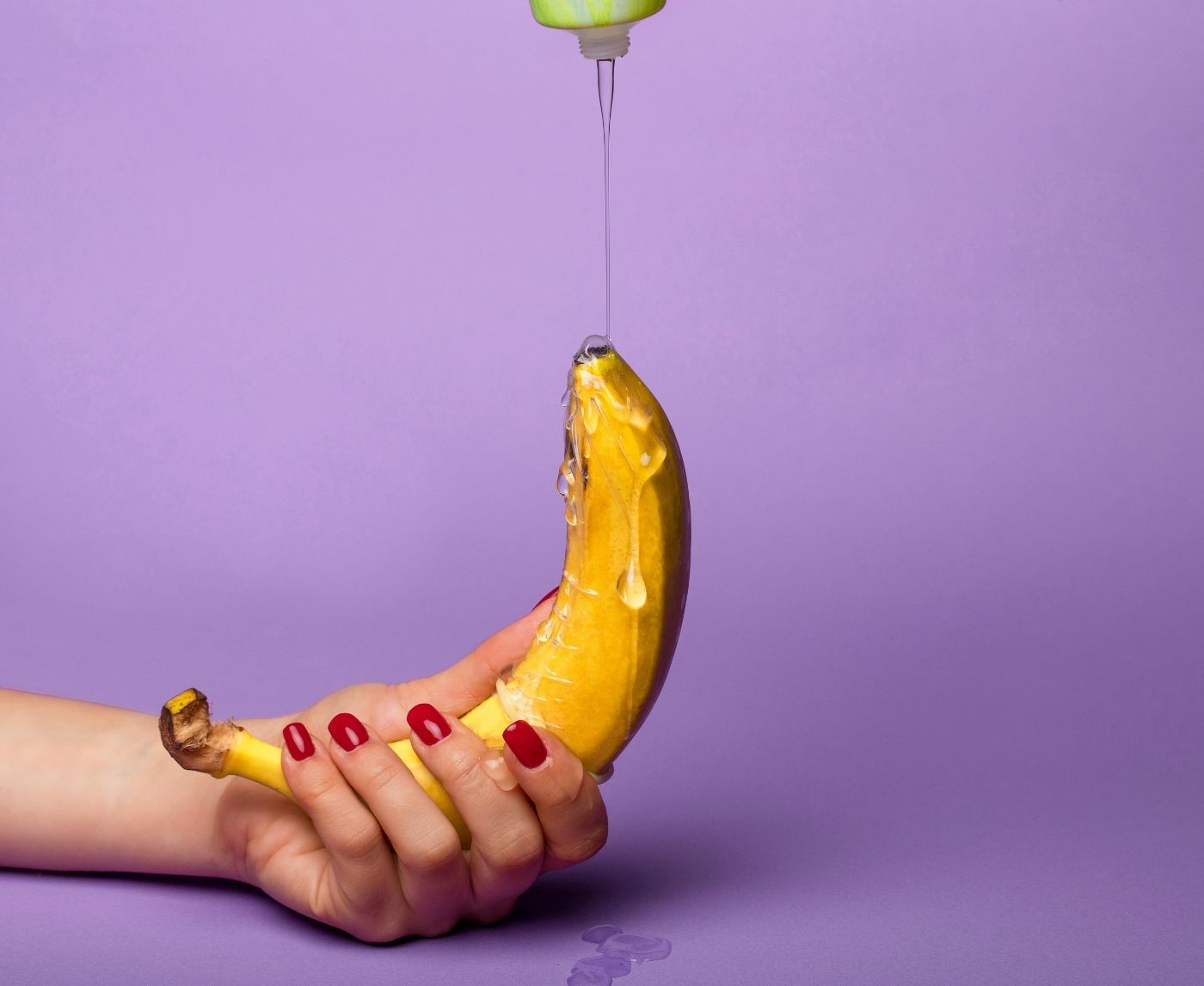
Lube makes sex more comfortable, and that comfort genuinely matters for safer sex. But comfort and prevention are not the same thing. The honest answer to does lube prevent HIV is no. Lube by itself does not block HIV transmission. What the right lube can do is lower the chance of microtears in vaginal and rectal tissue, and reduce the odds of condom breakage. Both of those effects can lower per-act risk when lube is used alongside condoms or pre-exposure prophylaxis (PrEP).
This article walks through what current CDC and WHO guidance says about lubricants and HIV risk, which lube chemistries are condom-compatible, which ingredients to avoid, and when to test after a worrying exposure. None of this is medical advice; it is a plain-English summary of public-health guidance for people trying to make informed choices.
Key Takeaways
- Lube does not prevent HIV on its own. It lowers friction and reduces condom breakage, which can lower per-act risk when paired with condoms or PrEP.
- Oil-based lubes break down latex within minutes. For HIV protection, only water-based or silicone-based lubes belong with a latex condom.
The short answer
Lube alone does not prevent HIV. It reduces friction during sex, and less friction means fewer microtears in vaginal and rectal tissue. Fewer tears means fewer entry points for the virus. That effect is real, but it is secondary, not direct prevention.
The tools that directly block HIV transmission are condoms used correctly, pre-exposure prophylaxis (PrEP) in HIV-negative people at ongoing risk, and viral suppression in a partner living with HIV (the principle known as Undetectable equals Untransmittable, or U=U). Lube supports these tools; it does not replace them. A condom paired with a water-based or silicone-based lube is more effective than a condom alone, mostly because the lube keeps the condom intact.
Oil-based lubes are the exception that proves the rule. They undermine latex condoms within minutes, which can convert a protected encounter into an unprotected one without either partner noticing.
- Condoms (used correctly, every act): the primary barrier against HIV during sex.
- PrEP for HIV-negative people at ongoing risk: a daily or on-demand medication regimen that reduces sexual HIV acquisition by roughly 99% when taken as prescribed.
- U=U (viral suppression in an HIV-positive partner): a partner with a sustained undetectable viral load cannot transmit HIV sexually.
Lube belongs in your toolkit as a friction reducer that supports condoms and reduces breakage. It is not a fourth prevention tool.
How HIV transmits during sex
According to the CDC, HIV passes from one person to another when blood, semen, pre-seminal fluid, rectal fluid, vaginal fluid, or breast milk from a person with HIV reaches the bloodstream of a person without HIV. During sex, that crossing usually happens through mucous membranes in the rectum, the vagina, the inside of the penis, or the mouth. Microscopic tears or surface inflammation make the crossing easier.
Per-act risk varies a lot by activity. The CDC’s published estimates put receptive anal intercourse with an untreated partner at the high end (roughly one to two transmissions per hundred exposures), receptive vaginal intercourse roughly an order of magnitude lower, and insertive intercourse on either side lower again but not zero. Oral sex risk is very low but not nil, particularly when bleeding gums, mouth sores, or pharyngeal STIs are present.
The reason rectal tissue is more vulnerable is structural. The rectum is lined with a single-cell-thick mucosa sitting directly over a dense bed of immune cells that HIV preferentially infects. The vagina has a thicker layered epithelium, more robust under most conditions, but still vulnerable to friction injury, especially when dry. The lube chemistry chosen for any given sex act therefore matters more in some contexts than in others, and rectal exposure is the most sensitive case.
Public-health estimates of HIV transmission risk per single act with an untreated HIV-positive partner, no condom, no PrEP:
- Receptive anal intercourse: roughly 1 to 2 transmissions per 100 exposures (the highest sexual route).
- Receptive vaginal intercourse: roughly an order of magnitude lower, around 1 to 2 per 1,000 exposures.
- Insertive anal or vaginal intercourse: lower again, single digits per 10,000 exposures, but not zero.
- Oral sex: very low, close to zero in most modeled scenarios, but not zero when bleeding gums, mouth sores, or untreated pharyngeal STIs are present.
These are population averages. Real-world per-act risk is modified by viral load, coexisting STIs, mucosal health, and consistent condom or PrEP use.
Water-based, silicone, or oil: why type matters
Lubricants fall into three broad chemistry categories. The differences are not cosmetic. They change whether the lube is condom-safe, how long it lasts, and whether it irritates mucosal tissue.
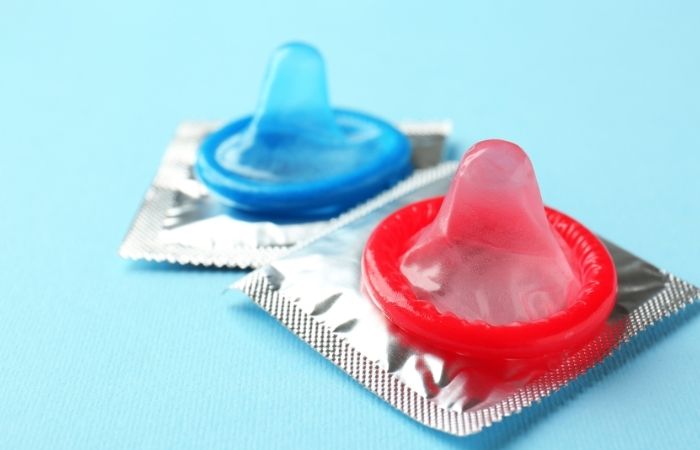
Water-based lubes are the most common. They feel clean, wash off easily, and are safe with both latex and polyurethane condoms. The trade-off is that they can dry out during long sessions and need re-application. Silicone-based lubes last longer, feel slicker, and are particularly useful for anal sex where friction is highest. They are also condom-safe. Oil-based lubes (mineral oil, coconut oil, baby oil, petroleum jelly, body lotions) feel rich and last long, but they break down latex; the WHO condom fact sheet is explicit that only water-based or silicone-based products belong with latex condoms.
Practical takeaway: if you use latex condoms, never combine them with oil. Stick with water or silicone. Silicone lube can also damage silicone-rubber sex toys, so check the bottle if you use both. The table below summarizes the basics.
| Lube type | Safe with latex condoms? | Effect on HIV risk | Notes |
|---|---|---|---|
| Water-based | Yes | Lowers risk when used with condoms | Safe with all condom types; may need re-application |
| Silicone-based | Yes | Lowers risk when used with condoms | Longer lasting; useful for anal sex; can damage silicone toys |
| Oil-based (coconut oil, baby oil, petroleum jelly, lotions) | No | Can raise risk by degrading latex | Destroys latex condoms within minutes; not recommended |
The microtear question: real, but often misunderstood
Microtears are exactly what they sound like: microscopic abrasions in vaginal or rectal mucosa caused by friction. You usually cannot see them and they often do not bleed. They matter for HIV transmission because they expose the very immune cells the virus prefers to infect.
The mechanism is well-established in the public-health literature. Receptive anal intercourse without adequate lubrication produces more mucosal damage than the same act with lubrication, and the WHO has cited rectal tissue trauma as a key reason anal sex carries higher per-act risk than vaginal sex. Adequate, condom-compatible lubrication reduces that trauma. It does not eliminate it.
The myth side of the conversation is the assumption that visible blood is what counts. It is not. HIV does not need a wound it can see. A mucosal surface inflamed by friction, by bacterial vaginosis, or by an untreated coexisting STI provides plenty of access. This is part of why people with active genital herpes, syphilis sores, or untreated gonorrhea have elevated HIV-acquisition risk: their mucosa is already compromised.
The flip side is also real. Some lubes irritate mucosa rather than protect it. Lubricants with high osmolality (a technical measure of how much water they pull out of tissues, common in flavored and warming products) can leave the very tissue you are trying to protect drier and more vulnerable. Ingredient red flags are covered further down.
Can sharing a lube bottle spread HIV?
This question comes up in group-sex and kink contexts, and the short answer is: extremely unlikely. HIV survives poorly outside the body. The CDC notes that once exposed to air and normal environmental conditions, the virus quickly loses the ability to infect. Lube bottles, pump dispensers, jars, and applicators that pass between people during sex are not a documented route of HIV transmission.
That said, hygiene around shared bottles is still worth thinking about for other reasons. Bacteria, yeast, and some STIs (notably trichomoniasis) can survive on shared surfaces for longer than HIV does. Wiping the nozzle between users, avoiding finger-dipping into communal jars, and using single-use applicators where possible reduce that secondary risk. The table below summarizes common scenarios.
| Situation | HIV risk level | Good hygiene practice |
|---|---|---|
| Sharing lube from the same pump bottle | Very low | Wipe nozzle between users |
| Double-dipping into an open jar with fingers | Very low for HIV; higher for bacteria and yeast | Use a clean scoop or disposable glove |
| Sharing a single-use applicator or syringe | Low for HIV, but possible for other infections if blood is present | Use single-use applicators or sanitize thoroughly |
What is in your lube?
Most drugstore lubricants contain ingredients you would never spot from the front-of-bottle marketing. A handful of them can actively make sex less safe by drying out or irritating the mucosa you are trying to protect.
WHO lubricant guidance recommends iso-osmolar or hypo-osmolar lubricants for anal sex specifically, meaning lubes that do not pull water out of cells. Many flavored, warming, and tingling lubes are hyperosmolar by a wide margin because of how much glycerin or propylene glycol they contain. Animal studies summarized in WHO guidance have shown hyperosmolar lubes cause epithelial damage and may increase HIV transmission risk; human data is more limited but trends the same direction.
Ingredients worth flagging when reading a label:
- Glycerin: a sugar alcohol that can feed yeast overgrowth, especially in vaginal use.
- Propylene glycol: common in warming lubes; drying and abrasive to rectal and vaginal mucosa at higher concentrations.
- Chlorhexidine: an antimicrobial that can be harsh on sensitive mucosa and cause irritation.
- Nonoxynol-9 (N-9): a spermicide once added to lubes; WHO advises against it for anal sex because it damages rectal cells and can raise HIV risk.
- Parabens, fragrances, and flavors: potential allergens and possible irritants; flavored products tend to be hyperosmolar.
If you are not sure where to start, fragrance-free water-based lubes labeled “condom compatible” or “safe for anal use” are a reasonable default. Iso-osmolar silicone lubes are a good upgrade for anal sex specifically.
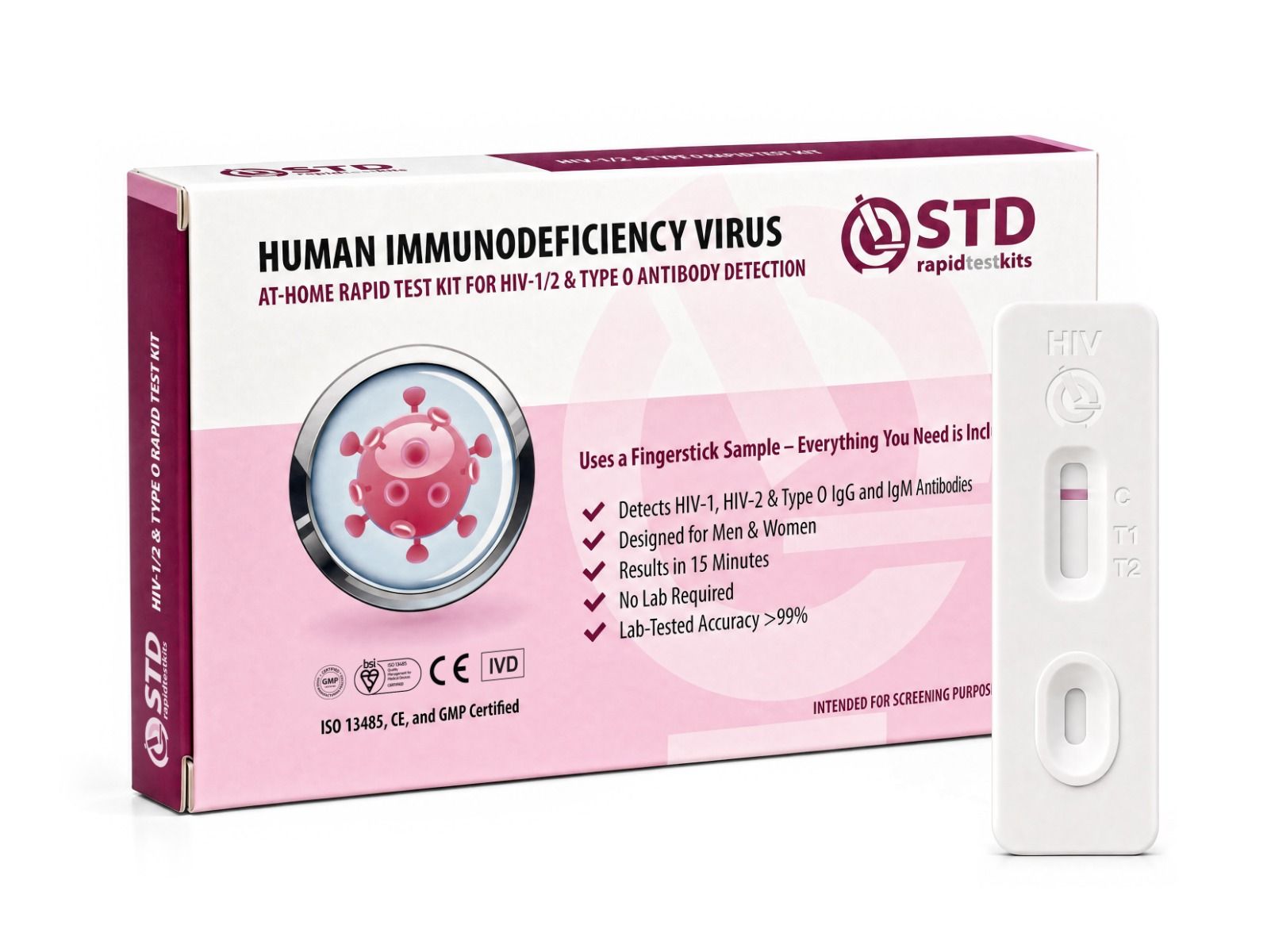
The rest of this article covers when an HIV test is reliable after a worrying exposure. stdrapidtestkits.com publishes this guide and sells the rapid at-home HIV test described in the section below. We recommend products based on fit to the reader’s concern, not commercial benefit.
When should you test for HIV after a worrying exposure?
If a condom broke, you did not use one, or you are simply not sure what your partner’s status was, the practical question becomes: when does a test tell you something useful?
HIV tests do not detect the virus the instant it enters the body. There is a “window period” between exposure and the point at which a test becomes reliable. The length depends on the test technology.
- Under 7 days post-exposure: no test is reliable yet. If you had a high-risk exposure within the last 72 hours, contact a clinic or emergency department about post-exposure prophylaxis (PEP). PEP is a 28-day medication course that can prevent infection if started within that window.
- 10 to 33 days: a laboratory nucleic-acid test (NAT or RNA test) may detect the virus directly. This is the earliest reliable detection window and is generally only done in clinical settings after a high-risk event.
- 18 to 45 days: a lab fourth-generation antigen/antibody test becomes reliable for most people.
- 23 to 90 days: rapid antibody-only tests, including home tests, become reliable. The CDC’s general guidance is to consider a result conclusive at 90 days if it stays negative.
If you want a quick, private answer after the window period has closed, an at-home rapid HIV test can give you a result without a clinic visit.
Five myths that keep people unsafe
A few persistent myths about lube and HIV are worth addressing directly.
“Lube is all I need if there is no visible blood.” Wrong. Most HIV transmission happens through mucosal exposure, not bleeding wounds. Lube lowers friction, which lowers risk, but it does not seal off the mucosa.
“Natural means safe.” Coconut oil, olive oil, and other natural oils are widely promoted online as healthy lubes. They destroy latex condoms within minutes. Whatever else you think about them, do not pair them with a condom you are relying on for HIV protection.
“Flavored or warming lubes are fine for anal.” Many flavored and warming products are hyperosmolar and high in glycerin or sugar. They can irritate the rectal and vaginal lining, raise the risk of yeast overgrowth, and undermine the protective effect lube is supposed to provide.
“Tops cannot get HIV.” Insertive partners have a meaningfully lower per-act risk than receptive partners, but not zero. The urethral opening and any small abrasion on the penis are entry points. The CDC’s estimates put insertive anal sex risk in the single-digits-per-ten-thousand range with an untreated HIV-positive partner; uncommon, but real.
“If we both feel fine, we do not need to test.” Most people with early HIV have either no symptoms or a flu-like cluster easily mistaken for something else. The only way to know status is to test. The same is true for syphilis, chlamydia, and gonorrhea, which often produce no symptoms in the first weeks.
The WHO and CDC describe lubricants as a tool that supports condom integrity by reducing friction and breakage. Used together with condoms, lubricants lower per-act HIV risk indirectly. Used on their own, lubricants do not prevent sexually transmitted infections, including HIV.
Bottom line: lube helps, condoms and PrEP do the blocking, testing confirms
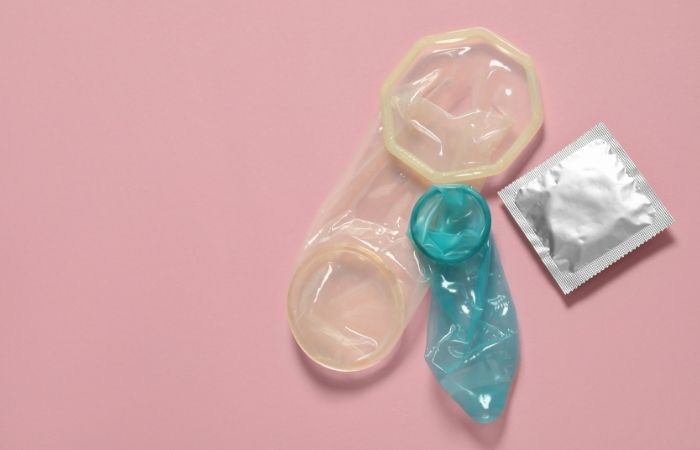
If you take one thing away: lube is a partial risk reducer, not a barrier. It works best when combined with the tools that block HIV transmission, which are condoms, PrEP, and U=U for partners on suppressive treatment. Choose water-based or silicone-based, skip flavored and warming products for anal sex, and never combine oil with latex.
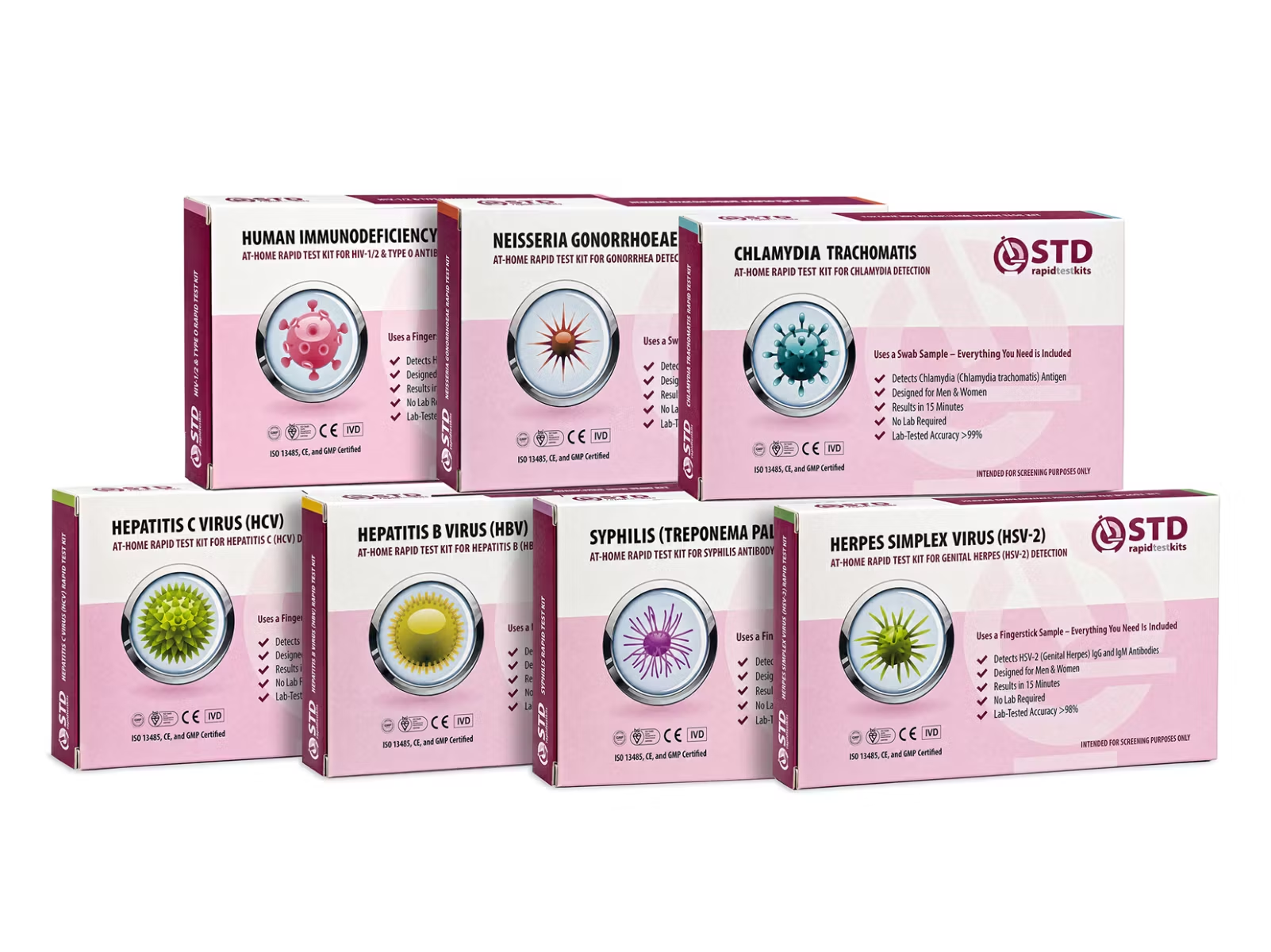
The most concrete thing you can do after any worrying exposure is to know your status. Window periods matter, so timing changes what the test can tell you. If you want a single home result for HIV alone, the kit above does that. If you would rather check the broader set of infections that commonly travel alongside HIV exposure events (syphilis, hepatitis B and C, herpes), a combo panel is the practical option.
FAQs
- Can you get HIV while using lube?
- Yes. Lube reduces friction and lowers the chance of microtears and condom breakage, but it does not block the virus. HIV prevention still depends on condoms, PrEP, or U=U for partners on suppressive treatment.
- Is silicone-based lube safer than water-based for HIV prevention?
- Both are condom-safe and both reduce friction. Silicone lasts longer and is often the better choice for anal sex specifically because friction is higher and rectal tissue is more fragile. Neither chemistry prevents HIV on its own.
- Does using more lube lower STI risk?
- Up to a point, yes. More lubrication means less friction and fewer microtears, which lowers per-act risk when combined with condoms. It does not replace condoms, PrEP, or testing.
- Can oil-based lube cause HIV transmission?
- Oil breaks down the polymer structure of latex. A condom that has been in contact with coconut oil, mineral oil, or petroleum jelly for even a few minutes may look intact but has lost significant tensile strength. The transmission risk is therefore indirect: the oil ruins the barrier, the failed barrier exposes the partners.
- Are flavored or warming lubes safe for anal sex?
- Often not. Many flavored and warming products are hyperosmolar and high in glycerin or sugar, which can dry out and inflame rectal mucosa. WHO guidance recommends iso-osmolar lubes for anal sex specifically.
- Do condoms and lube together make sex safer?
- Studies of condom use during anal and vaginal sex show fewer breakages, less slippage, and lower per-act STI transmission when adequate lube is added. The condom is doing the prevention work; the lube keeps it intact and in place through the act.
- Should I test for HIV if I used lube but no condom?
- Yes. Lube on its own does not prevent HIV. If you had any exposure to genital, rectal, or other body fluids without a barrier, the responsible move is to test after the window period has closed (or sooner if symptoms appear).
- Can I test for HIV at home?
- Yes. Rapid at-home HIV tests use a fingerstick blood sample and give a result in about 15 minutes. They are reliable from roughly 23 to 90 days after exposure. A test before the window closes can miss a recent infection, so timing matters.
- U.S. Centers for Disease Control and Prevention. HIV basics, transmission routes, and per-act risk estimates.
- World Health Organization. Condoms fact sheet, including guidance on water-based and silicone-based lubricants and the incompatibility of oil-based products with latex.
- World Health Organization. HIV and AIDS fact sheet, covering transmission, prevention, and testing.
- HIV.gov. Pre-exposure prophylaxis (PrEP) for HIV prevention.
- HIV.gov. Post-exposure prophylaxis (PEP): the 28-day medication course used after a recent high-risk exposure, started within 72 hours.
- U.S. Centers for Disease Control and Prevention. HIV testing overview and window-period guidance for antibody, antigen/antibody, and nucleic-acid tests.
- NHS. HIV and AIDS overview, symptoms, and testing guidance for the UK general public.
