Published: September 2025 | Last updated: May 2026 | Editorial review and quality control: Martina N.
If you have ever lain awake after a hookup wondering whether the protection you trusted was actually enough, this article is for you. Pre-Exposure Prophylaxis, or PrEP, works. The clinical data is strong, and the CDC reports it can cut HIV transmission risk from sex by about 99 percent when taken consistently. But PrEP works inside the messiness of real lives, where pills get missed, refills run out, and the body sometimes pushes back against the medication itself.
The honest framing for 2026 is this: PrEP remains the most reliable HIV prevention tool widely available right now. It is not the only tool being built. Researchers are pushing hard on vaccine candidates and longer-acting injectables, and the gap between near-perfect on paper and near-perfect in real life is what the next generation of prevention science is trying to close.
This article walks through where HIV vaccine research stands today, who is most underserved by the current PrEP-first system, and how at-home testing fits into a layered prevention plan while the science continues to evolve.
Key Takeaways
- Daily oral PrEP cuts HIV risk from sex by about 99% per CDC data when taken consistently, but real-world protection drops with missed doses, drug interactions, or gaps in refill and lab access.
- HIV vaccine trials are advancing in 2026, with mRNA platforms leading the next generation after the discontinued Mosaic candidate, but no licensed HIV vaccine exists yet and any public rollout is years away.
PrEP Changed the Game, But It Didn't End It
Let's get specific about what PrEP does. Pre-Exposure Prophylaxis is a medication taken before potential HIV exposure so the virus cannot establish itself in the body. The two oral options approved for daily use are emtricitabine plus tenofovir disoproxil fumarate, marketed as Truvada, and emtricitabine plus tenofovir alafenamide, marketed as Descovy. The injectable option, cabotegravir (brand name Apretude), is administered as an intramuscular shot every two months.
According to the CDC, daily oral PrEP reduces the risk of getting HIV from sex by about 99 percent when taken as prescribed. Injectable cabotegravir shows similarly high efficacy in trials and reduces the adherence burden for people who struggle with daily pills. These are among the highest single-intervention protection rates in HIV prevention history.
But “as prescribed” is the operative phrase. Missed doses, drug resistance in the source partner, absorption issues from gastrointestinal conditions, and the different drug concentrations PrEP reaches in vaginal versus rectal tissue all push real-world effectiveness down from that ceiling. PrEP also is not for everyone. Some people experience nausea, headaches, or kidney function changes on the oral medication. Others lack the access pathway needed to start it or to maintain the required quarterly lab work. And many never hear about it from a provider in the first place.
The gap, between what PrEP can do biochemically and what it does in actual lives, is where vaccine research is trying to make a different kind of difference.
| Option | Form | Dosing | Notes |
|---|---|---|---|
| Truvada | Oral pill | Once daily | First FDA-approved PrEP (2012); generic available |
| Descovy | Oral pill | Once daily | Different kidney/bone profile from Truvada; not approved for receptive vaginal sex |
| Apretude (cabotegravir) | Intramuscular injection | Every 2 months at a clinic | Removes daily-pill burden but requires regular clinic visits |
Where HIV Vaccine Research Stands in 2026
For decades, HIV vaccine development was a graveyard of promising candidates. The largest late-stage trial of the recent era, the Mosaic vaccine developed by Janssen, was discontinued in early 2023 after data showed it did not effectively prevent infection across the studied populations. That outcome ended one major line of research and redirected attention to a different platform: mRNA.
The same mRNA technology that produced the Pfizer and Moderna COVID-19 vaccines is now being adapted for HIV. The advantage is precision. mRNA delivers genetic instructions that tell the body how to produce specific antibodies, including broadly neutralizing antibodies that can recognize multiple HIV strains at once. That breadth is essential, because HIV mutates faster than almost any other human virus.
Several candidates are in early-phase trials supported by NIAID's HIV vaccine research program and partner consortia. The table below summarizes the current landscape.
What the pipeline means in practical terms: every active candidate remains in Phase I or Phase II, which is where researchers establish safety, dose, and immune response. A Phase III efficacy trial, the kind that generates the data regulators need for approval, has not yet begun for any mRNA HIV vaccine. Based on the current pipeline, a realistic timeline for the first publicly available HIV vaccine extends to the late 2020s or early 2030s.
The takeaway for individual decisions today: nothing in the vaccine pipeline changes what to do right now. PrEP, condoms, regular testing, and treatment-as-prevention for anyone living with HIV remain the toolkit. The vaccine work is a longer arc, and a hopeful one, but it does not change the math for this weekend.
| Vaccine Candidate | Sponsor | Platform | Phase (2026) | Target Strategy |
|---|---|---|---|---|
| mRNA-1644 | Moderna + IAVI | mRNA | Phase I (extending) | Trigger broadly neutralizing antibodies across HIV subtypes |
| HVTN 302 | NIAID-funded HVTN consortium | Protein subunit + adjuvant | Phase II | Clade C focus (dominant in sub-Saharan Africa) |
| BG505 SOSIP-based | Scripps Research + IAVI | Native-like trimer + germline targeting | Phase I | Sequential immunization to coach broad antibody response |
| Mosaic (Janssen) | Janssen / Johnson & Johnson | Adenovirus vector + multivalent protein | Discontinued 2023 | Was targeting global strain diversity; did not prevent infection |
Why PrEP Doesn't Work for Everyone
On paper, PrEP is close to a complete answer. In practice, the people who get HIV while taking it, or who never start it in the first place, fall into recognizable patterns.
Adherence gaps account for the largest share of breakthrough cases. The common pattern is not someone forgetting a pill once or twice; it is someone losing access entirely. Insurance changes, refill delays, clinic gaps during a move, or stretches when the medication runs out. During those windows, drug levels drop, and if exposure occurs the chance of seroconversion rises sharply.
Side-effect intolerance accounts for another sizable fraction. Some people develop persistent nausea, dizziness, or kidney function changes on oral PrEP. Switching from Truvada to Descovy helps some patients because the two drugs have slightly different kidney and bone profiles. Switching to injectable cabotegravir helps others, but neither pathway is universally available depending on insurance, region, and provider familiarity. People who stop oral PrEP because of side effects and never make it to an alternative are uncovered while they figure out what to try next.
Biological factors also matter. Vaginal tissue absorbs PrEP differently than rectal tissue, and the protective drug concentration reached in cervicovaginal tissue is lower per dose. Women using PrEP for receptive vaginal sex therefore need stricter adherence to reach the same level of protection that men who have sex with men reach on the same regimen. Cisgender women and transgender women face this consistently. The FDA labels reflect this difference, but public messaging often does not, leaving women under-informed about the higher adherence requirement.
Drug-resistant HIV strains are rare but real. If someone is exposed to a virus carrying mutations against the medications in PrEP, the regimen may not block infection. This is part of why CDC guidelines pair PrEP with HIV testing every three months: a missed acute infection could allow a resistant strain to develop under what is effectively monotherapy.
The point of mapping these failure modes is not to undermine PrEP. It is to be honest about who PrEP serves well and who needs additional layers.
What Real-World Protection Looks Like Beyond the Pill
The thing that gets lost in the “PrEP is 99 percent effective” headline is that prevention works in layers. Knowing your status and your partner's status, using barrier protection, taking post-exposure prophylaxis (PEP) within 72 hours of a suspected high-risk exposure, getting prompt treatment if positive (because viral suppression makes HIV untransmittable per the U=U evidence), and accessing PrEP all overlap to produce a level of safety that no single tool reaches alone.
For someone whose PrEP coverage is unreliable, layering matters more. For someone whose PrEP is rock-solid, the extra layers are insurance. For someone who cannot take PrEP at all, the layers ARE the prevention plan, and that plan can still be strong if it includes regular testing, condoms when wanted, and treatment-as-prevention for any positive partner.
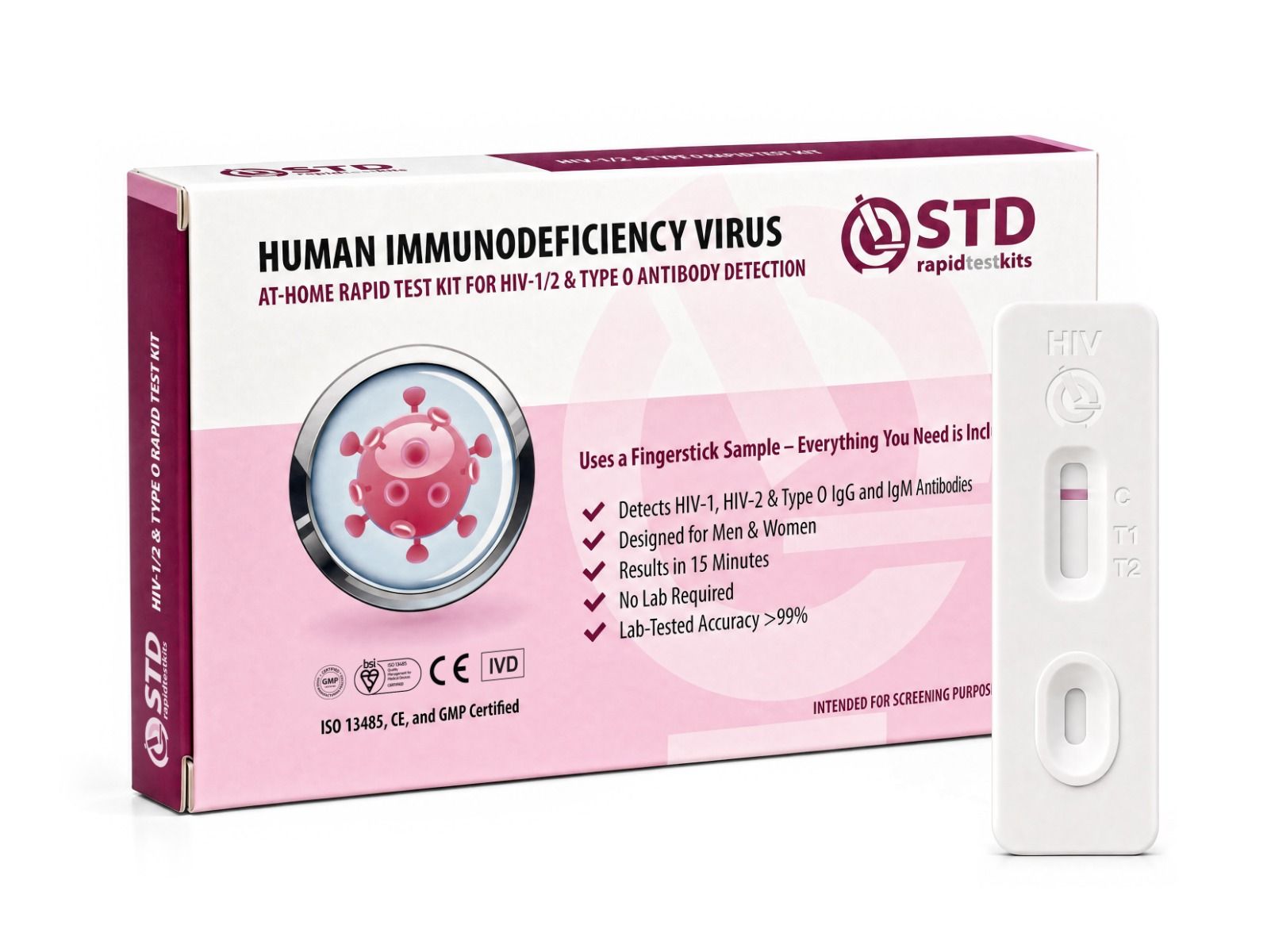
This site sells the rapid at-home tests referenced below; see our full product range for the swab and blood kits that fit into a layered prevention plan.
What an HIV Vaccine Could Actually Change
Imagine a once-yearly injection that trained your immune system to recognize HIV before it ever reached your bloodstream. That single shot would replace the daily pill, the reminder app, and the quarterly lab visit with one clinic appointment a year. That is the design target for the next generation of prevention. Whether mRNA candidates will reach that bar at scale is still an open scientific question, but the structural advantages of a vaccine over a daily medication are clear.
The table below summarizes the practical differences across current and projected prevention tools.
Even a vaccine with only moderate efficacy, say 50 to 70 percent in trials, could substantially shift population-level transmission, especially if it reaches communities currently underserved by PrEP. Public health math is not just about per-person effectiveness; it is about reaching enough people consistently to break transmission chains. A vaccine delivered once and lasting a year would reach people that a daily pill regimen never could.
Vaccines won't replace PrEP overnight, and the first generation likely won't be 100 percent effective. But layered protection is the point. A vaccine plus consistent testing, plus PrEP for those who can take it, plus treatment-as-prevention for anyone living with HIV, plus condoms when wanted, produces a stronger safety net than any single tool.
| Prevention Tool | User Burden | Real-World Effectiveness | Best Fit |
|---|---|---|---|
| Daily oral PrEP | Daily pill plus quarterly labs | About 99% with consistent use | Routine-friendly users with stable healthcare access |
| Injectable cabotegravir | Clinic shot every 2 months | Very high in trials | People who struggle with daily pills |
| HIV vaccine (projected) | One dose annually or less | TBD; trial targets are moderate to high | Underserved populations and as a supplementary layer |
| Condoms | Per-act use | About 80% effectiveness against HIV | Anyone; no medical access needed |
The Global Picture: Who's Left Out of Prevention
In the United States and other high-income countries, PrEP uptake is uneven along race, geography, and income lines. CDC surveillance data consistently shows that Black and Latino men who have sex with men have lower PrEP coverage than white peers, despite higher HIV incidence in those communities. Transgender women face additional access barriers, including provider mistrust, gender-affirming care intersections, and insurance coverage gaps.
Globally, the picture is harsher. According to WHO data, most new HIV infections occur in sub-Saharan Africa, where prevention infrastructure is patchier, drug supply chains are less reliable, and stigma around testing and antiretroviral use remains high. International programs run by UNAIDS, the Global Fund, and PEPFAR have expanded access dramatically over the past two decades, but PrEP adherence rates in the populations facing the highest exposure remain well below what is achieved in well-resourced clinical trials.
A vaccine could bypass several of these barriers. It would not require monthly refills, ongoing labs, or regular disclosure of medication use. It would not depend on a partner not seeing a pill bottle, or on a clinic being open the day a refill runs out. It would still require functional health systems and trust, but the bar would be meaningfully lower. This is why so many global-health funders, including the Bill and Melinda Gates Foundation and the EU's Horizon program, continue to back HIV vaccine research even when individual trials fail.

Why HIV Vaccines Have Been So Hard to Build
A fair question: COVID-19 had vaccines in under a year. Why has HIV taken more than 40 years?
The biology is genuinely different. HIV mutates faster than almost any other human virus. Within a single infected person, the virus generates billions of variant copies, and the immune system cannot keep up. HIV also integrates into the host cell's own DNA, making it effectively invisible to immune surveillance during the latent phase. And the most-exposed surface protein, gp120, is heavily glycosylated, meaning it is coated in sugars that the immune system reads as “self” and ignores.
Past failures helped clarify what does not work. The original step-up vaccines based on adenovirus vectors did not generate the right antibody responses. Some, like the STEP trial in 2007, may even have temporarily increased infection risk in certain subgroups. The Mosaic trial showed that even a globally targeted multi-antigen approach could fail against real-world exposures.
mRNA has shifted the design space. Instead of using a viral vector or a recombinant protein, researchers can encode the precise antigen they want the immune system to learn from. Sequential vaccination strategies, sometimes called germline targeting, can teach the immune system in stages: first show it a starter version of the antigen, then progressively more complex variants, building toward antibodies that can neutralize broad HIV strain diversity. Several groups, including the Scripps Research consortium and IAVI partners, are testing this approach right now.
The work is hard, but it is no longer stuck. The pipeline has moved past the Mosaic dead end, even if the finish line is still years out.
Three Biological Barriers That Make HIV Vaccines Hard
- Rapid mutation: HIV generates billions of variant copies inside a single infected person, outpacing the immune system's ability to track and target it.
- DNA integration: HIV inserts its genome into the host cell's own DNA, hiding from immune surveillance during the latent phase.
- gp120 glycosylation: the virus's most-exposed surface protein is coated in sugars the immune system reads as “self” and ignores.
Myths About HIV Vaccines and Prevention
Let's clear up the persistent misunderstandings.
“There's already an HIV vaccine, they're just not releasing it.” No. This belief is rooted in valid medical mistrust, particularly within communities historically harmed by medical experimentation. But if an effective vaccine existed, it would be moving toward approval and rollout. The billions still being spent on research are because the science has not yet produced a candidate that works at the bar regulators require.
“If I'm on PrEP, I don't need anything else.” Not quite. PrEP is excellent, but its protection is user-dependent. A vaccine, when one is licensed, would offer passive baseline protection that does not require daily routine, which is meaningful for anyone whose life circumstances make perfect adherence impossible.
“Vaccines just don't work for viruses like HIV.” Past tense does not predict future tense. The same was said about mRNA in general before 2020. Current candidates are still in trials, and the realistic answer is that nobody yet knows how well they will work at scale, but they are not categorically blocked by the underlying biology.
“The Mosaic failure proves vaccines won't work.” Mosaic's discontinuation provided crucial immune-response data that informed current mRNA design. Failed trials are data, not the end of a research program. Many drug classes have several failed candidates before a working version emerges.
“PrEP causes drug resistance.” Generally false in practice. PrEP regimens are chosen specifically to minimize resistance. When resistance does emerge in PrEP users, it is almost always because the person was already infected with HIV at the time PrEP was started, which is why testing before initiation is required.
No Phase III efficacy trial has begun for any mRNA HIV vaccine. A realistic timeline for the first licensed product extends to the late 2020s at the earliest, with early 2030s more likely. Phase III trials typically take five to seven years to enroll, run, and analyze. Until then, PrEP, consistent testing, and treatment-as-prevention carry the load.
Layered Prevention While the Science Catches Up
Here is the practical posture for 2026. PrEP, if it can be taken consistently, remains the strongest single tool. If oral PrEP doesn't suit a particular body, injectable cabotegravir might. If neither works, the remaining options are not negligible: condoms, regular testing, transparent partner conversations, and prompt PEP within 72 hours of a possible exposure all reduce risk meaningfully.
Testing is the layer almost everyone underuses. HIV.gov guidance suggests that sexually active people who are not on PrEP test at least annually, and more often (every three to six months) for those with multiple partners or recent inconsistent condom use. Testing every three months is required for people on PrEP. Home rapid tests for HIV have made this dramatically less friction-heavy than it was a decade ago, with results in about 15 minutes from a fingerstick.
Home rapid HIV tests are screening tools, not diagnostic gold standards. Any reactive result needs lab confirmation through a Western blot or fourth-generation antigen/antibody assay. But for the first answer to a worrying question, they are fast, private, and accurate enough to either reassure or to prompt the right next step.
For people navigating new partners, recent exposures they're uncertain about, or simply maintaining quarterly check-ins while on PrEP, at-home testing fits into a layered prevention plan without requiring a clinic visit. It does not replace a full STI screening with throat or rectal swabs that aren't available in the at-home format, but it answers the most pressing question quickly.

You Deserve More Than a Single Tool
If reading all of this has been a lot, that is fair. The takeaway is not that PrEP is broken. PrEP is one of the most important medical advances of the past 15 years, and it remains the strongest single prevention option for people who can take it consistently.
The takeaway is that prevention works best when it is layered, when it is honest about the gaps, and when it doesn't require any single person to be perfect to stay safe. Vaccines are coming, but they aren't here yet. The honest 2026 status: the mRNA platform has earned its place after Mosaic's discontinuation, and the work is moving, but no licensed HIV vaccine exists yet and the realistic public-rollout timeline still measures in years.
While that work continues, the best things anyone can do are know their own status, know their partner's status when possible, use the tools available, and test on a schedule that matches their risk.

A person living with HIV who is on treatment and maintains an undetectable viral load has zero risk of transmitting HIV to their sexual partners.
FAQs
- Can I still get HIV while on PrEP?
- Yes, but it's rare. Breakthrough infections on PrEP almost always trace back to one of three causes: significant doses missed during exposure windows, a partner carrying an HIV strain with drug-resistance mutations, or someone who was already infected at the time PrEP was started but tested falsely negative. Taken as prescribed, PrEP cuts sexual transmission risk by about 99 percent. Consistency is the load-bearing piece.
- When will an HIV vaccine actually be available?
- No Phase III efficacy trial has started for any mRNA HIV vaccine as of 2026. Phase III trials typically take five to seven years to enroll, run, and analyze, which puts a licensed product at the late 2020s at the earliest and early 2030s more realistically. Anyone giving a sooner date is either describing a single-arm trial or projecting past historical norms.
- What's different about the mRNA approach to HIV vaccines?
- Instead of using a weakened virus or a recombinant protein, mRNA vaccines deliver genetic instructions that tell your immune system to produce specific antibodies. For HIV, this lets researchers target broadly neutralizing antibodies that can recognize multiple viral strains at once, which is essential because HIV mutates faster than almost any other human virus.
- Why was the Mosaic HIV vaccine discontinued?
- The Mosaic Phase III trial data, released in early 2023, showed it did not effectively prevent HIV infection across the studied populations. That ended the program. The field learned which immune-response profiles do not translate to real-world protection, and that data directly shaped the mRNA designs now moving through Phase I trials.
- I can't tolerate oral PrEP. What are my options?
- Several. Switching from Truvada to Descovy resolves side effects for some people because the two drugs have different kidney and bone profiles. Injectable cabotegravir (Apretude) eliminates the daily pill entirely and is given every two months by a clinician. If neither works, condoms, regular testing, and PEP within 72 hours of a possible exposure all remain part of an effective prevention plan.
- How often should I test for HIV if I'm not on PrEP?
- At minimum once a year if you're sexually active with no PrEP. Every 3–6 months if you have multiple partners or inconsistent condom use. On PrEP, quarterly testing is required as part of the prescription protocol. Home rapid tests make quarterly cadence realistic for almost anyone.
- Is at-home HIV testing reliable enough to make decisions on?
- Yes, for a screening result. Modern rapid antibody/antigen tests have high sensitivity and specificity, particularly when run after the recommended window period (typically 3 to 12 weeks depending on the assay). A reactive at-home result needs lab confirmation, but a negative result outside the window period is reliable enough to inform short-term decisions while you arrange follow-up if needed.
- Is it safe to date someone whose HIV status I don't know?
- It depends on what other protections are in place. If both partners are on consistent PrEP, transmission risk is very low. If one partner is HIV-positive and reliably on antiretroviral therapy with an undetectable viral load, transmission risk is effectively zero per the U=U evidence. Without those, condoms plus regular testing are the next-best layered approach until status is known.
How we sourced this article: This piece draws on current guidance from the CDC, HIV.gov, NIAID, and WHO, alongside peer-reviewed clinical literature on PrEP effectiveness, breakthrough infection patterns, and the active HIV vaccine pipeline. We translate published recommendations into plain-English summaries of what they mean for everyday prevention decisions. The references below highlight the public-health resources that directly support the specific claims in this article.
- U.S. Centers for Disease Control and Prevention. HIV prevention overview, including PrEP effectiveness data, adherence guidance, and testing intervals.
- HIV.gov. Federal hub for HIV prevention guidance, including PrEP, PEP, testing, and treatment-as-prevention information.
- National Institute of Allergy and Infectious Diseases (NIAID). HIV vaccine research program covering the mRNA candidate pipeline and the HVTN trial network.
- World Health Organization. HIV/AIDS topic page with global epidemiology, prevention policy, and vaccine research updates.
- U.S. Centers for Disease Control and Prevention. Undetectable equals Untransmittable (U=U) evidence base and resource hub.
- UNAIDS. Global HIV epidemic data and progress reporting on PrEP and antiretroviral therapy access in low and middle-income countries.
