
Published: September 2025 | Last updated: April 2026 | Editorial review and quality control: Martina N.
The phone screen says "positive." Heart racing. The mind starts running ahead, fast: dating is over, sex is dangerous, the future just got smaller. That spiral is the part doctors rarely explain at the appointment, and it is the part that hits hardest first.
Here is the calmer reality. Living with HIV, herpes, or HPV in 2026 looks much like living with any other long-term health condition. The medicine works. The science is settled. People date, marry, have children, and grow old. What changes is awareness, communication, and a few habits, not the shape of an entire life. This guide covers each virus, what current public-health guidance says, and how day-to-day reality lines up against the fear.
Can you live a normal life with HIV, herpes, or HPV?
Yes. With current treatment, all three are highly manageable. People living with HIV who reach an undetectable viral load on consistent antiretroviral therapy cannot transmit HIV through sex (the CDC's "Undetectable = Untransmittable" guidance). Herpes outbreaks become less frequent over time and can be suppressed with daily antivirals. Most HPV infections clear on their own within one to two years, and a vaccine prevents the highest-risk strains. The medical picture is far more stable than the initial panic suggests; the harder part is usually the disclosure conversation, which gets easier with practice.
Key Takeaways
- People living with HIV who take antiretroviral therapy as prescribed and reach an undetectable viral load have effectively no risk of sexually transmitting HIV to a partner (CDC, "Undetectable = Untransmittable").
- Most people with herpes or HPV never know they have it. Knowing your status, not avoiding the conversation, is what changes both medical outcomes and the disclosure conversation.
What "Long-Term" Means for HIV, Herpes, and HPV
Not every sexually transmitted infection sticks around. Chlamydia and gonorrhea, for example, are bacterial and clear with a short course of antibiotics. The three covered in this article are different. They are viral, and each one behaves on its own timeline.
HIV is a chronic viral infection that, untreated, attacks the immune system. With daily antiretroviral therapy, the virus is suppressed to levels so low it becomes medically undetectable, and most people living with HIV today reach a near-normal life expectancy. Treatment is lifelong, and typically straightforward.
Herpes, both HSV-1 and HSV-2, lives in nerve tissue for life after infection. Herpes has no cure; most people experience fewer outbreaks over time, and daily antiviral medication can suppress symptoms and lower transmission risk substantially.
HPV is a family of more than 150 related viruses. Most infections clear on their own within one to two years. A small subset persist, and a smaller subset cause cell changes that can lead to genital warts or, over many years, certain cancers. The HPV vaccine prevents the highest-risk strains.
These three get grouped together because they feel like verdicts at the moment of diagnosis, even though untreated chlamydia and gonorrhea cause more acute physical harm. They tend to involve a lifelong medical relationship, even when symptoms are minimal or absent.
| Virus | Curable? | Day-to-day reality with treatment | Common path over time |
|---|---|---|---|
| HIV | No, but suppressible | Daily antiretroviral pill or periodic injection; routine labs every few months | Undetectable viral load, near-normal life expectancy, no sexual transmission |
| Herpes (HSV-1, HSV-2) | No | Optional daily antiviral suppressive therapy; outbreaks managed at home | Outbreak frequency decreases over months to years; many years pass between flares |
| HPV | Often clears on its own | Vaccination if eligible; cervical screening if applicable | Most infections cleared by the immune system within 1 to 2 years |
HIV in 2026: What "Undetectable" Actually Means
The CDC and WHO are unambiguous on this point: a person living with HIV who takes their antiretroviral therapy consistently and reaches an undetectable viral load cannot pass HIV to a sexual partner. The campaign phrase is "Undetectable = Untransmittable," abbreviated U=U. It is the most important shift in HIV outcomes since the introduction of effective combination therapy in the 1990s.
Reaching undetectable typically takes around six months on treatment. Once there, blood tests confirm that the virus is suppressed below the threshold a lab can measure. People living with undetectable HIV have HIV-negative partners and stay HIV-negative. They have biological children without transmitting the virus. They live decades.
Treatment matters here. U=U depends on consistent daily medication. Missing doses lets the virus rebound. The newer long-acting injectable regimens, given every one or two months, have made adherence easier for people who struggle with daily pills.
For someone newly diagnosed, the standard of care is to start treatment quickly, often the same day as the positive result. In the U.S., the Ryan White HIV/AIDS Program covers medication and care for people without insurance or with limited resources. Cost is not a reason to delay starting treatment.
For partners, two prevention tools matter beyond U=U. PrEP (pre-exposure prophylaxis) is a daily pill or periodic injection that an HIV-negative person takes to prevent acquisition; it is highly effective when used as prescribed. PEP (post-exposure prophylaxis) is a 28-day medication course started within 72 hours of a possible exposure to prevent infection from taking hold. Together, these tools have changed the transmission math from the 1990s framing many people still carry.
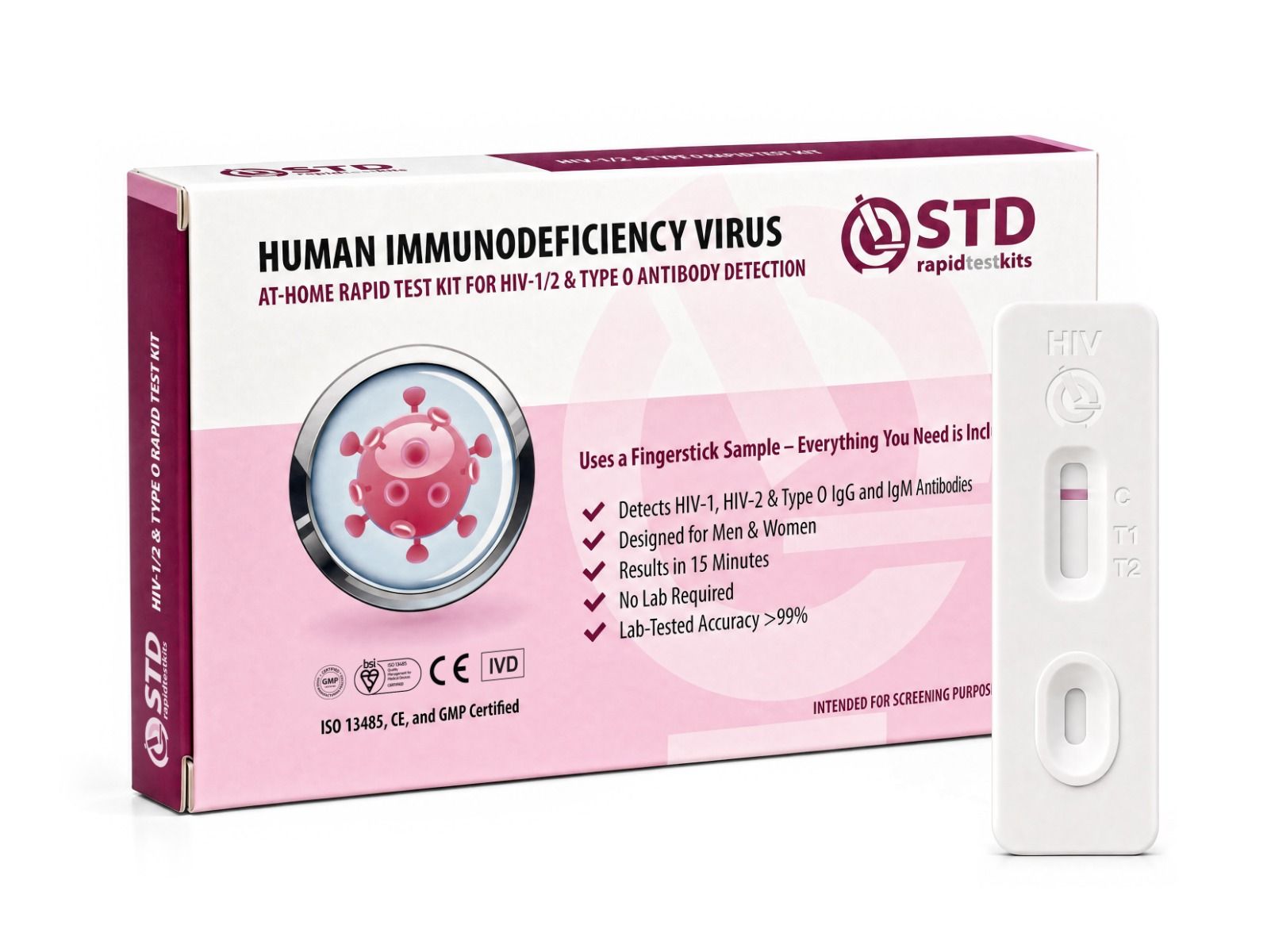
This site sells at-home rapid lateral-flow STI test kits; the product links below point to our own catalog.
People who take HIV medicine as prescribed and get and keep an undetectable viral load have effectively no risk of sexually transmitting HIV to an HIV-negative partner.
Herpes: Common, Misunderstood, and Manageable
Herpes carries more stigma than its medical impact deserves. The WHO estimates that around 13 percent of people aged 15 to 49 globally have HSV-2, and around two-thirds of people under 50 have HSV-1. Most have no symptoms or mild symptoms and are never formally diagnosed.
When symptoms do appear, they typically follow a recognizable pattern: a tingling or burning sensation in the affected area (the prodrome), then small fluid-filled blisters that scab and heal over one to two weeks. The first outbreak is usually the most severe. Recurrences, when they happen, are shorter, milder, and decrease over time. Many people go a year or more between outbreaks once the first year is past.
Suppressive therapy means daily antiviral medication such as valacyclovir or acyclovir. According to CDC herpes guidance, daily antiviral medication makes outbreaks less frequent and lowers the risk of transmitting HSV-2 to a partner. Used together with consistent condom use and avoiding sex during prodrome or active lesions, the combined transmission risk drops well below the unprotected, untreated baseline.
Two practical points are often missed at diagnosis. First, blood tests for HSV are not routinely included in standard STI panels, and they have known false-positive issues at low-positive index values. The CDC does not recommend routine type-specific HSV-2 screening for asymptomatic adults. Diagnosis usually comes from a swab of an active lesion. Second, the hardest part of a herpes diagnosis is rarely the physical symptoms. It is the loop of "what does this mean about me?" That loop typically loosens within months as people learn the actual numbers and meet other people who are dating and partnered without issues.
HPV: The Virus Most Sexually Active Adults Encounter
HPV is one of the most common viral sexually transmitted infections. The CDC describes it as a very common virus, and most sexually active adults who are not vaccinated will encounter at least one strain at some point in their lives. For most people, the immune system clears the infection within one to two years and they never know they had it.
A subset of HPV strains, called high-risk types, can persist and cause cell changes. Persistent HPV-16 and HPV-18 in particular drive most cervical cancer cases, and they also play a role in throat, anal, penile, and vulvar cancers. Other strains, such as HPV-6 and HPV-11, cause genital warts but do not cause cancer.
The Gardasil 9 vaccine protects against nine HPV types, including the most cancer-associated ones. The CDC's Advisory Committee on Immunization Practices (ACIP) recommends routine HPV vaccination starting at ages 11 to 12 (it can begin as early as age 9), with catch-up vaccination through age 26. For adults aged 27 through 45, vaccination is offered through shared clinical decision-making with a provider, since most adults in that range have already been exposed to one or more strains.
For people with cervixes, screening matters more than testing for general "HPV status." Pap smears and primary HPV testing detect the cell changes that, untreated over years, become cervical cancer. Following the recommended cervical-screening schedule for your age and prior results is what converts HPV from a serious cancer risk into a routine health item. For people without cervixes, there is no equivalent routine screening test; HPV-related cancers are rarer in this population but possible.
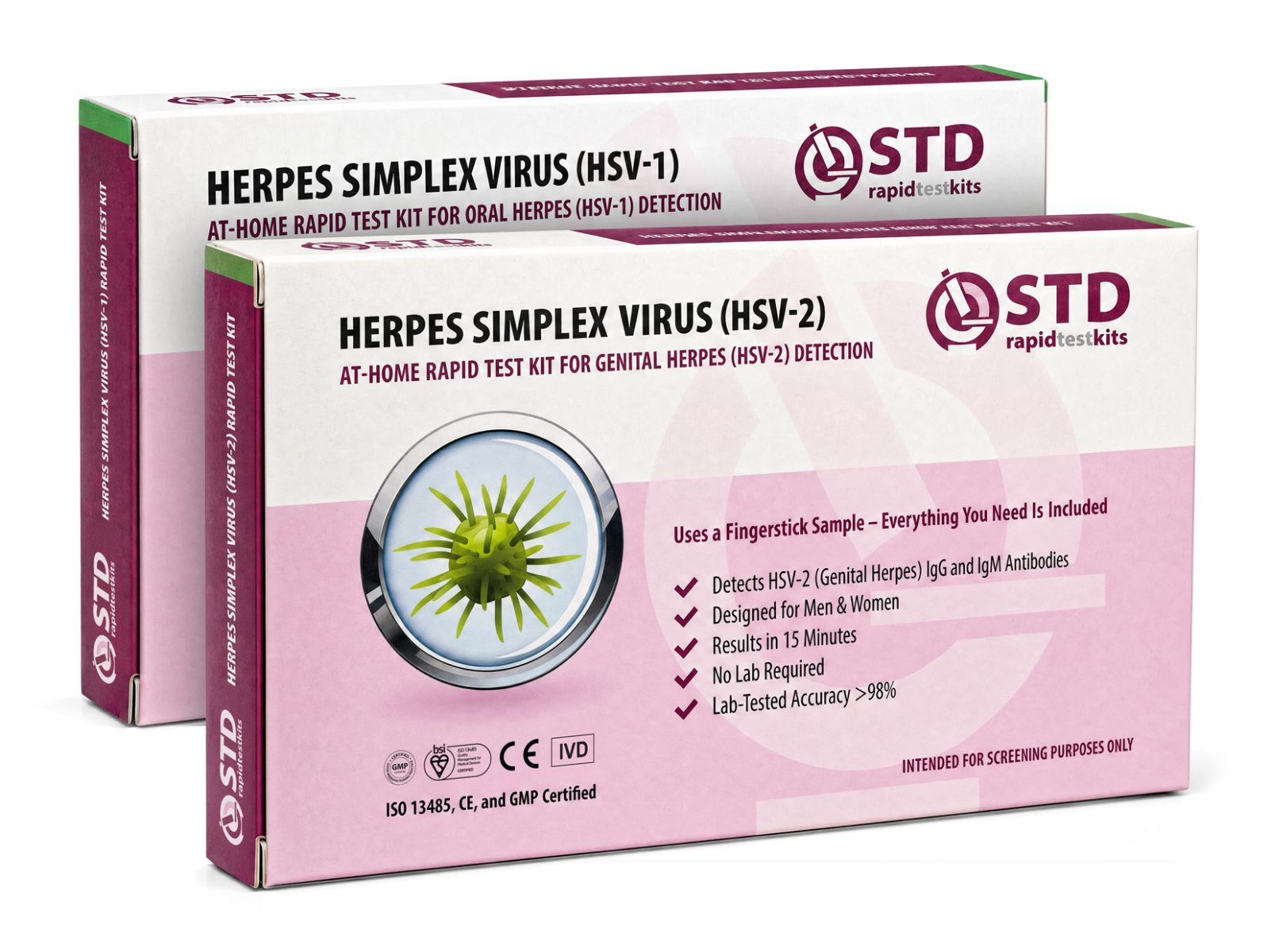
Our at-home HPV self-swab is validated for vaginal self-collection only. People without a cervix who need HPV-related testing should see a clinic; we do not currently offer a male-compatible at-home HPV test.
What the Diagnosis Actually Feels Like
The first 48 hours after a positive result are often the hardest stretch of the entire experience. The dominant feelings reported in support communities and in the clinical literature are shame, isolation, and grief, in roughly that order. There is usually a period of replaying recent partners, blaming oneself, and avoiding social contact.
What follows tends to be a process more than a single moment. Most people describe a gradual replacement of "what does this mean about me?" with "what do I actually need to know and do?" That shift is helped by accurate information, by talking to one trusted person, and (importantly) by time. Many people who write or speak publicly about their diagnoses describe the first six months as the heaviest period and the second year as substantially lighter.
Two things often make the early days harder than necessary. The first is searching online at 2 a.m., which surfaces both reliable sources and outdated alarmist material. The second is silence. Carrying a diagnosis as a secret amplifies its weight; telling one supportive person (a close friend, a therapist, a peer support group) typically eases that weight within weeks.
Mental health support belongs in chronic STI care alongside the medical care. A diagnosis can prompt or worsen anxiety and depression in ways that medication for the virus alone does not address. If a primary-care provider does not take the emotional side seriously, that is a reason to find a different provider, not a reason to fold the feelings inward.
If you find yourself reading at 2 a.m., these are the resources to anchor on: the U.S. Centers for Disease Control and Prevention (CDC), the World Health Organization (WHO), the UK National Health Service (NHS), Mayo Clinic, Johns Hopkins, and Cleveland Clinic. They keep current with treatment guidelines and avoid the alarmist framing common on commercial wellness sites.
Disclosure: What to Say and When
The disclosure conversation is the part most people dread, and the part that is almost always less catastrophic in reality than in anticipation. People rehearse a speech for days. The conversation, when it happens, is usually two minutes long.
The mechanics that work, drawn from disclosure research and patient-education materials, come down to four pieces.
Timing. Bring it up before sex, after some level of trust has formed. Not at the moment things are about to escalate, and not on a first message before meeting. Somewhere between "we have spent time together and I like you" and "we are about to be intimate" is the right window.
Tone. Informational lands better than confessional. "I want to share something so we can both make informed choices" is a different conversation from "I have to tell you something terrible." The first invites a question. The second invites alarm.
Information. Be ready to answer the partner's likely questions: how transmission works for the specific virus, what treatment looks like, what risk reduction is possible. Having the actual numbers (U=U for HIV, the suppressive-therapy figures for herpes, the natural-clearance rate for HPV) helps the partner respond from facts rather than fear.
Reaction. Some people will step back. Many will not. The ones who walk away over a managed viral infection are giving useful information about themselves; the ones who ask thoughtful questions and stay are usually the kind of partner worth having anyway. For people in mixed-status long-term relationships, the disclosure conversation evolves into ongoing risk-reduction planning, which becomes routine within weeks.

Sex After a Diagnosis
Sex does not stop after a diagnosis. It tends to become more communicative, which most partners report as a net positive. The specifics depend on which virus is involved.
For HIV: an undetectable viral load on consistent treatment removes the sexual transmission route entirely. A condom is still useful for other STI prevention but is not required for HIV prevention specifically when U=U applies. PrEP is an additional layer the HIV-negative partner can choose if they want it.
For herpes: the practical risk-reduction stack is daily suppressive antivirals, consistent condom use (which reduces, though does not eliminate, skin-to-skin contact), and avoiding sex during prodrome or active outbreaks. The combination drops transmission risk substantially below the unprotected, no-suppression baseline.
For HPV: condoms reduce risk, though they do not eliminate it because HPV transmits via skin-to-skin contact in areas a condom does not cover. Vaccination of the negative partner (if they are within the eligible age range and have not been previously exposed to the relevant strains) is the most reliable additional layer. For long-term couples already exposed to each other, additional precautions usually do not change the underlying math.
Pleasure is not the variable that changes. Many people in support communities report that sex after diagnosis is more intentional, partly because the conversation around it is no longer assumed.
Per-virus risk-reduction stack
- HIV: consistent antiretroviral therapy with confirmed undetectable viral load eliminates sexual transmission (U=U). Condoms remain useful for preventing other STIs. PrEP is an additional optional layer the HIV-negative partner can choose.
- Herpes: daily suppressive antivirals, consistent condom use, and avoiding sex during the prodrome (the tingling phase) and any active outbreak. Each layer adds protection.
- HPV: vaccinate the susceptible partner if eligible. Condoms reduce risk; HPV can still transmit through skin-to-skin contact in areas a condom does not cover.
Long-Term Relationships and Family Planning
Mixed-status long-term relationships are common and stable. Couples with one HIV-positive partner and one HIV-negative partner stay HIV-negative when U=U holds. Couples where one partner has HSV-2 and the other does not often live for years without transmission, particularly with suppressive therapy on the positive partner's side. HPV typically resolves on its own, and couples already exposed to each other's strains face minimal additional risk.
Pregnancy planning is well-supported across all three. For HIV, the standard of care prevents transmission to the baby in the great majority of cases when the parent is on effective treatment with an undetectable viral load throughout pregnancy and at delivery. With those conditions in place, CDC guidance describes the transmission risk to the baby as very low. For herpes, the main concern is neonatal herpes, which is rare but serious. Standard practice is suppressive antiviral medication starting around 36 weeks, plus a cesarean delivery if active lesions are present at the time of labor. With these measures, transmission to the baby is uncommon. For HPV, vertical transmission is rare and usually does not affect the baby's long-term health.
Talking to an OB-GYN or maternal-fetal medicine specialist early in pregnancy planning is the right move for any of the three. The protocols are well-established, and the delivery decisions are routine for clinicians who handle these cases regularly.
The takeaway people often need to hear: a diagnosis does not end fertility, partnership, or family. It adds a few medical conversations to the planning process.
HIV: antiretroviral therapy throughout pregnancy and at delivery, with a confirmed undetectable viral load. Transmission risk to the baby is very low under these conditions.
Herpes: suppressive antiviral medication starting around 36 weeks. Cesarean delivery if active lesions are present at the time of labor.
HPV: vertical transmission to the baby is rare and usually does not affect long-term health.
Where Testing Fits
Most of the anxiety after a possible exposure or a new partner comes from not knowing. Testing closes that gap. It also simplifies the disclosure conversation: a current negative result, in writing, takes a lot of guesswork out of the picture for both people.
For HIV, current rapid lateral-flow blood antibody tests detect HIV antibodies typically by about three months after exposure. Fourth-generation laboratory tests, which detect both antibodies and the p24 antigen, close that window earlier. CDC HIV testing guidance covers the specifics by test type. The CDC recommends routine HIV screening at least once for everyone aged 13 to 64, and more frequently for those at higher exposure.
For herpes, serology is available, and is not routinely recommended for asymptomatic screening. The CDC does not recommend type-specific HSV-2 testing in the general population without symptoms. If symptoms appear, a clinic-administered swab of the active lesion is the right test.
For HPV, there is no commercial blood test. Cervical screening (Pap and primary HPV) is the relevant test for people with cervixes. Anal Pap screening is sometimes recommended for higher-risk populations.
The more general STI panel (HIV, syphilis, hepatitis B, hepatitis C, chlamydia, gonorrhea, herpes) is what most clinics offer routinely. At-home rapid tests cover the same panel privately.

Frequently asked questions
- Can I get HIV from someone whose viral load is undetectable?
- No, not through sex. The CDC, WHO, and the consensus of large multi-year studies (PARTNER, PARTNER2, HPTN 052) found zero linked sexual transmissions from partners with a sustained undetectable viral load. "Undetectable = Untransmittable" applies to vaginal, anal, and oral sex. The condition is consistent treatment and confirmed undetectable status, usually verified every three to six months by lab testing.
- How much does daily suppressive therapy reduce herpes transmission?
- Daily valacyclovir suppressive therapy reduces HSV-2 transmission risk to a susceptible partner by roughly half in the foundational randomized trial, and reduces outbreak frequency by 70 to 80 percent. Combined with consistent condom use and avoiding sex during prodrome and active lesions, the practical day-to-day risk in a long-term mixed-status couple is low.
- If I tested negative recently, do I need to test again before a new partner?
- Test if anything has happened since your last result, or if it has been more than three to six months and you have had partners in that window. The HIV antibody window is up to about 12 weeks; combined antibody and antigen lab tests close that window earlier. For chlamydia and gonorrhea, retest annually if sexually active with new partners, or sooner if exposure is suspected. A current panel makes the disclosure and risk conversation cleaner for both partners.
- Should I get the HPV vaccine if I am over 26?
- Maybe. The CDC's ACIP recommendation is routine HPV vaccination through age 26, with shared clinical decision-making for adults aged 27 through 45. Most adults in that range have already been exposed to at least one HPV strain, but if your sexual history is limited or you expect future new partners, the vaccine still protects against the strains you have not yet encountered. A primary-care provider can help weigh it for your situation.
- Do condoms prevent herpes transmission?
- Condoms reduce herpes transmission, and they do not eliminate it because HSV spreads through skin-to-skin contact in areas a condom does not cover. The strongest combination is consistent condom use, daily suppressive antiviral therapy on the positive partner's side, and avoiding sex during the prodrome (tingling phase) and any active outbreak. Each layer adds protection; together they drive day-to-day risk in a long-term mixed-status couple low.
- How do I know if a herpes outbreak is starting?
- Typically 12 to 48 hours before any visible blister, you feel the prodrome: tingling, itching, or burning in the area where outbreaks usually appear, and sometimes a brief flu-like sense of being run down. If you take suppressive therapy, prodrome is the cue to be especially careful with skin-to-skin contact. If you take antivirals episodically (only during outbreaks), prodrome is the cue to start the medication, since earlier dosing shortens the outbreak.
- What is the difference between HSV-1 and HSV-2?
- Both are herpes simplex viruses; they are very similar genetically and cause similar lesions. Historically, HSV-1 caused most oral cold sores and HSV-2 caused most genital herpes, and the line has blurred. HSV-1 now causes a substantial share of new genital herpes cases through oral-to-genital contact. Either type can infect either site. HSV-1 in the genital area tends to recur less often than HSV-2 in the genital area. Diagnosis matters because the recurrence pattern and the conversation with future partners are different.
- U.S. Centers for Disease Control and Prevention. HIV basics, treatment, U=U guidance, and prevention with PrEP and PEP.
- U.S. Centers for Disease Control and Prevention. HIV testing guidance, including window periods by test type.
- U.S. Centers for Disease Control and Prevention. Genital herpes basic information, transmission, suppressive therapy, and screening recommendations.
- U.S. Centers for Disease Control and Prevention. HPV basics, vaccination (Gardasil 9), and ACIP age recommendations.
- World Health Organization. HIV and AIDS fact sheet, including global U=U guidance and antiretroviral coverage data.
- World Health Organization. Herpes simplex virus fact sheet, including global HSV-1 and HSV-2 prevalence figures.
- National Health Service (UK). Cervical screening information page covering eligibility and recommended screening intervals.
