The 13 Early Signs of HIV: Acute Symptoms, Testing, and Prevention
Most people who develop acute HIV symptoms notice them about 2 to 4 weeks after exposure, and the pattern looks almost identical to flu or mononucleosis. This guide covers the early signs, what the rash can look like, how HIV does and does not spread, when home and lab tests can detect infection, and how PEP, PrEP, and modern treatment have reshaped HIV prevention in 2026.



- Acute HIV symptoms usually appear 2 to 4 weeks after exposure and look almost identical to flu or mononucleosis. A significant share of newly infected people notice nothing at all, so symptoms alone never rule HIV in or out.
- PEP (emergency medication) works only within 72 hours of exposure; PrEP prevents infection before exposure; and modern treatment makes HIV untransmittable once the viral load is undetectable (U equals U).
Published: August 2025 | Last updated: May 2026 | Editorial review and quality control: Martina N.
When do HIV symptoms appear, and what do they look like?
Most people with acute HIV notice symptoms about 2 to 4 weeks after exposure. The pattern mimics flu: fever, fatigue, swollen lymph nodes, sore throat, headache, and sometimes a faint pink rash on the trunk. Symptoms resolve in 1 to 4 weeks. A meaningful share of newly infected people feel nothing, so only a test can confirm or rule out HIV.
HIV does not always announce itself. Some people develop a flu-like episode 2 to 4 weeks after exposure that fades within days, gets blamed on a bug going around, and is forgotten. Others have no symptoms at all for years. The early signs of HIV are real, but they are usually mild, nonspecific, and easy to mistake for influenza, mononucleosis, or a passing cold. That is why testing matters far more than symptom-watching once you have had a possible exposure.
This guide covers the timing and shape of acute HIV symptoms, the most reliable signs to know, why so many cases get missed, how the virus is and is not transmitted, when home and lab tests can actually detect infection, and the prevention tools (PEP, PrEP, and the U equals U principle) that have reshaped what HIV means as a chronic condition in 2026.
The Three Stages of HIV Infection
HIV moves through three clinical stages, each with a different viral load, symptom pattern, and effect on the immune system. The stages explain how someone can feel perfectly healthy and still pass on the virus.
Stage 1: Acute HIV infection. The virus replicates fast in the first 2 to 4 weeks. Viral load is very high, which makes the person highly contagious. The immune system's first response, not the virus itself, produces the flu-like symptoms most associated with new HIV. The acute phase lasts a few days to about four weeks.
Stage 2: Chronic HIV infection (clinical latency). Replication slows as the immune system partly contains the virus. People can feel well for years, sometimes a decade or more, without treatment, while the virus stays active, transmissible, and slowly damaging CD4 immune cells. With antiretroviral therapy this stage can last a normal lifespan; without it, progression typically takes around a decade, per CDC HIV resources.
Stage 3: AIDS. When CD4 counts fall below 200 cells per cubic millimeter, or an opportunistic infection appears, HIV has progressed to acquired immunodeficiency syndrome. Symptoms become pronounced: persistent fever, severe weight loss, recurring infections, certain cancers. Effective treatment keeps most people from ever reaching this stage.
| Stage | Typical duration | Defining feature |
|---|---|---|
| Acute HIV infection | 2 to 4 weeks | Very high viral load; flu-like symptoms in most people who get symptoms |
| Chronic HIV (clinical latency) | A normal lifespan with treatment; about 10 years without | Often symptom-free; virus active and transmissible without therapy |
| AIDS | Late-stage, variable | CD4 count below 200 cells per cubic millimeter, or an AIDS-defining opportunistic infection |
When Acute HIV Symptoms Show Up
The acute phase begins about 10 to 14 days after the virus enters the body, and in people who do get symptoms, those usually peak between week 2 and week 4. Clinicians call this stretch acute retroviral syndrome. The CDC describes a flu-like illness peaking around 2 to 4 weeks after infection, while the U.K.'s NHS cites a slightly wider window of around 2 to 6 weeks.
Most people with a new infection notice at least some symptoms during this window, but a meaningful share pass through it with nothing they would think to mention. When symptoms do appear, they build over a few days, hold for about a week, then fade over the next one to three weeks.
The pattern matters because it overlaps almost perfectly with influenza, mononucleosis, strep throat, and several common viral illnesses. Without a known exposure or a deliberate test, a clinician seeing only the symptoms is unlikely to suspect HIV first. Anyone who has had a possible exposure and then develops a flu-like illness in that 2-to-4-week window should raise the exposure history with their provider directly, rather than waiting for the symptoms to point at HIV on their own.
Once the acute phase resolves, the virus enters clinical latency and people often feel back to normal. That temporary disappearance is exactly what has driven so many missed diagnoses, because it suggests, wrongly, that whatever happened was minor and is over.
If a flu-like illness appears 2 to 4 weeks after a possible exposure, tell your provider about the exposure and ask specifically about HIV testing. Do not wait for symptoms to point there on their own; the same illness has many far more common causes, and only the exposure history tips the differential toward HIV.
The 13 Most Common Signs of Acute HIV Infection
The signs below are the ones most frequently reported in acute HIV. None is specific to HIV on its own. It is the pattern, several appearing together within 2 to 4 weeks of a possible exposure, that should raise suspicion.
1. Fever. A low-grade to moderate fever, often around 38 to 39 degrees Celsius (100 to 102 Fahrenheit), is the single most common acute HIV symptom. It tends to be persistent rather than spiking, and often comes with chills.
2. Fatigue. A heavy, disproportionate tiredness that sleep does not fix. Many people compare it to the exhaustion of mononucleosis.
3. Swollen lymph nodes. Tender, enlarged nodes in the neck, armpits, and groin, a direct sign the immune system is fighting a systemic infection.
4. Sore throat. Usually a pharyngitis without the white patches typical of strep, often with mild swelling.
5. Muscle and joint aches. Generalized aching, much like the flu.
6. Headache. Mild to moderate, sometimes with light sensitivity.
7. Maculopapular rash. A faintly itchy or non-itchy pink-to-reddish rash (flat spots mixed with small raised bumps) on the trunk that can spread to the face and limbs. It is covered in more detail in the next section.
8. Mouth or genital ulcers. Painful sores in the mouth or on the genitals are a more specific clue than fever or fatigue alone.
9. Nausea, vomiting, or diarrhea. Gastrointestinal upset is common during acute infection and usually clears with the other symptoms.
10. Night sweats. Drenching sweats that soak bedding and clothes.
11. Loss of appetite and weight loss. A short dip in appetite is common in the acute phase; significant unintended weight loss is a later-stage sign that needs prompt evaluation.
12. Oral thrush. White patches of Candida on the tongue and inner cheeks signal immune-system stress. It is more typical of untreated chronic infection than the acute phase, but it can appear early.
13. Cognitive symptoms. Trouble concentrating, mild memory lapses, or mental fog. In advanced untreated HIV this can progress to HIV-associated neurocognitive disorder.
Without a known exposure in the prior weeks, far more common viral illnesses explain this same symptom pattern.
Acute HIV Symptoms to Watch For
These overlap heavily with flu and mononucleosis. Several appearing together within 2 to 4 weeks of a possible exposure is the pattern that matters, and only a test can confirm HIV.
- Fever, often with chills Common
- Heavy fatigue that rest does not fix Common
- Swollen lymph nodes in the neck, armpits, or groin Common
- Sore throat without strep-style white patches Common
- Muscle and joint aches Common
- Headache, sometimes with light sensitivity Common
- Faint pink-to-reddish rash scattered on the trunk Common
- Drenching night sweats Less common
- Nausea, vomiting, or diarrhea Less common
- Painful mouth or genital ulcers Less common
- Oral thrush (white patches in the mouth) Rare
What the Acute HIV Rash Looks Like
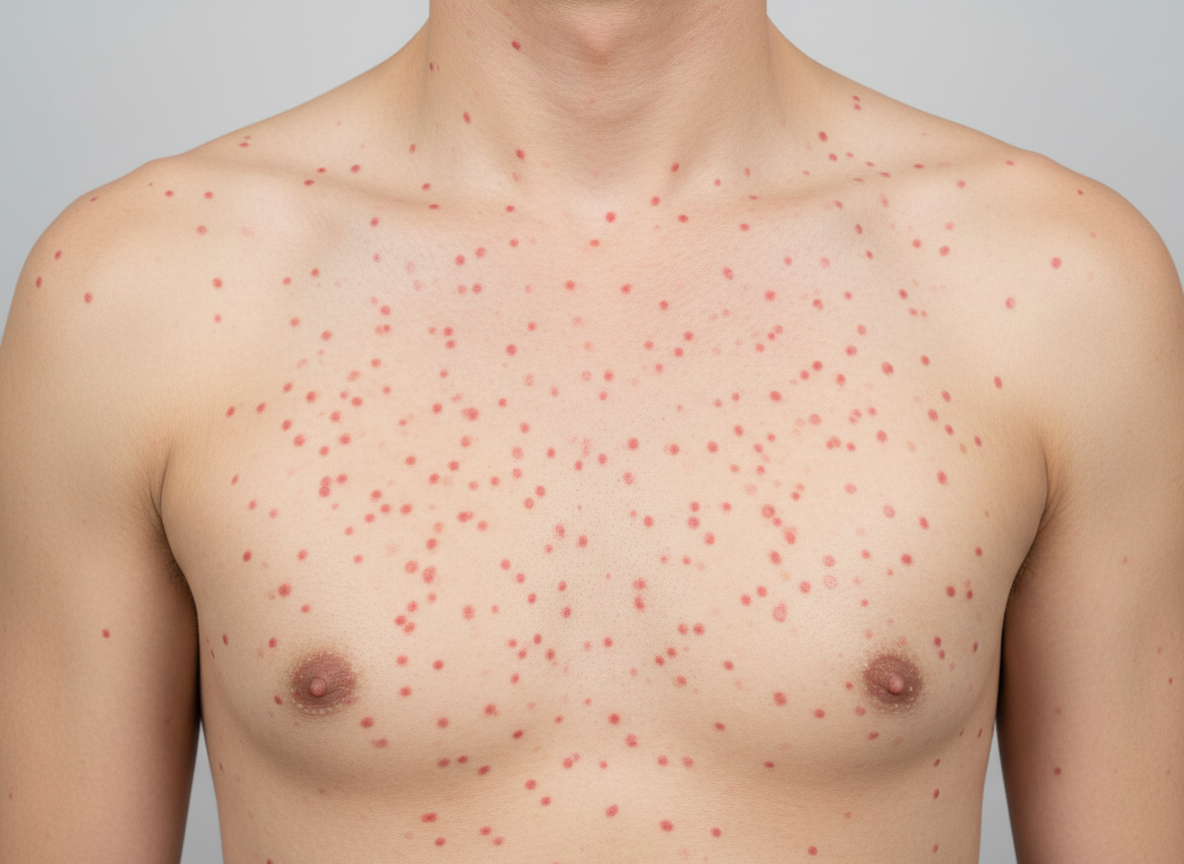
The rash that can come with acute HIV is one of the more recognizable signs, though it is never diagnostic on its own. It is maculopapular: a mix of flat discolored spots and small raised bumps. The spots are usually pink to reddish, roughly 1 to 3 millimeters across, and scattered over the trunk, sometimes spreading to the face, neck, and upper limbs. It is only mildly itchy or not itchy at all, and it clears on its own within one to three weeks.
It shows up in a large share of people who have symptomatic acute infection, but it looks like many other viral rashes. A drug reaction or a cold-virus exanthem can produce something similar, so appearance alone cannot confirm HIV. What shifts suspicion is timing: a rash like this arriving 2 to 4 weeks after a possible exposure, usually alongside fever and swollen glands.
Why Acute HIV Gets Missed
Acute HIV is one of the most commonly missed diagnoses in primary care, and the reasons are structural rather than careless. Three patterns explain most missed cases.
Symptom overlap with common illness. A young adult with fever, fatigue, sore throat, and a rash is usually told they have a virus, and statistically the clinician is right most of the time. HIV is uncommon enough in any single visit that it is not the first thing tested unless something flags the case.
Reluctance to mention exposure. Many people who could disclose a possible exposure do not. Stigma, shame, partner concerns, or simply not knowing whether what they did counted as exposure all keep the key fact out of the visit, and the clinician then decides without it.
Rapid tests can miss acute infection. Antibody-only tests, including most home rapid kits, are not sensitive enough in the first few weeks. A negative rapid test taken during acute infection can falsely reassure both patient and clinician. The same person tested 6 to 12 weeks later might be positive, by which point the acute clue has passed.
The practical move: if you had a possible exposure and then run a flu-like illness 2 to 4 weeks later, raise the exposure history with your provider and ask specifically about HIV testing, rather than letting the visit get filed as an ordinary viral illness.
If you test less than 3 to 4 weeks after a possible exposure, an antibody-only rapid test may not yet detect HIV. Re-test at 6 to 12 weeks for a reliable result, or ask your clinician for a 4th-generation antigen-antibody lab test or an HIV RNA test (NAT) to detect infection earlier.
How HIV Is and Is Not Transmitted
HIV transmission requires direct contact between an infectious body fluid and a mucous membrane, broken skin, or the bloodstream. The fluids that carry transmissible amounts of HIV are blood, semen, pre-seminal fluid, vaginal fluid, rectal fluid, and breast milk. Saliva, sweat, tears, and urine do not transmit HIV, and neither does casual contact like hugging, sharing utensils, or a closed-mouth kiss, per CDC guidance on how HIV spreads and the WHO HIV fact sheet.
Globally, the routes behind the overwhelming majority of new diagnoses are sexual contact and shared injection equipment. Mother-to-child transmission is now rare in countries with routine prenatal testing and treatment, and transmission through blood products is extremely rare wherever donations are screened. Two factors meaningfully raise per-exposure risk: a high viral load in the partner with HIV (highest during their own acute phase) and untreated STIs in either partner that inflame the mucosal surface.
| HIV is transmitted by | HIV is NOT transmitted by |
|---|---|
| Vaginal or anal sex without a condom or PrEP | Saliva, kissing, or sharing utensils |
| Sharing needles, syringes, or other injection equipment | Air or water |
| Mother to baby during pregnancy, birth, or breastfeeding | Hugging, handshakes, or casual contact |
| Occupational needlestick injuries (rare) | Sweat, tears, or insect bites |
| Transfusions in countries without donation screening | Toilet seats or swimming pools |
Everyday Prevention That Adds Up
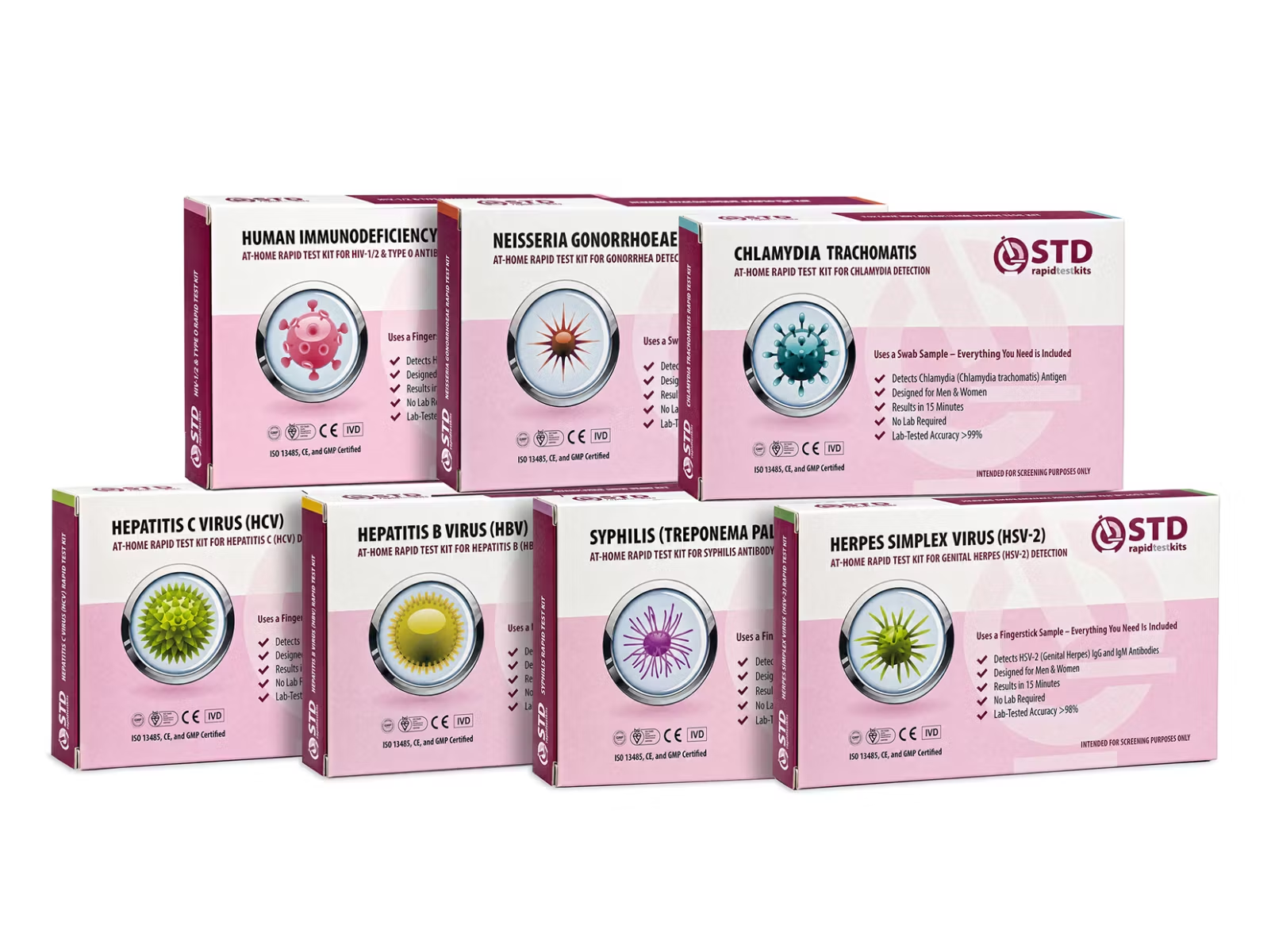
PEP and PrEP get the attention, but public-health agencies describe HIV prevention as a layered model with several smaller tools alongside the medications. (This article is published by stdrapidtestkits.com, which sells at-home test kits; we point to them where they fit a reader's timing and exposure, not as a replacement for clinic care.)
Condoms. Used consistently and correctly, latex or polyurethane condoms substantially cut HIV transmission during vaginal and anal sex, and they also block gonorrhea, chlamydia, and syphilis, which themselves raise HIV risk.
Sterile injection equipment. If you inject drugs, never share needles, syringes, cookers, cotton, or water. Many cities run syringe service programs that supply sterile equipment and safe disposal, often with naloxone for overdose reversal.
Treatment as prevention. When a partner with HIV is on therapy with an undetectable viral load, the risk of sexual transmission is effectively zero. This is why early diagnosis and prompt treatment protect partners as much as the person diagnosed.
Routine STI testing. Untreated STIs inflame mucosal surfaces and make HIV easier to catch and to pass on, so treating them is itself HIV prevention. Periodic screening with at-home STI test kits can fit a prevention routine, with anything reactive confirmed in a clinic.
Open conversations. The most underused tool is asking. "When were you last tested?" and "Are you on PrEP?" are ordinary questions, and a partner who refuses to discuss it has told you something useful.
Five Everyday Prevention Tools at a Glance
- Condoms: used consistently, they cut HIV transmission during vaginal and anal sex and block other STIs that raise HIV risk.
- Sterile injection equipment: never share needles, syringes, cookers, cotton, or water; syringe service programs supply sterile gear.
- Treatment as prevention: a partner with HIV who keeps an undetectable viral load cannot transmit it sexually.
- Routine STI testing: treating other STIs removes mucosal entry points, so it doubles as HIV prevention.
- Open conversations: asking a partner about their last test and PrEP use is an ordinary, useful prevention step.
PEP: The 72-Hour Emergency Window
PEP, post-exposure prophylaxis, is a 28-day course of HIV medication that can stop the virus from establishing infection after a possible exposure. The catch is timing: it has to start within 72 hours, and ideally within 24, per CDC clinical guidance for PEP. Every hour of delay matters, because HIV begins embedding in immune cells within roughly 24 to 36 hours.
PEP is appropriate after a condom break with a partner whose status is unknown or who is positive and not virally suppressed, after sexual assault, after needle-sharing, after a needlestick from a known or unknown HIV-positive source, and after receptive sex with a partner from a high-prevalence group when other prevention failed.
How to get it: emergency rooms can prescribe PEP, many urgent-care clinics can, and some sexual-health clinics keep starter packs. The federal PEPline (1-888-448-4911) is a clinical advisory service for providers; as a patient, your local emergency room, sexual-health clinic, or health department can guide you directly. Many health departments dispense PEP free of charge for sexual or injection exposures.
PEP often causes mild stomach upset, fatigue, or headache in the first week or two, which is rarely a reason to stop; finishing all 28 days is what makes it work. Follow-up HIV testing at week 4 to 6 and again at month 4 confirms the exposure was cleared. PEP covers one specific event. If your risk is recurring, PrEP is the right tool instead.
If a possible exposure happened in the last 72 hours, stop reading and call an emergency room, urgent care, or sexual-health clinic now. Ask specifically about PEP. Bring the timing of the exposure with you when you call.
PrEP: Protection Before Exposure
PrEP, pre-exposure prophylaxis, is medication taken before exposure to stop HIV from taking hold if it ever reaches the bloodstream. Taken as prescribed, oral PrEP greatly reduces the chance of acquiring HIV from sex and from injection drug use, per CDC PrEP guidance.
As of 2026, three formats are available. The most established is a daily tenofovir-based pill (Truvada or Descovy), with the longest safety record. Injectable cabotegravir (Apretude), given every two months, suits people who find daily dosing hard to keep up. A twice-yearly injection, lenacapavir, was approved by the FDA on June 18, 2025; in its trials it was 100 percent effective among women and 96 percent effective in a largely male population, per the CDC's 2025 MMWR recommendation.
PrEP is not for one demographic only. The CDC suggests offering it to anyone whose situation raises HIV risk: men who have sex with men, transgender people, people with multiple partners, people whose partner has HIV but is not yet virally suppressed, and people who inject drugs or share equipment.
Starting PrEP means a baseline HIV test (you must be HIV-negative to begin), a kidney-function check for tenofovir regimens, hepatitis B status, and an STI panel, with follow-up every three months. Most insurance plans cover PrEP with no cost-share under Affordable Care Act preventive-services rules, and assistance programs cover the medication for people without insurance.
Three PrEP formats available in 2026
- Daily oral tenofovir-based pills (Truvada or Descovy): the most established option, with the longest safety record.
- Injectable cabotegravir (Apretude): one shot every two months, useful when daily dosing is hard to keep up.
- Injectable lenacapavir: a twice-yearly shot approved by the FDA in 2025, with trial efficacy of 100 percent among women and 96 percent in a largely male population.
Per-Act Risk and the U equals U Finding
Per-act transmission risk varies widely by route. Receptive anal sex without a condom carries the highest per-act risk in sexual transmission, because the rectal lining is thin and easily injured, giving the virus direct access to the bloodstream. Sharing needles is also high risk, since injected blood bypasses every mucosal barrier. Insertive vaginal sex without a condom carries a meaningfully lower per-act risk, though it accumulates over repeated exposures and climbs sharply when other STIs are present, especially ulcer-causing ones like syphilis or genital herpes.
The most important development in HIV is that treatment itself prevents transmission. Antiretroviral therapy that drives the viral load to undetectable eliminates the risk of sexual transmission. This consensus, captured in the slogan U equals U (undetectable equals untransmittable), rests on several large prospective studies and is endorsed by the CDC and HIV.gov.
People living with HIV who take antiretroviral therapy as prescribed and maintain an undetectable viral load do not transmit HIV to sexual partners. The U equals U consensus is endorsed by the <a href="https://www.cdc.gov/hiv/" target="_blank" rel="noopener noreferrer">CDC</a> and <a href="https://www.hiv.gov/" target="_blank" rel="noopener noreferrer">HIV.gov</a> and is supported by large prospective cohort studies including PARTNER, PARTNER2, and Opposites Attract.
Who Should Get Tested for HIV
The CDC recommends that everyone aged 13 to 64 be tested for HIV at least once as part of routine care, regardless of perceived risk, a point echoed by HIV.gov. Diagnosing HIV is the single most effective way to slow its spread, and some people who have it do not know.
Beyond that one-time baseline, more frequent testing is recommended for anyone whose circumstances raise the yearly chance of exposure. The list below summarizes who should test more often than once a year.
Most people newly diagnosed say, in hindsight, that they did not think they were at risk. Routine testing exists precisely to catch those cases before anyone suspects a reason to look.
When to test more often than annually
- Unprotected sex with a new partner in the last year: test at least annually.
- Men who have sex with men: every 3 to 6 months.
- Sharing needles, syringes, or other injection equipment: every 3 to 6 months.
- Diagnosed with another STI in the last year: test for HIV alongside it.
- Known recent exposure: test now with a clinic 4th-generation test or NAT, then again at 6 to 12 weeks for confirmation.
- On PrEP: every 3 months as part of standard monitoring.
When Each HIV Test Can Detect Infection
Different HIV tests look for different markers, and each has its own window period: the gap between exposure and the earliest point a test can reliably detect infection. The four main formats, summarized from CDC HIV testing guidance:
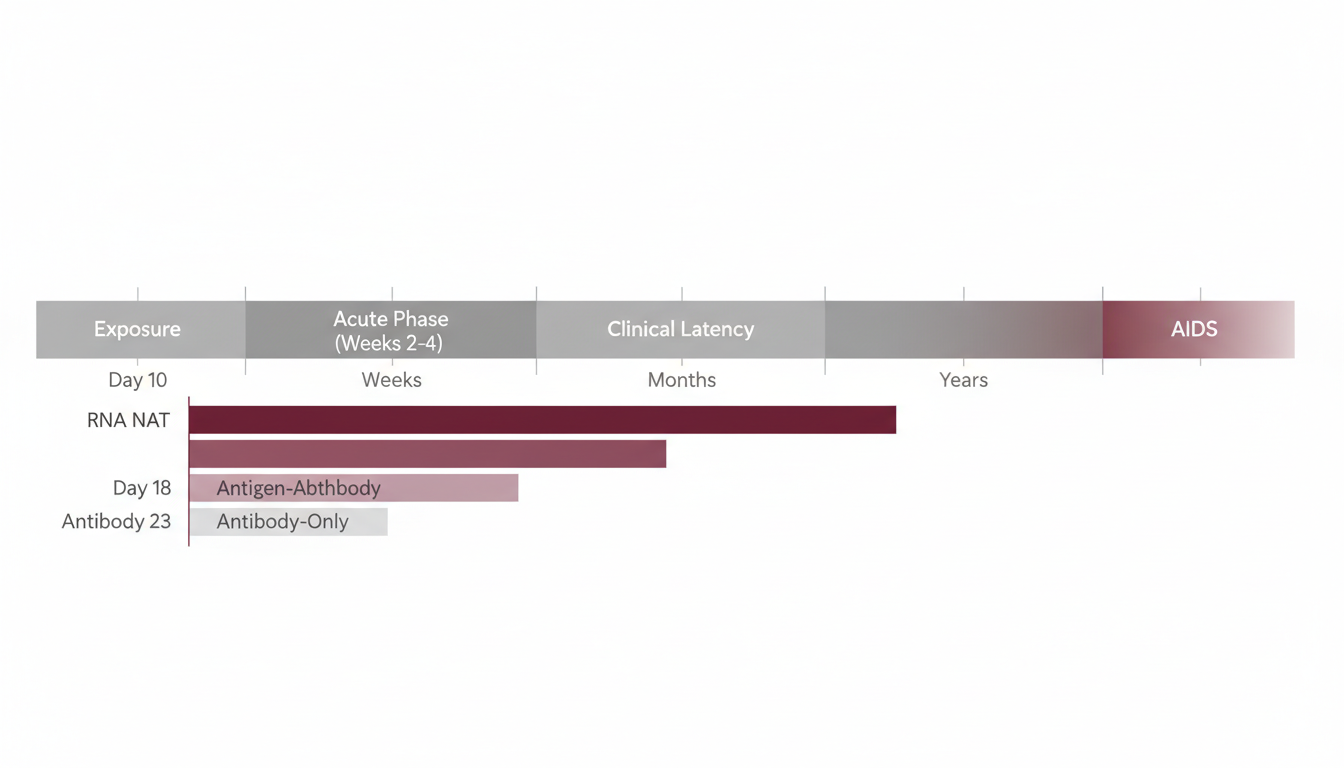
HIV RNA test (NAT). Looks directly for viral genetic material. Detects infection from roughly 10 to 33 days after exposure. It is the most expensive option and is usually reserved for known recent exposures, occupational exposures, or evaluation of acute symptoms.
Antigen-antibody lab test (4th generation). A blood draw that detects both the p24 viral antigen and HIV antibodies. Detects from about 18 to 45 days. This is the standard initial test in most clinical settings.
Rapid antigen-antibody test. A fingerstick version of the 4th-generation test used in clinics and pharmacies. Detects from about 18 to 90 days.
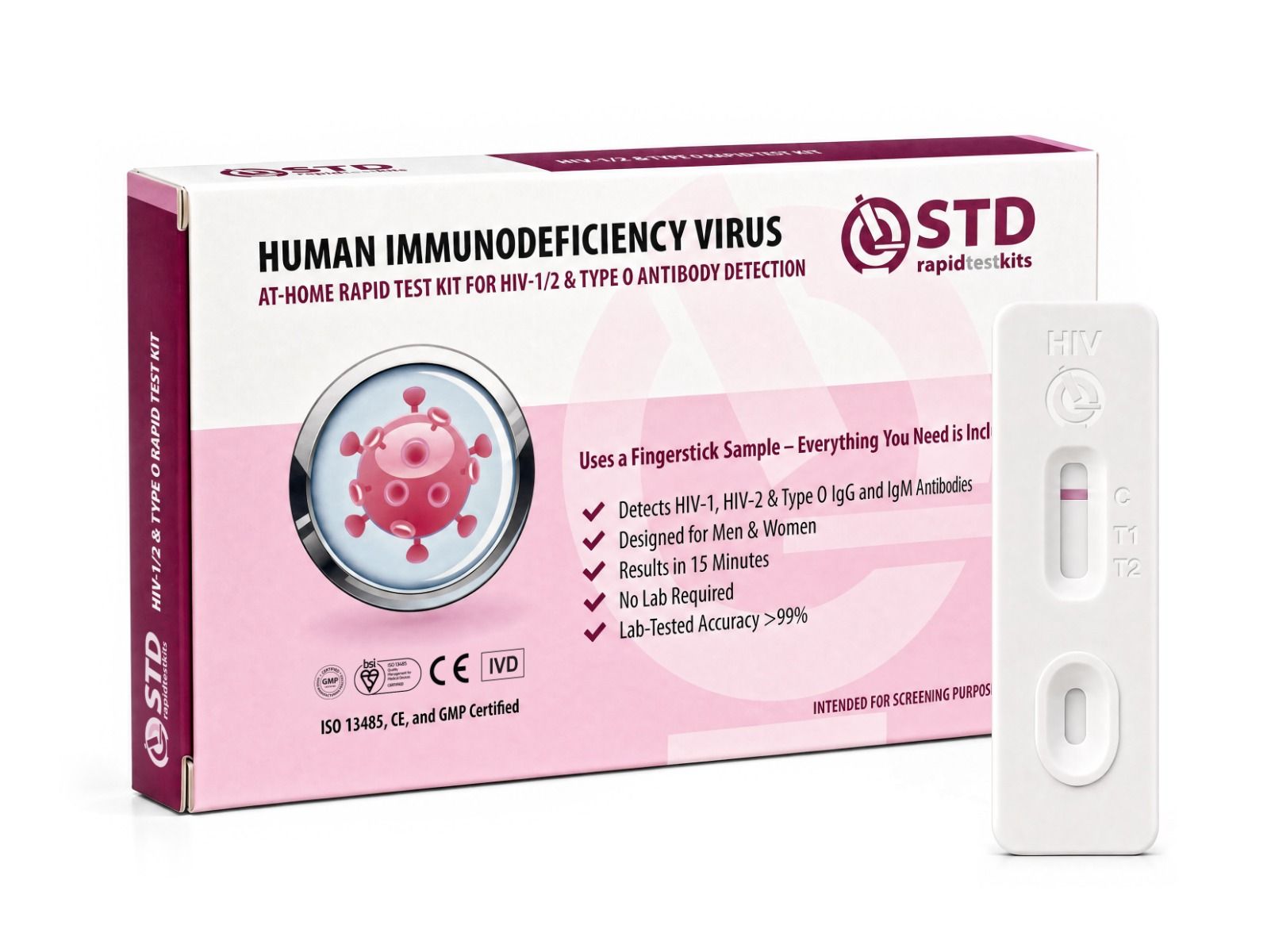
Antibody-only test. Looks only for the antibodies your immune system makes against HIV. Detects from about 23 to 90 days, depending on the assay. Most rapid home tests, including fingerstick-blood and oral-fluid versions, are antibody-only. They are highly accurate when used after the window period, but they can read falsely negative in the first few weeks of a new infection.
If you are testing because of a known recent exposure, a clinic 4th-generation test or NAT in the first 4 to 6 weeks is the right tool. An at-home rapid HIV test is well suited to routine periodic screening, checking your status before a new relationship, or confirmation testing 12 weeks or more after a possible exposure.
Treatment and the Long-Term Outlook
HIV is now a chronic, manageable condition for people who start treatment early and stay on it. Antiretroviral therapy suppresses the virus, lets the immune system recover, and brings most people's viral load to undetectable within about three to six months of starting, per HIV.gov.
Modern single-tablet regimens are taken once a day and are far gentler than the protease inhibitors of the 1990s. Long-acting injectable regimens, given every one to two months, are also available. People diagnosed early and treated promptly now have life expectancies approaching the general population, according to large cohort studies summarized by the CDC and WHO.
If a test comes back positive, the next step is a confirmatory test (usually a different antibody-antigen test plus a viral-load measurement) and a clinic appointment. In many cities, treatment can start the same day under rapid-start protocols. There is no benefit to waiting, and stop-start therapy lets resistance develop.
Most people who get HIV develop a flu-like illness within 2 to 4 weeks after infection. This is called acute HIV infection.
What to Do This Week
If you have read this far because something is worrying you, do one concrete thing in the next seven days. The right move depends almost entirely on how long ago the possible exposure was, because that determines which test can give you a usable answer.
Use the quick guide below to match your situation to a next step. When in doubt, a clinic can assess your exposure, check whether PEP is still an option, and order the right test for your timing.
Match Your Situation to a Next Step
Was the possible exposure within the last 72 hours?
Yes: Call an emergency room, urgent care, or sexual-health clinic now and ask about PEP. Bring the timing of the exposure with you.
Was the exposure roughly 4 days to 4 weeks ago?
Yes: Book a clinic 4th-generation lab test or NAT. Antibody-only home tests cannot catch a brand-new infection this early.
Was the exposure 4 weeks to 3 months ago?
Yes: A clinic test or a home antibody test will detect HIV now. Pair it with a broader STI panel, since co-infection is common.
Is your risk ongoing, or have you simply never tested?
Yes: Book a PrEP consultation this week if risk is recurring, and test at least once, as the CDC recommends for everyone aged 13 to 64.
No: If none of these describe you, routine periodic testing keeps your status current.
Guidance only. A healthcare provider can advise based on your specific situation.
FAQs
- How soon after exposure do HIV symptoms typically appear?
- In people who develop acute symptoms, the typical window is 2 to 4 weeks after exposure. A small minority develop them as early as 5 days or as late as 6 weeks. Symptom intensity usually peaks around week 3 to week 4 and resolves over the following 1 to 3 weeks.
- Can someone have HIV without any symptoms?
- Yes. HIV has three stages, and most people pass through years of the second stage (clinical latency) feeling completely well even without treatment. In the initial acute phase, a significant share of newly infected people notice no symptoms either. Testing is the only reliable way to confirm HIV status.
- What does the HIV rash look like?
- Acute HIV rash typically appears as a cluster of small flat or slightly raised pink-to-red spots on the chest and back, sometimes spreading to the face and arms. It is rarely itchy and clears on its own within one to three weeks. Because many viral rashes look identical, timing relative to a possible exposure matters more than appearance alone.
- Can I get HIV from oral sex?
- The per-act risk is very low. The CDC describes it as effectively negligible in routine encounters and well below the risk of vaginal or anal sex. It increases slightly with bleeding gums, recent dental work, or open mouth sores in either partner. Worth noting in a layered prevention plan, but not the highest-priority concern for most people.
- When can a rapid home HIV test detect infection?
- If your possible exposure was fewer than 3 weeks ago, a home antibody test cannot give a reliable answer yet; ask a clinic for a 4th-generation lab test or HIV RNA test. After 6 weeks a home test is reliable for most people, and after 12 weeks it is conclusive. Between 3 and 6 weeks is a gray zone where a negative home result should be retested at 12 weeks to confirm.
- How accurate are at-home HIV rapid antibody tests?
- Modern FDA-cleared HIV rapid antibody tests are highly accurate when used after their window period, with strong sensitivity and very high specificity. The key limitation is timing, not the technology: a test taken too early can read falsely negative. Any reactive (positive) result should be confirmed with a clinic lab test before it is treated as final.
- How long after PEP should I test for HIV?
- Two follow-up tests are needed: one at four to six weeks after starting PEP, and a second at the four-month mark. A single test at the end of the 28-day medication course alone is not sufficient to confirm clearance.
- Is HIV the same as AIDS?
- No. HIV is the virus; AIDS is the late-stage clinical syndrome that results from untreated HIV infection. With consistent antiretroviral therapy started early, most people with HIV never progress to AIDS. AIDS is defined either by a CD4 count below 200 cells per cubic millimeter or by the appearance of an AIDS-defining opportunistic infection.
- Can a single sexual exposure cause HIV?
- Yes, though per-exposure risk varies widely by sexual act and other factors. Receptive anal sex without a condom carries the highest per-act sexual transmission risk; insertive vaginal sex carries a much lower per-act risk. Risk rises sharply when other STIs are present, when the partner has a detectable viral load, and when there is mucosal trauma. A single exposure is not low enough to ignore: if it happened, test on the schedule above, and consider PEP if within 72 hours.
- Does insurance cover PrEP?
- If you have U.S. health insurance, almost certainly. Affordable Care Act preventive-care rules require most plans to cover PrEP medication, lab work, and clinic visits at no cost-share. For people without insurance, the federal Ready, Set, PrEP program and manufacturer assistance programs cover the medication for most who qualify.
- U.S. Centers for Disease Control and Prevention. HIV section covering basics, acute infection, transmission, surveillance, and the U equals U evidence.
- U.S. Centers for Disease Control and Prevention. HIV testing guidance, including the window periods for NAT (10 to 33 days), antigen-antibody lab test (18 to 45 days), rapid antigen-antibody test (18 to 90 days), and antibody-only test (23 to 90 days).
- U.S. Centers for Disease Control and Prevention MMWR. 2025 clinical recommendation for injectable lenacapavir as HIV PrEP, including FDA approval on June 18, 2025 and trial efficacy of 100 percent (PURPOSE 1) and 96 percent (PURPOSE 2).
- World Health Organization. Global HIV and AIDS fact sheet covering transmission, symptoms, prevention, and treatment.
- HIV.gov. U.S. federal information service on HIV, covering testing recommendations, viral suppression and U equals U, and living with HIV.
- U.K. National Health Service. HIV and AIDS overview covering symptoms, transmission, testing, and treatment, including the roughly 2-to-6-week acute symptom window.