Published: October 2025 | Last updated: May 2026 | Editorial review and quality control: Martina N.
Can syphilis really affect your eyes?
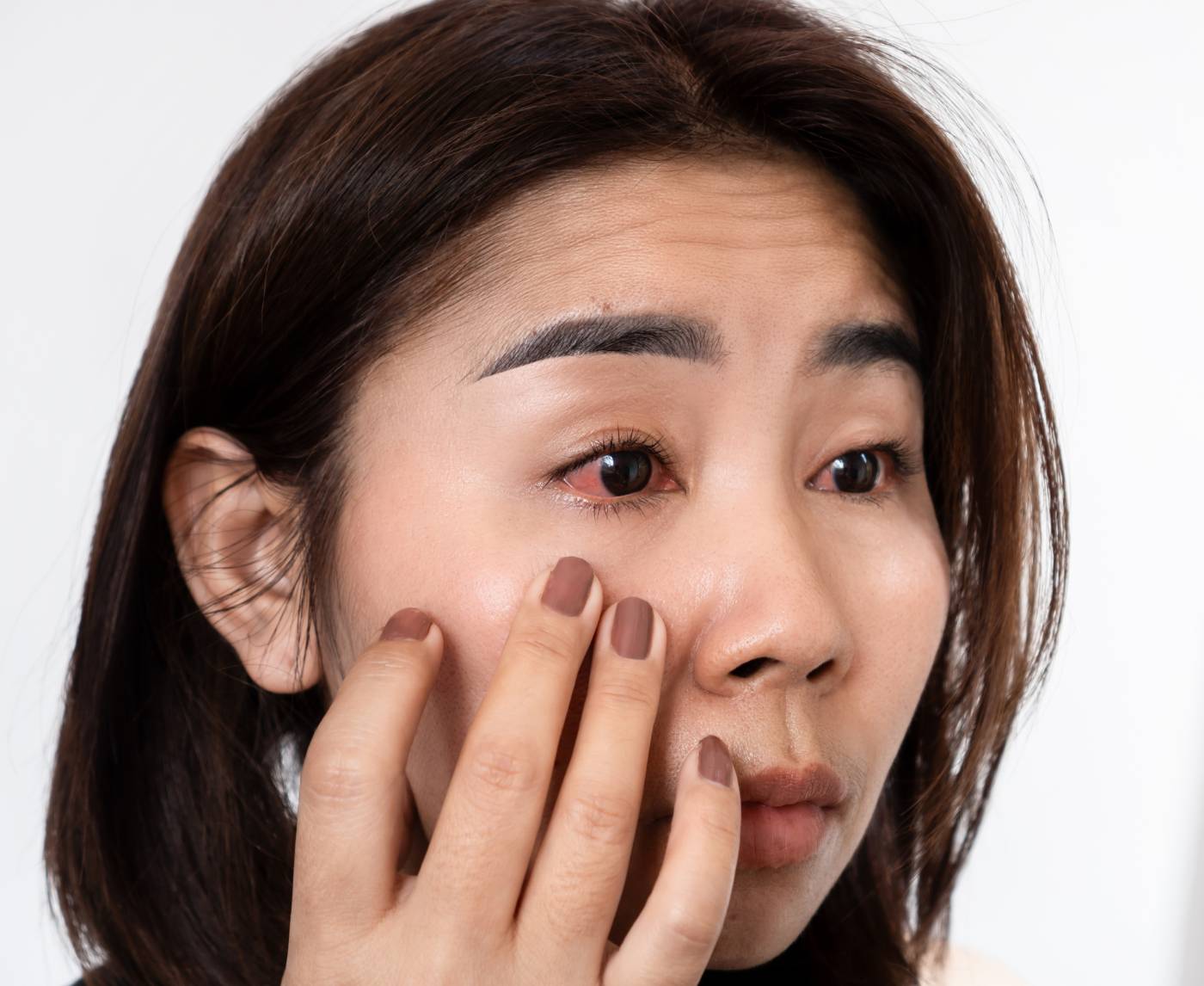
Yes. When the syphilis bacterium reaches the eye through the bloodstream, it causes ocular syphilis, a form of neurosyphilis. Signs include blurry vision, floaters, eye pain, and light sensitivity, sometimes before any genital symptom appears. Left untreated, it can permanently damage vision, so eye symptoms after a sexual exposure warrant a syphilis blood test promptly.
Ocular syphilis is uncommon, but it is real, it is rising, and it is the kind of complication where a short delay can cost permanent vision. Eye pain, sudden floaters, new blurry vision, or unusual light sensitivity in someone with a recent unprotected sexual exposure deserves a syphilis blood test on the same visit, not a wait-and-see prescription for eye drops.
Clinicians take this seriously because of what real cases have shown. A cluster in Seattle and San Francisco in 2014 and 2015 prompted the CDC to issue a Clinical Advisory asking eye doctors and primary-care providers nationwide to add syphilis to the workup for any unexplained eye inflammation (CDC clinician guidance on neurosyphilis, ocular syphilis, and otosyphilis). A second cluster, five women in Southwest Michigan in 2022, showed the same infection in a very different group of people.
This guide explains what the eye looks and feels like when syphilis reaches it, why an ordinary eye exam can miss the cause, what a full workup involves, and where an at-home blood test fits into the timeline.
Key Takeaways
- Syphilis bacteria can travel through the bloodstream and inflame the eye, causing blurry vision, floaters, or vision loss before any genital sign appears.
- Real clusters (388 suspected U.S. cases in 2014 to 2015, and five Michigan women in 2022) show eye symptoms are sometimes the first warning, so testing early is what protects sight.
What ocular syphilis means for your eyes
Ocular syphilis is the term for syphilis that has spread from its original site of infection to structures inside the eye. The bacterium that causes syphilis (Treponema pallidum) travels through the bloodstream and can settle in the uvea, retina, optic nerve, or cornea, where it triggers inflammation. Where that inflammation lands decides what symptoms appear and how fast they worsen.
The condition is classified as a form of neurosyphilis, because the optic nerve is an extension of the central nervous system. Clinicians group it that way because the same workup and the same treatment apply. The most common presentation is uveitis, inflammation of the middle layer of the eye; CDC clinician guidance lists posterior uveitis and panuveitis as the most frequent forms seen in U.S. surveillance (CDC clinician guidance). The NHS likewise notes that untreated syphilis can spread and cause sight and nervous-system problems (NHS: syphilis).
Eye involvement can be the first sign of syphilis a person notices. The painless primary sore (chancre) often heals on its own and is easy to miss, especially in places that are hard to see, such as inside the mouth, the cervix, or the rectum. The body-wide rash of secondary syphilis is also easy to mistake for a viral illness or an allergic reaction. By the time the eyes are affected, the bacteria have usually been circulating for weeks or months.
The optic nerve is part of the central nervous system, so when syphilis bacteria reach it, the condition is classified as a form of neurosyphilis. The same diagnostic workup and the same intravenous penicillin G regimen apply, regardless of how soon after exposure the eye symptoms appear.
What documented ocular syphilis clusters reveal
Two U.S. clusters explain why clinicians now keep ocular syphilis on the radar. The first surfaced in 2014 and 2015, when providers in Seattle and San Francisco reported an unusual concentration of cases. CDC surveillance across eight jurisdictions counted 388 suspected ocular syphilis cases over those two years, rising from 157 to 231 (CDC MMWR ocular syphilis surveillance, 2014 to 2015). The clustering was tight enough that the CDC issued a Clinical Advisory in early 2016, asking providers nationwide to consider syphilis in any unexplained eye inflammation and to report suspected cases.
What stood out was the diagnostic delay. Many patients never noticed the painless primary chancre before their eye symptoms began, and several were treated for unrelated eye conditions first. By the time syphilis made it onto the differential, the infection had already reached central-nervous-system territory. That population skewed toward men who have sex with men, with a high rate of HIV co-infection, yet the broader lesson held across demographics.
The second cluster made that point in an entirely different population. During March to July 2022, five women in Southwest Michigan, each living in a different county and aged 40 to 60, were diagnosed with ocular syphilis after meeting a single male sex partner online (CDC MMWR, Southwest Michigan, 2022). All five were HIV-negative. One had primary syphilis, three had secondary, and one was in early latent. All five were hospitalized and treated with intravenous penicillin. The shared partner had early latent syphilis but never developed eye involvement himself, and investigators raised the possibility that an unidentified strain of the bacterium carried a higher risk of spreading systemically, though there was not enough genetic material in the samples to confirm it.
Together the two clusters carry one message: "I do not feel like someone who would have syphilis" is not a screening tool. Risk follows the sexual network you are part of, not how you picture yourself.
Two ocular syphilis clusters, two different populations
| Feature | Seattle & San Francisco (2014 to 2015) | Southwest Michigan (2022) |
|---|---|---|
| Cases | 388 suspected cases across 8 jurisdictions | 5 women, each in a different county |
| Who was affected | Disproportionately men who have sex with men | Women aged 40 to 60 who met one male partner online |
| HIV status | About half were HIV-positive | All five were HIV-negative |
| Syphilis stage at diagnosis | Often already past the primary stage | 1 primary, 3 secondary, 1 early latent |
| Main lesson | Add syphilis to any unexplained eye inflammation | Ocular syphilis is not limited to one risk group |
Ocular syphilis was documented in two very different groups, which is why testing decisions should not hinge on who someone assumes is at risk.
How syphilis bacteria reach the eye
Syphilis enters the body through tiny breaks in skin or mucous membranes during sexual contact. Within hours, the bacteria are in the lymphatic system; within days, they are in the bloodstream. From there, they can cross the protective barriers around the eye and the central nervous system. Ocular syphilis is one of several presentations of the same systemic infection, depending on where the bacteria settle.
The eye is rich in small blood vessels, particularly in the choroid, the layer of tissue beneath the retina. Once T. pallidum reaches that vasculature, the immune system responds with inflammation. That inflammation is what damages the structures of the eye, not the bacteria directly, which is why corticosteroids are sometimes added to penicillin to calm the inflammatory response while the antibiotic clears the infection.
Several factors raise the chance that an active syphilis infection will reach the eye:
- Co-infection with HIV, which weakens immune containment of the bacteria.
- Delayed or incomplete prior treatment for syphilis.
- Higher-risk exposure patterns (multiple partners, or partners with unknown status).
- Late-stage or latent syphilis, where the infection has been present for months or years.
None of these factors are required. Ocular syphilis is documented in people without HIV and in people with no syphilis history they were aware of, exactly as the Michigan cluster showed: five HIV-negative women, none of whom fit the older assumption about who develops the complication.
Posterior uveitis and panuveitis are the most common clinical manifestations. Ocular syphilis may lead to decreased visual acuity with subsequent permanent blindness.
Symptoms to watch for
The symptoms of ocular syphilis depend on which part of the eye is inflamed. Some people notice a sudden change in one eye over a few days. Others have a slow blur they blame on age, screen time, or contact lenses for weeks before they look harder. Pain is common but not universal, and some presentations are entirely painless.
The CDC's 2014 to 2015 surveillance found that 54% of patients with suspected ocular syphilis reported blurry vision and 28% reported at least some vision loss by the time of diagnosis (CDC MMWR ocular syphilis report). That second figure is the worrying one, because it means more than a quarter of people had already lost some vision before anyone connected it to syphilis.
The flip side is that mild early symptoms are an opportunity. A new floater that does not resolve, in someone with any sexual exposure in the last six to twelve months, is a reasonable trigger to ask for testing alongside an eye exam, whether through a clinic or an at-home syphilis test, even if the eye exam itself looks unremarkable at first. The patterns most often reported in clinical studies and CDC surveillance include the following.
Eye symptoms that warrant a syphilis test
Having one or more does not confirm ocular syphilis; most eye symptoms have ordinary causes. But after a sexual exposure, these are worth a blood test rather than a wait-and-see.
- Blurry or patchy vision in one eye, sometimes both, that does not clear within a day or two Common
- Floaters or shadows that appear suddenly and persist, not the occasional drift many people get Common
- Eye pain, especially behind the eye or with eye movement, with no obvious physical cause Less common
- New, severe light sensitivity (photophobia), where bright rooms feel painful Less common
- Color desaturation, where reds and greens look washed out compared with the unaffected eye Rare
When ocular syphilis can appear across syphilis stages
Ocular involvement can occur during any stage of syphilis, including the latent stage where there are no other symptoms. There is no single window that rules it in or out. The Michigan cases ranged from primary to early latent, while many cases in the earlier cluster were diagnosed later. The table below summarizes when each stage typically occurs and what other symptoms tend to come with it; for a fuller walkthrough, see our overview of syphilis stages and symptoms.
A syphilis blood test is worth considering for any unexplained intraocular inflammation, regardless of age or how recent the exposure seems. Someone with a prior treated infection is at low residual risk, but if new eye symptoms appear, retesting and a full ophthalmic evaluation are still reasonable. Treated syphilis usually does not return, though reinfection is possible and, rarely, so is treatment failure.
| Syphilis stage | Timing after exposure | Typical body-wide symptoms | Ocular involvement? |
|---|---|---|---|
| Primary | 10 to 90 days | Painless sore (chancre), often missed, especially when internal | Possible but less common |
| Secondary | 2 to 12 weeks after the primary sore | Body-wide rash, fever, swollen lymph nodes, patchy hair loss | More common; uveitis and optic involvement reported |
| Latent (early or late) | Months to years; no outward symptoms | None visible; infection still active in the body | Can occur; eye symptoms may be the first warning sign |
| Tertiary or neurosyphilis | Years later if untreated | Brain, heart, or nerve involvement; varies widely | Frequently includes eye and optic-nerve damage |
How ocular syphilis differs from common eye infections
Most red, painful, or watery eyes are not ocular syphilis. They are conjunctivitis, dry eye, allergies, or contact-lens irritation. The challenge is that early ocular syphilis can mimic any of these. A patient with mild floaters and slightly blurry vision might be sent home with artificial tears while the underlying infection keeps progressing. Patients in both documented clusters often had this experience, treated for unrelated eye conditions before anyone ordered a syphilis blood test.
The differentiating clue is usually depth. Ocular syphilis affects the inner structures of the eye (uvea, retina, optic nerve), while ordinary surface infections sit on the conjunctiva, cornea, or lid margin. Surface infections tend to produce visible discharge, redness on the white of the eye, and clear vision in most cases. Internal inflammation produces vision changes, floaters, and pain that does not match how the outside of the eye looks.
The table below shows the practical differences a clinician weighs, including which conditions usually affect one eye versus both, and what clinical clue points to each.
| Condition | Typical cause | Where it sits in the eye | Key clinical clue |
|---|---|---|---|
| Ocular syphilis | Treponema pallidum reaching the eye via the bloodstream | Uvea, retina, optic nerve, sometimes cornea | Deeper inflammation; often one eye; may co-exist with HIV |
| Bacterial conjunctivitis | Common surface bacteria (Staph, Strep) | Conjunctiva, the surface lining of the eye | Yellow or green discharge; usually self-limited |
| Viral conjunctivitis | Adenovirus and other respiratory viruses | Conjunctiva | Watery discharge; often both eyes; recent cold or close contact |
| Herpes keratitis | HSV-1 or HSV-2 | Cornea | Sharp pain; dendritic ulcer pattern visible on slit-lamp exam |
| Autoimmune uveitis | Immune dysregulation, not infectious | Uvea | Recurring pattern; no sexual or systemic infection link |
Diagnosis: confirming ocular syphilis takes more than one test
Diagnosing ocular syphilis is a two-track process. One track confirms that syphilis is present in the body. The other confirms that the eye findings are consistent with syphilitic inflammation rather than another cause.
For the body-wide question, providers use a combination of treponemal and non-treponemal blood tests. A treponemal test (such as the FTA-ABS, the fluorescent treponemal antibody absorption test, or another treponemal-based assay) checks for antibodies specifically against T. pallidum. A non-treponemal test (such as RPR, the rapid plasma reagin test, or VDRL, the Venereal Disease Research Laboratory test) measures the immune response and gives a titer that helps track infection activity. Either test alone can mislead, especially in people with previously treated syphilis, very early infection, or HIV co-infection. The CDC's algorithm uses both, with reflex confirmation when the two disagree (CDC STI Treatment Guidelines: syphilis).
For the eye itself, an ophthalmologist performs a full slit-lamp examination with dilated pupils to inspect the retina, optic nerve, and uveal structures. Optical coherence tomography (OCT) or fluorescein angiography is sometimes added to map the inflammation more precisely.
If ocular syphilis is confirmed or strongly suspected, the next question is whether the central nervous system is also involved. A lumbar puncture may be ordered to test the cerebrospinal fluid for inflammation and treponemal antibodies. This is not always done; the indication depends on what the eye exam shows and what other neurological symptoms are present.
A single negative rapid antibody test does not rule out ocular syphilis when the clinical picture suggests it. Repeat testing or a more sensitive treponemal-specific test may be needed before the diagnosis is dismissed. If you have active eye symptoms after a sexual exposure, ask for the full treponemal plus non-treponemal pair rather than relying on one screen.
Treatment: IV penicillin remains the standard
Treatment for ocular syphilis follows the regimen for neurosyphilis: aqueous crystalline penicillin G given intravenously, at 18 to 24 million units per day for 10 to 14 days (CDC STI Treatment Guidelines: neurosyphilis, ocular and otosyphilis). Hospitalization is sometimes needed, particularly in the first few days, though outpatient infusion is also common. In the Michigan cluster, all five women were hospitalized and received intravenous penicillin.
Penicillin is first-line because T. pallidum has stayed uniformly susceptible to it after more than seventy years of use; resistance has not emerged. For people with a documented penicillin allergy, desensitization is usually preferred over alternative antibiotics, since the alternatives have weaker evidence specifically for ocular and neurosyphilis. Patient-education resources describe syphilis as a curable bacterial infection that is easiest to treat when caught early (MedlinePlus: syphilis).
Corticosteroids may be added to reduce inflammation in the eye while the penicillin clears the infection. They are never used alone, because steroid-only treatment can worsen the underlying infection. The ophthalmologist decides whether to add them based on the type and severity of inflammation.
Recovery varies. Some people regain full vision within days of starting treatment, especially when the inflammation has not yet damaged the retina or optic nerve. Others have lasting visual loss in proportion to how long the inflammation was active before treatment began. Follow-up includes repeat eye exams, a repeat non-treponemal blood test (typically at 6 and 12 months) to confirm declining titers, and sometimes a repeat lumbar puncture if neurosyphilis was documented.
If a patient with ocular syphilis is started on corticosteroid eye drops without antibiotic coverage, the infection can worsen quickly. This is one reason providers test for syphilis when uveitis is unexplained, before starting steroid-only treatment. If you have been prescribed steroid eye drops for unexplained inflammation and have had any sexual exposure in the last six to twelve months, ask whether syphilis has been ruled out.
Why HIV and syphilis often travel together
About half of patients with ocular syphilis in the CDC's 2014 to 2015 surveillance were also living with HIV (CDC MMWR ocular syphilis report). Several factors explain the overlap. The two infections share transmission routes, so people exposed to one are more often exposed to the other. HIV also weakens immune containment of syphilis, which makes the bacteremia (bacteria in the blood) that seeds the eye more likely. And among men who have sex with men, where HIV prevalence is higher, syphilis incidence is higher too.
That overlap is real, but it is not the whole story. All five women in the 2022 Michigan cluster were HIV-negative (CDC MMWR, Southwest Michigan), a useful reminder that ocular syphilis is not confined to people with HIV. The practical takeaway works both ways: anyone diagnosed with ocular syphilis should also be tested for HIV at the same visit, and anyone diagnosed with HIV should have their syphilis status checked at routine intervals.
The same network logic applies to other STIs in the same exposure window. Gonorrhea, chlamydia, hepatitis B, and hepatitis C share enough transmission overlap with syphilis that screening for one is a reasonable trigger to screen for the others. Globally, the WHO estimates 8 million adults aged 15 to 49 acquired syphilis in 2022, and U.S. rates have climbed over the past decade (WHO syphilis fact sheet). When background rates rise, the absolute number of unusual presentations (ocular, otic, neurological) rises with them.
Roughly half of patients with ocular syphilis are HIV-positive in U.S. surveillance, while a separate cluster of HIV-negative cases shows it is not limited to people with HIV. Because HIV affects how aggressively syphilis progresses and what follow-up is needed, anyone tested for one should be offered testing for the other. A multi-STI panel is the practical default when eye symptoms appear after a sexual exposure.
Where at-home testing fits in (and what the window period means)
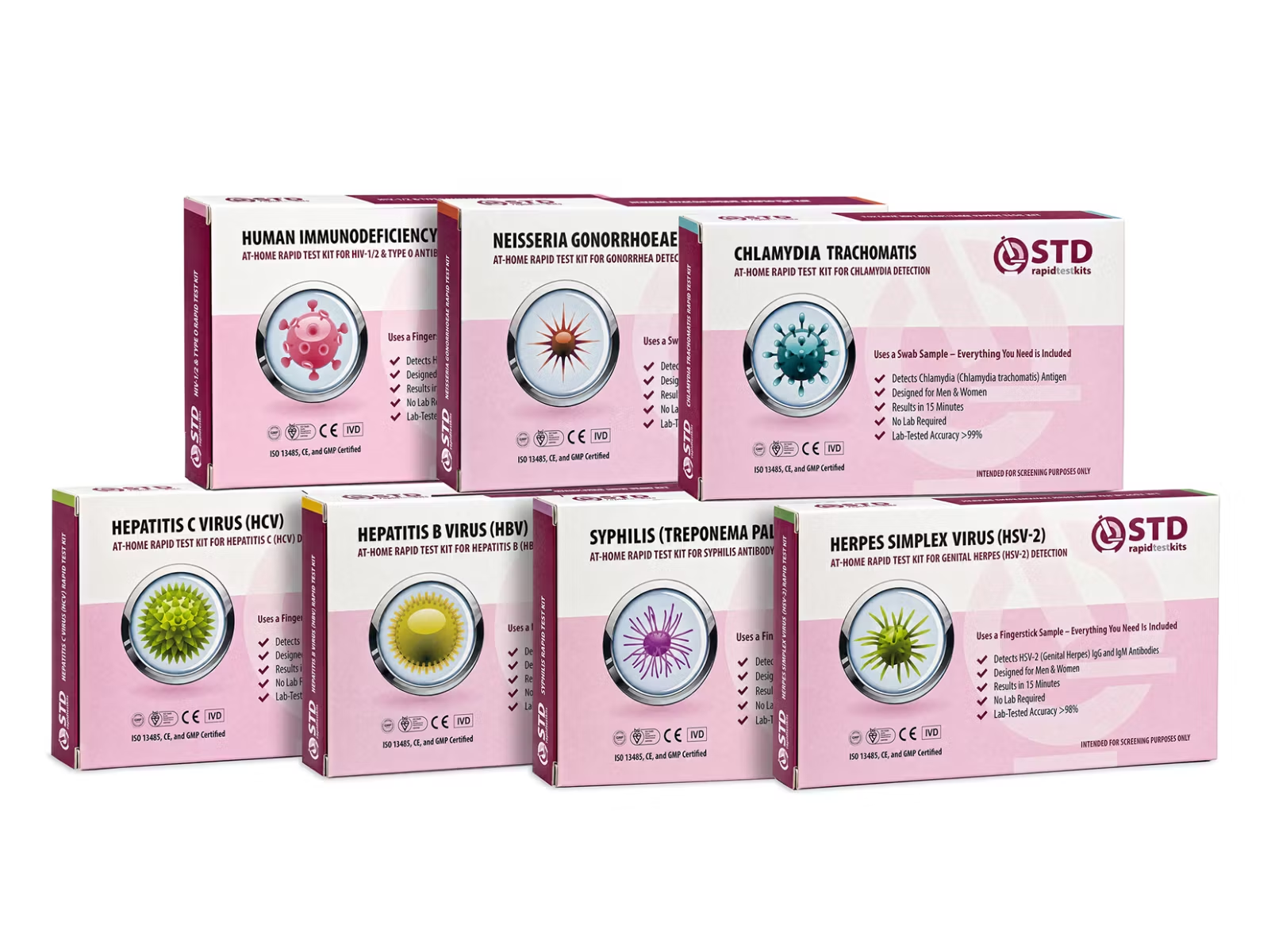
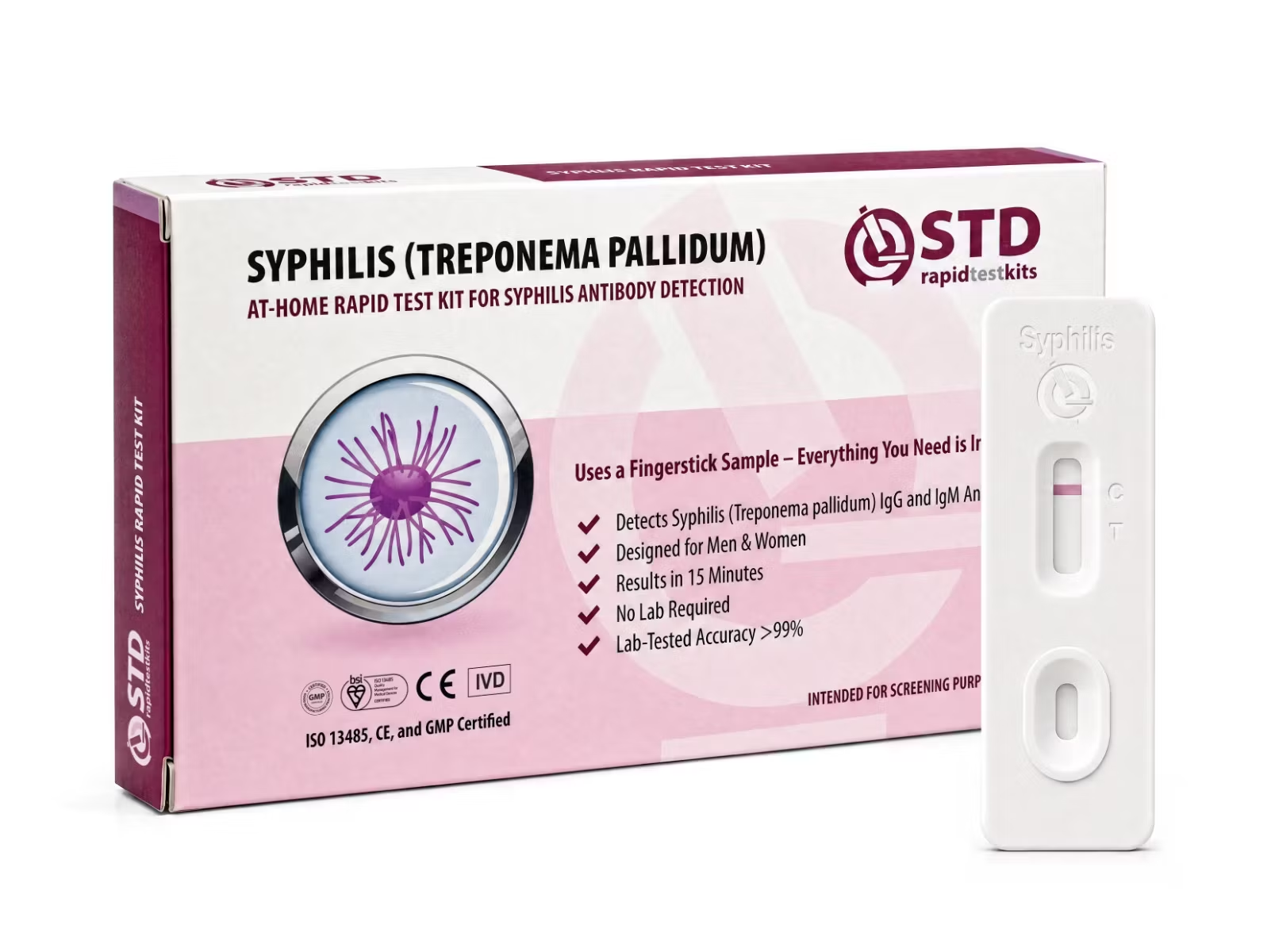
At-home rapid syphilis tests are useful for screening, particularly for people who suspect exposure but have no obvious symptoms, or who prefer privacy over a clinic visit. The test uses a fingerstick blood sample on a lateral-flow strip and gives a result in about 15 minutes. A positive result is meaningful and warrants follow-up, but it should always be confirmed with a laboratory blood test before treatment decisions are made.
Syphilis blood tests detect the antibodies your immune system makes in response to the bacteria, not the bacteria themselves. That is what creates the window period. After exposure, your body takes time, usually several weeks, to build a measurable antibody response, so testing too early can return a false negative even when the infection is already present. Sexual-health services commonly use six weeks as the standard syphilis window, with a confirmation retest at three months to catch slower seroconversions.
For someone already experiencing eye symptoms, a home test plays a different role. It can give a same-day signal that makes the conversation with an ophthalmologist or primary-care provider faster: a positive screen reinforces the case for an urgent eye exam and full lab confirmation. It does not replace the in-person evaluation. Active eye symptoms always need an ophthalmologist, regardless of what an at-home result says.
For transparency: this article is published by stdrapidtestkits.com, which sells at-home rapid tests for syphilis, HIV, and other common STIs. We recommend tests based on fit for the reader's situation, not commercial benefit. The window period applies differently to each infection, which matters when pairing tests after a single exposure event. The table below shows the targets to plan around.
| Infection | Earliest reliable testing |
|---|---|
| Chlamydia (swab test) | From 14 days after exposure |
| Gonorrhea (swab test) | From 3 weeks after exposure |
| Syphilis (blood test) | From 6 weeks after exposure |
| HIV (blood test) | First indicator at 6 weeks, confirmation at 12 weeks |
| HSV-2 (blood antibody test) | From 6 to 12 weeks after exposure |
| Hepatitis B (blood test) | From 6 weeks after exposure |
| Hepatitis C (blood test) | From 8 to 11 weeks after exposure |
The bottom line
Ocular syphilis is uncommon, but it is documented well enough that clinicians know how to catch it once the question is asked. The Seattle and San Francisco cluster and the later Michigan cluster are reminders that the question is not always asked early, and that the cost of waiting can be permanent vision loss. Most red, painful, or blurry eyes are not syphilis. The ones that are tend to keep getting worse despite standard treatment, especially in someone with a sexual exposure in the last six to twelve months.
Routine blood testing at the correct window period is what consistently breaks transmission chains. For people who want a single screening that covers syphilis alongside the other common bloodborne and swab-based STIs, an at-home combination STI panel checks several at once and keeps the cadence manageable without juggling separate tests. Syphilis stays fully treatable with penicillin at every stage, and how much vision is preserved depends mostly on how early the infection is caught.
Should you get a syphilis test now?
Do you have new eye floaters, blurry vision, or eye pain, along with any sexual exposure in the last six to twelve months?
Yes: See an ophthalmologist promptly and ask for a syphilis blood test at the same visit. Do not wait for the eye symptoms to worsen, and treat a positive at-home rapid result as a reason to act, not a final diagnosis.
Have you had a possible exposure but no symptoms, and is it now at least six weeks since that exposure?
Yes: A blood test (clinic or at-home rapid) is reliable now. Confirm any positive with a laboratory test, and if you are HIV-positive, fold syphilis screening into every routine HIV follow-up.
No: Test at the six-week mark, then confirm with a second test at three months if the first is negative and you remain concerned or symptoms appear.
Guidance only. An ophthalmologist or clinician can advise based on your specific situation.
FAQs
- Can syphilis really cause permanent blindness?
- Permanent loss is documented, though how much depends on which structure is inflamed and how soon treatment starts. The optic nerve recovers less reliably than the uvea, because nerve-fiber damage tends to be cumulative rather than reversible. More than a quarter of cases in CDC surveillance had already lost some vision before diagnosis, which is the strongest argument for testing early rather than waiting for symptoms to clearly worsen.
- Can women get ocular syphilis, or is it mainly men with HIV?
- It affects anyone. The earlier Seattle and San Francisco cluster skewed toward men who have sex with men, with about half being HIV-positive, which shaped an assumption about who is at risk. The 2022 Southwest Michigan cluster was five women, aged 40 to 60, all HIV-negative, who shared one male partner met online. Ocular syphilis follows the infection through the bloodstream, not a particular demographic.
- How is ocular syphilis different from pink eye or dry eye?
- Ordinary conjunctivitis sits on the surface of the eye and usually causes redness, watering, and a yellow or green discharge that clears in a few days. Ocular syphilis affects deeper structures (the uvea, retina, or optic nerve) and tends to cause floaters, internal pain, light sensitivity, or a vision change rather than just surface redness. Conjunctivitis usually affects both eyes; ocular syphilis often starts in one. You cannot tell them apart by looking, which is why a blood test settles it.
- If a rapid syphilis test comes back negative, am I in the clear?
- Not always. A single negative rapid test in someone with active eye symptoms does not fully rule out ocular syphilis. The CDC recommends combining treponemal and non-treponemal blood tests, and in some cases adding a lumbar puncture to test the cerebrospinal fluid. If your eye symptoms persist and an ophthalmologist suspects syphilitic inflammation, more testing is the right move even after one negative.
- When does an at-home syphilis blood test become reliable?
- From about six weeks after exposure. The test detects antibodies your immune system produces in response to the bacteria, and that response takes time to build. Testing earlier than six weeks can give a false negative because antibodies are not yet at a detectable level, not because the infection is absent. A confirmation retest at three months catches slower seroconversions.
- How long does treatment for ocular syphilis take?
- Standard treatment is intravenous penicillin G for 10 to 14 days, sometimes given in hospital and sometimes through outpatient infusion. Symptoms can begin improving within days of the first dose, but the full course is needed to clear the infection and prevent relapse. Follow-up blood tests are usually scheduled at 6 and 12 months to confirm the infection is resolved.
- Can syphilis come back in the eyes after I have been treated?
- Reinfection is possible if there is new sexual exposure to an untreated partner. True relapse from an infection that was treated correctly is uncommon. If new eye symptoms appear after a previous course, the right step is to retest and have an ophthalmic exam; the cause may be a new infection, residual inflammation, or an unrelated eye problem entirely.
- I feel fine. Could I still have syphilis?
- Yes. Syphilis is well known for silent phases. The primary sore can appear in places you will not see and is usually painless, and the latent stage by definition has no symptoms. Many people only learn they have syphilis through a routine blood test, which is why screening after a possible exposure, even when nothing feels wrong, is the most reliable way to catch it early.
- U.S. Centers for Disease Control and Prevention. Clinician guidance on neurosyphilis, ocular syphilis, and otosyphilis: clinical manifestations (posterior uveitis and panuveitis as the most common forms), the 2016 Clinical Advisory, and the Seattle and San Francisco cluster reference.
- U.S. Centers for Disease Control and Prevention. MMWR ocular syphilis surveillance across 8 U.S. jurisdictions, 2014 to 2015: 388 suspected cases, 54% reporting blurry vision, 28% reporting vision loss, and about half HIV-positive.
- U.S. Centers for Disease Control and Prevention. MMWR: a cluster of ocular syphilis cases with a common sex partner, Southwest Michigan, 2022. Five HIV-negative women, ages 40 to 60, all hospitalized and treated with IV penicillin; novel-strain hypothesis.
- U.S. Centers for Disease Control and Prevention. STI Treatment Guidelines: syphilis section, including the treponemal and non-treponemal testing algorithm with reflex confirmation.
- U.S. Centers for Disease Control and Prevention. STI Treatment Guidelines: neurosyphilis, ocular syphilis, and otosyphilis. Recommended regimen of aqueous crystalline penicillin G, 18 to 24 million units per day, for 10 to 14 days.
- World Health Organization. Syphilis fact sheet: an estimated 8 million adults aged 15 to 49 acquired syphilis in 2022, with ocular and neurological complications listed among the consequences of untreated infection.
- U.K. National Health Service. Syphilis overview: symptoms, diagnosis, and complications, including effects on sight and the nervous system when the infection is untreated.
- MedlinePlus (U.S. National Library of Medicine). Syphilis topic page: general patient overview describing syphilis as a curable bacterial sexually transmitted infection that is easiest to treat when caught early.
