Published: November 2025 | Last updated: May 2026 | Editorial review and quality control: Martina N.
What is syphilis in one paragraph?
Syphilis is a bacterial STI caused by Treponema pallidum. Untreated, it moves through four stages: a painless sore (chancre), then rash and flu-like symptoms, then a silent latent phase, then organ damage years later. A single penicillin injection cures most early cases. A blood antibody test reliably detects it about six weeks after exposure.
Syphilis is a sexually transmitted bacterial infection caused by Treponema pallidum. It spreads through direct skin-to-skin contact during vaginal, anal, or oral sex, and from a pregnant person to a fetus. The infection moves through four distinct stages if left untreated, each with its own pattern of symptoms. It remains fully curable with antibiotics, especially when caught early. But US cases climbed to 207,273 in 2022, the highest annual count since 1950, according to CDC STI surveillance, and congenital syphilis (passed from a pregnant person to a baby) has risen more than tenfold over the past decade.
Key Takeaways
- Syphilis is curable with penicillin, but only if caught and treated. Untreated infection can damage the heart, brain, and nerves decades later.
- The first sign is usually one painless round sore (a chancre) appearing 10 to 90 days after exposure. Many people miss it because it does not hurt.
What Is Syphilis and Why It Still Matters
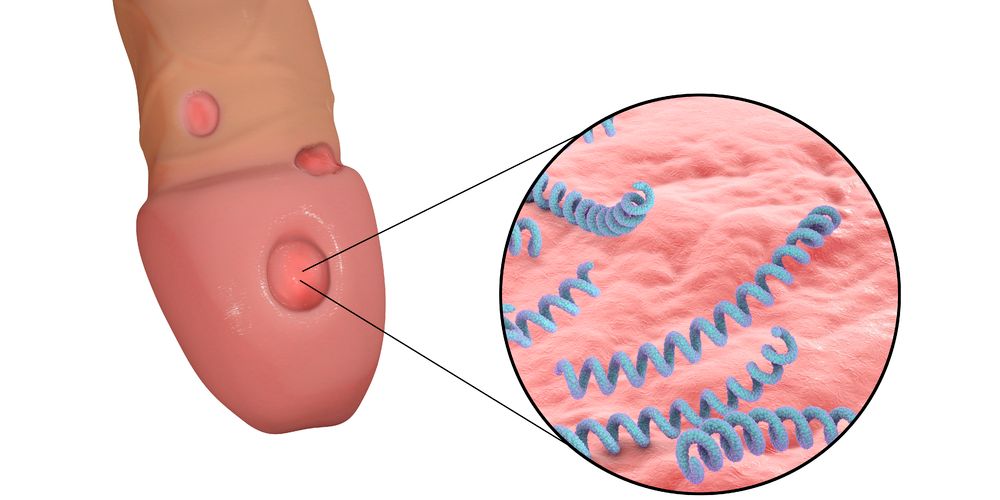
Syphilis is the clinical name for an infection caused by a corkscrew-shaped bacterium called Treponema pallidum. It belongs to a family of bacteria called spirochetes, which move by twisting through tissue. Once T. pallidum enters the body through a small break in skin or mucous membrane, it multiplies locally, spreads through the bloodstream, and can reach almost every organ system if the infection is not treated.
Despite being curable for nearly 80 years (penicillin became the standard treatment in the 1940s), syphilis remains a major public health concern. The World Health Organization estimates around 8 million new adult cases of syphilis worldwide each year. In the United States, the CDC recorded 207,273 syphilis cases in 2022, the highest annual count since 1950, and congenital syphilis cases reached 3,773 in the same year, more than ten times the 2012 figure.
The reason a curable disease keeps spreading is no mystery: testing gaps. The earliest sign of syphilis is often missed, public-health screening programs lost staffing during and after the pandemic, condom use among adults under 30 has declined, and reinfection is possible after cure.
Syphilis by the numbers
- Around 8 million new adult cases of syphilis worldwide each year, per WHO.
- 207,273 US syphilis cases in 2022, the highest annual count since 1950, per CDC.
- US congenital syphilis cases reached 3,773 in 2022, more than ten times the 2012 figure of around 334, per CDC.
How Syphilis Spreads
Syphilis transmits through direct contact with a syphilis sore. Those sores can be on the genitals, anus, rectum, lips, or mouth. The bacterium passes from one person to another through small breaks or microabrasions in skin or mucous membrane during vaginal, anal, or oral sex. Less commonly, syphilis transmits through:
- Pregnancy and childbirth (congenital syphilis), where the bacterium crosses the placenta or transmits during delivery
- Blood transfusion, though this is rare in countries that screen donated blood
- Needle sharing among people who inject drugs
Condoms reduce but do not eliminate risk. Because syphilis sores can appear on areas a condom does not cover (the scrotum, the base of the penis, the perineum, the inner thighs, the lips), skin-to-skin contact during sex can still transmit the infection even when a condom is used correctly.
Toilets, doorknobs, swimming pools, hot tubs, shared utensils, towels, and clothing are not transmission routes. T. pallidum does not survive long outside the human body and requires direct contact with an open lesion or mucous membrane to establish infection.
The Four Stages, Explained
Syphilis follows a fairly predictable progression if untreated. Each stage has its own symptom pattern, its own infectiousness, and its own diagnostic considerations. The same infection can be caught and cured at any stage, but the later the treatment, the more permanent damage may already exist.
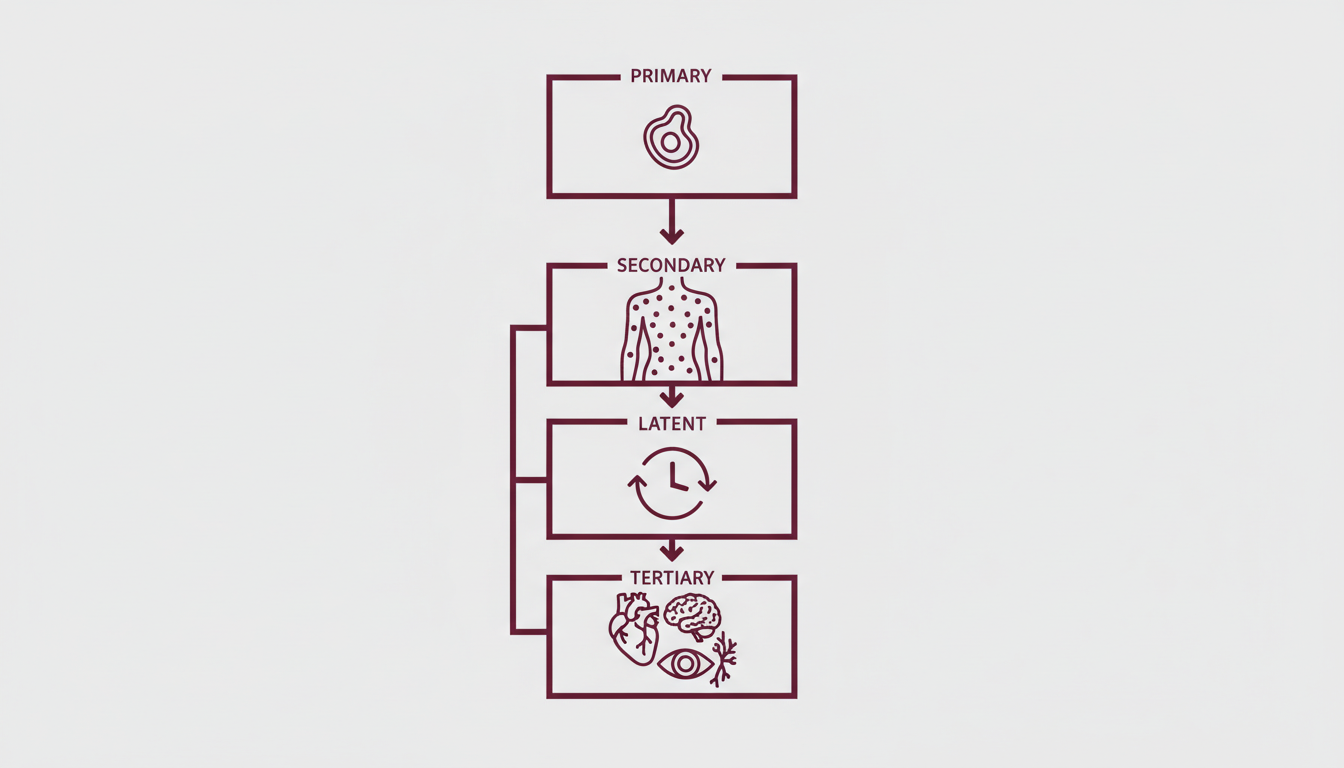
The four stages are primary, secondary, latent, and tertiary. There is no fixed timeline for everyone (immune response, reinfection history, and overall health all influence progression), but the typical sequence looks roughly like this:
- Primary: A single chancre appears 10 to 90 days after exposure, with a median of 21 to 25 days, according to the NCBI StatPearls clinical reference. The sore heals on its own in 3 to 6 weeks, with or without treatment.
- Secondary: Begins 4 to 10 weeks after the chancre appeared. Rash, fever, swollen lymph nodes, and flu-like symptoms last 2 to 6 weeks before resolving.
- Latent: No outward symptoms. Early latent (within the first year) is still infectious through possible mucosal lesions; late latent (after one year) is generally not sexually transmissible to adults but can still pass to a fetus.
- Tertiary: Develops in a substantial minority of untreated cases. Late neurologic manifestations such as tabes dorsalis and general paresis can emerge 10 to more than 30 years after infection, according to the CDC STI treatment guidelines. Damages the cardiovascular system, central nervous system, eyes, and other organs.
Below are the visual and clinical specifics of each stage.
Primary Stage: The Chancre
Primary syphilis announces itself with a chancre. A chancre is a single round sore that appears at the spot where T. pallidum entered the body, most often the genitals (penis, vulva, vagina, or cervix), the anus or rectum, or the mouth and lips.
Chancres appear 10 to 90 days after exposure with a median of 21 to 25 days, according to the NCBI StatPearls clinical reference. The sore then heals on its own in 3 to 6 weeks regardless of whether treatment is given. This natural healing is dangerous because it can convince someone the infection went away. The bacterium has not gone anywhere; it has spread silently through the bloodstream, and untreated infection moves into the secondary stage.
A chancre on the cervix, inside the rectum, or in the back of the mouth often goes entirely unnoticed.
How to recognize a chancre
- Painless: most chancres do not hurt and do not itch, which is the main reason they get missed.
- Single: usually one sore, occasionally a small cluster.
- Round and firm: a hard rim around a clean pink or red base.
- Wet center: the base may be moist with clear or slightly cloudy fluid that contains bacteria.
- Roughly 5 to 20 mm across: variable, but often small enough to be mistaken for a pimple or ingrown hair.
Secondary Stage: The Great Imitator
Secondary syphilis earned the nickname "the great imitator" because it can mimic almost any other illness. Symptoms typically begin 4 to 10 weeks after the original chancre and reflect the bacterium's spread through the bloodstream to skin, mucous membranes, lymph nodes, and major organs.
The most recognizable feature is a non-itchy rash. The rash often involves the palms of the hands and the soles of the feet, which is unusual for most other rashes and a useful diagnostic clue. The rash can be flat or slightly raised, and the spots are typically reddish-brown or coppery, ranging from a few millimeters to about a centimeter across. It is generally symmetrical and not painful.
Other secondary-stage signs and symptoms include:
- Fever, often low-grade
- Sore throat
- Swollen lymph nodes (especially in the groin and neck)
- Headache and body aches
- Fatigue and loss of appetite
- Patchy hair loss (alopecia areata-like)
- Mucous patches inside the mouth or on the genitals
- Condyloma lata: moist, flat, gray-pink wart-like growths in skin folds
Secondary syphilis is highly infectious because the rash, mucous patches, and condyloma lata all carry T. pallidum on their surface. Sexual contact during this stage transmits the infection efficiently. Symptoms last 2 to 6 weeks and then resolve on their own as the body partly contains the bacterium, but the infection itself remains. Without treatment, the disease enters the latent stage.
Because secondary syphilis copies so many common illnesses (flu, mononucleosis, pityriasis rosea, drug rash, viral exanthems), the diagnosis is easy to miss without a blood test.
Latent Stage: The Quiet Years
Latent syphilis means the infection is present but causing no outward symptoms. There is no rash, no chancre, no fever. The only way to detect latent syphilis is through a blood test that picks up antibodies the immune system has produced against T. pallidum.
Latent syphilis is split by clinicians into two phases (early and late) based on how long it has been since infection. The split matters because it changes how easily the infection passes during sex and which dosing schedule is used to treat it. Latent syphilis can last for years or even decades. Some people remain in the latent stage for life and never develop tertiary syphilis. Treatment in the latent stage uses the same antibiotic class as primary and secondary infection, though the dosing schedule is longer for late latent or unknown-duration cases.
Early latent (within the first 12 months after infection): still potentially infectious through sexual contact, especially if a brief secondary-rash relapse occurs.
Late latent (12 months or more after infection): generally not sexually transmissible to adults, but a pregnant person with late latent syphilis can still transmit the infection to a fetus.
Tertiary Stage: When Untreated Infection Comes Back
Tertiary syphilis develops in a substantial minority of people who never receive treatment, and it can appear many years (in some cases, 10 to more than 30 years) after the initial infection. The CDC STI treatment guidelines note that late neurologic manifestations such as tabes dorsalis and general paresis can occur 10 to more than 30 years after infection. By this stage, the bacterium has caused chronic damage to organ systems, and many of the resulting injuries are permanent even after the infection itself is cured.
Tertiary syphilis comes in three main forms:
- Cardiovascular syphilis: damage to the aorta and heart valves, often leading to aortic aneurysm, aortic regurgitation, or heart failure.
- Neurosyphilis: invasion of the central nervous system. Can cause stroke, dementia, personality changes, paralysis (general paresis), trouble with coordination (tabes dorsalis), and visual or hearing loss.
- Gummatous syphilis: soft, tumor-like growths called gummas in the skin, bones, liver, or other tissues. These are now rare in countries with antibiotic access.
Tertiary syphilis was once a leading cause of death and disability before penicillin. It remains a serious risk in places with limited testing and treatment access. Treatment for tertiary syphilis still involves penicillin, but the regimen is more intensive (often intravenous penicillin for 10 to 14 days for neurosyphilis), and existing organ damage cannot be reversed by treatment.
Penicillin cures the active infection at any stage. But cardiovascular and neurological injuries that developed during untreated tertiary syphilis are permanent. Treating late-stage syphilis stops further progression, though it cannot restore damaged tissue. Catching the infection in the primary or secondary stage, when a blood test can confirm it and a single penicillin injection cures it, prevents all tertiary complications.
Neurosyphilis and Ocular Syphilis: They Can Hit at Any Stage
One important caveat to the four-stage model: Treponema pallidum can invade the central nervous system and the eyes early in the infection, not just decades later. Both forms are medical emergencies and need urgent clinical evaluation, not at-home testing.
Neurosyphilis can cause headache, behavior change, weakness, sensory loss, stroke, dementia, and paralysis. Ocular syphilis can cause sudden vision loss and blindness. Both have been documented in the primary and secondary stages, particularly in people living with HIV, where altered immune response speeds up bacterial spread to the nervous system.
Syphilis and HIV amplify each other in both directions. Active chancres create an open entry point for HIV during sexual contact, which raises HIV acquisition risk significantly, according to the CDC syphilis fact sheet. People living with HIV also progress to neurosyphilis at higher rates than HIV-negative adults. CDC guidance therefore recommends screening people living with HIV for syphilis at least annually, with more frequent screening every 3 to 6 months tailored to individual risk for those whose risk behaviors persist or who have multiple partners, per the CDC STI treatment guidelines, HIV section.
Sudden vision changes, severe headache, new neurological symptoms (weakness, numbness, behavior change), or a painless genital sore alongside any of the above warrant emergency or same-day clinical evaluation. Do not wait for an at-home test result. These can be early signs of neurosyphilis or ocular syphilis, both of which need intravenous antibiotic treatment in a hospital.
Congenital Syphilis: Mother to Baby
A pregnant person with untreated syphilis can transmit the infection to the fetus across the placenta in 50 to 80 percent of cases, with transmission possible from the early second trimester onward. This is called congenital syphilis, and it is one of the most preventable serious infections in newborns.
Congenital syphilis can cause:
- Stillbirth or death within days of birth in severe cases
- Premature birth or low birth weight
- Bone deformities, deafness, blindness, or developmental delay in children who survive
- Skin rash, swollen liver and spleen, jaundice, and anemia at birth
The CDC and WHO both recommend syphilis screening for every pregnant person at the first prenatal visit, with repeat screening in the third trimester and at delivery for those at higher risk. Penicillin is the only proven safe and effective option in pregnancy; people with documented penicillin allergy should be desensitized so they can receive it. Treatment given before 24 weeks gestation prevents most fetal damage.
Despite this, US congenital syphilis cases reached 3,773 in 2022, more than tenfold the 2012 figure, according to CDC STI surveillance. The rise has been driven mostly by missed prenatal screening rather than treatment failure.
Syphilis can be passed from a mother with syphilis to her unborn baby. Untreated syphilis in pregnant women results in infant death in up to 40 percent of cases. If a pregnant woman has untreated syphilis, treating her with the right antibiotics during pregnancy will usually prevent her baby from getting congenital syphilis.
How Syphilis Is Diagnosed
Syphilis diagnosis combines blood testing with clinical examination. Two categories of blood test are used together.
Non-treponemal tests (RPR or VDRL) detect antibodies the body produces in response to cell damage caused by syphilis infection. They are quantitative, useful for screening, and used to track treatment response: the titer falls after successful treatment. They can produce false positives in conditions like pregnancy, autoimmune disease, or other infections, so a positive result is always confirmed.
Treponemal tests (FTA-ABS, TP-PA, EIA, CIA, and the lateral-flow rapid antibody tests sold for at-home syphilis screening) detect antibodies specifically targeted at T. pallidum. They confirm the infection but stay positive for life in most people, even after successful treatment, so they cannot distinguish a current infection from a past one on their own.
The CDC syphilis treatment guidelines recommend a two-step screening algorithm: an initial treponemal or non-treponemal test, then confirmation with the other type if the first is positive. The NHS syphilis testing overview describes a similar two-step approach in the UK setting. The combination distinguishes a current active infection from a treated past infection and from a false positive.
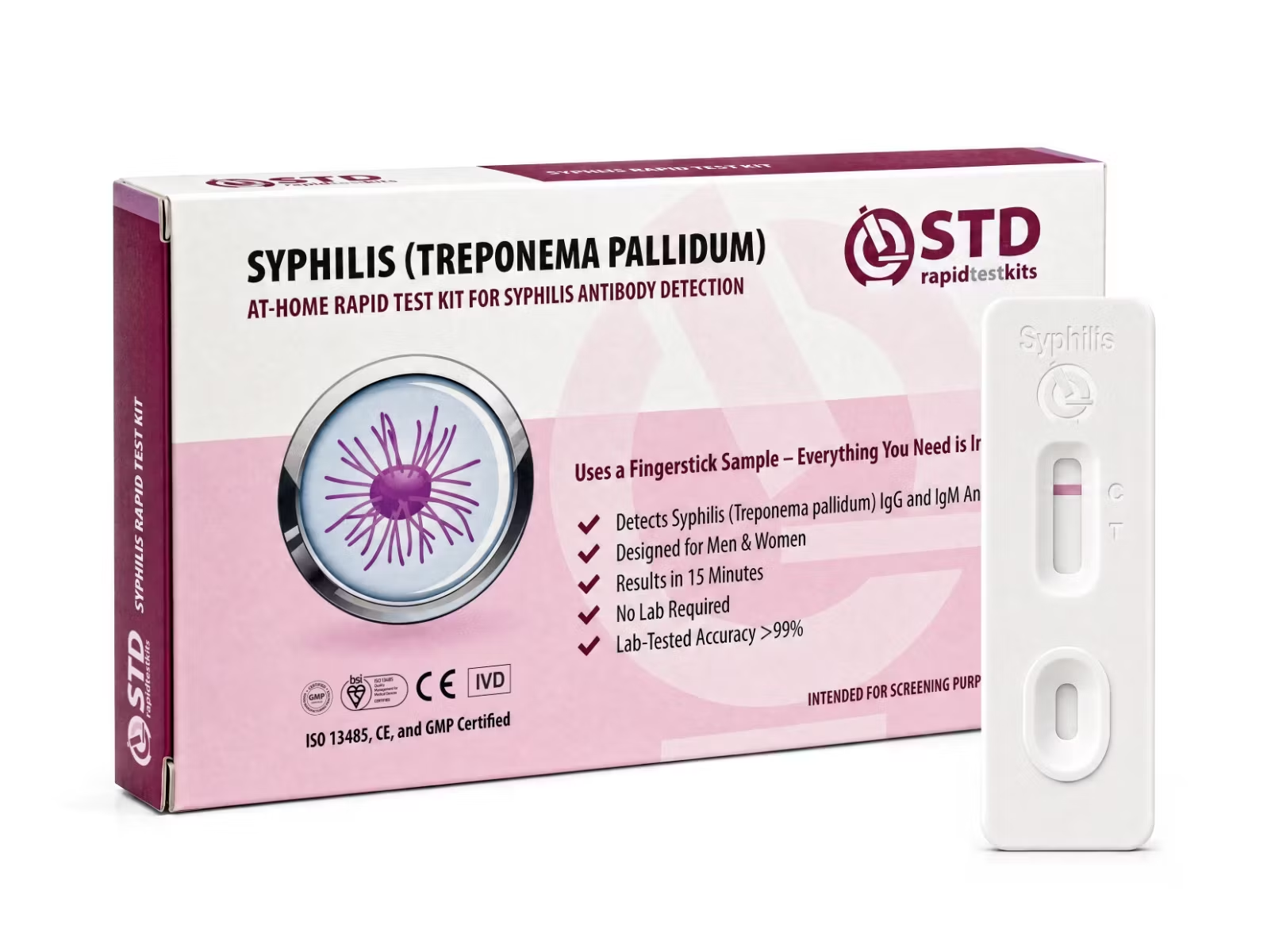
At-home rapid syphilis tests use lateral-flow chemistry to detect treponemal antibodies from a fingerstick blood sample. Most clinicians and CDC guidance suggest testing about six weeks after a known exposure for a reliable result. Antibodies can sometimes be detected as early as three to four weeks, but a negative test in the first month does not rule out infection. If a six-week test is negative and you remain concerned (a possible chancre or unexplained rash, for example), retest at three months.
This article is published by stdrapidtestkits.com, which sells at-home STI testing kits. Recommendations reflect fit-for-purpose for the reader's specific concern, not commercial benefit.
| At-home rapid test | Clinic lab RPR / VDRL |
|---|---|
| Best use: routine annual screening, or post-exposure peace of mind six weeks or more after a known exposure. | Best use: confirmation after a reactive rapid test, treatment monitoring, prenatal serology. |
| Result in roughly 15 minutes from a fingerstick blood drop. | Result in 1 to 3 days, drawn at a clinic or lab. |
| Detects treponemal antibodies (positive or negative). | Quantitative titer (1:2, 1:8, 1:32, etc.) used to track active infection and cure. |
| Stays reactive for life after a past treated infection. | Titer drops fourfold after successful treatment, the marker of cure. |
| Not appropriate for active sores, pregnancy serology, neurosyphilis, or treatment follow-up. | Required for all of the above; lumbar puncture for suspected neurosyphilis. |
Treatment: Penicillin Still Works
Syphilis is one of the few sexually transmitted infections that has stayed fully sensitive to its first-line antibiotic for nearly 80 years. According to the CDC STI treatment guidelines, benzathine penicillin G given as an intramuscular injection remains the standard. For primary, secondary, or early latent syphilis, a single 2.4 million unit dose is curative, as detailed in the NCBI StatPearls syphilis dosing reference. The dosing schedule lengthens with later stages.
For non-pregnant adults with documented penicillin allergy and only primary, secondary, or early latent infection, doxycycline or tetracycline are accepted alternatives. Azithromycin is no longer recommended in many regions due to documented resistance. For neurosyphilis, ocular syphilis, or pregnancy at any stage, penicillin is the only proven effective option; severe-allergy patients should be desensitized so they can receive it.
Many people treated for primary or secondary syphilis experience the Jarisch-Herxheimer reaction within hours of the first dose: fever, chills, headache, muscle aches, and a temporary worsening of the rash. The CDC notes that this reaction occurs most frequently in early syphilis. It is caused by the rapid die-off of bacteria releasing inflammatory products, not by allergy to the antibiotic. It typically resolves within 24 hours and does not mean treatment is failing.
Successful treatment is confirmed by repeat non-treponemal blood tests showing a fourfold drop in titer (for example, from 1:32 to 1:8) over 6 to 12 months. A subset of patients (roughly 5 to 10 percent) are serofast, meaning their RPR titer never fully drops to negative despite successful treatment. Clinicians watch the titer trend rather than waiting for a fully negative result.
The CDC treatment guidelines also set partner notification windows: 3 months plus the duration of symptoms for primary syphilis, 6 months plus the duration of symptoms for secondary, and 12 months for early latent infection. Partners within those windows should be notified, tested, and treated.
| Stage | First-line regimen | Route |
|---|---|---|
| Primary, secondary, or early latent | Single 2.4 million unit dose of long-acting benzathine penicillin G | Intramuscular injection |
| Late latent or unknown duration | Three weekly doses of benzathine penicillin G | Intramuscular injection |
| Neurosyphilis or ocular syphilis | Aqueous crystalline penicillin G for 10 to 14 days | Intravenous infusion |
| Pregnancy (any stage) | Penicillin only; allergic patients should be desensitized | Intramuscular or intravenous, stage-dependent |
Prevention and Higher-Risk Groups
Prevention combines behavior, screening, and prompt treatment of partners. The main levers are:
- Consistent condom use: reduces but does not eliminate transmission risk because chancres can be on areas a condom does not cover.
- Reducing the number of sexual partners and knowing partners' testing history.
- Regular screening for people in higher-risk groups (see below).
- Doxy-PEP: a single 200 mg dose of doxycycline taken within 72 hours after a possible exposure. The CDC 2024 doxy-PEP clinical guidelines endorse it for gay and bisexual men and transgender women who have had a bacterial STI in the past 12 months. In the trials behind that guidance, doxy-PEP reduced syphilis and chlamydia infections by more than 70 percent and gonorrhea by about 50 percent in the populations studied.
The CDC syphilis fact sheet recommends syphilis screening at least annually for the higher-risk groups summarized below. Syphilis is also a notifiable disease in most countries: public health departments contact partners (with the diagnosed person's consent) to offer testing and treatment, which interrupts ongoing transmission chains.
Who should screen for syphilis at least annually
- All sexually active gay and bisexual men, every 3 to 6 months for those with multiple partners
- People living with HIV and people taking PrEP for HIV prevention
- Pregnant people at the first prenatal visit, with a third-trimester repeat for higher-risk pregnancies and again at delivery in some states
- Anyone whose sexual partner has tested positive for syphilis
- People who have shared injection drug equipment
Reinfection, HIV, and Why Retesting Matters
Treatment cures the current infection but does not produce lasting immunity. A person can be reinfected through a new exposure, and reinfection is common in groups with high background prevalence. Reinfections are often diagnosed during routine screening rather than from new symptoms, because someone who has been infected before may not develop a noticeable second chancre. The CDC recommends retesting at 6 and 12 months after treatment for primary, secondary, or early latent syphilis, and continued routine screening for anyone in a higher-risk group.
Syphilis and HIV co-infection is common. The relationship works in both directions:
- Active syphilis chancres create open breaks in mucous membranes; having a sore from an STI such as syphilis can allow HIV to more easily enter the body during sexual contact.
- HIV co-infection can alter the course of syphilis. People with HIV are more likely to develop neurosyphilis early (sometimes during the secondary stage) and may need a more thorough diagnostic workup.
For these reasons, anyone diagnosed with syphilis should be tested for HIV and other STIs at the same visit, and anyone diagnosed with HIV should be screened for syphilis. The two infections often travel together, and missing one means missing risk-reduction options for the other.
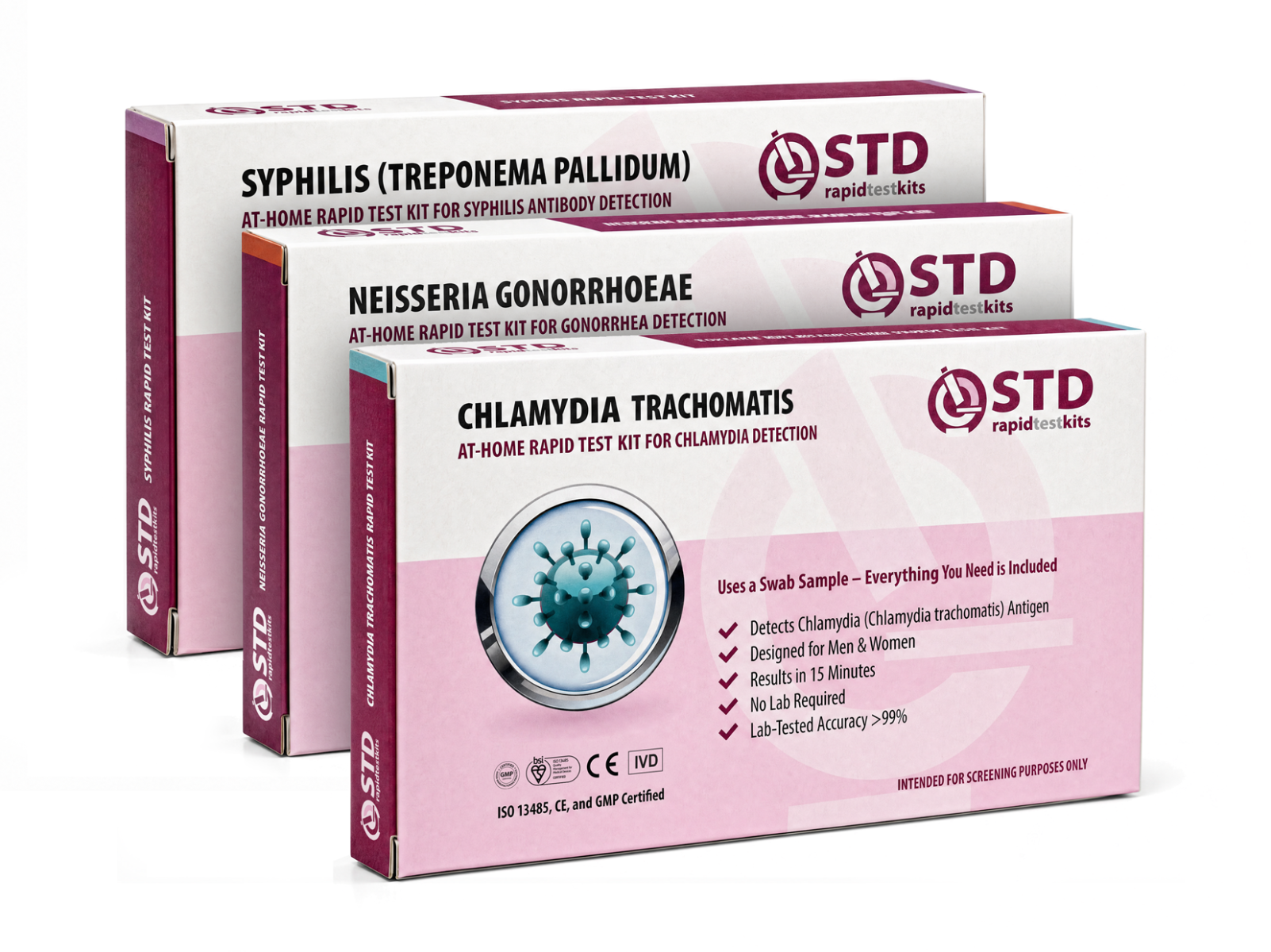
For the bacterial STIs most commonly co-tested alongside syphilis (chlamydia and gonorrhea), the 3-in-1 kit below covers all three from one sample collection. The HIV component discussed above is a separate fingerstick blood test and is not included in this 3-in-1 kit.
Syphilis is a sexually transmitted infection that can cause serious health problems without treatment. Infection develops in stages (primary, secondary, latent, and tertiary). Each stage can have different signs and symptoms.
Your Next Steps: A Quick Decision Guide
Are you experiencing sudden vision changes, severe headache, new neurological symptoms, or a painless genital sore alongside any of these?
Yes: Seek emergency or same-day clinical care. Do not wait for an at-home test result. These can be early signs of neurosyphilis or ocular syphilis, which need intravenous antibiotic treatment in a hospital.
Has it been at least six weeks since a known or possible exposure?
Yes: Test now with an at-home rapid syphilis blood test or a clinic blood draw. If the test is negative and you remain concerned, retest at three months for added certainty.
No: Wait until six weeks post-exposure for a reliable result. If a painless sore or unexplained rash appears before then, see a clinician immediately rather than waiting for the test window.
Did your at-home rapid test return a reactive (positive) result?
Yes: Visit a clinic for confirmatory lab testing (a quantitative RPR or VDRL titer) before starting treatment. Most clinics treat the same day if the confirmatory test agrees. Notify recent sex partners directly, or ask your local public-health department to handle anonymous partner notification on your behalf through partner services.
Have you been treated for syphilis in the past, or are you in a higher-risk group?
Yes: Continue routine screening: retest at 6 and 12 months after treatment for early-stage infection, then at least annually. People with multiple partners or living with HIV should screen every 3 to 6 months.
No: Add a syphilis test to your annual sexual-health check if you are sexually active. Most cases today are caught through routine screening, not symptoms.
Practical guidance based on where you are in the testing and treatment timeline. Not a substitute for clinical advice.
Syphilis FAQs
- Is syphilis curable?
- Yes. Syphilis is fully curable with antibiotics, especially when caught in the primary or secondary stages. A single 2.4 million unit intramuscular injection of long-acting benzathine penicillin G treats most early infections. Tertiary syphilis can also be cured, but organ damage that has already occurred cannot be reversed. Reinfection after a successful cure is possible because treatment does not produce lasting immunity.
- How long after exposure does syphilis show up on a blood test?
- Expect a reliable result around six weeks after exposure. The antibody response builds slowly, so a small fraction of people test positive from week three or four, but a negative result in the first month still needs follow-up testing. A negative at six weeks is reassuring for most exposures; if symptoms or risk level remain concerning, retest at three months.
- Can I get syphilis from oral sex?
- Yes. Oral sex transmits syphilis efficiently because chancres can appear on the lips, tongue, or back of the mouth, and the chancre may not be visible to the partner. Both the giver and receiver of oral sex can transmit or acquire the infection. Condoms or dental dams reduce but do not eliminate the risk.
- What does a syphilis chancre feel like?
- Most chancres do not hurt or itch. They feel firm to the touch (the rim is often described as having a cartilage-like consistency) but cause little or no discomfort. This painlessness is the main reason chancres get missed; people assume a non-painful sore must be harmless. Any new round genital, anal, or oral sore that appears 10 to 90 days (about 1 to 13 weeks) after sex deserves a syphilis test even if it does not hurt.
- Will a syphilis blood test stay positive after I am cured?
- Often yes. Treponemal antibody tests (which include most rapid lateral-flow at-home kits) typically remain reactive for life, even after successful treatment. Clinicians use a separate quantitative test called RPR to monitor whether an active infection has been cured by tracking whether the titer drops fourfold or more. A positive rapid test in someone treated years ago is usually not a new infection.
- Can syphilis go away on its own?
- Syphilis symptoms do resolve on their own without antibiotics, but visible improvement is not the same as cure. The sore clears within a few weeks and the rash within a month or two, while the bacteria remain active and move into the latent stage where there are no outward signs. From there, untreated infection can re-emerge years or even decades later as tertiary syphilis, with damage to the heart, brain, or nerves. Only antibiotics actually clear the bacterium.
- Does syphilis show up in a urine test?
- Syphilis is not diagnosed through urine. Blood tests (RPR, VDRL, or treponemal antibody tests) are the standard. Some clinics use direct visualization of fluid from a chancre under a dark-field microscope, but this is rare and only useful when an active sore is present. The most reliable tests for any stage of syphilis are blood-based.
- Do I have to tell my partners if I test positive?
- Public health departments offer free anonymous partner notification if you prefer not to make contact directly. The service is called partner services. Notification windows to work from: 3 months back from symptom onset for primary syphilis, 6 months for secondary, 12 months for early latent. Partners contacted through this service are typically offered testing and presumptive treatment without needing a positive test result of their own.
- Can I have sex while being treated for syphilis?
- No. The CDC recommends abstaining from sexual contact until any chancre or rash has fully healed and at least 7 days after a single-dose treatment, or until all doses of a multi-dose regimen are completed. Sexual partners from the relevant exposure window should also be notified, tested, and treated to prevent reinfection.
- U.S. Centers for Disease Control and Prevention. Syphilis fact sheet (overview), including transmission routes, the four stages of disease progression, the HIV co-infection relationship, and high-risk-group screening recommendations.
- U.S. Centers for Disease Control and Prevention. Sexually transmitted infections treatment guidelines (syphilis section), including the two-step screening algorithm, benzathine penicillin G treatment, late neurologic manifestation timing, and partner notification windows.
- U.S. Centers for Disease Control and Prevention. Sexually transmitted infections treatment guidelines (HIV section), including STI screening of persons with HIV: at least annually, with more frequent screening every 3 to 6 months tailored to individual risk.
- U.S. Centers for Disease Control and Prevention. STI surveillance annual report, including the 2022 syphilis case count (207,273) and the congenital syphilis trend (3,773 cases in 2022).
- U.S. Centers for Disease Control and Prevention. Clinical guidelines on doxycycline post-exposure prophylaxis (doxy-PEP) for bacterial STI prevention, MMWR 2024, reporting more than 70 percent reduction in syphilis and chlamydia and about 50 percent for gonorrhea in the populations studied.
- World Health Organization. Syphilis fact sheet, including global incidence estimates and recommendations for prenatal screening to prevent congenital syphilis.
- National Health Service (NHS), United Kingdom. Syphilis condition page, including symptom progression, two-step testing, and treatment overview.
- National Center for Biotechnology Information (NIH). StatPearls peer-reviewed clinical reference: Syphilis, including chancre incubation period (10 to 90 days, median of 21 to 25 days) and benzathine penicillin G dosing (2.4 million units) for early syphilis.
