






Last updated: April 2026
Fear of STD testing is one of the most common and least talked about mental health experiences in sexual health. It stops millions of people from getting answers they urgently need, quietly fueling an epidemic that thrives on silence. This article walks through the full psychological arc: from the paralysis before testing, through the emotional shock of a diagnosis, to the long road back to feeling like yourself again. If you're somewhere on that arc right now, you're in the right place.
The fear of getting tested for an STD is not weakness, and it is not irrational; it is a completely predictable response to a culture that has spent centuries turning sexually transmitted infections into moral verdicts. That fear has a name, a mechanism, and a way through. The first step is understanding what is actually happening in your head, because once you do, the path forward gets a lot clearer.
In this guide: Why people avoid testing · STD paranoia and OCD · What stigma does to your brain · Testing at home · After a positive result · Systemic stigma · Recovery and identity · Getting mental health support · FAQs

People are also reading: STD Myths and Facts: Common Misconceptions About Sexually Transmitted Infections
Why So Many People Are Scared to Get Tested, And Why That Fear Is the Real Problem
Picture this: it has been three weeks since a hookup you're not entirely sure was risk-free. You've Googled your symptoms seventeen times. You know you should get tested. And yet every time you come close to booking an appointment or ordering a kit, something stops you. Not laziness. Not forgetfulness. Fear, specific, visceral, and surprisingly hard to reason your way out of. If that description fits where you are right now, you're not the only one: anxiety about STD testing is one of the most common barriers to care, and it operates completely independently of actual risk level.
This is where the STD crisis actually lives, in STD test anxiety, not in the lab results themselves. Not in the labs or the clinics, but in the gap between knowing you should get tested and being able to make yourself do it. According to the CDC, stigma is one of the primary structural barriers driving STI health disparities in the United States. It creates negative feelings around testing and treatment that keep people away from care, sometimes for years. The infections spread not because people are careless, but because shame is a more powerful force than most public health campaigns give it credit for.
What makes this especially frustrating is the self-reinforcing loop it creates. The longer you wait, the more anxious you get, a pattern explored in depth in our guide to anxiety about STD testing. The more anxious you get, the harder testing feels. The harder testing feels, the longer you wait. Meanwhile, if an infection is present, it has more time to cause damage and more opportunities to be passed on without anyone knowing. Stigma doesn't just hurt the person carrying it. It quietly fuels the entire epidemic.
The fear is also not monolithic. It comes in several distinct flavors, and recognizing which one is actually running your avoidance is the first move toward breaking out of it. Some people fear the result itself, the positive test that would make everything real. Others fear the judgment: from a doctor, a partner, a parent, a community. Others are caught in a different trap entirely, a kind of obsessive, spiraling anxiety that attaches to the possibility of infection and won't let go, even when every rational signal says the risk was low.
STD Paranoia, OCD, and the Fear That Won't Quiet Down
There is a specific psychological experience that doesn't get nearly enough attention in sexual health conversations: the person who is not avoiding testing because they don't want to know, but because they are trapped in an anxiety loop that testing doesn't seem to fix. They test negative. They feel relieved for forty-eight hours, what our article on the mental toll of waiting for STD results calls the cruelest part of the process. Then the doubt creeps back in. What if the test was wrong? What if I tested too early? What if the doctor missed something? So they test again. And again.
This pattern, sometimes called STD paranoia, has a clinical name: venereophobia, and it overlaps significantly with obsessive-compulsive disorder and illness anxiety disorder. Researchers have described it as a heightened state of fear and suspicion about sexual health and potential infection, where the compulsive behavior (repeated testing, incessant body-checking, hours of online research) is an attempt to reduce anxiety that ultimately makes the anxiety worse. The OCD brain is often called the "doubting disorder" for exactly this reason: certainty feels necessary, but it is never quite achievable, which means relief is always temporary.
If you recognize yourself here, if negative tests don't actually give you peace, if you find yourself checking for symptoms multiple times a day, if the fear of a specific infection has started to reshape your daily life, this is a mental health concern that deserves direct attention, not just another round of testing. Cognitive behavioral therapy, and specifically a method called exposure and response prevention (ERP), has a strong evidence base for treating this kind of health anxiety. At-home rapid testing can be genuinely useful for breaking the anxiety loop when it is used as a single, well-timed tool, particularly for HIV-specific fear, which has its own spiral dynamic covered in our guide to HIV testing at home for anxious testers, not as a repeated reassurance ritual. The distinction matters, and a therapist who specializes in OCD or health anxiety can help you find where that line is.
| Fear Type | What It Feels Like | What Drives It |
|---|---|---|
| Stigma avoidance | Postponing testing to avoid becoming "someone with an STD." | Internalized shame, fear of judgment from others |
| Result fear | Not wanting to know, ignorance feels safer than certainty | Fear of what a positive result would mean for relationships and identity |
| Venereophobia / STD OCD | Repeated testing that doesn't bring relief; obsessive body-checking | Health anxiety, OCD; certainty feels necessary but is never achievable |
| Systemic mistrust | Reluctance to engage with the healthcare system at all | Historical mistreatment, discrimination, lack of culturally affirming care |
| Social fear | Avoiding testing because of who might find out | Community stigma, fear of partner reaction, small-town social exposure |
What STD Stigma Is Actually Doing to Your Brain
Stigma is not just an abstract social problem. It has measurable, documented effects on the brain and body, and understanding those effects makes it a lot easier to stop blaming yourself for how hard this feels. When a person internalizes stigma (meaning they absorb external shame and turn it against themselves), the result is what researchers call self-stigma: a privately held belief that the diagnosis makes them lesser, unlovable, or dirty. This is not a character flaw. It is a predictable neurological response to a culture that has consistently communicated exactly that message.
The psychological literature on this is unambiguous. Research published in peer-reviewed journals, and summarised in our deep-dive on how STD stigma affects mental health, consistently shows that people diagnosed with STIs report shame, anxiety, embarrassment, isolation, fear of rejection, and fear of no longer being sexually desirable, a cluster of responses that closely mirrors what we see in other heavily stigmatized health conditions. Studies on internalized STD stigma have found it strongly linked to depression and anxiety, not just as a short-term reaction to diagnosis, a connection explored in detail in our guide to STDs and mental health, but as an ongoing condition that can persist for months or years if left unaddressed.
Here is the part that makes this a genuine public health emergency, not just a personal struggle: stigma doesn't stay in the individual. A 2025 APA/Harris poll found that 35% of U.S. adults say they would view someone differently if they knew that person had a mental health condition, and STD stigma runs considerably deeper than mental health stigma in most communities. That ambient cultural judgment is what people are picking up on when they feel unable to book a test. It is not paranoia. It is an accurate read of an environment, and the clinical overlap between STDs and depression is documented in depression, anxiety, and STDs: the overlooked impact. that has consistently punished honesty about sexual health. The solution isn't to tell people to stop being scared. It's to dismantle the environment that makes the fear so rational in the first place, and in the meantime, to find testing options that make that environment irrelevant.
People are also reading: Treated for an STD? Here's Everything You Need to Do Before Having Sex Again
The Waiting Room You Never Have to Sit In, How At-Home Testing Changes the Equation
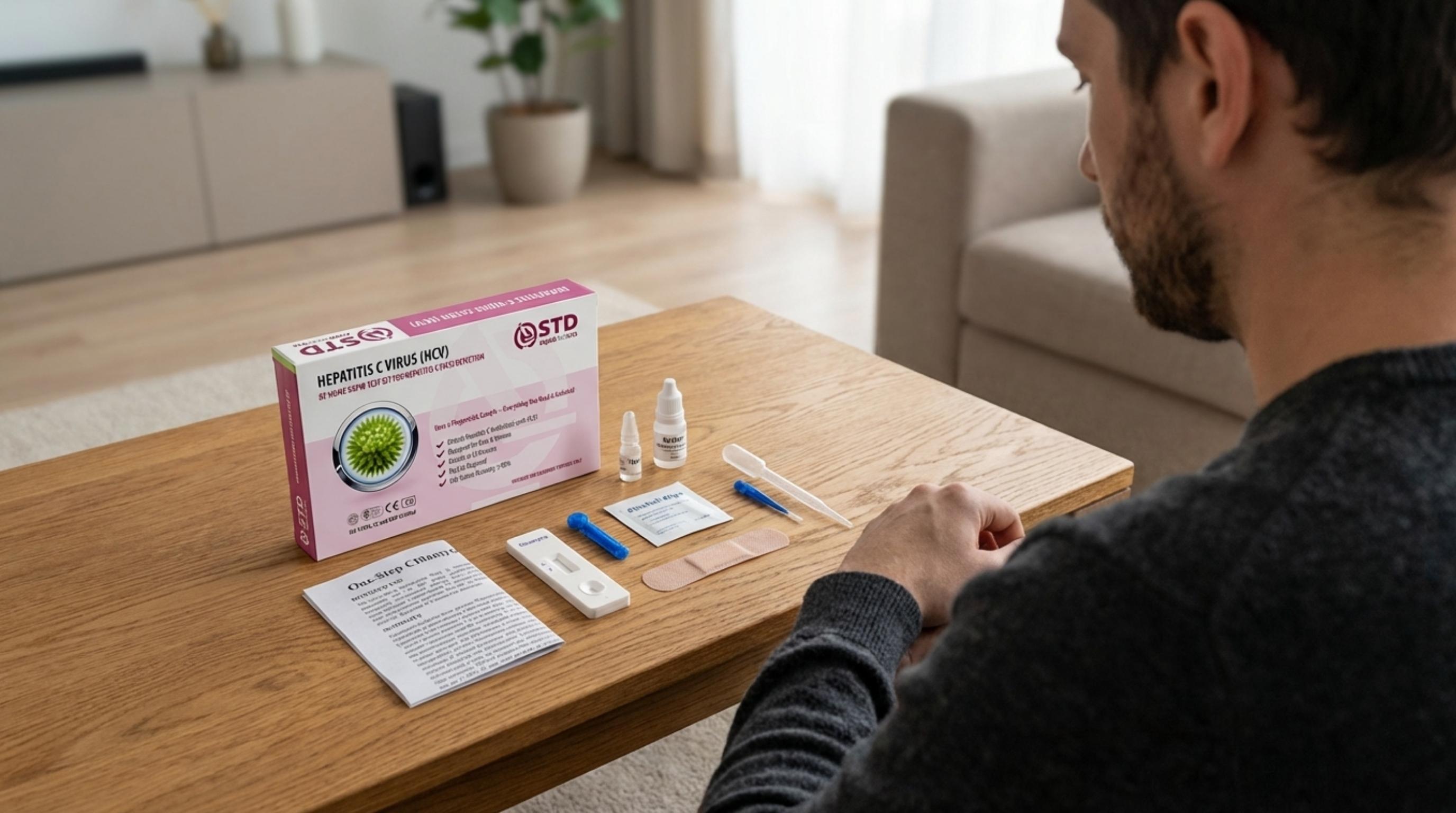
One of the most concrete things that has shifted in the last five years is this: you no longer have to walk into a clinic, sit in a waiting room, and hand your sexual history to a stranger in order to know your status. At-home rapid STD testing exists precisely for the gap between knowing you should get tested and being able to make yourself do it in a traditional setting. If stigma, anxiety, or systemic mistrust is what's keeping you from testing, removing the clinic from the equation removes the most friction-heavy part of the process.
At-home rapid tests from STD Rapid Test Kits deliver results in minutes, not days. There's no waiting room, no staff judgment, no paperwork trail in a shared medical system. You test on your own timeline, in your own space, with your own privacy fully intact. For the person who is scared of what the result might say, that privacy is not a minor convenience, it is the entire point, as we explore in breaking the stigma through at-home testing., it is the difference between testing and not testing at all. And not testing is always the worse option, medically speaking.
Timing matters as much as the test itself, and this is where a lot of well-intentioned people make an avoidable mistake: testing too soon after an exposure and getting a false negative that doesn't actually give them accurate information. Every infection has a window period, the time between exposure and when a test can reliably detect it. Testing inside that window doesn't mean you're clear. It means the test hasn't had enough biological signal to work with yet.
| Infection | Test From | Recommended Kit |
|---|---|---|
| Chlamydia | 14 days after exposure | Chlamydia At-Home Rapid Test Kit (99.7%) |
| Gonorrhea | 3 weeks after exposure | Gonorrhea At-Home Rapid Test Kit (97.2%) |
| Syphilis | 6 weeks after exposure | Syphilis At-Home Rapid Test Kit (99.4%) |
| HIV 1&2 | 6 weeks (first indicator); retest at 12 weeks for certainty | HIV 1&2 At-Home Rapid Test Kit (99.7%) |
| Herpes HSV-1 & HSV-2 | 6 weeks after exposure | Genital & Oral Herpes HSV-1+2 2-in-1 (98.2%) |
| Hepatitis B | 6 weeks after exposure | Hepatitis B At-Home Rapid Test Kit (98.8%) |
| Hepatitis C | 8–11 weeks after exposure | Hepatitis C At-Home Rapid Test Kit (98.5%) |
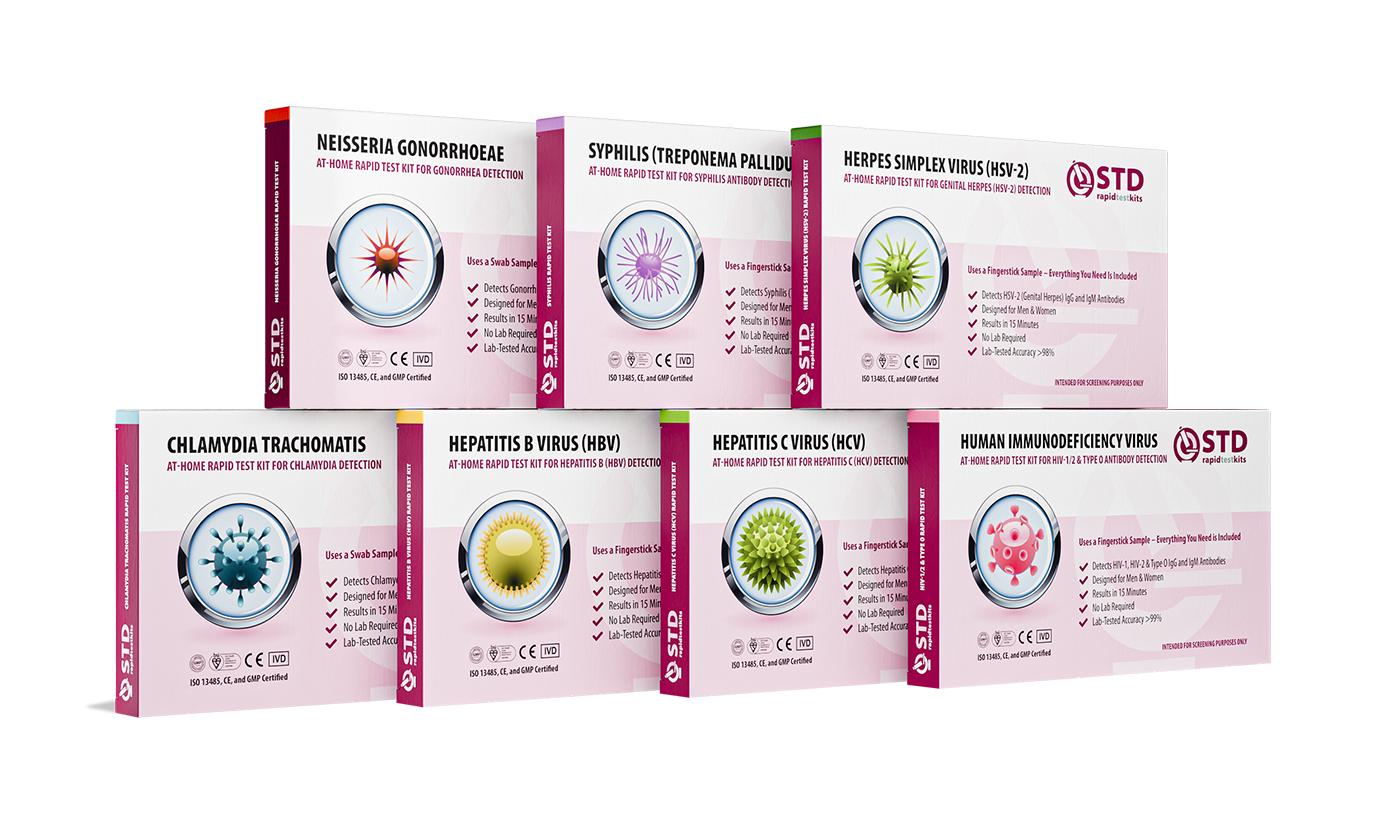
If you are not sure which infection to test for, a combo kit takes the guesswork out entirely. The Complete 8-in-1 At-Home Rapid Test Kit (99%) covers HSV-1, HSV-2, chlamydia, gonorrhea, syphilis, HIV, hepatitis B, and hepatitis C in a single order. For the anxious person who is worried about multiple exposures or doesn't know exactly what they were exposed to, a comprehensive screen is almost always the better move than testing for one infection and leaving uncertainty on the table. Your results, your privacy, your power.
Check Your STD Status in Minutes
Test at Home with Remedium7-in-1 STD Test Kit
 For Men & Women
 Results in Minutes
 No Lab Needed
 Private & Discreet
Order Now $129.00 $343.00
For all 7 tests
The Stigma That Lives Outside You, and Why It's a Systemic Problem, Not a Personal One
It is worth being honest about where STD stigma comes from, because understanding its origins makes it much harder to absorb as personal truth. The stigma attached to sexually transmitted infections is not an inevitable response to illness, it is a historically constructed one, and it has been deliberately shaped by forces that have very little to do with medicine or public health.
For most of recorded Western history, STDs were understood as divine punishment for immoral behavior. Syphilis, gonorrhea, and later HIV were all used as tools of social control, ways to categorize certain people (the promiscuous, the deviant, the outsider) as morally inferior and medically undeserving. That legacy didn't disappear when science got better, it migrated into law. It migrated into culture, language, institutional policy, and the implicit bias of healthcare providers, and in the specific weight it carries in faith communities, covered in how to talk about STDs without shame in faith-based communities. When someone today feels "dirty" after an STD diagnosis, they are not having an irrational emotional response. They are absorbing centuries of deliberate messaging about what their diagnosis is supposed to mean about them.
The burden of this messaging is not distributed evenly. CDC data on STI health equity, and our deep-dive into STD stigma in the LGBTQ+ community, consistently shows that racial and ethnic minority groups, LGBTQ+ individuals, and people in lower-income communities face disproportionate STI rates, driven not by behavior, but by structural inequities including poverty, reduced healthcare access, systemic discrimination, and the compounding effect of medical mistrust built over generations of unethical treatment. The Tuskegee syphilis study, whose lasting effects on medical trust we trace in Tuskegee's long shadow, in which Black men with syphilis were deliberately left untreated for decades so researchers could observe disease progression, is not an isolated historical footnote. It is a foundational reason why communities of color approach healthcare with rational, justified caution, and why "just go get tested" lands very differently depending on who is hearing it.
Acknowledging all of this is not an exercise in hopelessness. It is the prerequisite for actual empowerment. You cannot overcome a shame that you believe you deserve. You can overcome a shame that you understand to be externally imposed, historically constructed, and medically meaningless. An STD is a pathogen. It is not a character assessment. That is not motivational language, it is the scientific consensus, stated plainly.
What Actually Happens to Your Mind After a Positive STD Diagnosis
You tested. The result came back positive. And now you're somewhere on the floor, emotionally, if not literally. What happens next in your head is not weakness. It follows a remarkably consistent pattern, which means it also has a way through.
The first wave is almost always shocking, regardless of how much you suspected the result. Even people who were mentally prepared for a positive report, the moment the result is real, something in the brain short-circuits. This is a biological response; the stress system floods with cortisol, the prefrontal cortex going temporarily offline, and the body treating the information as a physical threat. You may feel nausea, dissociation, a strange flatness, or the opposite: immediate, overwhelming grief. All of these are normal. None of them is permanent.
What tends to follow the shock is the shame spiral, a documented psychological pattern that we break down in full detail here, and this is where the real psychological damage happens if it goes unchecked. The shame spiral is the internal voice that takes the diagnosis and turns it into a verdict about your worth as a person. It says things like: this happened because of something fundamentally wrong with me, no one will want me now, I should have known better, I am disgusting. None of these statements is medically accurate. All of them feel completely true in the first forty-eight hours. A survey of 100 people living with herpes simplex virus found that 98% reported symptoms of depression, a figure that informs our full breakdown of the emotional impact of a diagnosis, a figure that tells you this is not a personal failure of emotional regulation. It is the predictable psychological cost of a diagnosis delivered inside a culture that has weaponized it.
The shame spiral also has a particularly dangerous tendency: it discourages people from seeking treatment, telling partners, and getting follow-up care. This is the mechanism by which stigma causes direct physical harm. Someone who is too ashamed to go back to a clinic, or too afraid to have the partner conversation, is someone whose infection goes unmanaged and uncontained. Breaking the shame spiral is not just a matter of feeling better. It is, in a very concrete sense, a public health intervention.

People are also reading: Can Having Sex Before an STD Test Affect Your Results?
The Long Way Back, Reclaiming Your Identity and Sexual Health After Diagnosis
There is life after an STD diagnosis. Not a diminished version of it, not a life defined by it, but an actual, full, continued existence, including a continued sex life, continued relationships, and continued self-respect. This is not an optimistic sentiment. It is what the data shows and what the experience of millions of people confirms. Getting there, though, is real work, and it is worth being honest about what that work actually involves.
The first stage is information, and our comprehensive guide to living well after an STD diagnosis covers exactly what to look for. Not the panicked, 3am Google-search kind, but calm, sourced, accurate information about exactly what your diagnosis means clinically. Most people's mental image of what it means to have herpes, chlamydia, HIV, or syphilis is dramatically worse than the medical reality, and dramatically worse than what their own experience will be with proper care. Effective treatment exists for every common STD. Many bacterial infections are cured completely with a single course of treatment. Chronic viral infections can be managed to the point where transmission risk is dramatically reduced and outbreaks become infrequent or cease entirely. The gap between what stigma tells people their diagnosis means and what medicine actually tells them is enormous, and closing that gap is the first concrete step toward recovery.
The second stage is community. This sounds abstract, but it is, practically speaking, one of the most powerful interventions available. Finding even one other person, in an online forum, a support group, a conversation with a trusted friend or healthcare provider, who has been through the same experience and come out the other side, does something that information alone cannot: it makes the future livable in a felt, not just intellectual, way. The isolation of an STD diagnosis is one of its most damaging features. Shame thrives in silence. The antidote is not broadcast disclosure, but the selective, chosen experience of being known and not rejected.
The third stage is the question of disclosure, to partners, to people you date, to people you care about. This is where the fear tends to reconsolidate after diagnosis. And it deserves its own honest treatment: disclosure is hard, it does not always go the way you hope, and the fear of rejection is real. But it is also true that people living with STDs sustain relationships, find new partners, build intimacy, and are loved consistently and ordinarily. For those navigating this with a herpes diagnosis specifically, where stigma tends to be the most intense, Dating With an STD? Here's How to Tell Them Without Losing Them is the place to start. Disclosure gets easier with practice, with language, and with the grounding that comes from genuinely believing that your diagnosis is not the most important thing about you. That belief takes time to build. It builds.
When the Fear Is the Problem, Getting Mental Health Support That Actually Helps
Sometimes the psychological response to an STD diagnosis, the STD anxiety, the shame, the loop that will not stop, or to the fear of one, crosses from understandable distress into something that needs professional support. Knowing where that line is matters, because the same shame that keeps people from testing also keeps people from asking for mental health help. Both deserve to be addressed directly.
If you are experiencing persistent depression, significant anxiety, suicidal thoughts, or a complete inability to function in the weeks following a diagnosis, these are signs to reach out to a mental health professional, specifically one who is affirming of sexual health concerns and comfortable with STD-related distress. Not all therapists have this background, and it is worth asking directly. Our guide to overcoming the stigma of STD testing also covers practical steps for finding affirming care. Cognitive behavioral therapy (CBT) has strong evidence for both the depression and anxiety that commonly follow STD diagnosis. For OCD-related STD fear specifically, exposure and response prevention (ERP) is the gold-standard treatment.
If you are in the venereophobia spiral, testing repeatedly without relief, unable to trust negative results, checking your body obsessively, the at-home testing environment can be both a lifeline and a trap. Used once, at the right time, with accurate information about window periods, a rapid test is exactly the clarity-giving tool it is designed to be. Used as a compulsive reassurance ritual, it feeds the anxiety loop rather than breaking it. If you recognize the second pattern in yourself, and if you've been down the road of waiting for a result that then spiraled into something worse, the most useful next step is not another test; it is a conversation with someone trained to treat health anxiety. That conversation is available, it works, and it does not require you to feel better before you reach out.
Testing is the fastest way to stop the guessing game. Whatever is driving your fear, the result, the judgment, the identity threat, the loop that won't stop, the answer on the other side of testing is always more manageable than the one inside the spiral. The 6-in-1 At-Home Rapid STD Test Kit covers the most common infections discreetly, without waiting rooms or clinical encounters, with results in minutes. Whatever comes next, you deal with it from a position of knowing. That is always better than not knowing.
Check Your STD Status in Minutes
Test at Home with Remedium8-in-1 STD Test Kit
 For Men & WomenResults in MinutesNo Lab NeededPrivate & Discreet
Order Now $149.00 $392.00
For all 8 tests
FAQs
1. Is it normal to feel terrified before getting an STD test, even if my risk was probably low?
Yes, completely normal, and you're far from alone in it. The fear isn't proportional to actual risk; it's proportional to what a positive result would mean socially and emotionally. That gap between clinical reality and perceived threat is exactly what STD stigma creates. The anxiety you're feeling is a response to cultural messaging, not a signal that something is wrong with you.
2. I tested negative, but I still can't stop worrying. What's going on?
This is one of the most common patterns in STD-related health anxiety, and it has a name: reassurance-seeking that doesn't actually reassure. If a negative result brings relief for a day or two and then the doubt creeps back in, you may be dealing with something closer to OCD or illness anxiety disorder than a standard fear of infection. More testing won't fix it; the anxiety is the issue, not the infection status. A therapist who specializes in health anxiety or OCD is the right next step.
3. Can STD stigma actually cause depression?
Yes, and the research is clear on this. Internalized stigma following an STD diagnosis is consistently linked to clinically significant depression and anxiety, not just temporary sadness. The shame of an STD diagnosis, compounded by fear of rejection and isolation, creates exactly the psychological conditions in which depression develops. This is not a personal weakness. It is a documented, predictable consequence of delivering a medical diagnosis inside a shame-saturated cultural context.
4. I think I tested too early. Do I need to retest?
Probably, yes, if you tested before the window period closed for the infection you're concerned about. Testing inside the window period can produce a false negative because the infection hasn't built up enough biological signal to be detected yet. Check the window period for your specific infection: chlamydia tests from 14 days, gonorrhea from 3 weeks, syphilis, HIV, herpes, and hepatitis B all from 6 weeks, and hepatitis C from 8–11 weeks. If you're inside those windows, retest at the right time.
5. How do I tell a partner about a positive STD result without the conversation destroying everything?
Directly, factually, and without pre-apologizing for having the diagnosis. The conversation works best when it leads with information rather than shame, what the infection is, how it's managed, what it means for them, and what steps you're taking. Most people respond better to calm clarity than to emotional self-flagellation. Some conversations will still be hard. That doesn't mean they always will be, and it doesn't mean the diagnosis makes you undateable.
6. Is it possible to have a normal sex life after an STD diagnosis?
Yes, and this is not a consolation; it is a clinical reality. Millions of people live with herpes, HIV, HPV, and other managed STDs and sustain active, healthy, intimate relationships. Effective treatment significantly reduces transmission risk for most infections. Disclosure, consistent care, and honest communication with partners are the practical building blocks of a sex life that continues on the other side of a diagnosis.
7. Why do some people with STD-related anxiety keep testing even after negative results?
Because the anxiety is driving the behavior, not the infection risk. This is the hallmark of what clinicians call venereophobia or STD OCD, a pattern where testing is used as a compulsion to reduce anxiety, but because compulsions feed OCD rather than resolving it, the relief never lasts. Negative results stop being reassuring. The only treatment that actually breaks this cycle is working with a trained therapist on the underlying anxiety, not accumulating more test results.
8. Does stigma actually stop people from getting tested, or is that overstated?
It is not overstated; it is one of the most documented mechanisms in STI epidemiology. The CDC explicitly identifies stigma as a structural barrier to testing and treatment, particularly in communities of color and LGBTQ+ populations. Studies consistently show that fear of judgment from healthcare providers, partners, and the community is a primary reason people delay or avoid testing. Stigma doesn't just hurt individuals. It drives the spread of infections that would otherwise be caught and treated early.
9. What's the fastest way to get tested without anyone finding out?
An at-home rapid test. No clinic, no waiting room, no paperwork in a shared system, no staff interaction. Results arrive in minutes, in your own space. The Complete 8-in-1 kit covers the eight most common infections in a single, discreet order, shipped directly to you. If privacy is the barrier between you and knowing your status, that barrier is now completely removable.
10. How long does STD-related depression usually last after a diagnosis?
It varies significantly by person, by infection, and by what support is available. For most people, the acute emotional response, the shock, the shame spiral, the grief, starts to stabilize within weeks as accurate information replaces fear-based assumptions. For others, particularly those with chronic infections or strong internalized stigma, depression can persist for months without intervention. The most important variable is not the infection itself, but whether the person has access to accurate information, social support, and if needed, professional mental health care. None of those are luxuries. They are part of treatment.
Take Your Status Off the Table, Test at Home, Move Forward With Clarity
Whatever has been keeping you from testing, the fear of the result, the shame of sitting in a clinic, the OCD loop that won't quiet down, the mistrust of a system that hasn't always been trustworthy, the answer to all of it begins in the same place: knowing your status. Not knowing is not protection. It is a different kind of anxiety, one that has no resolution and no expiry date.
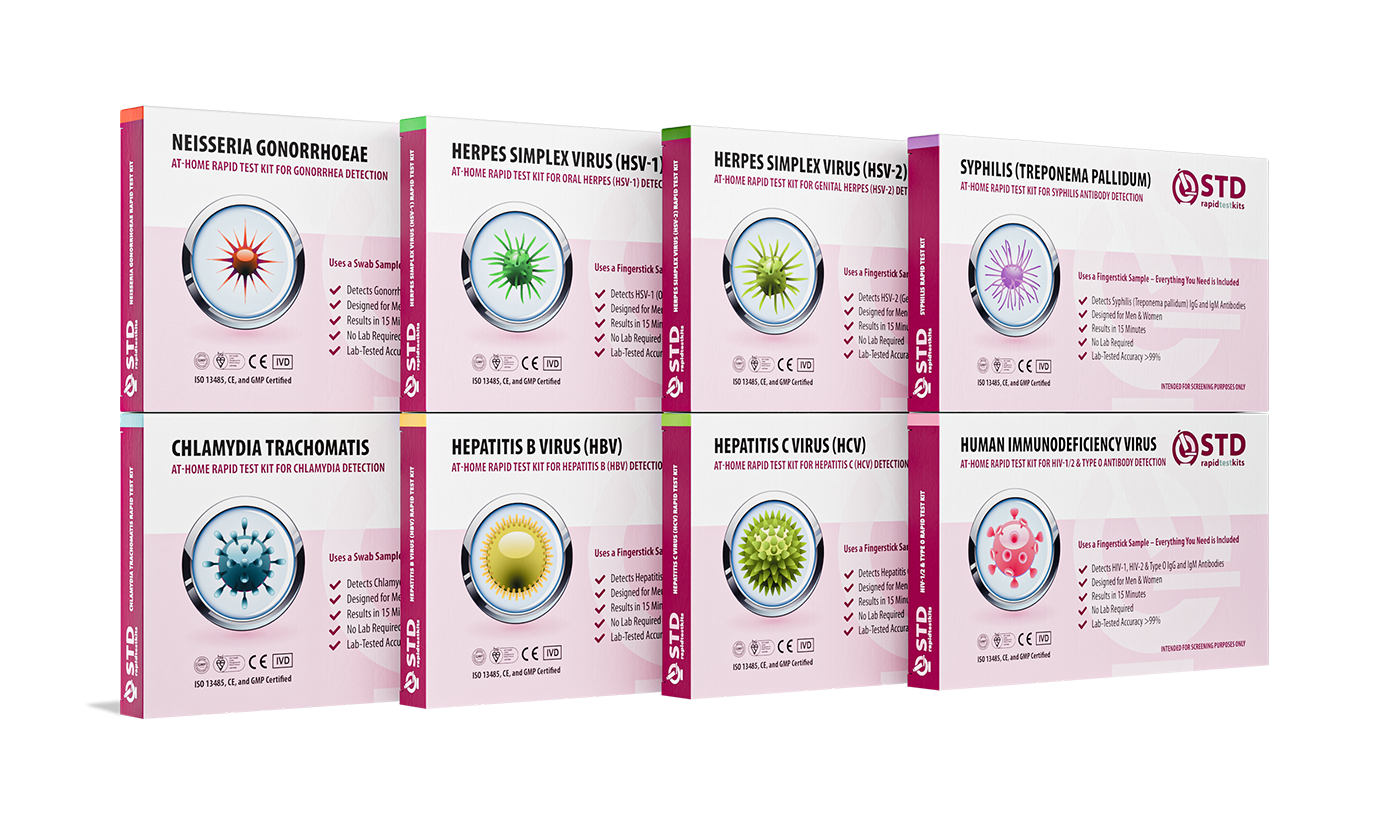
At-home rapid testing removes the most common barriers between fear and answers. The Complete 8-in-1 At-Home Rapid STD Test Kit (99%) covers HSV-1 and HSV-2, chlamydia, gonorrhea, syphilis, HIV, hepatitis B, and hepatitis C, the eight most common infections, in a single discreet kit with results in minutes. If your concern is more targeted, the 6-in-1 kit covers the core infections including HIV and herpes. Both ship directly to you, no clinic required, no judgment, no waiting room.
Testing is empowerment, not confession. Whatever the result says, you are in a better position knowing than not knowing, medically, emotionally, and in every practical sense. Take control of your sexual health today. Visit STD Rapid Test Kits and get the clarity you've been putting off.
How We Sourced This: Our article was constructed based on current advice from the most prominent public health and medical organizations, and then molded into simple language based on the situations that people actually experience, such as treatment, reinfection by a partner, no-symptom exposure, and the uncomfortable question of whether it "came back." In the background, our pool of research included more diverse public health advice, clinical advice, and medical references, but the following are the most pertinent and useful for readers who want to verify our claims for themselves.
Sources
1. CDC, STI Health Equity: Stigma as a Structural Barrier to Testing and Treatment
3. PMC / NCBI, Psychological Health and Well-Being in Patients with Sexually Transmitted Infections
4. PMC / NCBI, Venereophobia: A Comprehensive Review (2025)
5. Healthbeat, Are STIs Truly Declining, or Is the Data Just Lacking? (2025)
6. Psych Central, Coping with a Positive STI Diagnosis: 9 Helpful Tips
About the Author
Dr. F. David, MD is a board-certified infectious disease specialist focused on STI prevention, diagnosis, and treatment. He writes with a direct, sex-positive, stigma-free approach designed to help readers get clear answers without the panic spiral.
Reviewed by: Rapid STD Test Kits Medical Review Team | Last medically reviewed: April 2026
This article is for informational purposes and does not replace medical advice.


