
Published: November 2025 | Last updated: May 2026 | Editorial review and quality control: Martina N.
You're about to take an STD test, and then it hits you: you had sex recently. The next thought is usually "Did I just mess up the test?" It's one of the most common last-minute doubts before testing, and most of what you find online doesn't make it clearer.
Here's the reality: sex right before testing doesn't automatically invalidate your results, but it can change how accurate they are depending on what's being tested, how the sample is collected, and how much time has passed since the exposure you're worried about. The difference between a reliable result and a misleading one often comes down to biology, not bad luck.
Key Takeaways
- Blood-based STD tests (HIV, syphilis, herpes, hepatitis) are not affected by recent sex. Only the time since exposure matters for those.
- For urine and swab tests, urinating, ejaculating, or having sex within one to two hours before sampling can dilute the sample and raise the risk of a false negative, never a false positive.
What Happens in Your Body After Sex Before Testing
Right after sex, your body doesn't just go back to baseline. There are immediate physical changes that matter for testing. Semen, vaginal fluids, and natural lubrication can remain in the urethra, vagina, or surrounding tissue, and these fluids can temporarily mix with whatever a test is trying to detect. In most situations this matters only marginally, though understanding it can make the difference between a reliable result and a misleading one.
For infections like chlamydia and gonorrhea, the bacteria live inside cells lining the urethra, cervix, throat, or rectum. Tests, especially NAAT (nucleic acid amplification tests), are designed to detect genetic material from those bacteria. If you've had sex recently, additional fluids in the sample area can temporarily change the concentration of bacterial DNA in a urine sample or shift where the bacteria can be detected at any given moment. The infection itself hasn't moved. What changes is how well the sample can represent what's happening deeper in the tissue.
Think of it this way: imagine you're trying to measure the salt content in a glass of water, and someone pours in a splash of plain water just before the measurement. The salt is still there, it's just slightly harder to find at that concentration. That's roughly what happens when external fluids mix with a urine sample that was supposed to capture only the first-catch stream from the urethra, where bacteria concentrate most heavily.
Blood-based tests are an entirely different story. Whether you're checking for HIV, syphilis, herpes, or hepatitis, those tests look at what's circulating in your bloodstream: antibodies, antigens, or viral particles that were already present before sex happened. Sexual activity doesn't change what's in your blood. Blood test accuracy depends on time elapsed since exposure, a question of weeks rather than anything that happened in the hours before the test.
Can sex right before an STD test affect my results?
Yes, for sample-based tests (urine and swabs), and only in one direction: a true positive can be masked into a false negative if the sample is diluted. Blood-based tests for HIV, syphilis, herpes, and hepatitis are unaffected. For urine and swab tests, the practical fix is simple: avoid urinating or ejaculating for one to two hours before collecting the sample, and collect the first portion of your urine stream (first-catch).
Can Sex Before an STD Test Cause False Negatives or False Positives?
The bigger risk is a false negative rather than a false positive. A false negative means the test says "negative" when an infection is actually present. This happens when there isn't enough detectable material in the sample at the time of testing, either because the infection is too early to detect, or because the sample was compromised before collection. Recent sex can contribute to the second scenario in very specific ways that are worth understanding clearly.
For urine-based tests, the problem is dilution and displacement. If you urinate or ejaculate shortly before giving a urine sample, you may flush out part of the bacterial load that normally concentrates at the beginning of the urine stream. That reduces the amount of detectable DNA in the sample, which directly affects the test's sensitivity. According to CDC guidance on STI testing, proper sample collection is critical for accurate results, and anything that alters the composition of the sample right before testing can reduce reliability. This includes recent urination, ejaculation, or the introduction of external fluids.
False positives from sex itself are far less common and are largely not a concern with modern testing methods. The reason is test specificity: modern NAATs are designed to identify the specific genetic sequences of a particular pathogen. They don't react to semen, vaginal fluid, or lubricant as if those fluids were chlamydia or gonorrhea. The test isn't confused by those fluids; it simply works less effectively when the concentration of target material is lower than usual. The practical concern runs one way: a compromised sample can cause the test to miss an infection that is actually present, while false positives from this mechanism are not a meaningful risk.
It's also worth separating the impact of sex right before testing from the more common mistake of testing too early after exposure. The culprit in most cases is testing before the infection has reached detectable levels; sex the night before is rarely what produces the misleading result. The biological window matters far more than pre-test activity, which is covered in depth in a later section. Understanding both risks helps you plan testing that gives you a result you can rely on.
If your result comes back positive after sex, that result is reliable. A positive means the test detected enough of the target pathogen to confirm infection, regardless of what happened beforehand. The risk runs one way: sex before testing can potentially mask a positive, never invent one.
Full disclosure: this site sells the rapid test kits referenced in this article. All editorial claims draw on the public-health sources cited throughout, independent of commercial interest.
Does Ejaculation or Fluids Interfere With STD Test Samples?
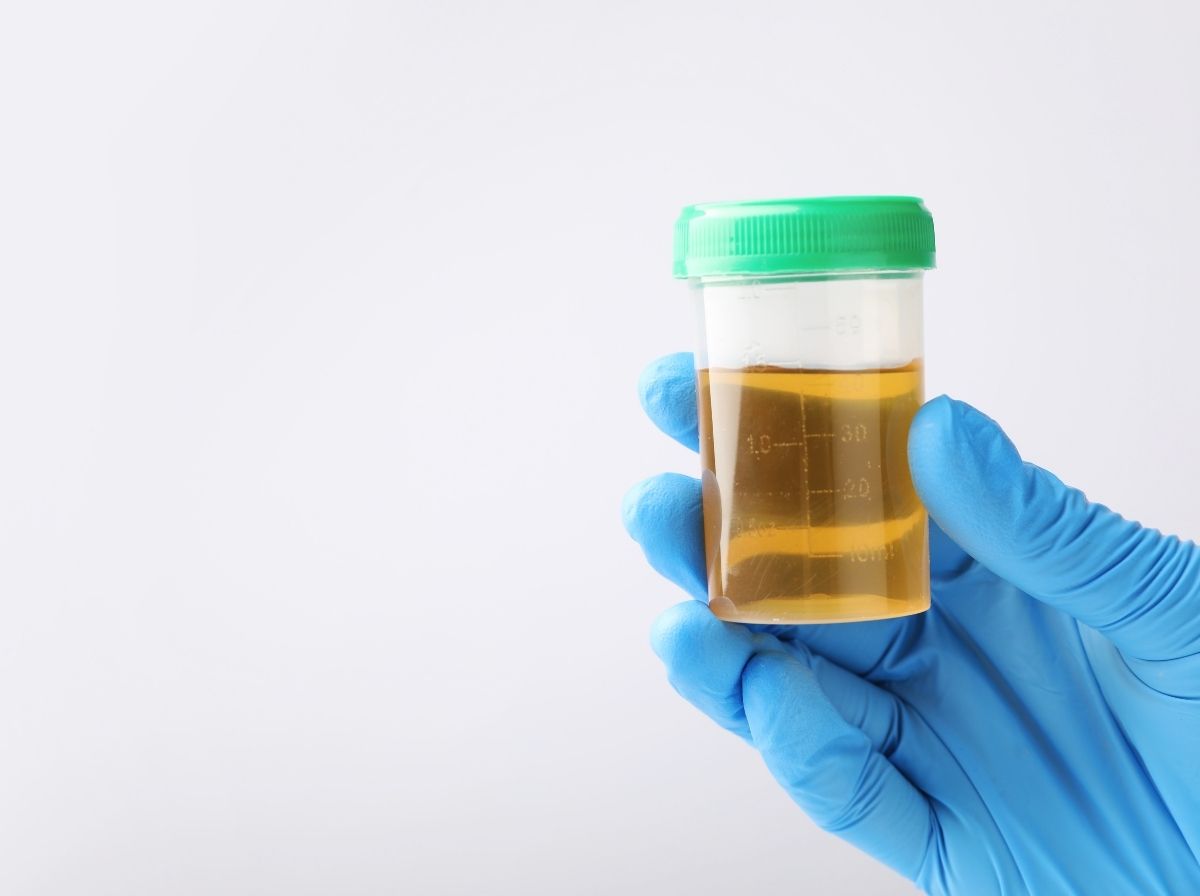
Ejaculation and sexual fluids matter for testing because they physically change the content of the sample being collected. In urine-based STD tests, especially for chlamydia and gonorrhea, the first-catch urine (the very beginning of the stream) contains the highest concentration of organisms from the urethra. Standard collection protocols for major NAAT systems specify that the patient should not have urinated for at least one to two hours before providing a sample, precisely because holding urine allows bacterial material to accumulate rather than be flushed away. Ejaculation has a similar flushing effect: it can temporarily clear some infected cells from the urethral lining, lowering the concentration available in the next urine sample.
The CDC's chlamydia treatment guidelines identify first-catch urine as the preferred specimen type for NAAT in men, and patient-collected vaginal swabs for women. This distinction highlights how much the choice and quality of specimen influences what the test can detect. When the urethra is partially cleared before testing, whether by urination, ejaculation, or both, the bacterial load in the sample drops, and with it, the test's ability to confidently detect infection at low concentrations. The test doesn't fail completely; it simply becomes less sensitive precisely when sensitivity matters most.
For swab-based tests (vaginal, cervical, throat, rectal), the mechanism is slightly different. Ejaculate or vaginal fluids deposited during sex can create a layer over the area the swab is trying to sample. The swab still collects material from the tissue, but it may pick up more external fluid and less of the infected cellular material from the lining itself. This is part of why the CDC recommends vaginal swabs as a preferred sample type for chlamydia and gonorrhea NAAT detection in women: swabs reach the cellular layer more reliably when collection is done correctly and without recent interference.
Ejaculation before testing measurably raises the risk of a diluted sample, stopping well short of guaranteeing a false negative while shifting the odds in the wrong direction. The fix is straightforward. For urine-based tests, avoid urinating or ejaculating for at least one hour before collection. For swab-based tests, avoiding sex for several hours beforehand improves sample quality.
How Different STD Tests React to Recent Sexual Activity
Not all STD tests respond the same way to recent sex. The impact depends on what the test is looking for (bacterial DNA, viral antibodies, or viral antigens) and how the sample is collected. This is where a lot of confusion comes from, because people assume all tests work the same way when in reality, each has its own sensitivity window, sample requirements, and exposure to interference. Getting clear on these differences helps you understand not just whether sex before testing matters, but exactly why and in which direction.
For chlamydia and gonorrhea, NAAT is the laboratory standard. These tests detect bacterial genetic material from urine or swabs. Because the target is bacterial DNA concentration in a specific sample, both the timing and quality of that sample make a real difference. If you urinate or ejaculate right before the test, it becomes harder for the test to find infected cells or sufficient bacterial DNA. The timing of when you collect the sample is core to how the test works, well beyond a minor instruction-sheet detail.
Tests that use blood to check for HIV, syphilis, herpes, and hepatitis are fundamentally different. Recent sex doesn't affect these tests the same way because they look for antibodies or antigens that are already circulating in your bloodstream: material that was there before sex happened and will be there afterward. However, these tests are still subject to biological timing. If you had a new exposure recently, your immune system may not have produced a detectable response yet regardless of what you did or didn't do beforehand. Sample quality and immune-response timing are separate variables; both shape how to read your result.
The key distinction is sample-based detection versus systemic detection. Sample-based tests (urine and swabs) capture what's present in a specific location at a specific moment. They're vulnerable to anything that alters that moment. Blood-based tests capture what's circulating through your entire system. They're not affected by what happened locally before you sat down to test.
| Test Type | Sample Source | Effect of Recent Sex |
|---|---|---|
| Urine NAAT (Chlamydia, Gonorrhea) | First-catch urine | Can reduce detectable bacterial load if urination or ejaculation occurs within 1 to 2 hours of sampling |
| Swab NAAT (Genital, throat, rectal) | Cellular swab of mucosal tissue | External fluids may dilute sample concentration; vaginal swabs are preferred for women and more robust than urine |
| Blood tests (HIV, Syphilis, Herpes, Hepatitis) | Venous or fingerprick blood | No direct interference from sex; accuracy depends entirely on time since exposure and immune response |
| Rapid antigen tests (HIV) | Blood or oral fluid | No interference from sex itself; sensitivity depends on viral load and detection window |
Should You Avoid Sex Before an STD Test?
You shouldn't have sex right before a urine-based or swab-based test because it can change the sample in ways that lower accuracy. The point is sample quality, not abstinence. Those tests need the cleanest, most concentrated sample possible to reflect what is happening in your body. For blood-based tests, sex doesn't affect the sample at all, so avoiding it beforehand makes no difference to the result.
For urine NAAT tests used to detect chlamydia and gonorrhea, standard collection protocols recommend avoiding urination or ejaculation for at least one to two hours before providing a sample. This recommendation exists because the first-catch urine, the initial stream from the urethra, is where bacterial concentration is highest. Holding urine allows bacteria to accumulate rather than be flushed away. If sex happens immediately before testing and involves ejaculation or urination afterward, the bacterial load in the urethra drops before the sample is collected. The test isn't useless, though the result carries more uncertainty than a well-timed, clean collection would.
For swab tests (vaginal, cervical, throat, or rectal), the same general principle applies. Avoiding sex for several hours before a swab test reduces the chance that external fluids dilute or displace the organisms the swab is trying to collect from the tissue lining. The swab still works, though a cleaner collection window improves sensitivity, particularly for lower-level infections where the bacterial or viral load may already be at the edge of detection.
There's also the practical reality that many people don't plan their testing in advance. You might decide to test on a Tuesday morning after having sex Monday night, or pick up a kit on the way home from a date. In those cases, the one-to-two-hour guidance is still useful: even if sex was recent, waiting a few hours before collecting a urine sample gives the bacteria time to re-accumulate in the urethra and improves sample quality meaningfully. You don't need to reschedule for another day.
Urine-based tests: avoid urinating or ejaculating for at least one to two hours before collecting.
Swab tests: avoid sex for several hours beforehand.
Blood tests: recent activity has no effect on results; only time since exposure matters.
When to Test for STDs After Sex (Timing That Works)
Window periods trip up more people than pre-test behavior does, by a wide margin. Someone wakes up two days after unprotected sex, anxiety running high, and takes a test immediately. It comes back negative. They feel relieved. But biology doesn't run on your emotional timeline, and that result may mean nothing at all. The window period has nothing to do with whether you had sex the night before the test.
For bacterial infections, detection depends on how long it takes the organism to replicate inside your cells and reach a concentration that the test can identify. Chlamydia requires roughly 14 days after exposure before a NAAT can reliably detect it: the bacteria need time to infect epithelial cells and multiply to a threshold where their DNA is consistently present in sufficient amounts. Gonorrhea has a similar but slightly longer requirement per CDC gonorrhea guidance (test from around 3 weeks after exposure) as the organism must establish itself in mucosal tissue before appearing reliably in samples. Testing earlier than these windows doesn't give you an early answer, it gives you an answer based on incomplete biology.
For infections that spread through blood and trigger immune responses, the timing shifts to how long your body takes to generate detectable antibodies or antigens. Syphilis: test from around 6 weeks after exposure, when the body has begun producing the antibodies tests look for. HIV: per the CDC HIV testing page, antigen/antibody lab tests can detect infection from 18 to 45 days after exposure; rapid antibody tests need up to 90 days. Testing at 45 days gives an early read; retesting at 90 days confirms a negative conclusively. Herpes HSV-1 and HSV-2: test from around 6 weeks after exposure, when antibodies become detectable in the blood. Hepatitis B: test from around 6 weeks after exposure, when surface antigens or antibodies appear. Hepatitis C: test from 8 to 11 weeks after exposure, reflecting the time required for viral RNA or antibodies to reach reliable detection levels. These windows align with general CDC guidance for each infection; see the dedicated CDC STI hub in the sources list for per-infection detail.
The CDC's ongoing STI surveillance continues to track millions of new chlamydia, gonorrhea, and syphilis diagnoses each year in the United States. The volume of infections still circulating makes accurate testing more important than ever, and inaccurate testing driven by timing errors contributes directly to infections going undetected and untreated. Testing at the right biological window isn't just a technicality; it's what separates a result that protects you from one that gives false confidence.
If you test before these windows, the result may come back negative even if the infection is already in your body, simply because there isn't enough detectable material yet. A negative result in this scenario doesn't mean no infection; it means the test ran before the biology was ready to be read.
| Infection | Test From | Detection Basis |
|---|---|---|
| Chlamydia | 14 days after exposure | Bacterial DNA in urine or swab (NAAT) |
| Gonorrhea | 3 weeks after exposure | Bacterial DNA in urine or swab (NAAT) |
| Syphilis | 6 weeks after exposure | Antibody response in blood |
| HIV | 18 to 45 days (antigen/antibody lab); up to 90 days for rapid antibody | Antigen/antibody in blood |
| Herpes HSV-1 & HSV-2 | 6 weeks after exposure | Antibody response in blood |
| Hepatitis B | 6 weeks after exposure | Surface antigen or antibody in blood |
| Hepatitis C | 8 to 11 weeks after exposure | Viral RNA or antibody in blood |
NAATs are the most sensitive tests for detecting chlamydial infection and can be performed using urine specimens or vaginal, endocervical, urethral, or rectal swabs.

What to Do If You Had Sex Right Before Testing
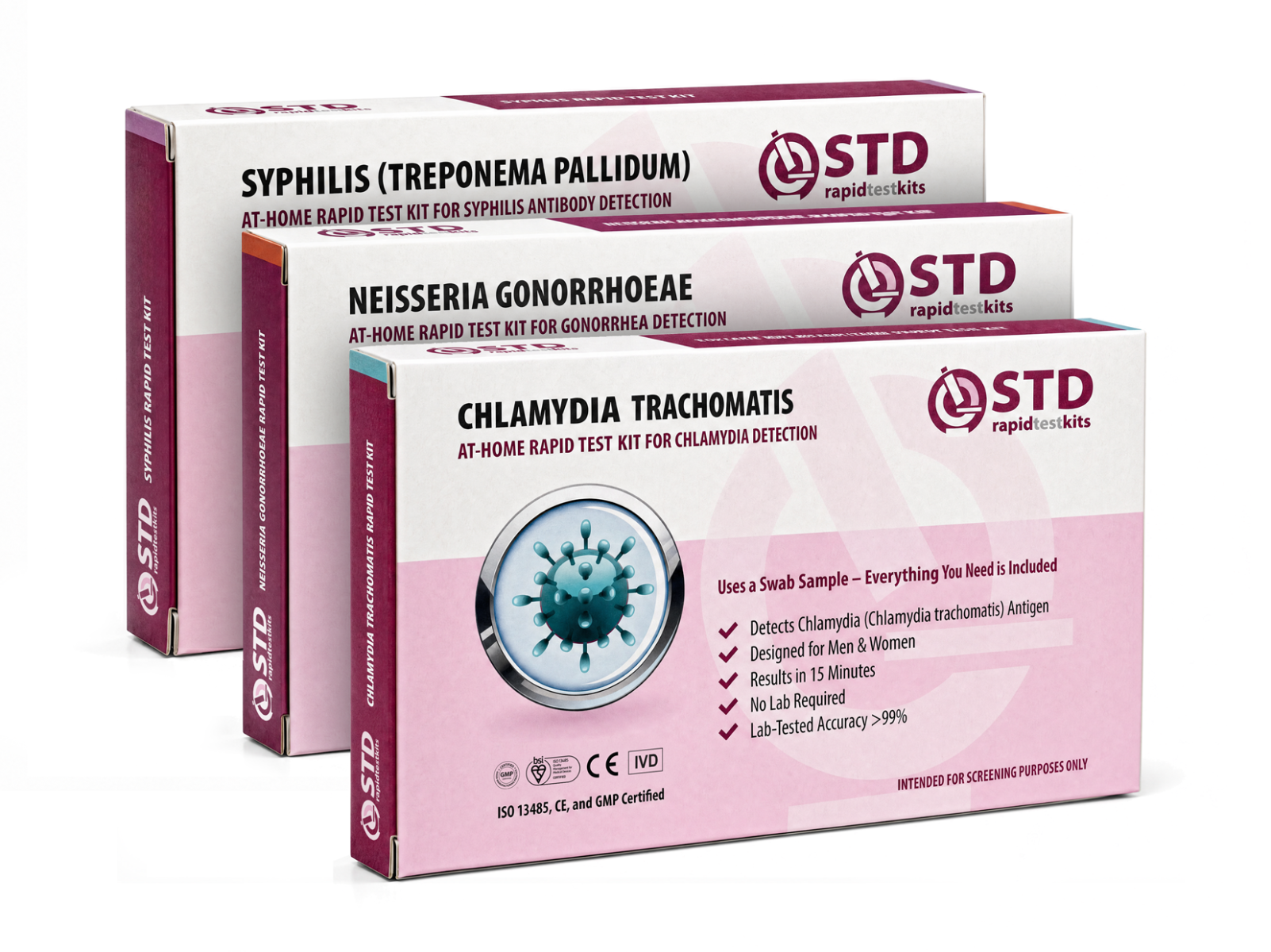
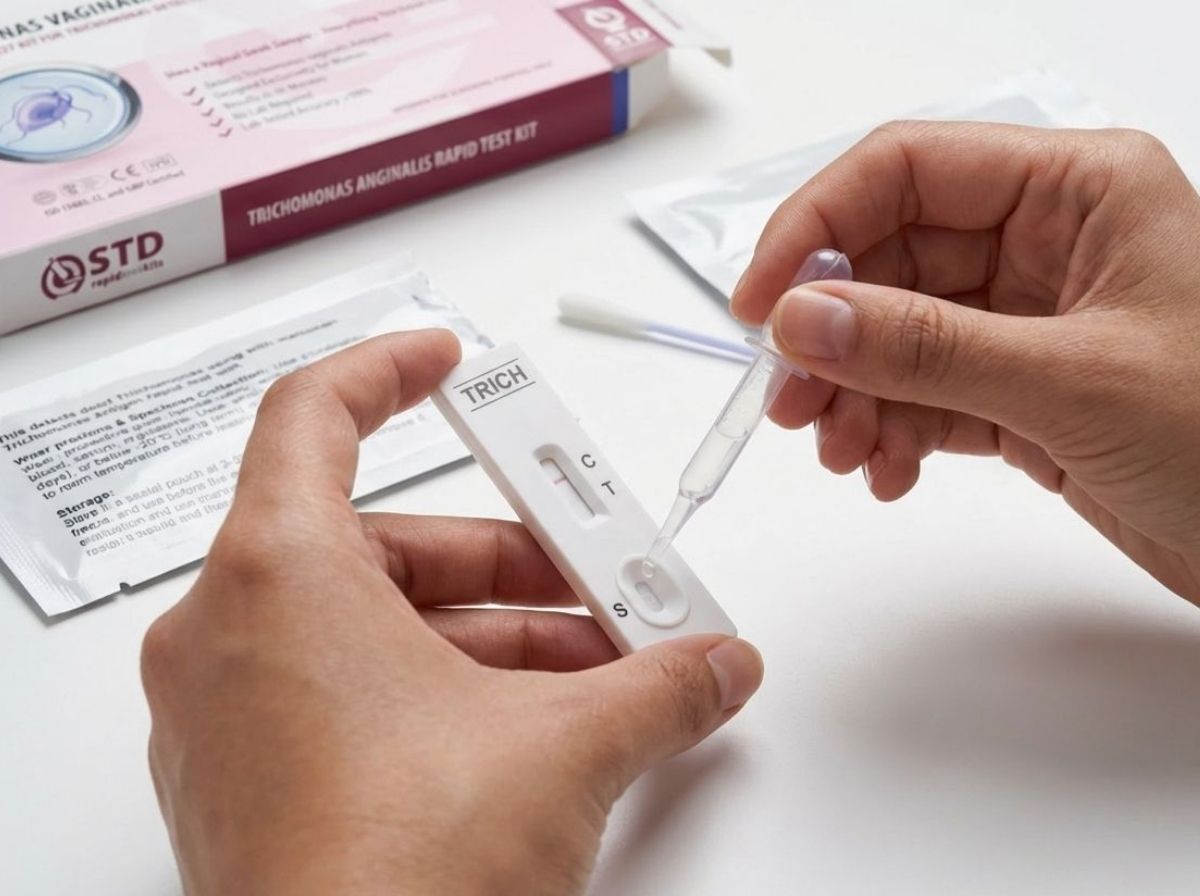
At-home rapid test kits give you real answers without the clinic wait, when used correctly. At-home rapid kits use lateral-flow chemistry for bacterial infections (chlamydia, gonorrhea) and fingerstick blood for viral and antibody-based infections. The detection method differs from the lab NAAT gold standard; lateral-flow strips give you a fast result at home, while lab NAAT offers higher analytical sensitivity. Both can catch established infections when the sample is collected correctly. In an at-home setting, the pre-test choices you make have a more direct impact on accuracy than they would in a clinical setting where a provider walks you through each step.
For urine-based components of an at-home kit, the most important rule is the collection window. Don't urinate for at least one hour before collecting the sample. If you've had sex recently and ejaculated or urinated shortly beforehand, wait longer before collecting; a two-hour window gives the urethra more time to rebuild bacterial concentration. The first-catch urine (the very first portion of your urine stream, not a midstream sample) is the most important part of the collection. Collect it correctly, and you maximize what the test has to work with.
For blood-based components (HIV, syphilis, herpes, and hepatitis), the collection is a fingerprick or blood sample. Recent sex doesn't affect these at all. What matters is that you're testing within the correct window after a possible exposure. If you're testing as a routine check, blood-based tests are reliable regardless of recent activity, as long as you've observed the standard wait periods since any possible new exposure. A negative at-home result is only as reliable as the conditions under which it was collected. The test itself is accurate; it's the sample that matters.
If you already had sex shortly before your test, don't assume the result is useless, but don't treat it as fully definitive either. The key question is timing, both in terms of how recently the sex occurred relative to your sample collection, and how long it's been since the potential exposure you're testing for. Both variables shape how much weight to give the result.
If your result comes back negative and the test was taken within an hour of sex, especially if urination or ejaculation preceded sample collection, there is a real possibility that the sample was suboptimal. In that case, the correct next step isn't panic; it's retesting with a cleaner collection window. Wait until at least an hour or two has passed since your last urination, collect the first-catch urine carefully, and repeat. This is especially relevant for chlamydia and gonorrhea NAAT tests, where sample concentration matters most. For blood-based tests included in the same kit, the result stands regardless of recent activity.
If your result comes back positive, trust it. A positive result means the test found sufficient detectable material to confirm infection, and recent sex doesn't generate false positives in modern lateral-flow or blood-based testing. The infection is established and measurable. The appropriate next step is confirmation with your healthcare provider if required, and then appropriate follow-up.
If there's genuine uncertainty about both timing and sample conditions (for example, you tested the day after sex and also tested earlier than the recommended window for the exposure you're concerned about), treat the result as preliminary and plan a retest at the correct biological window. A fast result from a compromised sample is less useful than a well-timed result from a clean collection.
How to Get Accurate Results Every Time
Accurate STD testing comes down to two variables you can control: timing after exposure and sample quality. Sex right before testing affects the second one, not the first, and that distinction matters. You're not changing whether an infection exists in your body. You're affecting whether the test can detect it in that specific sample, at that specific moment. Once you understand that, the path to a reliable result becomes straightforward.
Three things work together for a reliable result: wait until the correct biological window has passed since a possible exposure; avoid any activity that could dilute or displace your sample within the hour or two before collection; and use a kit designed to detect infections with high sensitivity across both bacterial and blood-borne categories. Skipping the biological window means the biology isn't ready to be read; compromising the sample means the test can't read it even when the biology is. Both failures are preventable.
Clinicians routinely recommend retesting when initial conditions were uncertain. If you tested early, or there's any doubt about sample quality, a retest at the proper window with a clean collection is the smart move.
Three-variable checklist for reliable results
- Wait for the correct biological window after exposure (14 days for chlamydia, 3 weeks for gonorrhea, 6 weeks for syphilis, herpes, and hepatitis B, 18 to 45 days for HIV with a 90-day confirmation retest, 8 to 11 weeks for hepatitis C).
- Hold urine for at least one to two hours before a urine sample, and avoid sex for several hours before a swab test.
- Collect the first-catch portion of urine (the very first stream, not midstream) and follow the kit instructions precisely.
FAQs
- If I had sex the night before, did I mess up my STD test?
- Not necessarily. You didn't ruin it, but you may have made the sample less reliable, especially for urine tests. The infection is either present or it isn't; what changes is how easily the test can detect it in that specific sample. For blood-based tests, recent sex has no effect at all.
- What about having sex without ejaculation, is that still an issue?
- It can be, to a lesser degree. Fluids introduced during sex, even without ejaculation, can mix into the testing area and slightly dilute what the test is looking for. It's not a dealbreaker for most tests, though it's not ideal for a urine sample. The one-hour wait recommendation still applies.
- Are blood tests completely unaffected by sex?
- Essentially yes. Blood tests look for antibodies or antigens already circulating in your bloodstream, not what's happening locally in the urethra or genital tissue right now. Sex doesn't change what's in your blood. What affects blood test accuracy is the time elapsed since exposure, not recent activity.
- How long should I wait before testing after sex?
- For urine-based tests, avoid urinating or ejaculating for at least one hour before collecting the sample. That window gives bacteria time to accumulate in the urethra so the first-catch urine is as concentrated as possible. For swab tests, a few hours is ideal but the effect is less pronounced. For blood tests, waiting has no relevance; you can collect whenever.
- If my result is negative after recent sex, should I trust it?
- It depends. If you collected the urine sample correctly after the hold-urine window and tested within the proper detection window for your exposure, a negative is likely reliable. If either of those conditions was off (sample taken too soon after sex, or tested before the biological window opened), a retest with better conditions is the right call.
- What's the biggest mistake people make with STD testing?
- Testing too early and then trusting the negative result. The biology isn't ready yet, the test comes back negative, and people assume they're clear when they might not be. The window period matters more than almost anything else about how you time a test.
- Do at-home tests work as well as clinic tests?
- High-quality home rapid tests use the same detection principles as clinic-based rapid tests: lateral-flow immunoassays for blood antibodies and antigens, and similar chemistry for bacterial samples. The lab gold standard for chlamydia and gonorrhea remains NAAT/PCR processing in a clinical lab, so a positive home result is worth confirming with a lab NAAT when possible. Home tests are excellent for screening and faster turnaround.
- If I want zero guesswork, what's the best approach?
- Start with the question of how long since the possible exposure. Inside the biological window: don't test yet, no result will be reliable. Past the window: hold urine for at least an hour, collect first-catch, follow kit instructions carefully. If you're second-guessing the sample quality afterward, retest the next morning with a clean collection. That sequence removes the main variables.
- U.S. Centers for Disease Control and Prevention. Getting Tested for STIs (sample collection and window-period guidance).
- U.S. Centers for Disease Control and Prevention. STI Treatment Guidelines: Chlamydial Infections (NAAT sample-type considerations).
- U.S. Centers for Disease Control and Prevention. About Gonorrhea (CDC root gonorrhea topic page with general detection and treatment context).
- U.S. Centers for Disease Control and Prevention. HIV Testing (antigen/antibody timing and window periods).
- U.S. Centers for Disease Control and Prevention. STI Statistics (annual provisional US STI surveillance and case-volume context).
- U.S. Centers for Disease Control and Prevention. Sexually Transmitted Infections (STIs) hub (condition-specific testing context for syphilis, herpes, and hepatitis B/C).
