







Last updated: April 2026
You tested. You got a negative. You feel reassured. But here's what nobody told you: a negative urine test for gonorrhea doesn't say anything about whether gonorrhea is sitting in your throat. A vaginal swab doesn't detect rectal chlamydia. The test is only as good as the site it samples, and when providers don't ask about the full picture of someone's sexual activity, they don't order the full picture of testing either. The result is infections that go undetected, untreated, and passed on, not because people didn't bother to test, but because the testing they received wasn't designed around their actual exposures.
People are also reading: The Trans Guide to STD Testing: Symptoms, Gaps, and Getting Tested on Your Terms
What Extragenital Testing Actually Means, and Why It Exists
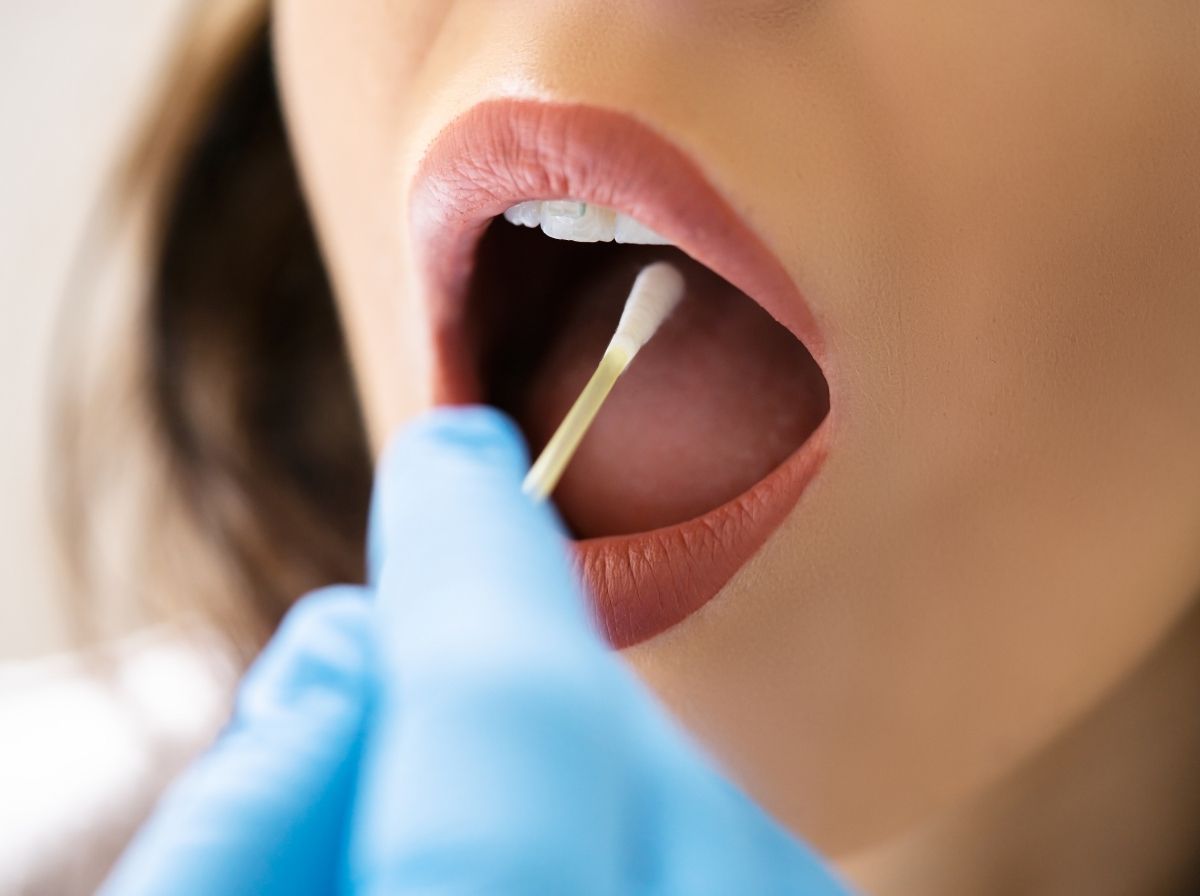
Extragenital is a clinical term for "outside the genitals." Extragenital STD testing means screening the throat (pharyngeal testing) and the rectum (rectal testing) in addition to, or sometimes instead of, urogenital testing. It exists because chlamydia and gonorrhea don't limit themselves to genital tissue. The bacteria that cause these infections can establish themselves wherever mucosal tissue is exposed: the lining of the throat after oral sex, the rectal mucosa after anal sex, the urethra after frontal penetration. Each of those sites is a biologically distinct location, and an infection at one site cannot be detected by testing another.
This isn't a niche concern for small populations. According to a 2025 peer-reviewed update on STI testing and treatment in the United States, the median prevalence of rectal chlamydia among women is 8.7%, higher than most people assume, and pharyngeal gonorrhea sits at 2.1%. Among men who have sex with men, rectal gonorrhea prevalence reaches 5.9% and rectal chlamydia 8.9%. These aren't fringe statistics. They represent real infections that standard panels miss every day because providers default to urine or a single swab without asking where exposure actually occurred.
| Test Type | What It Detects | What It Misses | When It's Enough |
|---|---|---|---|
| Urine NAAT (chlamydia/gonorrhea) | Urethral and some urogenital infections | Rectal infections, pharyngeal infections | Only if the sole exposure was frontal penetration received |
| Vaginal or cervical swab | Vaginal and cervical infections | Rectal infections, pharyngeal infections | Only if no anal or oral sex occurred |
| Rectal swab NAAT | Rectal chlamydia and gonorrhea | Urogenital and pharyngeal infections | Only if the sole exposure was receptive anal sex |
| Throat swab NAAT | Pharyngeal gonorrhea and chlamydia | Urogenital and rectal infections | Only if the sole exposure was giving oral sex |
| Blood draw (HIV, syphilis, hepatitis B/C, herpes) | Systemic viral and syphilis infections | Localized bacterial infections at any site | Always needed alongside site-specific bacterial testing |
The mechanics of why different sites require different tests come down to how bacteria travel and establish infection. Gonorrhea and chlamydia don't circulate through the bloodstream the way viral infections like HIV or hepatitis do. They colonize the mucosal tissue at the specific point of contact. A rectal infection from receptive anal sex stays in the rectal mucosa. A pharyngeal infection from giving oral sex colonizes the throat. Neither shows up on a urine test, because urine reflects only what's happening in the urethra and urogenital tract. The two sites are simply not connected in any way that would allow cross-detection.
The Miss Rate: How Many Infections Are Actually Being Skipped
The numbers here are uncomfortable, and they should be. Research consistently shows that urogenital-only testing, the default at most clinics, leaves a substantial proportion of infections undetected. The exact figure varies by population and study, but the direction is consistent. The 2025 PMC review on STI testing in the United States found that for women, adding extragenital screening increases detection of gonorrhea or chlamydia by approximately 6% to 50% compared with urogenital testing alone, a range that reflects how dramatically results shift when the full picture of someone's sexual activity is accounted for. In populations with higher rates of anal and oral exposure, that upper end of the range is the more relevant figure.
For men who have sex with men, the miss rate is starker still. Older data from San Francisco sexual health clinics found that if only urethral screening had been performed in men who reported receptive anal sex, 90% of rectal chlamydia infections would have been missed, and 77% of rectal gonorrhea infections. Studies also found that 36% of men with gonorrhea had the infection in the throat only, with no urethral infection present at all. One study of women attending an urban STD clinic found that if only urogenital testing had been performed, 27% of gonorrhea infections and 14% of chlamydia infections would have been entirely missed. Among a cohort of people with HIV screened at a Ryan White program clinic, 96% of those diagnosed with an STI were positive only at an extragenital site, meaning urogenital testing alone would have found almost nothing.
You can see why this matters clinically. Someone who tests negative on a urine-only panel may have active rectal chlamydia, be experiencing no symptoms, and have no idea they're transmitting it during anal sex with future partners. The infection doesn't stay quietly contained. Untreated extragenital infections are a reservoir for ongoing transmission and, according to the CDC and peer-reviewed literature, can increase the risk of acquiring or transmitting HIV. Asymptomatic infections are more dangerous than most people assume, and rectal and pharyngeal infections are asymptomatic at especially high rates, making symptom-based detection nearly impossible. A negative result that came from the wrong site isn't reassurance; it's a false negative waiting to be understood.
Why Throat Gonorrhea Is a Particularly Serious Gap
Imagine getting a sore throat for a few days, assuming it's a cold, and moving on. That's exactly the typical presentation, or rather, non-presentation, of pharyngeal gonorrhea. The vast majority of throat gonorrhea infections produce no symptoms at all. When symptoms do appear, they're almost identical to a regular sore throat: mild discomfort, some redness, maybe swollen lymph nodes. Nothing that would prompt most people to think "STD." Without a throat swab taken by someone who specifically asked about oral sex history, the infection goes undetected indefinitely.
This matters beyond individual health for a reason that's becoming increasingly urgent: the pharynx is where antibiotic-resistant gonorrhea strains are most likely to develop. The throat is home to naturally occurring Neisseria bacteria, relatives of the gonorrhea-causing organism, and when someone carries pharyngeal gonorrhea alongside these commensal bacteria, genetic exchange between the species can create or amplify antibiotic resistance. According to the WHO's reporting on multi-drug resistant gonorrhea, virtually all confirmed treatment failures have been pharyngeal infections. Poor antibiotic penetration into throat tissue compounds the problem: even effective treatments reach the pharynx at lower concentrations than they reach urogenital tissue, meaning standard dosing may not fully clear the infection. A test-of-cure 10 to 14 days after treatment is standard of care specifically for pharyngeal infections, a requirement that doesn't exist for urogenital gonorrhea, because the pharynx is simply harder to treat.
The practical upshot is this: undetected pharyngeal gonorrhea doesn't just affect the person carrying it. It's a driver of treatment-resistant spread across entire sexual networks, because the throat is where resistance develops and where standard dosing is least reliable. A throat swab is one of the most consequential tests available in a sexual health encounter, and it's still routinely skipped because providers don't ask about oral sex. Throat gonorrhea is far more common than most people realize, and the gap between "I had oral sex" and "I got a throat swab" is almost entirely a failure of clinical workflow, not patient access.
Check Your STD Status in Minutes
Test at Home with RemediumGonorrhea Test Kit
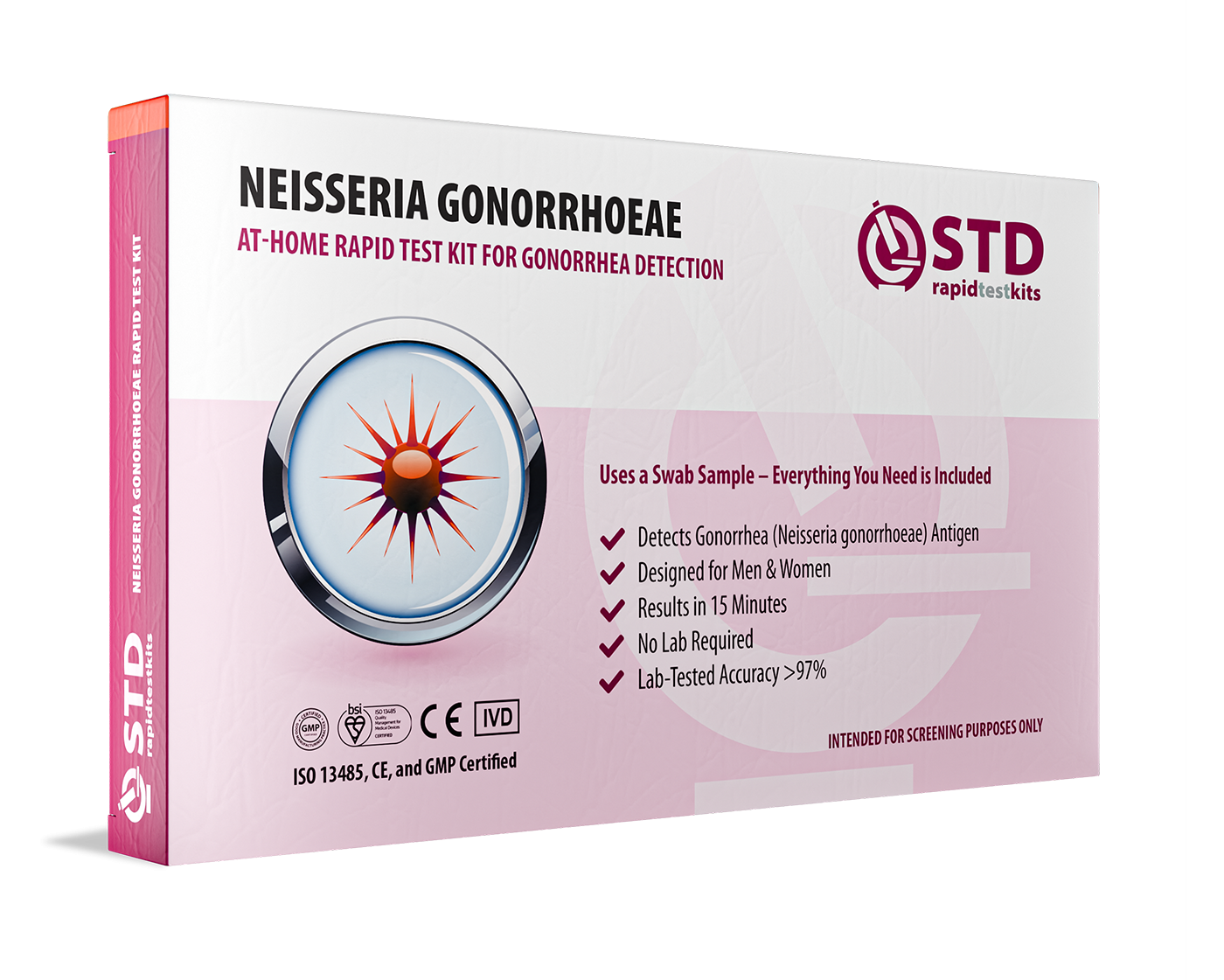
 For Men & Women
 Results in Minutes
 No Lab Needed
 Private & Discreet
Order Now $33.99 $49.00
Rectal Chlamydia: The Infection That Shows Up Where Nobody Looks
Rectal chlamydia has a particular feature that makes it especially likely to be missed: it can be present without any history of receptive anal sex. This isn't a theoretical possibility; it's a consistent finding across multiple studies. A 2025 review published in PMC noted that rectal chlamydia was detected in 33% to 83% of women who had urogenital chlamydia infection, independent of reported anorectal receptive sexual activity. The leading hypothesis is autoinoculation: bacteria present in the urogenital tract migrate to the rectal mucosa through proximity and normal bodily processes, establishing a secondary site of infection that the patient never anticipated and the clinic never tested for.
The practical implication is significant. Someone gets treated for chlamydia based on a positive urine test. The treatment clears the urogenital infection. The rectal infection, untreated because it was never detected, remains. Within weeks or months, urogenital reinfection from the untreated rectal reservoir occurs, and the cycle repeats. This is one reason chlamydia reinfection rates remain high even among people who receive treatment. Testing and treating only the detected site while leaving an adjacent reservoir untouched is an incomplete intervention, and it's happening far more routinely than the current standard of care acknowledges.
Rectal chlamydia symptoms, when they exist at all, include anal discomfort, discharge, or bleeding, all of which are easy to attribute to other causes like hemorrhoids, skin irritation, or bowel changes. Most of the time there are no symptoms. Someone lying in bed at 2 am Googling "rectal chlamydia symptoms" is unlikely to find much that helps them recognize the infection, because it often presents as nothing at all. The same pattern holds for the broader risks of STD transmission through anal sex, most of the danger is invisible until tested for. Testing at the right site, rather than waiting for symptoms, is the only reliable approach. At-home STD testing has become a practical option for people who want to take control of site-specific screening without depending on a provider to ask the right questions first.
Site-Specific STD Testing: Which Sites Need to Be Tested and When
The core principle is simple: test where exposure happened. That sounds obvious, but it requires someone in the clinical encounter, either the provider or the patient, to have an honest conversation about what kinds of sex actually occurred, with which sites involved, before a testing order is placed. Most standard intake forms don't ask this. Most providers don't ask either. The result is a default to urogenital testing for everyone, regardless of exposure history, because it's the easiest thing to order and the path of least resistance.
The CDC's STI treatment guidelines are explicit on this point: testing should be based on anatomy and sexual behaviors, meaning the actual sites of exposure, not assumptions based on identity or perceived risk category. This guidance applies broadly, to cisgender people, to trans and nonbinary people, to anyone whose sexual activity involves oral or anal contact. The sites that get tested should reflect where the relevant exposure occurred. Everything beyond that is incomplete screening regardless of how many tests are ordered.
| Sexual Activity / Exposure | Sites to Test for Chlamydia / Gonorrhea | Additional Tests Always Indicated |
|---|---|---|
| Receptive frontal/vaginal penetration | Vaginal or cervical swab (preferred over urine) | HIV, syphilis, hepatitis B/C (blood) |
| Receptive anal sex | Rectal swab, urine alone will miss this | HIV, syphilis, hepatitis B/C (blood) |
| Giving oral sex (on a penis or vulva) | Throat swab for pharyngeal gonorrhea | HIV, syphilis (blood) |
| Receiving oral sex | Genital swab or urine at the site receiving contact | HIV, syphilis (blood) |
| Multiple exposure types (oral + anal + frontal) | All three: throat swab, rectal swab, genital swab/urine | Full panel: HIV, syphilis, hepatitis B/C, herpes (blood) |
| Trans person with cervix (any penetrative exposure) | Cervical swab, urine alone is insufficient; add rectal/throat as applicable | HIV, syphilis, hepatitis B/C (blood) |
| Trans woman post-vaginoplasty | Neovaginal swab plus rectal/throat as applicable; no cervical HPV screening needed | HIV, syphilis, hepatitis B/C (blood) |
The testing windows for the infections that matter most at these sites are determined by the biology of the pathogen, not the site of exposure. Chlamydia becomes detectable 14 days after exposure regardless of whether the infection is urogenital, rectal, or pharyngeal. Gonorrhea is detectable from 3 weeks after exposure at any site. Syphilis requires a 6-week window from exposure before blood tests reliably detect antibodies. HIV testing is reliable at 6 weeks for a first indicator, with a confirmatory retest at 12 weeks for certainty. Herpes HSV-1 and HSV-2 are detectable by blood test from 6 weeks after exposure. Hepatitis B from 6 weeks, hepatitis C from 8 to 11 weeks. These windows don't change based on where the infection is sitting in the body. If you've had unprotected sex and aren't sure where to start, this guide to when to test after unprotected sex covers the timing decisions in full.
Who Is Most Affected by the Extragenital Testing Gap
The extragenital testing gap affects anyone whose sexual activity involves oral or anal contact, which is a wide population. But certain groups bear the impact disproportionately, both because their STI rates are higher and because the clinical systems they encounter are least likely to ask the right questions.
Men who have sex with men (MSM) were the first population for whom extragenital screening guidelines were developed, and they remain the group with the most evidence-based guidance on site-specific testing. CDC guidelines recommend annual extragenital chlamydia and gonorrhea screening for sexually active MSM, with more frequent screening for those with multiple partners. Despite this, studies consistently show that rectal and throat screening rates at many clinics fall well short of guidelines even in this population, before accounting for how rarely the conversation happens at general practice settings where MSM may present without disclosing their sexual practices.
Trans and nonbinary people face a compounded version of the same gap. A trans man with a cervix who presents to a clinic registered as male is likely to receive a urine test when a cervical swab is what's indicated, and if he's also had anal or oral sex, those sites go unswabbed entirely. A trans woman post-vaginoplasty needs neovaginal, rectal, and throat swabs based on her sexual activity, not a urine-only default. Standard STD tests after vaginoplasty require a fundamentally different approach, and the site-specific gap is at the center of that difference. The broader pattern of how clinical systems fail trans patients on sexual health testing is covered in depth in The Trans Guide to STD Testing.
Women who have sex with men are increasingly recognized as underscreened for extragenital infections as well. A 2024 clinical update published in PMC noted that a recent study found 35% of women exposed to gonorrhea tested positive at the pharynx, a rate that makes routine throat swabbing worth discussing with any woman who reports giving oral sex, regardless of other risk factors. The instinct to categorize extragenital testing as an MSM-specific practice has always been a clinical shortcut rather than an evidence-based policy, and the data on pharyngeal and rectal infection rates in women have been steadily eroding that justification.

People are also reading: How Testosterone HRT Changes STD Symptoms, Testing, and What Actually Catches Infections
What Happens When Extragenital Infections Go Untreated
An untreated rectal chlamydia infection can cause proctitis, inflammation of the rectal lining, producing pain, discharge, and bleeding that's often chalked up to hemorrhoids or an unrelated bowel issue. Left untreated long enough, it can contribute to pelvic inflammatory disease in people with a uterus, particularly when autoinoculation creates urogenital infection from the rectal reservoir. Untreated gonorrhea through the same PID pathway can cause scarring of the fallopian tubes that leads to chronic pelvic pain or fertility complications, consequences that develop silently over months while the person has no idea an infection is present.
Pharyngeal gonorrhea that isn't detected and treated poses a different set of downstream risks. Beyond the antibiotic resistance implications described earlier, untreated gonorrhea at any site, urogenital, rectal, or pharyngeal, can occasionally disseminate through the bloodstream in a condition called disseminated gonococcal infection (DGI). DGI typically presents with joint pain, skin rash, and fever and can, in rare cases, cause meningitis or endocarditis. It requires inpatient treatment with intravenous antibiotics. The scenario isn't common, but it represents the endpoint of a chain that started with an infection nobody swabbed for because nobody asked about oral sex. The connection between that sore throat that came and went and a septic joint six weeks later is not a connection most people would ever make without testing in the middle.
Untreated extragenital infections also increase susceptibility to HIV at the exposed mucosal sites, a finding that holds across multiple studies and anatomical locations. Inflammation from bacterial STIs disrupts the mucosal barrier and creates an environment where HIV transmission is more efficient in both directions. This is not a theoretical risk; it's one of the mechanisms driving HIV disparities in populations with high rates of untreated STIs. The relationship between untreated STDs and HIV transmission is well-established, and extragenital infections that go undetected contribute to that relationship in exactly the same way urogenital infections do.
At-Home Extragenital STD Testing: What Works and What to Know
At-home testing removes the single biggest barrier to site-specific screening: needing a provider to ask the right questions. When you collect your own samples, you know where your exposure was. You control which sites get tested. You don't need to navigate an intake form that defaults to male or female, doesn't ask about oral sex, and orders a urine test before you've said a word about your actual sexual history. That autonomy is significant, and the evidence on self-collected samples backs it up.
Research has consistently found that self-collected rectal and pharyngeal swabs perform equivalently to provider-collected specimens for NAAT testing of gonorrhea and chlamydia. A 2025 multicenter validation study in the Veterans Health Administration found high concordance between patient-collected and provider-collected extragenital samples. A separate review found over 96% concordance between self-collected and clinician-collected specimens for pharyngeal and rectal gonorrhea and chlamydia detection. The accuracy of the test doesn't depend on who holds the swab, it depends on whether the right site was sampled.
For comprehensive coverage at home, the 7-in-1 Complete At-Home STD Test Kit covers HSV-2, chlamydia, gonorrhea, syphilis, HIV, hepatitis B, and hepatitis C, the core bacterial and viral infections relevant for anyone who has had recent sexual exposure. For people who retain a front hole and want to add trichomoniasis and HPV to that panel, the Women's 10-in-1 Complete At-Home STD Test Kit covers all ten of the most common STDs. For a targeted bacterial screen after a specific exposure, the Chlamydia, Gonorrhea & Syphilis 3-in-1 Kit covers the three infections where site-specific testing makes the most difference.
One practical note: when using any swab-based kit for rectal or throat testing, collect from the site that was actually exposed. A swab taken from the wrong location provides no useful information. If you've had receptive anal sex, a rectal swab means inserting the swab approximately 3 to 4 centimeters into the rectum and rotating. If you've given oral sex, a throat swab means reaching the back of the throat and tonsillar area. Following the kit instructions carefully is what translates the technology's accuracy into a result you can actually rely on. Testing is the fastest way to stop the guessing game, and doing it correctly is what makes that true.

People are also reading: DoxyPEP for Trans People: Does It Really Prevent STDs?
Talking to Providers About Site-Specific Testing
Walking into a clinic and asking for an extragenital STD panel shouldn't require a medical degree to navigate, but the reality is that most providers aren't going to offer it unless prompted. The standard workflow is a urine test and a blood draw. If your sexual history includes anal or oral contact and you want those sites screened, you have to say so explicitly, ideally before the provider leaves the room to order the default panel.
The scripts that work best are specific. "I've had receptive anal sex, can I get a rectal swab for chlamydia and gonorrhea?" is clearer than "can I get a full panel?" because "full panel" means different things to different clinics. "I've been giving oral sex, I'd like a throat swab for gonorrhea" is more likely to result in the right test than asking whether "everything" is included. If you're trans or nonbinary, being explicit about your anatomy before the testing order is placed is worth the extra thirty seconds: "I have a cervix, can you use a cervical swab rather than urine?" or "I've had vaginoplasty, what does site-specific testing look like for my anatomy?" Understanding how screening works for your specific anatomy is the foundation of getting testing that actually covers your risk.
If you encounter a provider who seems unfamiliar with extragenital testing protocols or who pushes back on the request, it's useful to know that the CDC's treatment guidelines explicitly recommend anatomy-based, behavior-based screening. You're not asking for something outside the standard of care; you're asking for the standard of care that the guidelines actually specify. At-home testing is always an option if the clinical encounter isn't producing what you need. Your results, your privacy, your power.
FAQs
1. Does a standard STD test check my throat and rectum?
No. The default panel at most clinics, urine or vaginal swab for chlamydia and gonorrhea, blood draw for HIV and syphilis, doesn't include pharyngeal or rectal swabs. You have to ask for those specifically. If you've had oral or anal sex and no one swabbed those sites, they weren't tested.
2. Can you get gonorrhea in your throat from giving oral sex?
Yes, pharyngeal gonorrhea from giving oral sex is documented and common enough to appear in CDC screening guidelines. Most throat gonorrhea infections produce no symptoms at all. A throat swab NAAT is the only way to detect it. Test from 3 weeks after potential exposure.
3. What is rectal chlamydia, and how do you get it?
Rectal chlamydia is a chlamydia infection of the rectal mucosa. It can result from receptive anal sex, but research also shows it can develop from autoinoculation, spread from a urogenital infection, independent of anal sex history. It's predominantly asymptomatic. Test from 14 days after exposure with a rectal swab NAAT.
4. Why does a urine STD test miss rectal and throat infections?
A urine test only detects what's in the urinary tract. Rectal and pharyngeal infections sit in entirely separate mucosal tissue with no connection to urine. A gonorrhea infection in the throat produces no bacteria in urine. No matter how sensitive the test is, it can't detect an infection at a site it doesn't sample.
5. How do I get a rectal or throat STD test?
In a clinic, ask specifically for a rectal swab or throat swab for chlamydia and gonorrhea, and name the sites. At home, self-collected rectal and throat swabs perform equivalently to provider-collected specimens and can be used with NAAT-based testing kits. Collect from the correct site following kit instructions.
6. How soon after anal or oral sex should I get tested for STDs?
Window periods are the same regardless of which site was exposed. For chlamydia, test from 14 days. For gonorrhea, 3 weeks. For syphilis, HIV, and herpes, 6 weeks, with a 12-week confirmatory retest for HIV. Testing before these windows produces unreliable results even when the correct site is swabbed.
7. Is extragenital STD testing only for gay men?
No. The guidelines developed first for MSM because that's where the early research focused, but the biology applies to anyone who has given or received oral sex or had anal sex. Women, trans people, bisexual people, STD stigma has long distorted who gets offered which tests, and site-specific screening is a matter of exposure, not identity.
8. Can rectal chlamydia cause symptoms?
Sometimes, anal discomfort, discharge, or bleeding, but the majority of rectal chlamydia infections are asymptomatic. Symptoms that do appear are easy to attribute to other causes, including hemorrhoids or bowel changes. The absence of symptoms is not reassurance that the infection isn't there. Testing is the only reliable answer.
9. Why is throat gonorrhea harder to treat than genital gonorrhea?
Two reasons: poor antibiotic penetration into pharyngeal tissue, meaning effective concentrations are harder to achieve; and the presence in the throat of related Neisseria bacteria that can exchange genetic material with gonorrhea bacteria and contribute to antibiotic resistance. A test-of-cure 10 to 14 days after treatment is recommended specifically for pharyngeal infections because treatment failure is more common there than at urogenital or rectal sites.
10. What's the most comprehensive at-home STD test for someone who's had oral and anal sex?
You need a kit that covers chlamydia and gonorrhea (the infections most affected by site-specific testing) alongside HIV, syphilis, and hepatitis. The 7-in-1 Complete At-Home STD Test Kit covers that full bacterial and viral range. Collect from all relevant sites, throat, rectal, and genital, based on your actual exposures. A single site swab when multiple sites were exposed is still incomplete testing.
Test the Right Site, Get the Right Answer
The extragenital testing gap isn't a failure of STD testing technology, the tests exist and they work. It's a failure of how testing gets ordered: defaulting to the path of least resistance rather than the path that reflects where exposure actually occurred. If you've had oral or anal sex and your last STD test didn't include a throat swab, a rectal swab, or both, you don't actually know your full status. That's not a judgment about your choices. It's just how the biology works.
The 7-in-1 Complete At-Home STD Test Kit covers the bacterial and viral infections most relevant to anyone who has had recent sexual exposure, chlamydia, gonorrhea, syphilis, HIV, HSV-2, hepatitis B, and hepatitis C, with results in minutes and no waiting room required. For anyone who retains female reproductive anatomy and wants to add HPV and trichomoniasis, the Women's 10-in-1 Complete At-Home STD Test Kit provides the most comprehensive coverage available. If your last test was urine-only and you've had anal or oral sex since, this is the article that explains why that matters, and the test that closes the gap. Browse the full range at STD Rapid Test Kits. Peace of mind is one correctly collected swab away.
How We Sourced This: Our article was constructed based on current advice from the most prominent public health and medical organizations, and then molded into simple language based on the situations that people actually experience, such as treatment, reinfection by a partner, no-symptom exposure, and the uncomfortable question of whether it "came back." In the background, our pool of research included more diverse public health advice, clinical advice, and medical references, but the following are the most pertinent and useful for readers who want to verify our claims for themselves.
Sources
1. PMC / IAS-USA (2025), Updates on Testing, Treatment, and Prevention of STIs in the United States
2. CDC, STI Treatment Guidelines: Transgender and Gender Diverse Persons
3. PMC (2024), Clinical Updates in Sexually Transmitted Infections
4. WHO, Multi-Drug Resistant Gonorrhoea
5. PMC, Extragenital Gonorrhea and Chlamydia Testing Among Women Reporting Extragenital Exposure
About the Author
Dr. F. David, MD is a board-certified infectious disease specialist focused on STI prevention, diagnosis, and treatment. He writes with a direct, sex-positive, stigma-free approach designed to help readers get clear answers without the panic spiral.
Reviewed by: Rapid STD Test Kits Medical Review Team | Last medically reviewed: April 2026
This article is for informational purposes and does not replace medical advice.


