
Published: August 2025 | Last updated: May 2026 | Editorial review and quality control: Martina N.
Deciding to test for a sexually transmitted infection should be the easy part of taking care of yourself. For many trans and nonbinary people, it is the hardest. Public-health surveys consistently find that a meaningful share of trans adults delay or skip routine sexual-health testing because past clinic visits left them misgendered, asked invasive questions unrelated to the test, or made to feel that their body was the focus instead of the result. At-home rapid testing exists to remove that friction. It does not replace clinical care; it lets you check in on your sexual health without the parts of the clinic experience that drive people away.
This guide walks through what at-home tests can do for trans and nonbinary readers, what they cannot do, how to match the right kit to your anatomy and exposure, and what to do with the result you get. The intent is practical, not anxious. You should finish this page knowing whether an at-home option fits your situation, or whether a clinic remains the right next step. We sell some of the kits referenced here, and we will say so clearly when we do; the honest version of this article also flags the gaps in our catalog so you can plan accordingly.
Key Takeaways
- At-home rapid kits are private, identity-neutral in their lab analysis, and accurate when used after the correct window period. They cover the most common bloodborne and genital infections through self-collected swabs or fingerstick blood samples.
- They do not replace clinic care for throat or rectal exposures, visible symptoms, or confirmatory testing of a positive result. Match the test to the body site and the time since exposure, not just the worry.
The barriers trans and nonbinary people face when seeking testing
Routine STI screening is one of the simplest preventive services in modern medicine. For trans and nonbinary patients, the supposedly simple visit often unfolds very differently. The issue is rarely the swab or blood draw itself. The issue is how clinics structure the encounter around an assumed body, an assumed identity, and an assumed reason for being there.
Misgendering and intake forms that do not match your life
Many clinic intake systems still force patients into a binary sex field that drives the order set the provider sees. A trans woman flagged as male in the system may not be offered the right screening even when she asks for it. A trans man whose chart still lists female may be routed to a Pap or pelvic exam without anyone asking whether he wants one. Researchers studying transgender sexual health have documented that this kind of mismatch reduces guideline-aligned testing for the very populations who would benefit most from it. Public-health guidance increasingly recommends that clinics use structured organ-inventory questions rather than sex markers to drive screening, but most general-practice intake systems have not caught up.
Dysphoria triggered by clinical exams
For some readers, the physical act of a urethral swab, vaginal speculum, or genital exam by a stranger is the entire reason they avoid testing. Even when providers are trained and respectful, the exam can feel like the wrong attention paid to the wrong body part. People who experience this often describe the standard testing visit as having their body put on display in a way they did not opt into. The clinic does not need to do anything overtly wrong for the experience to be deeply uncomfortable.
Geographic and insurance barriers
Trans-competent clinics cluster in large cities. Outside of those, people often travel hours for a provider who will use their correct pronouns and understand the relevant anatomy questions. When the closest clinic is also the closest place they might run into someone they know, privacy concerns stack on top of the medical ones. Insurance adds another layer. A sexual-health test billed through a parent's or partner's policy can be a privacy disclosure that some readers cannot risk.
Fear of judgment from providers
Stigma around STIs is already strong enough that many people delay testing. For trans and nonbinary patients, that stigma compounds with the fear of being judged about identity, partners, or behaviors a provider has no medical need to scrutinize. Studies of the trans population repeatedly find that past negative experiences with healthcare are one of the strongest predictors of future avoidance, which means each bad visit costs years of missed routine care.

How at-home testing changes the experience
At-home rapid kits remove most of those friction points by design. You order the kit, you read the directions, you collect your own sample, and you read the result. The kit does not ask for your gender marker or your insurance. It does not care which pronouns you use. It runs the same lateral-flow assay that a clinic-issued rapid test would run.
Private from start to finish
Kits ship in plain packaging with no medical labeling on the outside. Sample collection happens in your own bathroom on your own schedule. There is no waiting room, no triage form, no nurse asking why you are here today. For readers who have had even one bad experience in a clinical setting, the absence of that environment is the entire point.
You see the sample type before you order
Each kit in our catalog is built around a specific sample type: a self-collected swab from a specific anatomy, a fingerstick blood draw, or both. You see the sample type on the product page before you commit. If a particular kit does not match a body part you have, or asks you to swab somewhere you are not comfortable with, you can pick a different kit. Clinic visits rarely give you that visibility ahead of time, since the provider often decides which sample to take during the appointment.
Quick window-to-answer time
Our rapid lateral-flow kits return a visible result in roughly fifteen minutes after the sample is processed. There is no lab queue, no callback, no follow-up appointment to learn the result. For routine screening between exposures or partners, that speed is the difference between testing and putting it off.
What you can test at home, and what still belongs in a clinic
An honest answer matters more here than a marketing one. At-home rapid kits cover a meaningful slice of STI screening, but not all of it. Understanding the slice matters because picking the wrong sample type is the most common reason an at-home result misses an infection that is genuinely present.
What our rapid kits cover
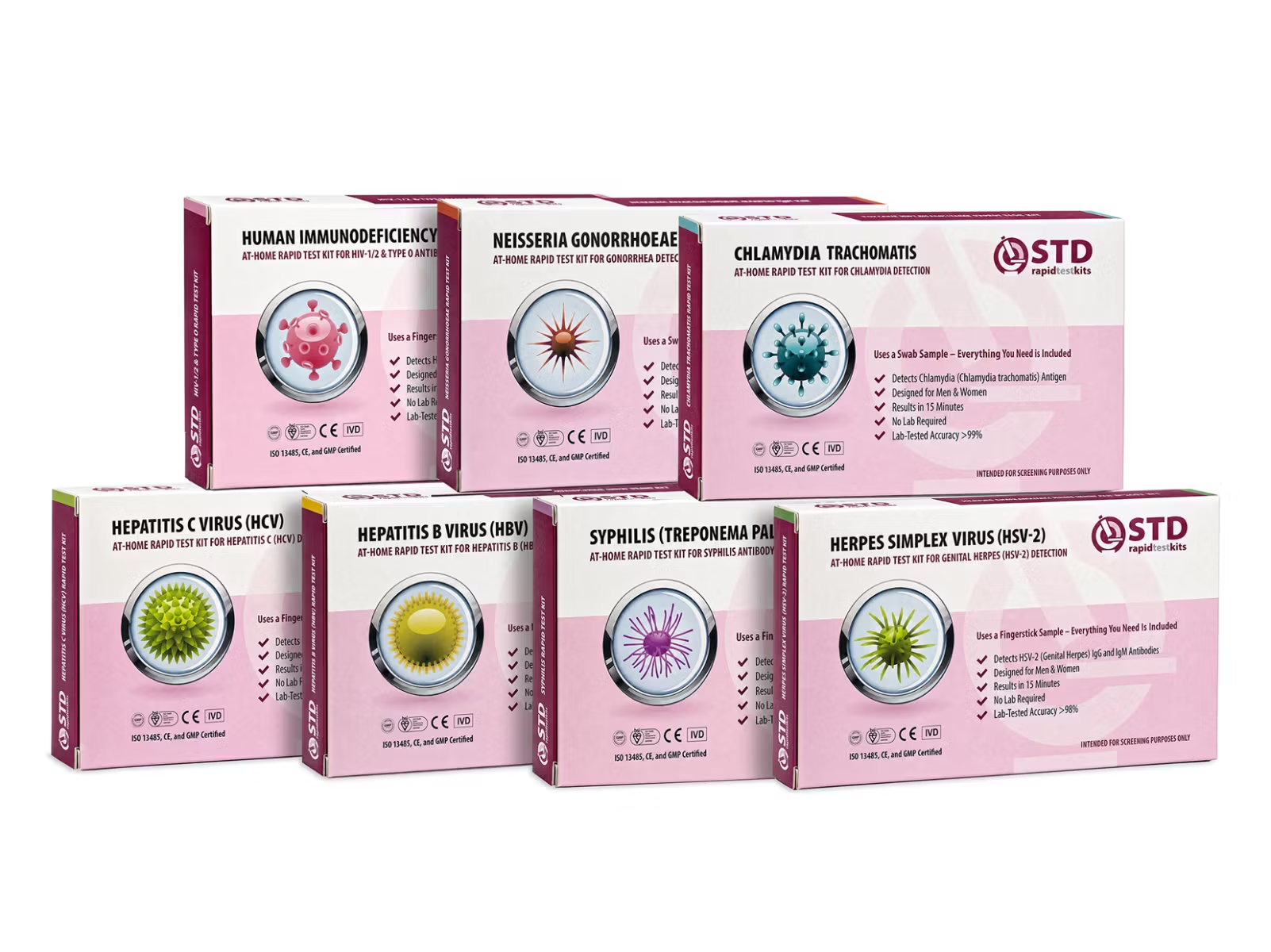
Our catalog is built around two sample technologies. The first is a self-collected genital swab read on a lateral-flow cassette. We offer single-infection swab tests for chlamydia, gonorrhea, trichomoniasis, and HPV. The second is a fingerstick blood test on a lateral-flow cassette. We offer single-infection blood tests for HIV, syphilis, hepatitis B, hepatitis C, HSV-1, and HSV-2. Combination kits bundle the most common pairings, including 2-in-1, 3-in-1, 6-in-1, 7-in-1, 8-in-1, and 10-in-1 panels drawn from those single-infection assays.
What we do not sell
We do not sell urine-sample STI tests. We do not sell pharyngeal (throat) swab tests. We do not sell rectal swab tests. We do not sell lab-processed mail-in NAAT panels. If your most likely exposure was oral or anal, the most sensitive screen is a clinic-administered swab of that specific anatomy, processed in a lab by nucleic acid amplification testing (NAAT). At-home rapid blood tests for HIV, syphilis, and the hepatitis viruses still pick up bloodborne risk from those exposures during the appropriate window period; they will not detect a localized infection at the throat or rectum.
Rapid lateral-flow versus lab NAAT
Public-health labs use NAAT for chlamydia and gonorrhea because NAAT can detect very small amounts of pathogen DNA or RNA. Lateral-flow tests measure antigens or antibodies and trade some analytical sensitivity for speed, privacy, and the absence of a lab visit. The two serve complementary roles. A positive at-home result is worth confirming with a lab NAAT when possible, and a clean at-home result inside the correct window period is a strong screening signal, though it is not a guarantee of clearance.
Book a clinic visit rather than relying on an at-home rapid test alone if any of the following apply: your exposure was oral or anal sex, you have visible symptoms (sores, unusual discharge, pelvic or rectal pain, swollen lymph nodes), you are pregnant or planning surgery, or your at-home rapid test returns a positive result. Lab-based NAAT testing of the specific anatomical site is the most sensitive screen for site-specific exposures, and clinics can start treatment the same day for most curable infections.
Matching the test to your anatomy and exposure
This is the part most general articles skip. Trans and nonbinary readers are best served by a frank discussion of which tests fit which body, because the assays do not care about identity, though they do require a specific sample from a specific tissue.
Genital swabs in our catalog
Our swab-based kits sample directly from the genital mucosa where chlamydia, gonorrhea, trichomoniasis, and HPV live and shed. Two of these kits, our trichomoniasis and HPV tests, are validated for self-collected vaginal swabs only. That validation reflects the clinical studies the assays were tested against, not our policy on who should use them. If you have a vagina, whether you are a cis woman, a trans man, or a nonbinary person, the test is intended to work on your anatomy. We do not sell a male-anatomy version of the trichomoniasis or HPV test. If you have only a penis, that body part needs a clinic for those two infections.
Chlamydia and gonorrhea swab kits in our catalog are validated for both vaginal and penile self-collection. Either anatomy works; the sample-collection step is different, and the kit instructions walk through both options.
Blood tests are anatomy-independent
HIV, syphilis, hepatitis B, hepatitis C, and HSV-1/HSV-2 are detected in blood via antibody or antigen responses to systemic infection. The fingerstick is identical regardless of body part. For trans and nonbinary readers, the blood tests are the most genuinely identity-neutral option in the catalog. They cover the bloodborne risk from any exposure route, and they do not require swabbing a body part that may feel uncomfortable to access.
Throat and rectal exposures
If your most recent exposure involved oral sex or anal sex, a genital swab in an at-home kit will not screen the site where a localized infection would actually live. A clinic-administered pharyngeal or rectal swab, processed by NAAT, is the appropriate test for that scenario. The blood tests in our catalog still cover bloodborne infections (HIV, syphilis, hepatitis) from those exposures; for chlamydia and gonorrhea specifically, the body site matters and a clinic is the right venue.
Pick a self-swab kit when the infection has a specific genital anatomy and you have that anatomy. Pick a fingerstick blood kit when the infection is bloodborne (HIV, syphilis, hepatitis, HSV), regardless of which body parts you have. Book a clinic when the relevant site is throat or rectum, when you have visible symptoms, or to confirm a positive at-home result.
Window periods, sensitivity, and what "accurate" really means
The single largest source of misleading at-home results is testing too soon after exposure. Every STI has a window period: the gap between when you could have been infected and when a test can reliably detect that infection. Testing inside the window can return a falsely reassuring negative.
Approximate window periods at a glance
The figures below come from current public-health guidance and the assay manufacturers' instructions for use. Treat them as orientation, not as a substitute for the specific kit's label.
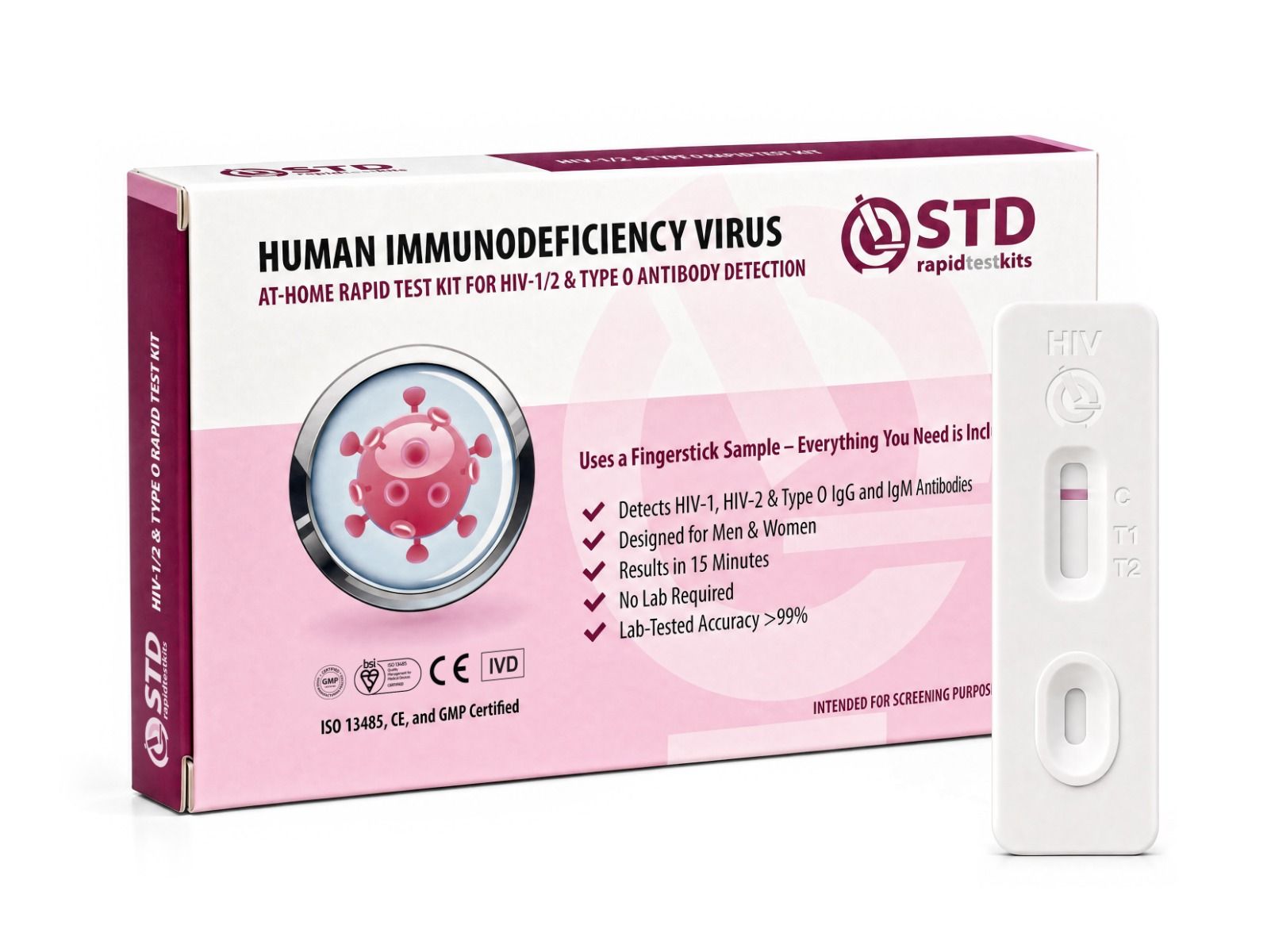
- HIV antigen/antibody rapid (fingerstick): detectable from about 18 to 90 days after exposure, with most infections detectable by day 45.
- Chlamydia and gonorrhea (swab): generally testable from about 1 to 2 weeks after exposure for symptomatic infection; many assays advise waiting at least 14 days.
- Syphilis antibody (fingerstick): generally detectable from 3 to 6 weeks after exposure, with most infections positive by week 12.
- Herpes (HSV-1/HSV-2) antibody (fingerstick): most seroconversion occurs within 12 weeks of exposure; some assays recommend confirming a negative result through 16 weeks if exposure was likely.
- Hepatitis B and C antibody (fingerstick): generally detectable from 4 to 10 weeks for hepatitis B, and 2 to 12 weeks for hepatitis C.
These ranges are drawn from current public-health guidance; see the CDC's STI guidance pages and CDC HIV testing resources for infection-by-infection detail.
Sensitivity and specificity, in plain terms
Sensitivity is the share of truly infected people the test correctly catches. Specificity is the share of truly uninfected people the test correctly clears. Both numbers matter. A test with high sensitivity but low specificity will produce false alarms; a test with high specificity but low sensitivity will miss real infections. Rapid lateral-flow STI tests, used inside the labeled window, typically report sensitivity in the mid-to-high 90% range and specificity above 99% across the conditions listed above. Specific figures vary by assay and infection. Check each product's data sheet rather than relying on a single global number.
What a clean result actually tells you
A clean result on a kit used after the correct window period means the assay did not detect the infection at the level it is calibrated to find. It is a strong signal, especially when paired with consistent risk-reduction practices and routine retesting after each new partner. It is not proof of clearance, particularly if you tested early or if the exposure involved a body site the kit does not screen.
After your result: confirmation, treatment, and building a routine
The result itself is data. What you do with it is the part that protects your health.
If your result is negative
If you used the kit after the labeled window and the result is negative, you can treat it as a reliable screening signal. The two adjustments worth making are timing and retesting. If your test was inside the window, repeat it once you are past the window. If a new partner enters the picture, your testing clock effectively resets and another round of screening is the safe play.
If your result is positive
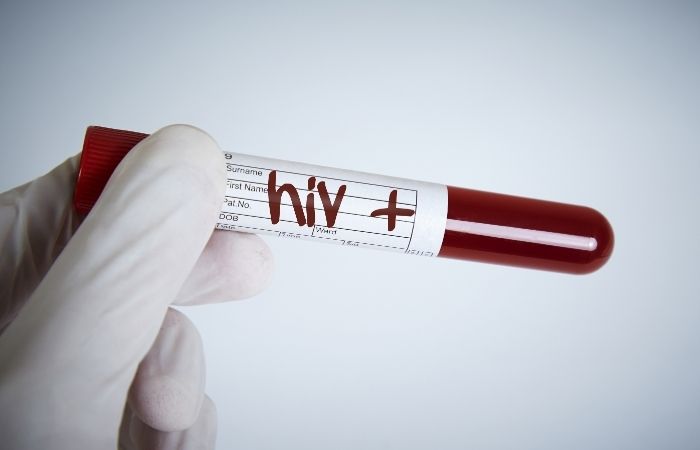
A positive at-home result is a screening positive. The next step is confirmatory testing through a clinic or telehealth service, because confirmation matters for both treatment and partner notification. Almost all STIs covered by our catalog are treatable. Chlamydia, gonorrhea, syphilis, and trichomoniasis are cured with antibiotics. HIV is managed with antiretroviral therapy that takes most people to an undetectable viral load. Hepatitis B is controlled with antiviral therapy; hepatitis C is now curable with direct-acting antivirals. HSV is managed with antivirals that reduce outbreaks and transmission. None of these are end-of-story diagnoses.
Building a routine that respects your body
For sexually active readers, CDC and WHO guidance points to STI screening at least annually, with more frequent testing (every 3 to 6 months) for people with new partners, multiple partners, or specific exposure risks. At-home kits make that schedule easier to keep because they fit into the time you actually have. A standing reminder, a small stock of kits stored where you can reach them, and a habit of testing before each new exposure cycle is enough for most readers.
Coordinating with gender-affirming care
Hormone therapy does not change which infections you can acquire, though it can change your anatomy over time. People taking estrogen may notice tissue changes that affect comfort during self-swab. People taking testosterone may experience vaginal atrophy that makes sample collection more sensitive; generic water-based lubricant on the outer tissue (never on the swab tip itself) usually helps. If you have had bottom surgery, the body site for any swab-based test has changed. Your surgeon's follow-up clinic or a gender-affirming primary care provider is the better starting point for figuring out which screening protocol fits the new anatomy.
Most STIs do not cause any symptoms. Testing is the only reliable way to know your status.
Frequently Asked Questions
- How accurate are at-home rapid STI tests?
- Specificity above 99% means false positives are rare for most lateral-flow STI assays, assuming the test was used inside its labeled window and the kit was stored correctly. Sensitivity (the catch rate for true infections) falls in the mid-to-high 90% range across most of the infections we sell. Two factors swing the real-world number: how soon after exposure the sample was taken, and whether the kit's data sheet validates the specific anatomy or sample type you used. Always check the per-kit label.
- Can I choose the sample method that feels most comfortable?
- Yes. Each kit lists its sample type before you order: a self-collected genital swab, a fingerstick blood draw, or a combination of both. Blood-based kits are the most identity-neutral choice and require only a fingerstick, which makes them a good first step for readers who want to avoid genital sampling at home.
- Do I need a prescription to order an at-home STI kit?
- No. Our at-home rapid kits are available without a prescription and ship in plain packaging with no medical labeling on the outside.
- How often should I test if I am sexually active?
- If you have new or multiple partners, plan on testing every 3 to 6 months. If your situation is more stable (a single regular partner, no new exposures), at least once a year is the floor. After any specific exposure that worries you, the right move is to retest once you are past the relevant window period rather than waiting for the next scheduled round.
- What should I do if my at-home test is positive?
- First, know that almost every infection we test for is treatable or fully manageable today. Chlamydia, gonorrhea, syphilis, and trichomoniasis are cured with a course of antibiotics; HIV and the hepatitis viruses are well-controlled with current therapy. Then book a confirmatory test through a clinic or telehealth service so the result is documented and treatment can start cleanly.
- Can I test for every STI at home?
- Genital and bloodborne STIs, yes. Throat and rectal infections, no. A localized infection at the pharynx or rectum needs a clinic-administered swab of that specific site, run through lab NAAT. If your exposure was oral or anal, book a clinic for site-specific screening; our fingerstick blood kits will still cover the bloodborne risks (HIV, syphilis, hepatitis) from the same exposure event.
- Does my anatomy affect which kit I should order?
- Yes, for swab-based tests. Our trichomoniasis and HPV kits are validated for self-collected vaginal swabs only, and we do not sell a male-anatomy version of either. Our chlamydia and gonorrhea swab kits are validated for both vaginal and penile self-collection. Blood-based tests (HIV, syphilis, hepatitis, HSV) are anatomy-neutral and work identically for everyone.
- Does hormone therapy change how I should test?
- No, it does not change which infections you can acquire; only sample-collection comfort may shift. See the "Coordinating with gender-affirming care" section above for the specific adjustments worth knowing about, including how to handle bottom-surgery follow-up screening.
- U.S. Centers for Disease Control and Prevention. Sexually Transmitted Infections (STI) guidance hub, including infection-by-infection screening recommendations and window-period orientation for chlamydia, gonorrhea, syphilis, and the hepatitis viruses.
- U.S. Centers for Disease Control and Prevention. HIV testing resources, including the 18 to 90 day window for fingerstick antigen/antibody rapid tests and routine-screening cadence guidance.
- World Health Organization. Sexually transmitted infections (STIs) fact sheet, including the prevalence of asymptomatic infection and the global case for routine screening.
- NHS. Sexually transmitted infections overview, including UK testing guidance and at-home testing context.
- American Sexual Health Association. Consumer-facing primer on at-home STI testing, sample types, and when to follow up with clinical care.
