
Published: October 2025 | Last updated: May 2026 | Editorial review and quality control: Martina N.
STD testing after vaginoplasty barely shows up in mainstream sexual health guidance, even though it absolutely should. Most testing advice is written for cisgender bodies, which leaves a lot of trans women guessing, avoiding testing altogether, or walking into clinics where providers do not know how to collect a sample correctly. This article covers which tests work, why urine alone is not always enough, what infections your neovagina is at real risk for, and exactly when to test after exposure.
Here is the short answer: yes, you can and should test for STDs after vaginoplasty, but not every standard test is equally effective for post-surgical anatomy. A urine-only test may miss infections present in your neovagina. A vaginal swab, combined with site-specific oral and rectal swabs based on your sexual activity, plus blood testing for HIV and syphilis, gives a far more complete picture. The details matter, and they are worth understanding.
Key Takeaways
- Urine-only testing can miss neovaginal infections. A vaginal swab plus a blood panel for HIV and syphilis, with extra oral or rectal swabs based on what kind of sex you are having, gives full coverage.
- HPV and herpes are the most consistently documented neovaginal STIs across surgical techniques. Gonorrhea and chlamydia risk depends partly on whether your procedure used penile skin alone or added mucosal grafts.
Why your neovagina is not the same as a cis vagina, and why that changes testing
Understanding why standard tests sometimes fall short starts with understanding what vaginoplasty creates. The most common surgical technique, penile inversion vaginoplasty, uses penile skin and scrotal tissue to line the vaginal vault. The result sits in roughly the same anatomical location as a natal vagina, with some important biological differences: there is no cervix, no natural vaginal pH, and the tissue lining is squamous epithelium rather than the columnar and transitional epithelium found in a natal vagina.
Why does that matter for STD testing? Bacterial infections like chlamydia and gonorrhea prefer columnar and transitional epithelial tissue, the kind that lines the cervix. Penile-inversion vaginoplasty uses squamous skin, which theoretically offers some protection against these specific bacteria. But it gets more complicated: many modern vaginoplasty techniques now incorporate urethral mucosa, peritoneal grafts, or intestinal tissue to improve self-lubrication and depth. Those tissues do contain the transitional and mucosal epithelium that bacteria like chlamydia target, and documented cases of neovaginal chlamydia infection have occurred specifically in trans women whose procedures involved these types of grafts.
The bottom line is that your STD risk profile, and therefore your testing approach, depends partly on which surgical technique was used to create your neovagina. If you are not sure, ask your surgeon or review your operative notes. It is a straightforward question, and the answer directly shapes how you should screen.
There is also the prostate to consider. Vaginoplasty removes the penis, testes, and scrotum, but the prostate remains in place. Trans women who are sexually active can still develop prostate-related infections, including prostatitis, which sometimes presents with symptoms that overlap with STI symptoms. A thorough screening approach keeps this in mind.
| Surgical technique | Primary tissue used | Chlamydia / gonorrhea risk | HPV / HSV risk |
|---|---|---|---|
| Penile inversion (standard) | Penile and scrotal squamous skin | Lower (squamous epithelium less susceptible) | Present; HPV and HSV documented |
| Penile inversion with urethral or peritoneal graft | Squamous skin plus mucosal tissue | Higher; mucosal grafts are susceptible | Present |
| Intestinal (sigmoid colon) vaginoplasty | Intestinal mucosal tissue | Higher; mucosal tissue is susceptible | Present, plus bowel-related conditions possible |
Which STDs can infect the neovagina?
A few weeks after becoming sexually active post-surgery you notice something that does not look quite right, maybe discharge, maybe irritation that was not there before. Before the late-night Google spiral starts, it helps to know what neovaginal STIs look like and which infections are documented to occur there.
The clearest evidence exists for HSV (herpes simplex virus) and HPV (human papillomavirus) in the neovagina; both have been reported across multiple surgical techniques. Clinical literature documents elevated rates of HPV and gonorrhea among trans women post-vaginoplasty, alongside the well-documented elevated HIV risk that affects transgender women broadly.
Gonorrhea and chlamydia in the neovagina are less common in standard penile-inversion cases but are documented when mucosal or peritoneal tissue is involved. Bacterial vaginosis-like dysbiosis has also been reported, though the neovagina's microbiome differs significantly from a natal vagina, lacking the Lactobacillus-dominant environment and running at a higher pH. What can look like BV discharge in a trans woman is often sebum, dead skin cells, or keratin debris from the squamous lining rather than a bacterial infection. Still, when symptoms persist, testing is the only way to know.
Syphilis can produce chancres (painless ulcers) on neovaginal tissue regardless of surgical technique; any skin surface can be affected. The same applies to herpes lesions. Anal and pharyngeal (throat) infections also remain a significant risk for trans women who engage in receptive anal sex or oral sex, independent of vaginoplasty status. The neovagina is one site to screen; it is not the only site. Trichomoniasis has not been documented in the neovagina to date, though our at-home trich kit is validated for vaginal self-swab in female anatomy if you need it for other reasons.
Across all surgical techniques: HSV, HPV, syphilis.
Higher risk with mucosal grafts (urethral, peritoneal, intestinal): gonorrhea, chlamydia.
Not documented in the neovagina to date: trichomoniasis.
Elevated regardless of surgical technique: HIV.
Does a standard urine STD test work after vaginoplasty?
This is the question at the center of everything, and the honest answer is: sometimes, but not always, and "sometimes" is not good enough when you actually want to know your status.
Standard urine-based tests for chlamydia and gonorrhea were designed to detect bacteria exiting through the urethral tissue. In cisgender women, the urethra sits close to the cervix, meaning urine samples can pick up cervical infections. In trans women post-vaginoplasty the anatomy is different; the urethra is repositioned during surgery, and there is no cervix. A neovaginal infection may not produce bacteria at concentrations high enough to reliably appear in a urine sample.
According to CDC STI Treatment Guidelines, there is currently no definitive data establishing whether urine or vaginal swabs are equivalent for detecting bacterial STIs of the neovagina. What the CDC does say clearly is that trans women who have had vaginoplasty should undergo routine STI screening at all exposed mucosal sites (oral, anal, and vaginal) rather than relying on a single urine collection. The UCSF Gender Affirming Health Program echoes this, noting that urine testing should be considered essential but that vaginal swab testing should also be performed where possible.
A 2025 review of STI testing updates reinforced site-specific screening for transgender women with vaginoplasty, recommending screening at all exposed mucosal sites based on anatomy and sexual behavior. That guidance lines up with the CDC's position above: no data establish whether urine or vaginal swabs are the optimal method for neovaginal bacterial STI detection. In practical terms, if you have been relying on a urine-only test kit and having receptive vaginal sex, you may have gotten an incomplete picture of your STI status.
The good news: at-home rapid swab tests can effectively collect a neovaginal specimen, and using one alongside blood tests for HIV and syphilis gives you coverage of the most critical infections.
At-home STD testing after vaginoplasty: what to use and when
We sell rapid at-home STI test kits at stdrapidtestkits.com; here is how to match them to your situation. You do not need to wait for a clinic appointment or navigate a provider who is not familiar with post-surgical anatomy. At-home rapid testing kits cover the most important infections and can be used comfortably and privately. The key is knowing which kit to choose and when to use it.
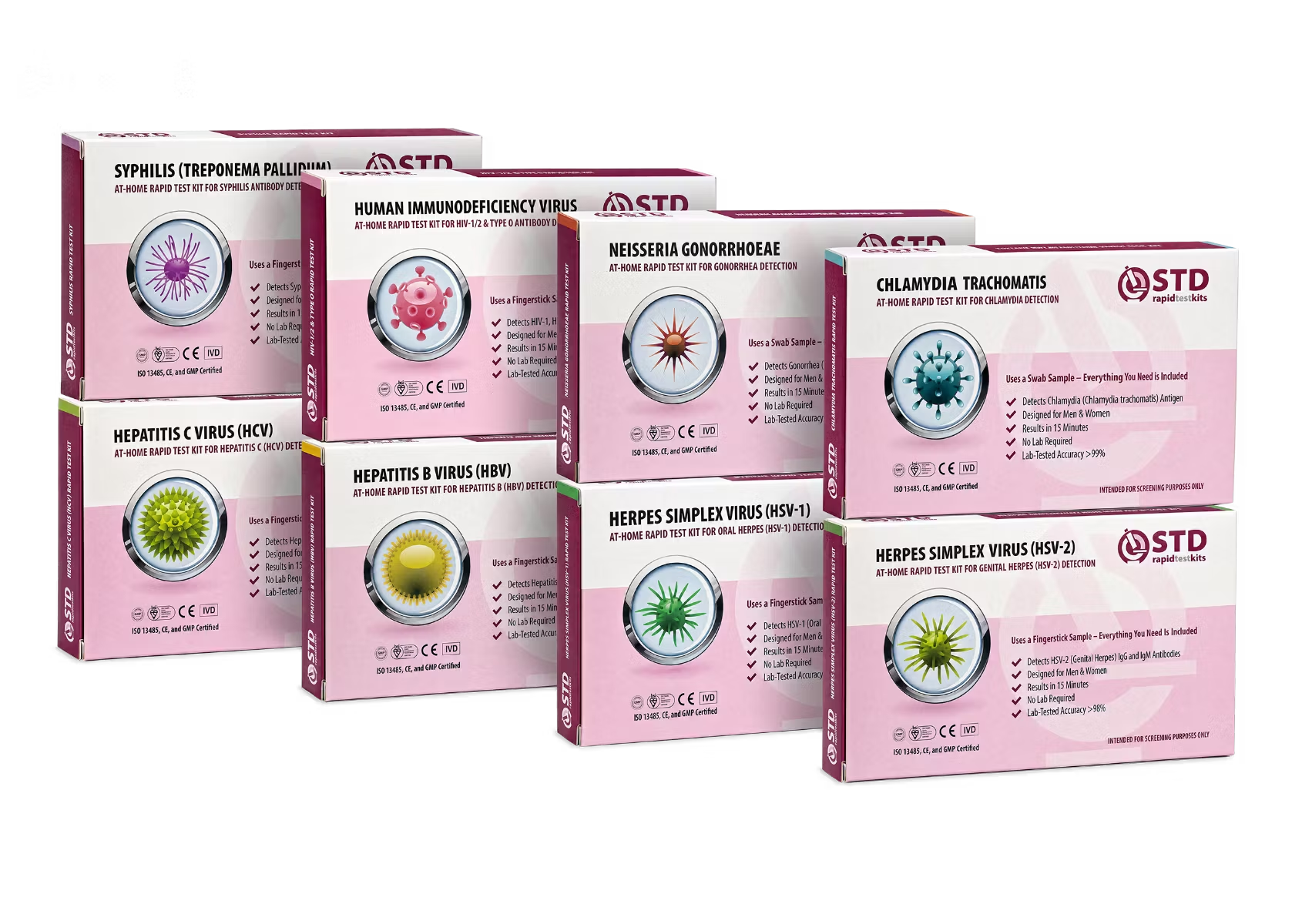
For most trans women post-vaginoplasty who are sexually active, a multi-infection combo kit provides the broadest coverage in a single purchase. The Complete 8-in-1 At-Home Rapid Test Kit covers HSV-1 and HSV-2, chlamydia, gonorrhea, syphilis, HIV, hepatitis B, and hepatitis C: the infections that are documented risks for sexually active trans women. If your sexual activity includes receptive vaginal sex along with oral or anal sex, this level of coverage is appropriate.
For trans women primarily concerned about HIV and wanting a standalone rapid confirmation, the HIV 1 and 2 At-Home Rapid Test Kit delivers results quickly and is suitable for regular monitoring, given the elevated HIV risk documented in this population. For herpes specifically, the combined Herpes HSV-1 and HSV-2 Rapid Test Kit covers both strains in a single fingerstick test.
These rapid panels use lateral-flow immunoassay technology, a different approach from the NAAT (nucleic acid amplification) tests laboratories run. They give a fast, screening-quality read at home using the same vaginal swab sample type that labs use for NAAT. A positive home result is worth confirming with a lab NAAT when possible; a negative result that falls outside the testing window is worth retesting.
When using a swab-based kit for neovaginal testing, collect the specimen from inside the vaginal canal using the swab provided, the same way you would collect any vaginal specimen. If you also engage in receptive anal or oral sex, those sites need separate testing, since extragenital infections in the rectum and throat are common in trans women and frequently asymptomatic. Standard at-home rapid kits are not validated for pharyngeal or rectal sampling; for those sites, an LGBTQ+-affirming sexual health clinic that can collect and run a NAAT is the appropriate route. We are being upfront about that limit: we do not sell a throat or rectal swab kit, and the right tool for those sites is clinic-based testing.
One critical point on timing: testing too soon after an exposure produces unreliable results. If you test for chlamydia 5 days after unprotected sex, a negative result does not mean you are clear; it means the test ran before the infection reached detectable levels. Wait for the windows listed below, and if you test negative but symptoms develop or a partner notifies you of a positive result, retest.
For trans women at higher risk (multiple partners, condomless sex, sex work, or a partner with a known STI), the CDC and UCSF guidelines both recommend testing every three months rather than annually. At-home kits make that frequency realistic without requiring repeated clinic visits.
| Infection | Test from | Notes for post-vaginoplasty |
|---|---|---|
| Chlamydia | 14 days after exposure | Vaginal swab preferred over urine; risk higher if procedure used mucosal grafts |
| Gonorrhea | 3 weeks after exposure | Also test oral and rectal sites if relevant; asymptomatic cases common |
| Syphilis | 6 weeks after exposure | Chancres can appear on neovaginal or labial skin; blood test required |
| HIV | 6 weeks (first indicator); retest at 12 weeks for certainty | Elevated risk documented in trans women; regular screening strongly recommended |
| Herpes HSV-1 and HSV-2 | 6 weeks after exposure | Neovaginal and labial HSV cases documented across surgical techniques |
| Hepatitis B | 6 weeks after exposure | Blood test; risk from any sexual exposure regardless of anatomy |
| Hepatitis C | 8 to 11 weeks after exposure | Blood test; risk from any sexual exposure |
What about HPV after vaginoplasty? And no, you do not need a Pap smear
Let's clear this up directly, because it comes up a lot. Pap smears test for cervical changes caused by HPV. Trans women who have had vaginoplasty do not have a cervix. Pap smears are therefore not indicated and serve no screening purpose in this population.
HPV, however, is a different matter. The virus itself can infect any skin or mucosal surface, including the neovaginal tissue, labial skin, and the perianal area. HPV-related lesions, including genital warts (condyloma acuminata) and, in rarer documented cases, HPV-related squamous cell changes in the neovagina, have been reported in trans women post-vaginoplasty. Clinical case reports of HPV-related changes in post-vaginoplasty patients reinforce that this is a real clinical consideration, not a theoretical one.
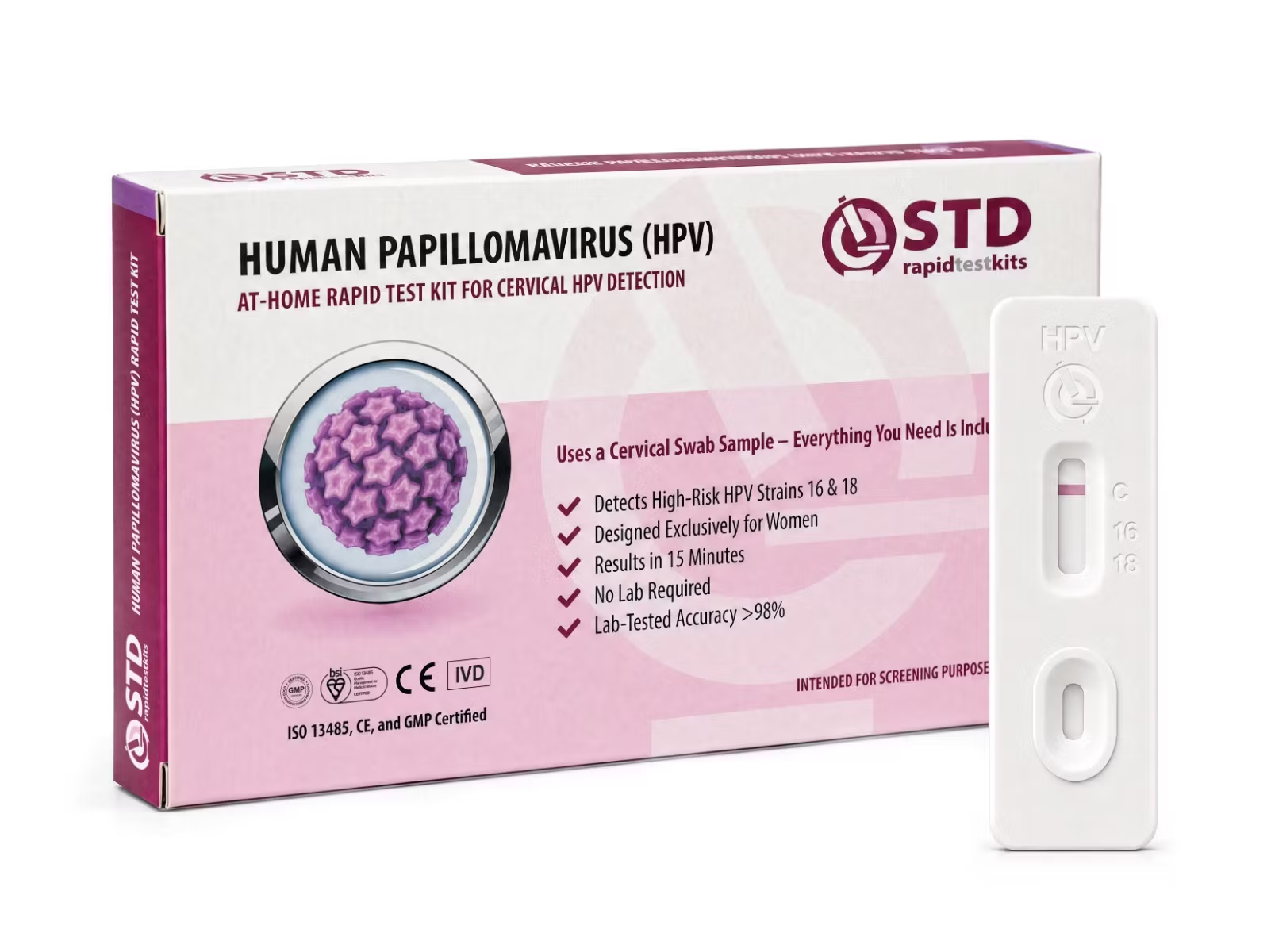
For trans women, the HPV (Papillomavirus) At-Home Rapid Test Kit screens for high-risk HPV strains including 16 and 18, the types most associated with serious outcomes. The kit is validated for vaginal self-swab and works for neovaginal sampling using the same collection method. If you notice any unusual growths, warts, or lesions in or around your neovagina or labia, that warrants both an HPV test and a clinical examination, not a watchful wait.
HPV vaccination, if not already completed, is worth discussing with your healthcare provider regardless of surgical status. The CDC recommends routine vaccination through age 26 and shared clinical decision-making for adults aged 27 to 45. The vaccines are effective against the highest-risk strains and can still provide some protection for adults who were not vaccinated earlier.
What symptoms should prompt testing?
Getting a text from a recent partner saying they tested positive is an obvious trigger. But STIs in trans women post-vaginoplasty are frequently asymptomatic, especially gonorrhea and chlamydia, which is exactly why routine testing matters more than waiting for symptoms. That said, there are signs worth knowing.
Neovaginal discharge that is new, has changed in character, or is accompanied by odor, itching, or irritation deserves attention. Some discharge in a neovagina is normal and not infection-related; sebum, keratin debris, and retained lubricant are all common and do not indicate an STI. A pattern of changing symptoms alongside recent sexual exposure is the relevant signal, not discharge alone.
Visible lesions, sores, or blisters on the neovaginal tissue, labia, or perianal area, whether painful or not, are a reason to test for herpes and syphilis. Painless ulcers in particular are classic for syphilitic chancres. Herpes lesions can be subtle and may be mistaken for surgical healing irritation in the first months post-op, which makes vigilance especially important in the period after sexual activity resumes.
Systemic symptoms (fever, body aches, swollen lymph nodes, or an unusual rash) combined with recent sexual exposure, are worth taking seriously as potential signs of acute HIV infection, primary syphilis, or hepatitis. These deserve urgent testing, not a wait-and-see approach.
Prostate-related symptoms (pelvic pressure, pain on ejaculation, or urinary symptoms after receptive sex) may indicate prostatitis rather than a vaginal STI. Some trans women retain the ability to ejaculate post-surgery, which is worth mentioning to a provider when describing symptoms. This kind of presentation requires a different clinical evaluation than an STI workup and is worth raising with a provider familiar with trans anatomy.
Routine STI screening should be performed at all exposed mucosal sites for transgender women who have undergone vaginoplasty, with site-specific sampling based on anatomy and sexual behavior.
Navigating providers who are not familiar with post-op anatomy
This is a real barrier. Research consistently shows that transgender people, particularly trans women, face higher rates of discrimination, lack of provider knowledge, and healthcare avoidance as a result. Tens of thousands of trans people have reported delaying or avoiding healthcare out of fear of mistreatment in recent national survey data, and that avoidance has measurable consequences for STI detection and treatment.
If you are walking into an appointment for STI screening post-vaginoplasty and your provider seems uncertain about how to collect a specimen, a few things are worth knowing. The clinical recommendation from UCSF and supported by CDC guidelines is that a vaginal swab, collected from inside the neovaginal canal, is appropriate for gonorrhea and chlamydia testing via nucleic acid amplification test (NAAT). You can also self-collect; the UCSF Gender Affirming Health Program has confirmed that self-collected vaginal and rectal swabs perform equivalently to provider-collected samples for NAAT testing of gonorrhea, chlamydia, and trichomoniasis. You do not have to rely on a provider getting the collection right; self-collection delivers equivalent accuracy.
Being clear about your surgical history with providers also matters. The type of vaginoplasty technique used affects which tissues are present and therefore which infections to screen for most actively. If you know your procedure involved urethral mucosa or peritoneal grafts, share that, as it should inform a more targeted screening approach. Bringing operative notes or a summary from your surgical team to any new healthcare encounter helps providers give you better care.
At-home testing removes the provider variable entirely for the core infections. For the clinical follow-up piece (visual examination, swab collection by a clinician, or management of any positive results), seeking out providers at LGBTQ+-affirming sexual health clinics, Planned Parenthood locations, or academic medical centers with gender-affirming health programs will generally give you a more knowledgeable experience than a general urgent care walk-in.

How often should trans women test after vaginoplasty?
The frequency question matters as much as the what-to-test question. Annual STI screening is a floor, not a target, for sexually active trans women, and for many, it is not enough.
The UCSF Gender Affirming Health Program recommends testing every three months for trans women at higher risk, defined as those with multiple sexual partners, condomless sex, sex while intoxicated, or transactional sex. This interval mirrors the recommendation for PrEP users and is grounded in the elevated STI burden documented in this population. A 2024 study in the Journal of Infectious Diseases found bacterial STI prevalence of 32% among trans women with HIV and 11% among trans women without HIV, rates that underline why routine, frequent screening is appropriate care rather than overcaution.
For trans women who are monogamous with a regularly tested partner and consistently use barrier protection, an annual screen covering HIV, syphilis, gonorrhea, chlamydia, hepatitis B, and hepatitis C is a reasonable baseline. Add herpes blood testing if you have had a new partner or are uncertain about your or your partner's herpes status.
Pick a schedule you will follow. At-home rapid tests make quarterly screening far more accessible than clinic-only options: no appointment, no waiting room, and a 15-minute result, so you can keep that interval without rearranging your schedule around clinic visits.
Screening cadence at a glance
- Every 3 months: multiple partners, condomless sex, transactional sex, or sex while intoxicated. Mirrors the cadence used for PrEP screening.
- Annually at minimum: regularly tested monogamous partner with consistent barrier use. Add herpes blood testing after a new partner.
- Retest any time a partner notifies you of a positive result, even if your last test was recent.
FAQs
- Can a regular urine STD test find infections in my neovagina?
- Sometimes, but not reliably. Urine tests can pick up urethral infections, but they were not designed for neovaginal anatomy and the CDC says there is no clear evidence that urine and vaginal swabs are equivalent for neovaginal testing. Use a vaginal swab as the primary sample, paired with site-specific oral or rectal swabs based on your sexual activity.
- Which STDs are most likely to infect a neovagina?
- HPV and herpes (HSV) are the most consistently reported neovaginal STIs across surgical techniques. Gonorrhea and chlamydia risk is higher when the procedure involved urethral mucosa, peritoneal grafts, or intestinal tissue. Syphilis can affect any skin surface. HIV risk remains elevated regardless of surgical technique. Trichomoniasis has not been clearly documented in the neovagina to date.
- Do I need a Pap smear after vaginoplasty?
- No. Pap smears screen for cervical changes caused by HPV, and vaginoplasty does not create a cervix. There is no cervical screening to do after vaginoplasty. HPV itself can still infect the neovaginal tissue and labial skin, so HPV testing and visual examination of any unusual growths remain appropriate; cervical Pap smears do not.
- How soon after exposure can I get accurately tested?
- Testing too soon produces unreliable results. Wait 14 days after exposure for chlamydia, 3 weeks for gonorrhea, and 6 weeks for syphilis, HIV, and herpes (with HIV retested at 12 weeks for certainty). Hepatitis B at 6 weeks, hepatitis C at 8 to 11 weeks.
- Can I take a vaginal swab at home for testing?
- Yes. Insert the swab into the neovaginal canal and rotate to collect a specimen, using the same technique as for any vaginal swab. Per UCSF Gender Affirming Health Program guidance, self-collected vaginal swabs perform equivalently to provider-collected samples for NAAT testing of gonorrhea, chlamydia, and trichomoniasis.
- After penile-inversion vaginoplasty, can I still get gonorrhea or chlamydia from vaginal sex?
- Standard penile-inversion vaginoplasty uses squamous skin, which is less susceptible to chlamydia and gonorrhea than the mucosal tissue these bacteria typically infect. But if your procedure involved urethral mucosa, peritoneal grafts, or intestinal tissue, the susceptible tissue is present and risk goes up. Documented cases of neovaginal chlamydia confirm this. Know which technique your surgeon used.
- Should I also test my throat and rectum, not just my neovagina?
- Yes, if you engage in receptive oral or anal sex. Pharyngeal and rectal gonorrhea and chlamydia are common in trans women and frequently asymptomatic. The neovagina is one site to screen; it is not the only one. Standard at-home rapid kits are not validated for throat or rectal swabs, so those samples need to be collected at an LGBTQ+-affirming clinic that runs NAAT testing.
- How often should I get tested after vaginoplasty?
- At least annually if you are sexually active. Every three months if you have multiple partners, condomless sex, or other higher-risk factors. The UCSF guidelines anchor this in the elevated STI burden documented in trans women; quarterly screening at this level is appropriate care, not overcaution.
Test with confidence: at-home kits that work for trans women
Here is what to take from everything above: testing after vaginoplasty is possible, accessible, and worth doing regularly. You do not need to find a specialist clinic or navigate a provider who does not understand your anatomy to get started. At-home rapid kits deliver accurate results for the infections that matter most, and they can be used from home, on your timeline, with no waiting room required.
For the broadest coverage, the Complete 8-in-1 At-Home Rapid Test Kit covers HSV-1 and HSV-2, chlamydia, gonorrhea, syphilis, HIV, hepatitis B, and hepatitis C in one purchase. If you want comprehensive coverage without buying multiple separate tests, this is the most efficient option. For trans women who test frequently and want targeted HIV monitoring between full panels, the HIV 1 and 2 At-Home Rapid Test Kit works as a standalone tool.
Testing is not a sign that something is wrong. It is the only reliable way to know your status, and knowing is what gives you real options and the ability to protect yourself and your partners. With a 15-minute rapid test, that information is within reach.
This article draws on current guidance from the CDC STI Treatment Guidelines for transgender and gender-diverse persons, the UCSF Gender Affirming Health Program, and peer-reviewed clinical literature on neovaginal STI risk and screening. Behind the references listed below sits a wider pool of public-health and clinical research; the sources here are the most direct supports for the specific claims made, and the most useful starting points if you want to verify any of them yourself.
- U.S. Centers for Disease Control and Prevention. STI Treatment Guidelines, Transgender and Gender Diverse Persons. Source for site-specific screening recommendations and the lack of established equivalency between urine and vaginal swab samples for bacterial STIs of the neovagina.
- Radix AE et al. Chlamydia trachomatis Infection of the Neovagina in Transgender Women. Open Forum Infectious Diseases, 2019. Documents two cases of neovaginal Chlamydia trachomatis infection in transgender women post-vaginoplasty and identifies specimen-type equivalency for neovaginal testing as an unresolved area requiring further research.
- Brown EE et al. Prevalence of Sexually Transmitted Infections Among Transgender Women With and Without HIV in the Eastern and Southern United States. Journal of Infectious Diseases, 2024. Source for the 32% / 11% bacterial STI prevalence figures cited in the article, and broader documentation of elevated STI rates among trans women.
- UCSF Gender Affirming Health Program. Transgender People and STIs. Source for clinical recommendations on neovaginal swab sampling, the equivalence of self-collected and provider-collected swabs for NAAT testing, quarterly screening cadence for higher-risk patients, and provider guidance.
- Neu N et al. Updates on Testing, Treatment, and Prevention of STIs in the United States, 2025. PMC / IAS-USA. Reinforces site-specific screening guidance for transgender women with vaginoplasty based on anatomy and sexual behavior.
