
Published: August 2025 | Last updated: May 2026 | Editorial review and quality control: Martina N.
Most information about HPV and cervical screening is written as if transgender men don't exist, which leaves a lot of people piecing together answers from guidelines that weren't written with them in mind. The biology is straightforward; the system around it isn't. If you have a cervix and you're between 21 and 65, HPV screening applies to you regardless of gender identity, hormone use, or sexual history.
Key Takeaways
- If you have a cervix and you're between 21 and 65, HPV screening applies to you regardless of gender identity, testosterone use, or sexual history.
- Self-collected at-home HPV swab tests are a validated screening option for trans men and remove the speculum exam most people avoid.
What HPV does in the body, and why screening catches it early
You've almost certainly heard of HPV, but what it actually does inside the body is where most explanations fall apart. It's not a virus that announces itself. No fever, no obvious warning sign, no moment where you'd know something is different. HPV works quietly, which is exactly what makes screening so important.
When high-risk HPV enters the body through skin-to-skin sexual contact, it targets the thin layer of cells lining the cervix, called epithelial cells. In most cases, the immune system clears the virus on its own within one to two years. When it doesn't, the virus can begin interfering with how those cells regulate their own growth. That's a slow process. It doesn't happen in weeks. It happens over years, which is why screening intervals are spaced out the way they are, and why a single negative result isn't a reason to stop getting checked.
According to the CDC's data on HPV and cancer, persistent high-risk HPV infection is the primary driver behind nearly all cases of cervical cancer. The mechanism is a slow one: the virus disrupts how cells regulate their own growth when it persists long enough without being cleared. The key phrase is "persistent infection." Most HPV clears. When it doesn't, that's what screening is designed to catch at the cellular level, before it ever becomes a serious problem.
There are two main ways HPV screening looks for that persistence. The HPV test itself checks directly for the genetic material of high-risk virus strains in collected cervical cells. The Pap smear examines the cells themselves to see if HPV has already begun to alter their structure. Modern guidelines often combine both from the same sample, testing for the virus and for early cellular changes at once.
Do trans men need HPV screening? What the science says
Yes. If you have a cervix, HPV screening is medically necessary for you. This is a standard preventive health recommendation, not optional and not contingent on how you feel about it. The American College of Obstetricians and Gynecologists, the US Preventive Services Task Force, and the American Cancer Society all state explicitly that trans men with an intact cervix should follow the same screening guidelines as cisgender women.
The most persistent myth is that testosterone changes this. It doesn't. Testosterone alters the thickness and texture of cervical and vaginal tissue; that part is real, and it matters for how the test feels and how the sample is collected. The hormone doesn't eliminate the epithelial cells that HPV targets, and it doesn't change the biological pathway through which HPV infection can lead to cellular abnormalities. The virus interacts with cell structures, not hormone levels.
What testosterone does affect is screening rates. A scoping review published in PMC found that trans men are significantly less likely than cisgender women to be current on cervical cancer screening, with one study finding that 37% of trans men had never received a Pap smear at all, compared to 10% of cisgender women. Another study found that only 56% of trans men received regular screening, versus 72% of cisgender women. That gap isn't driven by lower biological risk. It's driven by systemic barriers: providers who aren't trained in trans healthcare, clinical environments that feel hostile or alienating, and healthcare systems that often fail to send screening reminders to patients registered as male.
People registered with their GP or provider as male are frequently not invited for routine cervical screening at all, meaning the system itself actively skips them. That's not a personal failure. It's a structural one. The consequence of missing screening, though, is the same either way.
| Factor | What the evidence says |
|---|---|
| Biological risk for HPV | Equivalent to cisgender women with a cervix |
| Effect of testosterone on HPV risk | Does not reduce or eliminate cervical HPV risk |
| Effect of testosterone on sample quality | Can reduce sample adequacy; roughly 10x higher rate of unsatisfactory Pap results |
| Recommended screening start age | Age 21, regardless of sexual history or hormone use |
| Screening if cervix is intact | Every 3 years (Pap alone) or every 5 years (HPV test alone or co-test with Pap) |
| Screening after hysterectomy | Only if cervix was retained, or there is a history of cervical dysplasia |
What happens during HPV screening
Here's where a lot of articles lose people. They describe the test in technical terms that make it sound more intimidating than it is, or they gloss over the parts that matter to someone walking into that room for the first time, or for the first time in years.
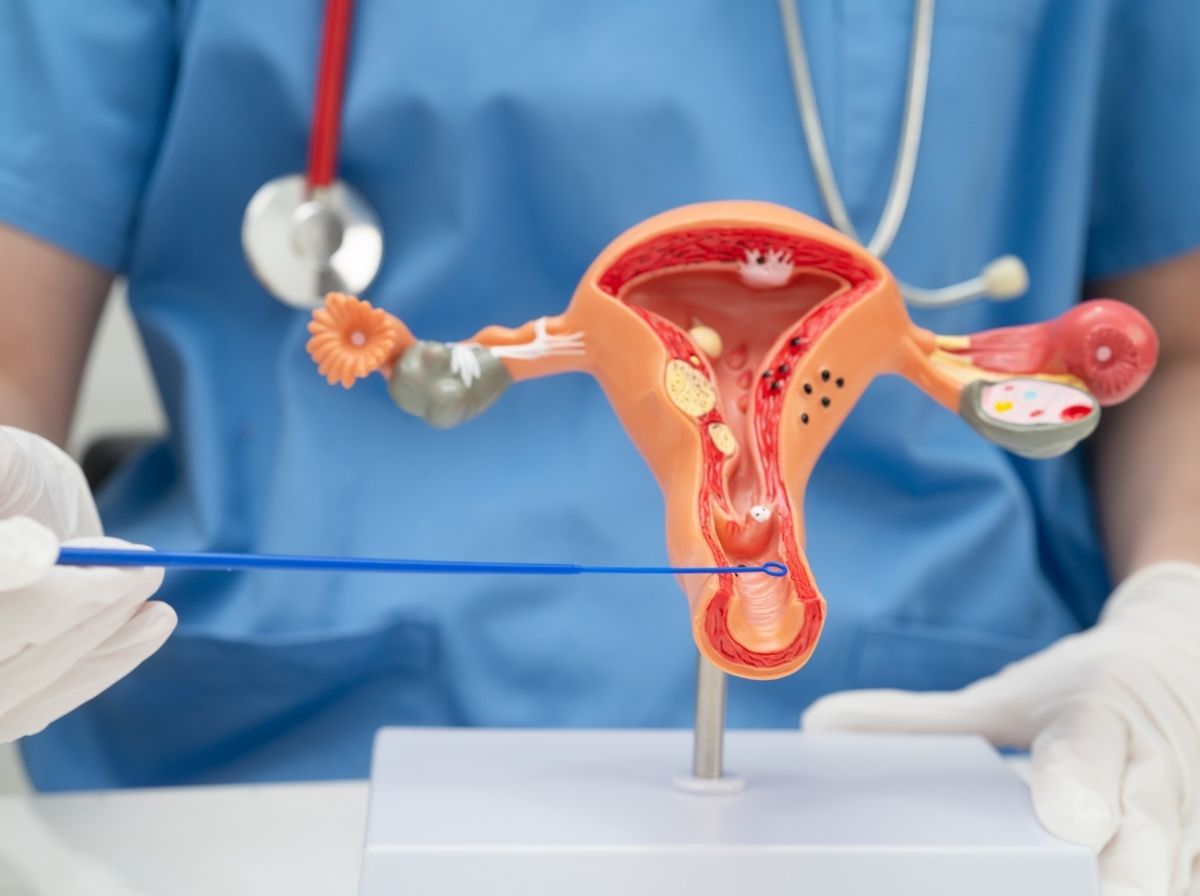
The goal of HPV screening is to collect a small sample of cervical cells and examine them, either to look for the presence of high-risk HPV DNA, to look at the cells themselves for early signs of change, or both. In a traditional clinical setting, this means a speculum is used to gently open the vaginal canal so a small brush or swab can reach the cervix. The whole collection takes a couple of minutes. The sample goes to a lab, the results come back within a few days to a week, and the result tells you whether high-risk HPV DNA was detected.
For trans men, the part of this that tends to cause the most friction isn't the biology, it's the experience. Studies have found that a substantial share of transgender men are unwilling to have a provider-collected HPV test. The reasons aren't mysterious. Speculum exams can be physically uncomfortable, especially for those on testosterone. Clinical environments don't always feel welcoming or competent. The exam itself can trigger gender dysphoria in a way that makes the whole process feel worth avoiding. That avoidance is understandable. It's also, medically speaking, the thing most worth overcoming, which is exactly why alternatives exist.
Testosterone-induced atrophy of the cervical and vaginal epithelium is well-documented in the research. Studies show that trans men on testosterone are roughly ten times more likely to have an unsatisfactory Pap test result than cisgender women, largely because the thinning of the tissue makes it harder to collect an adequate cell sample. The test isn't useless. It just means labs need to be informed that the patient is on testosterone therapy so they can interpret the sample correctly, and it means repeat testing may occasionally be necessary. It's also part of why primary HPV testing, rather than cytology alone, is increasingly considered a better first-line option for this population.
Almost all cervical cancer is caused by HPV. Cervical cancer screening can find changes in the cervix that might become cancer if not treated.
At-home HPV testing: what it is and why trans men prefer it
Imagine getting a text from a recent partner, "hey, I just found out I have HPV," and then trying to work out how to get tested without navigating a clinic that may or may not know how to treat you respectfully. That's the moment when at-home testing stops being a convenient option and becomes the only option that gets used.
At-home HPV testing works by using a vaginal swab to collect a sample of cells, which is then processed to check for the presence of high-risk HPV DNA. It's not a speculum exam. There's no clinic visit, no provider interaction, no paperwork asking for a gender that doesn't match how you live. You collect the sample yourself, send it in, and get a result. The core biology is the same as a clinical test, the same virus, the same detection method, just a different way of getting to the cells.
The research on self-collection is clear about why it matters for this population. A 2025 study of trans men and gender-diverse people indexed on PubMed found that 63% of trans men preferred at-home self-collected HPV testing, and that among those experiencing gender dysphoria, provider-collected testing was significantly less acceptable. The same study found that being misgendered during a clinical exam significantly reduced willingness to undergo testing at all.
stdrapidtestkits.com sells at-home HPV rapid tests; the guidance in this article is independent public-health information drawn from CDC, USPSTF, and peer-reviewed sources.

How testosterone changes the cervix, and what that means for your test results
Testosterone lowers estrogen levels over time. That's a biological fact with a specific downstream effect on cervical and vaginal tissue: the epithelial layer becomes thinner, drier, and more fragile. This process is called atrophy, and it's well-documented in trans men on hormone therapy. It's also the part that makes Pap smears more difficult, both to perform and to interpret.
Here's something worth knowing that most providers don't explain. When a Pap smear is processed at a lab, the tech reading the slide needs to know the patient is on testosterone. Without that context, the changes that testosterone causes in cervical cells, including a pattern called transitional cell metaplasia, can look unusual in ways that might be flagged as potentially abnormal when they're actually just testosterone effects. This isn't rare. Cytopathology research has found these testosterone-specific cellular patterns in the vast majority of Pap smears from trans men on hormone therapy. A provider who doesn't note testosterone use on the lab requisition is setting up a result that's harder to interpret accurately.
The atrophy itself doesn't make HPV more or less likely to be there. The virus doesn't care about estrogen levels. The atrophy does make the cells more physically challenging to collect, which is part of why trans men on testosterone have roughly a ten-fold higher rate of unsatisfactory Pap samples compared to cisgender women. An unsatisfactory result means the sample lacked enough cells for analysis. It usually just means you need to repeat the test.
One option some providers offer is a short course of low-dose topical estrogen applied before the exam. This temporarily reverses some of the atrophic thinning and can significantly improve sample quality. It doesn't affect overall hormone therapy. For trans men who experience pain during speculum exams due to atrophy, it's worth asking about. For those who'd prefer to skip the speculum entirely, at-home HPV swab testing sidesteps most of these issues by collecting from the vaginal canal rather than requiring a full cervical exam.
When should trans men get screened for HPV? The actual timeline
Here's the part most articles leave out: the schedule. "Get screened at recommended intervals" is not an answer. Here's what the guidelines say.
Screening begins at age 21. Before that, the immune system handles most HPV infections effectively enough that the benefit-to-harm ratio of screening doesn't support it, regardless of when sexual activity began. From 21 to 29, a Pap smear every three years is the standard recommendation if results are normal. From 30 to 65, the options are: a Pap smear every three years, a primary HPV test every five years, or co-testing (both a Pap and an HPV test together) every five years. After 65, screening can be stopped if there have been consistently normal results in the preceding decade and no history of high-grade cervical changes. The full schedule is laid out in the USPSTF cervical cancer screening recommendation.
These intervals exist because HPV-related cellular changes are slow. The virus needs time to persist and alter how cells replicate. Screening more frequently than every three years doesn't improve outcomes; it increases the rate of false positives and unnecessary follow-up procedures without meaningfully reducing cancer risk. The schedule is calibrated to match the biology.
If a result comes back abnormal, meaning HPV was detected or cellular changes were identified, the follow-up schedule changes. Depending on the finding, this might mean a repeat test in one year, a colposcopy (a closer look at the cervix), or a biopsy. None of this means cancer has developed. It means the monitoring gets closer for a period of time. Most high-risk HPV infections clear on their own. The point of screening is to catch the ones that don't before they have time to progress.
Screening is a separate health decision from hormone therapy. A trans man one month into hormones follows the same intervals as a trans man fifteen years in.
- Under 21: No screening recommended.
- 21 to 29: Pap smear every 3 years.
- 30 to 65: Pap every 3 years, primary HPV test every 5 years, or co-test (Pap plus HPV) every 5 years.
- Over 65: Screening can stop after a decade of consistently normal results with no history of high-grade changes.
What your HPV test result means
Refreshing an app, waiting for a result, and seeing "HPV positive" without any context is exactly the kind of moment that sends people into a spiral. Here is what a positive result means, before anyone ends up doing their own medical research at midnight.
A positive HPV result means high-risk HPV DNA was found in the cells that were collected. The virus is present, nothing more. The vast majority of HPV infections, including high-risk strains, clear on their own within one to two years as the immune system does its job. The ones that don't clear are the ones that get monitored carefully, which is the whole purpose of follow-up screening protocols. A positive result is the beginning of monitoring, not a diagnosis of anything serious.
A negative result means no high-risk HPV DNA was detected in the sample at the time of testing. That's a genuinely good result. It means the risk of ongoing cellular changes at that moment is very low. The reason repeat screening exists isn't because negative results are unreliable; it's because future exposures can introduce the virus at any point, and the test is only capturing a moment in time. Consistent screening over the years is what provides meaningful long-term protection.
If a result is "unsatisfactory," the sample didn't contain enough cells to be analyzed. This happens more often with trans men on testosterone, for the reasons outlined earlier. An unsatisfactory result means the test needs to be repeated, usually after a few months.

Why trans men are under-screened, and why that's a real health risk
The gap between trans men's actual HPV risk and their screening rates isn't subtle. The PMC scoping review cited earlier found that 37% of trans men have never received a Pap smear at all, against 10% of cisgender women. Regular-screening rates also lag: 56% of trans men versus 72% of cisgender women. Follow-up after an abnormal result is also slower among trans men, which compounds the problem.
The reasons aren't hard to find. Screening invitations in most healthcare systems are sent based on gender markers, which means trans men registered as male are often completely excluded from automated reminders. Many gynecologists report limited comfort treating transgender patients and limited training in gender-affirming gynecological care, which is documented in the same PMC narrative review on female-to-male cervical screening, which also draws on survey data showing widespread distrust of healthcare services and a meaningful share of trans patients reporting mistreatment or discrimination in clinical settings. Those aren't abstract statistics; they're the reasons a scheduled appointment doesn't happen.
The medical consequence is straightforward: trans men who aren't screened regularly are at higher risk of cervical cancer progressing to a stage where it's harder to treat. This isn't about catastrophic odds. It's about the fact that the whole point of screening is catching changes early, and early detection only works if you get tested. At-home testing doesn't fix every part of this. It doesn't replace a colposcopy when one is needed, and it doesn't substitute for a provider who knows how to interpret testosterone-affected samples. But it removes enough of the practical and psychological barriers that it meaningfully increases the number of people who get tested.
- 37% of trans men have never received a Pap smear, compared with 10% of cisgender women.
- 56% of trans men are current on regular cervical screening, compared with 72% of cisgender women.
- Source: PMC scoping review on barriers to cervical cancer screening in transgender men.
Frequently Asked Questions
- Do trans men need HPV screening?
- Yes, if the cervix is present, the screening schedule applies. ACOG, USPSTF, and the American Cancer Society are aligned on this. Testosterone use, sexual history, and gender identity are all irrelevant to the biological pathway HPV uses to cause cervical changes.
- What's the difference between an HPV test and a Pap smear?
- The HPV test checks whether the virus is present in your cells. The Pap smear checks whether the virus has already started changing how those cells look. They answer two different questions, which is why modern guidelines often recommend both from the same sample. You get more complete information in one visit.
- Does being on testosterone mean I don't need to get screened?
- No. Testosterone changes the tissue environment; it thins the epithelial layer and can make tests harder to collect, but it doesn't eliminate the cells HPV infects or reduce the risk of persistent infection. The screening schedule is the same whether you've been on T for six months or ten years.
- Can you get HPV without penetrative sex?
- Yes. HPV spreads through skin-to-skin contact involving the genitals. That includes oral sex, manual contact, and shared toys. You don't need penetration for transmission, which is why guidelines base screening on anatomy rather than specific sex acts.
- Why do trans men on testosterone get so many unsatisfactory Pap results?
- Testosterone thins the cervical and vaginal epithelium over time, making it harder to collect enough cells for a clear sample. Studies put the rate of unsatisfactory results at about ten times higher for trans men on T than for cisgender women. An unsatisfactory result isn't bad news; it just means the test needs to be repeated. Informing the lab about testosterone use beforehand can also help with interpretation.
- Are at-home HPV tests reliable?
- For detecting high-risk HPV, self-collected vaginal swabs have been validated in multiple clinical studies and are increasingly recommended as a first-line option specifically because they increase uptake in populations who otherwise avoid clinic-based screening. A 2025 study found that 63% of trans men preferred at-home testing. If the choice is between a self-collected test and no test, this isn't a close call.
- What does a positive HPV result mean?
- It means high-risk HPV DNA was found in your cells. It is not a cancer diagnosis. Most high-risk HPV infections clear on their own. A positive result triggers closer monitoring, a follow-up test, possibly a colposcopy, to watch whether the virus persists or the cells begin to change. It's the beginning of a process, not a verdict.
- How often do I need to get screened?
- Starting at 21, every three years with a Pap alone. From 30 onward: every three years (Pap alone), every five years (HPV test alone), or every five years (both together). Those intervals are calibrated to the biology; screening more often doesn't improve outcomes, it just increases unnecessary follow-up procedures.
- Does having a hysterectomy mean I don't need HPV screening anymore?
- It depends on what was removed and why. If you had a total hysterectomy (cervix included) for non-cancer reasons with no prior history of cervical dysplasia, screening is no longer needed. If the cervix was retained (subtotal hysterectomy), or if the surgery was related to abnormal cervical cells or cancer, screening continues. If you're not sure what was removed, your surgical records will have the answer.
- U.S. Centers for Disease Control and Prevention. Cancers caused by HPV: cervical cancer is driven by persistent high-risk HPV infection.
- U.S. Preventive Services Task Force. Recommendation Statement: Cervical Cancer Screening (published December 2024, current guidance). Screening intervals, preferred HPV-primary screening from age 30, and stop-screening criteria after age 65.
- Bridging barriers to cervical cancer screening in transgender men: a scoping review. Documents screening uptake gaps between trans men and cisgender women.
- Cervical cancer screening for patients on the female-to-male spectrum: a narrative review. Testosterone effects on cytology, sample adequacy, provider-training gaps, and survey data on patient distrust and mistreatment in clinical settings.
- PubMed listing. Preferences for hrHPV screening among transgender men and gender-diverse people (2025). Acceptability data on self-collected at-home testing.
