Published: November 2025 | Last updated: May 2026 | Editorial review and quality control: Martina N.
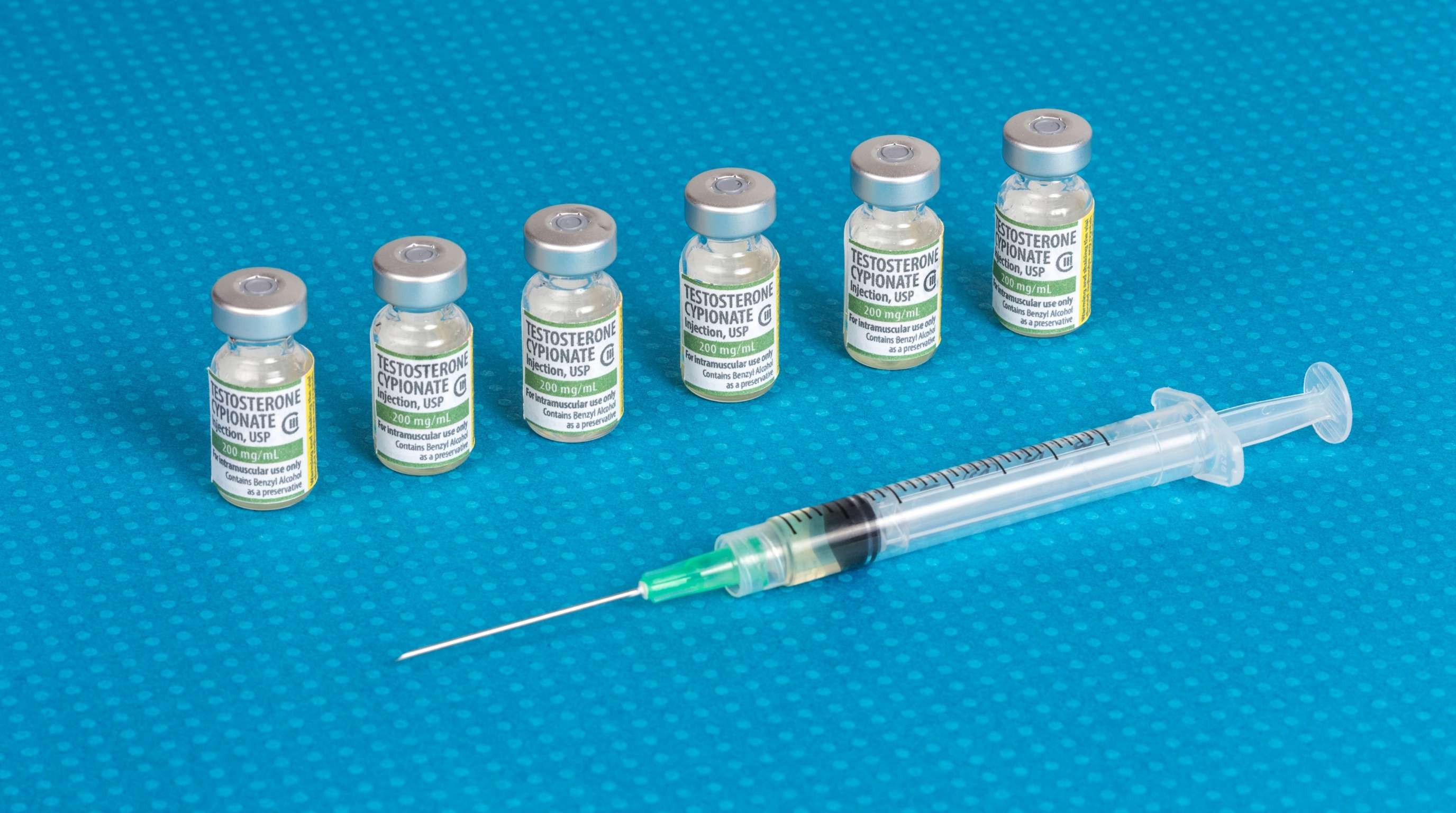
Most STD information out there was built for cisgender people having heterosexual sex. Even the guidelines that try to include LGBTQ+ people tend to center cisgender gay men or transgender women. If you're transmasculine, nonbinary, or anyone else on testosterone GAHT, you're working with a body that standard sexual health frameworks weren't designed around, and that gap has real consequences for how infections get detected, how symptoms get interpreted, and whether your test is giving you an accurate result. This article fixes that.
STD testing on testosterone isn't complicated once you understand what T does to your body's tissues and chemistry. The short version: testosterone changes the biology of the vagina and front hole in ways that alter both how STD symptoms show up and how reliably certain tests detect infections. A urine test that works fine for a cisgender woman can miss infections in someone on testosterone. Symptoms that look like an STD can be something else entirely, and symptoms that feel like normal T side effects can quietly be an infection. Here's what changes, what doesn't, and how to make sure you're getting tested correctly.
Key Takeaways
- Urine STD tests miss more chlamydia and gonorrhea than vaginal swabs do, and they don't detect rectal or throat infections at all. Anatomy-based, site-specific sampling matters more on testosterone than on a default cisgender panel.
- Window periods don't change on testosterone; pathogen biology sets when infections become detectable, not your hormone levels. Because T can mute the usual symptom signals, regular scheduled testing beats waiting for something to feel wrong.
What Testosterone Does to the Tissue That STDs Infect
Testosterone suppresses estrogen. That's a core part of how it works for gender-affirming hormone therapy. But estrogen isn't just responsible for feminine characteristics; it's also what keeps vaginal and cervical tissue thick, lubricated, and populated with the protective Lactobacillus bacteria that maintain a healthy pH. When estrogen drops, those tissues change significantly, and those changes matter a lot for STD risk and testing accuracy. If you've ever wondered why gender-affirming care and STD testing so rarely get discussed together, this biology is where the conversation should start.
The condition is called vaginal atrophy, and it's common in people on testosterone GAHT. The vaginal walls, which are normally 20 to 40+ layers of cells thick, can thin down to just a few layers. The tissue becomes drier, more fragile, and easier to abrade during sex, even gentle sex. The CDC's STI treatment guidelines for transgender patients are explicit that the precise impact of testosterone-induced hormonal changes on mucosal susceptibility to HIV and STIs remains unresolved. What is established is the physical mechanism: estrogen withdrawal thins the vaginal epithelium, making tissue drier and more prone to micro-abrasions during sex, the kind of entry points that HIV, herpes, chlamydia, and gonorrhea exploit.
Beyond the tissue itself, testosterone changes the vaginal microbiome. In cisgender women, Lactobacillus bacteria dominate and keep the vaginal environment acidic, which creates a hostile environment for pathogens. In people on testosterone, that Lactobacillus dominance collapses. A 2024 study published in Frontiers in Reproductive Health found that 89% of transmasculine participants had vaginal microbiomes that were not Lactobacillus-dominant, compared to 100% of cisgender women in the control group. That pH shift makes the environment more hospitable to bacterial vaginosis, yeast infections, UTIs, and STIs.
1. Vaginal atrophy. Estrogen withdrawal thins the vaginal wall from 20 to 40+ cell layers down to a few, making tissue drier and easier to abrade during sex.
2. Lactobacillus depletion. The protective bacterial layer that keeps pH acidic collapses, opening the door to BV and reducing chemical resistance to pathogens.
Both effects compound: more entry points for infection, plus a less hospitable sample environment when a swab test is run on that tissue.
Does Testosterone Make STD Symptoms Look Different?
This is the question that keeps people up at night, Googling at 2am after a new partner. The honest answer is: yes, testosterone changes the symptom landscape in ways that make STDs harder to self-identify, and in ways that make them easier to accidentally dismiss as HRT side effects. Burning when peeing on testosterone, for example, can be vaginal atrophy irritating the urethra, a UTI, or it can be chlamydia or gonorrhea. Telling apart a UTI from an STD is genuinely tricky for anyone; on testosterone, that distinction gets even murkier. Discharge on testosterone changes in character from what it would be pre-T, which means spotting an unusual discharge requires knowing what your new baseline is.
Itching and dryness on T HRT are common as atrophy develops, usually months or years into testosterone use. But those same symptoms, in different intensities or combined with odor, discharge, or sores, can indicate trichomoniasis, BV, or herpes. The overlap between "this is just my body on T" and "this is an infection" is significant enough that guessing almost never works. Someone who has been on testosterone for two years and develops new vaginal discomfort might reasonably assume it's just the atrophy progressing. Sometimes they'd be right. Sometimes they'd be sitting on an untreated gonorrhea infection while their body absorbs the consequences. Knowing how to read a burning sensation is one of the most underrated sexual health skills, especially on T, where the usual signals are muffled.
The flip side is also true: some classic STD symptoms become less pronounced on testosterone. Vaginal discharge that would be clearly abnormal in a cisgender woman might be subtle enough on T to miss, particularly because the baseline is already shifted. Understanding what counts as a meaningful change in discharge matters for anyone with a front hole, but on testosterone, the goalposts move. Chlamydia symptoms in trans men may present more mildly or asymptomatically because the hormonal environment is different. Asymptomatic STDs are more dangerous than most people assume, and STI symptoms in AFAB people on T are genuinely understudied.
| Symptom | Could Be T/Atrophy | Could Signal STD | Key Differentiator |
|---|---|---|---|
| Vaginal dryness | Yes, very common | Less likely alone | Atrophy is gradual; sudden onset warrants testing |
| Burning when peeing | Yes, urethral irritation | Chlamydia, gonorrhea, UTI | Discharge or odor alongside it shifts suspicion |
| Unusual discharge | Baseline shifts on T | Chlamydia, gonorrhea, BV, trich | Color, odor, or volume change from your new normal |
| Itching or irritation | Atrophic tissue reaction | Herpes, trich, BV | Sores, blisters, or fishy odor changes the picture |
| Pelvic discomfort | Possible from atrophy | PID from untreated chlamydia/gonorrhea | Severity and fever suggest infection |
| Sores or lesions | Friction abrasions from dry tissue | Herpes, syphilis | Location, cluster pattern, and pain profile matter |
Why the Standard STD Test Might Miss Infections in People on Testosterone
Here's the part that most clinics don't explain clearly: the type of test matters, and the standard protocol wasn't built around anatomy that's been hormonally altered by testosterone. The default STD screen at most clinics involves a urine sample for chlamydia and gonorrhea. The CDC's STI treatment guidelines for transgender and gender-diverse persons recommend anatomy-based, site-specific sampling rather than defaulting to urogenital urine. For people with a front hole, a vaginal or cervical swab is generally preferred over urine for chlamydia detection. For someone on testosterone with atrophic tissue, the case for swab over urine compounds further.
Testosterone-induced atrophy changes the cellular makeup of the tissue that swab tests are sampling. The 2024 Frontiers in Reproductive Health study found that transmasculine patients had rates of unsatisfactory cytology results of 16%, compared to just 2% in cisgender women and atrophic cisgender women combined. That's a significant proportion of tests coming back inconclusive or unusable because the tissue samples aren't giving the lab what it needs. The same study reported that Lactobacillus bacteria were substantially decreased in 89% of transmasculine participants' samples, a shift that directly affects how the vaginal environment reads on diagnostic tests. At-home testing has become a practical option for trans and nonbinary people partly because it puts control over sample type and timing back in your hands.
Site-specific screening matters just as much as sample type. If you're having receptive anal sex, a urine test or vaginal swab won't detect gonorrhea or chlamydia in the rectum. If you're having oral sex, throat swabs matter. The CDC explicitly recommends anatomy-based, site-specific screening for transgender and gender-diverse people, meaning the test should reflect where exposure happened, not just default to urogenital samples. A meaningful share of extragenital gonorrhea and chlamydia infections are missed when urine is the only sample collected, especially in people whose sexual practices include receptive anal or oral exposure. For someone on testosterone already dealing with reduced sample quality at the genital site, skipping extragenital testing is a significant oversight.

BV vs. STD on Testosterone, Getting the Diagnosis Right
Bacterial vaginosis is not an STD, but it sits in the same symptom neighborhood and gets dramatically underdiagnosed in transmasculine patients on testosterone. This matters because BV can be mistaken for an STD, and STDs can be mistaken for BV, and the treatments are completely different. Getting the wrong one diagnosed, or missing both, has real consequences. The myths around BV and STIs are worth unpacking because a lot of people on T are navigating this confusion without much clinical support. And here's the uncomfortable data point: according to the 2024 Frontiers study, transmasculine patients received BV testing at a rate of just 1.9% compared to 17.3% for cisgender women, even after controlling for demographics. That's a near-total absence of testing for a condition that testosterone actively makes more likely.
BV becomes more common on T because testosterone dismantles Lactobacillus dominance, the bacterial layer that keeps the vaginal environment balanced. Without that protection, the pH shifts, and opportunistic bacteria fill the gap. The symptoms (discharge, odor, irritation) overlap heavily with chlamydia, gonorrhea, and trichomoniasis. BV and trichomoniasis in particular share enough symptoms that testing for both at the same time is the only reliable approach. Someone who goes in reporting those symptoms and isn't asked about their testosterone use, or whose provider doesn't flag it as relevant, might walk out with the wrong working assumption about what's going on.
On testosterone, the differential diagnosis for discharge, odor, or irritation is wider than it would be for someone not on HRT. BV, yeast infection, trichomoniasis, chlamydia, and gonorrhea can all look similar from the outside. Testing is the only way to know which one you're dealing with, and making sure your provider is testing for all of the relevant possibilities, not just the one that fits a cisgender screening template. Hormonal changes and STD symptoms interact in ways that most standard care protocols weren't built to handle, much like hormonal contraceptives can shift the picture for herpes outbreaks.
Discharge change, odor, or pelvic irritation in someone on testosterone could be:
- Bacterial vaginosis (most likely on T due to microbiome shift)
- Trichomoniasis (parasitic STI, treatable with metronidazole)
- Chlamydia or gonorrhea (bacterial STI, antibiotic-treatable)
- A yeast infection (fungal, antifungal-treatable)
Symptom appearance alone cannot reliably distinguish them. A combined STD panel plus a BV test (vaginal pH, wet mount, or Amsel criteria) covers the realistic differential.
STD Testing on Testosterone: Which Tests Work, and When to Take Them
This section answers the practical question. For most STDs, accurate testing is entirely possible on testosterone; the key is knowing which test to use, where to sample from, and when to test after exposure. At-home rapid STD testing has become a genuinely good option for transmasculine people precisely because it removes the barrier of explaining your anatomy and hormone history to a clinician before they order the right tests. Knowing when to test after an exposure is the first decision, and getting it wrong means getting a false negative even if the test itself is technically accurate.
For chlamydia and gonorrhea, the gold-standard laboratory test uses nucleic acid amplification (NAAT) technology, which amplifies bacterial DNA and can detect even small quantities of infection. A 2025 peer-reviewed update on STI testing and treatment emphasizes the importance of site-specific sampling for accurate NAAT detection. For genital infections, a vaginal swab generally outperforms urine for people with a front hole. For people who've had receptive anal or oral sex, rectal and throat swabs matter independently. At-home rapid tests use lateral-flow chemistry on the same sample sites (swab for chlamydia, gonorrhea, trich, HPV; fingerstick blood for HIV, syphilis, hepatitis B, hepatitis C, herpes antibodies). A positive screening result is worth confirming with a lab NAAT when possible. Blood-based tests are unaffected by testosterone; the hormone doesn't interfere with blood draw accuracy. If you've had any uncertainty about what a false positive or false negative means for your results, that's worth understanding before you test.
Timing matters as much as test type. Testing immediately after exposure almost always produces a false negative; the infection simply hasn't established itself at detectable levels yet. The test works; the timing is the problem. Every STD has a window period, and on testosterone, those windows don't change. The biology of the pathogen determines the window, not your hormone levels. Here are the figures to use when planning your testing.
| Infection | Test From | Notes for People on T |
|---|---|---|
| Chlamydia | 14 days after exposure | Vaginal swab preferred over urine; site-specific testing if anal or oral exposure |
| Gonorrhea | 3 weeks after exposure | High miss rate with urine alone; rectal/throat swabs needed if applicable |
| Syphilis | 6 weeks after exposure | Blood test; unaffected by testosterone |
| HIV | 6 weeks (first indicator); retest at 12 weeks for certainty | Blood test; atrophic tissue increases micro-abrasion risk, testing is especially important |
| Herpes HSV-1 & HSV-2 | 6 weeks after exposure | Blood antibody test; sores may be confused with friction abrasions from atrophic tissue |
| Hepatitis B | 6 weeks after exposure | Blood test; unaffected by testosterone |
| Hepatitis C | 8 to 11 weeks after exposure | Blood test; unaffected by testosterone |
At-Home Testing Options for People on Testosterone
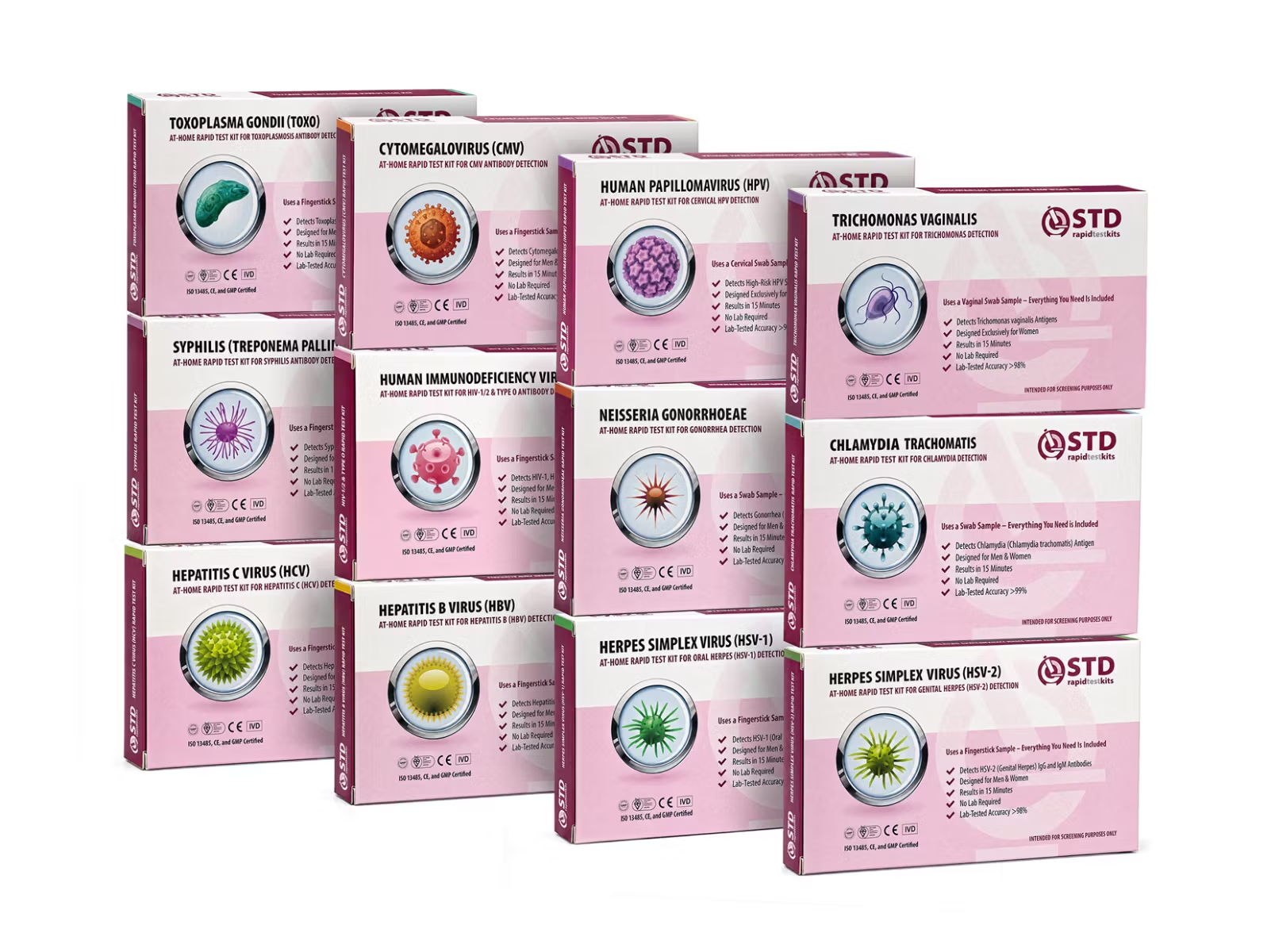
The kits below are sold by this site. They're recommended here because they cover the testing scenarios described in this article, not as a replacement for clinical evaluation when symptoms are present or a positive result needs confirming. For transmasculine people who want comprehensive at-home testing without navigating a clinic appointment, the 7-in-1 Complete At-Home STD Test Kit covers HSV-2, chlamydia, gonorrhea, syphilis, HIV, hepatitis B, and hepatitis C, the full bacterial and viral spread most relevant for sexually active people on T. If you're a person with a front hole who wants coverage for trichomoniasis and HPV as well, the 10-in-1 Complete At-Home STD Test Kit covers all ten of the most common STDs. A note on scope: the 10-in-1 panel's trichomoniasis and HPV components are validated for vaginal self-swab sampling, so they fit people on T who retain a front hole.
How Often Should You Get Tested for STDs on Testosterone?
STD testing frequency on testosterone should follow the same logic as for any sexually active person, with a few additional considerations specific to your anatomy and the tissue changes T produces. General framework from sexual health guidelines: at minimum once a year if you're sexually active with new or multiple partners, every three to six months if you're having sex with partners from higher-transmission networks, and as soon as the window period allows after any exposure that felt risky. The relationship between untreated STDs and HIV transmission risk is another reason consistent testing matters; each undetected bacterial STI creates additional vulnerability at the mucosal level.
Testing more often on T follows directly from the atrophy biology above: vaginal atrophy increases susceptibility to micro-abrasions during sex, which creates more transmission opportunity per encounter than would exist with intact, well-lubricated tissue. Atrophy-related micro-abrasion risk is manageable; consistent lube use reduces it significantly. What that biology does mean is that routine testing every three months makes more sense than waiting for symptoms. Someone who waits for symptoms to test is working against biology that has made symptoms less reliable as an early warning system. STD stigma in LGBTQ+ communities pushes people toward waiting until something is clearly wrong, which, on testosterone, often means waiting too long.
Testing frequency should reflect your actual sex life, not an idealized version of it. If you're regularly having sex with new partners, every three months is a reasonable baseline. If you're in a long-term monogamous situation with a tested partner, annual testing is likely sufficient. What matters is that testing happens on a predictable schedule, as a baseline expectation of taking care of yourself rather than as a reaction to worry.
How often to test, by situation
- Annual baseline: long-term monogamous partnership with both partners tested at the start.
- Every 3 to 6 months: multiple partners, new partners, or partners from higher-transmission networks.
- As soon as the window allows: after any specific exposure that felt risky.
Talking to Providers About STD Testing When You're on Testosterone
One of the most consistent frustrations in transmasculine sexual health is the clinical encounter that doesn't quite fit. Standing in a clinic explaining that yes, you have a front hole, yes, you're on testosterone, yes, you need to be tested for STDs, and then watching a provider work out in real time what panel to order, that experience is common enough that it shapes whether people get tested at all. STD testing frequency among transmasculine people is lower than it should be, in part because accessing affirming, anatomy-competent care creates enough friction that people avoid it. The gap between gender-affirming care and comprehensive sexual health care is well-documented, and it has real consequences for infection rates in this community.
What helps most is coming in with specific requests rather than relying on the clinic's default template. Ask explicitly for site-specific screening based on your actual sexual behaviors, which means naming the sites. If you've had receptive anal sex, say so and ask for a rectal swab for chlamydia and gonorrhea. If you've had oral sex, ask about throat swabs. If you have a front hole and have had penetrative sex involving it, request a vaginal swab rather than defaulting to urine. The CDC recommends anatomy-based, behavior-based screening for transgender patients specifically because the one-size-fits-all panel misses infections for this population.
It's also worth flagging your testosterone use explicitly when discussing any symptoms. A provider who doesn't know you're on T may interpret discharge or irritation through a cisgender framework and get the differential diagnosis wrong. The interaction between HRT and symptom presentation is specific enough that it changes the clinical picture; your provider needs that information to work accurately.
What Happens If an STD Goes Undetected on Testosterone?
This is the part worth being direct about, because the consequences of missed STD diagnoses are real regardless of whether you're on testosterone or not, and the testing gaps that exist for transmasculine people mean undetected infections happen more often than they should. Untreated gonorrhea is one of the clearest examples of how an asymptomatic infection becomes a serious health problem; it can lead to pelvic inflammatory disease (PID), an infection of the uterus and fallopian tubes that causes significant pain and can result in fertility complications. This remains relevant for people on testosterone who retain their reproductive anatomy, even if periods have stopped. Testosterone doesn't protect against PID; it just changes some of the symptom context around it.
Untreated chlamydia carries similar risks through the same PID pathway, and most chlamydia infections produce no symptoms at all, meaning the absence of obvious signs tells you nothing about whether you're infected. Syphilis, if caught late, moves through stages that become progressively harder to treat and can eventually affect the nervous system and cardiovascular system. The CDC's 2024 provisional STI data noted that over 2.2 million cases of chlamydia, gonorrhea, and syphilis were reported in the US, a total that remains 13% higher than a decade ago, which means these infections aren't rare occurrences in any community, including transmasculine communities.
The CDC's STI Treatment Guidelines for Transgender and Gender Diverse Persons call for adapting screening recommendations on the basis of patient anatomy and reported sexual behaviors, including all anatomic sites of exposure. The practical translation: a transmasculine patient who has had receptive anal or oral sex needs rectal and throat swabs in addition to whatever genital sampling fits their anatomy.
At-Home STD Testing for People on Testosterone
If navigating clinic visits to explain your anatomy and hormone history feels like too much friction to make testing happen consistently, at-home rapid testing removes that barrier entirely. You're in control of the timing, the process, and the results: no waiting rooms, no providers working out in real time what panel to order for your body. For transmasculine, nonbinary, and gender-diverse people, that removal of friction translates directly into more regular testing, which translates directly into earlier detection and better outcomes.
The 7-in-1 Complete At-Home STD Test Kit is the brief primary recommendation if you don't need trichomoniasis or HPV coverage; see the kit comparison table below if you do. A positive screening result on any rapid test is worth confirming with a clinical lab NAAT, but a rapid test on your schedule beats a delayed clinic visit you keep putting off.
Testing is a health decision in the same category as bloodwork for your T levels, not a confession or a statement about how you've been living. Browse the full range of testing options at STD Rapid Test Kits and find the panel that matches your anatomy, your sexual behaviors, and your timeline.
| 7-in-1 Kit | 10-in-1 Kit | |
|---|---|---|
| HSV-2 | Yes | Yes |
| Chlamydia, Gonorrhea | Yes | Yes |
| Syphilis, HIV, Hep B, Hep C | Yes | Yes |
| HSV-1 | No | Yes |
| Trichomoniasis, HPV | No | Yes (vaginal-swab validated) |
| Sample types | Swab + fingerstick blood | Swab + fingerstick blood |
| Gender scope | Any genital anatomy | Validated for vaginal anatomy |
FAQs
- Does testosterone affect STD test accuracy or cause false negatives?
- Yes, in two specific ways. First, vaginal atrophy reduces sample quality for swab tests, and testosterone shifts the vaginal microbiome in ways that affect how local samples read. Second, the hormone itself doesn't interfere with the chemistry of an STD test; what causes false negatives is testing too early (before the window period), using the wrong sample site, or getting a low-quality sample because atrophic tissue didn't yield enough usable cells. Blood-based tests for HIV, syphilis, and the hepatitises are unaffected. The biggest practical fix is site-specific sampling: vaginal swab if you have a front hole, plus rectal and throat swabs for the sites your sex life involves.
- Can a urine STD test miss infections if I'm on testosterone?
- It can, and this is one of the most important things to understand about STD testing on T. Urine tests detect chlamydia and gonorrhea at the urogenital site only, and they can miss rectal or throat infections entirely if those sites were exposed. Vaginal swabs are generally preferred over urine for people with a front hole. If you have a front hole and have had penetrative sex involving it, request a vaginal swab. If you've had anal or oral sex, make sure those sites are swabbed separately.
- What does gonorrhea discharge look like on testosterone?
- That's genuinely hard to answer with certainty, because discharge on testosterone already looks different from pre-T baseline; it tends to be drier, thinner, or less present. Gonorrhea discharge is typically yellow or green and may be accompanied by a burning sensation when peeing. The overlap with normal T side effects is real enough that you can't reliably self-diagnose from discharge appearance alone. If something changed from your normal, test for it 3 weeks after potential exposure.
- Is this discharge BV or an STD? How do I tell on testosterone?
- You can't reliably tell the difference from symptoms alone, especially on T. BV, chlamydia, gonorrhea, and trichomoniasis can all produce discharge changes and irritation. Testosterone increases susceptibility to BV specifically because it disrupts the Lactobacillus-dominant microbiome. The only reliable way to know is to test for all of them. A combined STD panel plus a BV test covers the realistic differential.
- How soon after sex can I test for chlamydia on T?
- Fourteen days post-exposure is the earliest reliable test date. Before that, chlamydia has not yet reached detectable levels regardless of test quality. If you get a negative result at day 14 and remain concerned, a follow-up test at three weeks confirms it. The two-week floor is set by pathogen biology and applies whether or not you are on testosterone.
- Does testosterone increase the risk of getting HIV?
- Testosterone doesn't directly suppress immune function in a way that raises HIV risk, but vaginal atrophy (a direct effect of T) creates tissue fragility and micro-abrasions during sex that make transmission easier at the mucosal level. That's a physical, not immunological, vulnerability. Using lubrication, which reduces friction and micro-abrasions, is a practical harm-reduction strategy. Testing for HIV from 6 weeks after potential exposure (with a retest at 12 weeks for certainty) is the right move if you had an exposure you're concerned about.
- Do STD testing windows change when you're on testosterone?
- No, the window periods are determined by the biology of the pathogen, not by your hormone levels. Chlamydia is detectable from 14 days, gonorrhea from 3 weeks, syphilis from 6 weeks, HIV from 6 weeks (with a 12-week confirmatory test), herpes from 6 weeks, hepatitis B from 6 weeks, and hepatitis C from 8 to 11 weeks. These don't change based on whether you're on T.
- Can you get trichomoniasis on testosterone?
- Yes. Trichomoniasis is caused by a parasite that infects the urogenital tract, and testosterone doesn't prevent infection. The symptom picture may be altered; discharge and irritation that would be distinctive in a cisgender woman might be subtler on T, which is one more reason to test rather than symptom-watch. The Women's 10-in-1 Test Kit includes trichomoniasis for people who retain a front hole.
- I'm on testosterone and had unprotected sex. What test should I take?
- The answer depends on what kind of sex you had and what sites were exposed. For penetrative frontal sex: vaginal swab for chlamydia and gonorrhea, blood test for syphilis, HIV, hepatitis B, and hepatitis C. For receptive anal sex: add a rectal swab. For oral sex: add a throat swab. Time the test to the right window period for each infection.
Our article was constructed based on current advice from the most prominent public health and medical organizations, and then molded into simple language based on the situations that people actually experience, such as treatment, reinfection by a partner, no-symptom exposure, and the uncomfortable question of whether it "came back." In the background, our pool of research included more diverse public health advice, clinical advice, and medical references, but the following are the most pertinent and useful for readers who want to verify our claims for themselves.
- U.S. Centers for Disease Control and Prevention. STI Treatment Guidelines: Transgender and Gender Diverse Persons. Source for anatomy-based, site-specific screening recommendations and the explicit CDC statement that the impact of GAHT-induced hormonal changes on mucosal susceptibility to HIV and STIs remains unresolved.
- Frontiers in Reproductive Health (2024). Cervicovaginal cytology, microbiome, and BV testing gaps in transmasculine patients on testosterone. Source for the 89% non-Lactobacillus-dominant microbiome figure, the 16% vs 2% unsatisfactory cytology rates, and the BV testing disparity (1.9% vs 17.3%).
- PMC / American Journal of Obstetrics & Gynecology (2023). Testosterone use and sexual function among transgender men. Background reference on testosterone GAHT effects on genital tissue and sexual function.
- U.S. Centers for Disease Control and Prevention (2024). National STI Surveillance Data (Provisional). Source for the 2.2 million reported cases of chlamydia, gonorrhea, and syphilis and the decade-over-decade increase.
- PMC (2025). Updates on testing, treatment, and prevention of STIs in the United States. Reference for general NAAT testing standards and the case for anatomy-based sampling over urine specimens.
- San Francisco AIDS Foundation. Gynecologic and Vaginal Care for Trans Men (Q&A). Practical guidance reference for vaginal care, atrophy management, and screening conversations.
