Penile Discharge and STDs: What It Means and How Fast It Appears
Penile discharge is one of the earliest signs that something is off, and most men who notice it are dealing with a sexually transmitted infection like chlamydia or gonorrhea. The color, timing, and other symptoms paired with it give useful clues about the cause. Here is what to watch for, what is harmless, and how to test fast without leaving the house.




- Chlamydia and gonorrhea cause most cases of unusual penile discharge, and both can be confirmed at home with a urethral swab test in about 15 minutes.
- Untreated bacterial STIs spread silently to partners and can cause epididymitis or fertility problems, so testing within a week of symptoms appearing is the standard advice.
Published: September 2025 | Last updated: May 2026 | Editorial review and quality control: Martina N.
Penile discharge is any fluid that leaves the urethra outside of normal urination, pre-ejaculate, or semen. Some of it is built into how the body works: pre-ejaculate during arousal, semen at orgasm, and the buildup of dead skin and moisture called smegma that collects under the foreskin. The rest is your body telling you that something has changed. The hard part is sorting which is which without panicking, and without ignoring a real infection.
Most cases of unusual discharge trace back to chlamydia or gonorrhea, and both can cause symptoms within days to a few weeks of exposure. This guide walks through what is normal, what is not, which infections are most often responsible, how the timing usually plays out, and what to do next.
Key takeaways
- Chlamydia and gonorrhea cause most cases of unusual penile discharge, and both can be confirmed at home with a urethral swab test in about 15 minutes.
- Untreated bacterial STIs spread silently to partners and can cause epididymitis or fertility problems, so testing within a week of symptoms appearing is the standard advice.
What counts as normal penile discharge
Three types of fluid are completely expected. Pre-ejaculate, also called pre-cum, is the clear, slightly slippery fluid produced by the Cowper's glands during sexual arousal. It lubricates the urethra and helps neutralize any leftover acidity from urine before sperm pass through. Pre-ejaculate is alkaline, thin, transparent, and shows up only in small amounts. Studies have found small amounts of motile sperm in some men's pre-ejaculate, which is one reason withdrawal is not a reliable form of contraception.
Semen is the cloudy white-to-gray fluid released during ejaculation. Sperm cells produced in the testes make up only about one to five percent of semen by volume. The rest is fluid from the seminal vesicles, prostate, and bulbourethral glands, which together provide the energy, pH buffering, and motility support that sperm need after leaving the body. Color can range from off-white to slightly yellow or gray depending on hydration, diet, and how often you ejaculate. A persistent yellow or green tinge, however, deserves a clinical look.
Smegma is the third. It is a whitish, paste-like buildup of dead skin cells and natural skin oils that collects under the foreskin in uncircumcised men when the area is not regularly washed. Smegma itself does not cause infection. Trapped moisture and bacteria underneath can lead to balanitis, an irritation that is treatable and does need attention. Daily gentle cleaning with warm water under a retracted foreskin clears it.
Anything else that comes out of the urethra outside of urination, pre-ejaculate, or ejaculation is worth investigating. That includes any fluid that appears at rest, leaves a stain on underwear, has a strong odor, looks yellow or green, or is paired with discomfort. The presence of pus, even small amounts, is a strong indicator of a bacterial infection.
Pre-ejaculate: clear, thin, and slippery, only during sexual arousal, in small amounts. Semen: cloudy white during ejaculation, sometimes off-white or slightly gray. Smegma: whitish buildup under the foreskin in uncircumcised men, cleared with daily washing. Anything outside these three patterns, especially if it appears at rest or with burning, itching, or odor, is worth testing.
Signs your discharge is not normal
Abnormal discharge usually announces itself by breaking at least one of three patterns: timing, appearance, or accompanying symptoms.
Timing. Normal fluids appear with arousal, orgasm, or after several days of foreskin neglect. Discharge that shows up randomly during the day, on your underwear in the morning when there has been no sexual activity, or during urination is not normal.
Appearance. Color shifts toward yellow, green, or pus-like cloudy white. Texture moves from slippery and clear to thick, opaque, or stringy. Odor becomes noticeable through clothing.
Other symptoms. Burning during urination is the single most common companion symptom of STI-related discharge. Other signals include pain in one testicle, a feeling of pressure or fullness at the base of the penis, redness or swelling at the tip, and an itchy feeling deep inside the urethra. Fever and lower-back pain suggest the infection has moved up toward the bladder or kidneys and need same-day medical attention.
If two of these three patterns are present together, a test is warranted. The cost of testing early is small. The cost of letting an untreated chlamydia or gonorrhea infection sit for months is real: epididymitis, reduced fertility, and ongoing transmission to partners.
Fever above 100.4 degrees Fahrenheit (38 degrees Celsius), lower-back or flank pain, blood in urine or semen, testicular swelling or severe pelvic pain, or a non-healing sore on the penis warrant urgent care rather than at-home testing. So does any symptom that persists beyond a week of antibiotic treatment, which usually points to reinfection, a missed second pathogen, or resistance.
When penile discharge points to a sexually transmitted infection
Four pathogens account for nearly all cases of STI-related penile discharge in the United States and the United Kingdom. Each one has a distinctive pattern. The patterns overlap enough that you cannot reliably tell them apart by appearance alone, and testing is the only way to confirm the cause.
Gonorrhea
Gonorrhea, caused by the bacterium Neisseria gonorrhoeae, produces the most dramatic discharge. The fluid is typically thick, yellow to greenish-yellow, and pus-like. It often shows up at the tip of the penis without provocation, sometimes leaving a visible stain on underwear. Burning during urination is almost always present, and the urge to urinate may feel more frequent than usual. The NHS gonorrhoea guidance states that symptoms usually start around 2 weeks after infection, although they sometimes do not appear until many months later. The CDC notes that gonorrhea often produces no symptoms at all, so some cases in men are only picked up through screening or after a partner's diagnosis.
Chlamydia
Chlamydia, caused by Chlamydia trachomatis, produces a more variable discharge: clear, milky white, watery, or sometimes light yellow. The volume is usually smaller than with gonorrhea, and the discharge may only appear in the morning or after a long stretch without urination. Burning during urination, urethral itching, and a sense of pressure or discomfort at the tip of the penis are common. The NHS chlamydia guidance notes that symptoms can start anywhere from 1 week to several months after infection, and the CDC's chlamydia fact sheet notes that most people with chlamydia have no symptoms at all. Annual chlamydia screening is recommended by the CDC for men who have sex with men; for any man, testing is advisable after an unprotected exposure with a new or unknown-status partner.
Mycoplasma genitalium
Mycoplasma genitalium, often shortened to Mgen, is a smaller and less commonly tested bacterium that causes a stubborn form of urethritis in men. The discharge tends to be clear or slightly cloudy, scant, and intermittent. Burning is mild but persistent. The CDC's Mgen guidance describes it as an emerging STI that frequently goes undiagnosed because routine STI panels do not always include it. In clinical practice, most cases are picked up after a chlamydia test comes back negative and symptoms persist (non-gonococcal urethritis).
Trichomoniasis
Trichomoniasis is caused by Trichomonas vaginalis, a single-celled parasite. In men, it produces a thin, milky or yellowish discharge with mild burning during urination. Symptoms in men are usually less obvious than in women, and many men carry the infection without symptoms while still passing it to partners. The CDC's trichomoniasis fact sheet notes that infection is more common in women than in men, and that men can transmit it just as readily.
Other STIs occasionally cause discharge in men. Primary syphilis can produce a painless chancre inside the urethra. Active herpes simplex lesions on the urethral meatus can produce discharge during outbreaks. Mpox produced urethral lesions in some men during the 2022 outbreak. These are uncommon presentations, and worth raising with a clinician if the standard chlamydia and gonorrhea workup is negative and discharge persists.
One scope note: our at-home trichomoniasis swab kit is validated for vaginal self-collection only, so men who suspect trich should ask a clinic for a urine NAAT or a urethral swab. Our 7-in-1 panel covers chlamydia, gonorrhea, and four blood-based STIs, which is the right home-test fit for most men with new urethral symptoms.
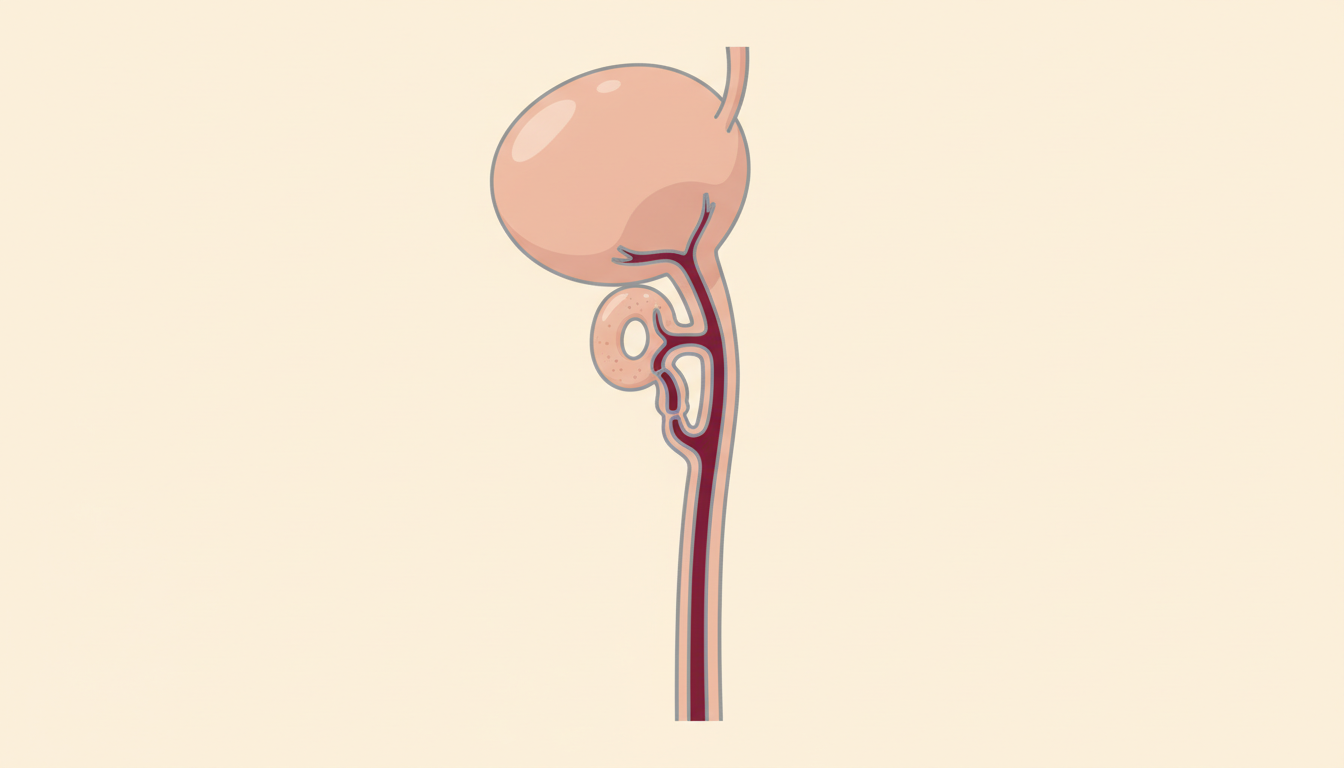
Non-STI causes of penile discharge
Not every case of unusual discharge is sexually transmitted. Several non-STI conditions can produce similar fluid and similar discomfort, which is part of why testing matters before assuming the worst.
Urinary tract infections. UTIs in men are less common than in women but do happen, particularly in older men, those with an enlarged prostate, or those who use catheters. UTI-related discharge is usually paired with cloudy or pink-tinged urine, a frequent urge to urinate, and burning that sits more in the bladder than at the urethral tip (MedlinePlus on UTI in men). Fever and lower-back pain point toward kidney involvement and need urgent care.
Prostatitis. Inflammation of the prostate gland can cause a milky discharge along with pelvic pain, painful ejaculation, and a feeling of pressure between the scrotum and anus. Acute bacterial prostatitis is a medical emergency. Chronic prostatitis can persist for months and often has no clear bacterial cause.
Balanitis. Inflammation of the head of the penis and the inside of the foreskin can produce a discharge that resembles trapped smegma; the fluid is actually inflammatory. The NHS balanitis guidance lists thrush (Candida), skin irritation from soaps or condoms, poor hygiene, phimosis, and uncontrolled diabetes among the common causes. Mild balanitis often responds to careful washing and an over-the-counter antifungal; recurrent or severe cases need a clinical evaluation that usually includes STI testing.
Non-gonococcal urethritis (NGU). When chlamydia and gonorrhea both come back negative, the diagnosis is NGU. Common culprits include Mycoplasma genitalium, Ureaplasma urealyticum, herpes simplex, and Epstein-Barr virus. MedlinePlus on urethritis notes that NGU presents with discharge from the penis and burning during urination, often indistinguishable from chlamydia at the bedside.
Far less commonly, cancers of the urethra or penis can present with bloody or pus-tinged discharge. These are rare and almost always paired with other warning signs such as a non-healing sore, persistent lump, or unexplained weight loss. They are mentioned for completeness, not to alarm: bacterial STIs are vastly more likely.
Non-STI causes at a glance
- UTI: cloudy or pink-tinged urine, frequent urge to urinate, bladder-area burning.
- Prostatitis: pelvic pain, painful ejaculation, pressure between scrotum and anus.
- Balanitis: foreskin and glans irritation, often from Candida or skin irritation.
- NGU: chlamydia-like symptoms (discharge plus burning) with a negative chlamydia and gonorrhea test.
How quickly does discharge appear after exposure
Timing depends on the pathogen, the exposure dose, and the individual immune response. Gonorrhea is among the faster-onset infections. The NHS gonorrhoea guidance notes that symptoms usually start around 2 weeks after infection, although they sometimes do not appear until many months later. Because the bacterium replicates quickly in the urethral lining, it triggers a strong inflammatory response that produces visible discharge fast in most symptomatic cases.
Chlamydia onset is more variable. The NHS chlamydia guidance states that symptoms can start anywhere from 1 week to several months after infection. The slower and more variable onset is part of why chlamydia spreads so widely: by the time someone notices anything wrong, several weeks of unprotected contact may have already happened.
Mycoplasma genitalium typically appears in 1 to 3 weeks. Trichomoniasis sits in a similar window, with most cases showing within 1 to 4 weeks, and both can remain asymptomatic indefinitely, especially trichomoniasis in men.
For testing, the practical implication is that swab-based rapid tests can detect chlamydia and gonorrhea reliably from about day 14 after exposure, when bacterial levels in the urethra are usually high enough to register on a lateral-flow cassette. Testing earlier than that risks a false negative, even when an infection is genuinely present. If discharge appears before day 14, the discharge itself is the evidence of infection and a positive test is not strictly required to start treatment, though confirming the specific pathogen helps a clinician pick the right antibiotic.
| Cause | Discharge appearance | Onset window | Other typical symptoms |
|---|---|---|---|
| Gonorrhea | Thick, yellow to greenish, pus-like | Around 2 weeks, sometimes longer (NHS) | Strong burning during urination, frequent urination |
| Chlamydia | Clear, milky, or watery | 1 week to several months (NHS) | Mild burning, urethral itching, often no symptoms at all |
| Mycoplasma genitalium | Scant, clear or cloudy | 1 to 3 weeks | Mild burning, often persistent after chlamydia treatment fails |
| Trichomoniasis | Thin, milky or yellowish | 1 to 4 weeks | Mild urethral irritation, frequently asymptomatic in men |
What does penile discharge usually mean?
Unusual penile discharge is most often caused by a sexually transmitted infection, with chlamydia and gonorrhea responsible for the majority of cases in men. Per the NHS, gonorrhea symptoms typically appear around 2 weeks after exposure, and chlamydia from 1 week to several months. Discharge that is yellow, green, milky white, or cloudy, especially when paired with painful urination or urethral itching, points strongly to a bacterial STI. Anything outside the normal pattern of pre-ejaculate during arousal and semen at orgasm needs testing within a few days, because untreated bacterial STIs can move into the prostate, epididymis, and reproductive tract.
Normal versus abnormal discharge at a glance
These features are general rather than diagnostic. Two or more rows landing in the abnormal columns is a practical reason to test.
| Feature | Normal | Likely STI | Likely non-STI |
|---|---|---|---|
| Timing | With arousal or orgasm | Random, often noticed in the morning | Random, may follow a new product or activity |
| Color | Clear or off-white | White, yellow, or green | White or cream, sometimes blood-tinged |
| Volume | Variable, usually small | From a single drop to noticeable on underwear | Drop to small amount |
| Burning urination | No | Common | Sometimes |
| Smell | Mild or none | Often strong, sweet or sour | Often strong, yeasty or fishy |
| Testicular pain | No | Sometimes (epididymitis) | Rare |
| Onset after exposure | Not applicable | 1 week to several months for chlamydia (NHS), around 2 weeks for gonorrhea (NHS) | Hours to days after a trigger |
How to confirm what is causing the discharge
Two routes are available. A clinic visit gets you a lab-processed nucleic acid amplification test (NAAT), which the CDC describes as the gold standard for chlamydia and gonorrhea. The clinician takes a urethral swab or urine sample, and results usually return in 1 to 5 business days. Treatment is prescribed based on the result.
The home route uses a rapid lateral-flow swab test. You collect your own sample, run the test cassette, and read the result in about 15 minutes. The chemistry is different from a lab NAAT: rapid lateral-flow detects bacterial antigens directly from the swab sample, rather than amplifying genetic material the way a lab does. The two methods are complementary, not equivalent. A positive home test gives you a strong reason to start care, and a negative home test taken at the right time after exposure is reassuring without matching the analytical sensitivity of a lab NAAT.
For men with active discharge, a swab test makes sense for two reasons. First, the bacterial load in active urethral infection is high, which favors antigen detection. Second, you get answers in minutes, which means you can start the conversation with a partner and a clinician the same day rather than waiting for a lab.
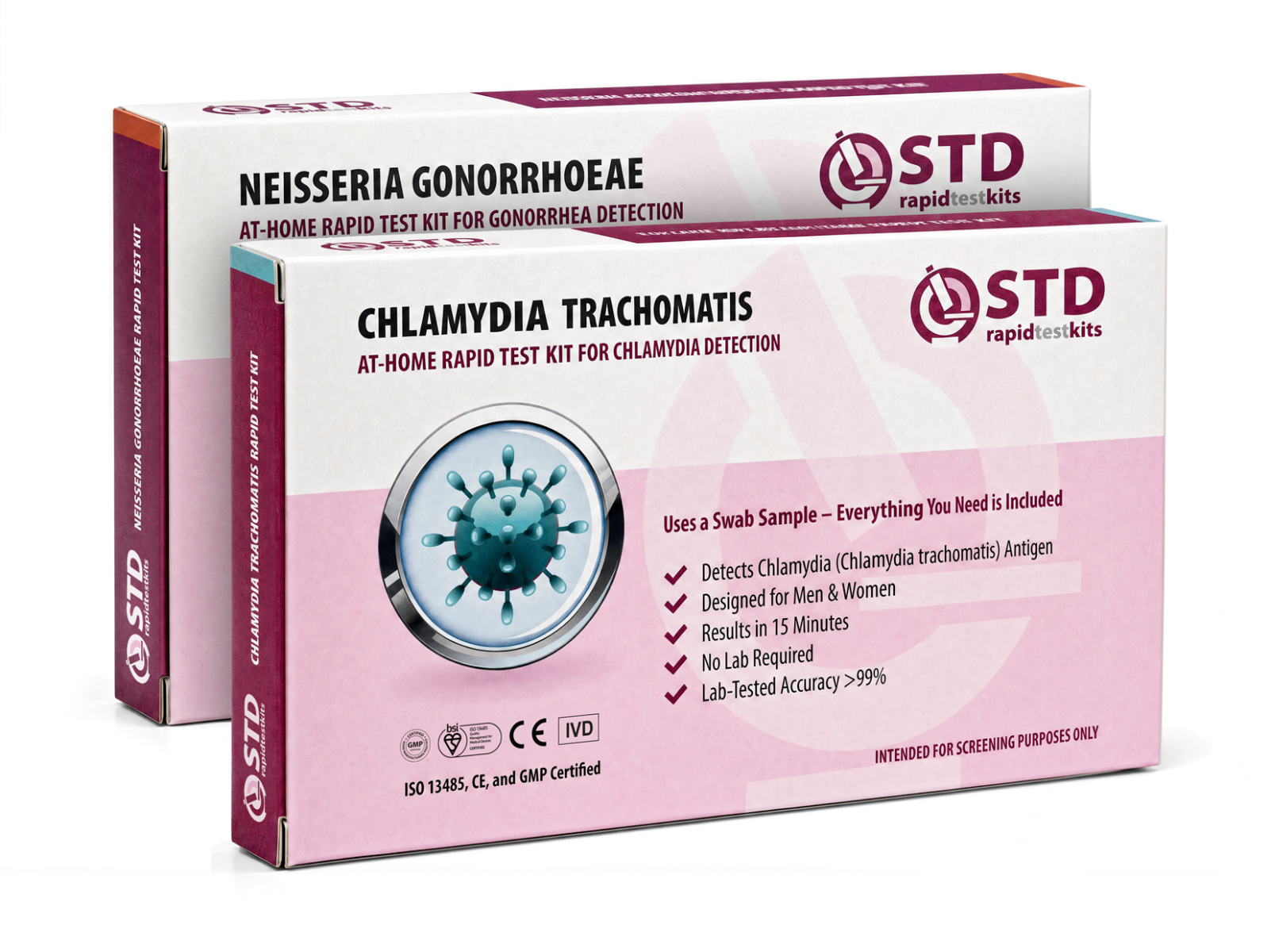
The most efficient single test is a chlamydia plus gonorrhea combination, since those two cover the majority of bacterial urethritis in men. A broader panel adds reassurance against the bloodborne STIs (HIV, syphilis, hepatitis B, hepatitis C) that may have been transmitted during the same exposure event. Window periods vary across these tests, so each kit's instructions and the CDC's testing pages are the right reference for when to test after a specific exposure. For HIV specifically, per-act transmission risk from unprotected vaginal sex is low (well below 0.1 percent per epidemiologic estimates), with unprotected receptive anal sex carrying higher per-act risk; testing after any unprotected exposure with an unknown-status partner is prudent regardless of whether STI symptoms appear.
This site sells at-home rapid STI test kits; the products linked below are available to order directly. We recommend kits based on what fits the reader's specific concern, not commercial benefit.
Treatment basics for each cause
All four STI causes of penile discharge are treatable with antibiotics, and the right antibiotic depends on the specific pathogen and on local resistance patterns. Self-treating with leftover or borrowed antibiotics is a poor idea: under-dosing breeds resistance, and the wrong antibiotic class will not clear the infection.
Gonorrhea is treated with a single intramuscular injection of ceftriaxone in current CDC STI treatment guidelines, due to widespread resistance to oral cephalosporins. Chlamydia is treated with doxycycline by mouth twice daily for seven days, which has replaced single-dose azithromycin as the preferred regimen. When both infections are present or both are suspected, both regimens are usually given together at the first visit.
Mycoplasma genitalium has become harder to treat because of antibiotic resistance. The CDC recommends a two-drug, sequential approach starting with doxycycline followed by either moxifloxacin or azithromycin, ideally guided by a resistance test if one is available.
Trichomoniasis in men is treated with metronidazole, usually a seven-day course. A single high dose is sometimes used for women and appears less reliable in men based on more recent CDC guidance.
For all of these, sexual contact should pause for at least seven days after treatment is finished, and ideally until any partner you may have exposed has also been tested and treated. Symptoms usually improve within 2 to 3 days of the right antibiotic. Persistent symptoms after a week of treatment is a reason to retest, since either reinfection or a missed second pathogen is the usual cause.
Antibiotic regimens at a glance
- Gonorrhea: single intramuscular injection of ceftriaxone.
- Chlamydia: doxycycline by mouth, twice daily for seven days.
- Mycoplasma genitalium: sequential doxycycline followed by moxifloxacin or azithromycin, ideally guided by resistance testing.
- Trichomoniasis: metronidazole, usually a seven-day course in men.
Telling partners and avoiding reinfection
This is the part most people dread, and it is also the part that protects everyone involved. Any sexual partner from the past 60 days should be told they may have been exposed and should get tested. Local public health departments in the United States offer anonymous partner-notification services that contact partners on your behalf without sharing your name, which can reduce the awkwardness considerably.
Reinfection from an untreated partner is the single most common reason a treated infection comes back. The CDC recommends retesting roughly 3 months after treatment for chlamydia and gonorrhea, regardless of whether you have symptoms, because reinfection rates are high enough that a routine recheck pays off.
Expedited partner therapy, where a clinician can prescribe treatment for your partner without seeing them, is legal in most US states for chlamydia and gonorrhea. It is worth asking about if your partner cannot easily get to a clinic.
1. Notify any sexual partner from the past 60 days so they can test and treat. 2. Ask your clinician about expedited partner therapy if your partner cannot easily get to a clinic. 3. Retest about 3 months after treatment, regardless of whether you have symptoms.
Prevention and routine screening
Consistent and correct latex condom use during vaginal, anal, and oral sex is the single most effective behavioral prevention against bacterial STIs. Condoms substantially lower transmission risk without eliminating it; some skin-to-skin transmission can still happen at the base of the penis or the perianal skin. Combined with regular testing, condoms cut transmission rates substantially across populations.
Annual STI screening is recommended by the CDC for men who have sex with men, who should test every 3 to 6 months depending on partner count. For other men, the highest-yield testing moments are before starting a new sexual relationship, before stopping condom use within a relationship, and after any unprotected exposure with a new or unknown-status partner.
Doxycycline post-exposure prophylaxis (doxy-PEP) is a newer prevention tool. A single 200 mg dose of doxycycline taken within 72 hours of unprotected sexual exposure reduces the risk of chlamydia, gonorrhea, and syphilis substantially in men who have sex with men, per emerging clinical-trial evidence. Current public-health use is concentrated in men who have sex with men; evidence for broader use in heterosexual men and women is under active study. Talk to a clinician about whether doxy-PEP is appropriate for your situation.
Chlamydia, gonorrhea, and trichomoniasis are common, treatable, and often have no symptoms. Testing is the only way to know for sure.
Frequently asked questions
- How quickly can STD discharge appear after exposure?
- For home testing, the key date is roughly 14 days after exposure for chlamydia and gonorrhea, when bacterial levels in the urethra are usually high enough for a swab test to detect. Per the NHS, gonorrhea symptoms (when they appear) typically show within that window; chlamydia can stay silent for months, which is why a retest at 3 months matters if initial results are negative but contact continued. Mycoplasma genitalium typically shows within 1 to 3 weeks and trichomoniasis between 1 and 4 weeks.
- What is the difference between chlamydia and gonorrhea discharge?
- Chlamydia discharge tends to be clearer, thinner, and milder, sometimes only a single drop in the morning. Gonorrhea discharge is usually thicker, more abundant, and more often yellow or green, paired with sharper burning during urination. The difference is suggestive yet not diagnostic, which is why both infections are tested for together. Co-infection is common.
- Can penile discharge come and go?
- Yes. Chlamydia and Mycoplasma genitalium discharge is often intermittent, sometimes only visible in the morning or after a long stretch without urinating. Discharge that disappears for a few days is not a sign that the infection has cleared. Bacterial STIs do not self-resolve, and the lull usually reflects the body holding bacterial levels temporarily lower rather than eradicating them.
- Can a UTI in a man cause penile discharge?
- Yes, though UTIs are far less common in men than in women. UTI-related discharge is usually paired with cloudy urine, a frequent urge to urinate, and burning that sits in the bladder area more than at the urethral tip. Older men, men with prostate enlargement, and men using catheters are at higher risk.
- Can I have an STD without any discharge?
- Yes, and this is common. Most men with chlamydia have no noticeable symptoms, and gonorrhea also frequently produces no symptoms in men. The absence of discharge does not rule out infection. Testing is advisable after any unprotected exposure with a new or unknown-status partner, regardless of symptoms.
- Will the discharge clear up on its own?
- Bacterial STIs do not self-resolve. The discharge may temporarily decrease as the immune response adjusts, and the infection persists and can spread to the prostate, epididymis, and reproductive tract if left untreated. Untreated chlamydia can cause epididymitis, which may affect fertility. Testing and antibiotic treatment are the only reliable paths.
- How accurate is at-home rapid testing for these causes?
- In symptomatic men where bacterial load is high, rapid antigen tests perform well. Check the specific kit's included instructions for published sensitivity figures. Lab-processed NAAT remains the reference standard for asymptomatic screening; for confirming the cause of active symptoms, a rapid swab is a fast and useful first step.
- When should I see a doctor instead of testing at home?
- Severe pain, fever above 100.4 degrees Fahrenheit (38 degrees Celsius), blood in urine or semen, testicular swelling, or symptoms that persist beyond a week of antibiotics all need clinical evaluation. Anyone who tests positive at home still needs a prescription for the right antibiotic, so a clinician visit (in person or telehealth) is the next step regardless of how testing is done.
Pick the right test for your situation
If your concern is the discharge itself and you want a fast answer on the two most likely causes, the chlamydia plus gonorrhea combination above is the right starting point. If your last exposure also carried risk for HIV, syphilis, or hepatitis (for example, a new partner whose status you do not know), the broader 7-in-1 panel covers those bloodborne infections too and is a better fit. Both kits use the same self-collected swab for the bacterial portion, so adding the broader panel is mostly a question of whether you also want bloodwork done at home.

- U.S. Centers for Disease Control and Prevention. Chlamydia: about, transmission, symptoms in men, and screening recommendations.
- U.S. Centers for Disease Control and Prevention. Gonorrhea: presentation, asymptomatic carriage, and current treatment.
- U.S. Centers for Disease Control and Prevention. Trichomoniasis: parasitic biology, prevalence, and presentation in men.
- U.S. Centers for Disease Control and Prevention. STI treatment guidelines: ceftriaxone for gonorrhea, doxycycline for chlamydia, and sequential regimens for Mgen.
- U.K. National Health Service. Chlamydia: symptom timing of 1 week to several months, transmission, and testing.
- U.K. National Health Service. Gonorrhoea: symptom timing of around 2 weeks (sometimes many months), presentation in men, treatment, and partner notification.