
Published: October 2025 | Last updated: May 2026 | Editorial review and quality control: Martina N.
You had a sexual encounter you're now worried about, and two days later something feels off. Maybe a tingle, redness, or a burning sensation when you urinate that wasn't there before. The question that brought you to this page is direct: can sexually transmitted infections really show up this fast?
Two-day symptoms are almost never a new STI. Most sexually transmitted infections need at least a week to produce noticeable signs, and several need anywhere from 2 to 12 weeks. Gonorrhea sits at the very fastest end of the published incubation range, with some symptomatic men reporting urethral burning around day 2 to 5, but even that is uncommon in real-world cases. Anything you're feeling 48 hours after exposure is far more likely to be friction-related irritation, a urinary tract infection, a soap or lubricant reaction, or a yeast or bacterial overgrowth that was already simmering before the encounter.
Below is what STI incubation looks like, what 2-day symptoms usually point to instead, when testing genuinely works, and what to do if your concern is real rather than imagined. The science is reassuring for most readers; the action plan is clear for the ones who do need to test.
Key Takeaways
- Most STIs need 1 to 12 weeks to produce noticeable symptoms; 2 days sits at the very early edge of what's biologically possible for one or two infections.
- Testing immediately after exposure misses most new infections. Window periods (not symptoms) are what determine when a test will be reliable.
Why STI symptoms rarely show up in 2 days
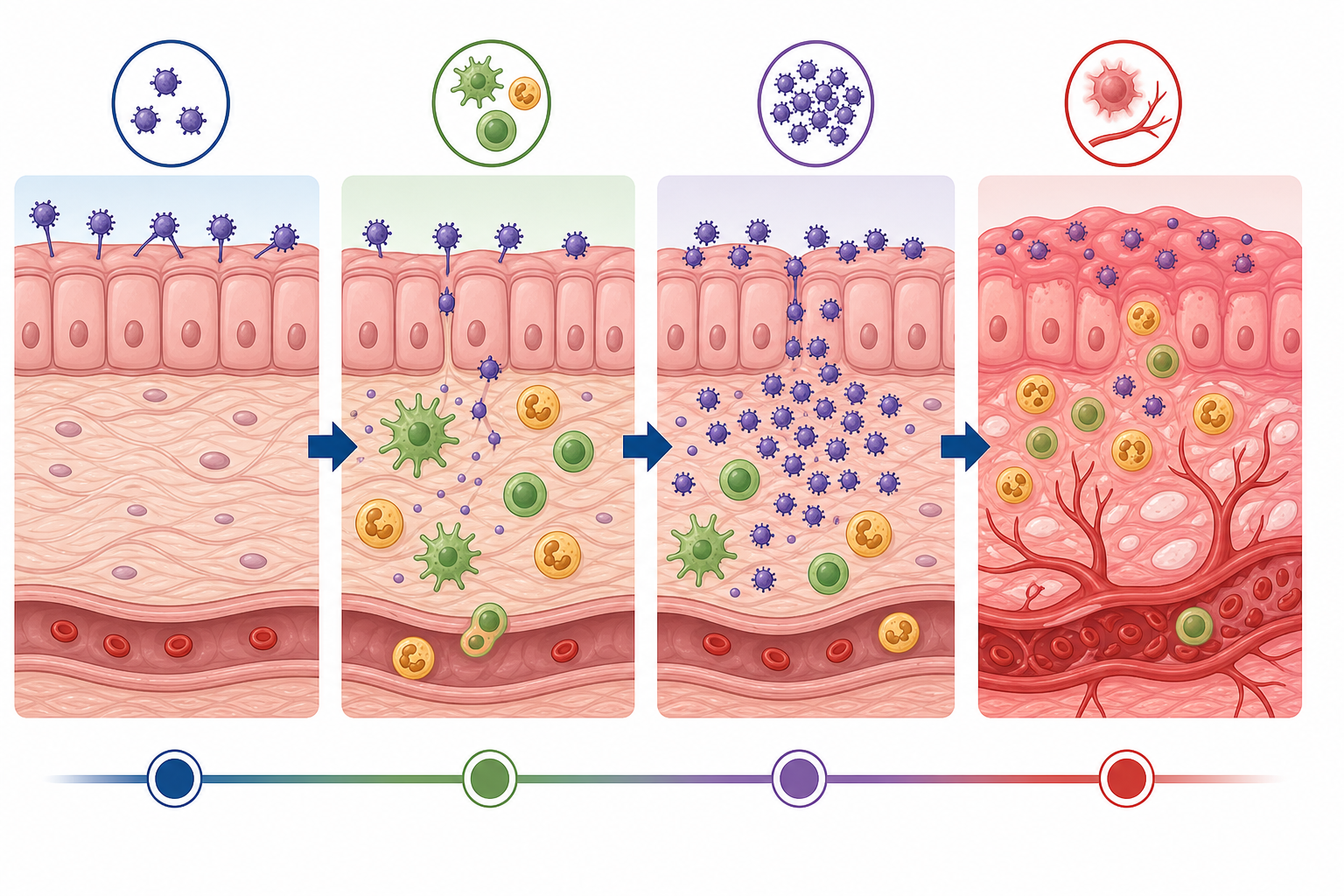
The reason 2-day symptoms are unusual comes down to how infections establish themselves. After exposure, an STI pathogen has to attach to host tissue, evade or overwhelm the local immune response, replicate to a population large enough to inflame surrounding tissue, and then trigger the visible response (discharge, sores, burning, swelling) that you'd actually notice. None of that happens in 48 hours for most infections.
Different pathogens follow different timelines:
- Bacterial STIs like chlamydia and gonorrhea generally need a couple of weeks before producing noticeable urethral or cervical symptoms. The CDC notes that chlamydia symptoms may not appear until several weeks after exposure (CDC chlamydia overview).
- Viral STIs with surface lesions, like genital herpes, typically take a few days to about two weeks for a first outbreak; the CDC notes that flu-like symptoms can accompany that initial outbreak (CDC genital herpes overview). HPV-related warts can take weeks to months to appear, and some never become visible.
- Bloodstream viral STIs like HIV and the hepatitis viruses have window periods measured in weeks. The CDC states that most people develop flu-like acute HIV symptoms within 2 to 4 weeks after infection (CDC About HIV).
- Syphilis shows its first lesion (a chancre) within several weeks of exposure on average, before healing on its own in 3 to 6 weeks (CDC syphilis overview).
Gonorrhea is the closest infection to fitting a 2-day timeline. Some men with urethral gonorrhea report a burning sensation as early as 2 to 5 days after exposure, though the more typical onset window is 2 to 14 days. Women are even less likely to develop early symptoms; many remain asymptomatic for the full course of infection. Per CDC STI screening guidelines, this is one reason annual chlamydia and gonorrhea screening is recommended for sexually active women under 25 regardless of perceived risk (see the CDC STI overview for general topic context).
Can STD symptoms really appear within 2 days of exposure?
For almost every sexually transmitted infection, no. Typical symptom onset is 1 to 3 weeks for chlamydia and gonorrhea, 10 to 90 days for syphilis (average around 21 days), about 2 to 12 days for a first herpes outbreak, and 2 to 4 weeks for the flu-like symptoms of acute HIV. Gonorrhea has the shortest published minimum incubation (around 2 days at the very low end), but the typical window is 2 to 14 days. Symptoms appearing within 48 hours are usually a urinary tract infection, friction irritation, or an allergic reaction, not a freshly acquired STI.
Incubation periods for the common STIs
The table below summarizes incubation ranges for the STIs most relevant to home-testing decisions, drawn from CDC and WHO topic pages and standard clinical references. Two definitions are worth holding in mind. The incubation period is the time from exposure to the first appearance of symptoms in someone who will become symptomatic. The window period is the time from exposure until a specific test can reliably detect the infection. They overlap, but they aren't the same thing, and a person can be infected and contagious before either window closes.
Your own range may sit anywhere within the bracket; outliers exist on both ends.
| Infection | Typical incubation period | Pathogen type |
|---|---|---|
| Chlamydia | 1 to 3 weeks | Bacterial |
| Gonorrhea | 2 to 14 days (typical), up to 1 month | Bacterial |
| Syphilis (primary chancre) | 10 to 90 days, average around 21 days | Bacterial |
| Trichomoniasis | 5 to 28 days | Parasitic |
| Genital herpes (first outbreak) | About 2 to 12 days | Viral (HSV-1, HSV-2) |
| Genital warts (HPV) | Several weeks to months | Viral |
| Hepatitis B (acute symptoms) | 6 weeks to 6 months, average 90 days | Viral |
| HIV (acute, flu-like) | 2 to 4 weeks; can be silent for years | Viral |
If you do decide to test from home
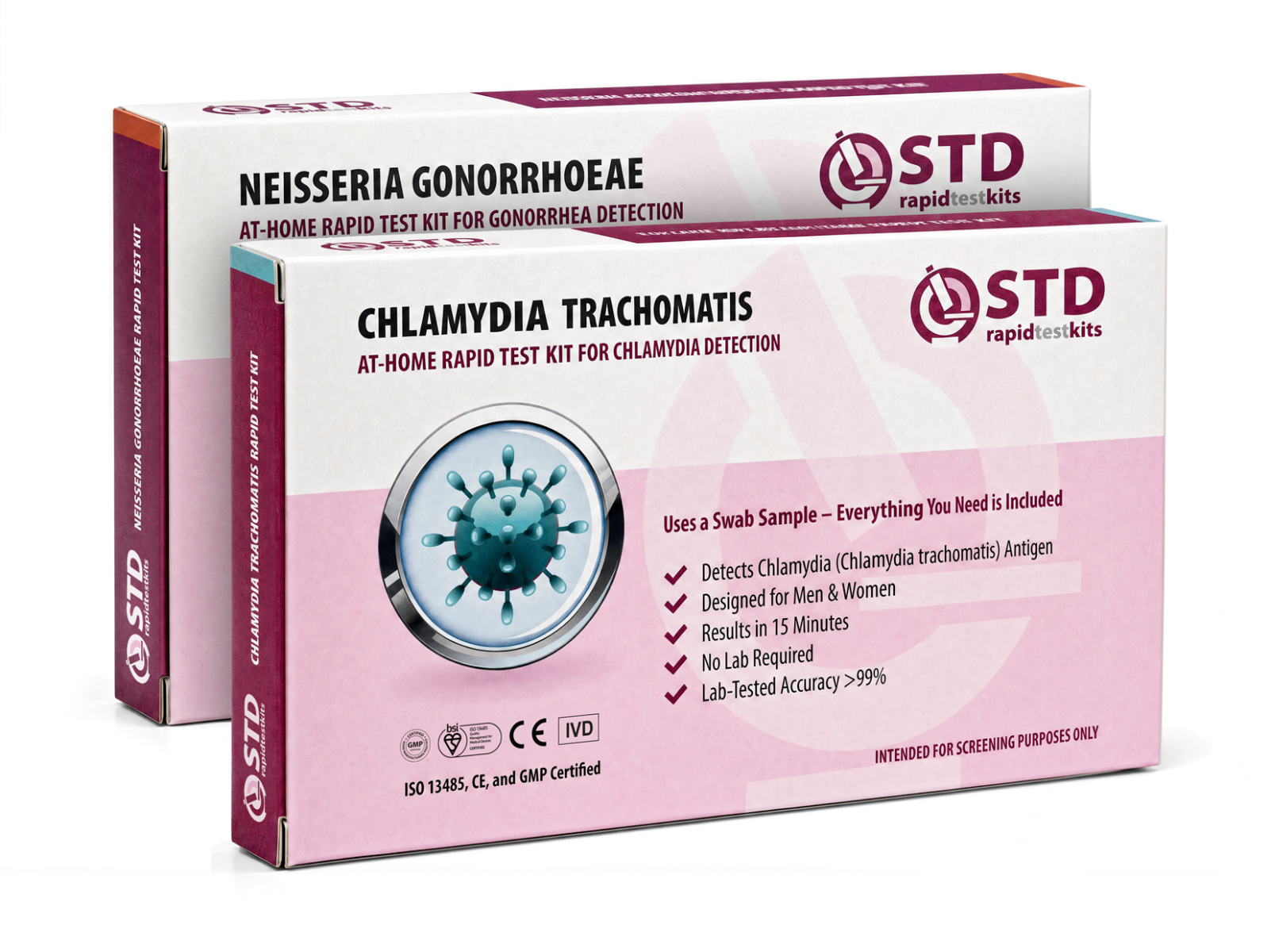
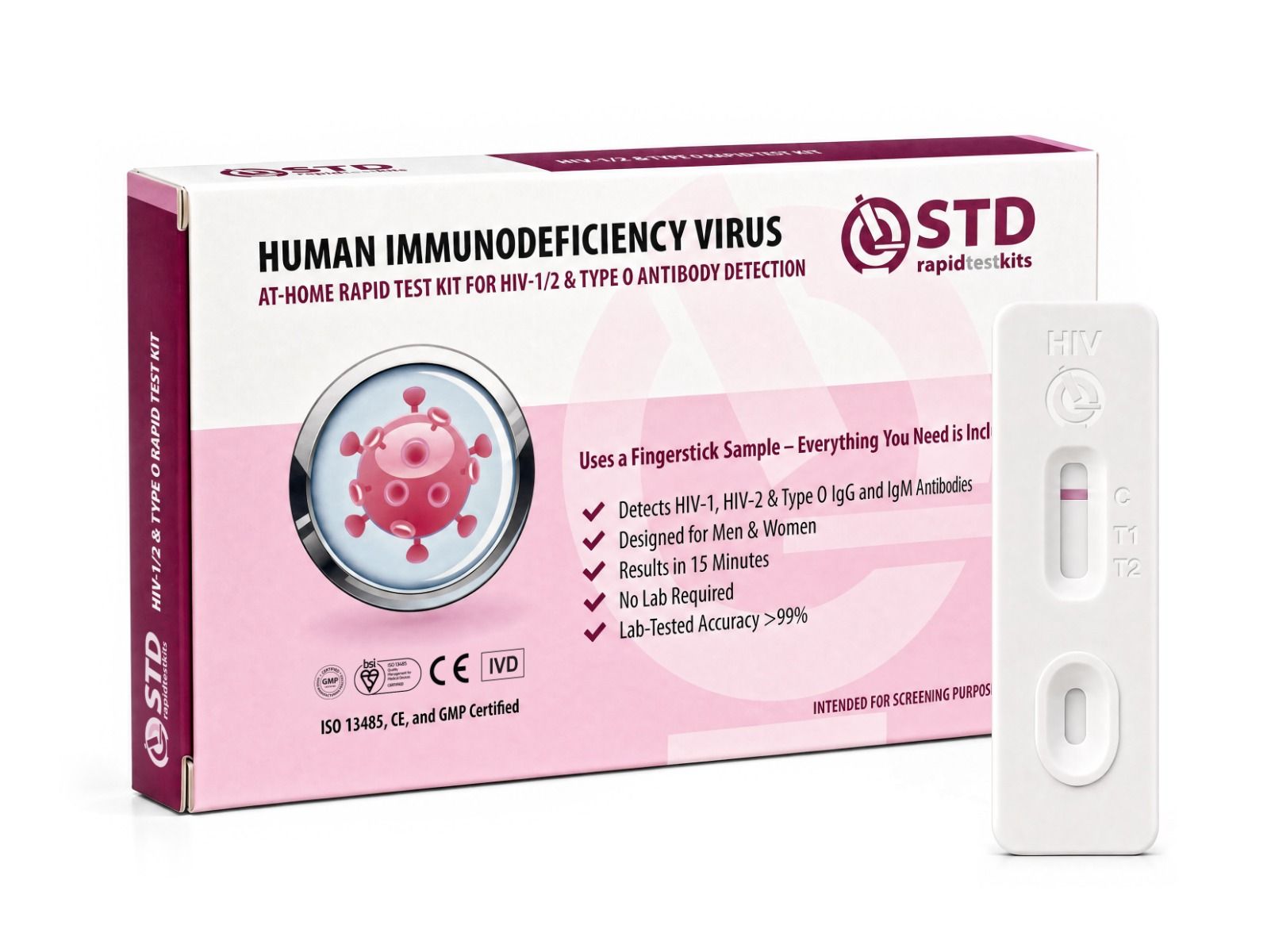
stdrapidtestkits.com publishes this article and sells the at-home rapid test kits linked in this guide. The kit below is positioned at the section where it best fits a reader's decision; these are lateral-flow rapid tests, not laboratory NAAT, and a positive at-home result should be confirmed in a clinic before treatment.
What 2-day symptoms usually are (when they aren't an STI)
If you've noticed something odd within 48 hours of sexual activity, the differential is much more often non-STI than STI. The most common explanations clinicians rule in or out at the 2-day mark are:
- Urinary tract infection (UTI). Sexual activity is a well-documented trigger for UTIs, especially in women. Symptoms (burning urination, frequency, pelvic ache) often appear within 24 to 48 hours of an exposure that introduced bacteria from skin or the perineal area into the urethra. UTIs and chlamydia can produce similar urinary symptoms, but a UTI usually appears faster and responds quickly to a urine culture (CDC urinary tract infection overview).
- Friction or microtrauma. Vigorous or prolonged sex without enough lubrication can produce small abrasions on penile, vulvar, or anal skin. The result is redness, soreness, and sometimes a stinging sensation when urinating. It clears within a few days.
- Allergic or irritant contact reaction. Latex condoms, spermicides, flavored lubricants, scented body washes, and partner products (lotions, perfumes) can all trigger contact dermatitis on genital skin within hours. The pattern is itching plus a fine pink rash exactly where the irritant touched.
- Yeast or bacterial vaginosis flare. Both are unrelated to sexual transmission in the strict sense, but sex can disturb the local pH or introduce a partner's flora and tip a borderline imbalance into a noticeable flare. Discharge changes show up fast (CDC bacterial vaginosis).
- A herpes outbreak that was already brewing. If you've had genital herpes before, prodrome (tingling, burning) can begin a day or two before a visible lesion. The exposure didn't cause this outbreak; the trigger (stress, friction, immune dip) did. Recurrent HSV is its own pattern, separate from a freshly acquired infection.
None of this is a guarantee that what you're feeling isn't an STI. Two-day symptoms are simply far more likely to come from one of the items above than from a fresh STI.
UTIs respond best to early antibiotic treatment, and untreated lower UTIs can spread to the kidneys within a week. A primary-care visit, urgent-care visit, or telehealth consultation with a urine sample is the right pathway for 2-day urinary symptoms, separate from any STI testing decision.
What real early STI signs look like, infection by infection
If your symptoms persist past day 5 to 7, or if new symptoms appear in the second or third week after exposure, it's worth knowing what each common infection looks like in its earliest visible phase.
- Chlamydia. Most cases are asymptomatic. When symptoms appear, the CDC notes they may take several weeks; common features include a thin or cloudy urethral discharge, burning during urination, and in women, light intermenstrual or post-coital bleeding. Pelvic discomfort can develop if the infection has reached the upper reproductive tract.
- Gonorrhea. In men, a thicker yellow or green urethral discharge with painful urination, often within 2 to 14 days. In women, frequently silent; when symptoms appear they include increased vaginal discharge and intermenstrual bleeding. Pharyngeal and rectal gonorrhea are usually asymptomatic and require site-specific swab testing at a clinic.
- Syphilis (primary stage). A single firm, round, painless ulcer (a chancre) at the site of inoculation, typically appearing several weeks after exposure. Because it's painless and often hidden (vaginal wall, anal canal, posterior pharynx), it's commonly missed. The chancre heals on its own in 3 to 6 weeks (CDC syphilis overview); the infection does not.
- Genital herpes. A first outbreak typically begins with localized tingling or burning, followed by a cluster of small fluid-filled vesicles that ulcerate, crust, and heal over a couple of weeks. The CDC notes that flu-like symptoms (fever, body aches, swollen glands) commonly accompany the first outbreak but rarely the recurrences (CDC genital herpes overview).
- Trichomoniasis. In women, a frothy yellow-green discharge with a strong odor, vulvar itching, and burning during urination, typically several weeks post-exposure. Most infected men are asymptomatic but can transmit (CDC STI overview).
- HPV. Skin-colored, soft, sometimes cauliflower-shaped warts on genital skin, anus, or surrounding areas. They appear weeks to months after exposure. Most HPV infections are cleared by the immune system without ever becoming visible.
- HIV (acute phase). A flu-like illness 2 to 4 weeks post-exposure: fever, sore throat, fatigue, swollen lymph nodes, body aches, sometimes a generalized rash. The CDC describes this acute syndrome as common but nonspecific enough to be mistaken for a generic viral illness (CDC About HIV).
- Hepatitis B and C. Often asymptomatic in the acute phase. When symptoms appear, they include fatigue, low-grade fever, nausea, right-upper-quadrant abdominal discomfort, and (less commonly) jaundice. Per the CDC, hepatitis C symptoms (when they occur) typically appear 2 to 12 weeks after infection (CDC hepatitis C overview); hepatitis B incubates from 6 weeks to 6 months.
The common thread across all of them is that early symptoms are easy to miss, easy to misattribute, and present in only a fraction of those infected.
Window periods: when at-home and lab tests become reliable
Symptoms are unreliable; tests are the answer. The catch is that no test detects an infection from day one. Each test has a window period, the interval between exposure and the point at which the test will reliably return a true positive in someone actually infected. Test before that window closes and you risk a false negative, which is worse than no test at all because it can falsely reassure you out of follow-up.
The current CDC-aligned window-period guidance for the most common tests:
- Chlamydia and gonorrhea (NAAT, lab gold standard). Per CDC guidance, testing too soon after chlamydia or gonorrhea exposure risks a false negative because bacterial loads have not yet built up to detectable levels; standard clinical practice is to wait at least two weeks before testing. A negative result at day 7 is not informative; retest at day 14 or later. (See the CDC STI overview for general topic context.)
- Syphilis (treponemal or non-treponemal antibody). Standard clinical practice is to wait at least 3 to 6 weeks after possible exposure before syphilis antibody testing, since seroconversion takes time; positive screens are then confirmed with a second treponemal-specific test. The CDC syphilis overview recommends testing for anyone at risk.
- HIV (antigen-antibody lab test). The CDC states this test can usually detect HIV 18 to 45 days after exposure (CDC HIV testing).
- HIV (rapid antibody, including at-home). The CDC states antibody tests can usually detect HIV 23 to 90 days after exposure (CDC HIV testing). At-home rapid HIV tests are antibody-only, so the window is closer to the long end.
- Genital herpes (HSV antibody). Per the CDC, after exposure, it can take up to 16 weeks or more for current tests to detect infection (CDC genital herpes screening). Antibody tests do not distinguish recent from established infection and are not the right tool for an active visible lesion (which calls for clinic-based PCR or culture).
- Hepatitis B (HBsAg). The CDC recommends hepatitis B testing for all adults and any person at ongoing risk; the timing of a reliable positive result depends on exposure context and is best discussed with a clinician (CDC hepatitis B testing).
- Hepatitis C (anti-HCV antibody). The CDC notes that for known recent exposures within the last 6 months, a NAT for HCV RNA is preferred over the antibody test, since antibodies take time to develop (CDC hepatitis C testing).
The practical implication: if your exposure was within the last 48 hours, the appropriate response is usually to wait for the window to open rather than to test immediately. The exception is exposures where post-exposure prophylaxis (PEP) for HIV is on the table.
HIV transmission risk varies meaningfully by exposure route, partner factors, and condom use. Receptive anal intercourse carries the highest per-act probability of any common route; insertive anal, receptive vaginal, and oral sex each carry lower probabilities, with oral sex among the lowest. Two factors meaningfully change the math: a partner whose HIV is virally suppressed by treatment to undetectable levels does not transmit HIV sexually, and the CDC notes that <q>the higher someone's viral load, the more likely that person is to transmit HIV</q> (<a href="https://www.cdc.gov/hiv/causes/index.html" target="_blank">CDC how HIV spreads</a>). If exposure was within 72 hours and any of the above raised your risk, post-exposure prophylaxis (PEP) is the priority. The CDC states that <q>PEP must be started within 72 hours (3 days) after a recent possible exposure to HIV</q>, with sooner being better (<a href="https://www.cdc.gov/hiv/prevention/pep.html" target="_blank">CDC PEP</a>). See an emergency room, urgent-care clinic, or sexual-health clinic the same day; at-home testing comes after PEP is decided, not before.
Asymptomatic STIs: the reason testing matters more than symptoms
One of the recurring patterns in sexual-health medicine is that the most common STIs are also the most likely to be silent. The CDC and WHO converge on this: a sizable fraction of people with chlamydia, gonorrhea, and trichomoniasis never develop noticeable symptoms, and that fraction is higher in women than in men. Asymptomatic syphilis is also common between its primary and secondary stages, and HPV is asymptomatic in most carriers throughout the entire course of infection.
The implication is direct. Waiting for a symptom to appear before testing is not a reliable strategy. By the time you'd notice anything, you may have transmitted the infection to one or more partners or moved into a complication phase (pelvic inflammatory disease, infertility, congenital transmission in pregnancy, or in the case of HPV, cervical or oropharyngeal precancer).
More than 1 million curable sexually transmitted infections (STIs) are acquired every day worldwide in people 15-49 years old, the majority of which are asymptomatic.
Who should test, and how often
The CDC's screening recommendations for sexually active adults follow a tiered structure based on risk profile. The current guidance:
- Sexually active women under 25: annual chlamydia and gonorrhea screening regardless of perceived risk.
- Sexually active women 25 and older with risk factors (new partner, multiple partners, partner with an STI): annual chlamydia and gonorrhea screening.
- All adults aged 13 to 64: at least one HIV test in their lifetime, with annual or more frequent testing for those at higher risk.
- Sexually active gay and bisexual men: at least annual screening for HIV, syphilis, chlamydia, and gonorrhea (including pharyngeal and rectal sites where exposure occurred), with 3- to 6-month frequency for those with multiple or anonymous partners or who use HIV-prevention PrEP.
- People on HIV PrEP: HIV testing every 3 months is required before prescription renewal; co-test for chlamydia, gonorrhea, and syphilis at the same visit.
- Pregnant people: HIV, syphilis, hepatitis B, and chlamydia at the first prenatal visit; gonorrhea and hepatitis C if at risk; repeat testing in the third trimester for those at continued risk.
- People with new partners or after a known exposure: targeted testing once the relevant window periods have opened.
If you fall outside any of those categories but have had a recent exposure that's worrying you, the practical path is to wait the appropriate window and then test for the infections that match the exposure type (genital, oral, anal). At-home rapid tests are well-suited for screening between clinic visits or for people whose access to in-person care is limited; positive results from any rapid lateral-flow test should be confirmed with lab-based testing (NAAT for bacterial infections, confirmatory antibody panels for viral infections) before treatment decisions are made.
Many STIs have no symptoms or may only cause mild symptoms, so people can have an infection but not know it. That is why getting an STI test is important if you are having sex.
Frequently asked questions
- Can chlamydia symptoms appear in 2 days?
- Almost never. The CDC notes chlamydia symptoms may not appear until several weeks after exposure. A person occasionally reports symptoms at the very low end of that range, but day 2 is well below it. If you're experiencing urinary or genital symptoms 48 hours after sex, the most likely explanation is a urinary tract infection, friction irritation, or an existing imbalance, not new chlamydia.
- What about gonorrhea? Can that show in 48 hours?
- Gonorrhea is the only common STI with a published minimum incubation short enough to brush 48 hours, and even then it is uncommon. Among the differential causes a clinician would consider for day-2 urethral symptoms in a sexually active person, a urinary tract infection is still the more likely explanation for most exposure profiles. Gonorrhea earns a place on the differential but does not lead it.
- If I test negative right after exposure, am I in the clear?
- No. Negative tests run before the relevant window period has opened are not informative. A negative chlamydia or gonorrhea result at day 3 tells you almost nothing; you need to retest at day 14 or later. A negative HIV antibody test at day 10 tells you almost nothing; you need to retest at the appropriate window depending on the test type used. Window periods, not symptoms, set the testing timeline.
- What's the soonest I can reliably test for HIV?
- If it has been fewer than 72 hours, PEP is the priority; see a clinician before doing any testing. After that, the earliest credible at-home antibody result is from about 3 weeks onward, with a definitive negative at 90 days per CDC HIV testing guidance. If you can access a lab antigen-antibody test, that one is reliable a little earlier.
- Are 2-day urinary symptoms usually a UTI?
- In sexually active women, frequently yes. UTIs are a common post-sex problem, often appearing within 24 to 48 hours, and they share burning urination and frequency with chlamydia and gonorrhea. A urine culture distinguishes them quickly. The advantage of testing for both possibilities is that UTIs need treatment within days, while STI testing can wait for the appropriate window.
- Should I get tested if I have no symptoms?
- Routine screening exists precisely because most infections produce no symptoms. For chlamydia, gonorrhea, trichomoniasis, and HPV, a symptom-free status is the norm, not the exception, so the schedule replaces the symptom as the trigger to test. Match your cadence to risk profile (age, partner change, exposure route) and don't wait for something to feel wrong before booking the next screen.
- How accurate is at-home rapid testing compared with lab testing?
- At-home rapid tests for STIs use lateral-flow chemistry: a strip-based assay that produces a visual result in 15 to 20 minutes. Sensitivity varies by infection and kit; check the product insert for the specific figure. Laboratory NAAT (for bacteria) and confirmatory antibody panels (for viruses) are more sensitive and remain the gold standard for diagnosis. The two are complementary: rapid tests are excellent for at-home screening and surveillance; positive results are confirmed in a lab before treatment.
- U.S. Centers for Disease Control and Prevention. About HIV: stages of infection, acute symptom timing of 2 to 4 weeks after infection.
- U.S. Centers for Disease Control and Prevention. HIV Testing: window-period figures for antigen-antibody lab tests (18 to 45 days) and antibody tests including at-home rapid (23 to 90 days).
- U.S. Centers for Disease Control and Prevention. Sexually Transmitted Infections (STIs) overview and asymptomatic-infection guidance.
- U.S. Centers for Disease Control and Prevention. Genital Herpes Screening: HSV antibody test detection windows, with current tests taking up to 16 weeks or more after exposure.
- U.S. Centers for Disease Control and Prevention. Post-Exposure Prophylaxis (PEP): the 72-hour window for starting PEP after possible HIV exposure.
- World Health Organization. Sexually transmitted infections (STIs) fact sheet: global incidence (more than 1 million curable STIs acquired daily in people 15-49) and asymptomatic-infection statistics.
