Published: October 2025 | Last updated: May 2026 | Editorial review and quality control: Martina N.
Bacterial vaginosis affects about one in five women of reproductive age in the United States, making it the most common vaginal condition in this group according to the CDC's BV treatment guidelines. Yet confusion about what BV actually is, and whether it counts as a sexually transmitted infection, keeps many women from making informed decisions about testing and prevention.
Although classified separately from sexually transmitted infections, BV does raise your risk of catching one, because the bacterial imbalance it causes strips away the vaginal defenses that would otherwise slow an incoming pathogen. The bacteria responsible for BV spread differently than chlamydia or gonorrhea, yet sexual activity strongly influences who develops the condition, and once BV sets in, the vaginal lining becomes more vulnerable to genuine STIs. This article walks through the most stubborn myths about BV and STIs, what the science actually says, and how to protect yourself with prevention habits and the right testing.
Key Takeaways
- BV is classified separately from sexually transmitted infections, yet women with BV are roughly twice as likely to acquire HIV and face meaningfully higher risk of chlamydia, gonorrhea, and trichomoniasis (CDC BV treatment guidelines).
- More than half of BV cases produce no symptoms at all, which is why routine STI screening matters even when nothing seems off.
Myth 1: Bacterial Vaginosis Is a Sexually Transmitted Infection
Fact: BV is classified separately from STIs, though sexual activity strongly influences who gets it.
One of the most stubborn misconceptions about bacterial vaginosis is that it works like chlamydia or gonorrhea. It does not. Chlamydia and gonorrhea are each caused by one specific organism transmitted directly between partners during sex. BV is what happens when the normal balance of bacteria already living in the vagina shifts. Protective Lactobacillus species drop, and a mix of other bacteria, most commonly Gardnerella vaginalis, takes over.
That said, BV is far more common in sexually active women, and certain behaviors clearly raise the risk. The CDC's BV treatment guidelines describe BV as associated with new or multiple sex partners and rank sexual activity among the strongest behavioral risk factors. Research also documents higher BV rates in women who have sex with women, which suggests that bacterial exchange between female partners contributes to recurrence.
Sexual activity is one of the strongest forces that disrupts the vaginal microbiome, even though the transmission mechanism differs fundamentally from a classic STI.
- Unprotected vaginal sex, which can introduce new bacteria into the vaginal environment.
- Douching, which strips out protective lactobacilli and shifts vaginal pH upward.
- Having new or multiple sex partners, which raises exposure to bacterial strains the vagina is not used to.
- Receptive oral sex, which can transfer oral bacteria into the vaginal microbiome.
Myth 2: BV Does Not Affect Your STI Risk
Fact: BV measurably increases your vulnerability to STIs, including HIV.
Even though BV is classified separately from STIs, it makes acquiring one easier. A growing body of evidence shows that the vaginal microbiome plays a defensive role, and BV disrupts that defense in three meaningful ways.
Loss of protective lactobacilli. A healthy vagina is dominated by Lactobacillus species that produce lactic acid, keeping vaginal pH low (around 3.8 to 4.5) and creating a hostile environment for many pathogens. BV reduces lactobacilli sharply, raising pH to 5.0 or higher and removing the front line of defense.
Inflammation and microtears. BV is often subclinical, yet it can drive low-grade inflammation in the vaginal lining. Inflamed, thinner tissue is easier for STI pathogens to cross, especially during sex.
Immune disruption. Several bacteria associated with BV produce metabolites that interfere with local immune signaling, leaving the vaginal environment less able to clear invading organisms before they establish.
Women with BV are roughly twice as likely to acquire HIV compared with women who have a healthy vaginal microbiome, according to CDC summaries of pooled research. BV is also linked to higher rates of chlamydia, gonorrhea, trichomoniasis, and HSV-2 acquisition. Exact effect sizes vary by study, though the direction is consistent across the literature: women with BV face higher odds of acquiring chlamydia, gonorrhea, trichomoniasis, HSV-2, and HIV than women whose vaginal microbiome is healthy, which is why clinicians treat BV as a genuine health concern alongside the STIs it makes more likely.

Myth 3: Only Sexually Active Women Get BV
Fact: BV can occur in women who have never had sex, though it is less common.
Sexual activity is the strongest behavioral risk factor for BV, though it is far from the only one. Anything that disrupts the vaginal microbiome can trigger BV, and several non-sexual triggers are well documented. Surveys of college-age women who have never been sexually active still find BV in a meaningful minority of them. This matters because women who believe BV could only be sexual sometimes ignore symptoms or delay seeing a clinician. Anyone with a vagina can develop BV, and the diagnostic process is the same regardless of sexual history.
- Hormonal shifts from pregnancy, the postpartum period, perimenopause, menopause, or starting and stopping hormonal birth control.
- Antibiotic use for an unrelated infection, which can wipe out protective lactobacilli alongside the targeted bacteria.
- Harsh hygiene products such as scented soaps, deodorizing sprays, douches, and bubble baths, which alter vaginal pH.
- Tight, non-breathable underwear that traps moisture and creates conditions for bacterial overgrowth.
- Smoking, which observational research has linked to disrupted vaginal microbiome diversity.
Myth 4: You Will Know You Have BV Because It Has Obvious Symptoms
Fact: More than half of BV cases produce no symptoms at all.
The classic BV story is a thin grey-white discharge with a fishy odor, sometimes stronger after sex, sometimes with itching or a burning sensation when urinating. That is what BV looks like when it does cause symptoms. The CDC estimates that more than half of BV cases are asymptomatic, meaning women have the bacterial imbalance without ever noticing.
This silent half matters for two reasons. First, undiagnosed BV is still increasing your risk for STI acquisition every day it goes untreated. Second, the symptoms of BV overlap significantly with the symptoms of several STIs, particularly trichomoniasis. Both can cause discharge changes. Both can cause irritation. Self-diagnosing is unreliable; testing is the only way to know.
When BV does cause symptoms, the most common ones are:
- Thin, watery discharge that is grey, white, or off-white.
- A strong fishy odor, often more noticeable after sex or during your period.
- Itching or irritation in or around the vagina.
- A burning feeling when urinating.
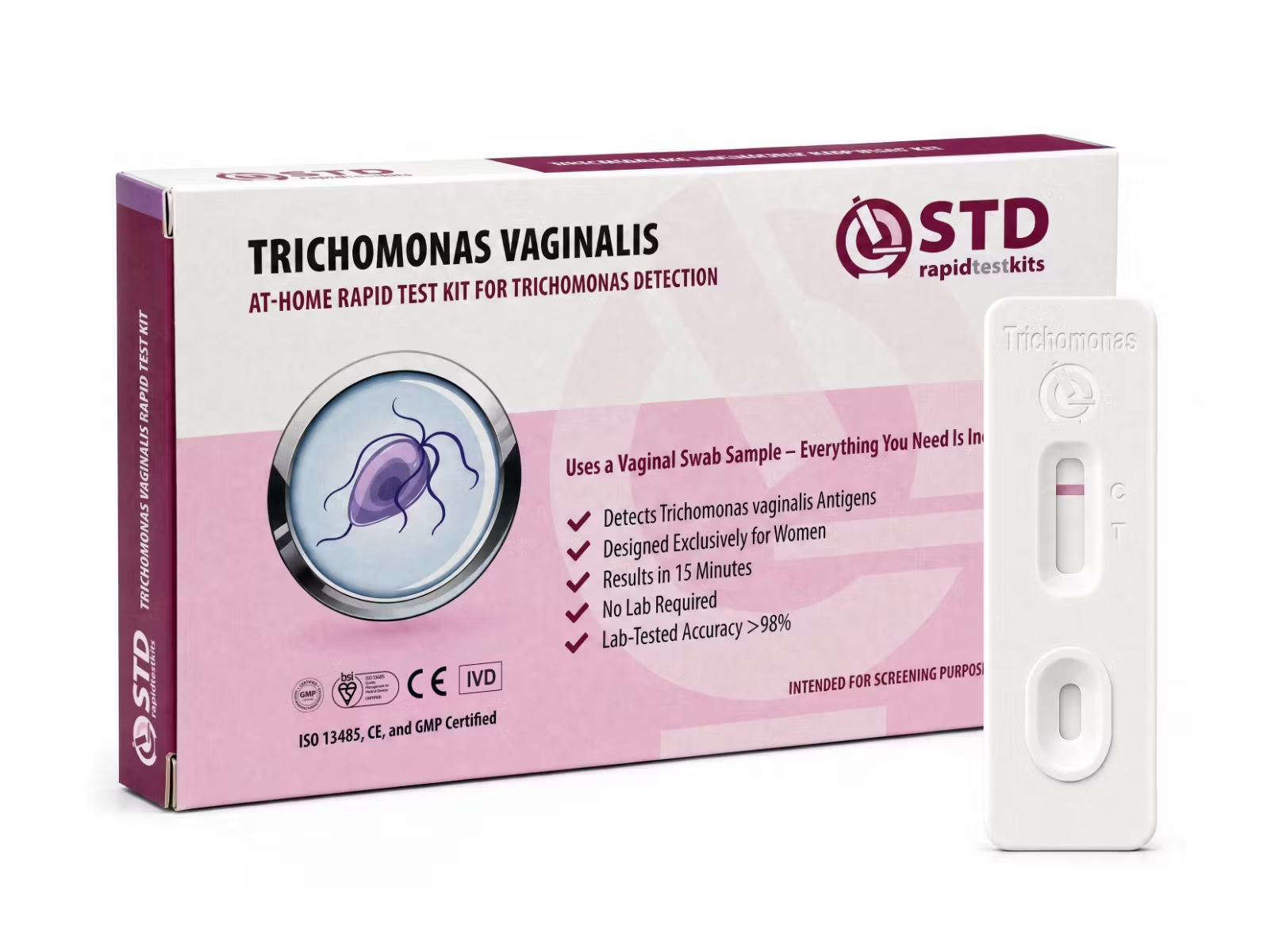
If you have any of these symptoms, especially the fishy odor, getting screened for both BV and the STIs that mimic it is the right move. The overlap with trichomoniasis is the most clinically important one to rule out. (For full transparency: stdrapidtestkits.com sells at-home STI tests, and the kit below is one of the products we carry.)
Myth 5: BV Always Needs Antibiotics, or Always Resolves on Its Own
Fact: Both extremes are wrong. Some mild cases clear without treatment, though most symptomatic cases benefit from antibiotics.
Treatment guidance for BV depends on whether you have symptoms, whether you are pregnant, and how often BV is recurring. For symptomatic BV, the CDC's first-line treatments are oral or vaginal metronidazole, or vaginal clindamycin. A short course usually clears symptoms within a week. Asymptomatic BV in non-pregnant women is generally not treated, unless the woman is planning a procedure that could introduce bacteria into the upper genital tract.
BV is famously recurrent. About half of women treated for BV will have at least one recurrence within a year. For women with frequent recurrences (three or more episodes in twelve months), longer suppressive courses or maintenance treatment may be appropriate, and probiotics containing specific Lactobacillus strains have shown modest benefit in some studies. The evidence for boric acid suppositories as an adjunct is mixed though promising for resistant cases.
If you have BV symptoms, see a clinician for diagnosis and a prescription. If recurrent BV is your pattern, ask specifically about suppressive regimens and microbiome-restoring options.
- Douching, which makes BV more likely, not less.
- Yogurt or probiotic foods alone for an active infection. They may support long-term microbiome health, though they do not cure an active episode.
- Tea tree oil or other essential-oil home remedies. There is no strong clinical evidence, and some can irritate vaginal tissue.
Prevention: How to Lower Your Risk of BV and STIs Together
Because BV raises your STI risk, anything that prevents BV indirectly protects you from STIs. The good news: the same behaviors that prevent BV also reduce direct STI exposure, so the prevention list does double duty.
Protect your vaginal pH. The single most evidence-supported habit is leaving the vaginal environment alone. Skip douching entirely. The vagina is self-cleaning, and douching demonstrably raises BV risk and disrupts the lactobacilli that protect you. Avoid scented soaps, perfumed wipes, and intimate sprays. Plain warm water on the outer vulva is enough.
Practice safer sex. Condoms are the most cost-effective single intervention for both BV reduction and STI prevention. They reduce bacterial exchange and direct STI transmission risk in one step. For oral sex, dental dams are a smaller though useful intervention if you are prone to BV after oral contact.
Treat partners thoughtfully. BV is not routinely treated in male partners because current evidence does not show benefit. For women in same-sex relationships, however, partner treatment is increasingly considered when one partner has recurrent BV, since shared bacterial strains may drive recurrence.
Mind antibiotics and birth control. If you are prescribed antibiotics for any reason, ask your clinician about probiotic support. If you start a new hormonal contraceptive and BV becomes more frequent, that is worth raising with your doctor; sometimes switching methods helps.
Test regularly if you are sexually active. Annual STI screening is the CDC's recommendation for sexually active women under 25 and for older women with new or multiple partners. Many STIs share BV's asymptomatic profile, and routine testing is the only way to catch them early.

Condoms are the single most cost-effective protective tool against both BV recurrence and direct STI transmission. Consistent use during vaginal sex reduces the introduction of new bacteria into the vaginal environment, lowering the disruption that drives BV episodes, and the same barrier blocks chlamydia, gonorrhea, trichomoniasis, HIV, and HSV-2 transmission at the same time.
When and How to Test for BV vs STIs
BV and STIs can mimic each other, and the simplest way to know what is going on is to test for both. The relevant tests differ.
For BV specifically, the diagnosis is made by a clinician using either the Amsel criteria (a four-point clinical checklist combining pH, discharge appearance, microscopy, and the whiff test) or by lab analysis of a vaginal swab using methods such as Nugent scoring (a lab-based microscopy score of vaginal flora balance). There is currently no widely-validated at-home rapid test for BV itself. So if you suspect BV, the right move is a clinic or telehealth visit for diagnosis.
For the STIs that commonly co-occur with BV or mimic its symptoms, at-home rapid tests are a practical and private option. The most relevant ones for women with BV symptoms or BV history:
- Trichomoniasis, because it is the closest STI mimic of BV symptomatically.
- Chlamydia and gonorrhea, both of which can be asymptomatic and are more likely to take hold in a BV-disrupted vaginal environment.
- HIV, especially relevant given the doubled acquisition risk associated with BV.
- HSV-2, often present alongside BV in epidemiological studies.
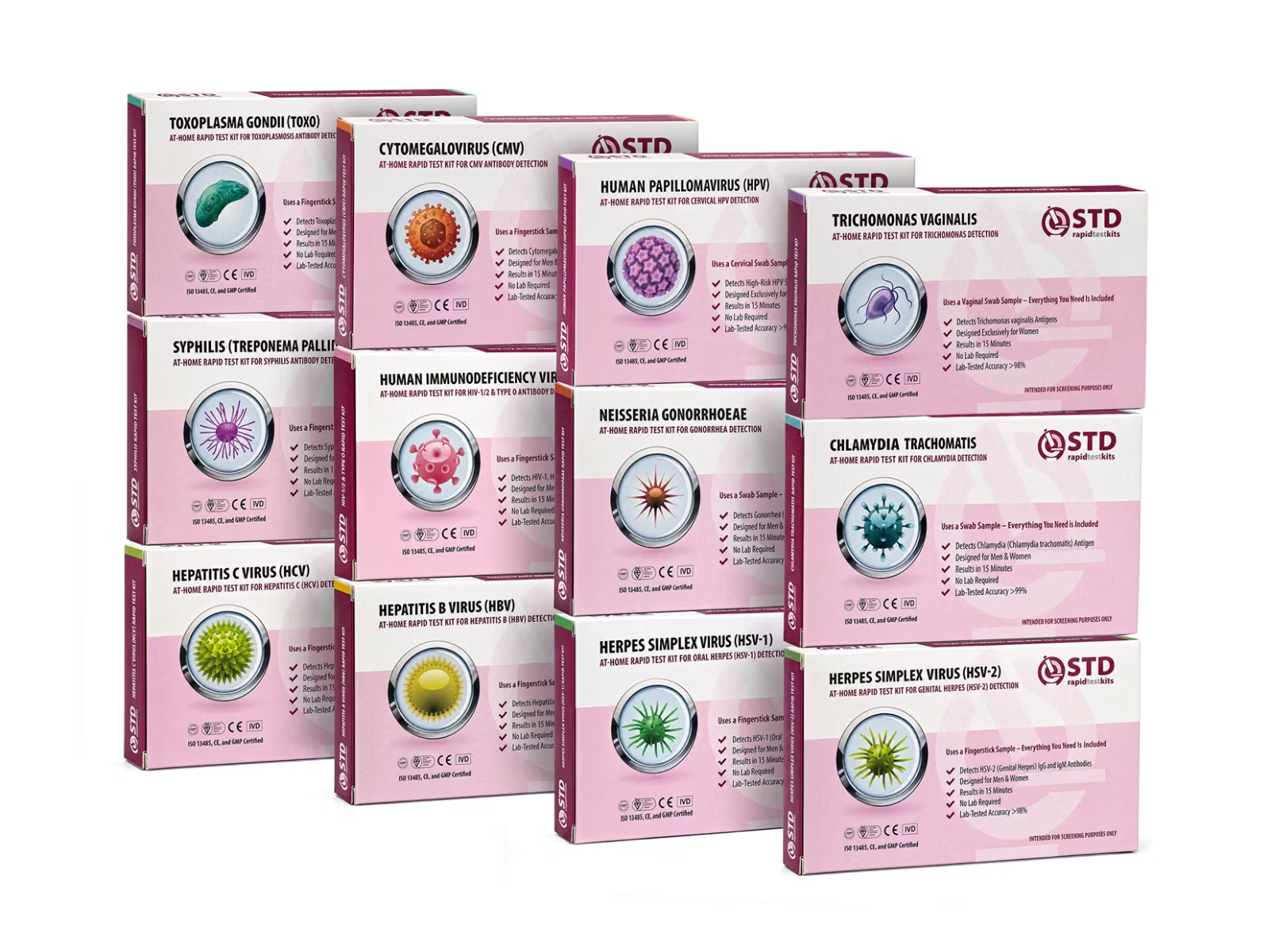
Our at-home rapid tests are lateral-flow immunoassays, not lab NAAT or PCR. A positive home result is worth confirming with a lab NAAT when possible, though the home test gives you a fast, private first answer. If you want one screening round that covers most of the BV-adjacent STIs, a comprehensive multi-infection kit makes sense. If you are responding to a specific symptom, single-target kits are quicker and cheaper.
Bacterial vaginosis is associated with increased risk for acquisition of sexually transmitted infections, including HIV, herpes simplex virus type 2, gonorrhea, chlamydia, and trichomoniasis.
Common BV Myths Worth Clearing Up
Beyond the five big ones, a handful of smaller myths circulate widely.
Myth: Only women can get BV. Strictly speaking, BV is a condition of the vagina, so only people with vaginas develop the classic syndrome. The bacteria associated with BV can colonize the urethra and penis in male partners, however. They typically do not cause symptoms there, yet some research suggests they contribute to BV recurrence when the female partner is exposed repeatedly.
Myth: BV always resolves on its own. Mild cases sometimes do. Many cases persist and progress, though. Untreated symptomatic BV in pregnancy is associated with preterm labor and low birth weight, which is reason enough to seek treatment rather than wait it out during pregnancy.
Myth: BV is caused by poor hygiene. The opposite is often closer to the truth. Over-washing, scented products, and douching all raise BV risk by disrupting the vaginal microbiome. BV is not a cleanliness failure; in many women it follows a well-intentioned though counterproductive cleaning routine.
Myth: You can catch BV from a toilet seat or swimming pool. No. BV is not transmitted through surfaces, water, or shared towels. It is an imbalance of bacteria already in the vagina, triggered by sexual, hormonal, hygiene, or medication factors. Public-pool and toilet-seat anxiety is misplaced; the actual triggers are sex, douching, antibiotic use, and hormonal shifts.
Myth: A negative STI test means your symptoms must be BV. Not necessarily. Yeast infections, irritation from products, and even some types of contact dermatitis cause similar symptoms. Testing rules things out; it does not always rule things in. If a round of STI testing comes back clear and the BV diagnosis is uncertain, a clinician examination is the next step.

Frequently Asked Questions
- Can BV turn into an STI if left untreated?
- No. BV will not become an STI on its own because they are different conditions. Untreated BV does raise your risk of catching an STI by weakening your vaginal defenses, however, so the practical effect of leaving it untreated is similar to lowering your STI guard.
- If I have BV, should my male partner get tested too?
- Routine testing of male partners is not recommended; current data does not show it changes recurrence rates. If your BV is recurrent and you have a male partner, raise it with your clinician. For same-sex female couples, partner testing or treatment is increasingly considered when one partner has frequent BV.
- How can I tell the difference between BV and an STI?
- BV typically causes thin grey discharge with a fishy odor. STIs more often cause pain, burning, sores, thick or colored discharge, or bleeding between periods. Symptoms overlap heavily, and roughly half of BV cases and many STIs are asymptomatic. Testing is the only reliable way to tell them apart.
- Can oral sex cause BV?
- Receptive oral sex has been linked to higher BV rates in some studies because oral bacteria can shift the vaginal microbiome. If you are BV-prone, dental dams reduce this kind of bacterial transfer. Avoiding oral sex during an active BV episode also makes sense.
- How long does BV last without treatment?
- Some mild cases resolve within a few weeks. Others persist or worsen until treated with antibiotics. If symptoms continue for more than two weeks, or recur soon after they cleared, see a clinician for diagnosis and treatment.
- Does BV really double the risk of HIV?
- Yes. Pooled research summarized by the CDC indicates that women with BV have roughly twice the HIV acquisition risk of women with a healthy vaginal microbiome. The mechanism is loss of protective lactobacilli, plus local inflammation that makes vaginal tissue easier for HIV to cross.
- Can BV be cured permanently?
- Recurrence within 12 months affects roughly half of treated women, so most clinicians describe BV as treatable rather than permanently curable. Long-term control depends on the habits you maintain after antibiotics clear an episode: avoiding douching, using condoms during sex, asking about probiotic support when you take unrelated antibiotics, and wearing breathable underwear. None of these habits eliminate recurrence completely, though together they reduce how often BV comes back.
- Should I test for STIs if I have BV?
- Yes, particularly if you have new or multiple partners, or your BV is recurrent. Because BV increases STI vulnerability and the symptoms overlap, a combined screen catches both the BV-mimic STIs (especially trichomoniasis) and the asymptomatic infections that BV makes you more susceptible to.
- U.S. Centers for Disease Control and Prevention. Bacterial vaginosis treatment guidelines, including risk factors, recurrence guidance, and the documented association between BV and STI acquisition.
- U.S. Centers for Disease Control and Prevention. HIV basics and transmission risk factors, including microbiome-related vulnerability.
- Mayo Clinic. Bacterial vaginosis: symptoms, causes, diagnosis, and treatment overview for general audiences.
- UK National Health Service. Bacterial vaginosis patient information, symptoms, and treatment guidance.
- U.S. Centers for Disease Control and Prevention. STI prevention and screening landing page, covering recommended screening intervals for sexually active women.
- U.S. Centers for Disease Control and Prevention. STI fact sheets landing page covering trichomoniasis, chlamydia, gonorrhea, and herpes, including symptom overlap with BV.
