
Published: July 2025 | Last updated: May 2026 | Editorial review and quality control: Martina N.
Bacterial vaginosis (BV) and several sexually transmitted infections produce remarkably similar early symptoms. The discharge change you noticed this morning, the odor you only catch after sex, the mild burn when you pee: any of these can come from a shift in vaginal bacteria, from chlamydia or gonorrhea, from trichomoniasis, or even from a switch in soap or detergent. The body does not label what is going wrong. It just signals that something has changed, and you are left to work backward from the signal.
This guide walks through the differences in plain English, the patterns clinicians actually rely on to tell BV apart from an STI, and the situations where a swab is the fastest way out of guessing.
Key Takeaways
- BV is a bacterial imbalance inside the vagina, not a sexually transmitted infection, but its symptoms overlap heavily with chlamydia, gonorrhea, and trichomoniasis.
- Symptoms alone are not reliable enough to tell BV from an STI. A swab in a clinic or a rapid at-home test is the fastest way to know what you are dealing with.
Why BV and STDs Look So Similar in the First Place
Biology is where the confusion starts. Healthy vaginal tissue hosts a living community of bacteria, dominated by lactobacilli, that keeps the local pH acidic and resistant to other microbes. When that community shifts out of balance, a different mix of bacteria multiplies faster than the protective lactobacilli, and the result is bacterial vaginosis. BV is not a sexually transmitted infection. It is a disturbance of the bacteria that already live there.
What makes things confusing is that the symptoms an out-of-balance microbiome produces are very similar to the early symptoms several STIs produce. Chlamydia, gonorrhea, and trichomoniasis can all cause discharge changes, irritation during sex, and burning during urination. Your body does not whisper the cause in your ear. It simply reacts, and you are left trying to interpret a signal that means many things at once.
That overlap is one reason clinicians lean on lab testing rather than visual judgment. Looking at discharge alone, even experienced providers cannot reliably tell which condition is responsible. The CDC's provider guidance is explicit about this: BV is diagnosed using Amsel criteria or Gram stain analysis, not by visual inspection of the discharge.
BV and several STIs irritate the same lining of tissue, so the body's response (changed discharge, odor, irritation) looks similar regardless of which microbe set it off. That is exactly why clinicians ask for a swab instead of trying to diagnose by sight.
The Symptoms That Overlap
Most people notice the same handful of signals when something is off down there. The discharge changes color, consistency, or volume. The odor becomes stronger or starts smelling different from what is normal for you. There is occasional irritation, sometimes only during urination, sometimes only after sex.
Those four signals (changed discharge, changed odor, irritation, and burning) are the shared vocabulary between BV and several common STIs. Frustratingly, the same word in the body's vocabulary can mean very different things depending on what set it off.
Below is a side-by-side look at where the symptoms of BV and the most commonly confused STIs overlap, and why people tend to assume one when it could be the other.
| Symptom | BV | Common STIs | Why People Confuse Them |
|---|---|---|---|
| Thin gray or white discharge | Very common; coats vaginal walls evenly | Possible with chlamydia or gonorrhea | Any unfamiliar discharge often triggers STD anxiety first |
| Strong fishy odor | Very common, especially after sex or menses | Sometimes occurs with trichomoniasis | Odor that intensifies after sex feels alarming and unfamiliar |
| Burning during urination | Occasional | Common with chlamydia, gonorrhea, trichomoniasis | Burning is widely (correctly) associated with STIs |
| Yellow-green or frothy discharge | Rare | Classic for trichomoniasis | Color shift is dramatic but not specific to one condition |
| Vaginal irritation or itch | Possible | Possible with several infections, also yeast | Irritation overlaps with yeast, contact reactions, and STIs |
| Pelvic pain or pain during sex | Rare with BV alone | Possible with gonorrhea, chlamydia, PID | Pain is the cleanest signal that an STI may be involved |
Clues That Lean Toward BV
While symptoms cannot give a definitive answer on their own, certain patterns hint at BV more than at a sexually transmitted infection.
One distinctive sign is fishy odor that becomes noticeably stronger after sex or during your period. Semen has a higher pH than the vagina, and menstrual blood does the same thing temporarily. That alkaline shift gives BV-associated bacteria a short growth advantage and amplifies the chemical compounds responsible for the smell. People often notice it most intensely the morning after intercourse, and that timing pattern is more typical of BV than of any STI.
Discharge consistency is another clue. BV discharge tends to be thin and grayish-white, often described as watery or coating the vaginal walls evenly. Yellow-green or frothy discharge points more toward trichomoniasis. Thick, pus-like discharge with pelvic pain leans toward chlamydia or gonorrhea, though many infections with those bacteria cause no symptoms at all.
Pain is the third differentiator. BV is uncomfortable but usually not painful. Significant pelvic pain, painful sex, bleeding between periods, or fever points toward an STI complication like pelvic inflammatory disease (PID) and should be checked quickly.
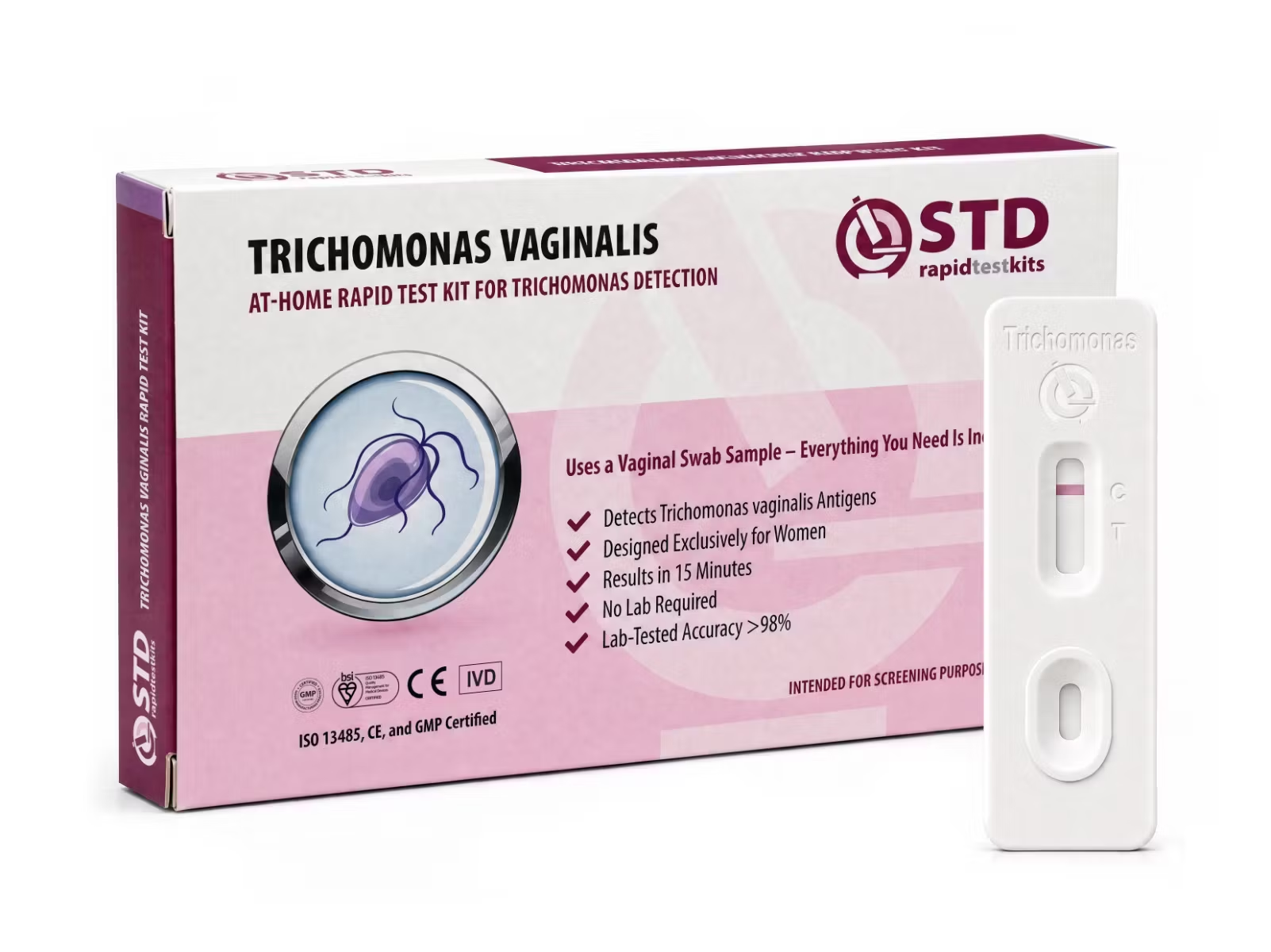
Trichomoniasis is the single STI most often mistaken for BV, since both produce that fishy odor and watery discharge pattern. If your symptoms fit the BV picture but you have had a new partner recently, a rapid trichomoniasis test is a sensible first step before assuming the imbalance is purely bacterial. The rapid at-home tests referenced below are sold directly by stdrapidtestkits.com.
Signs that lean toward BV rather than an STI
- Fishy odor that intensifies after sex or during your period.
- Thin grayish-white discharge that coats the vaginal walls evenly, not yellow-green or frothy.
- Discomfort or mild irritation without significant pelvic pain, painful sex, fever, or bleeding.
How Doctors Tell BV and STDs Apart
Clinicians work from the symptoms outward, but they do not stop at the symptoms. A typical evaluation in a sexual-health clinic combines a brief history (recent partners, condom use, previous infections), a physical exam, and laboratory analysis of a vaginal swab.
For BV specifically, the CDC's Amsel criteria are still widely used: thin homogeneous discharge, vaginal pH above 4.5, a positive whiff test when potassium hydroxide is added to the sample, and the presence of clue cells under a microscope. Three of those four criteria together confirms BV.
For STIs, the lab work depends on the suspected infection. Chlamydia and gonorrhea are usually screened with a nucleic-acid amplification test (NAAT) on a vaginal swab or urine sample. Trichomoniasis can be diagnosed with microscopy, NAAT, or a rapid antigen test. Each technology has different sensitivity, and at-home rapid kits use lateral-flow chemistry that complements lab NAATs rather than replicating them; a positive at-home result is worth confirming in clinic, and a negative result close to the exposure window is worth repeating once the window has fully passed.
When symptoms are ambiguous or there is a known exposure risk, clinicians often order both BV and STI testing in the same visit. New partners and frequent unprotected sex raise the recurrence risk for BV in particular, which is worth raising with a clinician when symptoms keep coming back.
| Situation | Tests Typically Ordered | Reason for Testing Both |
|---|---|---|
| New sexual partner in last 90 days | BV swab + chlamydia/gonorrhea NAAT panel | Exposure risk overlaps with bacterial-balance shift |
| Strong fishy odor that worsens after sex | BV swab first, trich testing if irritation present | Classic BV pattern, but trichomoniasis can mimic it |
| Burning urination or painful sex | Full STI panel plus BV swab | Pain leans STI, but co-infection is common |
| Persistent or recurring discharge | Vaginal infection panel including yeast | Multiple causes can coexist or recur |
| Pregnancy with discharge or odor | BV plus full STI screen per CDC guidance | BV in pregnancy is linked to preterm birth and low birth weight |
Why BV Often Shows Up After Sex
One of the most misread parts of BV is that symptoms often appear within a day or two of sex. That timing makes a lot of people assume their partner gave them an infection. The biology is different.
Sex shifts vaginal chemistry in several small ways. Semen is alkaline, with a pH around 7.2 to 8.0, while a healthy vagina sits between 3.8 and 4.5. After unprotected sex, vaginal pH temporarily rises, sometimes for hours. That alkaline window can favor BV-associated bacteria like Gardnerella over the protective lactobacilli that keep the environment acidic.
Friction during intercourse, new lubricants, scented condoms, and even saliva from oral sex can also disturb the balance. None of these are transmissions in the way an STI is. They are environmental nudges that allow the bacteria already living in the vagina to grow in a different proportion.
This is why epidemiologists describe BV as associated with sexual activity rather than sexually transmitted. New partners and frequent unprotected sex raise the risk that BV will recur, but a partner does not technically pass BV to you the way they would pass chlamydia. The bacterial mix involved is part of normal vaginal flora; it is just present in the wrong proportions.

Common Triggers That Tip the Bacterial Balance
BV is best understood as an ecosystem problem. The vagina is not sterile. It is a living community where one group of bacteria (lactobacilli) keeps the environment acidic enough to suppress the others. When the lactobacilli population drops, other bacteria fill the space, and the smell and discharge that come with BV follow.
A lot of everyday events can knock that population down for a while. Some are obvious, others are not.
| Trigger | What Happens in the Body | Why Symptoms May Appear |
|---|---|---|
| Unprotected sex | Semen temporarily raises vaginal pH toward 7-8 | Higher pH lets BV-associated bacteria multiply |
| Recent antibiotics | Protective lactobacilli may be reduced | Imbalance lets other microbes overgrow |
| Douching or scented intimate washes | Natural bacterial mix is stripped | Protective environment is weakened |
| Hormonal changes (cycle, pill, perimenopause) | Estrogen levels affect lactobacilli | Bacterial balance shifts with the cycle |
| New sexual partner | Exposure to a different microbiome | Vaginal ecosystem readjusts, sometimes noisily |
The Emotional Side of Symptom Panic
Symptoms are only half the story. The hidden half is what happens between noticing a change and getting an answer. Unfamiliar discharge or a new odor can trigger a cascade of anxious thoughts: was that recent encounter risky, did I miss something earlier, will I have to tell someone? Even people in stable, well-communicated relationships sometimes find their minds drifting toward blame or embarrassment.
That panic is not irrational. Sexual health still carries cultural baggage that other health concerns do not, and the consequences of an undiagnosed infection feel high. Anxiety then amplifies the symptoms themselves: the body becomes hyper-aware, the mild burn feels sharper, the discharge feels more unusual, and the odor feels more obvious than it would on a calm day.
What clinicians often report is that the anxiety drops quickly once a clear diagnosis is in hand. The fear lives mostly in the unknown stretch between noticing the change and getting a definitive answer. Once the cause is named (BV, a yeast infection, or a treatable STI), the path forward is concrete: antibiotics, antifungals, partner notification, a follow-up visit. The body still has to heal, but the mind stops looping.
This is one of the underrated reasons rapid testing exists. The biological treatment is roughly the same whether the result comes back today or in a week. The difference is mostly in how long you have to sit with the anxiety while waiting on the answer.

When Symptoms Need Faster Attention
Most BV cases are uncomfortable rather than dangerous, but a few patterns warrant faster medical attention rather than at-home wait-and-see.
See a clinician sooner rather than later if you notice significant pelvic pain (especially deep pain during sex), fever, bleeding between periods, discharge that turns yellow-green or pus-like, or symptoms that get noticeably worse over a few days. Those are signs that an STI may be present, or that an infection has moved from the vagina into the upper reproductive tract. Untreated chlamydia and gonorrhea can progress to pelvic inflammatory disease (PID), which carries long-term fertility consequences, so early evaluation matters.
If you are pregnant or trying to conceive, BV itself also deserves prompt attention. The CDC and the HHS Office on Women's Health both note that untreated BV during pregnancy is linked to a higher risk of preterm birth and low birth weight; about one in four pregnant women develops BV at some point. Testing is straightforward and standard antibiotic treatment is considered safe in pregnancy.
For everyone else, the threshold is simpler. If symptoms have lasted more than a week without improvement, or if they have come back within a month of completing treatment, get checked. Recurrent BV is common enough that the CDC's treatment guidelines include specific protocols for it, and recurrent STI exposure is worth addressing with both partners screened together.
BV is the most common vaginal condition in women ages 15-44.
FAQs
- Can BV actually feel like an STD?
- Yes. BV causes discharge changes, irritation, and a distinctive odor that intensifies after sex, and those same sensations show up with chlamydia, gonorrhea, and trichomoniasis. That is why so many people Google their symptoms at 2 a.m. and brace for the worst. Symptoms alone are not enough to tell the conditions apart, and clinicians rely on laboratory testing for exactly that reason.
- If BV shows up after sex, did someone give it to me?
- Not in the way you might think. Sex can trigger BV, but not because your partner passed it the way they would pass an STI. The vagina has its own bacterial ecosystem, and semen, friction, condoms, lubricants, and even saliva can shift the balance temporarily. When the balance tips, BV can develop using bacteria that were already there. Epidemiologists describe BV as associated with sex, not sexually transmitted.
- Why does BV smell stronger after sex?
- Semen runs between pH 7.2 and 8.0; a healthy vagina sits around 3.8 to 4.5. That alkaline shift after unprotected sex gives BV-related bacteria a short growth window, pushing out more of the compounds that produce the fishy smell. Most people notice the peak the next morning, which is why the timing feels so distinctly post-sex.
- Can I have BV and an STD at the same time?
- Yes, and co-infection is more common than most people realize. BV does not protect against STIs, and a few studies suggest BV may actually make some STIs easier to acquire by disrupting the protective vaginal environment. That is one reason clinicians often order BV testing alongside an STI panel when symptoms appear, rather than testing for one at a time.
- How do doctors tell BV apart from chlamydia, gonorrhea, or trichomoniasis?
- A typical evaluation combines a brief sexual-history conversation, a pelvic exam, and a vaginal swab. For BV specifically, the CDC's Amsel criteria check discharge appearance, vaginal pH, a whiff test, and microscopy for clue cells. For STIs, a nucleic-acid amplification test (NAAT) on the swab can detect chlamydia, gonorrhea, and trichomoniasis with high sensitivity. The in-clinic process usually takes minutes; results come back within a day or two.
- Does BV ever go away on its own?
- Sometimes, especially when the trigger was temporary like a recent course of antibiotics or a one-off shift in routine. But most cases do not resolve without treatment and can hang around for weeks. Standard treatment is a short course of oral or topical antibiotics, typically metronidazole or clindamycin. If symptoms have been around more than a week or keep coming back, treatment is usually needed.
- What is the fastest way to know whether it is BV or an STD?
- Rapid at-home lateral-flow tests return results in about 15 minutes; clinic NAAT results typically come back within one to two business days. Either route ends the guessing faster than waiting to see if symptoms resolve on their own. Pick whichever is more accessible: privacy and speed at home, or full clinical follow-up if you also want a pelvic exam and partner-notification support.
- Does BV come back once you have had it?
- It commonly does. Cleveland Clinic notes that up to 80% of people who get BV experience it again at some point, and roughly 10% to 15% need a second round of antibiotics after the first course. Triggers like new partners, hormonal changes, certain contraceptives, douching, and recent antibiotic courses can all set off recurrence. If you find yourself dealing with BV more than twice a year, the CDC's treatment guidelines include extended-treatment protocols worth asking a clinician about.
Clarity Beats Guessing
Vaginal symptoms come with a lot of social weight that other body changes do not. A sore knee or a persistent cough rarely triggers the same private anxiety that a new discharge or an unfamiliar odor can. But your body is not whispering moral judgments. It is signaling a chemistry change that has a knowable cause and, in most cases, a straightforward fix.
Bacterial vaginosis is the single most common cause of those signals in adults of reproductive age, and it is not an STI. Because the symptoms overlap so heavily with chlamydia, gonorrhea, and trichomoniasis, a quick test is the cleanest way to separate one from the other. Whether that test happens at a clinic, through a primary-care visit, or with a rapid at-home kit on your kitchen counter, the outcome is the same: a named cause and a treatment path you can actually follow.
What you are dealing with is almost certainly more boring than your worst-case scenario, even if the symptoms feel anything but boring right now.
Your next steps
- Test: a rapid at-home lateral-flow kit or a clinic swab will identify the most common causes within hours.
- Treat: BV with a short antibiotic course (metronidazole or clindamycin); confirmed STIs with the regimen for that specific infection.
- Return: if symptoms come back within a month of finishing treatment, or if you have had a new partner since, get re-tested rather than restarting old medication.
How We Sourced This Article: This guide was written using current clinical guidance from major public-health organizations along with peer-reviewed research on vaginal microbiology and sexually transmitted infections. Symptoms, diagnostic criteria, and treatment information for bacterial vaginosis and the most commonly confused STIs were cross-checked against the U.S. Centers for Disease Control and Prevention, the World Health Organization, the U.K. National Health Service, the HHS Office on Women's Health, and the Cleveland Clinic. Where guidance differed, the more conservative and patient-safety-oriented framing was used. The article is editorial summary, not personal medical advice; readers with concerning symptoms should see a licensed clinician.
- U.S. Centers for Disease Control and Prevention. About Bacterial Vaginosis: definition, symptoms, risk factors, BV-in-pregnancy complications, and the statement that BV is the most common vaginal condition in women ages 15 to 44.
- World Health Organization. Sexually transmitted infections fact sheet covering chlamydia, gonorrhea, and trichomoniasis prevalence and symptoms.
- U.K. National Health Service. Bacterial vaginosis information page covering symptoms, causes, treatment, and recurrence.
- Cleveland Clinic. Bacterial vaginosis condition page: notes up to 80% lifetime recurrence and that 10% to 15% of cases need a second antibiotic course after first-line treatment.
- HHS Office on Women's Health. Bacterial vaginosis A-to-Z page covering BV in pregnancy, preterm-birth and low-birth-weight risk, and the one-in-four prevalence figure in pregnant women.
- U.S. Centers for Disease Control and Prevention. STI Treatment Guidelines, Bacterial Vaginosis section: Amsel criteria, metronidazole and clindamycin regimens, and recurrent-BV protocols.
