







Quick Answer: Bacterial Vaginosis can feel similar to an STD because symptoms like unusual discharge, odor, or irritation overlap with infections such as chlamydia, gonorrhea, and trichomoniasis. The key difference is that BV is caused by a shift in vaginal bacteria, not a sexually transmitted infection, though testing is often the fastest way to confirm what’s happening.
Why BV and STDs Feel So Similar in the First Place
The confusion starts with biology. The vagina naturally contains a community of bacteria that help maintain a balanced environment. When those bacteria shift out of balance, the result can be Bacterial Vaginosis, a condition driven by bacterial overgrowth rather than transmission from a partner.
But here’s where the symptoms start to blur together. Changes in vaginal bacteria can produce many of the same signals that sexually transmitted infections do. A change in discharge, irritation during sex, and even burning during urination can appear in both BV and certain STIs.
From the outside, your body isn’t announcing the cause. It’s simply reacting to irritation or infection, which is why so many people find themselves wondering whether the symptoms they’re experiencing point toward something sexually transmitted.
A public health nurse once described this moment perfectly: “People walk into the clinic already convinced they have an STD, but half the time it’s actually BV. The symptoms overlap so much that guessing isn’t reliable.”
Symptoms That Make BV Look Like an STD
One reason people confuse BV with an STI is that the early symptoms often appear after sex or during a new relationship. When the timing lines up with a recent hookup or a new partner, it’s natural to assume transmission must be the cause.
In truth, BV symptoms often show up in situations where vaginal chemistry changes. Sex, semen, new hygiene products, antibiotics, or even hormonal shifts can trigger that imbalance. The body reacts, and suddenly the signs feel suspicious.
The table below highlights how the most common BV symptoms overlap with those of sexually transmitted infections.
| Symptom | BV | Common STDs | Why People Confuse Them |
|---|---|---|---|
| Thin gray or white discharge | Very common | Possible with chlamydia or gonorrhea | Discharge changes often trigger STD anxiety |
| Strong fishy odor | Very common | Sometimes occurs with trichomoniasis | Odor after sex feels alarming |
| Burning during urination | Occasional | Common with several STIs | Burning is widely associated with infection |
| Vaginal irritation | Possible | Possible with multiple infections | Irritation feels like inflammation from infection |
Because these symptoms are similar, doctors often use tests instead of looking at them to make a diagnosis. Even experienced clinicians can’t always determine the cause without lab confirmation.

People are also reading: It Looks Like a Cold Sore, But Is It Herpes Down There?
The Clues That Point Toward BV Instead of an STD
Although BV and sexually transmitted infections can look similar, a few patterns tend to hint at BV rather than an STI. One of the most recognizable signs is odor that becomes stronger after sex. Semen changes vaginal pH, which can temporarily intensify the bacterial imbalance responsible for BV.
Another clue involves the type of discharge. BV discharge is typically thin and grayish-white rather than thick or yellow-green. It also tends to appear consistently rather than escalating rapidly with pain.
Still, these clues are not definitive. People often assume they can diagnose themselves based on smell or discharge alone, but those signs can be misleading. A gynecologist once explained it bluntly: “Discharge doesn’t come with labels. If you want certainty, testing is the only way.”
That’s one reason many people now choose to test at home for common STDs when symptoms appear. Discreet options like those available at STD Rapid Test Kits can quickly rule out infections that require treatment while you investigate other causes.
Situations Where Doctors Check for Both
Medical professionals rarely assume a single cause when symptoms appear. Instead, they look at the entire picture: sexual history, symptom pattern, and laboratory results.
Doctors often check for both BV and STIs at the same time. One of the most common is having a new partner or having sex without protection recently, when the chance of getting sick is higher.
Another case is when the symptoms include both smell and irritation. BV often makes things smell bad without causing a lot of pain, but if it hurts or burns, doctors may also check for infections like chlamydia or gonorrhea.
The table below shows how medical providers typically approach these scenarios.
| Situation | Likely Tests Ordered | Reason for Testing Both |
|---|---|---|
| New sexual partner | BV screening + STI panel | Exposure risk combined with symptoms |
| Strong odor after sex | BV test first, STI testing if irritation present | Odor is classic for BV but overlaps with trichomoniasis |
| Burning or painful urination | STI tests plus BV swab | Symptoms overlap strongly |
| Persistent discharge | Full vaginal infection panel | Multiple infections can occur together |
Testing both conditions helps make sure that diagnoses aren't missed. While BV itself is not an STD, it can exist at the same time as one, which is another reason clinicians avoid guessing.
Why BV Often Appears After Sex
One of the most misunderstood aspects of Bacterial Vaginosis is its connection to sex. Many people believe that if symptoms appear after intimacy, the infection must be sexually transmitted. The truth is more complicated.
Sex changes the vaginal environment in subtle ways. Semen has a higher pH than the vagina, and friction during intercourse can temporarily alter the bacterial balance. For some people, those changes allow certain bacteria to multiply more rapidly.
That shift doesn’t mean anyone “gave” you BV. Instead, it means the vaginal ecosystem temporarily lost balance. A clinician once summarized it this way: “BV isn’t about blame. It’s about chemistry.”
Still, when symptoms appear after a new partner, many people understandably worry about STDs. In those situations, testing can provide reassurance and clarity.
Check Your STD Status in Minutes
Test at Home with Remedium7-in-1 STD Test Kit

 For Men & Women
 Results in Minutes
 No Lab Needed
 Private & Discreet
Order Now $129.00 $343.00
For all 7 tests
Testing Is Often the Fastest Way to Stop Guessing
The hardest part of symptom confusion is the waiting. When your body feels different and the internet is full of worst-case scenarios, uncertainty can become overwhelming.
Testing makes that change. You and your doctor can focus on treating BV or other non-STI conditions once a simple test rules out common infections like chlamydia, gonorrhea, or trichomoniasis.
For people who prefer privacy or convenience, discreet at-home testing is an increasingly popular option. Kits available through this at-home combo STD test allow individuals to screen for several infections quickly without needing a clinic visit.
A plan often replaces panic when you know the outcome. You don't have to guess; you can move forward with treatment, comfort, or more medical advice.
When Symptoms Should Be Checked Quickly
Most cases of BV are uncomfortable but not dangerous. However, certain symptoms should prompt medical evaluation rather than waiting to see if things improve on their own.
Severe pelvic pain, fever, or bleeding between periods can signal conditions beyond BV. Likewise, symptoms that persist for more than a week without improvement may require testing to rule out other infections.
Healthcare providers emphasize that getting checked is not an admission of wrongdoing. It’s simply a form of preventative care. Sexual health specialists frequently remind patients that testing protects both personal health and partners.
As one sexual health counselor often tells patients, “Testing isn’t about suspicion. It’s about clarity.”
Why Self-Diagnosing Vaginal Symptoms Is So Hard
One of the quiet truths about sexual health is that the body rarely sends perfectly labeled signals. A sore throat doesn’t come with a tag saying “virus” or “allergy,” and vaginal symptoms work the same way. Discharge, odor, irritation, or burning are simply the body’s way of saying something in the environment has shifted.
That shift could be something small. It could be hormonal changes during the menstrual cycle, a reaction to soap or detergent, or a temporary imbalance in bacteria. But because sexually transmitted infections can cause similar signals, the brain often jumps straight to the most frightening explanation.
Clinicians see this pattern constantly. A patient walks in convinced they have an STD, already rehearsing difficult conversations with partners. Then the test results come back and the cause turns out to be Bacterial Vaginosis, yeast, or simple irritation.
The important takeaway isn’t that symptoms are meaningless. They absolutely matter. The lesson is that symptoms are clues, not conclusions.

People are also reading: STD From a Towel? The Truth About Trichomoniasis and Hygiene
How BV Changes the Vaginal Environment
To understand why BV creates such noticeable symptoms, it helps to think about the vagina as a living ecosystem. Healthy vaginal environments are dominated by bacteria called lactobacilli. These bacteria produce lactic acid, which keeps the pH slightly acidic and prevents harmful microbes from taking over.
When BV develops, those protective bacteria decrease and other species multiply more rapidly. This shift doesn’t necessarily mean infection from another person. It means that the body's bacteria balance has changed for a short time.
That imbalance is what causes the classic symptoms that most people notice first. The bacteria that cause BV make chemicals that give off a unique smell, and the change in pH can change the thickness of vaginal discharge.
Sex, menstruation, antibiotics, douching, and hormonal shifts can all influence this balance. Sometimes the cause of BV is clear, but other times it happens for no clear reason.
Common Situations That Trigger BV Symptoms
Although BV isn’t technically an STD, many people notice symptoms shortly after events that affect vaginal chemistry. Understanding those patterns can help explain why symptoms appear when they do.
| Trigger | What Happens in the Body | Why Symptoms May Appear |
|---|---|---|
| Sex without a condom | Semen temporarily raises vaginal pH | Higher pH allows BV bacteria to multiply |
| Antibiotics | Beneficial bacteria may decrease | Imbalance allows different microbes to grow |
| Douching or scented washes | Natural bacteria are disrupted | Protective environment is weakened |
| Hormonal changes | Hormone fluctuations alter vaginal chemistry | Bacterial balance temporarily shifts |
| New sexual partner | Exposure to new microbiomes | Vaginal ecosystem adjusts to changes |
None of these triggers are the usual ways that STIs are spread. Instead, they change how many of the bacteria that live in the vagina are there.
The Emotional Side of Symptom Panic
Physical symptoms are only half the story. People don't always understand how deep the emotional side of sexual health is.
A strange smell or unfamiliar discharge can trigger a cascade of worries: Did something happen during sex? Did I miss a symptom earlier? What if I have to tell someone? Even people with healthy relationships sometimes find their thoughts drifting toward blame or embarrassment.
Sexual health clinicians talk about this reaction frequently. The anxiety itself can be more intense than the condition causing the symptoms. In many cases, the moment someone receives clear test results, the emotional tension drops almost immediately.
That’s why healthcare providers emphasize testing rather than speculation. Once the cause is identified, treatment becomes straightforward and the fear surrounding the unknown fades.
Check Your STD Status in Minutes
Test at Home with Remedium6-in-1 STD Test Kit
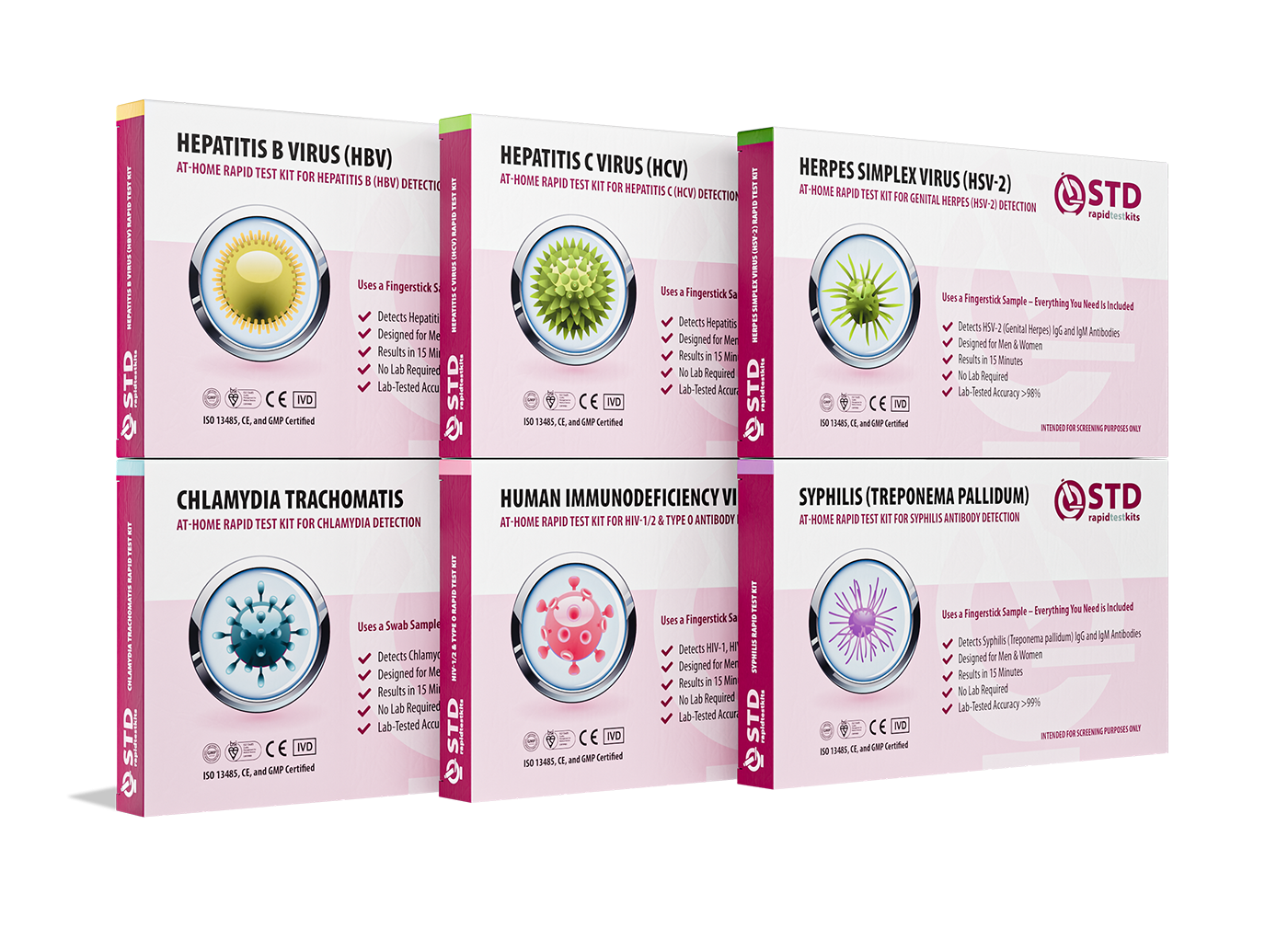 For Men & WomenResults in MinutesNo Lab NeededPrivate & Discreet
Order Now $119.00 $294.00
For all 6 tests
When Symptoms Don’t Match Any Clear Pattern
Occasionally symptoms don’t fit neatly into the usual descriptions of BV or an STD. Someone might notice mild irritation without odor, or discharge that changes briefly and then returns to normal. Bodies are complicated, and vaginal health can fluctuate for many reasons.
In these situations, clinicians often look at the broader picture rather than focusing on a single symptom. Recent medications, changes in hygiene products, new contraceptives, stress levels, and sexual activity can all influence vaginal health.
The goal isn’t to turn every symptom into a medical mystery. It’s simply to gather enough information to understand what the body is responding to.
Most of the time, once the underlying cause is identified, the solution is far less dramatic than people initially feared.
FAQs
1. “Be honest… can BV actually feel like an STD?”
Yeah, it absolutely can. That’s why so many people spiral about it at 2 a.m. after Googling symptoms. BV can cause discharge, irritation, and that unmistakable odor that suddenly makes you hyper-aware of your body. Those same sensations show up with infections like chlamydia or trichomoniasis, so your brain jumps to the worst-case scenario. Unfortunately, symptoms alone don't usually tell the whole story. Even clinicians rely on testing instead of guessing.
2. “If BV shows up after sex… doesn’t that mean someone gave it to me?”
Not necessarily, and this is where people get tripped up. Sex can absolutely trigger BV symptoms, but not because someone “passed” it to you like an STD. Think of the vagina as an ecosystem. Semen, friction, condoms, even lubricants can shift the balance of bacteria. When that balance tips, BV can appear. It’s less about blame and more about chemistry.
3. “Why does BV smell stronger after sex?”
This is one of the classic BV clues. The pH of semen is higher than that of the vagina, which changes the environment where bacteria live for a short time. If BV bacteria are already hanging around, that shift can amplify the odor for a while afterward. A lot of people notice it most the next morning and immediately panic, but that pattern actually points toward BV more often than an STD.
4. “Could I have BV and an STD at the same time?”
Unfortunately, yes. Bodies are complicated, and infections don’t politely take turns. BV doesn’t protect you from sexually transmitted infections, and sometimes they show up together. That’s why doctors often test for several things at once when someone has symptoms. It’s not overkill, it’s just thorough.
5. “My discharge changed. Does that automatically mean something is wrong?”
Not always. Vaginal discharge naturally shifts throughout the menstrual cycle, with stress, with new birth control, even with diet. What usually gets attention is when discharge changes color, consistency, or smell in a noticeable way. Thin grayish discharge with a fishy odor is a pattern that often points toward BV, but again, it’s one of those situations where testing gives you the real answer.
6. “How do doctors actually tell the difference between BV and an STD?”
They check out a lot of different things. To find out if you have chlamydia, gonorrhea, or trichomoniasis, a doctor might look at the discharge under a microscope, check the pH of the vagina, or do lab tests. It’s usually a quick process. Most people spend far longer worrying about the symptoms than they do getting the actual diagnosis.
7. “Is BV something that just goes away on its own?”
Sometimes it can, especially if the imbalance was temporary. But many cases stick around until treated with antibiotics. If symptoms keep hanging around or coming back, it’s worth getting checked instead of waiting it out and hoping your body sorts it out on its own.
8. “I’m embarrassed to get tested. Is that normal?”
Completely normal. Sexual health still carries a lot of unnecessary shame, even though infections are incredibly common. Clinics see these concerns every single day, and at-home testing has made things even easier for people who want privacy. The most important thing to remember is that testing isn’t a confession, it’s just healthcare.
9. “What’s the fastest way to stop worrying about whether it’s BV or an STD?”
Honestly? Testing. Guessing tends to make anxiety louder, not quieter. A simple test can rule out the most common STDs and point you toward the right treatment if BV is the culprit. Once you know what you’re dealing with, the stress usually drops off pretty quickly.
10. “If I get BV once, will it keep coming back?”
It can, and that’s one of the more frustrating parts of BV. Some people only have it once, while others have it over and over again because of hormonal changes, new partners, antibiotics, or even stress. The good news is that healthcare providers have strategies for managing recurring BV so it doesn’t keep disrupting your life.
You Deserve Clarity, Not Anxiety
When vaginal symptoms appear, the mind often jumps to the worst conclusion. But many infections that look like STDs turn out to be something else entirely. Bacterial Vaginosis is one of the most common examples, and it’s frequently misunderstood.
If you're not sure what your symptoms mean, testing can help you figure it out. With private options like the at-home combo STD test kit, you can quickly rule out common infections and move on with confidence.
Peace of mind matters. And when it comes to sexual health, clarity is always better than guessing.
How We Sourced This Article: This guide was written using current clinical guidance from major public health organizations along with peer-reviewed research on vaginal microbiology and sexually transmitted infections. We checked the symptoms, tests, and treatments for Bacterial Vaginosis and common STIs against information from the Centers for Disease Control and Prevention, the World Health Organization, the Mayo Clinic, the NHS, and Planned Parenthood.
Sources
1. Centers for Disease Control and Prevention – Bacterial Vaginosis
2. World Health Organization – Sexually Transmitted Infections
4. Cleveland Clinic – Bacterial Vaginosis
5. American College of Obstetricians and Gynecologists – Vaginitis
6. CDC – Bacterial Vaginosis Treatment Guidelines
About the Author
Dr. F. David, MD is a board-certified infectious disease specialist focused on STI prevention, diagnosis, and treatment. He combines clinical expertise with a practical, stigma-free approach to sexual health education.
Reviewed by: Medical Editorial Team | Last medically reviewed: March 2026
This article is only for information and should not be taken as medical advice.


