







Last updated: April 2026
Three days post-sex is one of the most anxiety-producing windows in sexual health, and one of the most misunderstood. It's early enough that most STDs haven't had time to produce symptoms, but it's also the exact window when several common non-STD conditions kick into gear. The result is a lot of people treating themselves for the wrong thing, or panicking over symptoms that have a much simpler explanation. This article breaks down every likely cause, gives you a clear symptom-by-symptom triage guide, and explains what the correct STD testing timeline looks like so you're acting on real information rather than 2 am Google spirals.
If something feels off 3 days after sex, your body is telling you something; the question is what. Most of the time, the answer is not an STD. But "most of the time" isn't the same as never, and knowing the difference is exactly what this article is for.
People are also reading: Burning, Itching, or Pain the Day After Sex; STD or Not?
Why 3 Days Is a Biological Grey Zone for STD Symptoms
Every STD has what's called an incubation period, the time between exposure to an infection and the moment your body starts producing noticeable symptoms. For most common infections, that window is longer than three days. Chlamydia, for instance, typically takes 5 to 14 days before symptoms appear, if they appear at all. Gonorrhea can show up in as few as 2 to 14 days in men, and up to 10 days in people with a uterus. Herpes requires 4 to 7 days on average before blisters form. HIV's acute phase usually arrives 2 to 4 weeks after transmission. Syphilis takes 3 to 6 weeks before the first sore appears.
What this means practically: if you had sex 3 days ago and you're feeling something now, the biology of STD transmission makes it very unlikely that an STD is the direct cause of your current symptoms. That's not false reassurance, it's just how these infections work at a cellular level. The pathogen needs time to replicate, establish itself in host tissue, and trigger an immune response before your body produces the discharge, burning, or irritation you can actually feel.
That said, "unlikely" is not "impossible." A small number of gonorrhea cases in men have shown symptoms as early as 1 day post-exposure. And if you already had a pre-existing, undetected infection before this encounter, what feels like a new symptom might actually be an old one getting worse. These are edge cases worth keeping in the back of your mind, but they're not where most people reading this article are going to land.
The much more statistically likely explanation, which we'll break down in detail, is that what you're experiencing right now is one of several very common conditions that sex can trigger or aggravate, none of which are sexually transmitted infections. Understanding which one applies to you is the whole point of this article.
The Most Common Culprit: Friction, Irritation, and Micro-Trauma
Sex is a physical activity. Sometimes it's rough. Sometimes there wasn't enough lubrication. Sometimes a new position puts pressure on tissue that isn't used to it. The result, burning, rawness, sensitivity, or a chafed feeling in the days afterward, is one of the most frequently Googled post-sex symptoms and one of the most benign explanations going.
The urethra and surrounding tissue are delicate. Even with a condom and lubrication, vigorous sex can create micro-abrasions, tiny surface-level tears in the mucous membrane that don't bleed and aren't visible to the naked eye, but that sting when urine passes over them. This is why the burning feels particularly sharp when you pee, often within 24 to 72 hours after sex. The sensation can be alarming precisely because it mimics what a UTI or an STD would feel like. But if the burning is external, meaning you feel it at the opening of the urethra or on the surrounding skin rather than deep in the bladder, and it's not accompanied by the constant urge to urinate or fever, friction is a very plausible explanation.
For people with a vulva, the labia and vaginal opening are especially susceptible to friction-related irritation. This shows up as a raw, tender, or slightly swollen feeling rather than a deep internal burn. If the sex was particularly vigorous, involved a lot of direct friction, or happened when you were dry or not fully aroused, the tissue can take 2 to 4 days to settle back down. The irritation should gradually improve on its own, not worsen; that's the key distinction. If it's getting worse over 48 hours rather than better, something else is going on.
Condoms themselves can also be the source of the problem. Latex allergies are more common than most people realize, and even a mild sensitivity, not a full allergy, can produce localized itching, redness, and a burning sensation that peaks around 1 to 3 days after exposure. Spermicides, flavored lubricants, and scented condoms are also common irritants. If this was a new brand, a new type of condom, or you used a lubricated product you don't normally use, that's worth considering before jumping to an infection diagnosis.
People are also reading: STD Myths and Facts: Common Misconceptions About Sexually Transmitted Infections
Is It a UTI? What Happens to Your Urinary Tract After Sex
If the burning is internal, meaning it starts deep in the urethra and intensifies through urination, a urinary tract infection triggered by sex is one of the most likely explanations at the 3-day mark. Post-sex UTIs are so common they have an unofficial nickname: honeymoon cystitis. They're not an STD, but they are directly caused by sex.
During intercourse, bacteria that live naturally around the vaginal and rectal areas can be pushed toward the urethra. From there, they can travel up into the bladder, where they multiply and cause infection. UTI symptoms typically emerge within 24 to 48 hours after sex, which puts the 3-day mark squarely in the middle of peak symptom onset. The classic signs are a persistent burning during urination, a strong urge to urinate even when the bladder is nearly empty, cloudy or strong-smelling urine, and pelvic pressure or discomfort in the lower abdomen.
The important difference between a UTI and an STD symptom at this stage comes down to the nature of the discomfort. A UTI is almost entirely urinary; it burns when you pee, you feel like you need to go constantly, and the discomfort is centered around the bladder. STD symptoms, when they eventually appear, are more likely to involve genital discharge, sores, or a burning that extends beyond urination. If your main symptom is the classic "burning pee plus constant urgency" combination, a UTI triggered by sex is the far more probable explanation than an STD at 3 days post-exposure.
UTIs are also very easy to test for and treat. An over-the-counter UTI test strip can give you a preliminary answer within minutes. If it comes back positive, or if symptoms are worsening, seeing a healthcare provider promptly is the right move. Untreated UTIs can progress to kidney infections, so this isn't something to wait out indefinitely.
Bacterial Vaginosis: The Infection Sex Triggers That Isn't an STD
Bacterial vaginosis is the most commonly misunderstood post-sex condition, and it shows up at almost exactly the 3-day mark after a new sexual encounter. BV is not a sexually transmitted infection, but sex absolutely can trigger it, which is part of why it gets so frequently confused with an STD.
Your vagina maintains a carefully balanced ecosystem of bacteria, dominated by lactobacilli that keep the environment slightly acidic. Semen has an alkaline pH, and when it enters the vaginal canal, it temporarily disrupts that acidic balance. For many people, this has no effect. But for others, particularly those with a new partner, a more frequent sex schedule than usual, or an already slightly disrupted microbiome, that pH shift is enough to cause an overgrowth of anaerobic bacteria, which is the definition of bacterial vaginosis.
The telltale sign of BV is a thin, greyish-white vaginal discharge with a distinctly fishy odor, an odor that is often stronger after sex or after a menstrual period. Itching and burning can accompany it, though according to the NHS, BV doesn't usually cause significant soreness or itching on its own. If itching and burning are prominent alongside discharge, something else (like a concurrent yeast infection) may be involved too. What BV almost never produces are sores, blisters, or the kind of thick, cottage-cheese-like discharge associated with a yeast infection; those distinctions matter for triage.
The timing is important here: BV can develop within 2 to 3 days of a new sexual encounter, which makes it one of the most plausible explanations for symptoms appearing right at the 3-day mark. According to the CDC, up to 84% of people with BV have no symptoms at all, so if you do have symptoms, you're already among the minority. BV requires a prescription antibiotic to clear up reliably. It will not resolve with an over-the-counter yeast infection treatment, which is one of the most common and frustrating mismatches people run into when self-diagnosing.
Check Your STD Status in Minutes
Test at Home with Remedium10-in-1 STD Test Kit
 For Women
 Results in Minutes
 No Lab Needed
 Private & Discreet
Order Now $189.00 $490.00
For all 10 tests
Could It Be a Yeast Infection? Why Sex Sets Them Off
Yeast infections are not STDs. They're caused by an overgrowth of Candida, a fungus that naturally exists in the vaginal environment, and sex is one of the most common triggers for setting that overgrowth in motion. The mechanism is similar to BV: disruption to the vaginal pH and microbiome creates conditions where yeast can proliferate faster than the body can regulate it.
Yeast infection symptoms are distinct enough that, once you know what to look for, they're usually recognizable: intense itching in and around the vagina, a thick, white, odorless discharge that's often described as resembling cottage cheese, redness and swelling of the vulva, and a burning sensation that worsens during urination or sex. The itching component of a yeast infection is typically more pronounced than what you'd experience with BV or friction irritation; it can be relentless and uncomfortable in a way that's hard to ignore.
Sex can trigger a yeast infection in several ways. Oral sex can introduce Candida from the mouth to the genitals. Semen's alkaline pH disrupts vaginal acidity. Friction and warmth from intercourse create conditions where yeast thrives. And if you recently took antibiotics, even a course that ended before this sexual encounter, your lactobacilli may still be depleted, leaving you more vulnerable to an overgrowth. Some people are also simply more prone to post-sex yeast infections than others due to underlying hormonal patterns, immune function, or microbiome composition.
The good news is that a straightforward yeast infection is usually treatable with over-the-counter antifungal treatments. The frustrating news is that the symptoms of a yeast infection overlap significantly with several STDs, particularly trichomoniasis and early gonorrhea, which is precisely why self-diagnosis has a meaningful error rate. If you've been treated for a yeast infection and symptoms haven't resolved in 3 to 7 days, or if this keeps recurring after sex with a particular partner, it's worth getting properly tested rather than cycling through OTC treatments.
If You Have a Penis: What 3-Day Symptoms Mean for You
The vast majority of post-sex symptom content online is written with a vagina in mind, which leaves a lot of men Googling burning and discharge 3 days after sex with no useful frame of reference. The picture looks different for people with a penis, and it's worth addressing directly.
The most important thing to know: the non-STD conditions that dominate the female experience at 3 days, BV, yeast, and pH disruption, don't apply in the same way to male anatomy. Men can get yeast infections, but they're less common and usually look different: redness, itching, or a rash on the head of the penis, sometimes with a white discharge under the foreskin. This is typically caused by the same Candida overgrowth as a vaginal yeast infection and can be transmitted back and forth between partners during sex. It's not an STD, but if your female partner keeps getting yeast infections after sex with you, this dynamic is worth investigating together.
For men, friction irritation is also real, particularly if the sex was vigorous or involved insufficient lubrication. The frenulum and glans are sensitive tissue, and micro-abrasions there can produce a raw, tender feeling for 2 to 4 days afterward. This improves on its own. A condom allergy or sensitivity to a lubricant can produce localized redness and itching on the shaft or glans that peaks 1 to 3 days post-exposure and then fades.
The symptom that requires more immediate attention in men at 3 days is urethral discharge alongside burning. A discharge from the tip of the penis that wasn't there before, combined with a burning sensation during urination, especially if it's cloudy, yellow, or greenish, is a presentation that gonorrhea can produce within 2 to 5 days of exposure in men. This is meaningfully different from every other symptom on this list. It doesn't mean wait for a testing window. It means get evaluated promptly. Early-stage gonorrhea in men responds well to treatment, but left untreated, it can progress to epididymitis and testicular complications. If you're also experiencing testicular or scrotal pain 3 days after sex, that warrants the same level of urgency.
For men with no discharge, just a vague burning or discomfort during urination, a post-sex UTI is less common in male anatomy but not impossible, particularly in men over 50 or those with any history of urinary issues. More often in men, this presentation points toward urethral irritation from friction, or if the timeline extends beyond a week, toward chlamydia or gonorrhea that hasn't yet fully declared itself. The practical answer is the same regardless: test at the correct window and don't wait for symptoms to confirm what the test will tell you anyway.
People are also reading: Scared to Get Tested for an STD? Here's How to Actually Pull Through
When Symptoms at 3 Days Might Actually Be STD-Related
This section is important because while we've established that most post-sex symptoms at 3 days are not STD symptoms, there are specific scenarios where an STD genuinely does enter the picture.
The first scenario is gonorrhea in men. In people with a penis, gonorrhea can produce symptoms, a thick, cloudy discharge from the urethra, and a burning sensation during urination, in as few as 2 to 5 days after exposure. So if you're male-bodied and you're experiencing a visible discharge from the penis alongside burning, a gonorrhea exposure 3 days ago is biologically consistent. That warrants attention rather than a "wait and see" approach.
The second scenario is a pre-existing undetected infection. A large proportion of the most common STDs produce no symptoms at all, or symptoms so mild that they go unnoticed. CDC surveillance data released in September 2025 confirm that over 2.2 million cases of chlamydia, gonorrhea, and syphilis were reported in 2024 alone, the vast majority of which were carried asymptomatically for some period before diagnosis. What this means for you: if you had an undetected infection before this most recent encounter, the physical activity of sex itself can sometimes irritate infected tissue enough to trigger or amplify symptoms. In that case, what feels like a "new" symptom tied to this encounter may actually be an old infection making itself known.
The third scenario involves trichomoniasis, a parasitic STD with a relatively short incubation period of 5 to 28 days. While 3 days is technically still on the early end, some people begin to notice the first faint signs, a slight change in discharge, a mild internal itch, in the 3 to 5 day window. Trichomoniasis is one of the most underdiagnosed STDs precisely because its symptoms mimic BV and yeast infections so closely.
| Symptom | Most Likely Cause at 3 Days | Action |
|---|---|---|
| Burning when peeing, urgency to urinate | UTI triggered by sex | OTC test strip now; see provider if positive |
| Thin grey discharge, fishy odor after sex | Bacterial vaginosis (BV), not an STD | See provider for antibiotic prescription |
| Thick white odorless discharge, intense itching | Yeast infection, not an STD | OTC antifungal; test for trich if it doesn't clear |
| External rawness, redness, tenderness only | Friction irritation or condom/lubricant reaction | Monitor, should improve within 4 days |
| Cloudy/yellow discharge from penis + burning | Gonorrhea, can appear 2–5 days post-exposure in men | Seek evaluation now; do not wait for window |
| Mild internal itch, slight discharge change | BV, yeast, or early trichomoniasis | Test for BV/yeast now; STD test at correct window |
| No symptoms at all | Most common outcome, most STDs are asymptomatic | Still test at correct window after any exposure risk |
The Testing Section: When, What, and Why the Timing Actually Matters
Here's where a lot of people make a mistake: they either test immediately after exposure (before any STD would be detectable) and get a false negative, or they assume that because symptoms haven't appeared, they're in the clear. Neither approach is correct. STD testing has specific window periods, the minimum time after exposure before a test can reliably detect an infection, and testing before those windows close gives you results you can't trust.
If your symptoms at 3 days point toward a UTI, BV, or yeast infection, address those now, they don't require a waiting period. Get tested or treated through a healthcare provider or urgent care. But if there was a genuine STD exposure risk in this encounter, mark your calendar for the correct testing windows below and test at those times regardless of whether symptoms appear. The most dangerous infections are often the ones that produce no symptoms at all.
| Infection | Test From | Notes |
|---|---|---|
| Chlamydia | 14 days after exposure | Most common bacterial STD, often zero symptoms |
| Gonorrhea | 3 weeks after exposure | Can show symptoms earlier in men; still test at window |
| Syphilis | 6 weeks after exposure | First sore (chancre) may appear before this window |
| HIV | 6 weeks (first indicator); retest at 12 weeks for certainty | Acute flu-like phase usually 2–4 weeks post-transmission |
| Herpes HSV-1 & HSV-2 | 6 weeks after exposure | Most people never have visible symptoms |
| Hepatitis B | 6 weeks after exposure | Vaccine-preventable, check your vaccination status |
| Hepatitis C | 8–11 weeks after exposure | Often asymptomatic for years |
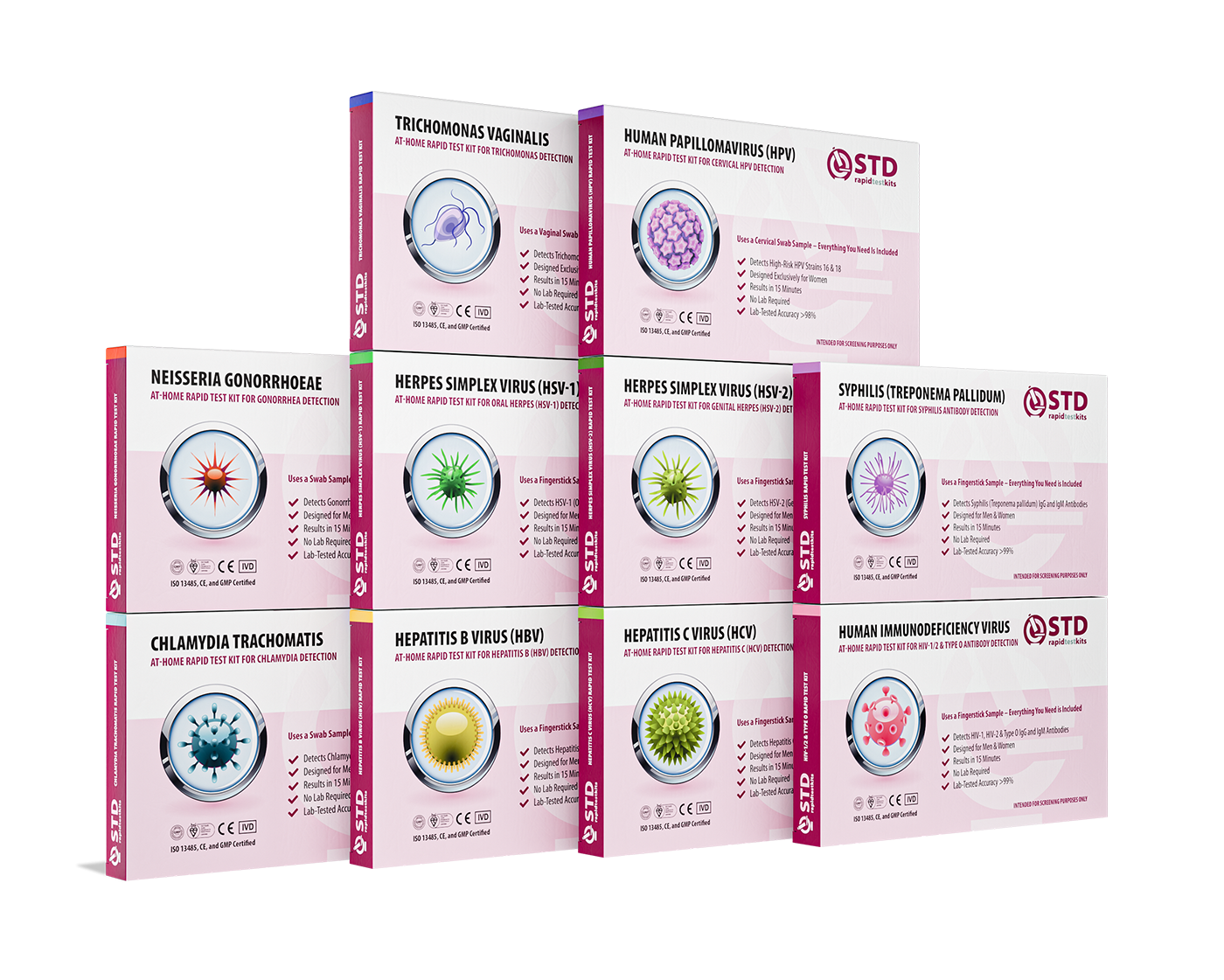
If the encounter involved potential exposure to multiple infections, which is true of most unprotected sexual encounters with a new or unknown-status partner, a combo test kit is the most efficient route. The 6-in-1 Rapid Test Kit covers HSV-2, Chlamydia, Syphilis, HIV, Hepatitis B, and Hepatitis C from a single at-home test, giving you answers across all the major exposure risks in one go. For the most comprehensive coverage, including gonorrhea and both herpes types, the Complete 8-in-1 Rapid Test Kit tests for HSV-1, HSV-2, Chlamydia, Gonorrhea, Syphilis, HIV, Hepatitis B, and Hepatitis C with 99% accuracy, all from home. Testing at the right time is the fastest way to stop the guessing game.
What to Do Right Now, Based on Your Symptoms
Three days after sex and something's off. The right next step depends on what you're actually experiencing. Here's a practical breakdown of how to act on the information in this article, without panic and without burying your head in the sand.
If the main symptom is burning when you pee combined with a constant urgent need to urinate, treat this as a probable post-sex UTI. Pick up a UTI test strip from a pharmacy, drink water consistently, and see a healthcare provider if the test comes back positive or symptoms worsen within 24 hours. Don't wait out a UTI, it can escalate to a kidney infection within days if left untreated.
If you're noticing a grey or off-white vaginal discharge with a fishy odor, especially one that gets stronger after sex, this is the classic presentation of bacterial vaginosis. BV will not resolve with an OTC yeast infection treatment. You need a proper diagnosis and a prescription antibiotic. Make an appointment with a healthcare provider rather than guessing at a fix from the pharmacy aisle.
If the dominant experience is intense itching alongside thick white discharge with little or no odor, a yeast infection triggered by the sexual encounter is likely. OTC antifungal treatments are a reasonable first step. But if this is a recurring pattern, a yeast infection after every sexual encounter with a particular partner, that pattern needs to be discussed with a healthcare provider, because something in the dynamic may need addressing at a deeper level.
If you're experiencing rawness, tenderness, or external irritation without any discharge change, friction, or a condom sensitivity reaction is the most probable explanation. Give it a few days, avoid further irritation to the area, and monitor whether it improves. It should. If it doesn't, or if a rash develops, see a provider.
And if your symptom is a visible discharge from the penis alongside burning at 3 days post-exposure, especially if that discharge is thick, cloudy, or yellow-green, don't wait for a testing window. Seek evaluation promptly. Gonorrhea in men can produce symptoms this early and responds well to early treatment.
For everyone: regardless of what your 3-day symptoms turn out to be, if the encounter carried any STD exposure risk, schedule testing at the correct window periods listed above. Symptoms are unreliable narrators. Testing is the only thing that gives you an actual answer. At STD Rapid Test Kits, results come back in minutes, no clinic wait, no appointment, no one else in the room. Peace of mind is one test away.
People are also reading: Can You Get an STD in a Relationship? The Complete Guide for Couples
The Anxiety Symptom Nobody Talks About
There's one more cause of post-sex physical symptoms that almost never makes it into medical articles: the measurable physical effect of anxiety on genital sensation. This isn't speculative; it's grounded in how the nervous system actually works.
When the body is under stress, cortisol and adrenaline elevate the sensitivity of pain receptors throughout the body, including in the pelvic region. This is a well-documented phenomenon in pelvic pain research: psychological stress lowers the threshold at which nerve endings register sensation as discomfort or pain. In practical terms, this means that mild, entirely normal post-sex sensations, slight tenderness, a faint awareness of the urethral area, and minor vaginal sensitivity can register as significantly more alarming under the amplifying effect of anxiety than they would on an ordinary day. The sensation is real. The neurological mechanism producing it is real. The cause, however, is stress rather than infection.
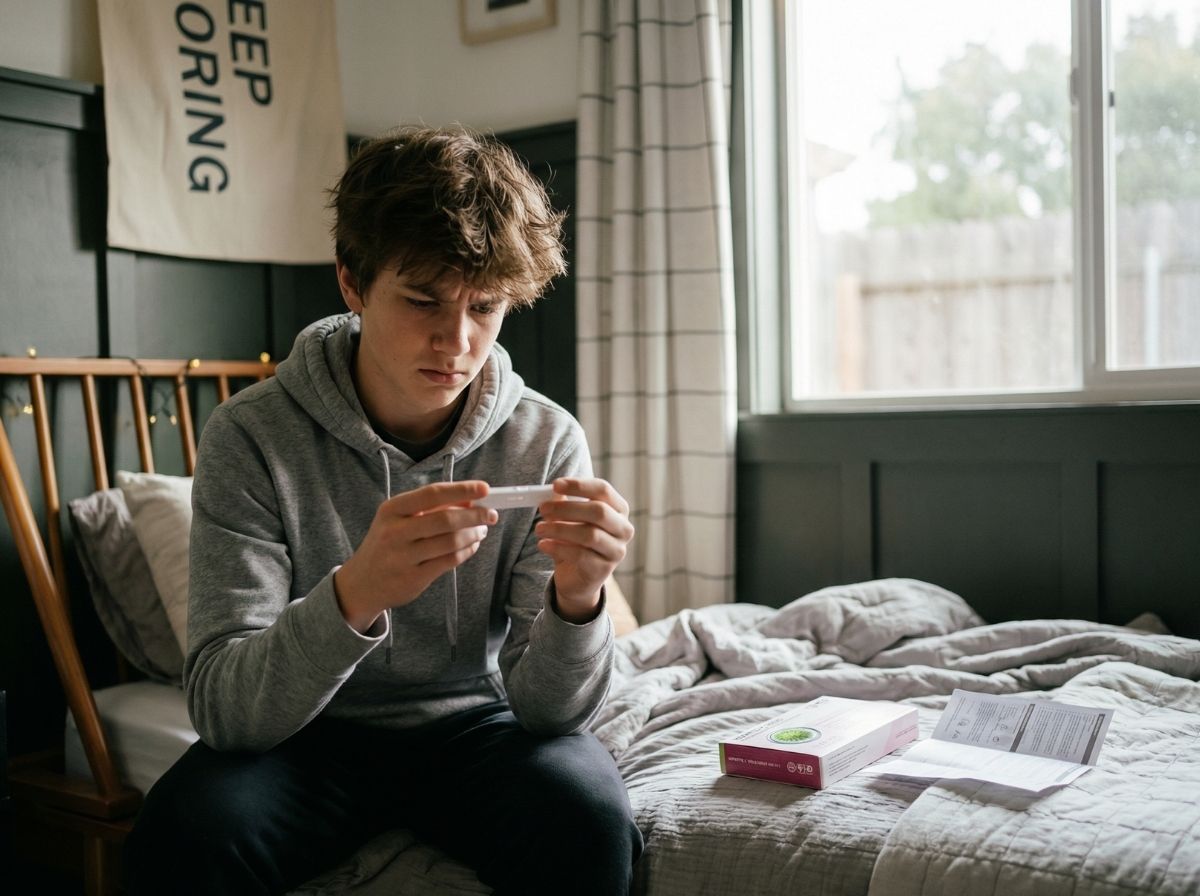
The 3-day post-sex window happens to be the peak of post-exposure anxiety for most people, which is exactly when this effect is most pronounced. Symptoms that seem to shift location, intensify when you focus on them, vary hour to hour, or feel different every time you check are patterns more consistent with anxiety-amplified normal sensation than with the consistent, localized, progressively worsening pattern of an actual infection. A UTI gets worse over time, not better when you're distracted. BV discharge doesn't disappear when you stop thinking about it. Real infection symptoms are stubborn and consistent in a way that anxiety-produced ones typically are not.
This isn't a reason to dismiss what you're feeling; it's a reason to apply the triage framework in this article rather than defaulting to a catastrophic interpretation. Address identifiable symptoms directly. Book an STD test at the correct window. And then, between now and those results, give yourself permission to stop checking, stop Googling, and stop cataloguing every sensation in the region. The test will tell you what you need to know. Your anxiety in the meantime won't.
FAQs
1. Is it possible for STD symptoms to show up three days after sex?
Three days is too soon for symptoms of most STDs to show up; biology just doesn't work that fast. Men with gonorrhea may have symptoms show up as soon as 2 to 5 days after they get it. The incubation period for chlamydia, herpes, syphilis, HIV, and other sexually transmitted diseases is usually longer, sometimes weeks. At three days, you're much more likely to have a UTI, BV, yeast infection, or irritation from friction.
2. Can sex change the smell or color of your discharge even if you don't have an STD?
Yes, and this happens more often than people think. The pH of semen is alkaline, which can temporarily change the vaginal environment. This can make the discharge smell, feel, or color different within 24 to 72 hours. This is usually the start of bacterial vaginosis, not an STD. People with BV have a thin, gray, or off-white discharge that smells like fish, especially after sex. If the change goes away in a few days and there are no other symptoms, it's probably because of a change in pH. See a doctor if it doesn't go away or gets worse.
3. Is it normal for your body's smell to change after sex?
It's normal for the smell of the vagina to change temporarily after sex, especially in the first day or two. This is usually because the pH level changes due to semen. The smell usually goes back to normal after 24 to 48 hours, when the vagina's acidity levels return to normal. A fishy smell that doesn't go away after that time frame, especially one that gets worse after sex or during your period, is a sure sign of bacterial vaginosis and needs to be treated. If you have a strong, bad smell and strange discharge that doesn't go away in a few days, you should see a doctor.
4. How can I tell if I have a UTI or an STD three days after having sex?
A UTI mainly makes you feel like you have to pee a lot and hurts when you do. The pain is more in the act of urinating than in the genitals themselves. When STD symptoms do show up, they are more likely to include sores, burning, or discharge from the genitals that lasts longer than urination. A UTI test strip that you can buy over the counter can give you a quick answer. You need to test at the right time to be sure you have an STD; a UTI test strip won't tell you anything about your STD status.
5. Can a new partner make you itch or hurt without giving you an infection?
Yes, for sure. A new partner may have different bacteria, a different pH in their saliva or semen, and possibly different types of personal care products or latex. Any of these things can temporarily mess up the bacteria in your vagina or cause a localized sensitivity reaction, which can make you itch or feel irritated for no reason other than an STD. A microbiome adjustment or sensitivity reaction is a very likely explanation if the irritation is mild, only happens on the outside, and goes away in a few days. If it gets worse, spreads, or has discharge or a bad smell, look into it more.
6. How long after having sex can I get a reliable STD test result?
This all depends on the infection. Chlamydia: 14 days after coming into contact. Three weeks for gonorrhea. Syphilis: 6 weeks. HIV: The first sign will show up in six weeks, and you should retest in twelve weeks to be sure. 6 weeks for herpes HSV-1 and HSV-2. Hepatitis B: 6 weeks. 8 to 11 weeks for hepatitis C. Testing before these windows gives false negatives that make you feel falsely confident. The timing is very important, and testing on day 3 doesn't really tell you anything about your STD status.
7. I put on a condom. Can I still get a UTI or BV after having sex?
Yes to both. Condoms lower the risk of getting an STD by a lot, but they don't stop the physical effects of sex that cause UTIs and BV. Intercourse can push bacteria toward the urethra even if you use a barrier. Semen isn't the only thing that can change the pH of the vagina; friction and temperature changes can also do this. Using condoms is a great way to protect yourself from STDs, but they don't protect you from every possible condition that can happen after sex.
8. Does it always mean something is wrong when you burn after sex?
Not all the time. A mild, short-lived burning feeling right after sex or while urinating on the first day is often just irritation from friction or tissue that has been physically worked and is temporarily sensitive. This kind of burning usually gets better on its own in 24 to 48 hours and doesn't need treatment. If the burning lasts longer than 2 to 3 days, gets worse over time, is accompanied by discharge or odor, or is combined with urinary urgency and frequency, it is the version that needs to be looked into. It's good to know that things are getting better over time. Over time, things do not get worse.
9. Could the itching and burning be a sign of an allergy to a condom?
More people than you might think have latex allergies or sensitivities. They can cause localized itching, redness, and a burning or stinging feeling that can last for 1 to 3 days after contact. If you think this might be the cause, non-latex condoms (made of polyurethane or polyisoprene) are a simple fix. Spermicides and novelty lubricants are also common irritants that you should rule out.
10. What's the one thing I should do if I'm worried after being around something dangerous?
Two things, but at different times. Right now, deal with any symptoms that aren't STDs, like a UTI, BV, or yeast infection. Don't let those get worse while you wait for STD window periods. Then, at the right time for each infection, do a quick test at home. Take care of what you can now. Check to see what needs a window later. That combination is the most logical and useful way to deal with health concerns after sex.
Test When It Counts, At-Home Kits That Give Real Answers
Whatever is causing your symptoms right now, one thing is certain: if this encounter carried any risk of STD exposure, testing at the correct window is non-negotiable. Not because every encounter leads to an infection, but because the most common STDs are asymptomatic, meaning you could be carrying one, or your partner could be, without either of you knowing. Testing is not a confession of recklessness. It's the single most responsible thing a sexually active person can do for themselves and their partners.
The Complete 8-in-1 Rapid Test Kit covers HSV-1, HSV-2, Chlamydia, Gonorrhea, Syphilis, HIV, Hepatitis B, and Hepatitis C, the eight most common STDs, with 99% accuracy from a single at-home test. Results in minutes, no clinic, no waiting room, no one else involved. If you'd prefer to start with the most commonly transmitted infections, the Chlamydia, Gonorrhea & Syphilis 3-in-1 Kit covers the three bacterial infections most likely to follow unprotected sex, with 99.5% accuracy. And for women who want comprehensive coverage, including trichomoniasis and HPV, the Women's 10-in-1 Complete Kit has everything in one package. Take control of your sexual health, visit STD Rapid Test Kits to find the right test for your situation.
How We Sourced This: Our article was constructed based on current advice from the most prominent public health and medical organizations, and then molded into simple language based on the situations that people actually experience, such as treatment, reinfection by a partner, no-symptom exposure, and the uncomfortable question of whether it "came back." In the background, our pool of research included more diverse public health advice, clinical advice, and medical references, but the following are the most pertinent and useful for readers who want to verify our claims for themselves.
Sources
1. CDC, About Bacterial Vaginosis (BV)
2. CDC, Sexually Transmitted Infections Surveillance, 2024 (Provisional)
3. Mayo Clinic, Sexually Transmitted Disease (STD) Symptoms
4. NCBI Bookshelf, Overview: Bacterial Vaginosis
6. PMC, Updates on Testing, Treatment, and Prevention of STIs in the United States, 2025
About the Author
Dr. F. David, MD is a board-certified infectious disease specialist focused on STI prevention, diagnosis, and treatment. He writes with a direct, sex-positive, stigma-free approach designed to help readers get clear answers without the panic spiral.
Reviewed by: Rapid STD Test Kits Medical Review Team | Last medically reviewed: April 2026
This article is for informational purposes and does not replace medical advice.


