
Published: August 2025 | Last updated: April 2026 | Editorial review and quality control: Martina N.
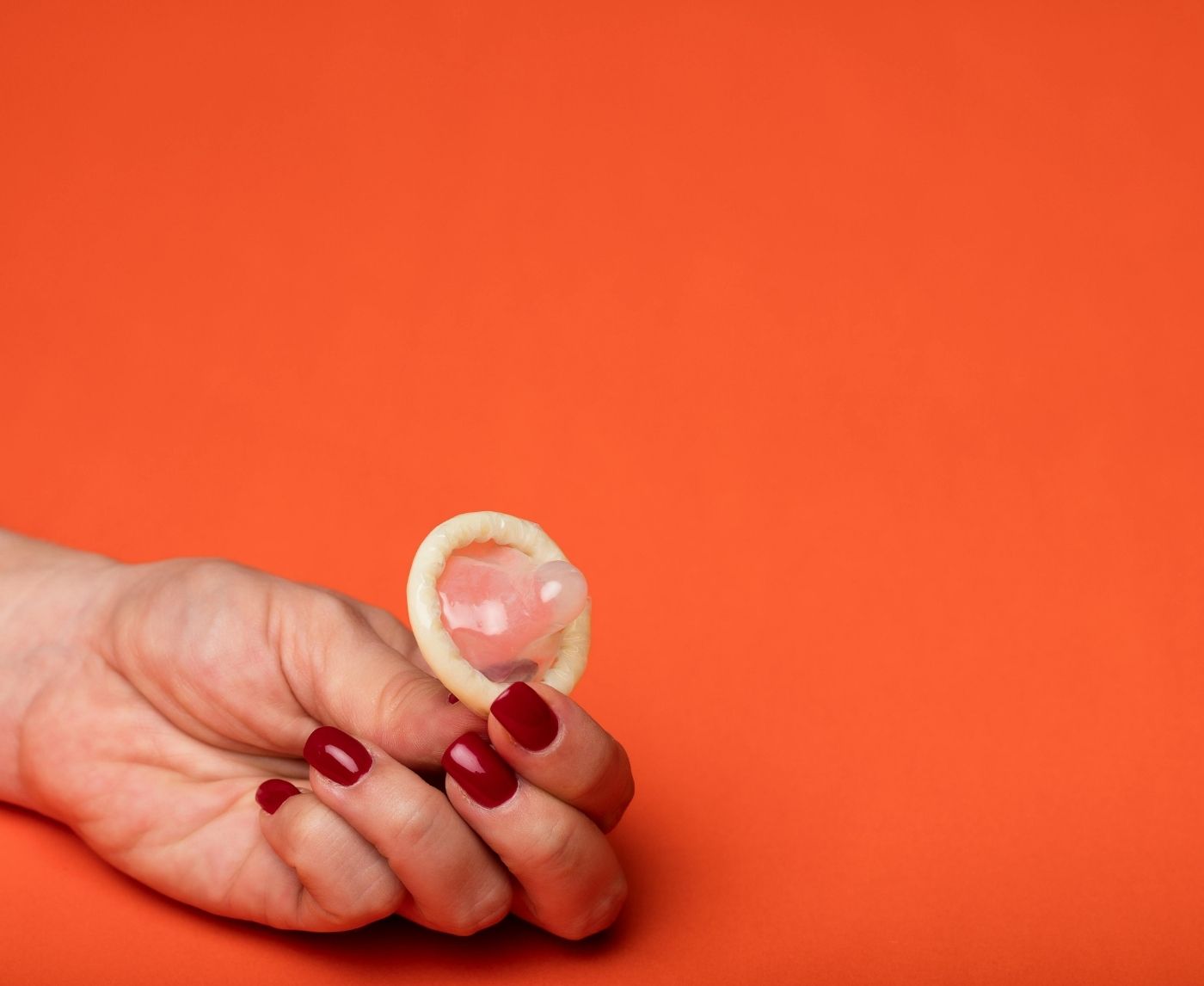
Condoms have a marketing problem. Slip one on, the cultural script goes, and the math supposedly settles itself. Use one, you're responsible. Skip one, you're reckless.
The reality is messier. Condoms protect against many sexually transmitted infections without making sex risk-free. They cut HIV transmission risk dramatically and substantially reduce bacterial infections like chlamydia, gonorrhea, and trichomoniasis. Their protection against herpes, HPV, and syphilis is partial, because those infections often spread through skin contact in areas a condom never touches, and they offer zero protection against pubic lice, scabies, or molluscum contagiosum. Effectiveness depends on which infection you're asking about, on whether the condom went on at the start of contact (not after), on whether the lubricant was compatible, and on whether the size fit. Each of those caveats reduces the protection by a measurable amount.
What follows is a calm, specific look at what condoms do, what they don't, and where testing, vaccination, and honest conversation fill the gaps. (Disclosure: stdrapidtestkits.com sells the at-home rapid tests referenced later in this article. We recommend kits based on fit for the reader's concern.)
How effective are condoms at preventing STDs?
Used correctly and every time, latex condoms cut HIV transmission risk substantially and reduce risk for chlamydia, gonorrhea, hepatitis B, and trichomoniasis. They offer partial protection against herpes, HPV, and syphilis, because those infections spread through skin-to-skin contact in areas a condom may not cover. No condom is 100% effective even with perfect use, so testing remains essential after new partners or known exposures.
Key Takeaways
- Condoms work best against fluid-transmitted infections (HIV, chlamydia, gonorrhea) and only partially against skin-to-skin ones (herpes, HPV, syphilis when sores sit outside the covered area).
- Most real-world condom failure traces back to human error: late application, oil-based lube, wrong size, expired latex, or reuse. Material breakage is rare.
How well condoms actually work, by STI
The honest answer to "do condoms prevent STDs?" is "it depends on which one." A latex or polyurethane sheath blocks the exchange of bodily fluids: semen, vaginal fluid, blood, pre-ejaculate. Infections that ride those fluids are the ones condoms stop best. Infections that spread through direct skin contact, where the contact point sits beyond the covered area, are a different story.
The U.S. Centers for Disease Control and Prevention and the World Health Organization both place consistent and correct condom use among the most reliable single-tool risk-reduction strategies for HIV and bacterial STIs. The CDC's primary prevention guidance states that consistent condom use reduces the risk for chlamydia, gonorrhea, hepatitis B, and trichomoniasis, and reduces the risk for HPV-associated diseases, genital herpes, and syphilis when the infected area is covered. Both agencies are equally clear that the modifier matters: figures collapse when the condom goes on late, comes off early, breaks, or is reused.
The table below summarizes the evidence. Numbers reflect ranges drawn from public-health agency reviews and apply to consistent, correct use across populations, not the perfect-use ceiling.
| STI | Transmission route | Condom effectiveness (consistent, correct use) |
|---|---|---|
| HIV | Bodily fluids | Highly effective; CDC describes consistent correct use as one of the strongest single-tool risk reductions |
| Chlamydia | Bodily fluids | Substantial risk reduction with consistent use |
| Gonorrhea | Bodily fluids | Substantial risk reduction with consistent use |
| Trichomoniasis | Bodily fluids | Risk reduction with consistent use; condoms recommended |
| Hepatitis B | Bodily fluids and blood | Significant reduction; vaccine remains primary defense |
| Syphilis | Contact with chancre (sore) | Partial; protection depends on whether the sore is inside the covered area |
| Genital herpes (HSV-2) | Skin-to-skin contact | Partial; consistent use lowers risk but cannot cover all skin areas where the virus sheds |
| HPV | Skin-to-skin contact | Partial protection; the HPV vaccine is what actually prevents infection |
| Pubic lice / scabies | Close skin contact | No protection |
| Molluscum contagiosum | Skin and shared items | No protection |
The STIs condoms miss (or mostly miss)
The skin-to-skin viruses are the ones that catch people off guard. You used a condom, you played it safe, you still came home with herpes. That doesn't mean the condom "failed" in any conventional sense. It means the virus was on a piece of skin the condom never touched.
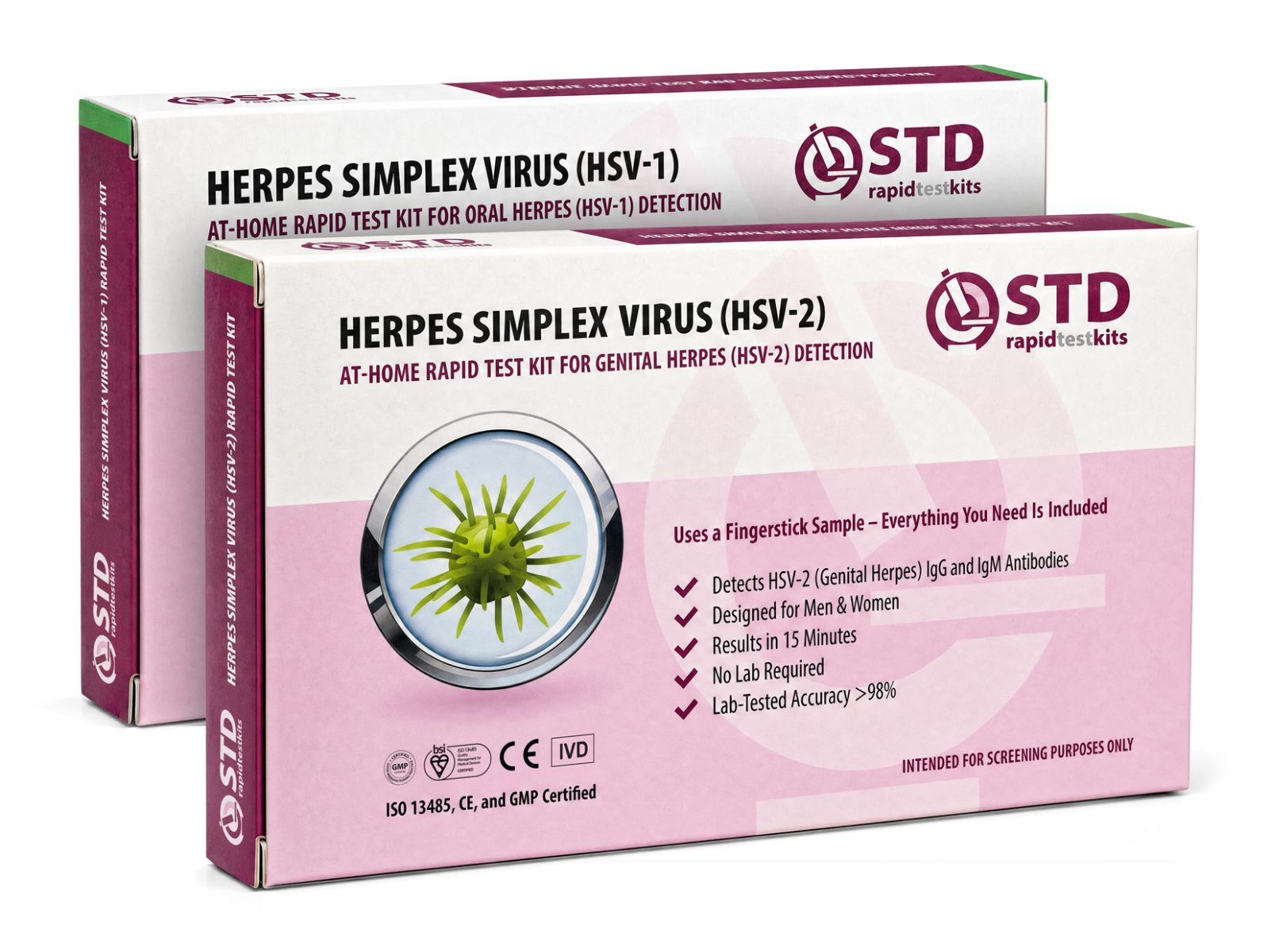
Genital herpes (HSV-2 mostly, sometimes HSV-1) can shed from the vulva, the upper thighs, the scrotum, the perineum, the buttocks. A condom covers the shaft of the penis. It does not cover those zones. The CDC's herpes overview notes that the skin can release the virus from areas without a visible sore, which is why a partner who has no symptoms can still transmit. The same page warns that condoms may not fully protect against herpes for exactly this reason: not all sores or shedding sites occur in areas a condom can cover.
HPV transmits during any genital skin-to-skin contact, regardless of penetration. The CDC's primary prevention guidance confirms that consistent condom use reduces HPV-associated disease when the infected area is covered, but the protection is partial because the virus can live on areas a condom doesn't touch. For HPV, vaccination prevents infection in a way a condom alone cannot.
Syphilis is a hybrid case. The bacterium spreads through contact with an infectious sore (chancre) which during primary syphilis is usually genital but can appear on the lips, anus, or surrounding skin. If the chancre sits inside the covered area, the condom blocks transmission. If it sits at the base of the penis, the scrotum, or the labia majora, it does not. The CDC's primary prevention guidance reflects exactly that limitation: condoms prevent contact with covered sores, but sores in unreachable locations can still transmit.
Pubic lice ("crabs") and scabies are parasites that travel via close skin contact and shared bedding. Condoms have no role in stopping them. Molluscum contagiosum, a poxvirus that produces small pearly bumps, transmits through contact with infected skin or shared towels. Condoms do not cover the areas where it commonly lands.
If your concern is herpes or HPV specifically, vaccination (for HPV) and antibody testing (for HSV, after the relevant window period) belong in the plan alongside the latex.
Why condoms fail in practice
Material failure of a quality-controlled latex condom is uncommon. The much larger gap between "perfect use" and "typical use" comes from how people deploy them in the moment. Most condom failures trace back to human error rather than to a tear in the latex.
Real-world failure modes worth naming:
- Late application. Penetration starts before the condom goes on. Pre-ejaculate carries enough HIV virus and bacterial pathogen load to transmit, so a few minutes of unprotected contact still counts.
- Oil-based lubricant. Petroleum jelly, baby oil, body lotion, coconut oil. These break down latex within minutes. Use water-based or silicone-based lubricant only.
- Wrong size. Too tight risks breakage; too loose risks slippage during withdrawal. Both happen and neither is rare.
- Reuse. Every condom is single-use. Reusing one redistributes pathogens it just blocked.
- Expired latex. Latex degrades over time and faster in heat. Check the date on the wrapper before opening, and don't store condoms in a wallet or glove box for months.
- Late withdrawal. Holding the condom at the base when withdrawing prevents spillage during semi-erection. Skipping that step is a common cause of fluid exposure even when the condom itself stayed intact.
- Damaged packaging. A wrapper with no air buffer or visible damage may indicate the condom inside is compromised.
Most of these are fixable with a few seconds of attention before things start. Whether that attention happens in the moment is another question, and the typical-use figures show what happens when it doesn't.
Stacking two condoms ("double-bagging") increases friction between the two layers and raises the chance both will tear. Use one condom, correctly. The same applies to combining an external and internal condom at the same time.
How to put on a condom correctly
The CDC and the NHS condom guide both publish step-by-step instructions. Stripped to essentials:
External (penis-worn) condom:
- Check the expiration date on the wrapper. Discard if expired or damaged.
- Open the wrapper carefully. No teeth, no scissors, no fingernails punching through the foil.
- Pinch the tip to leave a small reservoir for semen.
- Roll the condom down to the base of an erect penis before any genital contact.
- Use water-based or silicone-based lubricant if needed.
- After ejaculation, hold the condom at the base while withdrawing.
- Tie off the open end and discard in a bin (never flush).
Internal ("female" or receptive) condom:
- Check the date and packaging.
- Pinch the inner ring and insert it into the vagina (or anus, off-label use).
- Push the inner ring back so it sits behind the pubic bone or as deep as comfortable.
- The outer ring stays outside, flat against the vulva or anal opening.
- After sex, twist the outer ring to seal the contents and remove gently.
- Discard in a bin.
Internal condoms cover slightly more surface area than external ones, because the outer ring sits flat against the surrounding skin. That may offer marginal additional protection against some skin-to-skin infections, though strong head-to-head data is limited and condoms remain partial protection against HSV and HPV regardless of style.
Latex allergy? Polyurethane and polyisoprene condoms are the alternatives and protect against STIs comparably to latex. Lambskin condoms are also available, but lambskin has pores small enough to block sperm yet not viruses, so it is contraceptive only and offers no STI protection. Skip lambskin if STI prevention is part of why you're reaching for a condom in the first place.
Beyond condoms: vaccines, testing, honest talk
Condoms are one tool. The full prevention stack adds three more, and each one does work the latex cannot.
Vaccines. The HPV vaccine (Gardasil 9) protects against the strains that cause most cervical, anal, and oropharyngeal cancers, plus most genital warts. The CDC's HPV vaccine guidance recommends routine vaccination for everyone through age 26 who didn't start or finish the series earlier; adults aged 27 to 45 who weren't vaccinated may decide to get HPV vaccine after speaking with their doctor about new-infection risk. The Hepatitis B vaccine is a three-dose series, part of standard childhood immunization in most countries; adults who missed it can catch up at any age. Neither vaccine is on the menu for HIV, herpes, or the bacterial STIs, but for the two infections they do cover, they outperform condoms by a wide margin.
For HIV specifically, daily oral PrEP (pre-exposure prophylaxis) adds a layer of protection that covers gaps condoms leave. Worth discussing with a healthcare provider if HIV exposure risk is a primary concern.
Testing. The only way to know your status is to test. STIs without symptoms are common: CDC data describe chlamydia as frequently asymptomatic in both women and men, often with more than half of infections going unrecognized; HIV's acute phase produces vague flu-like symptoms (or none) two to four weeks after exposure; HSV-2 frequently produces no recognized first outbreak. None of these will surface in your daily life until they spread. Routine screening, especially after a new partner or a known exposure, catches them.
The CDC's screening baseline: annual chlamydia and gonorrhea testing for sexually active women under 25 and for older women with new or multiple partners; HIV testing at least once for everyone aged 13 to 64, more often for higher-risk populations; syphilis screening for all pregnant women and at-risk groups. Layer on top of that any specific concern (a partner's recent diagnosis, a missed condom, a genital symptom) and the schedule fills out.
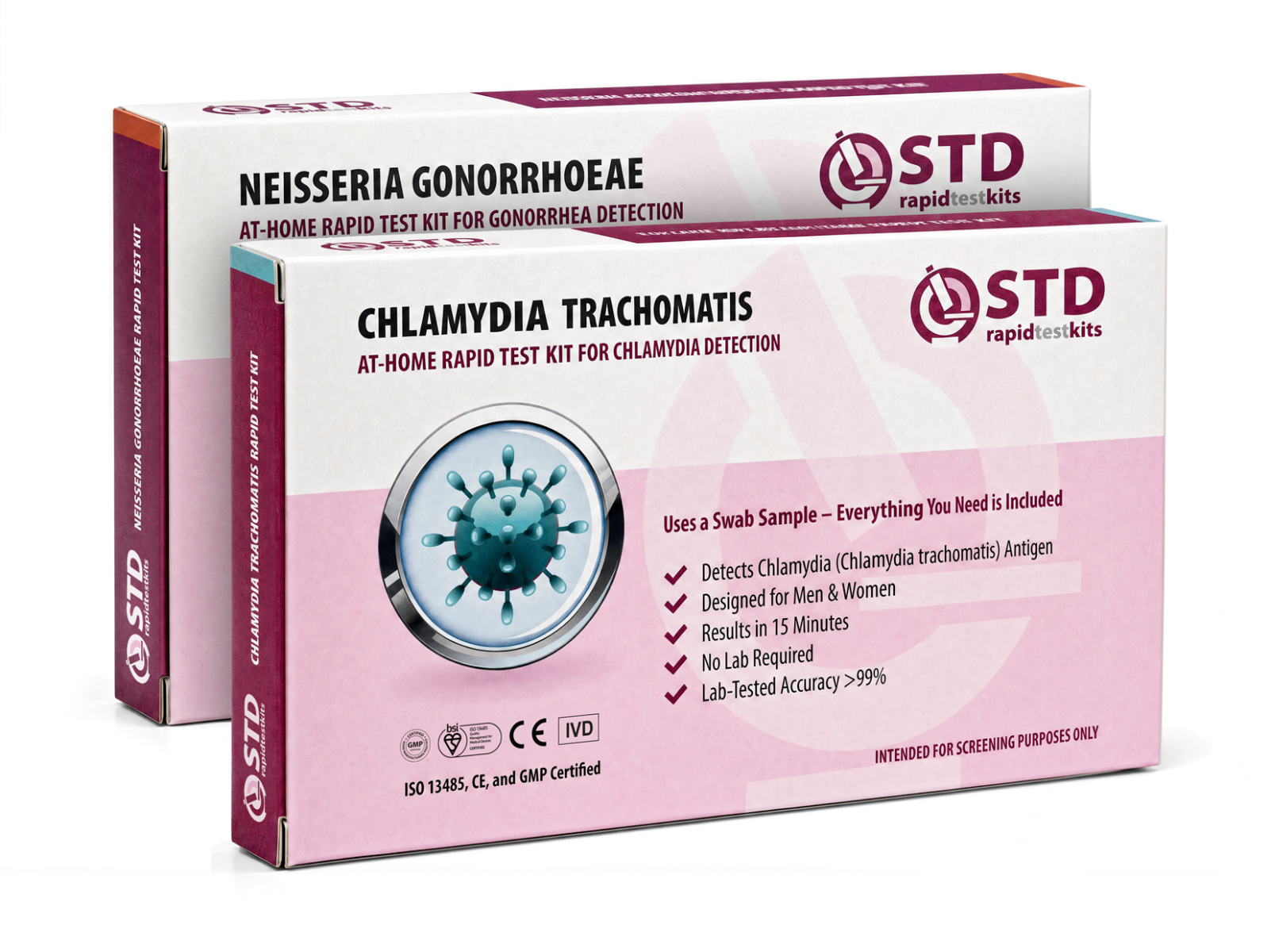
At-home rapid lateral-flow kits handle the routine screening end of that schedule, with results in about 15 minutes and no clinic visit required. They use the same sample types (genital swab for bacterial STIs, fingerstick blood for HIV / syphilis / hepatitis / herpes antibodies) as their lab counterparts; lab tests use NAAT or PCR chemistry, which has higher analytical sensitivity, so a positive at-home result is worth confirming through a clinician for any treatment decisions.
Communication. Asking a new partner about testing history, last result date, and vaccination status is awkward exactly once. After that it's a normal part of dating. "I tested two months ago for everything, here are my results" is a sentence the other person should be able to match. The conversation gets easier each time, and a recent test result is the only thing that turns "clean" from a feeling into a status.
Latex condoms, when used consistently and correctly, are highly effective in preventing the sexual transmission of HIV, the virus that causes AIDS.

Common myths about condoms, debunked
Two condoms double the protection. They don't. Friction between the two layers raises the chance both tear. Use one, correctly.
You can tell a clean partner. You can't. Most STIs are asymptomatic for long stretches. "I'm clean" without a recent test is a feeling.
Lambskin condoms protect against STIs. They don't. Lambskin has pores small enough to block sperm but not viruses. Use latex, polyurethane, or polyisoprene.
Withdrawal is enough without a condom. The pull-out method does little for STI prevention. Pre-ejaculate carries enough viral and bacterial load to transmit HIV, chlamydia, gonorrhea, and others.
Condoms ruin sensation. Modern thin condoms (Skyn, Durex Avanti, Trojan Sensitive) are markedly thinner than 1990s latex. Adding compatible lubricant restores most of the friction-feel concern.
If we're monogamous, we don't need condoms. Only true if both partners have tested clean after the relevant window periods, neither has had unprotected contact since, and both stay monogamous. That's a lot of preconditions, and skipping the testing step is the usual gap.
STIs are all curable now. Some are (chlamydia, gonorrhea, syphilis, trichomoniasis are bacterial or parasitic and respond to antibiotics if caught early). Some aren't (HIV, herpes, and most HPV strains are managed lifelong, not cured).
If a piece of common condom advice ends with "so you don't really need to test," treat it as wrong by default. Every honest version of the advice ends with "so testing remains part of the plan."
The bottom line
Condoms are real but partial protection. Used consistently and correctly, they cut HIV risk substantially and offer strong coverage against chlamydia and gonorrhea. Against herpes, HPV, and syphilis the coverage is incomplete, depending on whether the condom covers the part of skin where the virus or sore lives. Against pubic lice, scabies, and molluscum, there is no coverage at all.
The honest plan: use condoms every time, use them correctly, get vaccinated against HPV and Hepatitis B if you're not already, ask a clinician about PrEP if HIV exposure is a real concern, test on a routine schedule (and immediately after a known exposure or a missed condom event), and talk to your partners about results and vaccination status.
Frequently asked questions
- Are condoms 100% effective at preventing STDs?
- Effectiveness ranges from zero (pubic lice, scabies, molluscum contagiosum) to highly effective (HIV with consistent correct use), depending entirely on which infection you're asking about and whether the condom covered the relevant skin or sore. They are highly effective against fluid-transmitted infections (HIV, chlamydia, gonorrhea, trichomoniasis, hepatitis B), and only partially effective against skin-to-skin infections (herpes, HPV, syphilis when sores sit outside the covered area).
- Can I still get an STI if the condom doesn't break?
- Yes. Skin-to-skin infections like HSV-2 and HPV can transmit through contact with skin areas the condom never covered (scrotum, base of the penis, vulva, upper thighs). The condom can be intact and the exposure still real.
- Should I wear two condoms for extra protection?
- No. Two condoms rub against each other and increase the chance both tear. One condom, used correctly, is the better protection.
- Do condoms protect against oral STIs?
- Only if used during oral sex, and most people don't. Condoms during oral sex (or dental dams during oral-vulvar contact) do reduce risk of pharyngeal gonorrhea, oral herpes acquisition, and oral syphilis transmission. We don't sell pharyngeal swab tests; for a suspected oral STI, see a clinic for swab-based testing.
- How much does correct use change the effectiveness numbers?
- Significantly. Per the NHS male condoms guide, condoms are around 98% effective at preventing pregnancy with perfect use and around 82% with typical use. The same gap applies to STI prevention. Late application, oil-based lube, wrong size, and removing the condom too late are the main reasons typical-use numbers fall short of perfect-use numbers.
- Do I still need STI testing if I always use condoms?
- Yes. Condoms reduce risk; they don't erase it. Asymptomatic infections are common, especially for chlamydia, gonorrhea, and HSV-2. Routine screening (annually for sexually active people, more often after a new partner) is part of any honest prevention plan.
- Are internal (female) condoms as effective as external ones?
- Roughly yes. The outer ring of an internal condom sits flat against the surrounding skin and may cover marginally more area, but head-to-head data is limited. Both types remain partial protection against HSV and HPV.
- Should I trust a partner who says "I'm clean"?
- Not without recent test results. "Clean" is a feeling rather than a status. Asking when they last tested, what they tested for, and what the result was is reasonable and normal. So is sharing your own.
- U.S. Centers for Disease Control and Prevention. Condom Use overview, including the agency statement that latex condoms used consistently and correctly are highly effective in preventing the sexual transmission of HIV.
- U.S. Centers for Disease Control and Prevention. STI Treatment Guidelines, Primary Prevention Methods, with the agency statement that consistent condom use reduces risk for chlamydia, gonorrhea, hepatitis B, trichomoniasis, HPV-associated disease, herpes, and syphilis when the infected area is covered.
- World Health Organization. Sexually transmitted infections fact sheet, including condom use as a primary prevention tool and the limits of barrier methods against skin-to-skin viruses.
- U.S. Centers for Disease Control and Prevention. Genital herpes (HSV) overview, including transmission via asymptomatic shedding and the partial protective effect of condoms.
- U.S. Centers for Disease Control and Prevention. HPV Vaccines page, including ACIP guidance on routine vaccination through age 26 and shared clinical decision-making for adults 27 to 45.
- U.S. National Health Service. Male condoms guide, with the 98% perfect-use and 82% typical-use effectiveness figures plus step-by-step correct-use instructions and lubricant compatibility guidance.
