Published: November 2025 | Last updated: May 2026 | Editorial review and quality control: Martina N.
Why are STD rates rising, and what should I do about it?
Reported U.S. chlamydia, gonorrhea, and syphilis cases climbed across the past decade and topped 2.4 million combined at recent peaks. Provisional 2024 figures show a first broad decline (about 9% lower combined, to roughly 2.2 million), though congenital syphilis kept rising. Drivers include declining condom use among under-30s, COVID-era gaps in routine screening, persistent stigma, and clinic access barriers. The most effective personal response is the simplest one: if you are sexually active, screen once a year (every 3 to 6 months with new or multiple partners), use condoms with partners whose status you do not know, treat positives fast, and tell partners. At-home rapid kits cover most of the routine screening step privately, with results in about 15 minutes for the lateral-flow swab and blood tests we sell.
Reported sexually transmitted infections in the United States climbed steadily for most of the past decade and reached a multi-decade peak around 2023. Provisional 2024 figures, the most recent CDC has released, show the first broad decline in years: combined chlamydia, gonorrhea, and adult syphilis came in around 2.2 million (about 9% lower than 2023). Underneath that headline are roughly 1.52 million chlamydia cases (still the most common reportable bacterial STI by a wide margin), about 543,000 gonorrhea cases, and roughly 190,000 adult syphilis cases per CDC STI surveillance. One trend kept climbing through the same period: congenital syphilis, the form passed to a baby during pregnancy, reached 3,941 cases in 2024 (up about 1.6% from 2023) and now stands more than ten times above its 2012 level.
The headline is more nuanced than “rates are rising.” Certain age groups drove most of the decade-long increase. Certain test windows reliably catch the infections that matter. Certain barriers (cost, stigma, sex-ed gaps, clinic closures) are the real bottleneck for most people who delay testing. If you came here worried about a recent encounter, the practical answer sits in the middle of this article: a testing schedule, a window-period table, and what to do if a result comes back positive. If you came to understand what is happening, read on.
Key Takeaways
- U.S. STI cases climbed for most of the past decade and topped 2.4 million combined chlamydia, gonorrhea, and syphilis at recent peaks; provisional 2024 data shows the first broad decline (about 2.2 million), though congenital syphilis kept rising.
- Most chlamydia and gonorrhea infections cause no symptoms, so a known testing schedule (every 3 to 6 months when actively dating) catches what your body will not tell you.
What's driving the climb?
The rise across the past decade is a compounding effect of several smaller forces, not one villain. The U.S. is not alone: the World Health Organization estimates roughly 374 million new infections each year globally (2020 estimate) across the four most common curable STIs combined, chlamydia (129 million), gonorrhea (82 million), syphilis (7.1 million), and trichomoniasis (156 million) per the WHO STIs fact sheet. Six factors do most of the work, and each one is correctable with the right combination of public-health investment and individual choices.
1. Condom use has been declining among under-30s. CDC's Youth Risk Behavior Surveillance System and adult sexual-behavior surveys both show consistent multi-year drops in condom use during recent vaginal and anal sex among teens and young adults. Long-acting reversible contraceptives have decoupled pregnancy prevention from STI prevention. App-driven dating has shortened the courtship window where conversations about protection used to happen. PrEP has reduced HIV-specific anxiety without addressing the bacterial STIs condoms also block.
2. The pandemic disrupted routine screening. In 2020 and into 2021, routine sexual-health visits, school-based screening programs, and walk-in clinic capacity all dropped while transmission continued. A meaningful share of the 2022 to 2023 surge represented infections that quietly accumulated during the screening gap and were detected later. The 2024 decline partly reflects screening catching back up.
3. Public-health funding has shrunk. State and local STI program budgets were cut steeply over the past two decades while reported case counts more than doubled. Clinics shortened hours, closed locations, and reduced contact tracing. When testing gets harder, infections stay around longer.
4. Sex education has weakened in many states. Several U.S. states still require abstinence-only programs, and many teens leave high school without knowing that asymptomatic infections exist, that oral and anal sex carry STD risk, or that condoms reduce (without eliminating) transmission of skin-to-skin infections like HPV and herpes. The information gap shows up later as missed warning signs.
5. Older adults are dating again. CDC surveillance shows chlamydia, gonorrhea, and syphilis climbing every year for over a decade in the 55-plus age band. Two reasons stand out: post-divorce and post-widowhood dating without condoms, and the assumption that condoms are unnecessary once pregnancy is off the table. Providers also screen older patients less often, sometimes skipping the sexual-history question entirely during routine wellness visits.
6. Antimicrobial pressure on gonorrhea is rising. Per the World Health Organization's sexually transmitted infections fact sheet, gonorrhea strains with reduced susceptibility to ceftriaxone (the last reliable first-line drug class) have been documented in multiple countries. Resistance affects treatment more than transmission speed; a missed early diagnosis becomes harder to treat months later as drug options narrow.
Stigma sits underneath all of these. Shame, fear of judgment, and worry about being seen at a clinic delay testing across every age group. Teens worry about parents finding out. Adults in long marriages worry about being judged for needing a test at all.
WHO has documented gonorrhea strains with reduced susceptibility to extended-spectrum cephalosporins, the last reliable first-line drug class for the infection. Catching gonorrhea early matters more now than it did a decade ago, because the options for treating a missed case shrink as resistance spreads.
Who is getting hit hardest
Two groups stand out in CDC's most recent surveillance: people aged 15 to 24, and adults over 55. Different reasons; the outcome looks the same on the chart.
Teens and young adults (15 to 24)
Roughly half of all reported new STDs in the U.S. occur in this age band, even though they make up about a quarter of the sexually active population. Chlamydia is the leading reported infection; HPV and gonorrhea follow. Younger bodies are also biologically more susceptible to chlamydia and gonorrhea at the cervix. Many infections are caught late or not at all, because symptoms are mild or absent and asking a parent or doctor about testing feels too risky for many teenagers.
Composite scenario public-health workers see often: a 17-year-old whose partner has a “cold sore” does not realize HSV-1 can transmit to genitals through oral sex. Weeks later a painful sore appears, and the teen is too embarrassed to ask anyone about it. The infection itself responds well to antiviral treatment, yet the silence around it delays care for months.
Adults 55 and older
Reported syphilis, gonorrhea, and chlamydia have climbed in this group every year for over a decade. Risk factors include condom-free sex (often based on the false assumption that monogamy in a previous marriage covers current exposure), age-related changes that mask symptoms (vaginal dryness mistaken for menopause, friction-related bumps mistaken for shaving cuts), and providers who do not ask about sex during routine wellness visits.
Composite scenario: a 68-year-old, dating again two years after losing a spouse, does not think condoms apply at her age. Her new partner does not either. She develops mild discomfort she chalks up to menopause. A blood test ordered for an unrelated reason flags syphilis. Treatment works, yet earlier testing would have spared months of unexplained fatigue.
Other patterns worth knowing
Men who have sex with men carry higher rates of pharyngeal and rectal gonorrhea and chlamydia, higher syphilis rates, and disproportionate HIV risk; CDC recommends screening every 3 to 6 months for sexually active MSM per CDC STI screening recommendations. Pregnant people with untreated syphilis can transmit it to the baby, and the recent congenital-syphilis surge is the most concerning single trend in the data. Routine prenatal syphilis screening at the first visit (and again in the third trimester for higher-risk groups) is the strongest defense against that specific tragedy.
Roughly half of all reported new STD diagnoses in the United States occur in people aged 15 to 24, even though that group makes up about a quarter of the sexually active population.
Why most infections feel like nothing
Most chlamydia infections in women cause no symptoms, per CDC, and the same is true for a large share of infections in men. Gonorrhea is asymptomatic in roughly half of infected women. HPV is famously silent, often only flagged by an abnormal Pap or by visible warts months or years after exposure. Syphilis can hide for weeks before its first sign appears (a single painless sore), and that sore heals on its own even without treatment, while the infection continues underneath. The UK's NHS overview of common STIs reaches the same conclusion about silent presentation across the most reported infections.
Silent infections are what drive the spread. People without symptoms have no reason to think about testing. Their partners have no reason to ask. The infection moves quietly through dating networks until something prompts a test, usually either a partner's diagnosis or a delayed complication.
For teens, the mild symptoms that do appear (irregular bleeding, painful urination, light discharge) are often misread as a yeast infection, a UTI, or shaving irritation. For older adults, symptoms blend into background changes: vaginal dryness, fatigue, mild discomfort that feels age-appropriate. Either pattern leads to delayed diagnosis.
STIs continue to impact a substantial number of people in the United States, with serious consequences for health and well-being, especially among adolescents and young adults.
Testing windows: when a test will reliably catch it
Testing too early gives false negatives. The “window period” is the time between exposure and when a test can reliably detect the infection. Window length depends on the test technology and the specific infection. The table below summarizes the standard guidance for both laboratory and at-home rapid testing.
| Infection | Earliest reliable test | Best testing time | Notes |
|---|---|---|---|
| Chlamydia | 7 days | 14 days or later | Often asymptomatic; the leading reported STI in teens |
| Gonorrhea | 5 to 7 days | 14 days or later | Lab testing covers genital, throat, and rectal sites separately |
| Syphilis | 21 days | 6 weeks or later | Blood antibody test; can hide for weeks before first sore |
| HIV (antibody) | 18 to 45 days | 45 to 90 days | Most at-home rapid kits use antibody chemistry |
| HSV-2 (antibody) | 6 to 12 weeks | 12 to 16 weeks | Antibody seroconversion takes time; antibody tests don't detect active sores |
| Trichomoniasis | 5 days | 14 days | Self-swab kit available for women only |
| HPV | Variable | Per Pap schedule | No routine blood test; cervical Pap or HPV co-test for women |
How at-home testing closes the gap
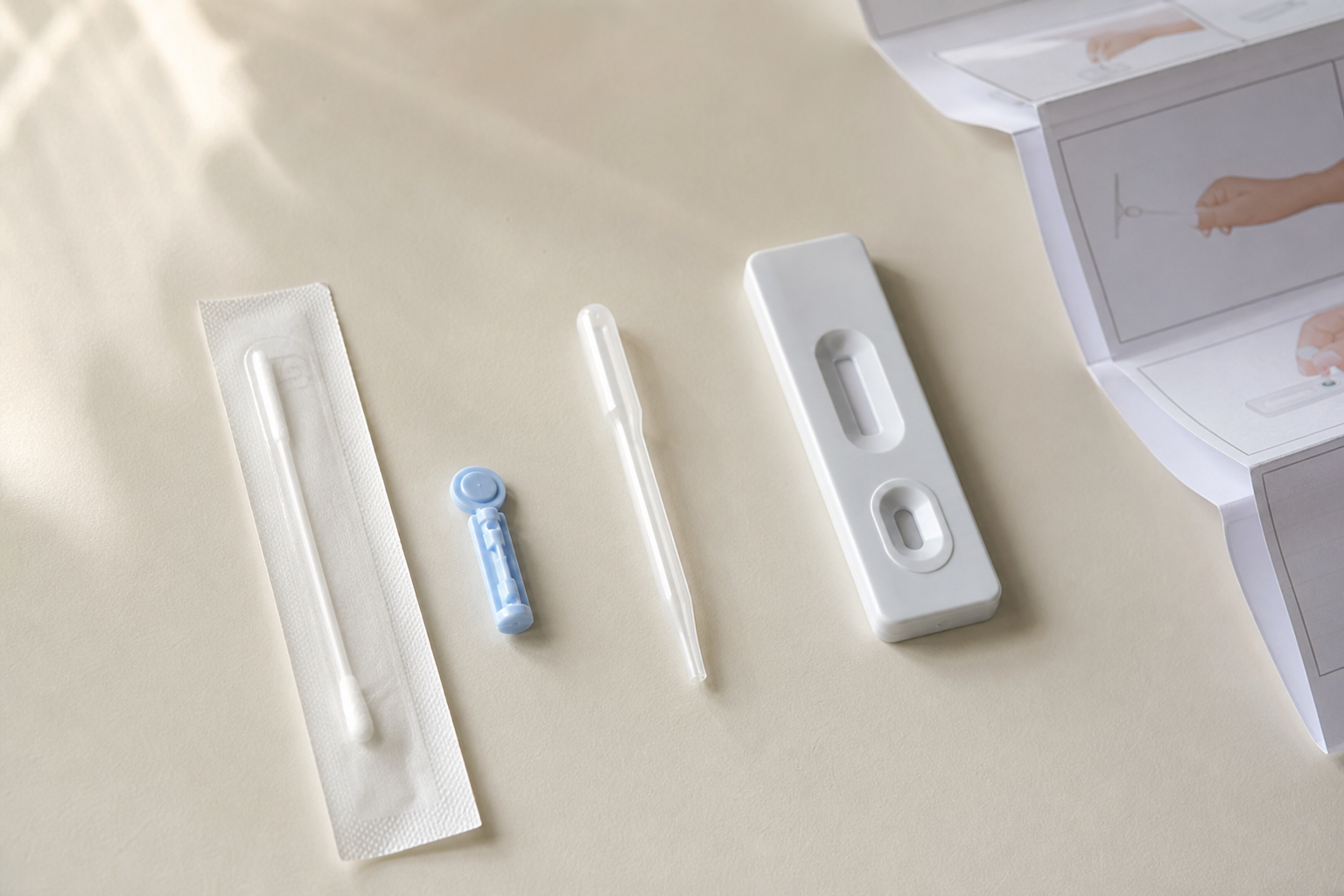
For both teens and seniors, social friction (billing notices, waiting-room anxiety, fear of judgment) keeps more people from testing than any medical barrier does. A teenager does not want a billing notice mailed to her parents. A 70-year-old does not want to sit in a youth-skewing sexual-health clinic waiting room. Our at-home STI test kits remove both frictions: discreet packaging, no appointment, no clinic interaction, results in about 15 minutes for most lateral-flow tests.
What at-home rapid tests do well:
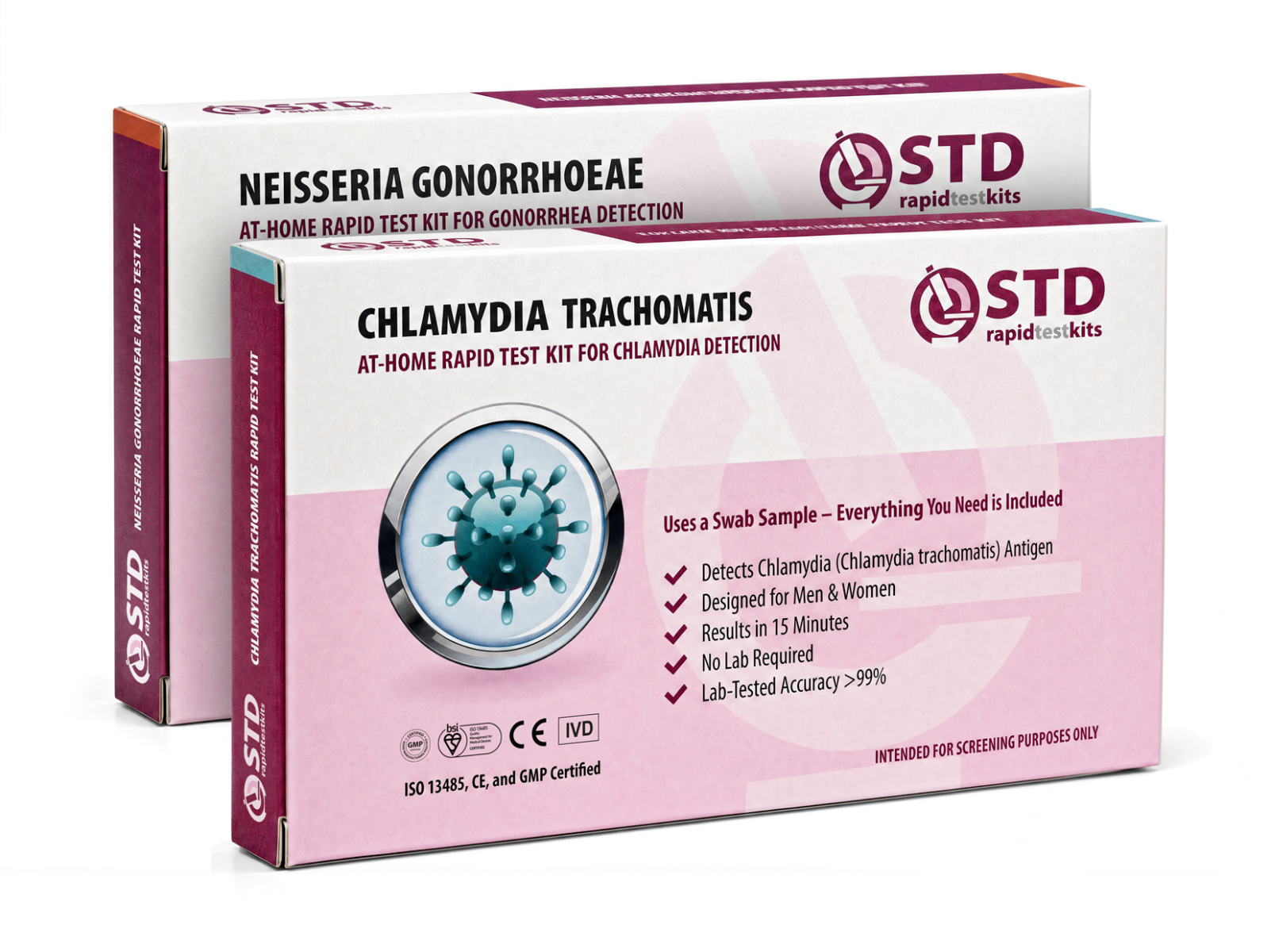
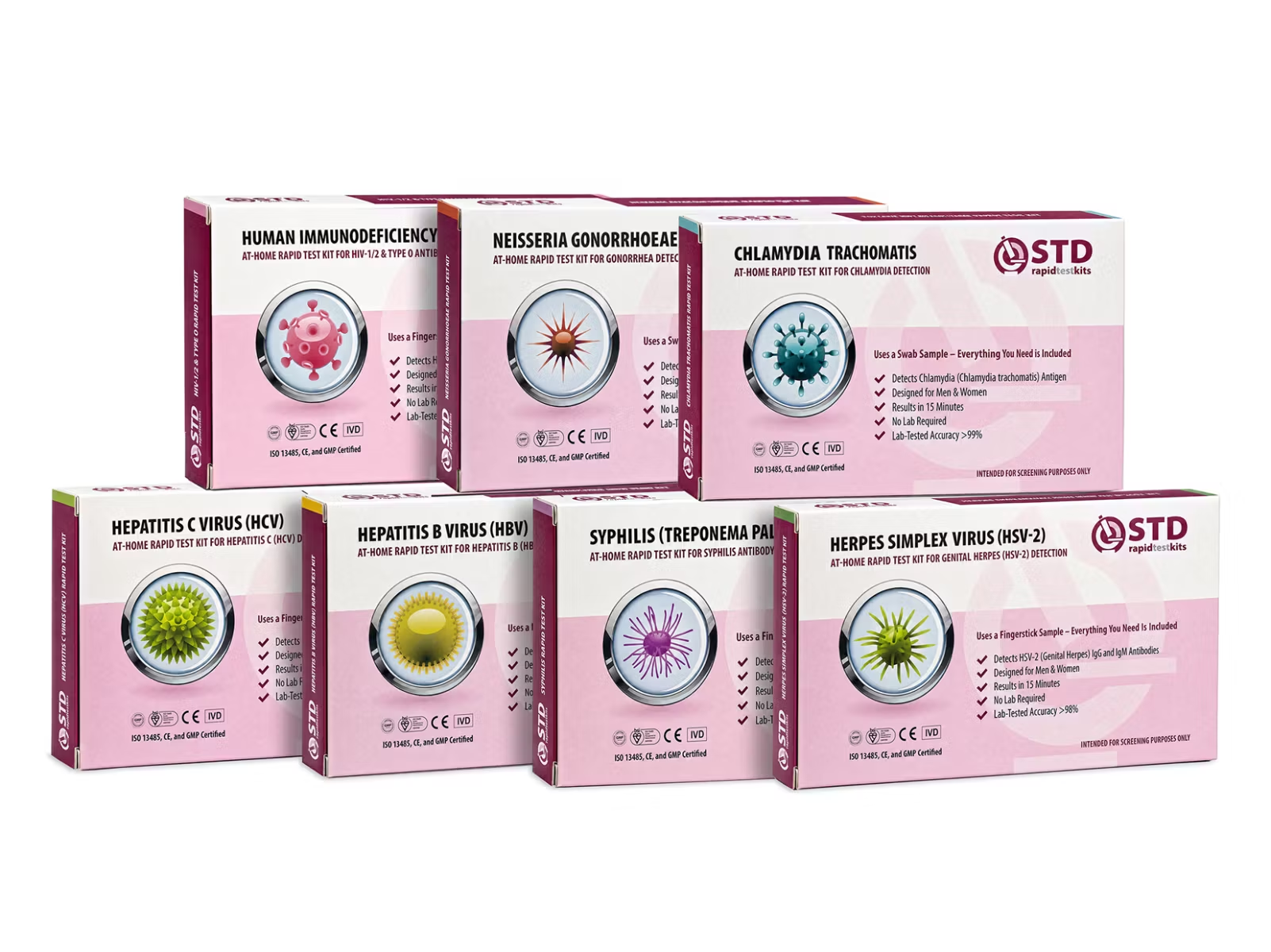
- Screen for the most common bacterial infections (chlamydia, gonorrhea) and major bloodborne ones (HIV, syphilis, hepatitis B, hepatitis C) in privacy.
- Repeat cheaply, which matters when window-period timing means one test is not enough.
- Lower the activation energy to test before a new relationship gets physical.
What they do not do:
- Replace a clinic visit when active symptoms need diagnostic workup.
- Match the analytical sensitivity of laboratory NAAT testing on borderline cases. Our rapid kits use lateral-flow chemistry; lab NAATs are more sensitive and remain the right confirmation tool for any positive at-home result.
- Cover sample types we do not sell (urine, throat swab, rectal swab). For those, see a clinic.
One scope note worth flagging: our at-home Trichomoniasis and HPV kits are validated for vaginal self-swab only. Male readers needing a test for either should see a clinic.
This article is published by stdrapidtestkits.com. The test kits linked throughout are products this site sells. Recommendations are based on which kit fits the reader's concern, not on commercial benefit. When the right answer is a clinic visit instead of a home kit, we say so.
What happens when STDs go untreated
People often delay testing because finding out feels scarier than not knowing. Most STDs are treatable, often curable, when caught early. Left untreated, the consequences are real and worth knowing in plain language.
Chlamydia and gonorrhea. In women, untreated chlamydia or gonorrhea can spread upward into the uterus and fallopian tubes, causing pelvic inflammatory disease (PID). PID is the leading preventable cause of infertility in the U.S. per CDC, and one untreated PID episode raises ectopic pregnancy risk for years afterward, as documented in the Mayo Clinic overview of pelvic inflammatory disease. In men, untreated infection can cause epididymitis, a painful swelling of the tube behind the testicle that can affect fertility. Both infections clear with a single course of antibiotics when caught early.
Syphilis. Syphilis follows a textbook three-stage progression: a painless sore weeks after exposure, a body-wide rash months later, and (if still untreated for years) damage to the heart, brain, and nerves. Modern syphilis is curable with penicillin at any stage, though late-stage damage can be permanent. Pregnant people with untreated syphilis can transmit it to the baby, and congenital syphilis can cause stillbirth, deafness, or developmental harm. Routine prenatal screening exists specifically to prevent that outcome.
HIV. Modern antiretroviral therapy (ART) lets people living with HIV reach an undetectable viral load and live a near-normal lifespan, and when sustained, makes the infection sexually untransmittable to partners (the “U=U” principle). The pivotal point is starting treatment early. Late diagnoses still happen, especially when people skip testing because they do not think they are at risk for HIV in the first place.
HPV. Most HPV infections clear on their own within two years. The fraction that do not can cause cervical, anal, throat, and penile cancers years later. The HPV vaccine prevents the strains responsible for most cancer cases and is recommended for routine vaccination through age 26 and shared clinical decision-making through age 45 per CDC HPV vaccination guidance. For unvaccinated adults, regular Pap or HPV co-testing in women catches precancerous changes early.
Herpes (HSV-1, HSV-2). Herpes has no cure. Daily antiviral medication controls outbreak frequency and substantially reduces transmission risk. Herpes is not life-threatening for healthy adults. The biggest harm is often emotional: stigma drives more distress than the infection itself for many people who test positive.
Pelvic inflammatory disease (PID), most often triggered by untreated chlamydia or gonorrhea, is the leading preventable cause of infertility in the United States per CDC. A single course of antibiotics caught early prevents the cascade. The cost of catching it late is years of follow-up care and, in some cases, permanent damage to the fallopian tubes.
Real solutions: take control of your sexual health
The good news in the data: most of the rise is fixable at the individual level. None of these steps require a clinic visit or a hard conversation with a parent or partner you cannot have.
1. Build a testing schedule. If you are sexually active with new partners, every 3 to 6 months. In a stable relationship where both partners tested before becoming exclusive, an annual check-in covers most of the risk. Mark it on a calendar the same way you would mark a dental cleaning.
2. Have the conversation before sex. A sample line that defuses the awkwardness: “Before we go further, I'd want us both to be on the same page about testing. I tested last month. Have you ever done one of the at-home kits?” Framing testing as mutual care lowers the temperature on both sides.
3. Use protection consistently. Condoms and dental dams are not perfect; they are the single largest reduction in transmission risk for most STDs. Skin-to-skin infections like HPV and herpes are an exception, where condoms still help on covered skin and do not eliminate risk on uncovered skin.
4. Use the vaccines that exist. The HPV vaccine prevents the strains responsible for most cervical, anal, and throat cancers. Hepatitis B vaccination is part of the standard adult schedule. There is no vaccine yet for chlamydia, gonorrhea, syphilis, herpes, or HIV; testing remains the primary tool for those.
5. Consider PrEP if your HIV risk is elevated. Daily oral PrEP and the long-acting injectable cabotegravir are highly effective at preventing HIV. CDC clinical guidance places effectiveness for sexual transmission at about 99% when taken as prescribed, and at least 74% effective against transmission via injection drug use per CDC HIV Nexus PrEP guidance. PrEP does not cover other STDs, which is why screening cadences for PrEP users are tighter (every 3 months). Many states offer PrEP through telehealth without a clinic visit.
6. Test when something feels off. Even a vague “something is not right” warrants a test, especially after a new partner. A false alarm costs the price of one kit; a missed infection costs months.
If you are sexually active with new partners, test every 3 to 6 months. In a stable mutually monogamous relationship where both partners tested before going exclusive, an annual check-in covers most of the risk. Calendar reminders work better than memory.
What to do if your test comes back positive
Most people's first reaction is fear. The next reaction should be a plan.
1. Confirm with a clinician. At-home rapid tests are screening tools. A positive result deserves a confirmatory laboratory test (usually a NAAT for bacterial infections, or a more sensitive antibody test for HIV and syphilis). Telehealth services can order this without a clinic visit in most U.S. states.
2. Get treated. Bacterial infections (chlamydia, gonorrhea, syphilis) are curable with antibiotics, usually a single course. HIV is managed with antiretroviral therapy. Herpes is managed with antivirals. HPV typically clears on its own; if it causes precancerous cervical changes, those are treated separately.
3. Tell partners. Anyone you have had sex with in the relevant exposure window needs to know so they can test and treat. State health departments and CDC partner services can notify former partners anonymously by text or email, without revealing your identity.
4. Avoid sex until cleared. For curable bacterial infections, that typically means until you and your partners have completed treatment and waited the recommended interval (often 7 days). For HIV, transmission risk drops to functionally zero once you have sustained an undetectable viral load on ART, though reaching undetectable can take months.
5. Plan a retest. For bacterial STDs, CDC recommends retesting about three months after treatment to catch reinfection from a partner who did not complete their treatment. Reinfection is common and does not signal that the original treatment failed.
State health departments and CDC partner services can notify former partners anonymously by text or email, without revealing your identity. Many people find this easier than calling each partner directly. Search “[your state] partner services STD” to find the local program.
Busting the most common myths
Several durable myths consistently delay testing across every age group.
“I'd know if I had an STD.” Most chlamydia, gonorrhea, and HPV infections show no symptoms for weeks, months, or longer. Syphilis can hide for years between stages. The only reliable signal is a test.
“Only people with many partners get STDs.” One partner is enough. A meaningful share of new diagnoses occurs in people who report fewer than three partners in the past year. Partner count correlates with risk because more exposures mean more chances; it does not define risk.
“Condoms cover everything.” Condoms substantially reduce risk for fluid-borne infections (chlamydia, gonorrhea, HIV, syphilis). For skin-to-skin infections (HPV, herpes), condoms reduce risk yet do not eliminate it because the virus can sit on skin a condom does not cover.
“Home tests are not accurate.” Reputable at-home rapid tests for HIV, syphilis, chlamydia, and gonorrhea typically report sensitivity in the high 90s and specificity above 99% when used after the recommended window period. They are screening tools; lab confirmation is recommended for positives, and a properly-timed negative is a meaningful negative.
“I'm in a monogamous relationship, so I'm safe.” Safe if both partners tested before going exclusive AND neither has had outside contact since. If either condition is not met, periodic testing still applies.
The myth that does the most damage is “I'd know if I had one.” Survey data on asymptomatic chlamydia and gonorrhea consistently puts the no-symptom rate above half. Acting on a feeling instead of a test is what lets infections spread for months. If you are sexually active, test on a schedule, regardless of how you feel.
What is next: testing, vaccines, and prevention tech
The prevention picture in 2026 is genuinely better than it was in 2019, even with elevated headline numbers. A few developments are worth knowing about because they will shape what your clinician suggests in the next few years.
Doxycycline post-exposure prophylaxis (doxy-PEP). A single 200 mg dose of oral doxycycline taken within 72 hours of unprotected sex substantially reduces the risk of subsequent chlamydia, gonorrhea, and syphilis acquisition in randomized trials of men who have sex with men and transgender women. CDC issued formal doxy-PEP guidelines in 2024 for selected populations. It does not replace condoms or routine screening, antimicrobial-resistance concerns are being monitored, and it is now part of the prevention toolkit for some readers.
Gonorrhea vaccine candidates. Several countries have begun deploying the meningococcal B vaccine (Bexsero) as off-label gonorrhea prevention, based on observational data suggesting partial cross-protection. Dedicated gonorrhea vaccines are in clinical trials. Within the next few years, an approved gonorrhea vaccine becomes plausible.
Telehealth plus at-home testing. The pairing that emerged during COVID (a video clinical visit with an at-home test kit shipped to the home, results reviewed remotely, and a prescription called in to a pharmacy) has become a permanent option for routine STI care in most U.S. states. For readers with limited clinic access, this pathway has dramatically lowered the friction of doing the right thing.
Better at-home test technology. Sample-to-answer molecular tests (true at-home NAAT) are in late-stage development and approaching consumer availability. When they arrive, the analytical sensitivity gap between home testing and lab testing closes considerably.
CDC 2024 guidelines recommend doxy-PEP for men who have sex with men and transgender women with a recent bacterial STI diagnosis. It is not a population-wide recommendation. Ask a clinician whether your situation qualifies before starting.
Should I test now?
Do you have any active symptoms (unusual discharge, a sore, painful urination, pelvic pain, or an unexplained rash)?
Yes: See a clinician this week. Symptoms need diagnostic workup that home rapid tests cannot provide, and treatment often starts the same visit.
Have you had a new partner in the past 3 months, or a partner whose recent status you are not sure about?
Yes: Time to test. Use the window-period table above to time it correctly, then order an at-home rapid kit for routine screening or book a clinic visit if you also need a throat or rectal swab.
Has it been more than 12 months since your last STI screen and are you currently sexually active?
Yes: Run a routine at-home panel now. Annual screening is the baseline cadence for most sexually active adults.
No: If your last screen was recent and negative and nothing in your sexual life has changed, your next annual check-in is enough. Calendar it now so it does not slip.
Guidance only; a clinician can advise based on your specific situation.
FAQs
- How often should I test for STDs?
- If you are sexually active with new or multiple partners, every 3 to 6 months is a reasonable rhythm. In long-term mutually monogamous relationships where both partners tested before going exclusive, an annual check-in covers most of the risk. Add a test any time you have a new partner, notice an unexplained change, or learn that a previous partner has tested positive.
- Are at-home rapid STD tests accurate?
- FDA-cleared at-home rapid tests for HIV, syphilis, chlamydia, and gonorrhea typically report sensitivity in the high 90s and specificity above 99% when used after the recommended window period. They are screening tools, not diagnostics. Any positive should be confirmed with a laboratory test, and a properly-timed negative is a meaningful negative.
- Can I have an STD with no symptoms?
- Yes, and that is exactly why a testing schedule matters more than waiting for a warning sign. Chlamydia is asymptomatic in most cases; HPV stays invisible for years; even syphilis produces a sore that heals on its own while the infection advances. A feeling of being fine is not a reliable signal.
- How long after sex should I wait to test?
- Window period depends on the infection. Chlamydia and gonorrhea: at least 14 days. HIV antibody: 45 to 90 days (most people seroconvert by 6 weeks; fourth-generation lab antigen-antibody combos detect earlier). Syphilis serology: 3 to 6 weeks. HSV-2 antibody: seroconversion begins as early as 6 weeks but a test at 12 to 16 weeks gives a more reliable result. If you test at 8 weeks and get a negative, retest after 16 weeks before ruling the infection out.
- Do condoms protect against all STDs?
- Condoms substantially reduce risk for fluid-borne infections like chlamydia, gonorrhea, HIV, and syphilis. For skin-to-skin infections like HPV and herpes, condoms reduce risk without eliminating it because the virus can sit on skin the condom does not cover. Combine condoms with regular testing for the strongest protection.
- Are at-home STD test kits covered by insurance?
- Coverage is plan-specific. Most U.S. plans cover preventive STI screening through traditional clinical pathways without copays under ACA preventive-care rules. At-home kits sold directly to consumers are sometimes reimbursable through HSA or FSA accounts; check your plan's eligible-expense list. Discreet, no-copay options through telehealth services are expanding in most states.
- Are STD rates really rising in older adults?
- CDC surveillance shows reported chlamydia, gonorrhea, and syphilis in adults over 55 climbing every year for the past decade, even as overall rates declined slightly in 2024. Drivers include post-divorce or post-widowhood dating without condoms, the assumption that monogamy in a previous marriage covers current exposure, and providers who often skip the sexual-health conversation with older patients.
- What is doxy-PEP and should I take it?
- Doxy-PEP is a single 200 mg dose of oral doxycycline taken within 72 hours after unprotected sex; it reduces the risk of subsequent chlamydia, gonorrhea, and syphilis in selected populations. CDC issued guidelines in 2024 favoring its use among men who have sex with men and transgender women with recent bacterial STI history. It is a clinician-prescribed prevention tool, not a replacement for condoms or routine screening. Ask a clinician whether it fits your situation.
- U.S. Centers for Disease Control and Prevention. STI Surveillance (2024 provisional release). Source for the specific reported case counts used throughout this article: chlamydia 1.52 million, gonorrhea 543,000, adult syphilis 190,000, congenital syphilis 3,941.
- U.S. Centers for Disease Control and Prevention. STI screening recommendations. Source for population-specific screening cadences (annual for women under 25, every 3 to 6 months for sexually active MSM, screening at every prenatal visit for pregnant people).
- World Health Organization. Sexually transmitted infections (STIs) fact sheet. Source for the 2020 global estimate of 374 million new annual infections across the four most common curable STIs and antibiotic-resistant gonorrhea context.
- U.S. Centers for Disease Control and Prevention. HPV vaccination guidance and ACIP-aligned recommendations for routine vaccination through age 26 and shared clinical decision-making through age 45. Also referenced for HIV Nexus PrEP effectiveness figures (~99% for sexual transmission, at least 74% for injection drug use).
- UK National Health Service. Sexually transmitted infections (STIs) conditions index. Used as a cross-check for asymptomatic presentation rates and plain-English clinical guidance across the most reported infections.
- Mayo Clinic. Pelvic inflammatory disease (PID) overview. Source for the long-term fertility and ectopic-pregnancy consequences of untreated chlamydia or gonorrhea referenced in the 'What happens when STDs go untreated' section.
