Why Gay and Bisexual Men Have Higher STD Rates, and How to Stay Safe
Gay and bisexual men in the United States carry a disproportionate share of new HIV, syphilis, and gonorrhea cases. The reasons are biological, behavioral, and structural. The fixes (PrEP, DoxyPEP, routine testing, frank conversations with partners) are well within reach for any reader willing to put a screening cadence on the calendar.




- Men who have sex with men accounted for roughly two-thirds of new HIV diagnoses in the U.S. in 2022, a disparity rooted in biology, network density, and care-access barriers, not individual fault.
- Annual screening for HIV, syphilis, gonorrhea, and chlamydia is the CDC standard for sexually active MSM. Men with multiple or anonymous partners should test every 3 to 6 months.
Published: November 2025 | Last updated: May 2026 | Editorial review and quality control: Martina N.
Gay and bisexual men in the United States carry a disproportionate share of new STI diagnoses. The reasons are not mysterious or moralistic. They are a mix of basic biology, partner-network density, and very real friction with the healthcare system. Once you understand each piece, lowering your own risk becomes a matter of routine: regular testing, the right preventive medication, and honest conversations with the people you sleep with.
This guide walks through what the most recent CDC surveillance data actually says about HIV, syphilis, gonorrhea, and chlamydia among men who have sex with men (MSM), why those numbers look the way they do, and the specific steps that have been shown to move them. Nothing here is judgment. It is the same plain-English summary a thoughtful primary-care provider would give you in a 20-minute appointment, plus the option to test at home if a clinic is not your style.
Why are STI rates higher among gay and bisexual men?
Three forces overlap. Biology: the rectal lining is thinner and more fragile than the vaginal wall, so receptive anal sex carries higher per-act transmission risk for HIV, syphilis, and herpes. Behavior and networks: MSM populations tend to form denser sexual networks with higher average partner counts, which spreads any new infection further and faster. Healthcare access: stigma, lack of LGBTQ-affirming providers, and providers who never ask the right questions mean asymptomatic infections often go undetected. The good news is that the modern toolkit (PrEP, DoxyPEP, the JYNNEOS mpox vaccine, and at-home testing) is the most effective set of prevention tools the field has ever had.
Key Takeaways
- Men who have sex with men accounted for roughly two-thirds of new HIV diagnoses in the U.S. in 2022, a disparity rooted in biology, network density, and care-access barriers, not individual fault.
- Annual screening for HIV, syphilis, gonorrhea, and chlamydia is the CDC standard for sexually active MSM. Men with multiple or anonymous partners should test every 3 to 6 months.
Why MSM face higher STI rates
Three forces overlap: biology, sexual-network structure, and healthcare access. Each one would matter on its own. Combined, they explain the disparity better than any single factor does.
The biology of anal exposure
The rectal lining is a single layer of columnar cells. The vaginal wall, by comparison, is multiple layers of squamous cells with a more acidic environment that helps neutralize some pathogens. That structural difference is why receptive anal sex carries the highest per-act risk for HIV transmission of any sexual route documented in the research literature. Based on CDC per-act risk modeling, the risk per condomless act with an HIV-positive partner who is not on treatment is roughly 138 transmissions per 10,000 exposures for receptive anal sex, compared to 8 per 10,000 for receptive vaginal sex (CDC HIV program). Anal sex is roughly 17 to 18 times riskier per act than vaginal sex when an untreated HIV-positive partner is involved.
The same biology matters for syphilis and herpes, both of which can transmit through small mucosal breaks that are more common in rectal tissue than in vaginal tissue. Gonorrhea and chlamydia transmit through any mucous membrane, but pharyngeal (throat) and rectal infections often go unnoticed because they rarely cause symptoms. Asymptomatic infections at non-genital sites are a major reason MSM-specific testing guidelines now include rectal and pharyngeal swabs at the clinic, not just a urine sample.
Sexual-network structure
Network analysis from public-health researchers consistently shows that MSM populations form denser, more interconnected sexual networks than heterosexual populations of comparable size. The practical effect: any single new infection in the network reaches more people, faster. This is a property of the network itself, not the individuals in it. A man with two lifetime partners can still sit at the center of a network where every infection introduced into the wider community arrives within a few transmission steps.
Combine that with the fact that gay and bisexual men report higher average partner counts than heterosexual men in nearly every survey, and the math becomes obvious. More partners times faster network propagation equals higher community prevalence. Higher community prevalence then raises the per-encounter probability that any new partner is infectious, which is where the disparity compounds on itself.
Healthcare access and stigma
Even in 2026, MSM still report being treated differently in primary-care settings. Many gay and bisexual men say their clinician never asked the relevant questions about their sex life, or assumed a heterosexual sexual history, leaving routine STI screening off the table entirely (CDC STI program guidance). Without screening, asymptomatic chlamydia, gonorrhea, and early syphilis continue circulating undetected.
The friction is worse for men in rural areas, men without health insurance, and men of color, who collectively face the steepest STI burden in U.S. surveillance data. Black MSM bear roughly half of new HIV diagnoses among MSM despite being a much smaller share of the population, a disparity that public-health researchers attribute primarily to access gaps and structural barriers rather than to differences in individual risk behavior.
Stigma adds another layer. National surveys consistently find that a meaningful share of MSM avoid seeking testing because they fear judgment from clinic staff or worry that a positive result will reach the wrong people. The cost of that hesitation is paid in late diagnoses, downstream transmission, and treatable conditions that progress further than they should.
We sell at-home STI testing kits, including a fingerstick HIV rapid test, a syphilis blood test, and combination panels for men. We recommend products based on fit-for-purpose for the reader's concern, not commercial benefit. Where a clinic-administered test is the right answer (rectal or pharyngeal swabs, mpox lesion PCR), we say so plainly.
The numbers worth knowing
Surveillance data is updated yearly by the CDC. A handful of figures consistently stand out, and they are the ones that should anchor any conversation about MSM sexual health in 2026.
HIV remains the headline disparity. In 2022, men who have sex with men accounted for approximately 67% of new HIV diagnoses in the United States, despite representing only a few percent of the adult male population (CDC HIV surveillance data). The lifetime risk of acquiring HIV is estimated at 1 in 6 for Black MSM, 1 in 4 for Hispanic and Latino MSM, and 1 in 11 for White MSM, based on CDC modeling. Globally, gay and bisexual men remain one of the populations most affected by HIV, according to the World Health Organization (WHO HIV fact sheet).
Primary and secondary syphilis cases reported among MSM make up a substantial share of all P&S syphilis diagnoses in the United States, according to the CDC's most recent STI surveillance reports. National syphilis rates have climbed for more than a decade, and MSM continue to bear a disproportionate share of that increase. Late-stage syphilis is rare in any population that screens regularly, which is why the screening cadence for MSM matters more than the absolute numbers.
Gonorrhea and chlamydia rates are harder to pin to one figure because they vary by anatomical site (urethral, rectal, pharyngeal). But site-specific testing in MSM consistently finds prevalence rates several times higher than in heterosexual men of comparable age, particularly for rectal and pharyngeal gonorrhea. A urine test alone misses the majority of these infections because most rectal and throat gonorrhea infections do not cause urethral symptoms. That is why a comprehensive screen requires swabs from each site of exposure, ideally at a clinic.
One newer threat is mpox (formerly monkeypox). Outbreaks in 2022 and a smaller resurgence since then have disproportionately affected MSM networks. The two-dose JYNNEOS vaccine remains the most effective preventive tool, and the CDC continues to recommend it for sexually active MSM with any ongoing risk profile (CDC mpox guidance).
| Infection | MSM share of U.S. burden | Common sites in MSM |
|---|---|---|
| HIV | About 67% of new diagnoses (2022) | Blood, anal/rectal mucosa, oral mucosa |
| Syphilis (primary and secondary) | Substantial over-representation | Genital, anal, oral |
| Gonorrhea | Site-specific rates several times higher | Urethral, rectal, pharyngeal |
| Chlamydia | Rectal and pharyngeal over-representation | Urethral, rectal, pharyngeal |
| Mpox | Majority of 2022 and recent outbreak cases | Skin lesions; can transmit sexually |
| HSV-2 | Slightly higher than heterosexual men | Genital, anal, perianal |
How to lower your risk
Modern STI prevention for MSM is layered. Condoms still work, but they are no longer the only tool, and a sensible prevention plan combines several. The four levers below are the ones with the strongest evidence behind them.
PrEP for HIV
Pre-exposure prophylaxis is daily oral medication (most commonly emtricitabine and tenofovir, sold as Truvada or Descovy) or a long-acting injection given every two months (cabotegravir, brand name Apretude). Taken consistently, oral PrEP reduces the risk of HIV from sex by about 99%, and the long-acting injection performs at least as well in clinical trials (CDC PrEP information). PrEP does not protect against any other STI. That is the single most important caveat to internalize, because the most common error among new PrEP users is assuming the protection extends to syphilis or gonorrhea. It does not.
DoxyPEP for bacterial STIs
Doxycycline post-exposure prophylaxis is a relatively recent addition to the toolkit. CDC's clinical guidelines now recommend a single 200 mg dose of doxycycline taken within 72 hours after condomless oral, anal, or vaginal sex for cisgender MSM and transgender women who have had a bacterial STI in the previous 12 months (CDC STI treatment guidelines). In the major trial that supported the recommendation, DoxyPEP reduced the combined incidence of syphilis, chlamydia, and gonorrhea by roughly two-thirds. It does not protect against HIV. Discuss DoxyPEP with a clinician before starting, particularly if you have any history of doxycycline allergy or sun-sensitivity issues.
Vaccines
The HPV vaccine (Gardasil 9) is recommended through age 26, with shared clinical decision-making through age 45 per ACIP guidance. The hepatitis A and hepatitis B vaccines are recommended for any MSM not previously immunized. The mpox JYNNEOS vaccine is the standard preventive for any sexually active MSM with ongoing risk. Vaccines are the highest-leverage prevention tool when they apply, because the protection runs in the background without daily action.
Condoms and lubricant
Condoms remain effective when used consistently and correctly. For anal sex specifically, a water- or silicone-based lubricant lowers the risk of condom breakage and reduces the small mucosal tears that increase infection risk. Avoid oil-based lubricants with latex condoms; they degrade the latex within minutes. Internal (receptive-partner) condoms are an option some men prefer; they are not as widely available but work on the same principle.
Routine testing as the underused lever
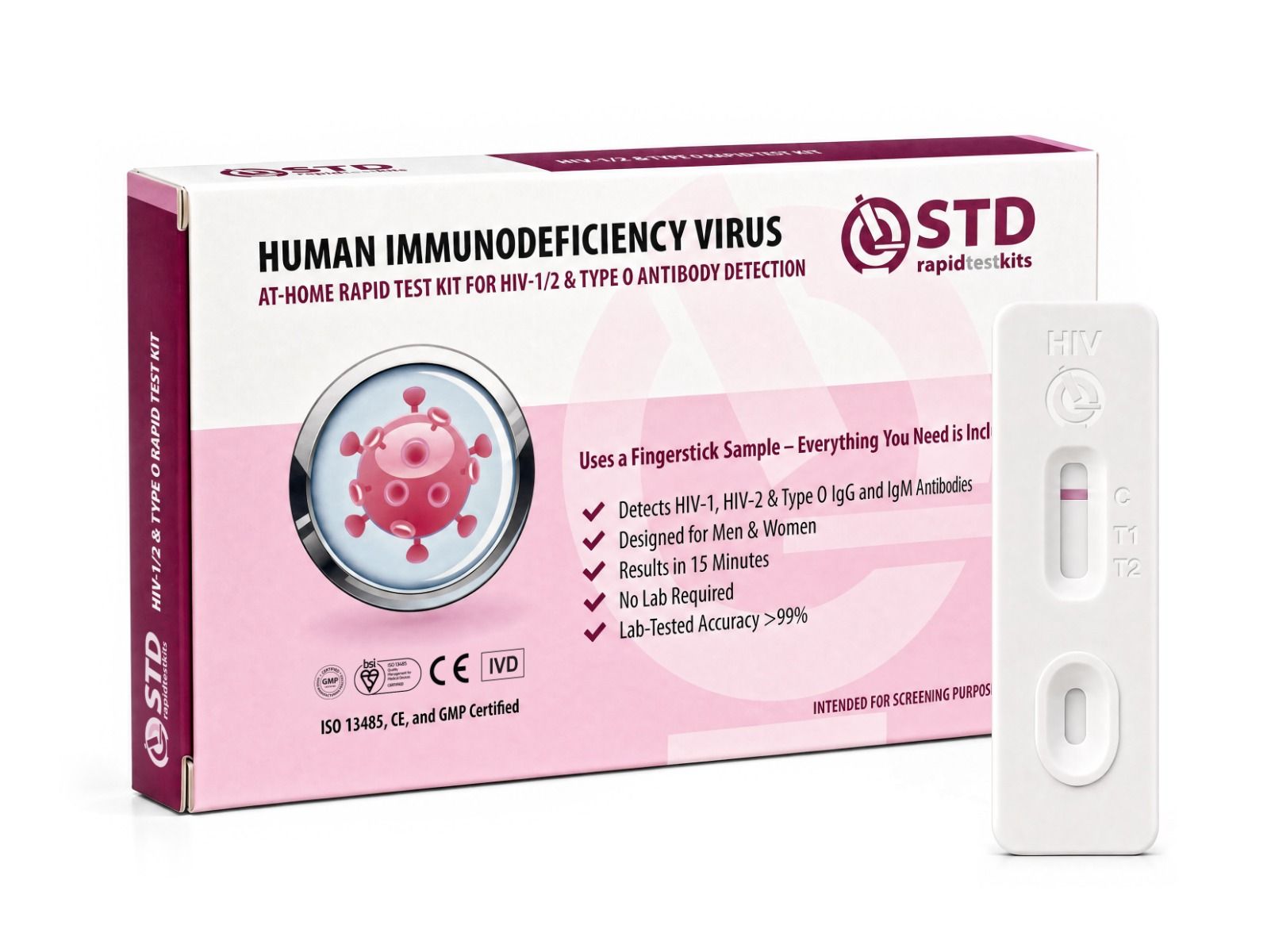
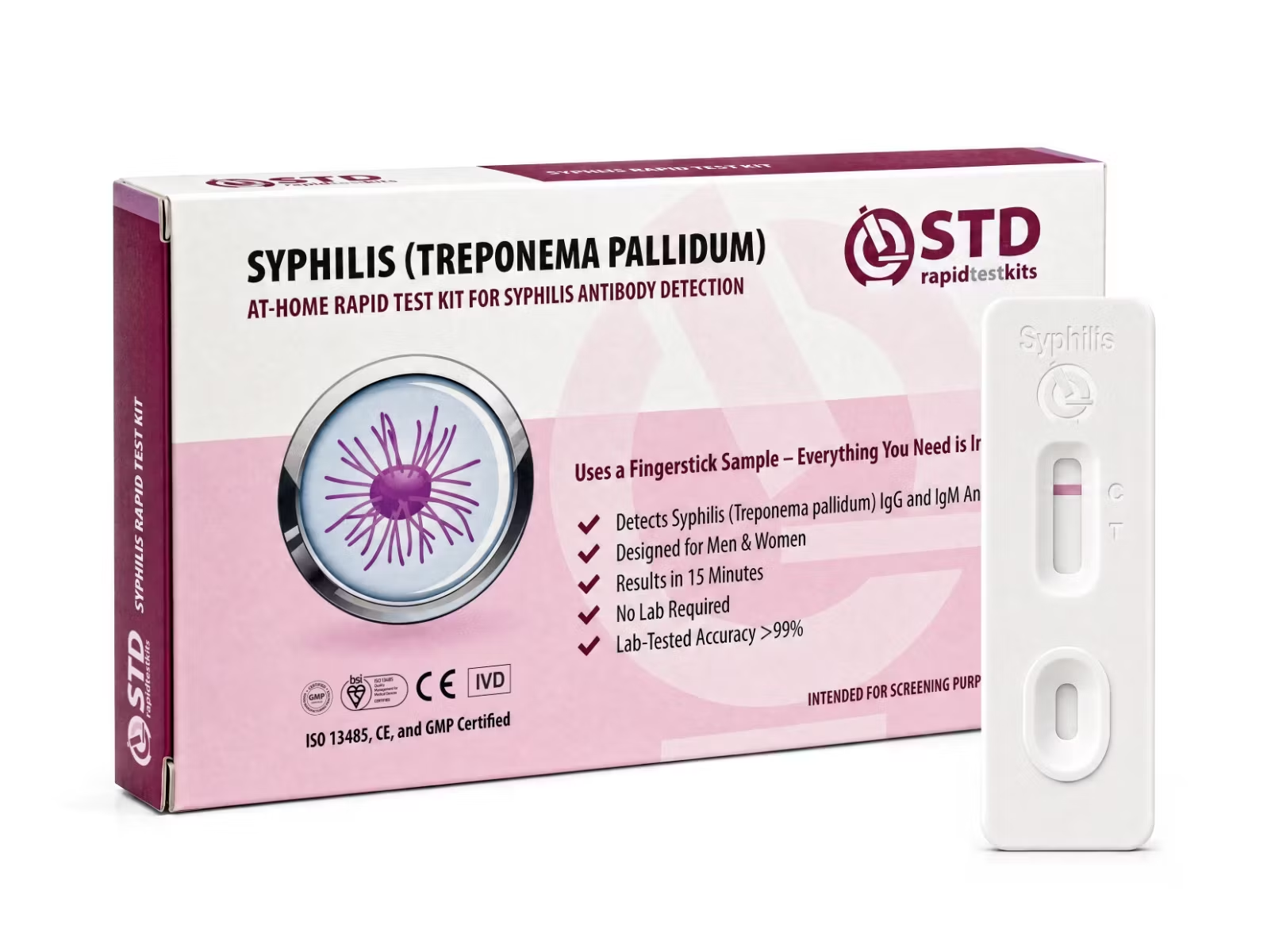
This is the prevention layer most under-used. CDC recommends at least annual screening for HIV, syphilis, chlamydia, and gonorrhea for all sexually active MSM. Men with multiple partners, anonymous partners, or partners with unknown HIV status should test every 3 to 6 months. Site-specific testing matters at the clinic: a urine sample alone misses most rectal and pharyngeal infections, so a comprehensive screen will involve a urine sample, a blood draw, and swabs from any site of exposure. Between clinic visits, a rapid at-home test gives you a quick check on the bloodborne infections (HIV, syphilis, hepatitis B and C) without the friction of an appointment.
Layer 1 (HIV): Daily oral PrEP or a long-acting injectable PrEP regimen.
Layer 2 (bacterial STIs): DoxyPEP within 72 hours of condomless sex, if eligible.
Layer 3 (vaccine-preventable): HPV, hepatitis A, hepatitis B, and mpox JYNNEOS vaccines, all up to date.
Layer 4 (early detection): Annual comprehensive screening at a clinic, with a quarterly cadence for higher-risk profiles. Rapid at-home tests fill the gaps between clinic visits.
Common misconceptions worth clearing up
Most of the conversational mistakes around STIs in MSM populations come from a small number of recurring misconceptions. Each of them is worth addressing directly.
"PrEP protects me from everything"
It does not. PrEP is highly effective against HIV. It does nothing for syphilis, gonorrhea, chlamydia, herpes, hepatitis, or mpox. The CDC specifically recommends quarterly STI screening alongside PrEP because, in observational data, men who start PrEP often see their incidence of bacterial STIs rise. The fix is not to stop PrEP. The fix is to layer DoxyPEP, condoms when appropriate, and routine quarterly testing on top.
"If I had an STI, I would feel it"
Most STIs in MSM are asymptomatic at the site of infection. Pharyngeal gonorrhea almost never causes a sore throat. Rectal chlamydia rarely causes pain or discharge. Early-stage HIV may produce a flu-like seroconversion illness 2 to 4 weeks after exposure, but many infections pass without anything the person notices. The whole reason routine screening exists is that you cannot trust your body to alert you in time. By the time symptoms appear, the infection has often been transmissible for weeks or months.
"I am in a monogamous relationship, so I do not need to test"
Monogamy reduces risk substantially when both partners are tested at the start of the relationship and the agreement is genuinely mutual. The risk does not disappear. Many syphilis and HIV diagnoses turn up in men who believed their relationship was monogamous and learn at the diagnostic visit that it was not. Periodic testing inside a long-term relationship is a standard part of relationship hygiene, not an accusation. A baseline screen at the start of any new relationship, plus a re-screen six months later for both partners, is a reasonable default.
"At-home tests are not as accurate as clinic tests"
For the rapid lateral-flow tests sold for home use, the right way to think about accuracy is as a screening tool rather than a diagnostic confirmation. Lateral-flow chemistry is well-validated, but laboratory tests (NAAT for chlamydia and gonorrhea, an antigen/antibody combination assay for HIV, a treponemal/non-treponemal pair for syphilis) have higher analytical sensitivity, particularly for very recent infections. A positive result on a home test should always be confirmed at a clinic. A negative result on a home test, taken after the relevant window period has passed, is a useful and convenient indication that no further action is needed.
"Only promiscuous men get STIs"
This one carries a moral judgment baked in, and it is also wrong on the facts. Network density matters more than individual partner count. A man with one partner sits inside the same community prevalence as a man with twenty, and any infection that reaches his partner reaches him. Framing STIs as a marker of behavior rather than a community-level health issue is exactly the stigma that keeps men from getting tested in the first place.
When and where to test
The window period (the gap between exposure and the point at which a test reliably detects an infection) varies by infection. For the rapid lateral-flow tests that home kits use, the practical windows are: HIV antibody-based rapid tests detect infection from roughly 4 to 12 weeks after exposure, with most cases caught by 6 weeks; syphilis blood tests turn positive 3 to 6 weeks after exposure; chlamydia and gonorrhea swab tests are reliable from about 7 to 14 days after exposure; hepatitis B and C antibody tests can take 8 to 12 weeks to turn positive after a recent exposure.
If you are testing because of a specific recent exposure, count from the date of exposure and test inside the window listed above. Testing too early returns a falsely negative result that has to be re-checked anyway. If you are testing as part of routine screening with no specific exposure in mind, the windows do not matter; just test on whatever cadence (annual or quarterly) your risk profile calls for.
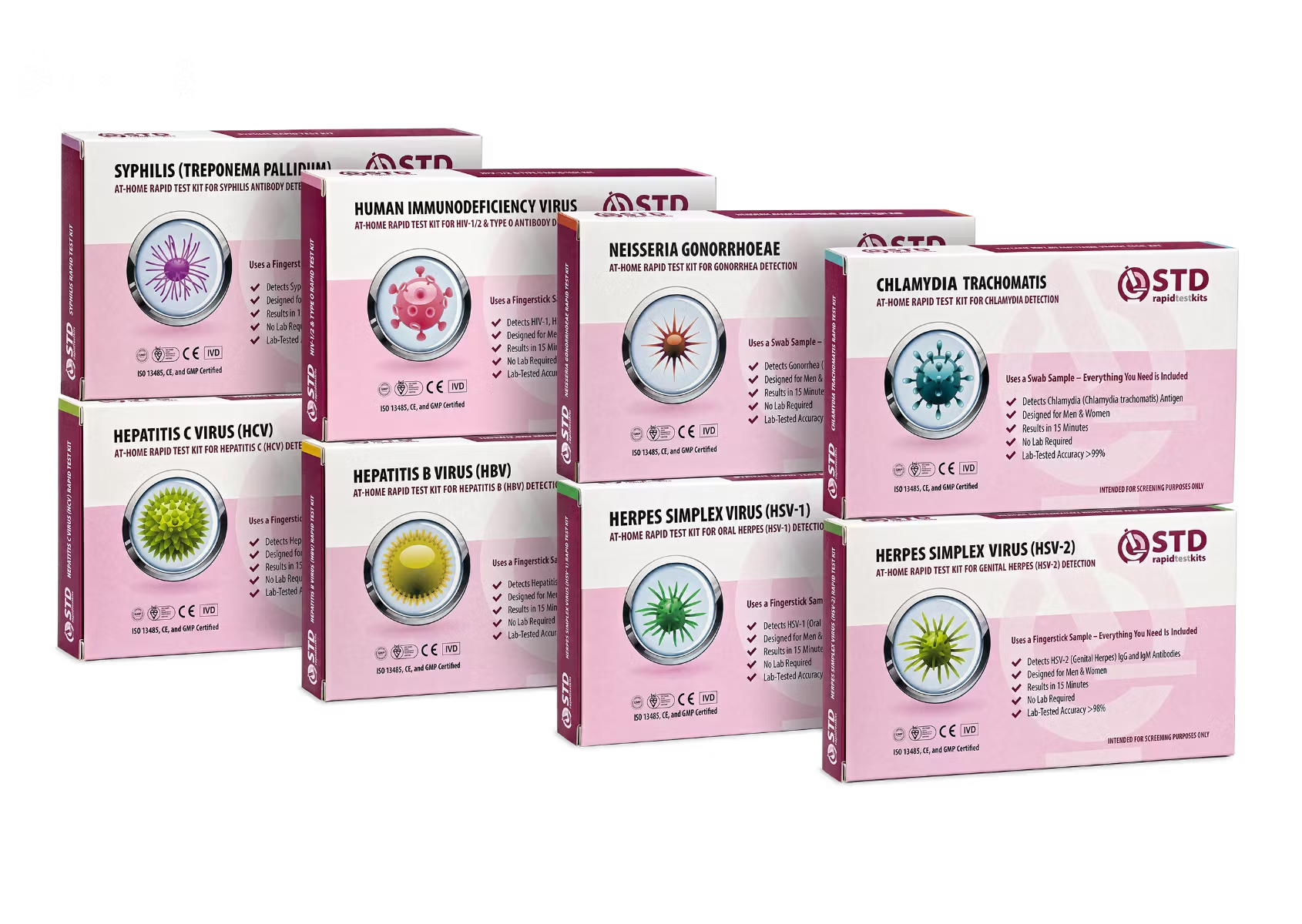
For MSM, three common testing routes work well in 2026. A sexual-health clinic that offers site-specific swabs (rectal and pharyngeal in addition to urine and blood) is the gold standard for a comprehensive panel. An LGBTQ-affirming primary-care practice that screens proactively is the next-best option for ongoing care. A discreet at-home test taken between in-person visits is the practical complement, particularly for the bloodborne infections (HIV, syphilis, hepatitis B and C) where the home rapid format is well-validated. Many men use a combination, with a comprehensive clinic panel once or twice a year and at-home rapid tests in between to maintain a tighter screening cadence than clinic visits alone allow.
For specific exposures that need a rectal or pharyngeal swab, a clinic visit is the right answer. We do not sell rectal or pharyngeal swab kits. If you have had a recent oral or anal exposure and want a comprehensive screen of those sites, book a sexual-health clinic appointment and ask explicitly for site-specific swabs.
Annual screening for HIV, syphilis, gonorrhea, and chlamydia is recommended for all sexually active gay, bisexual, and other men who have sex with men, with more frequent screening (every 3 to 6 months) for those at higher risk.
FAQs
- How often should sexually active gay or bisexual men get tested?
- At least annually for HIV, syphilis, chlamydia, and gonorrhea per CDC guidance. Men with multiple partners, anonymous partners, or partners of unknown HIV status should test every 3 to 6 months. Men on PrEP have a quarterly cadence built into their PrEP appointments by default.
- Does PrEP protect against syphilis or gonorrhea?
- No. PrEP only prevents HIV, and it does so very effectively (around 99% when taken consistently). It has no effect on syphilis, gonorrhea, chlamydia, herpes, hepatitis, or mpox. To cover bacterial STIs, layer DoxyPEP and condoms on top of PrEP, and screen for STIs every 3 months.
- What is DoxyPEP and who should consider it?
- DoxyPEP is a single 200 mg dose of doxycycline taken within 72 hours after condomless sex. The CDC recommends it for cisgender MSM and transgender women who have had a bacterial STI in the past 12 months. In trials it cut the combined risk of syphilis, chlamydia, and gonorrhea by roughly two-thirds. It does not protect against HIV. Discuss eligibility with a clinician before starting.
- Can I get an STI from oral sex?
- Yes. Gonorrhea, chlamydia, syphilis, herpes (HSV-1 and HSV-2), and HPV can all transmit through oral sex. Pharyngeal gonorrhea in particular is common in MSM populations and rarely causes a sore throat, so it is usually only caught through a clinic-administered throat swab.
- Are at-home rapid STI test kits accurate enough?
- For the bloodborne infections (HIV, syphilis, hepatitis B and C, herpes type 2), home rapid lateral-flow tests are well-validated screening tools with high sensitivity and specificity when used after the correct window period. They are screening tests, not diagnostic confirmations. A reactive (positive) result should always be confirmed at a clinic with the standard laboratory test before any decisions about treatment. A non-reactive result, taken after the window has passed, is a reasonable indication that no further action is needed.
- Should I get the mpox vaccine?
- The CDC recommends the two-dose JYNNEOS vaccine for any sexually active MSM with ongoing risk, defined broadly to include men who have had multiple partners, partners met through dating apps, or recent diagnoses of any other STI. The vaccine is well-tolerated and provides substantial protection. If you are unsure whether you qualify, your sexual-health clinic or LGBTQ-affirming primary care provider can confirm eligibility.
- What if I am in a monogamous relationship?
- A baseline screen at the start of the relationship, plus a re-screen for both partners after roughly six months, is a reasonable default. After that, periodic testing every year or two is sensible, the same way a routine physical or dental check-up works. Testing inside a relationship is a standard health behavior, not an accusation.
- How do I bring up testing with a new partner?
- A direct, low-stakes script works best: "Before we sleep together, can we both get tested? I'd feel better knowing." Most partners respond well to that, and the ones who do not have given you useful information. For partners you have already slept with, the same script works after the fact, framed around routine health rather than suspicion.
- U.S. Centers for Disease Control and Prevention. STI program guidance, screening recommendations, and population-specific resources for MSM.
- U.S. Centers for Disease Control and Prevention. HIV transmission risk estimates, prevention programs, and PrEP guidance.
- U.S. Centers for Disease Control and Prevention. National HIV surveillance data including transmission category breakdowns.
- U.S. Centers for Disease Control and Prevention. STI treatment guidelines including the DoxyPEP clinical recommendation.
- U.S. Centers for Disease Control and Prevention. Mpox prevention, vaccination guidance, and JYNNEOS recommendations.
- World Health Organization. HIV and AIDS fact sheet, including transmission, key populations, and global epidemiology.
- U.K. National Health Service. Sexually transmitted infections (STIs) overview, symptoms, and testing guidance.