
Published: December 2025 | Last updated: May 2026 | Editorial review and quality control: Martina N.
STI Awareness Week 2026 runs April 13–18. The CDC's theme, Talk. Test. Treat., asks sexually active people to do three things: have honest conversations about sexual health, get tested at the right window for each infection, and seek prompt treatment when a result comes back positive. Most people are missing at least one of those steps. This article is a practical guide to all three, including exactly when to test for each major STI and what your results mean when they come back.
Every April, the second full week of the month is STI Awareness Week, a national public-health campaign organized by the CDC and designed to cut through the silence, confusion, and avoidance that lets sexually transmitted infections spread undetected year after year. According to the CDC's most recent national STI surveillance, more than 2 million combined cases of chlamydia, gonorrhea, and syphilis were reported in 2024, and those are only the cases that were diagnosed and recorded. Testing is the only reliable intervention here, which is exactly how the system was built. The majority of people carrying an STI have no idea, because most infections produce no symptoms in their early stages.
Key Takeaways
- STI Awareness Week 2026 runs April 13–18, and the CDC's Talk. Test. Treat. theme is a three-step framework: open conversations, correctly-timed testing, and prompt treatment when needed.
- Every STI has a specific testing window (14 days for chlamydia, 6 weeks for HIV first indicator, 8 to 11 weeks for hepatitis C). Getting the timing right is the difference between a result you can rely on and one that gives false reassurance.
Why the CDC's Three-Word Theme Carries More Weight in 2026
Talk. Test. Treat. is not a new message, but its urgency in 2026 is sharper than it has been in several years. The US STI epidemic peaked around 2022 and has shown early signs of leveling off. Combined cases of chlamydia, gonorrhea, and syphilis declined around 9% in 2024 compared to the prior year. That is genuinely encouraging news. It is also incomplete news. Congenital syphilis, the infection passed from a pregnant person to their baby during pregnancy or delivery, rose for the 12th consecutive year in 2024, reaching nearly 4,000 reported cases. A condition that is entirely preventable with a timely test during prenatal care is still affecting nearly 4,000 newborns a year in the United States. The impact of syphilis on newborns is one of the most preventable tragedies in the current STI picture, and it keeps happening because people are not testing.
The CDC has been direct about what is actually moving the numbers in the right direction: expanded at-home testing access, better point-of-care testing, increased public awareness, and the adoption of newer post-exposure prevention strategies. The things bending the curve downward are precisely the things STI Awareness Week is designed to amplify. The data directly support what the campaign asks people to do.
The STI landscape is also not static. Old infections resurge in populations that dropped their guard, and gonorrhea is becoming harder to treat as antibiotic resistance spreads in real time.

Talk: The Conversation That Has to Happen Before Everything Else
Talking about STIs tends to get framed as the optional, soft side of sexual health, the part that feels important in theory but gets deprioritized in practice. That framing is backwards. The talk is what makes the test possible, and the test is what makes treatment possible. Without the conversation, the chain breaks before it starts.
There are three distinct conversations that fall under "Talk," and each one has a different level of difficulty and a different payoff. The first is with a healthcare provider. Research consistently shows that providers skip sexual health conversations during routine appointments at high rates, particularly with patients who do not present with obvious symptoms. If your provider has not asked about your STI testing history recently, the fastest way to change that is to raise it yourself. One question is often enough to open the conversation your provider should have been initiating anyway: given my sexual history, what should I be tested for, and when did I last get a full panel?
The second conversation is with sexual partners. This one carries more emotional weight, but the mechanics are straightforward. Knowing your own status matters. Knowing your partner's status matters too. Partner notification after an STI diagnosis is one of the most effective tools in limiting spread, and the conversation should not wait until after a positive result. People who normalize testing discussions with partners test more frequently, and people who test more frequently catch infections before they cause long-term damage or pass to others.
The third conversation is the internal one, the one most people quietly avoid having with themselves. A significant share of people who don't test are not confused about how testing works. They are afraid of what a positive result might mean. That fear is understandable, and it is also the precise reason infections keep spreading. Every common STI currently at epidemic levels in the United States is either curable or highly manageable with modern treatment. A positive for chlamydia, gonorrhea, or syphilis means a curable bacterial infection. A positive for HIV, caught early and treated consistently, means a diagnosis that allows people to live full, healthy lives with an undetectable viral load.
- With a healthcare provider: raise testing proactively if they haven't, using one direct question about your sexual history and last full panel.
- With a partner: frame it as a shared habit, not an accusation; partner notification is a primary public-health tool against spread.
- With yourself: name the fear of a positive result and test anyway; every common STI at epidemic levels is curable or highly manageable when caught early.
How to Actually Have the STI Conversation With a Partner
Most people know they should talk to partners about sexual health. Very few know how to start that sentence. The reason the conversation gets avoided is rarely lack of caring; it is the absence of a script. Here are three ways to open it, depending on where you are in the relationship.
If it is early, before or just after becoming sexually active with someone new, the most effective framing is mutual and practical, not accusatory: "I get tested regularly, I was last tested in [month], and I'm clean across the board. Have you been tested recently?" That framing removes the implication that either person is suspected of anything. It positions testing as a shared habit, not a red flag.
If you are in an established relationship and testing has just never come up: "I've been thinking about getting a full STI panel, I think it's just a good habit to keep up. Want to do it together?" Framing it as something you do together rather than something directed at the other person takes most of the charge out of it. At-home STI testing for couples is genuinely straightforward: two kits, twenty minutes, results you both have at the same time.
If you have just received a positive result and need to notify a partner: "I just got my STI results back, and one came back positive. I wanted to let you know so you can get tested too. It's treatable, I'm already dealing with it, and I just wanted to make sure you had the information." Direct, factual, no drama added where none is needed. The stigma around STD diagnoses makes these conversations feel bigger than they are. The medical reality is straightforward. The conversation can be too.
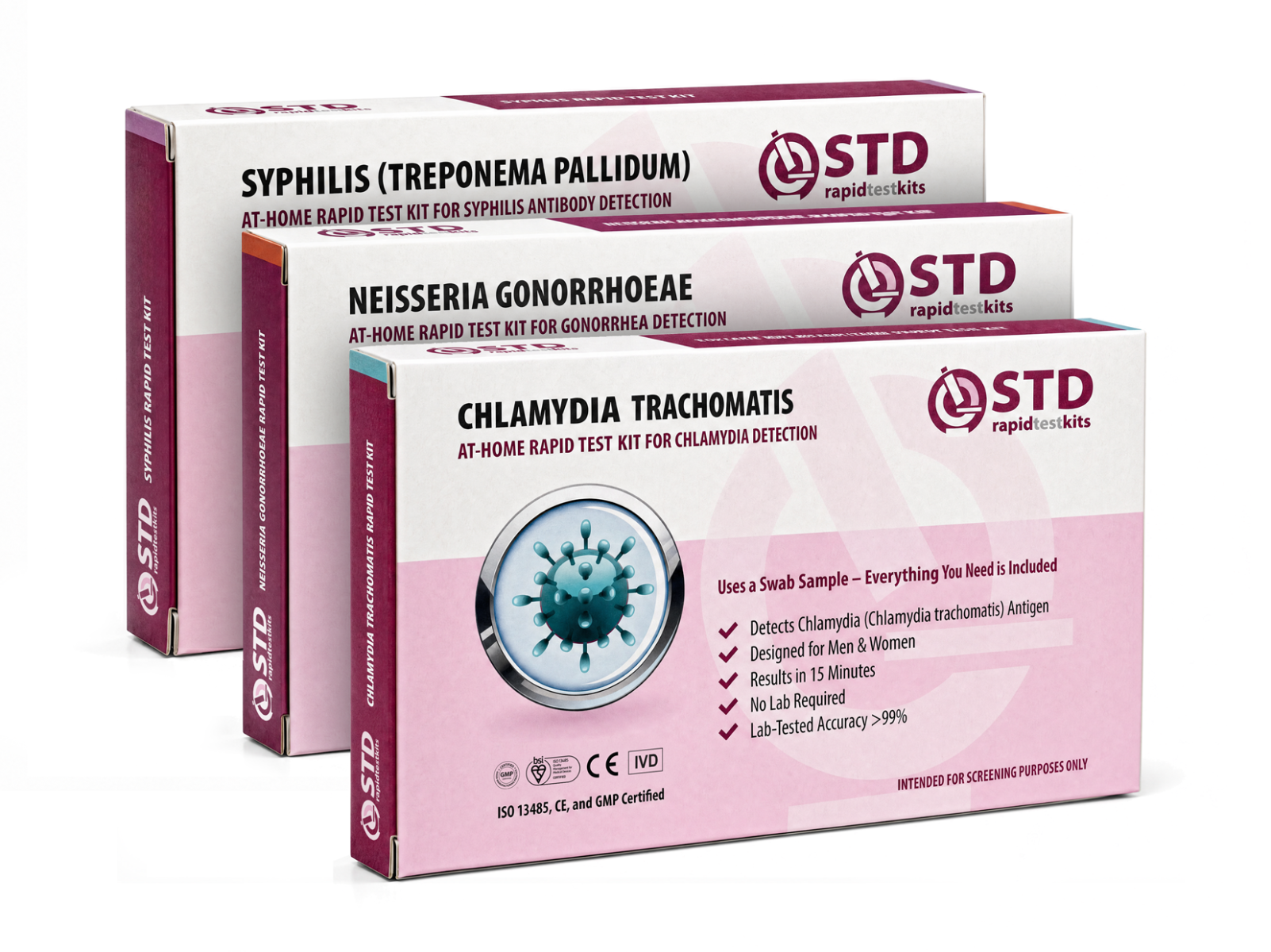
Full disclosure: STD Rapid Test Kits sells at-home rapid test kits for the infections described throughout this article. We recommend products based on fit-for-purpose for the reader's concern, not commercial benefit.
Test: What to Actually Test For and When
This is the step most people skip, and almost never because they lack intention. The barrier is friction. The logistics of scheduling an appointment, taking time off work, sitting in a waiting room, having a conversation with a provider you may not know well, and then waiting days for results create enough resistance that "I'll do it soon" becomes a permanent deferral. At-home rapid testing eliminates most of that friction, which is part of why the CDC specifically credits expanded at-home self-testing as a factor in the recent decline in STI rates.
The what and when of testing is not one-size-fits-all. Every infection has a specific window period determined by how long it takes your immune system to produce a detectable marker after exposure. Testing inside that window produces a false negative. The infection may already be present; the immune system simply hasn't generated enough of the detectable marker for the test to find yet. Getting the timing right is the difference between a result you can actually rely on and one that gives false reassurance. Understanding at-home test accuracy starts with understanding window periods; the test itself is only half the equation.
For chlamydia, test from 14 days after potential exposure. Chlamydia is the most commonly reported STI in the United States, and the vast majority of people who have it experience no symptoms. A negative at 14 days or later means no infection from that exposure was detected. A positive means a bacterial infection is present that is straightforwardly treatable. For gonorrhea, test from 3 weeks after exposure. Gonorrhea has shown increasingly concerning antibiotic resistance patterns in recent years, which makes catching it early more important than ever. Delayed treatment means dealing with a more complex clinical picture.
For syphilis, test from 6 weeks after exposure. Syphilis tests detect antibodies your immune system produces in response to the infection, and those antibodies need time to reach detectable levels. A negative at 6 weeks is meaningful, and a follow-up at 12 weeks provides full certainty if you have ongoing concerns about a specific exposure. For HIV with a home rapid antibody test, the CDC gives an outer window of up to 90 days (about 13 weeks). Test at 6 weeks for a first indicator result; a negative at 12 weeks is highly reliable, and a retest at the 90-day mark gives full certainty. A positive means the virus is present, and connecting with a healthcare provider immediately to begin treatment is the right next step.
For herpes HSV-1 and HSV-2, test from 6 weeks after exposure. Herpes tests also detect antibodies, requiring the same window as syphilis. A negative at 6 weeks is reliable. A positive indicates current or past infection, and a healthcare provider can help you understand what that means for your specific situation and how to manage it. For hepatitis B, test from 6 weeks after exposure; hepatitis B's shorter incubation period makes the 6-week window reliable. A positive means active infection and requires medical follow-up. For hepatitis C, test from 8 to 11 weeks after exposure. The virus takes longer to produce detectable antibody levels than most other infections. Testing before 8 weeks carries a real false-negative risk. A negative after 11 weeks is considered conclusive. A positive means infection is present and, in the majority of cases today, fully curable with a course of direct-acting antiviral treatment.
| Infection | Test From | Negative Result Means | Positive Result Means |
|---|---|---|---|
| Chlamydia | 14 days after exposure | No chlamydia detected; retest if new exposure occurs | Bacterial infection present; curable with antibiotics |
| Gonorrhea | 3 weeks after exposure | No gonorrhea detected from that exposure | Infection present; requires prompt treatment |
| Syphilis | 6 weeks after exposure | No infection detected; retest at 12 weeks if ongoing concern | Curable bacterial infection present; connect with a provider |
| HIV (home rapid antibody) | 6 weeks (first indicator); retest at 90 days (about 13 weeks) for full certainty | Highly reliable at 12 weeks; conclusive at 90 days | Virus present; connect with a healthcare provider immediately |
| Herpes HSV-1 & HSV-2 | 6 weeks after exposure | No herpes antibodies detected from that exposure | Antibodies detected; indicates current or past infection |
| Hepatitis B | 6 weeks after exposure | No infection detected; reliable at this window | Active infection; requires medical follow-up |
| Hepatitis C | 8 to 11 weeks after exposure | Conclusive after 11 weeks | Infection present; curable in most cases with direct-acting antivirals |
Who Should Be Testing, and How Often
The CDC recommends that all sexually active adults get tested for STIs at least once a year. For people with multiple partners, new partners, or recent unprotected sexual contact, more frequent testing (every 3 to 6 months) is the practical standard. For pregnant people, the recommendation is syphilis testing at the first prenatal visit, again in the third trimester, and at delivery in high-prevalence areas. Pregnancy is the highest-stakes time to test systematically, and the congenital syphilis data make the reason concrete: nearly 4,000 newborns a year are affected by a condition that one prenatal test prevents. STD testing keeps you and your baby safe during pregnancy in ways that no amount of assuming-everything-is-fine can replicate.
Young people between 15 and 24 years old account for nearly half of all reported chlamydia, gonorrhea, and syphilis cases in the United States every year. That age group is disproportionately affected. Providers rarely offer them STI testing proactively, and the assumption that no symptoms means no problem goes largely unchallenged. Dating apps and the rise of casual sexual contact have also changed the exposure landscape for young people significantly; regular testing is no longer a niche recommendation. It is the baseline.
People who have never had any STI testing are a specific and critical group. According to the CDC's most recent published prevalence estimate (2018 data), approximately 1 in 5 Americans had an STI on any given day, and case growth through 2022 means current levels likely run higher. A significant share of that group has never been tested for anything. Testing has always felt like something that happens after a symptom appears, or after a specific scare, or to other people. That assumption is exactly what keeps the epidemic running. Testing belongs in the routine that makes it possible to catch something before it does damage, rather than serving as a reaction after the fact. If anxiety about STD testing is part of what is holding you back, that is worth naming and then doing it anyway.
Talk. Test. Treat. is a campaign that encourages individuals and healthcare providers to take three simple actions, Talk. Test. Treat., to protect their health, the health of their partner(s), and that of their patients.
Treat: What Actually Happens After a Positive Result
Treatment is the step that follows testing, and for the most common STIs, it is far more manageable than people fear going in. The anxiety around a positive result is real. So is this: every common STI currently at epidemic levels in the United States is either curable outright or highly controllable with modern treatment, and early diagnosis is the variable that most determines how straightforward that process is.
Chlamydia, gonorrhea, and syphilis are all bacterial infections, and bacterial infections are cured with antibiotics. A positive result for any of these three is the beginning of a defined, finite treatment process. Untreated STDs can affect fertility in ways that are not reversible. Chlamydia causes pelvic inflammatory disease and epididymitis silently, over months, with no symptoms signaling the damage until it is done. Untreated syphilis causes irreversible heart and brain damage in its late stages, damage that could have been avoided entirely with a single timely test and a course of treatment.
Hepatitis C, which was effectively a life sentence less than fifteen years ago, is now curable in the overwhelming majority of cases through a short course of direct-acting antiviral treatment. People who contracted hepatitis C years ago and assumed they were beyond treatment have significantly better options today. Hepatitis B has no cure but is highly controllable with ongoing treatment, and vaccination is highly effective at preventing hepatitis B when given before exposure. HIV has no cure either, but people living with HIV who take antiretroviral therapy (ART, daily medication that suppresses the virus) consistently can reach an undetectable viral load, meaning the virus cannot be sexually transmitted to a partner. The hidden dangers of untreated HIV are entirely avoidable when the diagnosis is caught early and treatment begins promptly. A positive result found in the testing window is a fundamentally different clinical situation than one found after years of unknowing transmission.
| Infection | Curable? | What Happens Without Treatment | Why Early Treatment Matters |
|---|---|---|---|
| Chlamydia | Yes | Pelvic inflammatory disease, epididymitis, fertility damage | Damage is silent and cumulative; no symptoms until complications appear |
| Gonorrhea | Yes | Pelvic inflammatory disease, spread to joints and blood, worsening antibiotic resistance | Increasing resistance makes early treatment more effective than delayed treatment |
| Syphilis | Yes | Heart damage, brain damage, blindness, paralysis | Early stages are painless and self-resolving; late-stage damage is irreversible |
| HIV | No, but highly manageable | Progressive immune system damage leading to AIDS-defining illnesses | Early ART reaches undetectable status, protects health and prevents transmission |
| Hepatitis C | Yes, in most cases | Chronic liver disease, cirrhosis, liver cancer | Short treatment course cures most cases; liver damage from delay is not reversible |
| Herpes HSV-2 | No, but manageable | Recurrent outbreaks; increases HIV transmission risk | Ongoing management reduces outbreak frequency and transmission risk |
Why At-Home Testing Is the Practical Engine Behind This Campaign
You are lying in bed on a Wednesday night, scrolling your phone. Something in a recent encounter is nagging at you. The idea of calling a sexual health clinic, getting an available slot, taking half a day off work, sitting in a waiting room with strangers, having a conversation with a provider you have never met, and then waiting three to five days for results: that sequence is enough friction to make most people decide they will deal with it later. Later has a way of becoming never.
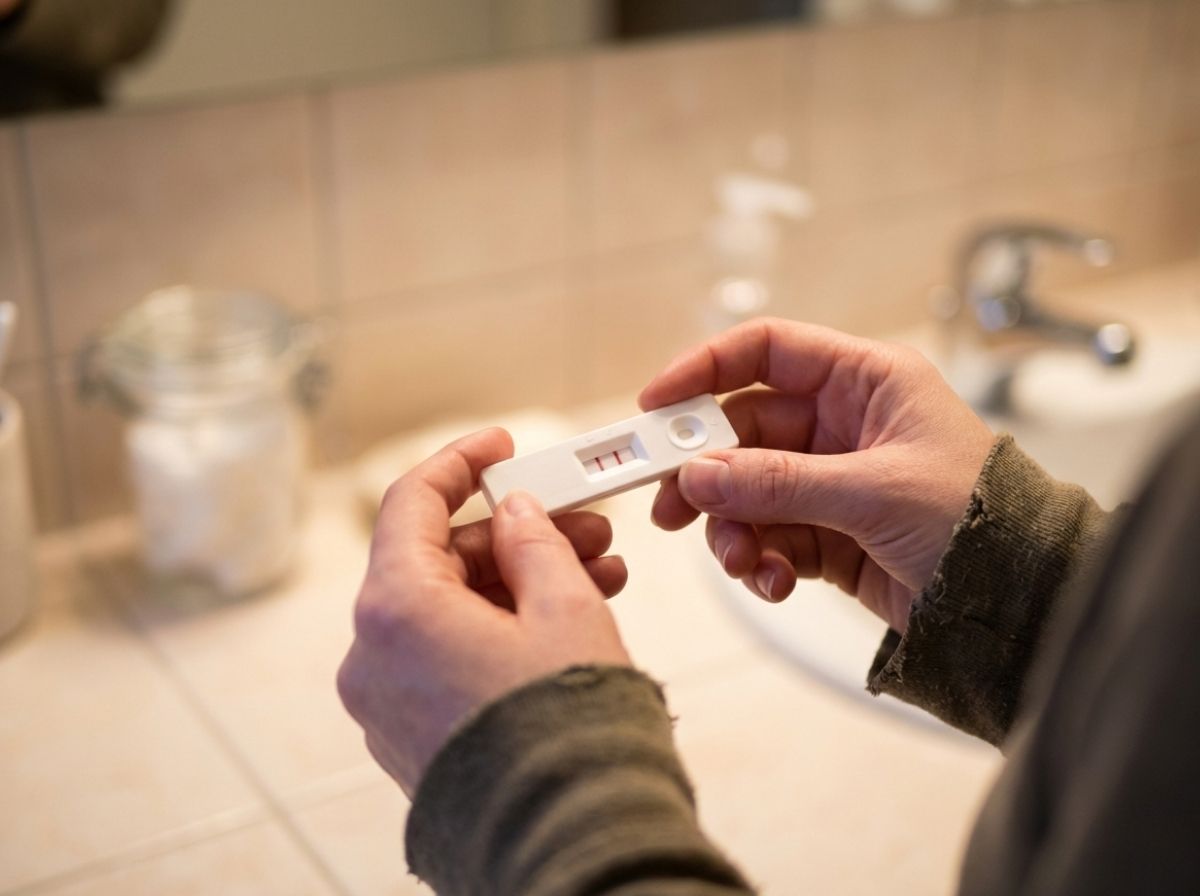
At-home rapid testing exists to close exactly that gap. Order a kit online, it arrives discreetly, you complete the test at home using a simple fingerstick blood sample or a self-collected swab, and results come back in about 20 minutes. No appointment, no waiting room, no conversation you weren't ready to have. According to the CDC, the expansion of innovative testing strategies, including at-home self-testing, is one of the factors driving the current, early decline in STI rates. Expanding access to frictionless testing drove people to actually use it, and that is one of the factors the CDC credits for the early decline in STI rates.
The accuracy of at-home rapid tests is not a meaningful trade-off either. The test kits available from STD Rapid Test Kits deliver sensitivity and specificity figures ranging from 97.2% to 99.7%, depending on the infection. These are lateral-flow immunoassays designed for screening at home; a positive result is always worth confirming with a lab NAAT or provider-administered test, and a clinician can connect treatment to the result. Timing is the variable that decides whether your result is reliable: test inside the correct window for the infection you are screening for, and the result is one you can act on. Test too early, and the biology has not caught up yet.

Practical Steps for STI Awareness Week 2026
STI Awareness Week runs April 13–18, 2026. If the campaign is going to mean anything beyond a hashtag, it needs to translate into specific actions. Here is what that actually looks like for a sexually active person in April 2026.
If you have had any new sexual contact in the past year and haven't tested recently, this week is a direct, timely reason to change that. Order a test, time it correctly for the exposure you are concerned about, and get a result you can rely on. If something comes back positive, connect with a healthcare provider promptly. Every common STI is more treatable the earlier it is found. If everything comes back negative at the right window, that result is genuinely useful information, not just a checkbox.
If you are in a relationship with a regular partner and neither of you has tested in the past year, have the conversation using the scripts in the Talk section above. It does not require a serious sit-down. Two people who know their status and have talked about it openly are in a fundamentally different and safer position than two people who assume they are fine because neither has mentioned anything.
If you have never been tested for STIs and you are sexually active, start with a comprehensive panel that covers the full range of common infections. Chlamydia, gonorrhea, syphilis, HIV, herpes, and hepatitis B can be screened in a single session timed at 6 weeks after last potential exposure; hepatitis C is retested at 8 to 11 weeks. The conversation you have been avoiding having with yourself, the one about what you might have and what it might mean, is less frightening than the alternative of carrying a silent STD long-term and finding out later when it is harder to treat.

This Week Has a Date. Your Status Doesn't Have to Wait.
STI Awareness Week gives the conversation a calendar anchor, but the infections don't observe the week. A positive result found this April is the same result it would have been in January, or will be in September. What the week offers is a direct, timely, culturally visible reason to do the thing you have been meaning to do. If that is what it takes to move from intention to action, that is exactly enough.
The 7-in-1 Complete At-Home Rapid Test Kit covers HIV, syphilis, HSV-2, chlamydia, gonorrhea, hepatitis B, and hepatitis C in a single session at home (with the hepatitis C window retested at 8 to 11 weeks). For the most comprehensive panel available, the Women's 10-in-1 Complete At-Home Rapid Test Kit adds HPV 16 and 18 plus trichomoniasis to the panel. If you want to start with a single targeted test, the HIV 1 and 2 At-Home Rapid Test Kit delivers a 99.7% accuracy result in about 20 minutes. Browse the full range of at-home rapid test kits at STD Rapid Test Kits. Your results, your privacy, your power.
- Single-infection kit (e.g. HIV 1 and 2): best when one specific concern is driving the test. Highest individual-test focus, lowest cost per panel.
- 7-in-1 Complete: the most common any-gender choice after a new exposure; six of seven infections share the 6-week window, with hepatitis C confirmed at 8 to 11 weeks.
- Women's 10-in-1: the most comprehensive panel available, adding HPV 16 and 18 plus trichomoniasis. These two specific tests are validated for vaginal self-swab only; male readers needing trich or HPV testing should see a clinic for those.
FAQs
- What is STI Awareness Week 2026, and when does it run?
- STI Awareness Week 2026 runs from April 13 to 18 and is an annual national public-health campaign organized by the CDC. The 2026 theme is Talk. Test. Treat., a three-step framework encouraging sexually active people to have open conversations about sexual health, get tested for STIs at the correct windows, and seek prompt treatment when results come back positive. It falls during the broader STI Awareness Month, which runs throughout April.
- How common are STIs in the United States right now?
- More than 2 million combined cases of chlamydia, gonorrhea, and syphilis were reported in 2024, and those figures represent only the cases that were diagnosed and reported. CDC prevalence estimates from 2018 placed roughly 1 in 5 Americans with an STI on any given day, a figure that likely understates current levels given case growth through 2022. Most early-stage infections produce no symptoms, so testing is the only reliable way to know your status.
- I have no symptoms. Do I still need to get tested?
- Yes, and this is the most important thing to understand about STIs. Asymptomatic status is an unreliable guide; only testing gives you a real answer. Chlamydia produces no symptoms in the majority of infections. Early syphilis presents as a painless sore that resolves on its own without treatment, which is exactly what makes it dangerous. HIV can remain asymptomatic for years while silently damaging the immune system. The only way to know is to test at the right window.
- What is the right time to test after unprotected sex?
- It depends on the infection. Test for chlamydia from 14 days after exposure. For gonorrhea, test from 3 weeks. For syphilis, herpes HSV-1 and HSV-2, and hepatitis B, test from 6 weeks. For HIV with a home rapid antibody test, test at 6 weeks for a first indicator result and retest at 90 days (about 13 weeks) for full certainty; a negative at 12 weeks is highly reliable. For hepatitis C, test from 8 to 11 weeks; testing before 8 weeks carries a genuine false-negative risk. Testing before these windows has limited value; a negative result inside the window period cannot be relied on, because the immune system has not yet produced enough detectable marker.
- Who should be getting tested most urgently right now?
- Anyone who has been sexually active with a new or untested partner in the past year and hasn't had a recent full panel. Young people between 15 and 24, who account for nearly half of all reported chlamydia, gonorrhea, and syphilis cases in the US annually. Pregnant people, given that congenital syphilis reached nearly 4,000 cases in 2024. People who have never had any STI testing, regardless of how long they have been sexually active. And anyone who has had unprotected sex recently and is currently doing mental gymnastics to avoid thinking about it.
- What does Talk. Test. Treat. actually require me to do?
- Talk means having an honest conversation about sexual health with partners before or after sex, and raising the topic of STI testing with a healthcare provider if they haven't brought it up. Test means ordering a comprehensive panel and timing it correctly to the window periods for each infection, not just doing it whenever and hoping the timing works out. Treat means acting on a positive result promptly instead of sitting on it, completing the full treatment course, and notifying partners who may have been exposed so they can test too.
- What should I do if my result comes back positive?
- Connect with a healthcare provider as quickly as possible. Every common STI currently at epidemic levels in the US is either curable or highly manageable: chlamydia, gonorrhea, and syphilis are all curable bacterial infections; hepatitis C is now curable in most cases; HIV is highly controllable with consistent treatment. A positive result is not a crisis. It is information that gives you the opportunity to act, and acting early consistently leads to better outcomes than acting after complications appear.
- Does at-home testing produce accurate results?
- Yes, when timed correctly and confirmed clinically for any positive. At-home rapid lateral-flow kits range from 97.2% to 99.7% sensitivity and specificity depending on the infection. A test taken too early can produce a false negative because the immune system simply hasn't produced enough detectable marker yet at that stage, regardless of test format. Lab NAAT or PCR is the gold standard for confirmation; treat the at-home rapid as your screening tool, and time it to the window in Table 1.
Our article was constructed based on current advice from the most prominent public health and medical organizations, and then molded into simple language based on the situations that people actually experience, such as a new exposure with no symptoms, the uncomfortable conversation with a partner, deciding which panel actually fits the question you have, and reading a positive result without panicking. In the background, our pool of research included more diverse public health advice, clinical advice, and medical references, but the following are the most pertinent and useful for readers who want to verify our claims for themselves.
- U.S. Centers for Disease Control and Prevention. About STI Awareness Week, campaign overview, the Talk. Test. Treat. framework, and 2026 dates.
- U.S. Centers for Disease Control and Prevention. Latest national data on STIs and syphilis in newborns, September 2025 press release, source for the 2024 9% combined decline figure and congenital syphilis case count.
- U.S. Centers for Disease Control and Prevention. About Congenital Syphilis, clinical background and prevention guidance for the pregnancy testing recommendation.
- U.S. Centers for Disease Control and Prevention. Sexually Transmitted Infections Surveillance, 2024 provisional data, source for combined case totals and population-level epidemiology.
- U.S. Centers for Disease Control and Prevention. HIV Testing, supports the 90-day window-period and confirmation guidance for antibody tests.
- U.S. Centers for Disease Control and Prevention. Hepatitis B Vaccination, supports pre-exposure vaccination effectiveness claim.
