

Published: October 2025 | Last updated: April 2026 | Editorial review and quality control: Martina N.
Most sexually transmitted infections start small. A bit of unusual discharge that fades in a week. A twinge while urinating that passes. A symptom-free month that turns into a symptom-free year. The trouble is that the silent infections are usually the ones that do the most fertility damage, because the bacteria keep working their way deeper into the reproductive tract while no one is looking.
Chlamydia and gonorrhea cause the majority of preventable infertility tied to infection in both sexes. Pelvic inflammatory disease, or PID, is the bridge between an untreated genital infection and tubal-factor infertility in women. Epididymitis is the equivalent bridge in men. Both pathways are quiet, both are common, and both respond to a short course of antibiotics if caught early enough. This guide walks through how the damage actually happens, which infections matter most, what testing windows look like in practice, and what protective steps a sexually active adult can take starting today.
Can untreated STDs really cause infertility?
Yes. Chlamydia and gonorrhea are the leading preventable infectious causes of tubal-factor infertility in women, and untreated cases of both can cause epididymitis and reduced sperm quality in men. According to the <a href="https://www.cdc.gov/std/treatment-guidelines/" target="_blank" rel="noopener">CDC's STI treatment guidelines</a>, most cases stay symptom-free until reproductive damage has already occurred. Routine testing every 6 to 12 months catches them while they are still curable with antibiotics.
Key takeaways
- Chlamydia and gonorrhea cause most STI-related infertility, and both are usually symptom-free until tubal or duct scarring has already occurred. Routine testing every 6 to 12 months catches them while they are still curable with antibiotics.
- Antibiotic treatment clears the active infection, but it cannot reverse scarring already done to fallopian tubes or sperm ducts. Time-to-diagnosis is the single biggest variable that decides whether fertility is preserved.
How an untreated STI turns into a fertility problem
An untreated genital infection rarely damages fertility through the infection itself. The damage comes from the body's immune response, which attempts to wall off the bacteria with inflammatory tissue. Over weeks and months, that inflammatory tissue becomes fibrous scar tissue. Scar tissue is rigid, narrow, and unable to perform the delicate transport functions of healthy reproductive anatomy.
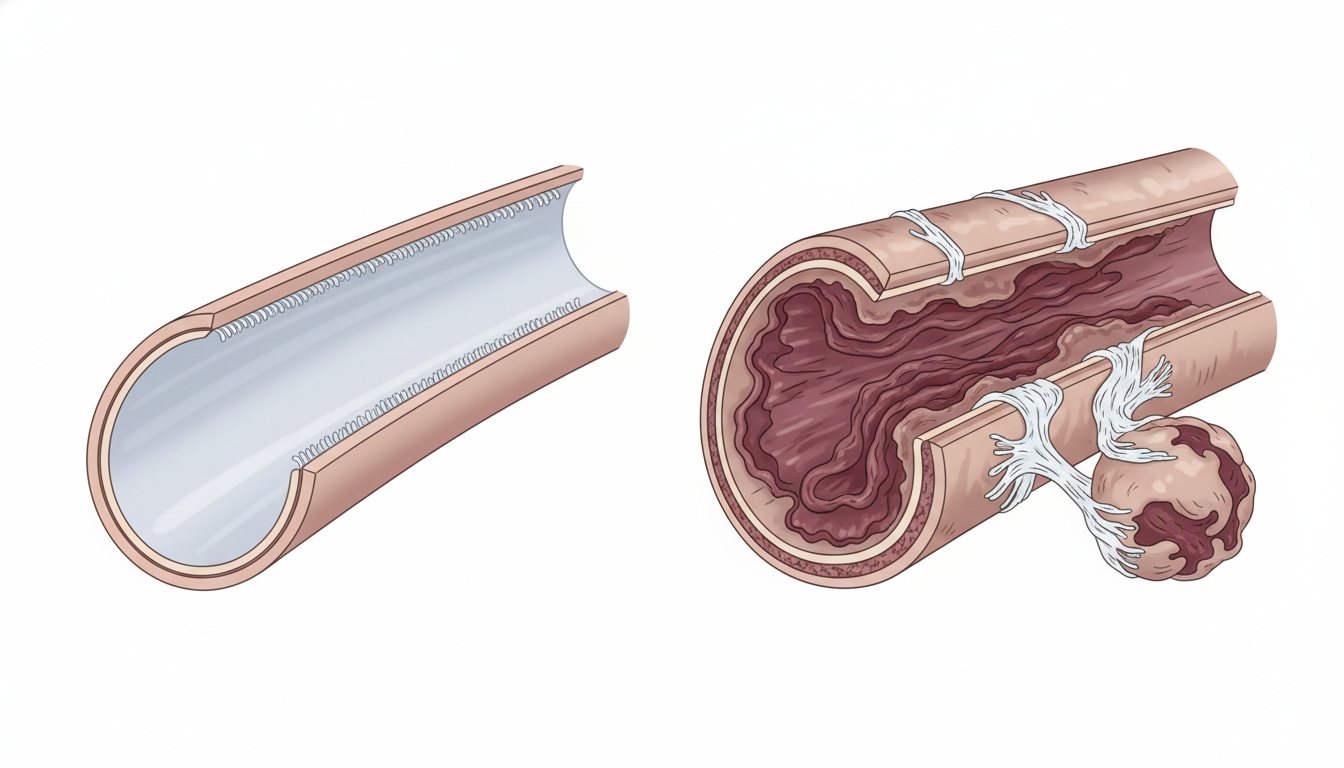
In women, bacteria from the cervix can ascend through the uterus and into the fallopian tubes. The tubes are no thicker than a strand of cooked spaghetti and rely on a thin, mobile inner lining to sweep an egg toward the uterus. Even mild scarring of that lining can stop the egg from reaching the uterus or trap a fertilized egg outside it, the mechanism behind ectopic pregnancy. In men, the same kind of bacterial spread reaches the epididymis, the tightly coiled tube where sperm mature before ejaculation. A scarred epididymis blocks sperm passage entirely or damages the maturation environment so that sperm motility and shape suffer.
The reason this matters for testing strategy is that the immune response is silent. The World Health Organization notes that the majority of STI cases, including chlamydia and gonorrhea, are asymptomatic. By the time pelvic pain, irregular bleeding, or testicular swelling shows up, scarring is already in progress.
For most infections, no symptoms means low risk. STIs that affect fertility flip that logic. The slowest, quietest infections cause the most reproductive damage because they have time to inflame and scar tissue without prompting anyone to seek treatment. A clean recent symptom history is not evidence of a clean reproductive tract.
How untreated STIs damage female fertility
The chain that links untreated genital infections to female infertility runs through pelvic inflammatory disease. PID is not a single disease but a category: any infection of the upper female reproductive tract, most often caused by untreated chlamydia or gonorrhea ascending from the cervix. The NHS describes untreated chlamydia and gonorrhea as the leading causes of PID, with risk rising further when infections are repeated.
Once PID begins, three reproductive structures are at risk. The fallopian tubes can scar internally, narrowing the passage an egg uses to reach the uterus. They can also adhere to surrounding tissue, kinking and immobilizing the tube even when the inner lumen is still patent. The endometrium, the inner lining of the uterus, can develop endometritis, which makes implantation more difficult. The ovaries themselves can be affected by inflammation that reaches them through the open ends of the tubes.
The best-known long-term consequence is tubal-factor infertility: blocked or damaged tubes that prevent natural conception. The second consequence is more dangerous in the short term. Damaged tubes raise the risk of ectopic pregnancy substantially; clinicians describe the mechanism as a narrowed or kinked passage that traps a fertilized egg inside the tube instead of letting it travel to the uterus. An ectopic pregnancy is a medical emergency because the tube can rupture as the pregnancy grows. The third consequence is chronic pelvic pain, which can persist for years after the original infection has been cleared.
The clinical reality is that none of these outcomes are inevitable. PID treated promptly with the right antibiotic regimen typically resolves without lasting fertility cost. PID that is missed or treated late can cause permanent damage on the first episode, and the risk compounds with each subsequent untreated infection.
How untreated STIs damage male fertility
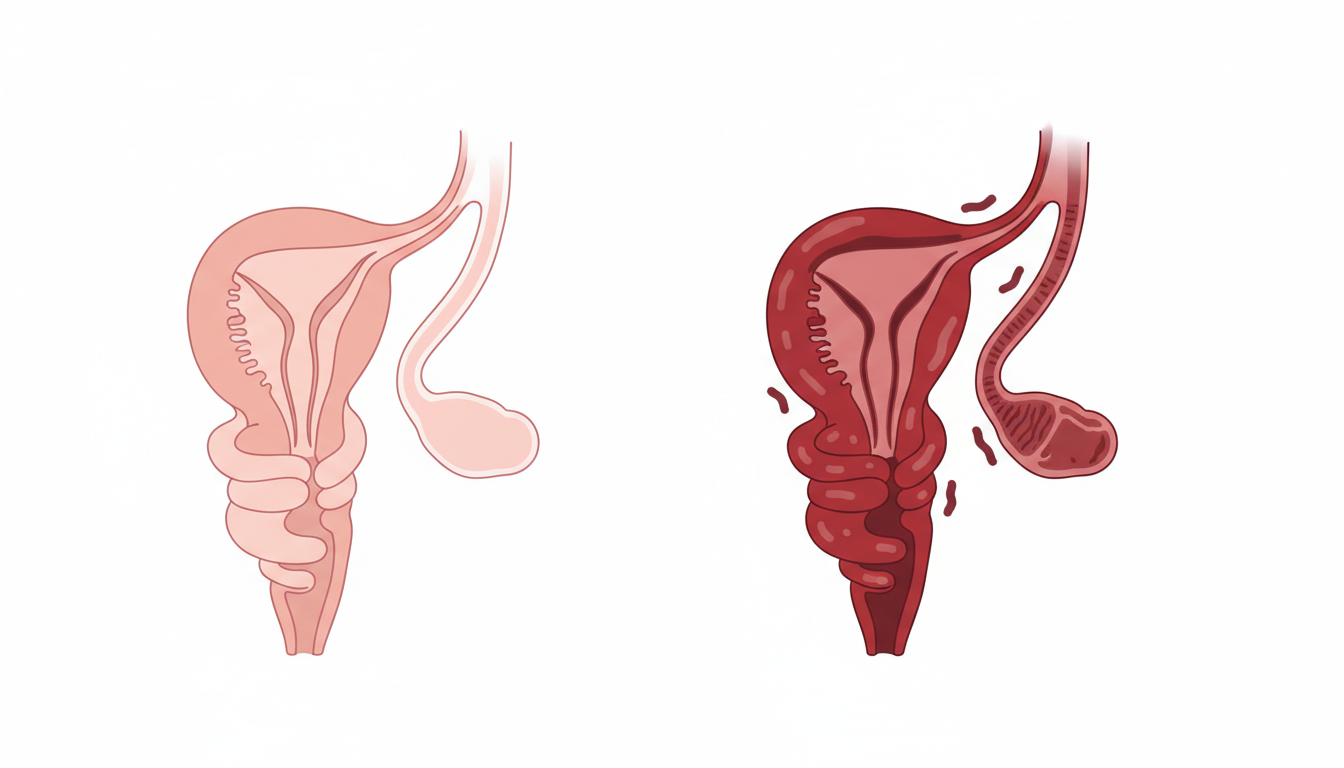
Male fertility damage from untreated STIs follows a parallel mechanism but a different anatomical path. The most common culprit is epididymitis, an inflammation of the tightly coiled duct that sits along the back of each testicle and where sperm complete the maturation process. Untreated chlamydia and gonorrhea are the dominant infectious causes in sexually active men under 35.
Acute epididymitis usually announces itself with one-sided testicular pain, scrotal swelling, and sometimes fever. Treated promptly with antibiotics, the inflammation resolves and fertility is generally preserved. The danger is the milder presentation, where pain is intermittent or attributed to a sports injury, and the inflammation runs unchecked for weeks. The inflammatory response thickens the wall of the epididymis and can scar it shut. A scarred epididymis on one side meaningfully reduces sperm output. A scarred epididymis on both sides can produce obstructive azoospermia: no sperm in the ejaculate despite normal testicular sperm production. Surgical reconstruction is sometimes possible, but success rates are limited.
The second pathway is prostatitis, an inflammation of the prostate gland that can be triggered or worsened by chlamydia. Chronic prostatitis is associated with painful ejaculation, abnormal seminal fluid composition, and changes in sperm motility. The third pathway is direct effects on sperm parameters. Chronic genital inflammation alters sperm motility, the way sperm move, and morphology, the proportion that have a normal head and tail shape. Both factors influence the chance of fertilizing an egg.
Men who are infected and asymptomatic carry an additional risk that does not show up on their own fertility profile. They can transmit the infection to a partner who then develops PID, with all the consequences described above. The pattern is well documented: a male partner with no symptoms is often the source of a woman's PID-related infertility.
Which infections pose the greatest fertility risk
Not every STI carries equal fertility risk. The strong association between specific infections and reproductive damage is concentrated in a few bacterial pathogens. Viral STIs affect fertility through different and usually less severe mechanisms. The table below summarizes how the most common infections rank, based on synthesis of current public-health guidance.
This site sells rapid at-home STI tests; the product links below go to our own product pages.
| Infection | Fertility risk if untreated | Mechanism |
|---|---|---|
| Chlamydia | High | PID and tubal scarring in women; epididymitis in men |
| Gonorrhea | High | PID and tubal scarring in women; epididymitis and prostatitis in men |
| Mycoplasma genitalium | Moderate, emerging evidence | PID-like inflammation; possible sperm-quality effects |
| Syphilis | Indirect; high pregnancy-loss risk | Congenital infection, miscarriage, stillbirth in untreated maternal cases |
| HPV | Low direct fertility effect | Cervical procedures for high-grade lesions can affect cervical competence |
| HIV | Low direct effect with treatment | Untreated infection affects general health; modern antiretrovirals largely preserve fertility |
| HSV-1 / HSV-2 | Very low | No tubal or duct involvement; pregnancy management considerations only |
| Hepatitis B and C | Low direct effect | Pregnancy management and transmission concerns rather than fertility damage |
How long an infection can hide before causing damage
The timeline question matters because it tells you when testing is useful and how often it should happen. Three time intervals are worth keeping straight: the incubation period, the window period for testing, and the damage window during which scarring begins.
For chlamydia, the incubation period is typically 1 to 3 weeks before any symptoms might appear, though most cases stay symptom-free entirely. The reliable testing window for a swab-based or NAAT chlamydia test is about 14 days post-exposure; testing earlier risks a false negative. The damage window, the point at which untreated infection begins to cause meaningful tubal or epididymal scarring, varies widely but is generally measured in months. Some women develop PID within weeks; others carry the infection for a year before damage is detected.
For gonorrhea, the picture is similar. Symptoms when present appear within 2 to 14 days, but a substantial fraction of cases are silent, particularly cervical and pharyngeal infections in women. Testing is reliable from about 7 days post-exposure for swab tests. Untreated, gonorrhea can cause PID on a faster timeline than chlamydia in some cases.
For syphilis, the incubation period before the primary chancre appears is typically 10 to 90 days. Antibody-based blood testing is reliable from roughly 4 to 6 weeks post-exposure. Syphilis-related fertility outcomes are tied less to direct reproductive damage and more to pregnancy complications, which is why the CDC recommends syphilis screening at the first prenatal visit and again later in pregnancy in higher-risk groups.
The practical takeaway is that no single test result is a permanent clean bill of health. Each test reflects exposure up to the cutoff of its window period. For sexually active adults with new or multiple partners, the CDC recommends annual screening at minimum, with shorter intervals for higher-risk groups.
A negative test taken 3 days after a possible exposure does not rule out chlamydia or gonorrhea. Either test on the day of any concerning symptom AND retest at the 14-day mark, or wait until 2 weeks have passed before testing for the first time. Testing too early is the most common reason a missed infection silently progresses to PID or epididymitis.
Why early testing changes the outcome
The fertility outcomes from untreated STIs are dose-dependent on time. The longer a bacterial infection sits in the upper reproductive tract, the more inflammatory tissue it generates and the higher the chance that inflammation crosses the threshold from acute and reversible to fibrotic and permanent. This is the single most important fact for anyone weighing whether to test.
An infection caught in the first month of asymptomatic carriage is essentially a non-event. A short course of antibiotics, often a single dose for gonorrhea or a 7-day course of doxycycline for chlamydia, clears it. The reproductive tract returns to baseline. The same infection caught 6 months later carries a meaningfully higher chance that some scarring has begun.
Three additional benefits compound that primary one. First, knowing your status interrupts onward transmission to current and future partners, which protects them from the same fertility risks. Second, treatment costs almost nothing relative to the cost of treating PID, performing tubal surgery, or pursuing IVF. Third, repeat infections compound damage, so detecting a first infection and treating it before reinfection sets in is fertility-protective in a way a single test does not fully capture.
For sexually active adults, the practical screening cadence depends on partner count and protection use. Annual screening is the floor for anyone in a non-monogamous arrangement. Twice-yearly is standard for those with multiple recent partners. Quarterly screening is reasonable for higher-risk groups. Testing after every new partner or after any episode of condom failure is a defensible additional layer.
A chlamydia or gonorrhea infection caught and treated within the first weeks to a couple of months of carriage typically leaves no lasting fertility cost. The same infection allowed to run for 6 months or longer carries a real risk of tubal or epididymal scarring. Routine testing protects that window between detection and damage.
What treatment can and cannot reverse
Antibiotics treat the infection, not the consequences. Once scarring has formed, no oral medication unmakes it.
What treatment reliably reverses: the infection itself. Chlamydia clears with doxycycline or, in pregnancy, azithromycin. Gonorrhea clears with ceftriaxone, often paired with doxycycline to cover possible co-infection. Syphilis at its early stages clears with a single intramuscular dose of benzathine penicillin. Treatment also stops disease progression, so any damage that has not yet happened simply will not happen.
What treatment does not reverse: scarring of the fallopian tubes, scarring of the epididymis or vas deferens, and structural changes already present in the uterus or prostate. Surgical interventions exist for some of these. Tubal microsurgery can sometimes restore patency to mildly damaged tubes. Vasoepididymostomy can sometimes reconnect a sperm path through a scarred epididymis. Both procedures have moderate success rates and are usually reserved for cases where the scarring is well-defined and limited.
Where natural conception is no longer possible, in vitro fertilization bypasses the damaged anatomy. IVF with the woman's own eggs is effective for tubal-factor infertility because it sidesteps the tubes entirely. For severe male-factor infertility from epididymal scarring, intracytoplasmic sperm injection, ICSI, can use sperm retrieved directly from the testis. These are real options, though they are not low-cost, low-burden alternatives to early detection. A single IVF cycle in the United States typically costs more than a decade of routine STI screening, and outcomes are not guaranteed.
Sperm parameter recovery is more variable. Sperm count, motility, and morphology after a treated genital infection often partially recover over the 3 months it takes for new sperm to mature, provided the scarring did not block the duct system entirely. Couples whose fertility problems trace to a recent treated infection are sometimes advised to wait at least one full sperm production cycle before attempting conception or repeat semen analysis.
One treated infection in your history is not, by itself, a reason to expect fertility problems. Most people who clear an early infection promptly never see any reproductive consequence. If you and a partner have been trying for a year without success, a basic fertility workup can establish whether tubal patency or sperm parameters are within normal range, and that is the right time to discuss any past infections with the clinician handling the workup.
Steps to protect your fertility now
Fertility protection in the context of STIs is mostly about avoiding the silent damage window. None of the steps below are novel; together they substantially reduce the risk of silent reproductive damage.
Build screening into a routine rather than treating it as a response to an event. Annual testing is the floor for sexually active adults; more often is reasonable for those with multiple or new partners. Use barrier protection consistently for new partners and during the first months of any new relationship, then revise based on shared test results and conversation. Get the HPV vaccine if you are within the eligible age range. The CDC recommends routine HPV vaccination through age 26 and shared clinical decision-making for adults aged 27 to 45.
Talk to partners directly about testing. The conversation feels awkward the first time and is usually fine after that. Sharing recent test results, or testing together at the start of a new relationship, removes most of the uncertainty. If a current partner tests positive for chlamydia or gonorrhea, both of you should be treated even if your own test is negative; this is the standard expedited partner therapy approach.
Pay attention to symptoms but do not wait for them. New pelvic pain, unusual discharge, painful urination, or testicular swelling deserves an immediate test. The absence of those symptoms does not mean a recent exposure is benign.
Quick action plan
- Test annually as a baseline. More often if you have new or multiple partners.
- Wait at least 14 days after a possible exposure before swab-based chlamydia or gonorrhea testing for a reliable result.
- If a partner tests positive, both of you treat. Do not skip treatment based on a negative own-test.
- Vaccinate against HPV through age 26 if you are not already. Discuss with a clinician if you are 27 to 45.
Untreated sexually transmitted diseases such as chlamydia and gonorrhea can spread into the upper genital tract and cause pelvic inflammatory disease, a leading cause of infertility, ectopic pregnancy, and chronic pelvic pain.
Frequently asked questions
- Can untreated STDs cause permanent infertility?
- Yes, but only after enough time has passed for inflammation to scar reproductive tissue. Untreated chlamydia and gonorrhea cause most STI-related infertility through pelvic inflammatory disease in women and epididymitis in men. Caught early, both clear with antibiotics and fertility is preserved. Caught late, the resulting scar tissue is usually permanent.
- Which STDs are most likely to affect fertility?
- Chlamydia and gonorrhea are the dominant fertility-affecting STIs in both sexes. Mycoplasma genitalium is an emerging concern with PID-like effects. Syphilis primarily affects pregnancy outcomes rather than baseline fertility. HPV, HIV, herpes, and hepatitis B and C have low direct fertility effects under modern care, though each has pregnancy-management considerations of its own.
- How does chlamydia damage fertility in women?
- Chlamydia ascends from the cervix into the uterus and fallopian tubes, where the body's inflammatory response can scar the delicate tube lining. Scarring narrows or blocks the passage an egg uses to reach the uterus and can trap a fertilized egg inside the tube, which is the mechanism behind ectopic pregnancy. Caught before PID develops, chlamydia clears with a 7-day antibiotic course and leaves no lasting reproductive damage.
- Can men become infertile from untreated STIs?
- Yes. Untreated chlamydia and gonorrhea can cause epididymitis, an inflammation of the duct where sperm mature. Mild cases resolve with antibiotics. Severe or chronic cases scar the epididymis and can block sperm passage. Bilateral scarring causes obstructive azoospermia, where no sperm reaches the ejaculate. Reduced sperm motility and morphology after chronic genital inflammation are also documented.
- If my STI was treated, can I still have children normally?
- Almost always yes, particularly if the infection was caught and treated early. Most people who clear a single early infection promptly never see any fertility consequence. A history of multiple untreated infections, severe PID, or an abnormal semen analysis is the right trigger for a basic fertility workup before assuming a problem exists.
- How often should sexually active adults test for fertility-affecting STIs?
- Annual testing is the floor for any sexually active adult who is not in a verified mutually monogamous relationship. Twice-yearly is reasonable for multiple recent partners. Quarterly is reasonable for higher-risk groups. Test after every new partner or after any episode of condom failure if you want a stricter routine. Pregnant women receive STI screening at the first prenatal visit per CDC guidance.
- Can at-home STI tests reliably catch the infections that affect fertility?
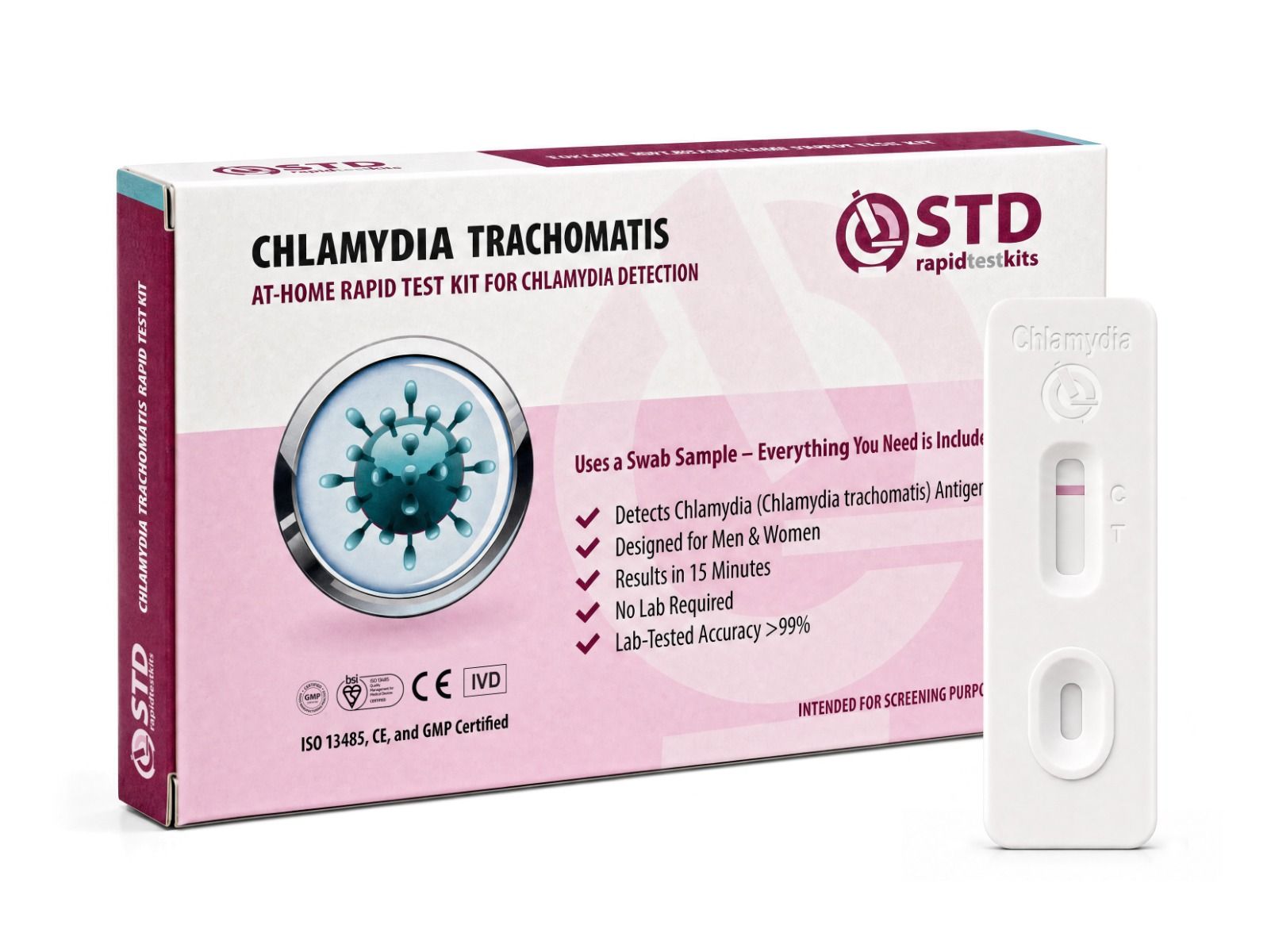
- At-home rapid lateral-flow tests are useful screening tools for chlamydia, gonorrhea, syphilis, HIV, and the hepatitis viruses. They use the same swab and blood sample types as clinic tests, with lateral-flow chemistry rather than laboratory NAAT. A positive home result is worth confirming at a clinic with NAAT for the bacterial infections; a negative result combined with proper window-period timing is reasonable for routine screening.
- What symptoms suggest an STI is already damaging fertility?
- In women: persistent pelvic pain, pain during sex, irregular bleeding, unusual discharge, or pain with urination. In men: testicular pain or swelling, scrotal heaviness, painful ejaculation, or persistent groin discomfort. Any of these warrant immediate testing and clinical evaluation. Many people with active fertility damage have none of these symptoms, which is why routine screening matters more than symptom-based testing.
- U.S. Centers for Disease Control and Prevention. Sexually Transmitted Infections Treatment Guidelines, including chlamydia, gonorrhea, syphilis, and PID management.
- World Health Organization. Sexually transmitted infections fact sheet, including the asymptomatic nature of most chlamydia and gonorrhea infections.
- U.K. National Health Service. Pelvic inflammatory disease overview, causes, and complications including infertility risk.
- U.K. National Health Service. Chlamydia overview, symptoms, complications, and treatment.
- U.K. National Health Service. Gonorrhoea overview, symptoms, complications, and treatment.
- U.S. Centers for Disease Control and Prevention. STD facts and screening recommendations, including HPV vaccination guidance through age 26 with shared clinical decision-making to age 45.
