

Published: November 2025 | Last updated: April 2026 | Editorial review and quality control: Martina N.
The infections behind chlamydia, gonorrhea, syphilis, trichomoniasis, and HPV often arrive without symptoms. For women, that silence is the danger. By the time pelvic pain, an unexpected miscarriage, or an abnormal Pap result surfaces, the underlying infection has often spent months quietly damaging the upper reproductive tract, the immune system, or, in the case of syphilis, the heart and brain. The World Health Organization estimates that more than one million curable STIs are acquired every day worldwide in people aged 15 to 49, and the majority of those infections are asymptomatic at the moment of acquisition (WHO, STI fact sheet, 2025).
This guide covers what each untreated infection does inside the body over time, the screening intervals that catch them early, and the at-home options that make routine testing genuinely routine. It is written for women who want a clear picture of the risk math, not a scare story. Most of the conditions below are preventable with one annual swab and one fingerstick blood draw.
What are the long-term risks of untreated STDs in women?
The most common long-term consequences are pelvic inflammatory disease leading to tubal scarring, infertility, and ectopic pregnancy (most often from untreated chlamydia or gonorrhea), persistent high-risk HPV progressing to cervical cancer over years, untreated syphilis spreading to the nervous system or eyes, and STI-related complications during pregnancy including preterm birth, neonatal infection, and stillbirth. Annual screening for sexually active women under 25, plus repeat testing after a new partner, prevents the majority of these outcomes.
Key Takeaways
- About 1 in 8 women with a history of pelvic inflammatory disease later experience difficulty getting pregnant, according to the CDC, and chlamydia and gonorrhea are the leading causes.
- The CDC recommends annual chlamydia and gonorrhea screening for sexually active women under 25, and for women 25 and over with a new partner, multiple partners, or a partner with an STI.
When chlamydia and gonorrhea reach the upper reproductive tract
The single most consequential complication of an untreated bacterial STI in women is pelvic inflammatory disease (PID). PID is what happens when chlamydia or gonorrhea, which usually start in the cervix, travel upward into the uterus, fallopian tubes, and surrounding tissue. The CDC's PID overview lists three reproductive outcomes from PID, all of which are common reasons women later seek fertility care: scar tissue forming inside and outside the fallopian tubes, ectopic pregnancy, and infertility (CDC, About Pelvic Inflammatory Disease).
The numbers are blunt. The CDC states that 1 in 8 women with a history of PID later experience difficulty becoming pregnant. The CDC also warns that treatment of PID does not undo damage that has already happened to the reproductive system, and that the longer the delay before treatment, the higher the chance of complications. That window is what makes screening so high-value: a five-day course of antibiotics for asymptomatic chlamydia is straightforward, while reversing tubal scarring is not.
Three patterns recur in PID and its sequelae:
- Tubal blockage from inflammation and scarring inside the fallopian tubes can stop the egg from reaching the uterus, leading to either infertility or ectopic implantation.
- Ectopic pregnancy, a pregnancy that grows outside the uterus, is potentially life-threatening and represents one of the most acute long-term consequences of an STI that was missed years earlier.
- Chronic pelvic pain can persist long after the original infection has cleared, driven by adhesions in the pelvis, recurrent inflammation, or repeated reinfection (NHS, Pelvic inflammatory disease).
Both chlamydia and gonorrhea typically cause no symptoms in women, which is the reason annual screening is the recommendation rather than test-when-you-feel-something-wrong (CDC, About Chlamydia; CDC, About Gonorrhea).
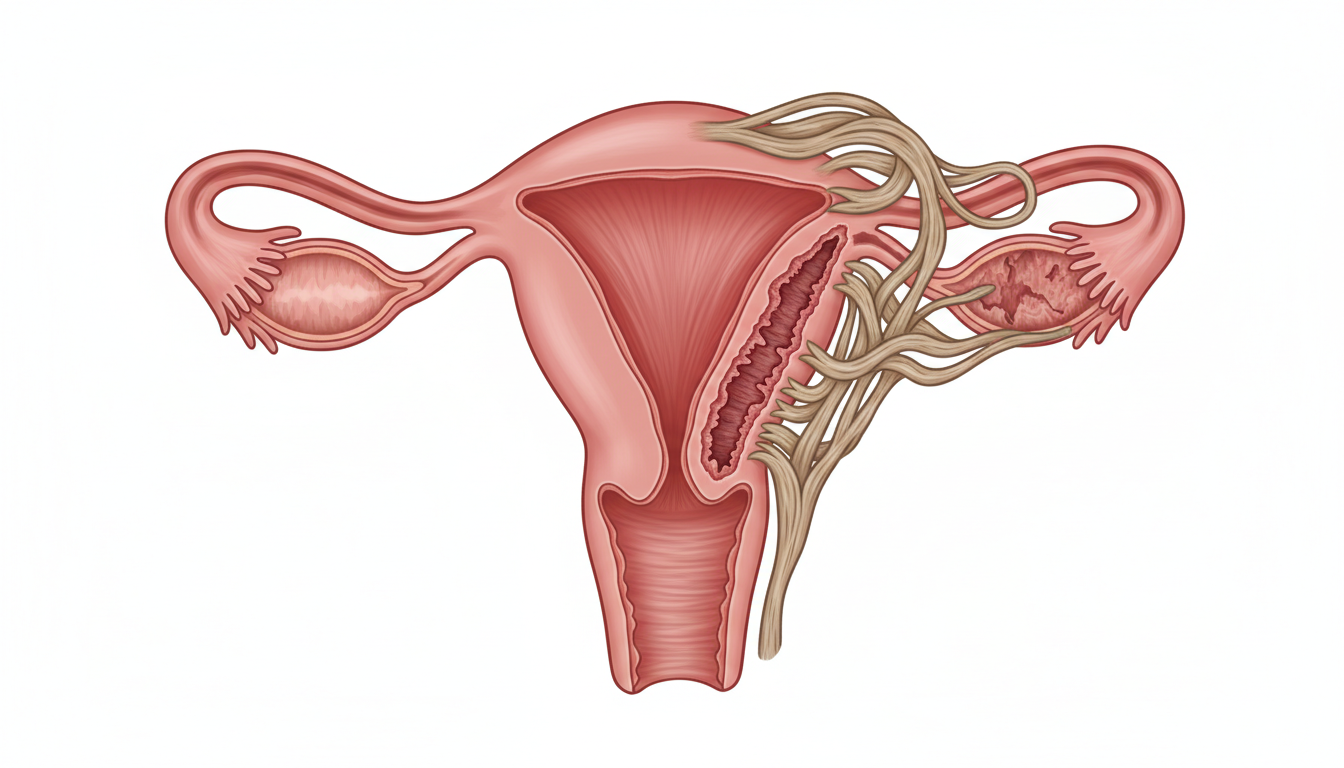
The CDC's chlamydia and gonorrhea overviews both state that these infections often have no symptoms but can still cause serious health problems. A normal-feeling body is not evidence of a clean test. If you are sexually active and under 25, an annual screen is the only reliable way to catch infections before PID begins.
How one untreated STI raises the risk of getting another
An untreated STI does more than damage tissue at its primary site. It also makes the body easier to infect with the next pathogen the immune system meets. This is most clinically meaningful for HIV, where the underlying mechanism is well documented: localized inflammation in the genital tract recruits the very immune cells (CD4 T-cells) that HIV preferentially infects, and disrupted mucosal barriers give the virus more direct access to those cells.
Trichomoniasis is a clear example. The infection is often asymptomatic in women, yet the chronic vaginal inflammation it produces is associated with increased susceptibility to HIV upon exposure. The same dynamic applies to untreated bacterial STIs that produce ulcers, discharge, or cervical inflammation. The combined effect is a feedback loop: one quiet infection raises the odds that a future exposure becomes a second infection.
This is why the WHO frames STI control as part of broader HIV prevention strategy, and why opportunistic case-finding (testing for one STI when a woman presents with another) is standard guidance. From a personal-decision perspective, the takeaway is simpler: do not wait for the second infection to test for the first.
Trichomoniasis is often dismissed because the symptoms are subtle or absent, but the chronic inflammation it produces in the vaginal mucosa is exactly the environment that helps HIV establish infection if exposure occurs. Treating trich early is a quiet but high-value step in HIV prevention, not just a comfort measure. A single oral antibiotic course resolves it in most cases.
Syphilis: from a painless sore to systemic disease
Syphilis follows a different timeline. The first stage produces a single painless sore (chancre) that heals on its own within a few weeks, even without treatment, which makes it the easiest infection to overlook. The CDC's syphilis overview describes what happens next when the infection is not treated: it can spread to the brain and nervous system (neurosyphilis), invade the eyes (ocular syphilis with possible vision loss or blindness), and, decades later, attack the heart and other organs in tertiary syphilis (CDC, About Syphilis).
The neurosyphilis presentation is especially worth flagging in YMYL terms because it can imitate non-infectious problems. Severe headaches, muscle weakness, mental-state changes, and dementia-like cognitive decline are all on the CDC's syphilis-complication list. A woman with cognitive symptoms in her 50s would not necessarily think to ask about an exposure from her 20s, which is why a single negative blood test years earlier is not protective if there has been a new partner since.
Ocular syphilis is rarer but worth naming. The CDC notes that infection-related changes in vision can progress to blindness if untreated. A rapid syphilis blood test catches the infection in the latent phase, between the chancre and the systemic complications, when antibiotics still resolve it cleanly.
Primary: a single painless sore (chancre) at the site of infection, healing on its own in 3 to 6 weeks. Secondary: a non-itchy rash (often on palms and soles), mucous-membrane lesions, fever, sore throat, and fatigue, weeks to months after the chancre. Latent: no visible symptoms, sometimes lasting years, while the infection persists in the body. Tertiary: serious damage to the heart, brain, nerves, eyes, and other organs, which can occur 10 to 30 years after initial infection per the CDC's syphilis overview.
HPV and the cervical-cancer timeline
Human papillomavirus is the most prevalent STI in the United States. The CDC notes that nearly everyone will get HPV at some point, that more than 42 million Americans currently carry disease-causing HPV types, and that roughly 13 million new infections occur each year (CDC, About HPV). Most of those infections clear on their own within one to two years.
The risk for women is the small subset that does not clear. Persistent infection with high-risk HPV types is the main cause of cervical cancer, according to the CDC's cervical-cancer overview (CDC, About Cervical Cancer). The progression is slow, often a decade or longer between persistent infection and invasive cancer, which is what makes the prevention math so favorable: regular cervical screening (Pap and HPV testing) and HPV vaccination together prevent the majority of cases.
Globally, HPV is associated with more than 311,000 cervical-cancer deaths every year, per the WHO. HPV also causes vaginal and vulvar cancers in women, and oropharyngeal cancers in both sexes. ACIP guidance supports routine HPV vaccination through age 26, with shared clinical decision-making for adults aged 27 to 45.
The at-home rapid HPV swab kit available on this site is validated for vaginal self-collection in women only. It is a screening cassette, not a substitute for a clinician-administered cervical Pap-plus-HPV co-test, and a positive result is a prompt to follow up with a clinic, not a final answer.
The CDC notes that most HPV infections resolve within one to two years without treatment. The risk to track is persistent infection with high-risk types (16 and 18 are the best-known), which is the main cause of cervical cancer over a decade-or-longer timeline. ACIP supports routine HPV vaccination through age 26, with shared clinical decision-making between ages 27 and 45. Vaccination plus regular cervical screening (Pap from age 21, HPV co-testing from age 30) prevents most cases.
Pregnancy, newborn outcomes, and prenatal screening
The stakes change in pregnancy. An untreated STI is no longer a personal-health question; it becomes a maternal and neonatal one. The WHO's STI fact sheet documents that an estimated 1.1 million pregnant women were infected with syphilis in 2022, resulting in over 390,000 adverse birth outcomes including stillbirth, neonatal death, low birth weight, and prematurity. Untreated chlamydia and gonorrhea can be transmitted to a baby during vaginal delivery and present as neonatal conjunctivitis or pneumonia in the first weeks of life.
Preterm birth and low birth weight, neonatal infection at delivery, and miscarriage or stillbirth are the outcomes that appear most consistently across the literature on untreated STIs in pregnancy:
- Preterm birth and low birth weight. Untreated bacterial STIs are associated with preterm labor, and infants born before 37 weeks have higher rates of respiratory and neurodevelopmental complications.
- Neonatal infection at delivery. Eye infections and pneumonia from chlamydia or gonorrhea acquired during birth are well documented; congenital syphilis can produce cataracts, deafness, seizures, and infant death (CDC, About Syphilis).
- Miscarriage and stillbirth. Syphilis in particular is dangerous in pregnancy and is on the WHO's list of causes of stillbirth and neonatal death globally.
The good news is that prenatal screening protocols catch nearly all of these. CDC and ACOG guidance recommends syphilis, HIV, hepatitis B, and chlamydia testing at the first prenatal visit, with retesting in the third trimester for women in higher-risk categories. The protocols work because they are systematic, not because the conditions are easy to spot.

If you are planning a pregnancy or are already pregnant, an at-home rapid STI panel is not a replacement for prenatal lab testing. It is useful before conception (so any infection is identified and treated before pregnancy begins) and as a baseline check between routine visits. Once pregnant, work with your OB-GYN: they will test for syphilis, HIV, hepatitis B, and chlamydia at the first visit and may repeat the panel in the third trimester depending on your risk profile.
For partners of pregnant women, an at-home rapid panel is a reasonable way to confirm status without waiting for a clinic appointment.
Mental health, relationships, and the cost of stigma
The psychological weight of an untreated or newly diagnosed STI is real and worth treating with the same seriousness as the physical complications. Surveys consistently show elevated rates of anxiety, shame, and relationship stress among women living with chronic STIs (HSV, HPV) or recovering from acute infections. The drivers are predictable:
- Fear of long-term health consequences, especially when fertility is already a concern.
- Disclosure stress, which can complicate dating and existing relationships.
- Loss of reproductive confidence after an infertility diagnosis tied to a past infection.
None of this is solved by avoiding testing. The opposite is true: women who test routinely report less anxiety because they have answers rather than uncertainty. Calm, fact-based education on what an STI actually does (and what it does not do) reduces the stigma load, and routine at-home testing keeps the question of status from accumulating into a crisis. If a positive result feels emotionally heavy, a sexual-health clinic or a primary-care provider can connect you with counseling alongside treatment.
Women with a clear result, positive or negative, consistently report lower worry than women who avoid testing because they fear the outcome. A sexual-health clinic or primary-care provider can pair counseling with treatment if a positive result feels heavy, and most acute STIs are curable once identified. The discomfort of testing is short; the relief of an answer is durable.
How and when to screen: the practical playbook
The CDC's screening framework for women is consistent across its chlamydia, gonorrhea, syphilis, and HIV guidance pages. Combined into one practical schedule:
- Annually for sexually active women under 25: chlamydia and gonorrhea screening (CDC, About Chlamydia).
- Annually for women 25 and over with risk factors: a new partner, multiple partners, a partner with an STI, or inconsistent condom use.
- At least once in adulthood: HIV testing, per CDC universal-screening guidance, with retesting based on ongoing risk.
- At every prenatal first visit: syphilis, HIV, hepatitis B, and chlamydia, with third-trimester repeat for women at higher risk.
- After a new partner or any unprotected exposure: a baseline panel after the relevant window periods.
- Cervical screening: Pap test every three years from age 21, or HPV co-testing every five years from age 30, per ACOG and CDC guidance.
At-home rapid kits are useful for the routine annual checkpoint and for between-clinic-visit checks. They are lateral-flow immunoassays, not laboratory NAAT or PCR, which means a positive result is a strong signal to follow up with a clinic for confirmation and treatment. They are most valuable for two reader profiles: women between clinic visits who want a quick interval check, and women who would not test at all if it required scheduling a clinic appointment.
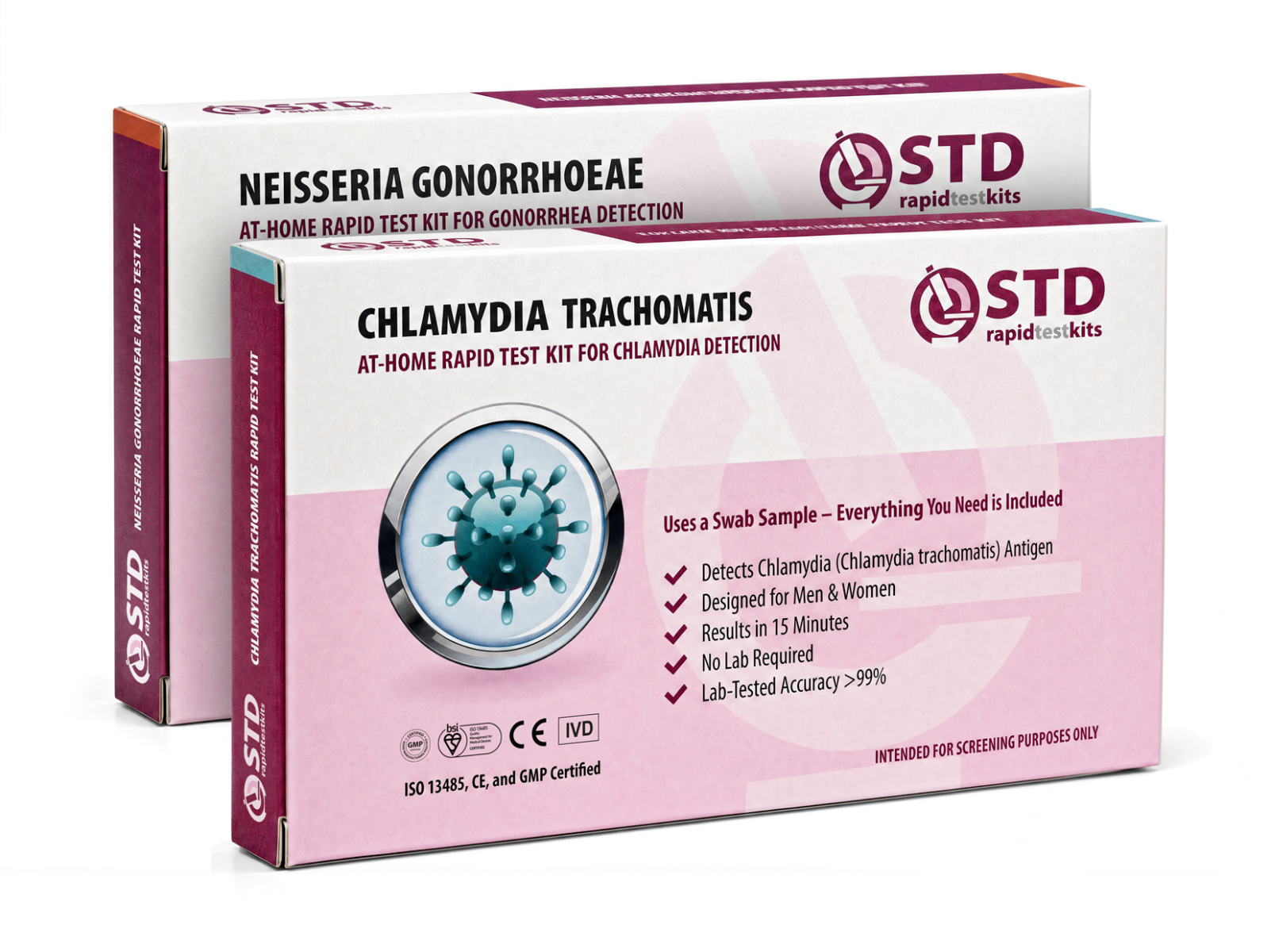
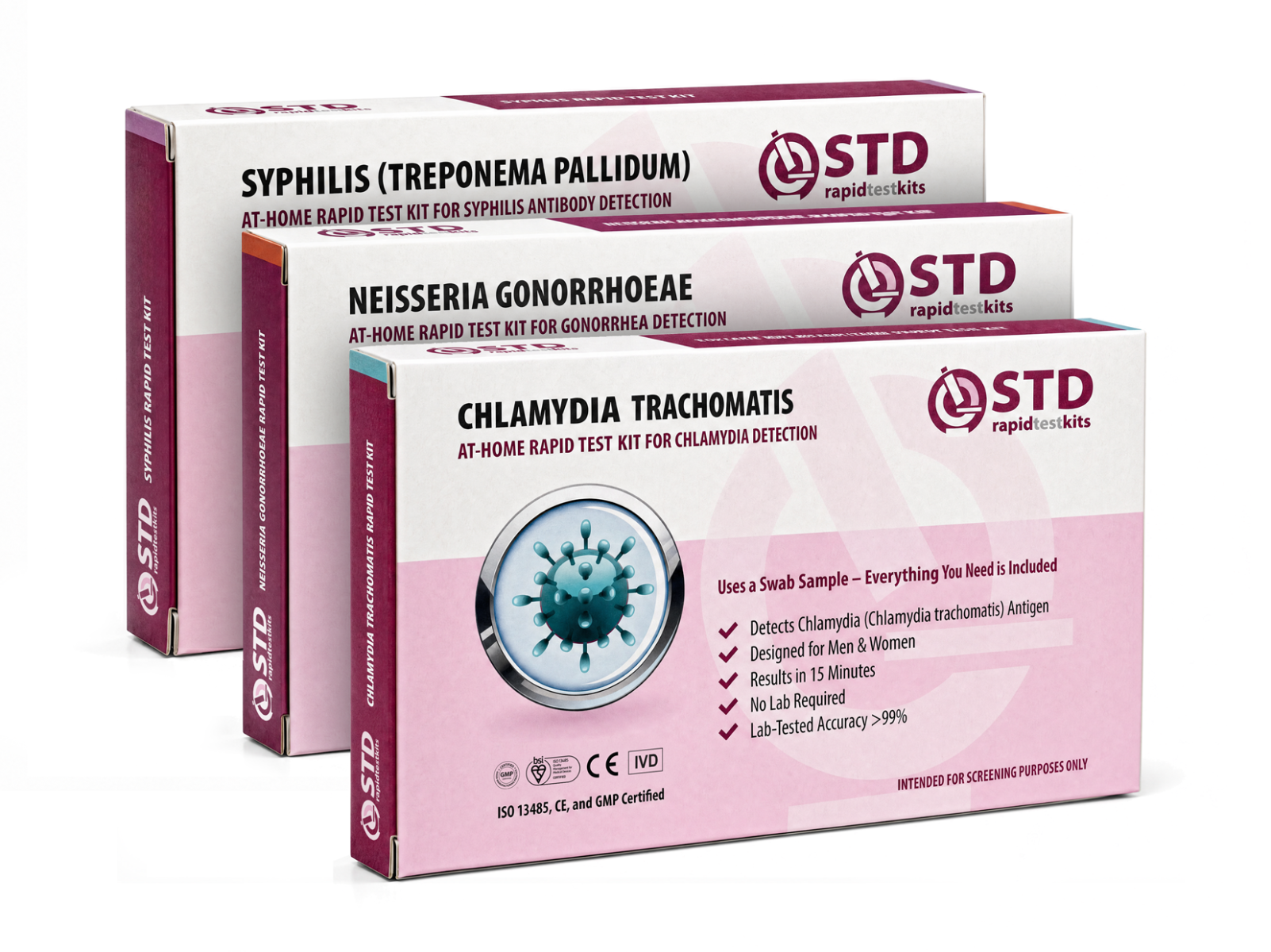
For full coverage of the infections discussed in this article, our 10-test at-home panel is validated for women only and screens for ten of the most common STIs in one kit. For a narrower checkpoint, the chlamydia and gonorrhea swab combo covers the two infections most likely to silently progress to PID.
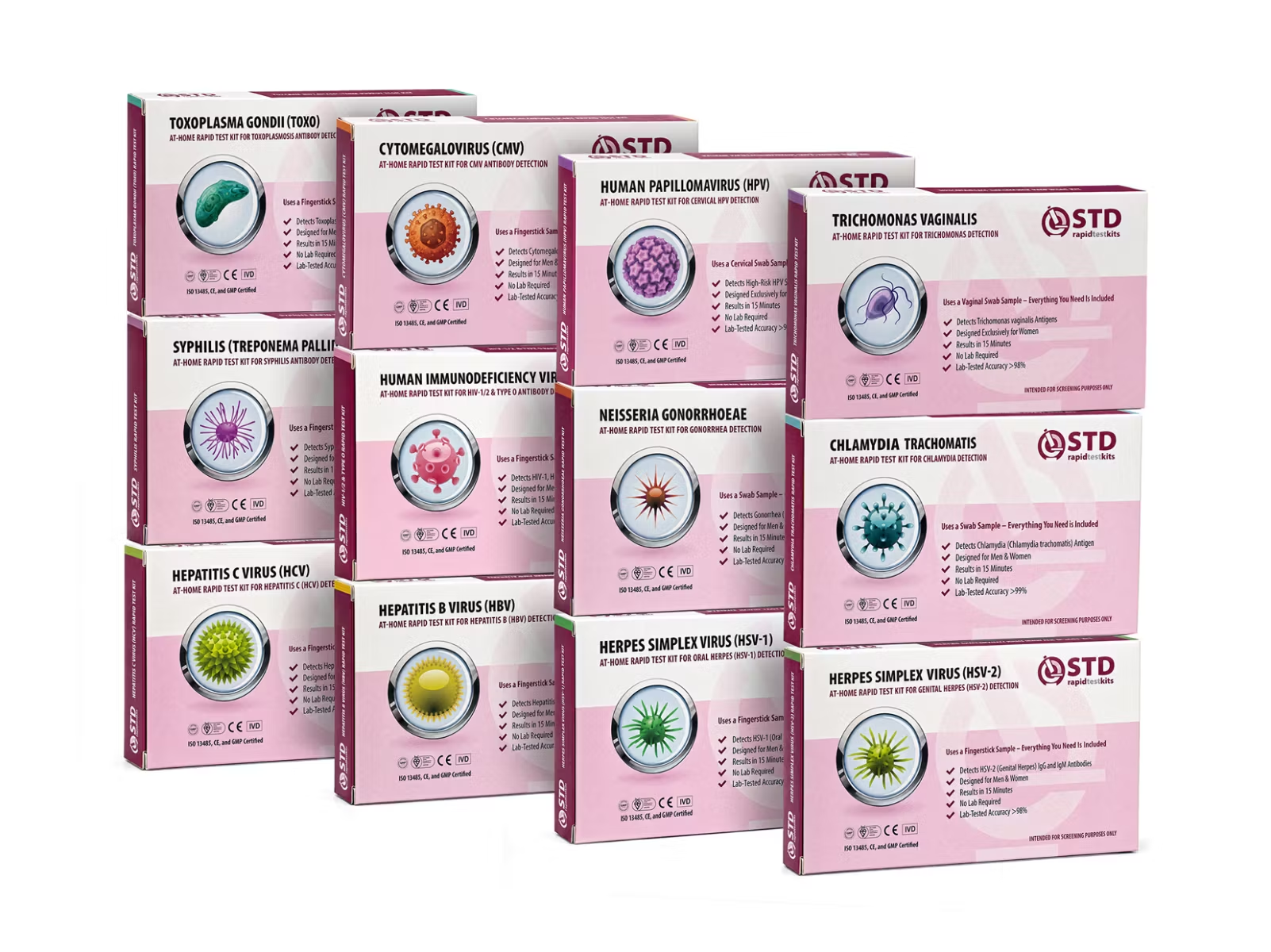
Our home test kits use rapid lateral-flow strips, the same general technology as a home pregnancy test or a rapid COVID antigen test. They detect the infection's antigens (for swab kits) or antibodies (for blood-based kits like HIV, syphilis, HSV). They are not NAAT-equivalent and they do not replace clinician-administered cervical screening for HPV or a clinic visit if you have symptoms. A negative result outside the relevant window period and a positive result both warrant clinic follow-up.
Untreated sexually transmitted infections (STIs) can cause pelvic inflammatory disease (PID), a serious condition, in women. 1 in 8 women with a history of PID experience difficulties getting pregnant.
Frequently asked questions
- Which untreated STD causes the most long-term harm in women?
- By volume of cases, untreated chlamydia is the leading cause of pelvic inflammatory disease, tubal-factor infertility, and ectopic pregnancy in women. Persistent high-risk HPV is the leading cause of cervical cancer over a longer timeline. Both are largely preventable with the screening intervals described above.
- If I have no symptoms, do I really need to test?
- The CDC built its annual-screening recommendation specifically around this pattern: most positive chlamydia and gonorrhea tests are found in women who feel entirely normal. By the time symptoms develop, PID may already have begun. Screening is the only reliable way to catch these infections in the window where antibiotics resolve them without lasting reproductive damage.
- Are all STIs curable if caught early?
- The bacterial STIs (chlamydia, gonorrhea, syphilis, trichomoniasis) and parasitic infections are curable with antibiotics or antiparasitics. Viral STIs (HSV-1, HSV-2, HIV, HPV, hepatitis B, hepatitis C) are not always curable, though several are now manageable as chronic conditions and some clear on their own. Early detection still matters for all of them because it changes the treatment options available.
- How can untreated trichomoniasis raise my HIV risk?
- Trichomoniasis often produces low-grade chronic vaginal inflammation, which recruits immune cells to the genital mucosa and disrupts the mucosal barrier. Both effects make it easier for HIV to establish infection if a future exposure occurs. Treating trichomoniasis early closes that window.
- Why does prenatal STI screening matter so much?
- The WHO documents over 390,000 adverse birth outcomes globally in 2022 from maternal syphilis alone, and untreated chlamydia and gonorrhea can be passed to a baby at delivery. The standard prenatal panel (syphilis, HIV, hepatitis B, chlamydia) at the first visit catches nearly all of these and prevents most of the worst outcomes.
- Can untreated gonorrhea spread beyond the genital tract?
- Yes. The CDC's gonorrhea overview notes that untreated gonorrhea can spread to the blood or joints, a condition that can be life-threatening. This is uncommon relative to PID but is one of the reasons the CDC frames untreated gonorrhea as a serious-systemic-risk infection rather than a localized one.
- How accurate are at-home rapid STI test kits?
- Sensitivity and specificity vary by infection and kit; figures are listed on each individual product page on this site. They are screening tools, not laboratory NAATs, so a positive result should always be confirmed at a clinic with a laboratory NAAT, and a negative result during a window period should be repeated after the window closes.
- Should women in monogamous relationships still test?
- A baseline test at the start of a relationship is reasonable, since either partner may have been exposed before. After that, ongoing routine testing is a personal-judgment call based on relationship structure and history. Pregnant women should still receive prenatal screening regardless of relationship status.
- U.S. Centers for Disease Control and Prevention. About Pelvic Inflammatory Disease (PID): causes, complications, and the 1-in-8 infertility statistic.
- U.S. Centers for Disease Control and Prevention. About Chlamydia: screening recommendations for women under 25, asymptomatic patterns, and complications.
- U.S. Centers for Disease Control and Prevention. About Gonorrhea: screening for women, asymptomatic infection, and disseminated infection risk.
- U.S. Centers for Disease Control and Prevention. About Syphilis: stages, neurosyphilis, ocular syphilis, and congenital syphilis complications.
- U.S. Centers for Disease Control and Prevention. About HPV and About Cervical Cancer: prevalence, transmission, HPV-associated cancers, and the role of screening and vaccination.
- World Health Organization. Sexually transmitted infections (STIs) fact sheet: global incidence, maternal syphilis outcomes, and HPV-related cervical-cancer mortality.
- U.K. National Health Service. Pelvic inflammatory disease: complications, abscesses, fertility and ectopic pregnancy risks.
