
Published: July 2025 | Last updated: May 2026 | Editorial review and quality control: Martina N.
Can untreated STDs lower sperm count and cause infertility in men?
Yes. Chlamydia and gonorrhea can ascend from the urethra into the epididymis, causing inflammation that scars the tubes sperm travel through. Even in men with no symptoms, this damage builds over weeks to months and is linked to lower sperm count, reduced motility, and higher DNA fragmentation. Caught before scarring forms, most of it is preventable.
Male infertility is often framed as a sperm-count problem with mysterious causes. In reality, a meaningful share of cases trace back to common bacterial sexually transmitted infections that a man never knew he had. Chlamydia, gonorrhea, and less often syphilis can sit quietly in the male reproductive tract for months or years, scarring the tubes that move sperm and inflaming the structures that mature them. By the time a couple is struggling to conceive, some of the damage may already be done.
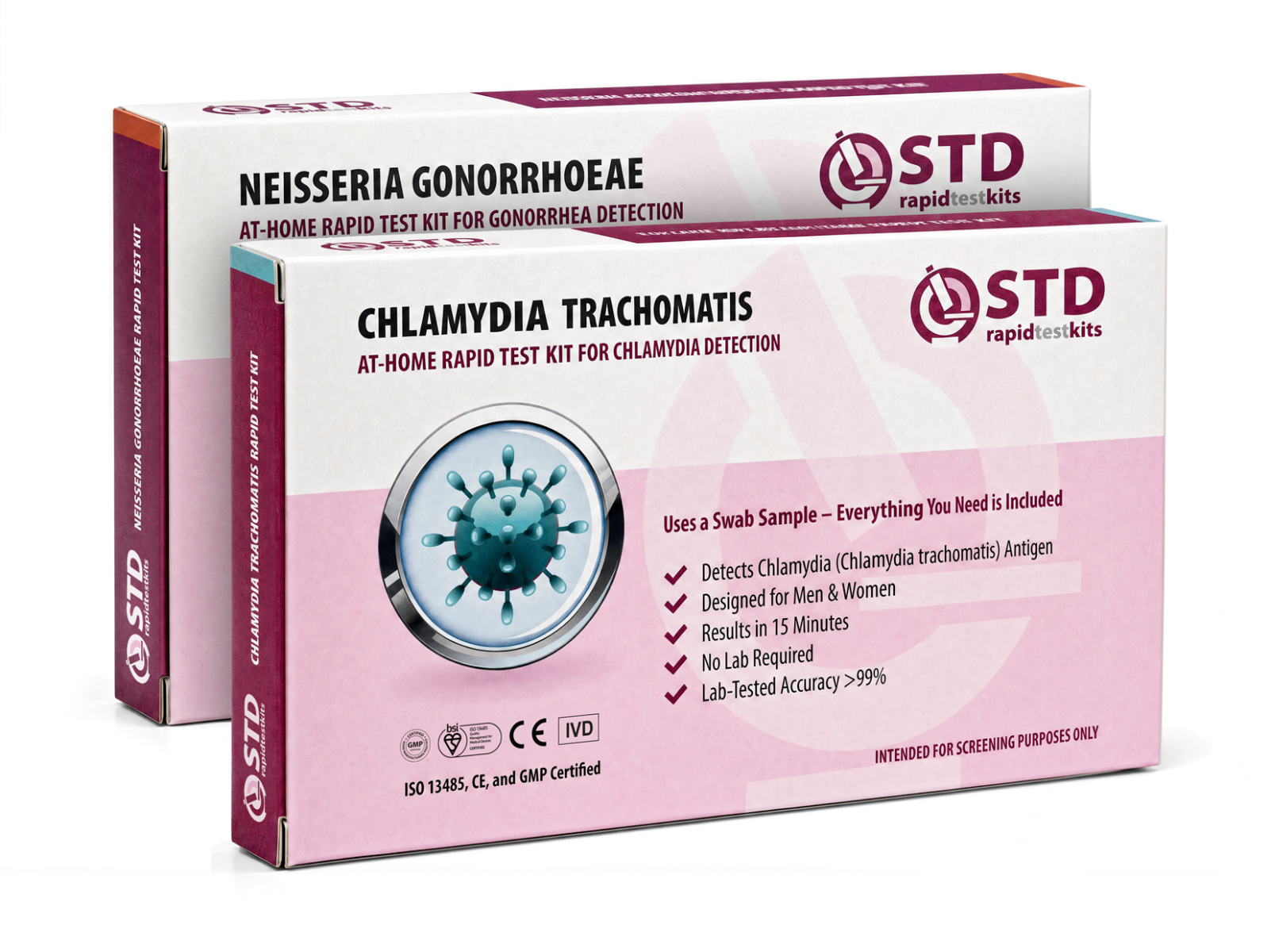
This article is published by stdrapidtestkits.com, which sells at-home STI test kits. The guide below walks through the underlying mechanisms in plain language, points out the early warning signs men commonly dismiss, and explains where home testing fits and where it does not. Recommendations are based on fit-for-purpose for the reader's concern, not commercial benefit. The numbers and timelines come from CDC, WHO, NHS, and Mayo Clinic guidance, and the takeaway is consistent across all of them: most men who test and treat promptly go on to have children without trouble.
Key Takeaways
- Chlamydia and gonorrhea often cause no symptoms, per the CDC, so silent infection is common, and these are the two STIs most strongly tied to male fertility damage.
- Damage from untreated chlamydia or gonorrhea is often reversible when caught early. Once scarring forms in the epididymis or vas deferens, surgery or assisted reproduction may be the only path forward.
How STIs quietly damage the male reproductive tract
Sperm travels a long path before ejaculation. It is produced in the seminiferous tubules of each testicle, matures in the epididymis (a tightly coiled tube roughly six meters long when uncoiled), travels through the vas deferens, picks up fluid from the prostate and seminal vesicles, and finally exits through the urethra. Every step runs through thin, delicate tissue that does not tolerate inflammation well.
When a bacterial sexually transmitted infection enters through the urethra, it does not always stay there. Chlamydia in particular is good at climbing. The bacteria ascend through the urethra into the prostate and from there into the epididymis, where they set off a slow-burning inflammatory response. The body sends immune cells, the tissue swells, and the immune response itself causes collateral damage. Over weeks to months, repeated cycles of inflammation can leave fibrous scar tissue behind, and scarred tubes carry less sperm, or none.
Bacterial infections do the most direct mechanical damage. Viral infections (HIV, herpes, HPV) affect sperm quality through different routes: oxidative stress, hormonal disruption, and direct effects on sperm DNA. Three injuries matter most for fertility, and none of them announces itself with a clear symptom. A man can lose meaningful fertility while feeling completely fine.
Three injuries that matter for fertility
- Tubal scarring. Fibrosis in the epididymis or vas deferens narrows or blocks the path sperm take, lowering the count that reaches the ejaculate.
- Direct testicular inflammation. If infection reaches the testicle itself (orchitis or epididymo-orchitis), it can disrupt the sperm-producing tubules.
- DNA damage and anti-sperm antibodies. Oxidative stress from chronic inflammation harms sperm DNA before the cells leave the testicle, and some men develop an immune response that targets their own sperm as foreign.
The STIs most strongly linked to male infertility
The mechanism above does not apply equally to every infection. Some pathogens are more likely to climb, more likely to cause silent damage, and more closely tied to fertility outcomes in published research. The names that recur in the male-fertility literature are chlamydia, gonorrhea, and syphilis, with chlamydia at the top of the list. Viral infections affect semen quality too, through different mechanisms.
Chlamydia (Chlamydia trachomatis) is the bacterial STI most consistently linked to male epididymitis and downstream sperm damage, and it is the most commonly reported bacterial STI in the United States. The CDC's chlamydia information notes that the infection often causes no symptoms, and when symptoms do appear in men they can be mild: a slight burning during urination, or a thin discharge that gets explained away. Per the NHS overview of epididymitis, a sexually transmitted infection is the usual cause of epididymitis in men under 35. Chlamydia has also been linked in clinical studies to higher sperm DNA fragmentation, a form of damage that does not show on a basic semen count but matters during embryo development.
Gonorrhea (Neisseria gonorrhoeae) is the next most common offender. It tends to cause more obvious symptoms in men than chlamydia (a thicker yellow-green discharge, sharper burning), but a meaningful share of cases are still silent, especially throat and rectal infections. Untreated, it can cause the same epididymitis and scarring. The CDC's gonorrhea information notes that the infection can cause a painful condition in the tubes attached to the testicles which, in rare cases, can lead to infertility. Antibiotic-resistant gonorrhea is also rising globally, which makes early detection more important than ever.
Syphilis (Treponema pallidum) is less commonly tied to male infertility, but untreated late-stage disease can cause testicular inflammation and disrupt the hormones that regulate sperm production. The CDC's syphilis information lays out the staged progression from an early painless sore to long-term systemic damage. Syphilis is far less common than chlamydia or gonorrhea in most populations, but case rates are rising and screening is cheap.
HIV is associated with lower sperm count, reduced motility, and abnormal sperm shape, especially when it is not well controlled with antiretroviral therapy. Lower testosterone and chronic inflammation both contribute. Men on effective treatment with an undetectable viral load typically see semen parameters improve substantially.
Herpes (HSV) has been linked to higher sperm DNA fragmentation and reduced motility, partly through oxidative stress in the reproductive tract. The effect is most noticeable during active outbreaks and usually eases between them. Daily antiviral medication can shorten outbreaks and reduce viral shedding.
HPV particles can attach to sperm and may be associated with reduced motility and DNA-integrity problems, though the research is still evolving. Beyond fertility, high-risk HPV types are a recognized cause of cancer in men, per CDC HPV information; these include penile, anal, and oropharyngeal cancers. Our at-home rapid swab kits for HPV and trichomoniasis are validated for vaginal self-swab in women only, so men who want testing for either should see a clinic.
| Infection | Typical fertility-related concern | How often men notice nothing |
|---|---|---|
| Chlamydia | Epididymitis, vas deferens scarring, lower motility, higher DNA fragmentation | Often causes no symptoms (CDC) |
| Gonorrhea | Epididymitis, urethral stricture, lower motility and viability | Often silent; throat and rectal cases especially |
| Syphilis | Testicular inflammation and hormonal effects in late untreated stages | Asymptomatic in the latent stage |
| HIV (untreated) | Lower count and motility, altered testosterone, abnormal shape | Often silent during the chronic phase |
| Herpes (HSV) | Oxidative stress and DNA fragmentation, mostly during outbreaks | Often no symptoms between outbreaks |
| HPV | May attach to sperm; possible motility and DNA effects (research evolving) | Usually no symptoms |
Why most men miss the warning signs
The clinical picture for chlamydia in men is famously underwhelming. The infection often produces nothing at all, and when it does, the signs can be mild enough to blame on dehydration, a snug pair of underwear, or a new shower gel. By the time a man notices something he cannot ignore, the infection has often had weeks or months to climb.
Stigma compounds the problem. Conversations about sexual health are still uncomfortable for many men, and walking into a clinic to ask whether something is wrong can feel worse than the worry itself. Home testing removes that specific friction. A self-collected swab or a fingerstick at home, with a result in about fifteen minutes, is a meaningfully lower barrier than booking an appointment, and a clear result is reassuring on the same timeline.
Chlamydia often has no symptoms, but it can cause serious health problems, even without symptoms.
The warning signs worth knowing
Symptoms are an unreliable guide here, but a few are worth taking seriously when they do appear, especially if you have had a recent new partner. The checklist below covers the patterns most often linked to chlamydia and gonorrhea in men. None of them confirms an infection on its own, and plenty of men have none at all, so an at-home chlamydia test or a clinic swab is still the only way to know for sure.
Signs worth taking seriously, even when mild
Having one or more of these does not confirm an infection, and many men with chlamydia or gonorrhea notice nothing at all, so only a test can tell you for sure. One pattern needs urgent care instead of a home test: a sudden, severe, one-sided testicular pain (especially with nausea, or in a man under 25) can signal testicular torsion, a same-day emergency, and is different from the slow, building ache these infections cause.
- A thin, watery, or cloudy discharge from the tip of the penis, often most noticeable first thing in the morning Common
- Burning, stinging, or itching during urination Common
- A dull ache, pressure, or heaviness in one testicle Less common
- Visible swelling, warmth, or redness on one side of the scrotum Less common
- Pain during ejaculation, or a change in the color or volume of semen Less common
- A mild groin or pelvic ache that comes and goes for no clear reason Rare
Epididymitis: the most common silent-damage pattern
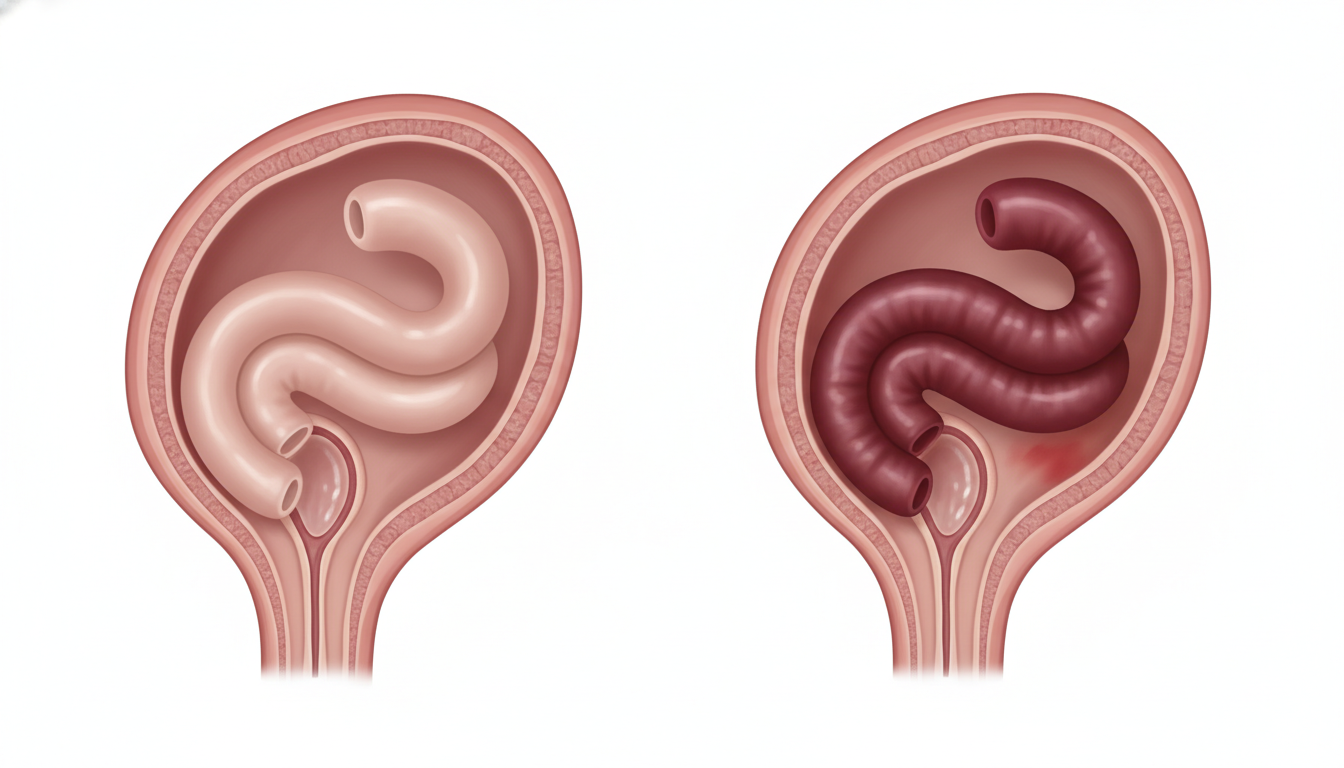
Epididymitis is inflammation of the epididymis, the coiled tube where sperm mature after leaving the testicle. In sexually active men under 35, the most common cause is an ascending bacterial STI, usually chlamydia or gonorrhea, per the NHS. (In men over 35 the more usual cause is a urine infection.)
The timelines differ. Gonorrhea can inflame the urethra and epididymis within about a week of infection; chlamydia usually takes two to three weeks. The longer either lingers untreated, the higher the risk of scarring or partial blockage along the sperm pathway.
The classic presentation is a gradual ache or pressure in one testicle that builds over a few days, sometimes with a low-grade fever, one-sided scrotal swelling, and tenderness when sitting. Some men feel a dragging discomfort when walking. Many have a milder, sub-clinical version where the only sign is a vague unease they brush off. When infection climbs from the epididymis into the testicle itself (epididymo-orchitis), it can cause more sudden swelling, fever, and groin pain, though it can also progress quietly.
Epididymitis threatens fertility mainly through scarring. As the inflammation runs its course, repeated or untreated inflammation can lay down fibrous scar tissue that narrows or blocks the lumen sperm pass through. If both sides are affected, or the scarring extends into the vas deferens, the result can be obstructive azoospermia: no sperm in the ejaculate despite normal production in the testicle. Started early, antibiotics resolve most cases with no lasting effect. Delayed treatment is where the permanent damage happens. The WHO's infertility fact sheet lists infections and obstruction of the reproductive tract among the causes of male infertility, and names untreated STIs as a driver of tubal-factor infertility in women.
Sperm quality is more than the count
Fertility specialists do not just count sperm. A standard semen analysis weighs several things at once, and an STI can touch any of them: count (how many sperm are present), motility (how many swim forward in a straight line), morphology (how many have a normal head and tail), and, in extended workups, DNA fragmentation (how much of the genetic material is intact rather than broken).
Chlamydia is especially associated with sperm DNA fragmentation. That damage does not register on a basic analysis, but it matters during conception because fragmented DNA is linked to early miscarriage and lower IVF success rates. Inflammation from any infection can generate reactive oxygen species (oxidative stress) that harm sperm DNA before the cells leave the testicle, so the count can look normal on paper while the underlying genetic integrity is poor.
For men who have had untreated infections and are trying to conceive, a fertility specialist can add a sperm DNA fragmentation test (often a SCSA or Comet assay, both lab tests that measure how much sperm DNA is broken) to the standard analysis. It is not needed for everyone, but it is worth asking about after repeated chlamydia or gonorrhea infections, a confirmed case of epididymitis, or a long history of untreated exposure.
What a semen analysis measures
- Count: how many sperm are present in the ejaculate.
- Motility: how many move forward in a straight line, which determines whether sperm can reach an egg.
- Morphology: how many have a normal head and tail shape.
- DNA fragmentation: how much of the genetic material is intact rather than broken into fragments.
Can the damage be reversed?
Whether it reverses depends almost entirely on timing.
Caught early, before significant scar tissue forms, an uncomplicated chlamydia or gonorrhea infection clears with a single course of the right antibiotics. Acute epididymitis treated within the first week or two of symptoms generally resolves with no measurable long-term effect on fertility, per Mayo Clinic. Sperm production runs on a roughly 70-day cycle, so a semen analysis about 90 days after treatment is the most informative checkpoint; results usually return to baseline by then. The practical guidance for men trying to conceive after treatment: wait at least four to eight weeks after finishing antibiotics before active attempts, then consider a semen analysis at three months.
Caught late, after fibrosis has formed in the epididymis or vas deferens, the picture changes. Antibiotics still clear the active infection, but they do nothing to soften scar tissue. From there, the route to biological fatherhood may involve a urology referral and, in some cases, surgical reconstruction of the blocked duct or assisted reproduction. Depending on the semen analysis, that can mean intrauterine insemination (IUI), in vitro fertilization (IVF), or testicular sperm extraction (TESE) followed by intracytoplasmic sperm injection (ICSI). All are well established, but each is more invasive and more expensive than a single antibiotic course caught at the screening stage.
| Outcome | Treated early (within weeks) | Treated late (scar tissue formed) |
|---|---|---|
| Active infection | Cleared with a single antibiotic course | Cleared with antibiotics; scarring remains |
| Sperm parameters | Generally return to baseline within months | May stay reduced even after the infection clears |
| Path to fatherhood | Usually unaffected after treatment | May need a urology referral, surgical reconstruction, or assisted reproduction (IUI, IVF, or TESE/ICSI) |
| Cost and burden | One antibiotic course plus a follow-up retest | Specialist visits, imaging, possible surgery, an IVF cycle |
When sexually active men should test, and the window periods
Per the CDC's screening recommendations, annual chlamydia and gonorrhea screening is advised for sexually active men who have sex with men, and screening is appropriate for any man with new or multiple partners. The CDC notes there is not enough evidence to recommend universal annual screening for low-risk heterosexual men, but it does advise testing after a new-partner exposure or whenever symptoms appear.
Window periods, the gap between exposure and when a test can reliably detect infection, vary by pathogen. Test too early and a negative can be falsely reassuring; wait too long and silent damage has more time to build.
- Chlamydia and gonorrhea: most reliable from about 14 days after exposure, for both swab-based rapid tests and lab NAATs.
- HIV: 18 to 45 days for fourth-generation antigen-antibody tests, with a 90-day outer window for full reliability, per CDC HIV testing guidance.
- Syphilis: typically 21 to 90 days for antibody seroconversion, per the CDC's syphilis information.
- Herpes (HSV-2 antibody test): about 6 to 12 weeks for reliable seroconversion. Commercial rapid kits typically test HSV-2 antibodies only.
- Hepatitis B and C: about 3 to 6 weeks for HBV antibodies; about 8 to 11 weeks for HCV.
Lab-based NAAT testing remains the analytical gold standard for chlamydia and gonorrhea. The at-home rapid kits sold here are lateral-flow immunoassays, a different technology whose strengths are speed, privacy, and screening convenience. A sensible workflow is to use a home rapid test as a first-line screen, confirm any positive with a lab NAAT before starting treatment, complete the full antibiotic course (commonly doxycycline for chlamydia), and retest at three months.
A workable routine for a sexually active man: screen for chlamydia and gonorrhea after any new partner where condoms were not used consistently (wait two to three weeks first); test every six months in non-monogamous arrangements regardless of symptoms; add syphilis and HIV before trying to conceive; and retest about three months after any treatment to rule out reinfection from an untreated partner, the so-called ping-pong effect.
Lifestyle factors that compound the damage
An untreated bacterial STI is the strongest preventable hit to male fertility, but it does not act alone. Several everyday exposures harm sperm on their own and stack with infection-related injury, making recovery slower or less complete after treatment.
Per Mayo Clinic's overview of male infertility, established contributors include heavy alcohol use, tobacco smoking, recreational drugs (anabolic steroids in particular), chronic heat on the scrotum, occupational exposure to pesticides and heavy metals, and obesity-related hormonal changes. Each works through a different pathway (oxidative stress, hormonal disruption, direct DNA damage), and the cumulative load is what matters.
A man recovering from a treated infection tends to see a faster, fuller return to baseline when these background stresses ease at the same time. Three months is a reasonable window to rebuild sperm quality after both an infection and a lifestyle reset, since spermatogenesis takes roughly that long from start to finish. A semen analysis ordered through a urology clinic measures count, motility, and morphology directly, so it is the clearest way to follow how recovery is going.
Lifestyle factors that stack with infection damage
- Heavy alcohol use and tobacco smoking, both linked to lower sperm count and motility.
- Anabolic steroids and some recreational drugs, which suppress the hormones that drive sperm production.
- Chronic scrotal heat: frequent hot tubs, long stretches with a laptop on the lap, or tight underwear in warm climates.
- Occupational exposure to pesticides and heavy metals.
- Obesity-related hormonal changes that lower testosterone and impair sperm quality.
The mental load, and what it does to testing behavior
Most fertility writing skips the emotional side of an STI diagnosis. The behavioral data does not. Men who fear judgment, blame themselves for an infection, or have absorbed cultural messaging about masculinity often delay testing and treatment, and that delay is the single behavior that turns a manageable infection into a lasting fertility problem.
The most common avoidance patterns reported clinically are familiar: attributing mild symptoms to irritation and waiting for them to pass; skipping a personal test after a partner's positive result because the news feels unwelcome; and finishing treatment without telling partners, who then reinfect months later. All three are understandable, all three are fixable, and all three respond to lower-friction options. Anonymous partner-notification services through public-health departments help with the third. Home testing helps with the first two.
An STI is a medical condition, not a moral verdict, and infections are far easier to treat when caught early. For many men, a discreet home test twice a year is simply a lower bar than booking a clinic visit, and that lower bar is often what gets them tested at all.
Public-health surveys consistently find that men test for STIs less often than women, even at similar levels of exposure. The reasons cited most often in CDC and NHS reporting are discomfort discussing sexual health with a clinician, the lack of a routine annual exam that includes STI screening, and a self-image that frames testing as something only people who already feel sick should do. All three barriers shrink with discreet at-home testing.
What about future children? The epigenetics question
A separate concern, less discussed but increasingly studied, is whether infection-related damage to sperm can affect the children eventually conceived from it. The mechanism is epigenetic: stable changes in how genes are switched on or off without changes to the underlying DNA sequence. Chronic inflammation in the male reproductive tract can alter how DNA is packaged in mature sperm, and some of those changes are carried into the embryo at fertilization.
For now, this is a real biological phenomenon worth taking seriously, though not yet a precise predictive tool for any individual. Studies have linked sperm DNA fragmentation to lower implantation rates and higher early-pregnancy loss in IVF. Whether ordinary STI exposure in fathers measurably raises the risk of specific outcomes in naturally conceived pregnancies is still an open research question.
Larger prospective studies tracking paternal STI history against children's outcomes are underway. Whether the effect translates meaningfully to naturally conceived pregnancies remains to be quantified.
Sperm DNA fragmentation is a measurable parameter that some fertility clinics test as part of an extended semen workup. There is no current public-health recommendation to test it in healthy men. The simpler upstream step is the one that protects against the well-documented damage: screen for chlamydia and gonorrhea regularly, treat any positive result, and retest at three months.
What to do next
If any of this applies to you, the practical path is short and the same for most men: screen on a schedule, confirm anything positive with a clinician, and treat early. The quick guide below maps the common situations to a next step.
Should you test, and when?
Have you had a new or untested partner in the past year, or unprotected sex you are unsure about?
Yes: Screen for chlamydia and gonorrhea. Wait at least 14 days after the exposure for a reliable result, and add HIV and syphilis if it has been a while since your last full screen.
Do you have any symptoms now, such as discharge, burning, or a one-sided testicular ache?
Yes: Test and arrange to see a clinician. A sudden, severe, one-sided testicular pain is a same-day emergency rather than a testing situation.
Did a home rapid test come back positive, or are you planning to conceive soon?
Yes: Confirm any positive with a lab NAAT before starting antibiotics, complete the full course, notify recent partners, and retest at three months. If you are planning conception, screen both partners first.
No: Set a recurring reminder to screen every six months while you have new partners; routine testing is the simplest way to protect future fertility.
Guidance only; a clinician can advise based on your specific situation.
Frequently asked questions
- Which STDs are most likely to affect male fertility?
- Chlamydia and gonorrhea are the most documented threats, because both can ascend into the epididymis and leave scarring. HIV, syphilis, herpes, and HPV are also linked to reduced sperm quality through inflammation, oxidative stress, DNA fragmentation, or hormone disruption, but the effect is generally smaller and more variable than with the two main bacterial infections.
- Can a man with no symptoms still have an STI that is hurting his sperm?
- Yes. An asymptomatic infection can still travel from the urethra into the epididymis and quietly scar the tubes sperm pass through. The CDC notes that chlamydia and gonorrhea often cause no symptoms, and throat and rectal gonorrhea are especially likely to be silent. Testing is the only way to rule it out before damage forms.
- How long after a possible exposure should I wait before testing?
- For chlamydia and gonorrhea on a self-collected swab, two to three weeks after exposure is the practical window; earlier testing risks a false negative. For HIV, fourth-generation antigen-antibody tests are reliable from 18 to 45 days, with a 90-day outer window. For syphilis, allow 21 to 90 days; for an HSV-2 antibody test, 6 to 12 weeks.
- If I test positive on a home rapid test, what should I do next?
- Treat it as a strong screen, not a final answer. Contact a clinician, in person or by telehealth, to confirm with a lab NAAT and to be prescribed the right antibiotic. Notify recent partners so they can test and treat too, and avoid sex until you and your partner have both finished treatment and any retest window has passed.
- If I get treated, will my sperm recover, and how long before we can try to conceive?
- For most men treated before significant scarring forms, semen parameters return to baseline within about three months of finishing antibiotics, which reflects the roughly 70-day cycle the body needs to grow a fresh batch of sperm. Wait at least four to eight weeks after the antibiotic course before active attempts; a semen analysis at three months is the informative checkpoint, especially after a confirmed case of epididymitis. If count or motility is still low then, ask for a urology referral.
- Should I get tested before trying to conceive?
- Yes, and ideally both partners should. A pre-conception screen for chlamydia, gonorrhea, syphilis, HIV, and hepatitis B is a small cost next to a fertility workup, and it catches treatable infections before they become a barrier. Many men carry an asymptomatic bacterial infection without knowing.
- Does using condoms protect future fertility?
- Indirectly, yes. Condoms sharply reduce the risk of acquiring chlamydia, gonorrhea, syphilis, and HIV, and lower lifetime acquisition means lower risk of STI-related fertility damage. They do not fully prevent infections spread by skin-to-skin contact, such as HPV and herpes, but those are less central to male fertility.
- What does a home rapid test actually measure?
- The kits sold here are lateral-flow immunoassays. The chlamydia and gonorrhea swab tests detect bacterial antigens directly from a self-collected genital swab; the blood-based tests (HIV, syphilis, hepatitis, herpes) detect antibodies from a fingerstick sample. A positive lateral-flow result is meaningful and worth acting on, while a laboratory NAAT (for bacterial STIs) or lab antibody testing (for viral) remains the gold standard for confirmation.
- U.S. Centers for Disease Control and Prevention. About Chlamydia: symptom presentation in men, complications including testicular tube inflammation, and treatment guidance.
- U.S. Centers for Disease Control and Prevention. About Gonorrhea: asymptomatic infection and complications of untreated infection, including the rare progression to infertility.
- U.S. Centers for Disease Control and Prevention. About Syphilis: staged progression from an early painless sore to long-term systemic damage.
- U.S. Centers for Disease Control and Prevention. STI screening recommendations, including chlamydia and gonorrhea screening for men who have sex with men and people with new or multiple partners.
- U.S. Centers for Disease Control and Prevention. HIV basics and testing windows, including the role of antiretroviral therapy.
- World Health Organization. Infertility fact sheet: causes of male and female infertility, including infections and obstruction of the reproductive tract and the role of untreated STIs in tubal-factor infertility.
- NHS. Epididymitis: causes (a sexually transmitted infection is the usual cause in men under 35), symptoms, and treatment overview.
- Mayo Clinic. Male infertility overview: contributing factors including infections, alcohol and tobacco, anabolic steroids, scrotal heat exposure, pesticides and heavy metals, and obesity-related hormonal changes.
