
Published: July 2025 | Last updated: May 2026 | Editorial review and quality control: Martina N.
Antibiotics clear the bacteria. They do not always reverse what the bacteria did before the prescription started. If you were diagnosed with chlamydia or gonorrhea, especially after weeks or months of silent infection, your reproductive tract may have absorbed inflammation, micro-scarring, or oxidative stress that lingers past your negative test of cure. Whether that translates into a real fertility problem depends on how long the infection ran, how your body responded, and what your sperm look like a few months out from treatment.
Can sperm recover after chlamydia or gonorrhea?
In many cases yes, but recovery is not automatic. Antibiotics clear the infection in days to weeks. Sperm production runs on a roughly two-to-three-month cycle, so a meaningful re-test sits at 90 days post-treatment. Men diagnosed early often see normal semen parameters at that checkpoint. Men whose infections went undetected for months are more likely to show inflammation-related damage (lower motility, higher DNA fragmentation, occasionally scarring of the epididymis or vas deferens) that may need fertility-specialist input.
Key Takeaways
- Sperm recovery checkpoint sits at 90 days post-treatment, the length of one full sperm production cycle.
- Re-test for the original infection at 3 months too, since reinfection is common and stacks the fertility risk.
Treatment Stops the Infection. Recovery Is a Separate Question
You took the meds. The follow-up test was negative. The clinical advice was to move on with your life. That guidance is correct for the infection itself. It is not the full story for fertility.
Chlamydia and gonorrhea can damage the male reproductive tract before any symptoms surface, and most chlamydia infections in men have no symptoms at all. Inflammation in the epididymis (the coiled tube where sperm mature), scarring along the sperm transport pathway, and oxidative damage to developing sperm cells are the most documented downstream effects. The CDC's chlamydia information notes that untreated chlamydia in men can progress to epididymitis, with infertility a documented (though uncommon) consequence.
The pattern clinicians commonly see: a man clears the infection, sets it aside for years, and only revisits the question when conception is not happening.
A negative test of cure confirms the bacteria are gone. It does not confirm your reproductive tract has fully recovered. The two questions need separate answers.
What an STD Actually Does to Sperm
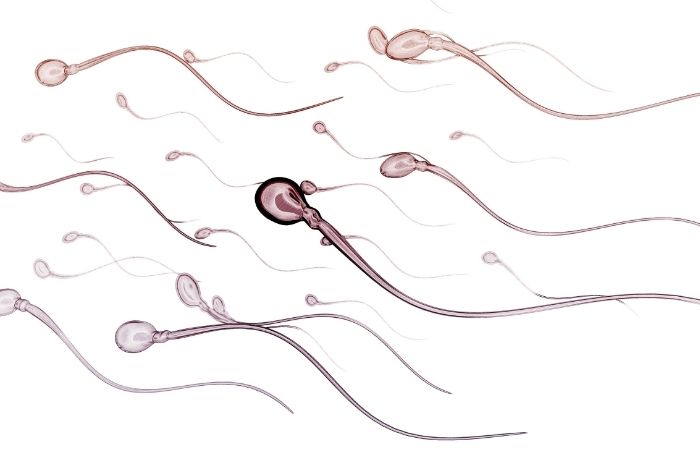
Sperm cells are surprisingly resilient. They are not invincible. A single untreated infection can disrupt three different parts of the male reproductive system at once.
The mechanisms vary by pathogen:
- Chlamydia. The bacteria trigger inflammation in the epididymis. That inflammation can reduce sperm motility, increase the proportion of abnormally-shaped sperm, and raise DNA fragmentation rates that show up on specialized semen testing. Damage tends to track with how long the infection ran before treatment.
- Gonorrhea. A more aggressive inflammatory response. Untreated gonococcal urethritis can cause pain in the tubes attached to the testicles. Per the CDC's gonorrhea page, this complication can, in rare cases, lead to infertility.
- Mycoplasma genitalium and ureaplasma. These often-missed pathogens can affect seminal plasma composition and the sperm cell membrane, both of which matter for motility and fertilization capacity. They are not on most standard STD panels.
The piece men miss most often: the damage happens internally. There is no external sign for a partner to notice, and no symptom that a man would naturally connect to fertility.
Why “I Feel Fine Now” Doesn't Cover It
It feels intuitive that the absence of symptoms means the absence of a problem. With post-STD fertility, that intuition fails.
Most chlamydia infections in men are asymptomatic. Roughly half of gonorrhea infections in men present with classic symptoms (urethral discharge, painful urination); the other half do not. The result: men routinely clear infections they never knew they had, after weeks or months of unnoticed reproductive-tract inflammation.
What can hide under “no symptoms”:
- Scarred or partially-blocked vas deferens, the tubes carrying sperm from the testicles
- Compromised sperm DNA from chronic low-grade inflammation
- Subtle hormone shifts if the testes themselves were inflamed (orchitis)
Treatment is the first half of the answer. A semen analysis is the second half.
Many men first hear about post-STD fertility damage in a fertility clinic, after a year of unsuccessful conception attempts. By then the original infection may be a decade old. If you have ever been diagnosed with chlamydia or gonorrhea, even once, even without symptoms, the cleanest move is a baseline semen analysis before you start trying to conceive (not after a year of trying).
How Long Sperm Need to Bounce Back
Spermatogenesis (the production of new sperm cells from scratch) runs on a roughly two-to-three-month cycle, per Mayo Clinic male infertility resources. After your antibiotics finish and the infection clears, your body still needs that full window to release a fully fresh batch of sperm. Re-testing semen quality before then does not give you a clean read.
The standard recovery checkpoint is 90 days post-treatment. That is when a semen analysis reflects your body's actual rebuilding work, not residual debris from the infection itself.
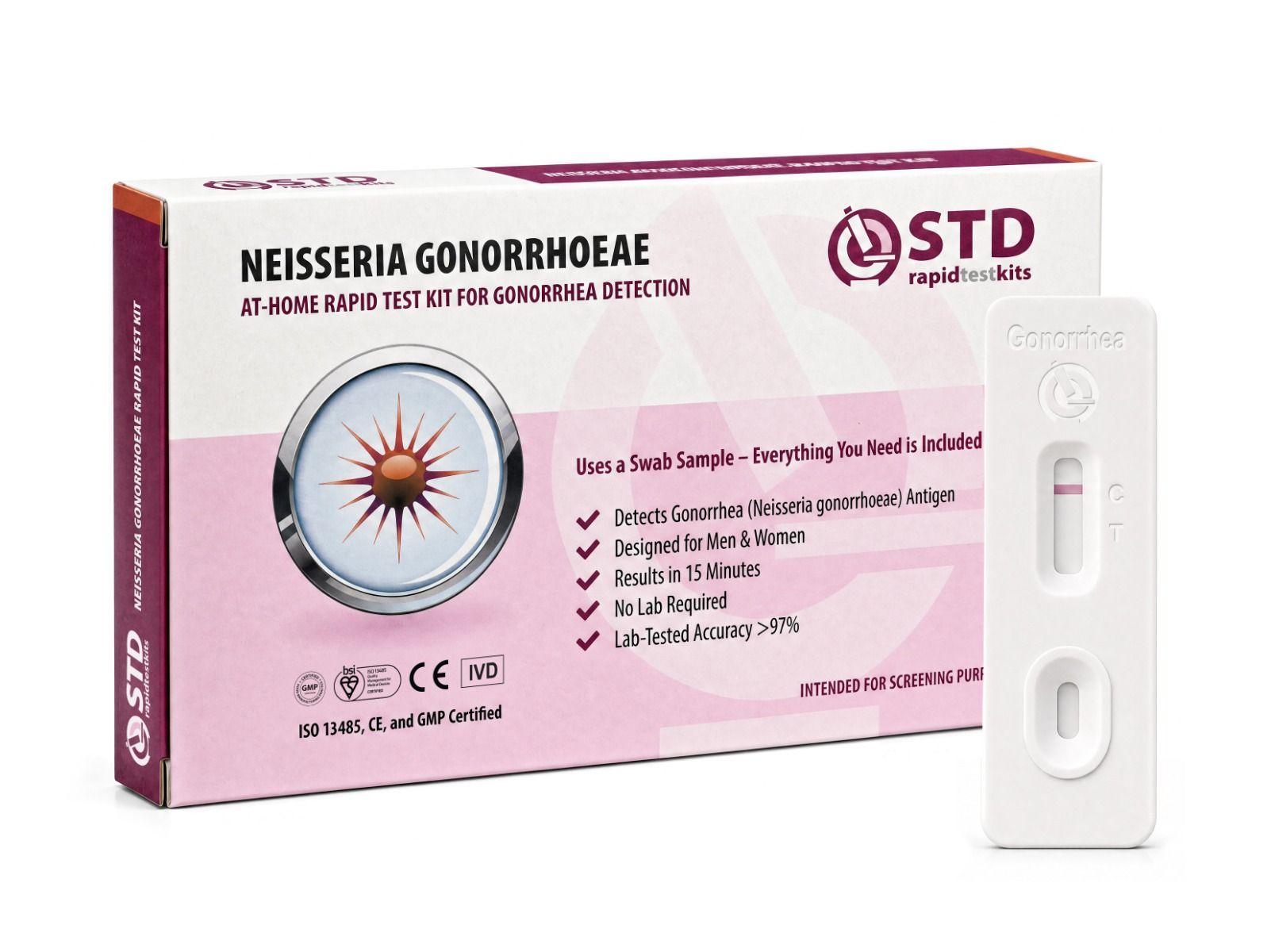
(A brief disclosure: stdrapidtestkits.com sells the rapid lateral-flow test kits referenced in this article. We recommend products based on fit-for-purpose, not commercial benefit.)
How quickly recovery happens depends on several factors:
What shapes recovery speed
- How long the infection went undetected before treatment (weeks vs. months).
- Whether the infection reached the epididymis or testes (epididymitis or orchitis).
- Baseline sperm parameters before infection. Younger and healthier sperm bounces faster.
- Reinfection history. Each repeat infection stacks the cumulative damage risk.
- Lifestyle during recovery: sleep, smoking, alcohol, diet, heat exposure.
What a Post-Treatment Fertility Workup Looks Like
A standard fertility check after a treated STD has four pieces. Each one answers a slightly different question, and a primary care or urology visit can usually order them together.
| Test | What it measures | Why it matters post-STD |
|---|---|---|
| Semen analysis | Sperm count, motility, morphology, volume | First-line check; flags global issues from inflammation |
| Sperm DNA fragmentation | Microscopic breaks in sperm DNA strands | Specifically captures damage from chronic inflammation |
| Hormone panel (testosterone, FSH, LH) | Hypothalamus-pituitary-testis axis function | Detects testicular impact if orchitis was involved |
| Re-screen for chlamydia and gonorrhea | Active infection presence | Rules out reinfection before conception attempts |
A Composite Patient Pattern
The following pattern recurs often enough in andrology practice to be worth describing in composite form. It is not a specific case; it is a synthesis of the recurring shape of these stories.
A man in his early-to-mid thirties, healthy on paper, walks into a fertility clinic after a year of failed conception. Routine workup shows low motility and elevated DNA fragmentation. On follow-up history, he mentions a brief course of antibiotics in his twenties for “a chlamydia thing” caught on a routine screen. No symptoms then. No follow-up after.
His vas deferens shows partial scarring on imaging. The lab attributes the sperm-quality drop to post-infectious epididymitis. The couple eventually conceives via IVF with intracytoplasmic sperm injection (ICSI), but only after 18 months of testing, two failed cycles, and significant out-of-pocket cost. The original chlamydia infection was treated correctly. The fertility consequences were never investigated until they became a problem.
This pattern is not rare in andrology practice. It is just rarely connected back to its origin in clinic notes the man read at age 24.
The infection can cause a fever and pain in the tubes attached to the testicles. This can, in rare cases, lead to infertility.
Rebuilding Sperm Quality: Practical Steps
Sperm cells do regenerate. That is the foundation of every recovery plan. Even when a previous infection caused measurable damage, many men see meaningful improvements in 3 to 6 months with the right approach.
The evidence-supported pillars:
- Time. Wait at least one full spermatogenesis cycle (3 months) before re-testing semen quality. Some men benefit from a second cycle (6 months) before drawing conclusions.
- Antioxidant support. Coenzyme Q10, vitamin C, vitamin E, zinc, and selenium have the most consistent evidence for supporting sperm DNA integrity. Discuss specific dosing with your clinician, especially if you take other medications.
- Inflammation control. Smoking, heavy alcohol use, and ultra-processed food consumption all elevate oxidative stress. Reducing them gives the recovery system room to work.
- Moderate exercise. Improves circulation and supports endogenous testosterone. Avoid overtraining and chronic excessive endurance work, which can suppress the same hormones.
- Re-testing. A second semen analysis at 6 months tells you whether numbers are trending up or stuck.
For more involved cases, urologists may discuss clomiphene citrate or hCG to support testosterone production, or specialized antioxidant blends formulated for sperm DNA integrity. A reproductive endocrinologist can assess whether these approaches are appropriate based on your hormone-panel results and semen analysis.
When to Try to Conceive
The starting framework depends on what your post-treatment semen analysis shows:
- If your 90-day semen analysis is normal. Green light. Begin trying to conceive on your usual schedule.
- If parameters are borderline (slightly low motility or count). Try for 6 months on optimized lifestyle support. Re-test if conception has not happened by then.
- If parameters are clearly impaired (significant DNA fragmentation, low count, or obstructive findings). A urology or fertility-clinic referral now beats waiting another year.
For couples planning IUI or IVF, most fertility clinics require recent STD screening before any procedure. Getting that paperwork in order early avoids delays right when the rest of the cycle is on a tight timetable.
How Long the Infection Ran Matters as Much as Which One
Recovery odds depend less on which STD you had and more on how long it had to do damage. A chlamydia infection caught at the first routine screen is very different from one that ran silent for 8 to 12 months.
Clinicians generally observe that infections detected and treated quickly are less likely to cause lasting epididymal changes than those that went undetected for months. Gonorrhea's damage window can be even shorter because the inflammatory response is faster and more severe in the urethra and reproductive tract.
What that translates to in practice:
- Caught within weeks. Recovery odds are high, especially under age 35.
- Months of silent infection before diagnosis. A baseline semen analysis is worth scheduling even if you feel completely fine.
- Repeat infections. Each round adds to the cumulative damage. Reinfection with chlamydia is common, which is why CDC treatment guidelines recommend re-screening 3 months after treatment.
Male-Factor Infertility: Misconceptions Worth Dropping
When a couple struggles to conceive, attention often defaults to the woman first. The reality is more even: male and female factors are roughly equally likely contributors to infertility, per NICHD reproductive health information. Past STIs sit among the preventable but often-overlooked drivers of male-side issues.
Sperm can be low in count, low in motility, or genetically damaged while everything else looks externally normal. A semen analysis is the only way to know. The three patterns below are the misconceptions most worth letting go of:
Three things that do not mean you are fertile
- Having no symptoms during the original infection. Most chlamydia infections in men are silent, and the absence of symptoms is not the absence of damage.
- Your partner having clean STD test results. Female-side testing does not measure male sperm quality.
- Being able to ejaculate normally. Ejaculation tells you about delivery; it says nothing about count, motility, morphology, or DNA quality.
Future-Proofing Your Fertility
Most of these recommendations are not exclusive to people actively trying to conceive. The earlier you have a baseline picture, the more control you have over the trajectory.
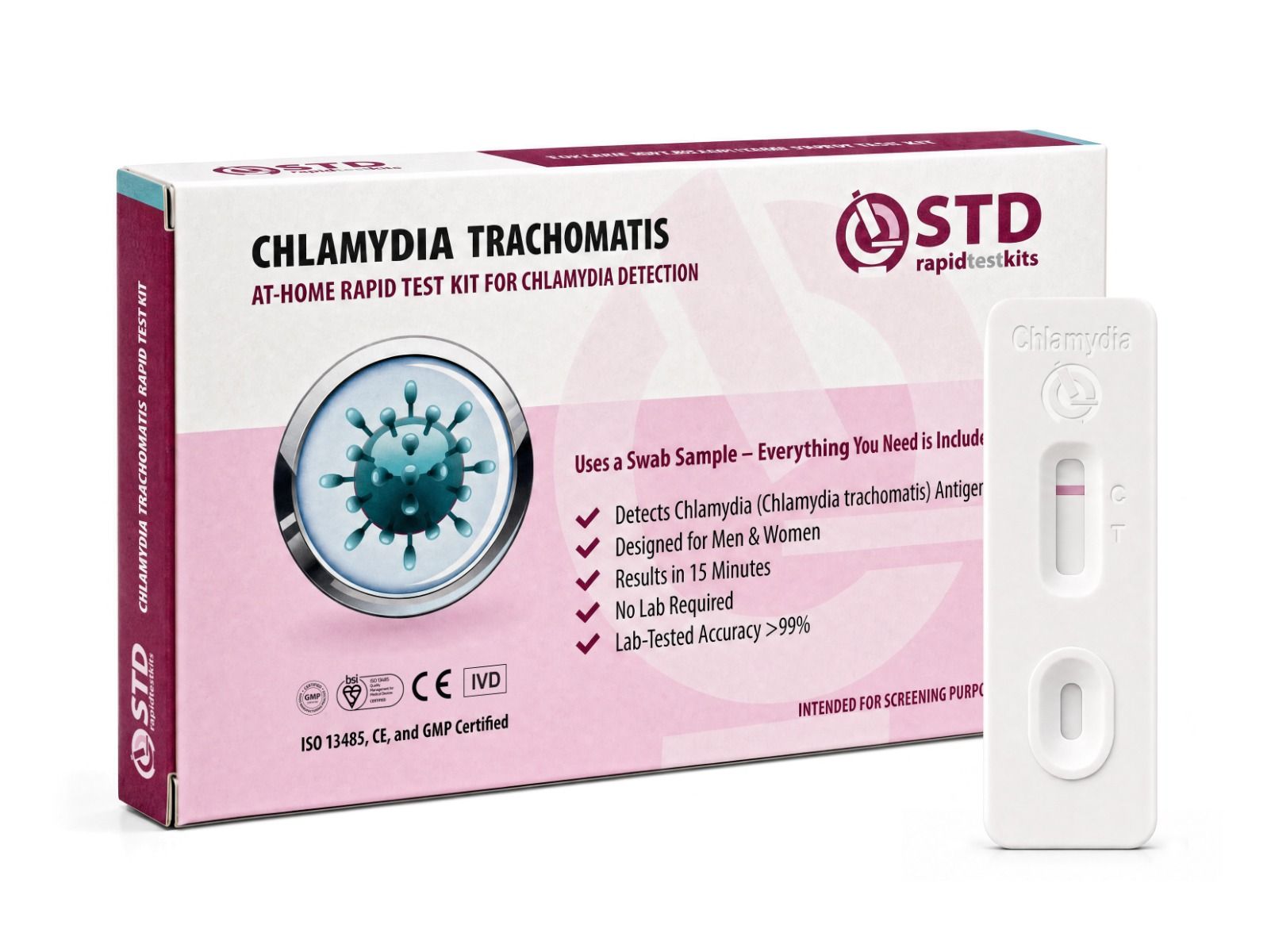
At-home rapid screening (swab kits for chlamydia and gonorrhea, fingerstick blood tests for HIV, syphilis, and hepatitis) makes the periodic STD check straightforward to keep on schedule without a clinic visit. Lateral-flow rapid tests are screening tools, useful for catching new infections quickly. A confirmatory lab NAAT remains the gold standard for any positive result.
The basic playbook breaks down into five practical steps:
Your fertility-protection checklist
- A baseline semen analysis at any age you start thinking about future fertility.
- Periodic STD screening every 6 to 12 months if you are sexually active with new partners.
- Antioxidant nutrition (zinc, selenium, vitamin C, CoQ10, L-carnitine) via diet or supplementation under physician guidance.
- Hormone check-ins if you have ever had testicular pain, swelling, or epididymitis after an infection.
- Sleep, hydration, stress management, moderate exercise. Boring, but effective.
FAQ
- How soon after treatment should I get my sperm checked?
- 90 days is the minimum. Sperm production runs on a roughly two-to-three-month cycle, so testing before that window closes shows a mid-recovery snapshot rather than a true baseline. Booking the semen analysis at 12 weeks post-treatment gives you the cleanest read on what your body has actually rebuilt.
- Will my sperm fully return to normal after chlamydia or gonorrhea?
- When the infection was caught early, full recovery is common. When the infection ran for months or reached the epididymis, parameters often improve but may not fully normalize. The 90-day semen analysis tells you your specific recovery curve, which is more useful than averages.
- What test shows whether an STD damaged my fertility?
- A semen analysis is the first-line check. It measures sperm count, motility (movement), morphology (shape), and volume. Sperm DNA fragmentation testing is a useful follow-up if the standard analysis looks fine but conception is not happening, since DNA damage from inflammation can sit underneath otherwise-normal numbers.
- I had no symptoms during the infection. Do I still need a fertility check?
- Yes. Most chlamydia infections in men are asymptomatic, and damage to the reproductive tract happens regardless of whether symptoms surfaced. If you ever tested positive, even years ago, a baseline semen analysis is reasonable insurance.
- Can supplements speed up sperm recovery?
- Antioxidants like coenzyme Q10, zinc, vitamin C, and selenium have evidence for supporting sperm DNA integrity, particularly after inflammatory damage. They complement time, they do not replace it. Discuss specific dosing with a clinician if you have documented sperm-quality issues.
- Should I tell my partner about a past STD if we are trying to conceive?
- Yes. Open communication helps both of you make informed decisions about timing, testing, and potential fertility-specialist visits. Most fertility clinics also require full sexual health history before procedures.
- Can a treated STD affect my testosterone?
- Sometimes. Infections that reach the testes (orchitis) can transiently affect testosterone production. A hormone panel covering testosterone, FSH, and LH catches this. Most cases recover with the rest of the reproductive system; persistent low testosterone needs urology evaluation.
- Is IVF still an option if my sperm count is low?
- Yes. Intracytoplasmic sperm injection (ICSI) is designed for cases of low count, low motility, or DNA-damage-driven infertility. Earlier diagnosis gives more options; a semen analysis years before you consider IVF still helps your clinic plan the path.
- U.S. Centers for Disease Control and Prevention. Chlamydia information for the public covering male symptoms, complications including epididymitis, and infertility risk.
- U.S. Centers for Disease Control and Prevention. Gonorrhea information covering urethritis, epididymitis, and complications in men.
- U.S. Centers for Disease Control and Prevention. Sexually Transmitted Infections Treatment Guidelines, including post-treatment re-screening recommendations at 3 months.
- World Health Organization. Sexually transmitted infections fact sheet covering global burden, complications, and reproductive consequences.
- Eunice Kennedy Shriver National Institute of Child Health and Human Development. Infertility and reproductive health overview, including male-factor infertility prevalence framing.
- National Health Service (UK). Chlamydia overview covering symptoms, transmission, complications, and follow-up.
- Mayo Clinic. Male infertility symptoms and causes, including post-infectious damage to the reproductive tract and spermatogenesis context.
